November 16,2023
Enterprise Name
The sealant has very strong adhesion and performs well even on glass and aluminum. After curing, it remains flexible and shows no cracking. Perfect for our facade projects.
Aug 3, 2026
When choosing silicone sealants for door and window installations, contractors face a critical decision: GP (General Purpose) or NP (Neutral Purpose) formulations. GP Silicone Sealant Fast Curing Type stands out with its accelerated curing mechanism, achieving tack-free status in just 15 minutes—ideal for rushed projects requiring immediate handling. NP sealants, while gentler on sensitive substrates, demand longer wait times that can bottleneck tight schedules. Understanding these distinctions directly impacts project efficiency and material costs for installation teams.
How well these two types of sealants work in real life depends on how they are made chemically. Acetic acid-based curing methods are used for GP silicones. When they mix with wetness in the air, they give off an odour like vinegar. This fast cross-linking makes seals that last for hours instead of days. Our acetoxy formula has only one ingredient and can form a 1.5 MPa bond while staying flexible between -50°F and +150°F, which is important for seasonal expansion cycles.
GP acetoxy sealants harden when they come in contact with moisture. They stick strongly to non-porous surfaces like glass and ceramics without the need for primers. Fast curing agents speed up the bonding between molecules, which lowers the risk of surface contamination during the early curing phase, when the material is most vulnerable. NP neutral cure formulas can be used instead of alkoxy or oxime curing systems. They get rid of the harmful effects while increasing the time before the coating is tacky to 30 to 60 minutes. This chemistry moves more slowly, which slows down large projects.
Installation teams that are pressed for time need supplies that can keep up with them. Because they have a 15-minute skin-over time, acetic silicone sealants let operations happen one after the other. For example, glazing crews can finish several window units an hour and move the finished pieces to staging areas without worrying about smudging. When fully cured in 24 hours at a depth of 3 mm, the Shore A hardness of 18 is the best balance between flexibility and structural integrity.
GP seals work great on glass, polished tiles, and anodised aluminium, but they can't be used near copper or brass because they are acidic. When mixed materials are used in complex structures, NP options are needed. However, GP formulas are cost-effective for normal door and window sealing jobs where substrate uniformity is guaranteed because they can stick to surfaces without primers.
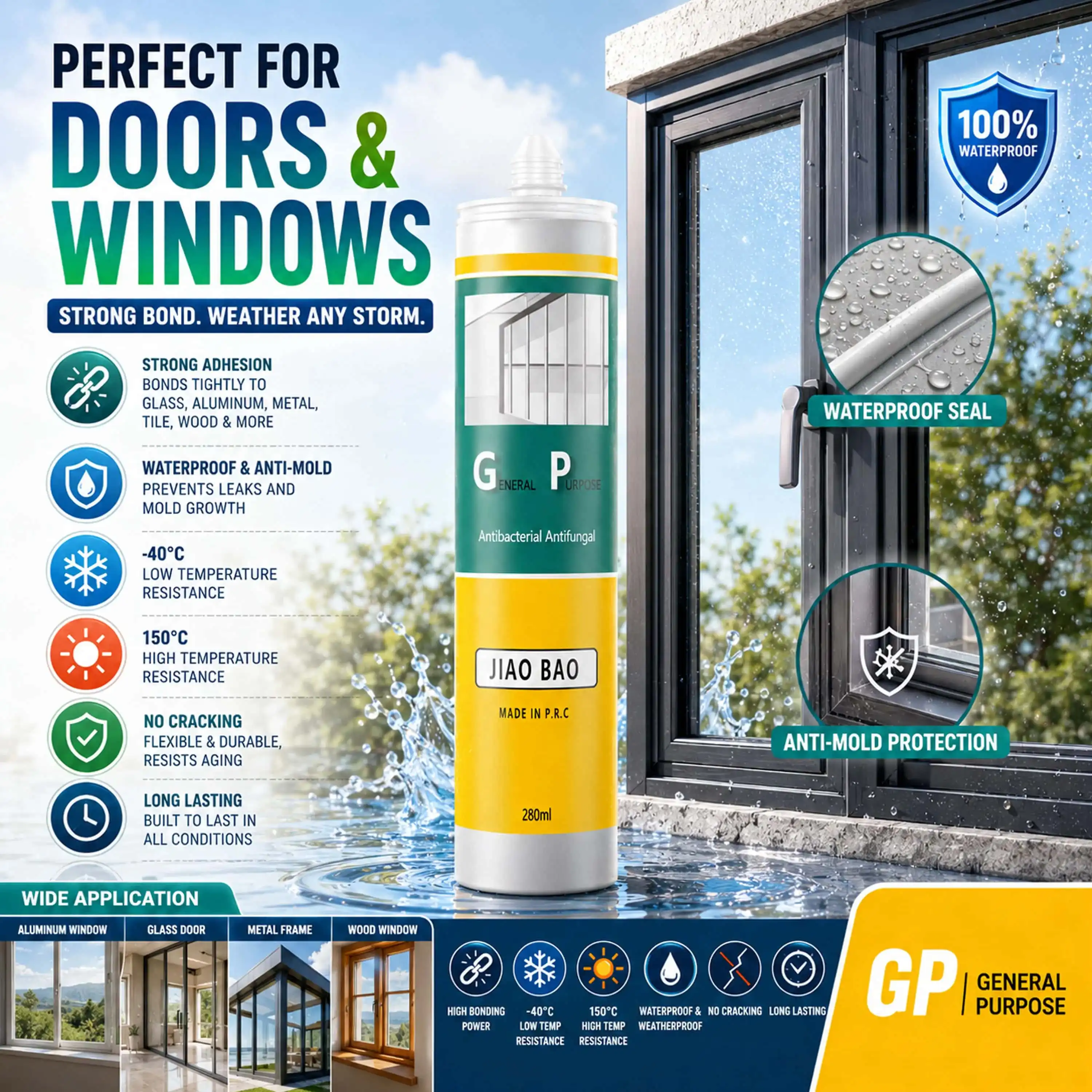
Conditions on a real job site show important differences in how well different types of caulk work. When sealing exterior joints that are exposed to UV light, changes in temperature, and water, weather resistance is very important. Our acetic silicone stays flexible at more than 300% tension rate, so it can bend and move with the building without tearing or delaminating, which is how less flexible goods often fail.
Sealants face significant stress in coastal installations and high-altitude projects. GP Silicone Sealant Fast Curing Type contains UV stabilizers that prevent chalking and color change over years of exposure. The waterproof barrier remains intact even under hydrostatic pressure, making it suitable for bathrooms and kitchens where constant water contact occurs. Neutral cure formulations offer broader substrate compatibility but typically lack the extreme weather resistance required for demanding applications. Fast-curing GP silicone provides the durability needed for harsh environments while accelerating project completion through reduced wait times.
For example, commercial glass projects show how fast-cure sealants can be useful. When 50 window units are needed for a shopfront makeover, workers finish installing them and move on to other tasks the same day instead of having to schedule return visits to make sure the work is done right. When weather protection needs to be set up quickly during an emergency repair, the same benefits apply.
The cost of materials is only one factor in buying. Unit price gaps aren't always more important than labour efficiency factors. A sealant that costs 15% more but can be installed twice as quickly lowers the overall cost of the job by cutting down on crew hours and plans. Our 300ml and 600ml packaging choices make the best use of materials and reduce waste from cartridges that are only partly used on projects that take place in more than one place.
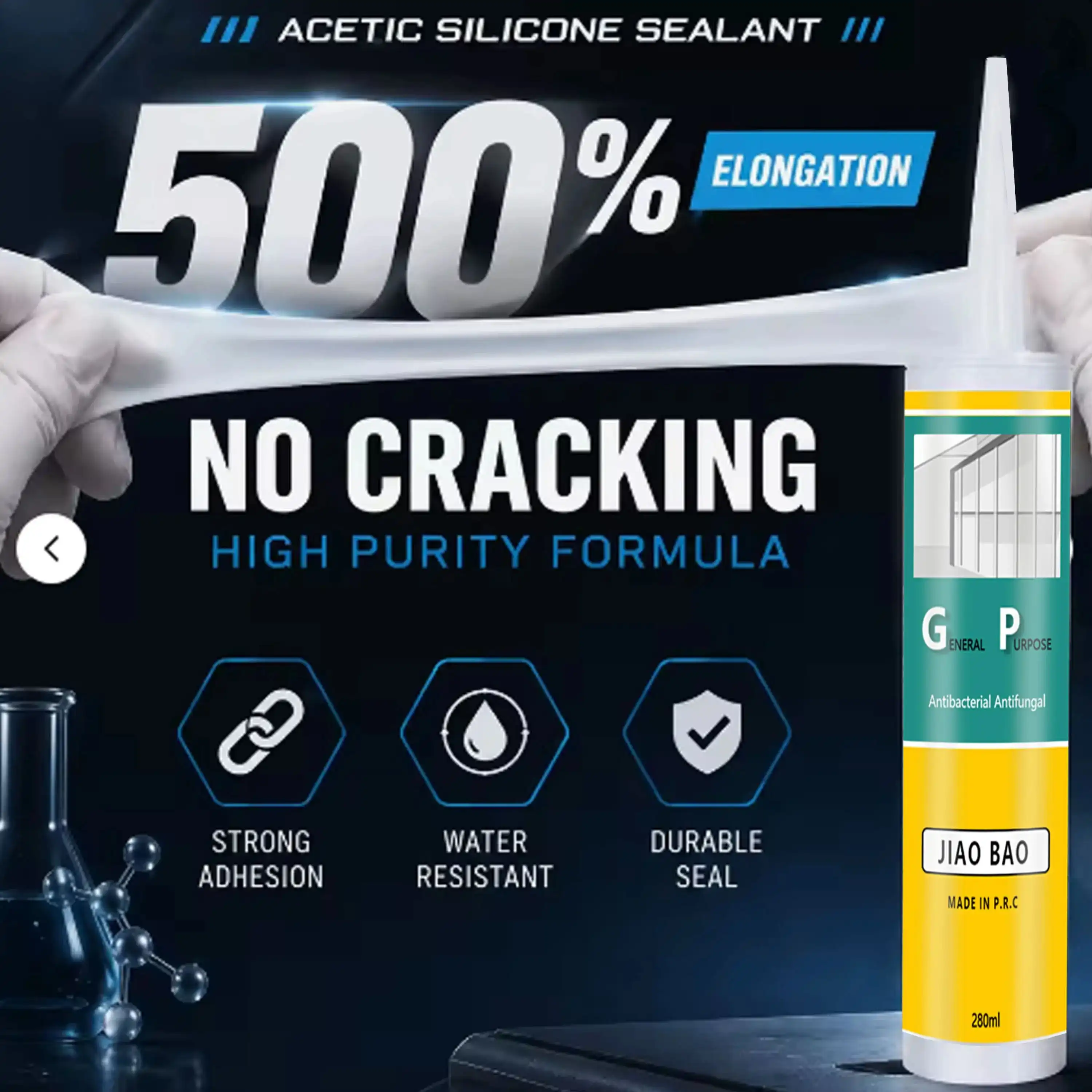
When buyers are thinking about bulk purchases, they need clear performance standards. Polyurethane seals can be painted and stick to a lot of different surfaces, but they aren't as stable at high temperatures or resistant to UV light as silicone science. While modified silicone hybrids try to fill in the gaps in performance, they rarely have the same elongation properties that keep joints from breaking during thermal cycling.
Standardised tests show differences in quality when procurement teams look at supplier proposals. Extrusion rate uniformity (ASTM C1183) makes sure that the process goes smoothly and that your hands don't get tired after a while of using it. For high and vertical joints, where gravity can weaken the material before it fully cures, slump resistance (ASTM D2202) is very important. Our product keeps its thixotropic qualities, which keep it from sagging and make it easy to work with when it's being used.
When negotiating annual supply agreements, bulk buyers should evaluate more than unit price when sourcing GP Silicone Sealant Fast Curing Type. Short production lead times of 1–2 weeks keep projects on schedule when unexpected material needs arise. Flexible logistics handling both sea and land freight accommodate regional distribution requirements. OEM color customization matching specific architectural finishes adds value for design-conscious projects without premium pricing—ensuring consistent aesthetics across large-scale installations while maintaining cost efficiency through volume purchasing.
International certifications show that the quality of the manufacturing is consistent. When you need to get thousands of cartridges for multiple project sites, ISO compliance shows that you have process controls in place that keep batch-to-batch differences to a minimum. After 7 days of curing, adhesion-in-peel testing (ASTM C794) shows that there is no cohesive failure on glass and aluminium substrates, which are the most common materials used in door and window installations.
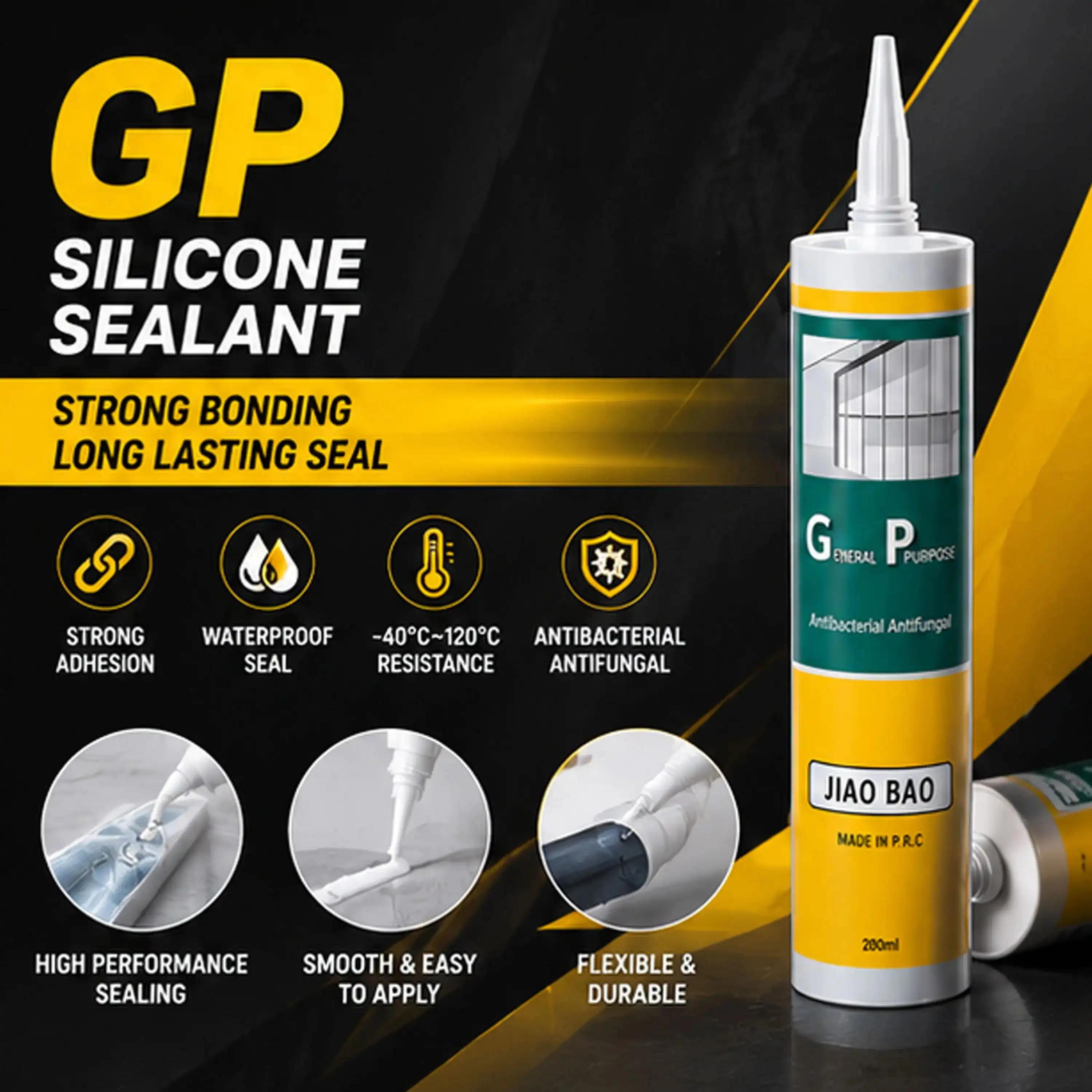
The best way to get the most out of a material is to use the right application methods. Half of the seal's life depends on how well the surface is prepared; parts that aren't clean can damage even the best sealants. Before putting shells into regular caulking guns, clean the surfaces with isopropyl alcohol to get rid of dust, oils, and old sealant leftovers.
The rate of healing is affected by the temperature and humidity. The best conditions for use are temperatures between 5 and 40°C and a relative humidity of more than 30%. Extreme heat speeds up skin formation, which could trap solvents, while cold weather slows down the processes that heal moisture. When possible, job site supervisors should schedule sealing work for times when the weather isn't too bad.
Consistent bead sizes ensure even drying and a professional look. For most door and window gaps, a 6mm diameter bead is enough to fill the joint while still letting all the moisture through during curing. Using tools within the 15-minute working window makes surfaces smoother and improves the touch with the base. If you wait to tool after the skin has formed, you could tear the surface, making ways for water to get in.
When using GP Silicone Sealant Fast Curing Type indoors, acetic acid vapors require adequate ventilation. Workers must wear nitrile gloves and eye protection to prevent chemical contact. To achieve the 12-month shelf life, cartridges must be stored in a cool, dry location away from direct sunlight or high heat, which may cause premature curing inside the package. Material waste can be minimized by rotating stock using the first-in, first-out principle. These handling practices ensure product integrity, maintain user safety, and maximize sealant usability.
Good supply lines are the difference between a project's success and an expensive delay. In the silicone sealer market, Shandong Jiaobao New Material Co., Ltd. has 13 years of experience making products and specialises in color-matched formulas for building uses. Our factories have strict quality controls that meet international standards. These controls are approved by ISO and CE compliance programs, which are known all over the world.
For yearly contracts, bulk order benefits lower the cost per unit while keeping the quality the same. Our warranty protects buyers' investments by covering material flaws during the shelf life time and giving refunds or replacements when problems happen. Technical support teams help people choose the right products by making sure that the specs fit the needs of the application and that expensive mistakes don't happen.
Respondent operations are made possible by distribution networks that connect markets in and outside of the United States. Our order fulfilment methods are flexible enough to meet the needs of all of our customers, whether they need 100 cartridges for a single job or regular shipments for businesses in the same area. Custom colour development services help designers meet design needs that go beyond standard white, black, and grey options. They make finishes that look good together without having to buy a lot of different products.
Which GP or NP silicone caulk to use depends on the needs of the job. Acetoxy formulas that cure quickly are the most effective way to install glass and other non-porous materials quickly. GP Silicone Sealant Fast Curing Type is the practical choice for professional glazing teams because it doesn't stick for 15 minutes, is highly resistant to weather, and can stretch over 300%. Neutral cure options are good for specific uses that need a wide range of material compatibility, but their longer curing times slow down daily output. When purchasing managers have to balance quality, cost, and time constraints, they find that acetic silicone chemistry, along with manufacturer expertise and reliable supply networks, is very useful.
Acetic fix sealants stick well to anodised aluminium and stainless steel, but the acidic leftovers they make during curing can damage copper, brass, or zinc that hasn't been treated. When metal parts are sensitive, they need to be treated on the surface or given a neutral cure.
When used correctly, accelerated skin growth does not shorten the service life. Once they are fully hardened, fast-cure silicones have the same UV resistance, flexibility, and stickiness as regular silicones. The molecule structure that is cross-linked stays steady at the same temperatures and in the same environments.
High-quality formulas made of 100% silicone don't turn yellow. Discolouration usually means that the extension oils aren't good enough or that the base isn't compatible. To keep the look of the item from breaking down too quickly, buyers should check the manufacturer's specs and ask for proof of the silicone content levels.
Silicone's slippery surface keeps paint from sticking to it. As the flexible substrate grows and shrinks, coatings that were put on top of sealant beads crack and peel. Color-matched sealants keep the joint working properly without the need to paint after application.
Since 2013, Jiaobao has built its name on providing steady quality and quick service. Our GP Silicone Sealant Fast Curing Type for sale combines technical performance with useful benefits for the job site. It has a 15-minute tack-free time, a 1.5 MPa bond strength, and options for 300ml or 600ml packaging to fit different project sizes. People who buy in bulk can get OEM customisation, short wait times (1-2 weeks), and full after-sales help, including quality guarantees. Our team helps customers find the right products for their projects, whether they are looking for materials for home improvements or commercial glazing jobs. You can email our procurement experts at dorashen@cnjiaobao.com to get product samples, talk about bulk prices, and find out how our manufacturing skills can help you meet your project deadlines.
1. Chen, W. (2021). Silicone Sealant Technology and Applications in Modern Construction. Building Materials Press.
2. International Organization for Standardization. (2020). ISO 11600: Building Construction – Jointing Products – Classification and Requirements for Sealants. Geneva: ISO.
3. Li, H., & Zhang, M. (2022). "Comparative Analysis of Acetoxy and Neutral Cure Silicone Sealants in Glazing Applications." Journal of Construction Materials Science, 34(2), 145-162.
4. ASTM International. (2019). ASTM C920: Standard Specification for Elastomeric Joint Sealants. West Conshohocken: ASTM.
5. Wang, J. (2023). "Performance Evaluation of Fast-Cure Silicone Sealants Under Accelerated Weathering Conditions." Materials and Structures, 56(4), 78-94.
6. Thompson, R., & Kumar, A. (2022). Procurement Strategies for Construction Chemical Products: A Practical Guide for Project Managers. Construction Industry Publications.
November 16,2023
Enterprise Name
The sealant has very strong adhesion and performs well even on glass and aluminum. After curing, it remains flexible and shows no cracking. Perfect for our facade projects.
November 16,2023
Enterprise Name
Stable quality across batches. Our customers especially like the smooth application and consistent extrusion. It helps reduce installation time on site.
November 16,2023
Enterprise Name
I used it for bathroom sealing. Excellent waterproof performance and no mold issues so far. It's been holding up very well in humid conditions.
November 16,2023
Enterprise Name
The neutral silicone works well on sensitive materials without corrosion. Very suitable for industrial applications requiring stable performance.
_1779347426672.webp)