November 16,2023
Enterprise Name
The sealant has very strong adhesion and performs well even on glass and aluminum. After curing, it remains flexible and shows no cracking. Perfect for our facade projects.
Oct 5, 2026
Yes — GP general purpose silicone sealant becomes fully waterproof after complete curing. This one-component, acetoxy-cure RTV sealant reacts with atmospheric moisture to cross-link into a permanently flexible silicone rubber layer. Once cured, it forms a continuous, impermeable seal that resists water infiltration, rain, humidity, and even periodic submersion.
The curing process typically achieves a tack-free surface within 15 minutes, though full through-cure depth depends on joint size and ambient humidity. For procurement professionals sourcing window and door sealing solutions at scale, understanding this waterproof mechanism is essential to confident product selection.
An acetic-cure RTV silicone sealant is waterproof because of a chemical process that crosses-links the molecules. When the paste-like coating comes in touch with moisture in the air, it gives off acetic acid. It also makes a dense network of polymers at the same time. Water molecules can't get through this network because it is naturally hydrophobic. This makes a rubber seal that sticks well to metal, glass, ceramic tile, and surfaces that have been painted. It makes a joint that is waterproof and lasts longer outside than polyurethane and acrylic.
It is known in polymer chemistry that Si-O-Si (siloxane) backbone bonds are some of the most chemically stable links. The acetoxy fix method is what makes them. A study in the Journal of Applied Polymer Science says that carbon-chain polymers are less stable when they are broken down by water than siloxane polymers. This is why silicone seals that are fully cured stay waterproof even after being wet and dry many times over the years.
Keep in mind that if the surface is dirty, even the best sealer will not last long. Paint doesn't stick to the base as well when there is loose paint, oil residue, or dust on it. Surfaces must be clean, dry, and in good shape before they can be coated. With the right prep work, GP general purpose silicone sealant will stick together and not come off at the edges, which is where water usually starts to seep in.
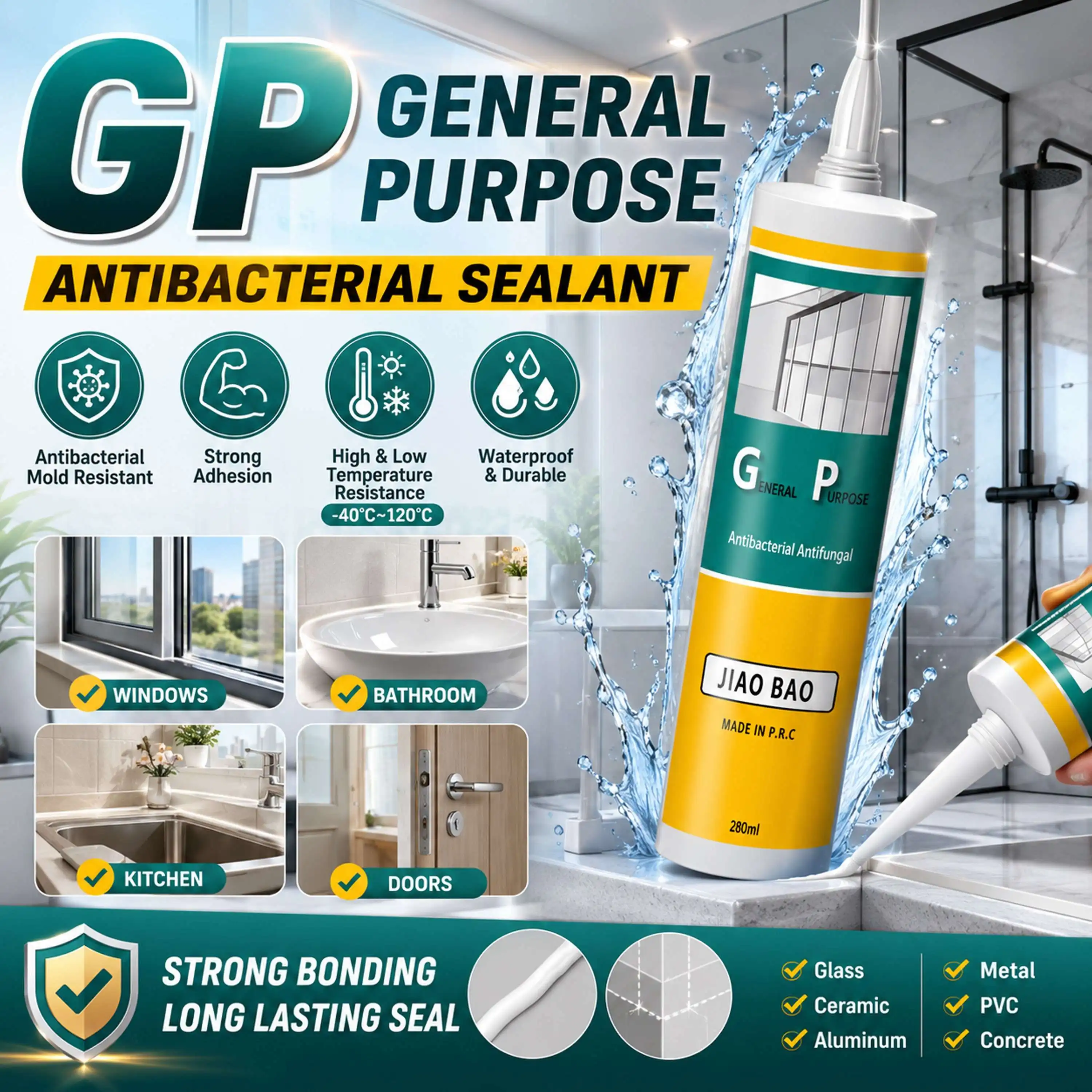
When procurement managers buy in bulk, knowing the technical specs helps them make decisions they can stand by. If you want to learn more about Jiaobao's GP silicone sealant, here are some important performance
All of these things work together to make a lubricant that doesn't weaken when it freezes and thaws, when put under UV light, or when chemically touched. GP general purpose silicone sealant is a good example of this kind of durable formulation. A different study that came out in 2019 in the journal Construction and Building Materials confirmed that acetoxy-cure silicone sealants kept more than 90% of their original tensile strength after being exposed to fast weather for 2,000 hours. This level was often not met by acrylic seals.
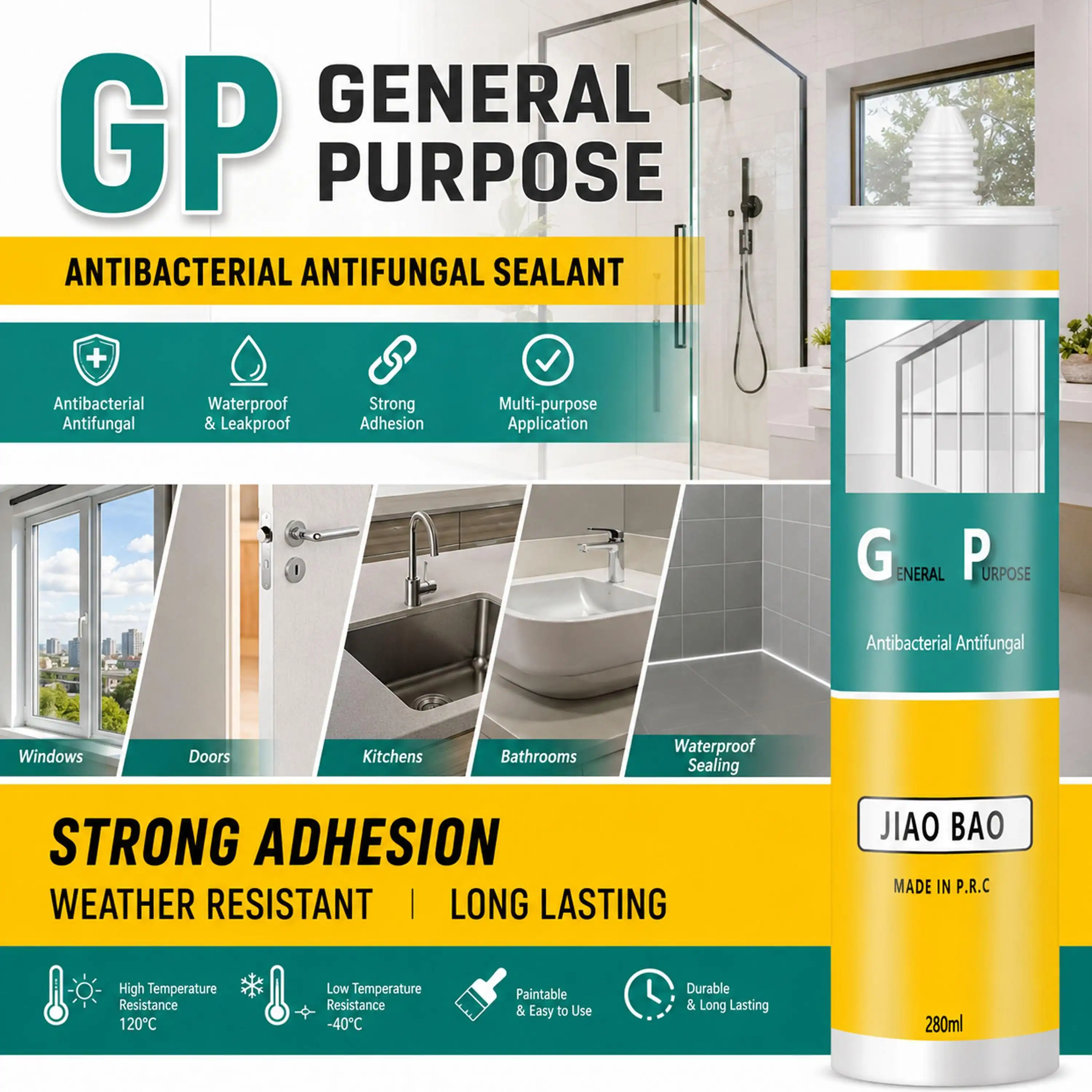
Correct placement is what makes sealing work or not work. The following steps are what the experts say you should do to use an acetic silicone sealant to seal doors and windows:
If you want to clean the surface, wipe it down with rubbing alcohol or clear silicone. Before putting it on, let it dry all the way.
In terms of tools, you should smooth out the bead within 5 minutes of putting it down, before it starts to skin over. The sealant is pressed down on the base, and any air pockets are gone.
People normally look at three things when comparing different types of close goods: how long the product will last, how flexible it is, and how much it costs per unit. It costs more to buy silicone sealants at first than plastic ones, but silicone sealants are cheaper in the long run because they last longer and don't need to be changed as often.
You can paint acrylic seals and they work with water, but they get harder over time and shrink when they dry. Acrylic joints need to be replaced every 3 to 5 years when they are used outside. At first, polyurethane seals stick well and can be painted over. However, UV light breaks them down over time, so they can't be used on exterior walls that aren't covered with something to protect them.
On the other hand, silicone doesn't shrink, stays rigid in UV light, and stays bendable even after temperatures change for decades. GP general purpose silicone sealant is exactly the kind of reliable product that builders and renovation teams look for. When builders and renovation teams buy from distributors, they want to make sure they have a reliable silicone sealant on hand to protect their warranties and improve their channel image.
People who buy a lot need more than just a list of prices that are competitive. Managing shelf life, making sure consistency from batch to batch, and quick transportation make up the total purchase risk profile. Here are some things to keep in mind as you look for a company that makes GP general purpose silicone sealant:
For example, if a product meets ISO and CE safety and quality standards, it means it also meets standards from other countries. This helps it get into markets that are regulated.
An acetic silicone sealant really keeps window and door openings dry for a long time once it's fully dried. Because it is made of siloxane polymers, it can stretch more than 300% and work reliably from -50°C to +150°C. This makes it a good choice for sealing in a lot of different temperatures and building types. When they use a good RTV silicone sealant, their product line stays stable and customers are less likely to complain.
For wholesalers who care about stable batches, low prices, and reliable sources, this is especially true. Getting something from the right seller is the most important thing to do in this area. Look for one that lets you shop when and how you want and has good customer service after the sale. GP general purpose silicone sealant fits well into this kind of reliable, versatile product lineup.
If everything is average (23°C, 50% RH), the surface will stop sticking in 15 minutes. It takes 24 to 48 hours for joints up to 6 mm deep to fully cure. As long as the joint is 72 hours old or bigger, it might take longer. Putting the concrete in water before it's fully set can mess up the cross-linking process and make it less waterproof.
Seals made of acetoxy-cure silicone are very water-resistant, but they shouldn't be left underwater in places with a lot of pressure. When it's wet and dry, they work great in bathrooms, around outdoor windows, and at the joints of roofs. But if you need to seal underwater under pressure, you need a neutral silicone made just for pools or tanks.
It's most often because there isn't enough air flow, the humidity is too low (below 30% RH), or the product has gone bad (12 months). Before you use it, make sure air can flow across the joint face and look at the date the cartridge was made.
It won't turn yellow or break if you put UV light on a good mix with little plasticizer extension. Look at the specific gravity. If it's pretty high, above 0.90, it means that the material has a lot of fillers that make it less flexible over time.
Jiaobao has sold double-checked silicone seals to wholesalers all over the world since 2013. There are good deals on GP general purpose silicone sealant on Jiaobao, whether you want to buy a small amount or a lot. They offer ISO-certified goods, one- to two-week wait times, OEM customization, and clear rules for what to do after the sale. Send an email to dorashen@cnjiaobao.com or visit shandongjiaobao.com right now to get examples or a price quote.

1. Journal of Applied Polymer Science — Hydrolytic Stability of Siloxane Polymers in Construction Sealant Applications, 2018.
2. Construction and Building Materials — Accelerated Weathering Performance of Acetoxy-Cure Silicone Sealants, 2019.
3. ASTM International — ASTM C920: Standard Specification for Elastomeric Joint Sealants, 2022.
4. ISO — ISO 11600: Building Construction — Jointing Products — Classification and Requirements for Sealants, 2020.
5. Progress in Organic Coatings — UV Degradation Mechanisms in Polyurethane vs. Silicone Sealants for Façade Applications, 2021.
6. Polymer Degradation and Stability — Long-Term Elasticity Retention in RTV Silicone Rubber Seals Under Thermal Cycling Conditions, 2020.

November 16,2023
Enterprise Name
The sealant has very strong adhesion and performs well even on glass and aluminum. After curing, it remains flexible and shows no cracking. Perfect for our facade projects.
November 16,2023
Enterprise Name
Stable quality across batches. Our customers especially like the smooth application and consistent extrusion. It helps reduce installation time on site.
November 16,2023
Enterprise Name
I used it for bathroom sealing. Excellent waterproof performance and no mold issues so far. It's been holding up very well in humid conditions.
November 16,2023
Enterprise Name
The neutral silicone works well on sensitive materials without corrosion. Very suitable for industrial applications requiring stable performance.
_1779347426672.webp)