November 16,2023
Enterprise Name
The sealant has very strong adhesion and performs well even on glass and aluminum. After curing, it remains flexible and shows no cracking. Perfect for our facade projects.
Sep 22, 2026
When contractors ask which material delivers the cleanest finish on interior joints, the answer consistently points to acrylic sealant for wall and ceiling applications. This water-based, one-component compound cures through water evaporation rather than chemical reaction, leaving a plasto-elastic seal that bonds reliably to gypsum board, concrete, plaster, and wood. Unlike silicone, it accepts paint directly after curing — no primers, no surface prep gymnastics. For construction teams managing tight schedules and quality-conscious clients, that single characteristic changes the economics of every interior finishing job.
acrylic sealant for wall and ceiling is a type of building chemical that is based on rubber. As the water in the paste evaporates, it cures into a moldable, stretchy rubber. Silicone sealants, on the other hand, cure through hydrolysis and can't be painted over, which is a big problem for artistic indoor work. Polyurethane sealants allow for more movement, but they contain solvents that make VOC worries higher in occupied areas. While latex glue is cheap, it does become weak over time. Acrylic is the most useful because it meets ASTM C834 (Standard Specification for Latex Sealants), is low in volatile organic compounds (VOCs), and works well with both alkyd and water-based topcoats.
The material is great for low-movement interior joints, like the ones between ceiling cornices and walls, gaps around door and window frames, tiny cracks in plasterboard, and settling cracks in new homes. In line with ISO 11600 F 12.5 P, its Movement Accommodation Factor (MAF) is usually between ±7.5% and ±12.5%. That range covers the small changes in temperature and structure that happen in controlled indoor environments, without the high cost of over-engineering that comes with a hybrid polymer product.
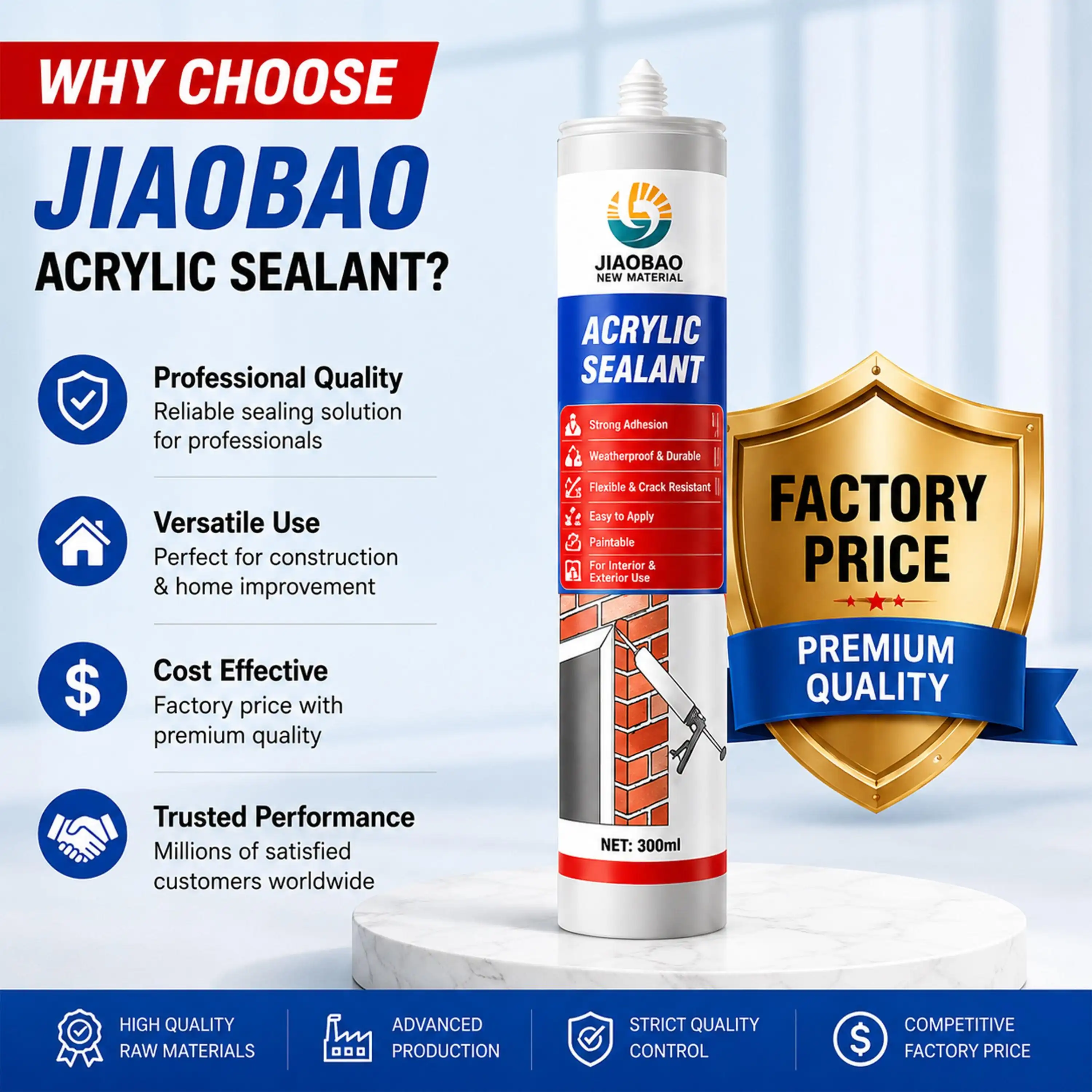
Acrylic sealant for wall and ceiling solutions are used again and again by people who finish the inside of homes for a number of reasons. These are the main performance benefits that make this material a must-buy.
These benefits directly lead to fewer callbacks, faster cycle times between trades, and a cleaner finish when the client handovers the keys. These results are important whether you are in charge of a single-unit home makeover or a business buildout with multiple units.
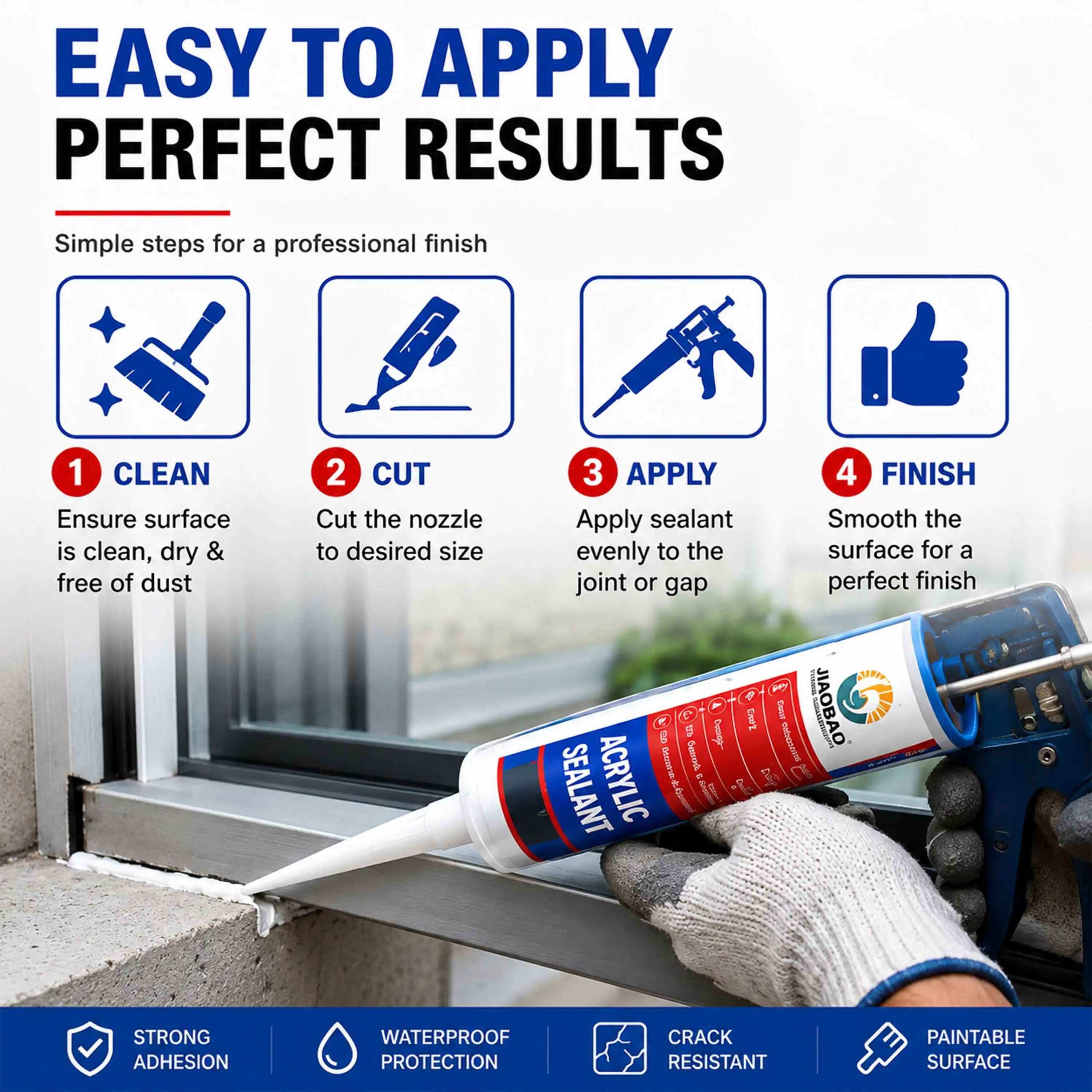
Before applying, clean the joint of any dust, oil, loose paint, or water that is still there. If you have settlement cracks, use a tool to slightly open the crack so that the sealant can go all the way to the bottom. The most important thing for long-term adhesion effectiveness is a clean, dry base.
In a regular caulking gun, put the cartridge in the gun. Make a 45-degree cut in the nozzle so that it fits the width of the joint. Put even, steady pressure on the joint and draw the gun along it all at once. Right away, use a wet finger or spatula to press the sealant into the joint walls and make the shape concave and smooth. A well-made product should have an extrusion rate of more than 80 ml/min. Jiaobao's acrylic sealant for wall and ceilings has an extrusion rate of 163 ml/min, which makes it easier for installers to work on large projects.
Before painting, let the surface skin over, which should take about 30 minutes under normal conditions. If you paint too early, the topcoat will crack as the water below it evaporates. The full fix depth depends on the width of the joint and the humidity in the air, but most internal joints are hard enough to work with in just a few hours. If it's cold or muggy, make sure there is enough air flow and stretch the wait time as needed.
When buying interior sealants, choices should be based on standards that can be measured instead of marketing claims. The ASTM D2202 test for slump resistance makes sure that the material won't sag from vertical or overhead surfaces before it cures. Extrudability (ASTM C1183) makes sure that gun-grade workability stays the same at all temperatures. Low-temperature flexibility testing at –15°C makes sure the product can handle cold-chain shipping and building sites that aren't heated without breaking down.
According to Jiaobao's one-part RTV acrylic sealant for wall and ceiling, it has a sag degree of 0 mm on flat surfaces, no deformation on parallel surfaces, a skin dry time of 0.5 hours, and a tensile strength of 0.64 MPa, which is a little above the standard range of 0.4 to 0.6 MPa and gives filled joints an extra bit of cohesive strength.
A trustworthy company that sells acrylic sealant should offer consistent batch quality, flexible packaging (both 300 ml cartridges and 600 ml sausage packs), a range of color options (including white, black, gray, and custom tones), and a shelf life of 12 months that has been proven. When distributors private-label products for regional markets, being able to do OEM/ODM is important. Jiaobao has a production cycle of only one to two weeks, which means that procurement teams don't have to carry as much extra inventory. This directly improves the efficiency of working capital.
The most common gripe after acrylic sealant for wall and ceiling joint filling is that the crack comes back within a few weeks. Almost always, this is caused by either too much joint movement (beyond the product's MAF) or a low-solids mix that shrinks a lot as it cures. Choose goods that have a solid content of at least 80%, and use polyurethane or hybrid sealants for parts that move a lot.
Water-based acrylics dry slowly below 5°C and may freeze before skinning, which makes the glue fail. On cold sites, leave cartridges out at room temperature overnight before using them, put them down during the hottest part of the day, and wait a long time for them to cure before painting. Jiaobao's formula includes low-temperature bending tests to make sure it still works well after being exposed to the cold chain.
Standard acrylic joint glue isn't made to be wet all the time. The material can re-emulsify or help mold grow in bathrooms or around shower trays. Sanitary-grade silicone or mixed polymer sealants are needed in wet places. Only use acrylic for dry internal joints that don't come into direct touch with water on a regular basis.
The paintability, quick skin formation, wide substrate compatibility, and low-VOC chemistry of acrylic sealant for wall and ceiling joints have earned it a place as the standard material for the interior finishing industry. When it comes from a manufacturer with strict quality control and well-documented technical data, it cuts down on rework, speeds up handover times, and helps clients get better results. You can tell the difference in performance between a well-formulated product and a cheap substitute by how much it shrinks, how well it sticks, and finally how much it costs to call back.
Yes. It can be used for both vertical and high surfaces because it doesn't sag. Use the tool right away to keep the bead flush on the ceiling joints.
Wait until a hard skin appears. In normal conditions (23°C, 50% RH), this takes about 30 minutes. If you paint over sealant that hasn't dried yet, the topcoat will crack as the remaining wetness evaporates.
Standard acrylic sealant for wall and ceiling made for inside is not meant to be exposed to the outdoors all the time. UV damage and cycling of moisture are worse than its MAF and durability envelope. For exterior joints, use a silicone or hybrid product that can stand up to the weather.
There are two main reasons for this: movement of the joints beyond the product's MAF (±12.5%) or a low-solids recipe that shrinks a lot. Check for stable content and make sure the movement rate of the product fits the type of joint.
One useful thing about water-based acrylics is that you can clean uncured material with a damp sponge. After being fully dried, beads need to be scraped or abrashed with a machine.
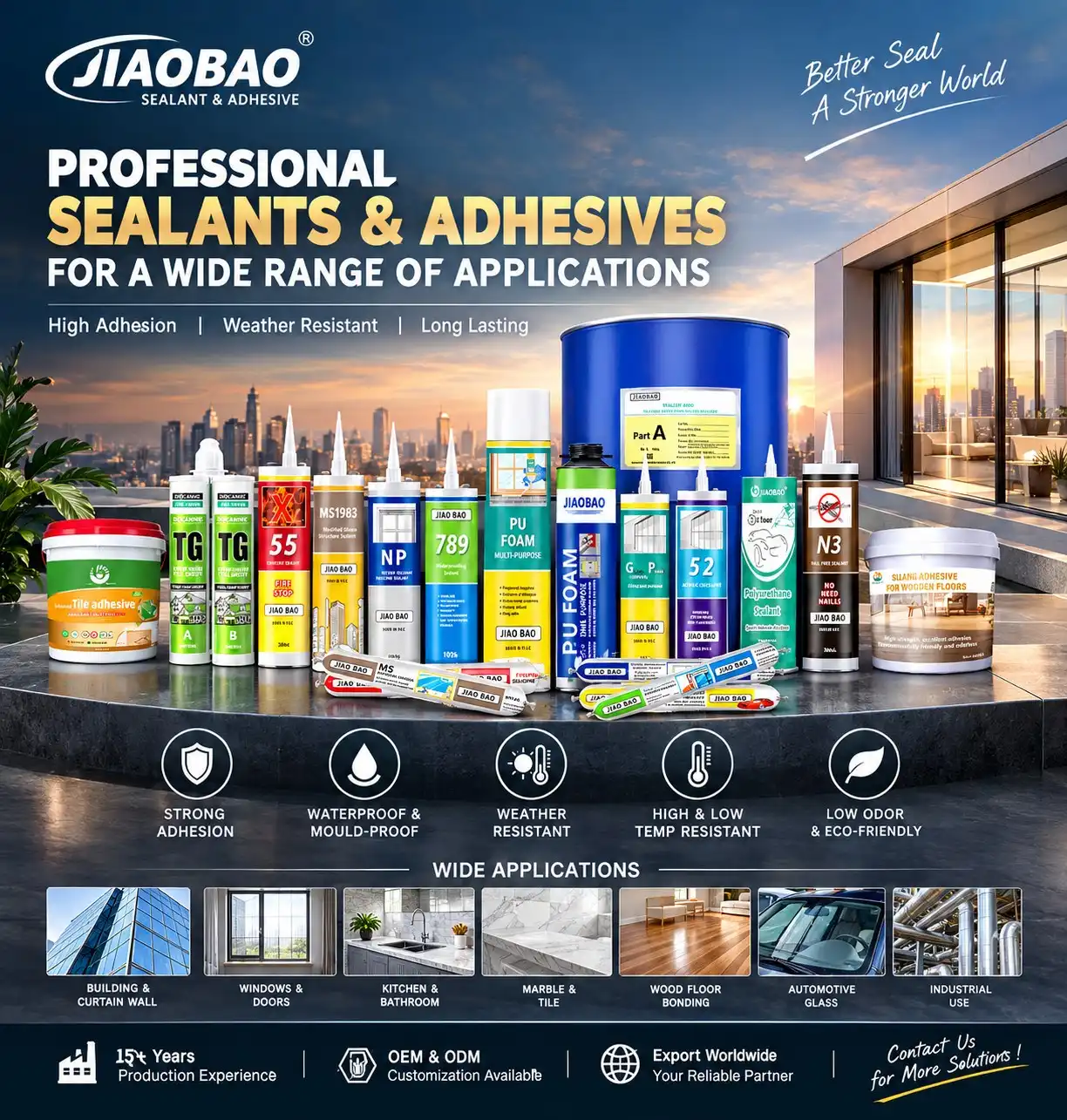
Since 2013, Jiaobao has been making building sealants and selling them to contractors and wholesalers in China and around the world. We offer 300 ml cartridges and 600 ml sausage packs in white, black, gray, and custom colors in our acrylic sealant for wall and ceiling provider store. We can also make products according to your OEM/ODM requirements. There are ISO and CE certifications, wait times of one to two weeks, and a quality guaranty that lasts for the whole 12-month shelf life. You can email our team at dorashen@cnjiaobao.com to get samples or a quote for buying in bulk right away.
1. ASTM International. ASTM C834: Standard Specification for Latex Sealants. ASTM International, 2020.
2. ASTM International. ASTM C1241: Standard Test Method for Volume Shrinkage of Latex Sealants During Cure. ASTM International, 2018.
3. ISO. ISO 11600: Building Construction — Jointing Products — Classification and Requirements for Sealants. International Organization for Standardization, 2018.
4. Petrie, Edward M. Handbook of Adhesives and Sealants. McGraw-Hill, 2007.
5. Cognard, Philippe. Handbook of Adhesives and Sealants, Volume 2: General Knowledge, Application Techniques, New Curing Techniques. Elsevier, 2006.
6. Construction Specifier. "Sealant Selection for Interior Finishing Applications." The Construction Specifier, 2021.
November 16,2023
Enterprise Name
The sealant has very strong adhesion and performs well even on glass and aluminum. After curing, it remains flexible and shows no cracking. Perfect for our facade projects.
November 16,2023
Enterprise Name
Stable quality across batches. Our customers especially like the smooth application and consistent extrusion. It helps reduce installation time on site.
November 16,2023
Enterprise Name
I used it for bathroom sealing. Excellent waterproof performance and no mold issues so far. It's been holding up very well in humid conditions.
November 16,2023
Enterprise Name
The neutral silicone works well on sensitive materials without corrosion. Very suitable for industrial applications requiring stable performance.
_1779347426672.webp)