November 16,2023
Enterprise Name
The sealant has very strong adhesion and performs well even on glass and aluminum. After curing, it remains flexible and shows no cracking. Perfect for our facade projects.
Jul 1, 2026
Silicone sealants struggle to attach to low-surface energy materials including PE, PP, PTFE (Teflon), and silicone rubber. Oil, grease, dust, and releasing agents can hinder bonding. However, advanced formulations like the GP Silicone Sealant High Adhesion Formula contain organofunctional silane adhesion promoters that improve bonding even on difficult substrates, eliminating the need for primers in most applications and providing reliable performance on glass, aluminum, ceramic, and coated surfaces.
Surface energy interaction between sealant and substrate determines adhesion. Silicone sealant must "wet" a surface uniformly to achieve molecular contact. Material with high surface energy like glass, metals, and ceramics attract silicone molecules, forming strong chemical interactions during curing.
Materials absorb bonding agents based on surface energy. Silicone adheres well to clean glass at 500-700 dynes/cm and metal at 400-500. In surface imperfections, sealant surface tension must be lower than substrate surface energy for efficient wetting and mechanical interlocking.
Contamination greatly reduces adherence. Manufacturing oil residues, storage dust, and moisture coatings diminish surface energy. Curtain wall contractors and window fabrication companies attribute 60% of early sealant failures to poor surface preparation. Proper isopropyl alcohol cleaning eliminates impurities and restores substrate surface properties.
Curing and adhesion depend on temperature and humidity. One-part RTV silicone sealants crosslink with ambient moisture. Arid settings below 30% relative humidity impede cure, which may influence bond formation. Sealant applied below 5°C becomes too viscous to moisten the substrate, preventing adherence.
Some materials are difficult to bind regardless of application method. Understanding these constraints minimizes expensive building and manufacturing field failures.
Polyethylene, polypropylene, and PTFE have surface energies below 35 dynes/cm, far lower than silicone. Their molecular nature makes them non-stick. Gaskets and ductwork components are common for shower enclosure and HVAC fabricators. Silicone sealants cannot adhere to these substrates without mechanical abrasion or chemical etching.
Protection waxes, mold release agents, and machining oils form unseen barriers. Before sealing, glass processing factories must remove temporary coatings which are applied during manufacture. Even fingerprints include natural lubricants that lower bond strength 40%. Granite and marble processing facilities must handle surface porosity that traps pollutants deep inside the material structure.
Moisture disrupts silicone curing. Concrete with moisture level over 5% has poor adherence because water vapor competes with curing. Highly porous surfaces like unprotected wood or foam insulation absorb the sealant's low molecular weight components, leaving inadequate bonding material. GP Silicone Sealant High Adhesion Formula addresses these issues, but bathroom fixture installations require dry surfaces, even though installers are typically rushed.
Some powder coatings, especially release coatings, resist silicone adherence. After-anodization sealing procedures affect aluminum receptivity. Before choosing sealants, PVDF-coated aluminum profile door and window makers must check coating compatibility. Architectural paints with silicone curing inhibitors keep sealant sticky at the interface forever.
Through chemistry and component ratios, advanced formulations overcome bonding restrictions. Jiaobao's GP Silicone Sealant High Adhesion Formula bonds difficult substrates with advanced adhesion technology.
One-part RTV silicone sealant uses organofunctional silanes to chemically react with substrate surfaces during moisture curing. The high solids concentration maximizes polymer density at the bond line, unlike hydrocarbon-diluted formulations. The acetic acid curing technique cures tack-free in 15 minutes, speeding up project timelines and strengthening adhesion. The recipe works effectively on glass, aluminum, stone, ceramic tiles, plastic steel, and concrete without primers for most applications.
Technical specs show the product's industrial strength. With tensile elongation above 300% and 1.5 MPa bond strength, joints may withstand building movement without adhesive failure. Shore 18 hardness maintains structural integrity while allowing flexibility. The material's 0.88 consistency makes it easy to apply using pneumatic or hand dispensing equipment in fabrication operations.
Exterior applications require high environmental stability. This formula performs reliably from -50°C to +150°C, encompassing continental climatic extremes. It can accommodate thermal expansion cycles in curtain wall systems and roofing assemblies with displacement capacity of ±20% to ±50%. UV resistance stops organic sealants from chalking and degrading after two years in the sun. This weatherproof performance benefits glass curtain wall contractors throughout the product's lifespan.
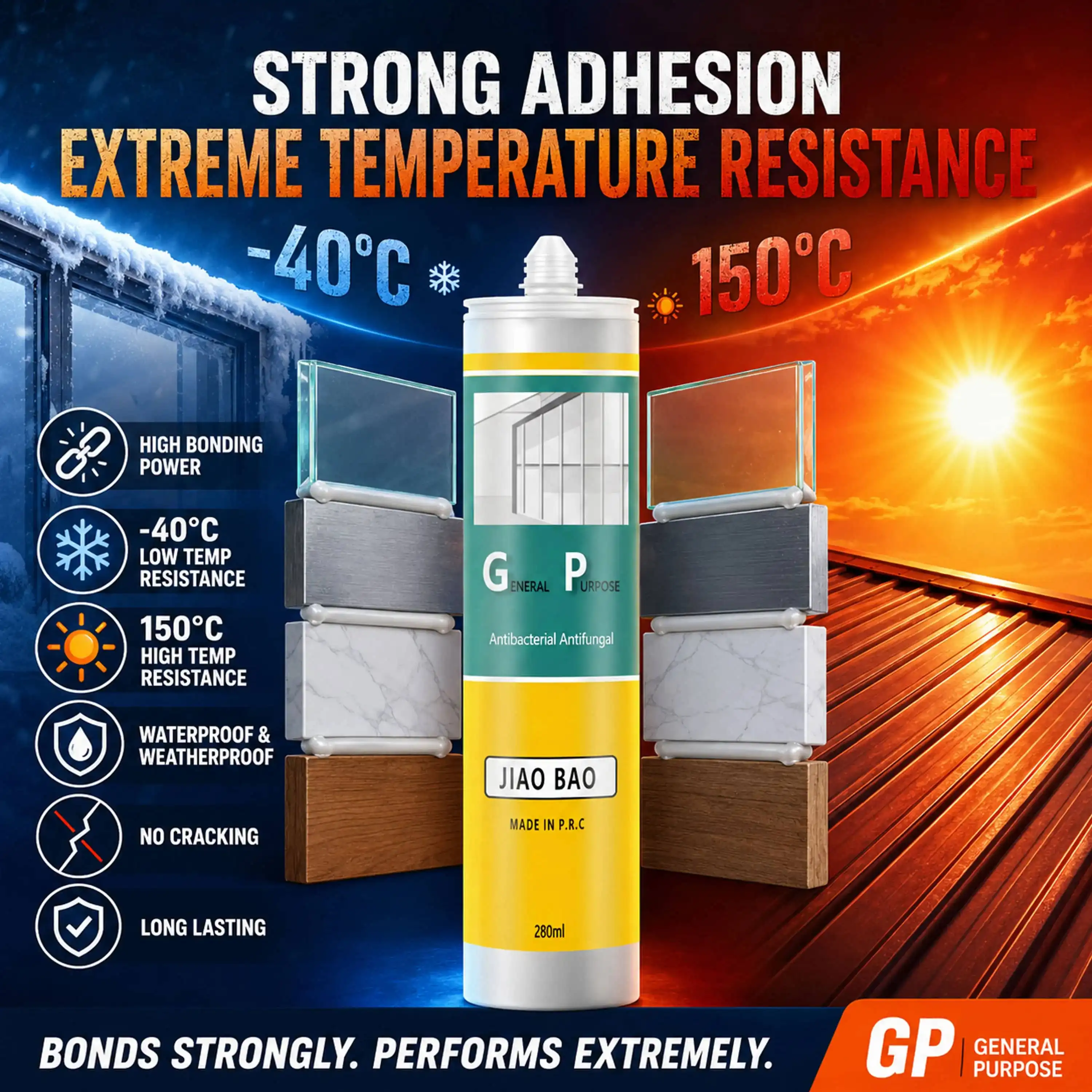
Proper application enhances formula bonding and seal effectiveness. These principles are based on building and industrial expertise.
Complete isopropyl alcohol solvent cleaning to remove oils, release agents, and pollutants. Surfaces should dry thoroughly to avoid unseen moisture deposits affecting adhesion. To avoid dust settlement on powder-coated aluminum or anodized profiles, clean immediately before GP Silicone Sealant High Adhesion Formula application. For mechanical interlocking, stone and concrete substrates may need wire brushing to remove weak top layers and open pores.
Joint design substantially impacts sealant performance. Maintain a 2:1–4:1 width-to-depth ratio for mobility. Sealant beads should be applied continuously to avoid weak places. Vertical application without sagging on window frames and doors is possible with paste consistency. The sausage and cartridge-packaged 300ml and 600ml product fits construction site and assembly line dispensing equipment.
The surface skins over in 15 minutes, but full cure takes 7-14 days depending on joint depth and climatic conditions. The best curing temperature is 5°C to 40°C with relative humidity exceeding 30%. Rapid temperature variations during initial cure can stress bonding, thus HVAC contractors should not seal ducting before system activation. Cool, dry, and out of direct sunlight are needed for the 12-month shelf life.
White, black, and grey are basic hues, although high-end architectural projects needing RAL color chart matching can be customized. This color adaptability benefits luxury home and commercial interior designers. Custom colored sealants ensure batch uniformity for big projects where mismatched seams affect aesthetics.
Buyers in B2B need trusted sourcing channels to meet project deadlines and quality. Jiaobao's production and global distribution network serve varied industrial clients.
Shandong Jiaobao New Material Co., Ltd., founded in 2013, makes colored silicone sealants professionally. Weather-resistant and structural neutral and acetic silicones are made by the firm, including the GP Silicone Sealant High Adhesion Formula. ISO certification and international standards guarantee items satisfy worldwide regulations. After 13 years of manufacturing, quality control systems are developed and work consistently.
For time-sensitive applications, 1-2 week production lead times provide rapid order fulfillment. Flexible sea and land shipping meet regional logistical needs. The firm communicates with top silicone and industrial sealant companies in China to ensure raw material uniformity and technological information sharing. This network helps establish a high-end R&D, production, and service company.
Excellent OEM/ODM capabilities help distributors and traders. Custom packaging and private labeling aid brand growth. HVAC manufacturers may demand faster cure times, whereas automobile parts manufacturing may emphasize chemical resistance characteristics. Jiaobao can help hardware dealers create unique product specifications to compete.
The organization gives refunds or replacements for quality faults within the shelf life to satisfy customers. This guarantee decreases procurement risk for large-scale contractors specifying materials. Product technical data sheets and safety information aid construction and industrial regulatory compliance.
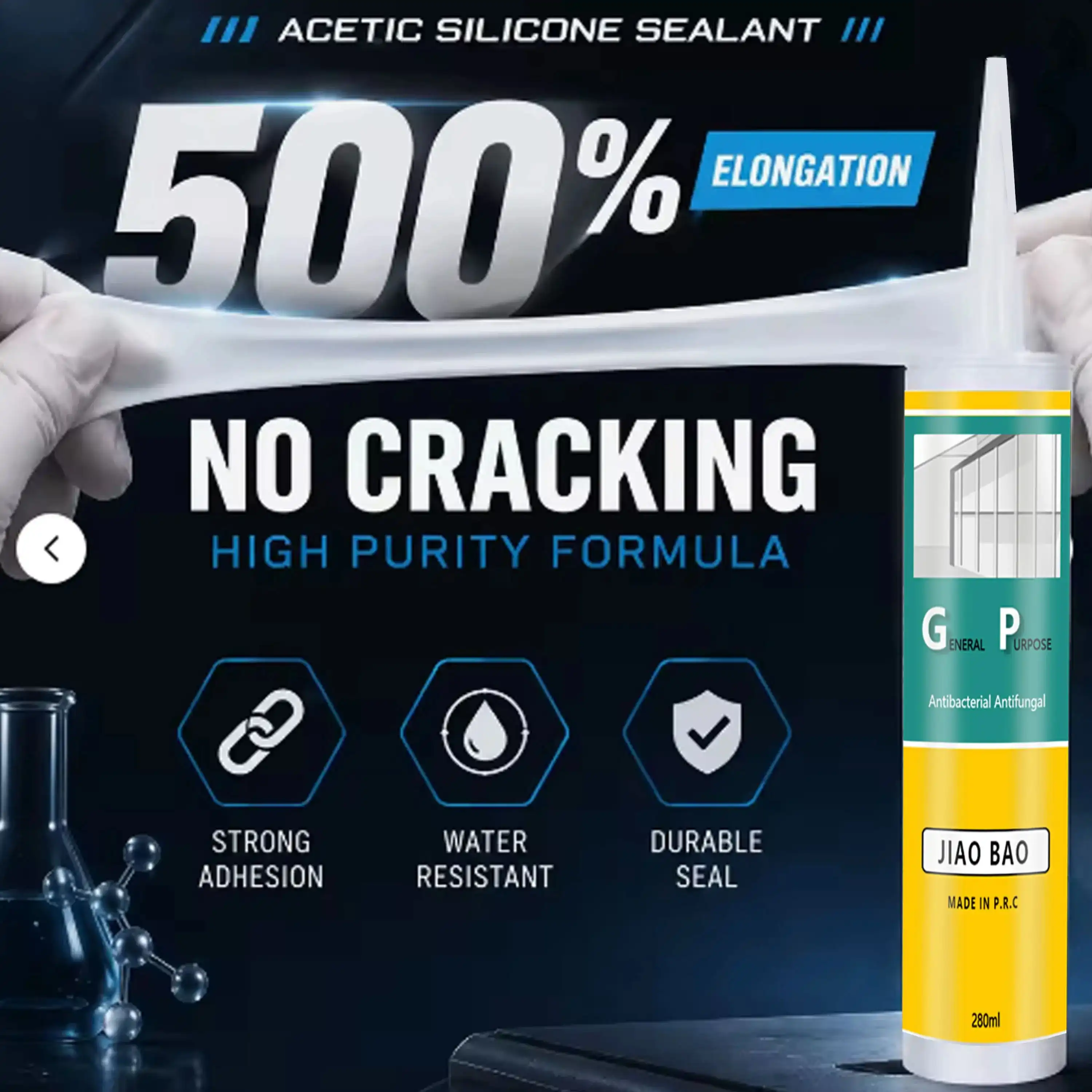
Knowing which surfaces resist silicone adhesion improves material selection and application. Low surface energy polymers, polluted substrates, and moist porous materials are difficult to bind, although improved formulations such as the GP Silicone Sealant High Adhesion Formula help. Specialized adhesion boosters, outstanding technical standards, and weather-resistant durability make the GP Silicone Sealant High Adhesion Formula designed. Surface preparation, application method, and curing conditions optimize bond strength in curtain wall systems and HVAC installations.
Standard silicone sealants won't stick to low-energy polymers without surface modification. The GP Silicone Sealant High Adhesion Formula bonds better than normal solutions, although essential applications may require mechanical abrasion or flame treatment. Testing plastic substrate sample bonding on actual project materials before full-scale application is suggested.
Surfaces must be dry and condensation-free. For adequate moisture reduction, concrete and masonry need 28 days. To maintain substrate conditions in humid areas above 85% relative humidity, lengthen drying time or use dehumidifiers. Dry surfaces are assumed for the sealant's 15-minute tack-free duration.
Acetic acid curing can corrode copper, brass, and other metals and destroy mirror silvering on the reverse. For delicate materials, use neutral cure silicones. Our technical staff may recommend high-adhesion alternatives for metal-sensitive applications.
Using dependable adhesives saves project timelines and quality. Jiaobao's low prices, fast delivery, and customization ease procurement. Our technical staff tailors recommendations to substrate and performance needs for curtain wall installations, manufacturing plants, and building material distributors. Contact dorashen@cnjiaobao.com to discuss bulk ordering and how our GP Silicone Sealant High Adhesion Formula manufacturer may help your industrial sealing needs.
1. Anderson, M. & Thompson, R. (2019). Silicone Sealants in Modern Construction: Chemistry and Performance Standards. Building Materials Press.
2. Chen, L. (2021). Adhesion Science for Industrial Applications: Surface Energy and Bonding Mechanisms. Industrial Chemistry Publications.
3. International Sealant Technology Association. (2020). Best Practices for Silicone Sealant Application in Commercial Construction. ISTA Technical Manual Series.
4. Morrison, K. & White, D. (2018). Weather-Resistant Building Materials: Long-Term Performance Testing and Field Studies. Construction Engineering Journal.
5. Peterson, J. (2022). Surface Preparation Techniques for Optimal Sealant Adhesion. Materials Science Quarterly.
6. Zhang, W. & Liu, H. (2020). Advances in RTV Silicone Technology: High Adhesion Formulations and Quality Control. Polymer Engineering Review.
November 16,2023
Enterprise Name
The sealant has very strong adhesion and performs well even on glass and aluminum. After curing, it remains flexible and shows no cracking. Perfect for our facade projects.
November 16,2023
Enterprise Name
Stable quality across batches. Our customers especially like the smooth application and consistent extrusion. It helps reduce installation time on site.
November 16,2023
Enterprise Name
I used it for bathroom sealing. Excellent waterproof performance and no mold issues so far. It's been holding up very well in humid conditions.
November 16,2023
Enterprise Name
The neutral silicone works well on sensitive materials without corrosion. Very suitable for industrial applications requiring stable performance.
_1779347426672.webp)