November 16,2023
Enterprise Name
The sealant has very strong adhesion and performs well even on glass and aluminum. After curing, it remains flexible and shows no cracking. Perfect for our facade projects.
Jul 1, 2026
Choosing the correct concrete-to-wood joint sealant affects structural integrity, project durability, and safety. After field testing and industry research, MS Sealant for Construction (Modified Silicone or Silyl Modified Polymer sealant) is the best option. This advanced hybrid technology solves the problems of traditional sealants in mixed-material applications by combining the mechanical resilience of polyurethanes with the weathering performance of silicones to provide primerless adhesion, exceptional elasticity (up to 400% elongation), and zero substrate staining.
Timber and concrete are incompatible with bonding and sealing. Concrete is hard, alkaline, porous, and moisture-absorbing yet dimensionally stable once cured. Since wood is biological, it expands with humidity and compresses with dryness, moving across the grain. Differential movement causes joint contact shear stress.
The high movement range makes standard sealants unsuitable for these joints. Wood tannins and oils can hinder bonding, and concrete's alkalinity degrades adhesive polymers. Moisture cycling causes adhesive or cohesive failure, when the sealant pulls cleanly from one substrate or breaks apart.
Water enters building envelopes when sealant connections between concrete foundations and timber framing break. This causes wood rot, freeze-thaw concrete spalling, mold, and structural load transfer losses. These failures increase maintenance costs and risk responsibility during project handover or warranty terms.
Technology in building chemistry has advanced with MS Sealants for Construction. These sealants cure without corrosive byproducts using silane-terminated prepolymers instead of single-polymers.
MS Sealants for Construction have silyl-modified polyether or polyurethane. When exposed to ambient moisture, silane end-groups hydrolyze and condense into a three-dimensional elastomeric network. Unlike acetic-cure silicones that emit acidic vapors, this curing technique does not corrode metals or substrates. MS Sealants for Construction adhere strongly to damp surfaces because to their moisture-curing process, which is useful during construction in uncertain weather. Contractors can modify application timing without affecting bonding.
MS Sealants for Construction have Shore A hardness between 20 and 60, allowing them to transmit stresses while keeping flexibility. With elongation above 400% and tensile strength of 2.2 MPa, they can absorb thermal expansion, moisture-induced dimensional changes, and structural settling. Most North American building climates are covered by -40°C to 120°C temperature resistance. Hydrophilic substance gives continuous adherence even on damp surfaces like freshly poured concrete or pressure-treated timber. Long drying times that delay project timetables are eliminated.
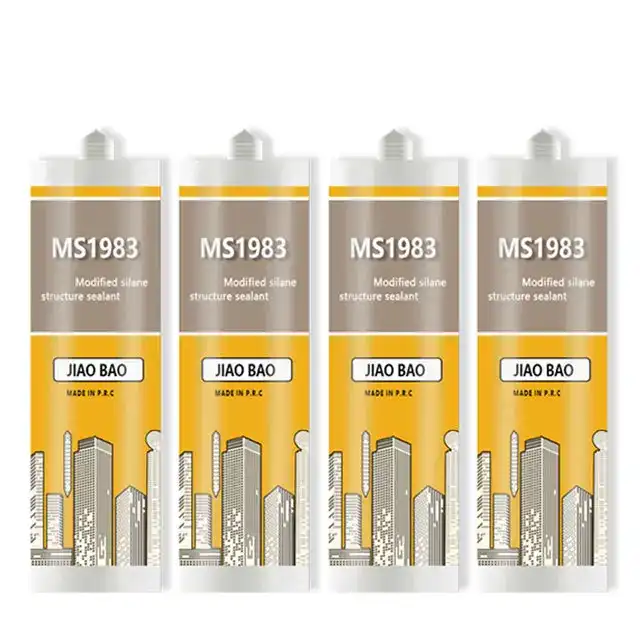
Knowing how MS Sealants for Construction compare to other products helps procurement managers balance cost, performance, and project risk.
Silicone sealants are weatherproof and temperature stable but have many drawbacks. They cannot be painted, limiting architectural aesthetics. Silicone produces plasticizers that discolor natural stone and porous concrete, creating ugly halos around seams. Without primers, silicone sticks poorly to many polymers and composites. MS Sealants for Construction eliminate these issues. They take paint coats within hours, have no migrating oils, and adhere well to different substrates without primers. Silicone may outperform MS materials over 150°C, although building envelope applications seldom reach that temperature.
Durability and abrasion resistance are polyurethane sealants' strengths. These products include isocyanates that offer health concerns during application and curing, necessitating increased ventilation and PPE. Polyurethanes produce carbon dioxide gas during the moisture-cure process, causing bubbles on damp surfaces. MS Sealant for Construction technology uses isocyanate-free chemistry to overcome these issues. In confined settings like interior renovations or HVAC installations, MS Sealants for Construction are safer without hazardous precursors. They match polyurethane's mechanical qualities and cure cleanly and are more UV stable, reducing yellowing and chalking in older joints.
Acrylic sealants are cheap and easy to clean, making them suitable for light-duty applications. They provide appropriate interior trim and esthetic gaps but lack structural concrete-to-wood connection flexibility and durability. Under cyclic stress, acrylics harden and fracture. Their limited water resistance makes them unsuitable for outdoor use. MS Sealants for Construction provide professional performance where acrylics fail. While initial material costs are greater, prolonged service life and lower maintenance frequency provide improved lifetime value, especially in warranty or reputation-sensitive projects.
The benefits of specifying MS Sealant for Construction technology match current building requirements including safety, sustainability, and efficiency.
Water penetration at concrete-wood interfaces is a major building failure mode. MS Sealants for Construction form a hydrophobic barrier that resists water, freeze-thaw, and hydrostatic pressure. Their elongation allows joint movement without breaking, ensuring seal integrity in seasonal weather. Many polymer sealants break and lose elasticity due to UV degradation. MS Sealant for Construction formulations contain UV stabilizers that keep mechanical qualities after years of direct sunlight, making them perfect for exterior cladding joints, door and window perimeters, and facade panel connections.
Construction material regulations have changed due to indoor air quality issues. MS Sealants for Construction eliminate harmful vapor emissions during application and cure by containing no solvents, formaldehyde, or isocyanates. ASTM C920 and LEED certification standards demand low VOC content. In health-critical areas like hospitals, schools, and residential complexes, these safety features important. Most jobs can be done without respirators, increasing productivity and lowering safety equipment expenditures.
Seamless architectural projects, sealant seams must mix seamlessly with painted surfaces. MS Sealants for Construction complement water- and solvent-based paints without surface preparation. This is especially useful in renovations where color schemes must be preserved and high-end residential or commercial projects where visual quality drives client satisfaction. Without oil migration, painted surfaces stay clean without black streaks or dust attraction from silicone-sealed seams. Decorative finishes, wallpapers, and spray coatings stick to cured MS Sealant for Construction.
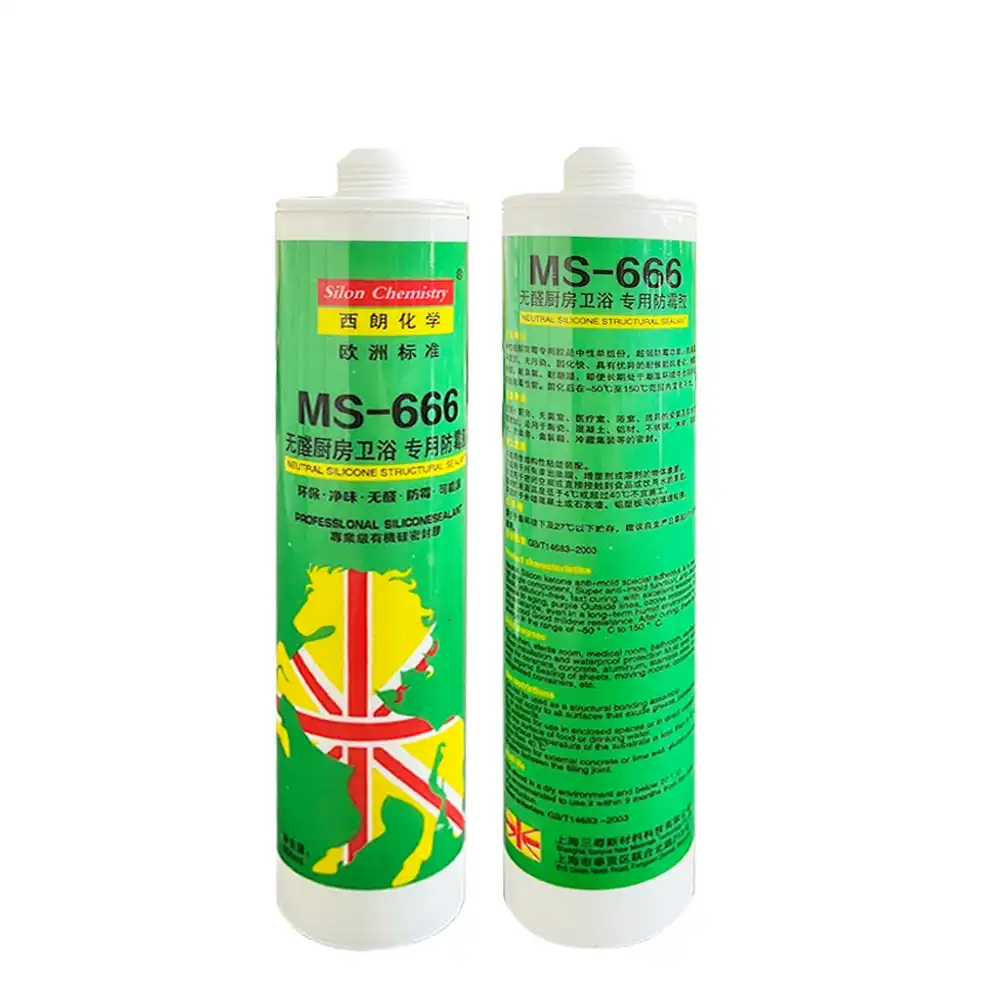
MS Sealant for Construction technology application involves procurement strategy and installation best practices.
Procurement managers should assess suppliers' production consistency, technical support, and compliance paperwork. Choose goods approved by ASTM C920 Types S or M, Grade NS (non-sag), and Class 25 or 35 (±25% or ±35% joint movement capacity). ISO 9001 quality management certification suggests dependable production, whereas ISO 14001 environmental certification shows sustainability. Supplier responsiveness affects project performance. Reliable producers offer technical hotlines, on-site application training, and fast adhesion testing samples before bulk purchases. They stock enough inventory for one to two weeks of lead time and urgent replenishment as project timetables quicken.
Negotiated price and bespoke packaging assist large-volume projects. For pneumatic application, MS Sealants for Construction come in 300ml and 600ml cartridges or sausages. Curtain wall installation and prefabricated panel sealing benefit from sausage packaging's waste reduction and speed. Unopened containers below 25°C have a 12-month shelf life. To reduce material aging and waste, procurement strategy should balance inventory costs against project schedules and buy quantities that match consumption rates.
Adhesion depends on surface pretreatment. Clean, dry concrete surfaces should not have laitance, curing ingredients, or form-release agents. Light sandblasting or wire brushing eliminates weak surface layers. Oil, dust, and loose fibers must be removed from wood. MS Sealants for Construction may withstand some moisture, however substrates should not contain water coatings.
Standard joint design uses 1:2 depth-to-width ratios for working joints up to 12mm wide and 1:1 for bigger joints. Backer rods regulate depth and prevent three-sided adhesion that limits sealant movement. To guarantee surface wetting and profile creation, tooling should occur within the tack-free time window (25-40 minutes in summer, 15-30 minutes in colder circumstances). Inward curing is 3.5mm per day from exposed surfaces. Complete cross-linking may take days for deep joints. Since the sealer usually skins over and no longer transmits to touch within a few hours, painted surfaces can be applied.
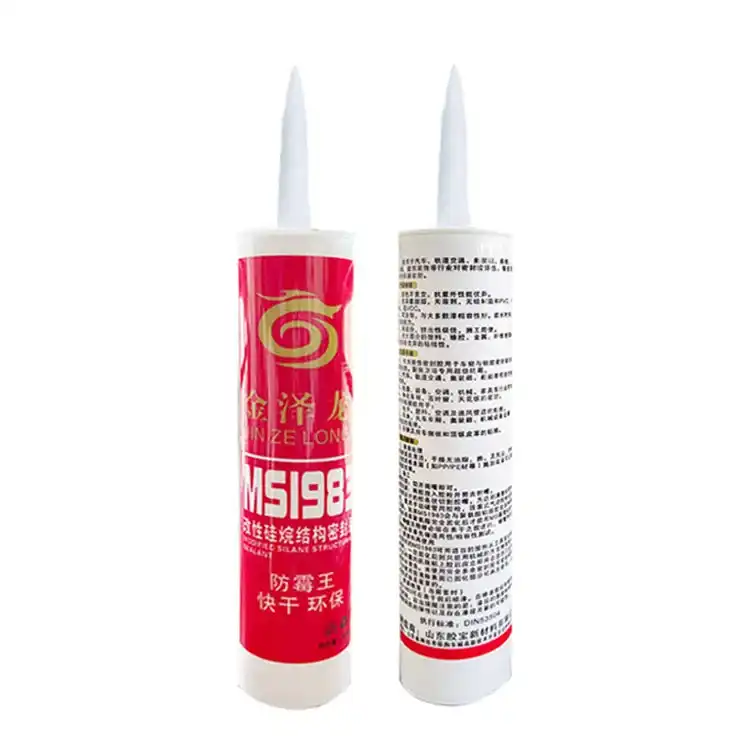
MS Sealants for Construction for concrete-to-wood connections outperform competitors in key criteria. The hybrid polymer chemistry removes substrate stains, health risks, and adhesion issues that plague traditional choices. MS Sealant for Construction is ideal for curtain walls, door and window installations, and structural connections because to its high elongation, paintability, and environmental endurance. ISO compliance, timely delivery, and supplier technical assistance reassure procurement managers and ensure project success.
MS Sealant for Construction works successfully at -40°C once cured. For best cure and adherence, substrate and ambient temperatures should be above 5°C during application. Cold temperature prolongs tack-free and full-cure time by slowing the moisture-cure reaction. Contractors can compensate by curing joints longer before stressing or painting. Unlike certain polyurethane formulations that stiffen in cold, it stays workable at colder temperatures without turning viscous.
MS Sealants for Construction stick to clean, sound concrete and wood without primers. Exceptions include plasticized woods or composites and excessively porous or friable concrete that needs surface consolidation. Atypical situations needing primer are identified by small-scale adhesion testing before project application. Applying sealant to sample substrates and measuring bond strength after cure is routine for high-stakes projects like curtain walls or structural glazing where joint failure is dangerous.
MS Sealants for Construction are not meant for permanent immersion applications like swimming pools or water tanks, but they endure occasional water exposure effectively. Continuous submersion hydrolyzes cured polymer networks. MS Sealants for Construction protect above-grade construction seams exposed to rain, snow, and humidity for decades. Wet settings including shower enclosures, outside cladding, and foundation-to-framing transitions require proper joint design with depth and backer rod support for long-term performance.
Since 2013, Shandong Jiaobao New Material Co., Ltd. has provided professional-grade silicone and modified silicone sealants, earning a reputation for consistency and technical superiority. MS Sealant for Construction satisfies ISO and ASTM requirements and may be customized with RAL chart matching for curtain wall systems and architectural facades. Small manufacturing cycles of one to two weeks enable fast project delivery even for big purchases.
More than competitive price, a certified MS sealant supplier must provide reliable logistics, quick technical assistance, and quality assurance to defend your project reputation. Over 13 years of manufacturing experience and flexible OEM/ODM capabilities allow Jiaobao to customize to regional specs and customer needs. Our after-sales service replaces or refunds quality faults within shelf life, reducing procurement risk.
Our experts at dorashen@cnjiaobao.com can help procurement managers and technical specifiers find a reliable MS sealant manufacturer for building projects. To optimise concrete-to-wood sealing applications, we offer product samples, technical data sheets, and project consultancy. Explore our comprehensive product line at shandongjiaobao.com and learn how Jiaobao helps your building success.
1. ASTM International. (2020). ASTM C920-18: Standard Specification for Elastomeric Joint Sealants. West Conshohocken, PA: ASTM International.
2. Beech, J.C. (2019). Construction Sealants and Adhesives: Selection and Performance. London: Butterworth-Heinemann.
3. Lacasse, M.A., & O'Connor, T.J. (2018). Durability of Building Sealants: Performance Assessment and Service Life Prediction. West Conshohocken, PA: ASTM International.
4. Panek, J.R., & Cook, J.P. (2021). Construction Sealants and Adhesives: Fourth Edition. New York: John Wiley & Sons.
5. Schwartz, M.M. (2017). Handbook of Structural Adhesives and Sealants in Construction. New York: McGraw-Hill Education.
6. Wolf, A.T., & Cleland-Host, J.L. (2020). Testing and Performance of Building Sealants. Philadelphia: American Society for Testing and Materials.
November 16,2023
Enterprise Name
The sealant has very strong adhesion and performs well even on glass and aluminum. After curing, it remains flexible and shows no cracking. Perfect for our facade projects.
November 16,2023
Enterprise Name
Stable quality across batches. Our customers especially like the smooth application and consistent extrusion. It helps reduce installation time on site.
November 16,2023
Enterprise Name
I used it for bathroom sealing. Excellent waterproof performance and no mold issues so far. It's been holding up very well in humid conditions.
November 16,2023
Enterprise Name
The neutral silicone works well on sensitive materials without corrosion. Very suitable for industrial applications requiring stable performance.
_1779347426672.webp)