November 16,2023
Enterprise Name
The sealant has very strong adhesion and performs well even on glass and aluminum. After curing, it remains flexible and shows no cracking. Perfect for our facade projects.
Sep 29, 2026
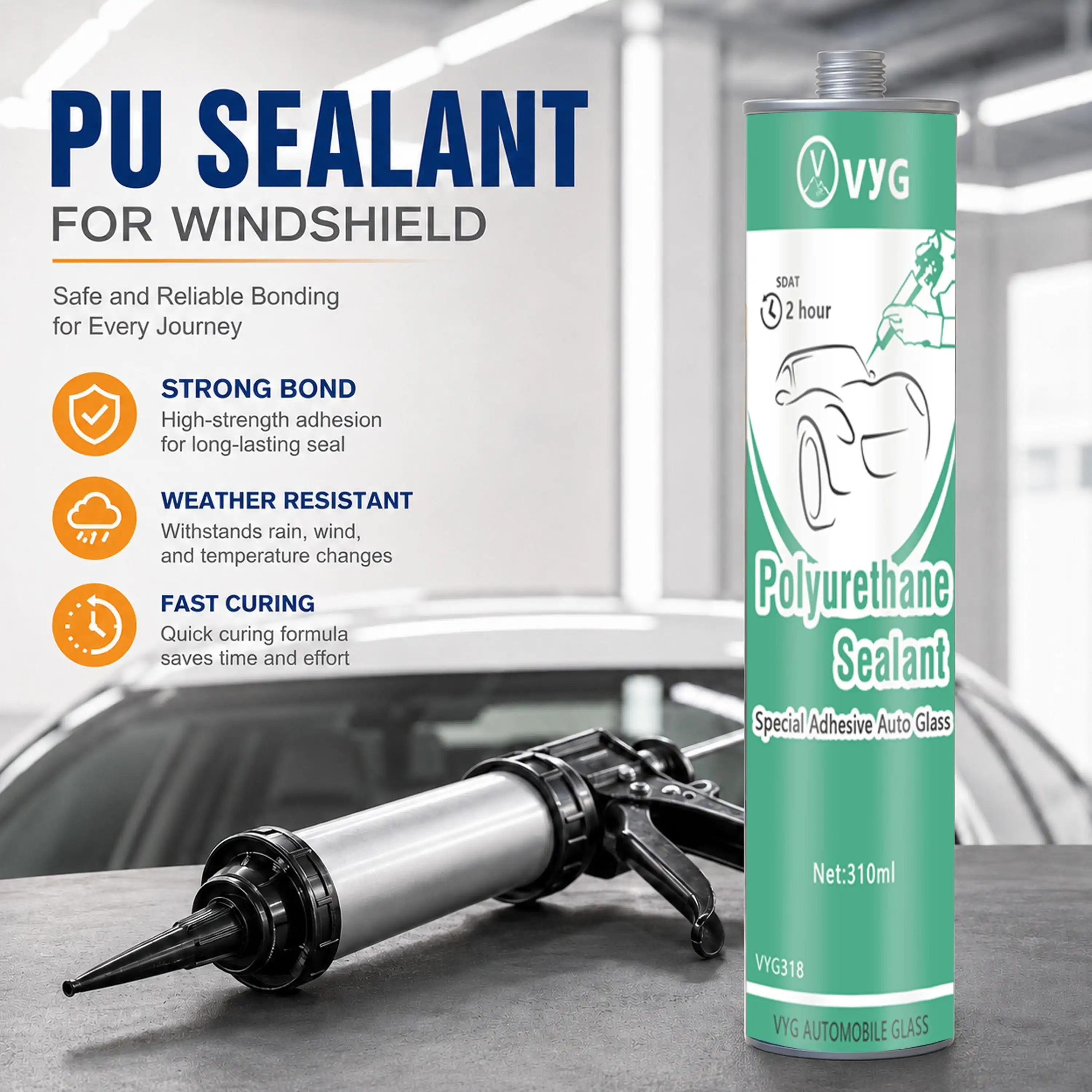
Polyurethane or silicone sealants for automobile glass bonding have structural implications. PU auto glass sealant high strength formulations dominate windshield structural bonding under FMVSS 212 and ECE R43 compliance frameworks due to their tensile strength of 6–9 MPa and shear modulus values above 2.0 MPa. Silicone sealants are chemically resistant yet have tensile strengths of 1.5–2.5 MPa. The mechanical performance of polyurethane is excellent for procurement engineers considering structural integrity, rollover resistance, and airbag deployment support.
One-component polyurethane adhesives harden when they absorb moisture, which creates a thick, elastic network through isocyanate-polyol cross-linking. This molecular structure makes a strong bond that sticks very well to ceramic frit and electrophoretic-painted pinchweld surfaces. The finished product can withstand rotational stress during chassis flex and keep more than 300–400% of its original length when it breaks. This gives it a unique quality in structural glass.
Silicone seals are made from polydimethylsiloxane (PDMS) backbones, which are very stable at temperatures ranging from -60°C to 200°C and almost completely resistant to UV light. The one-component silane-modified polyether sealant from Jiaobao is a next-generation blend product that combines the freedom of silicone chemistry with better stickiness. It has a Shore A hardness of about 45, a tensile strength of about 2.2 MPa, and an elongation at break of about 400%. In the summer, it takes 25–40 minutes to dry without sticking and cures at a rate of about 3.5 mm per day.
The structural needs of automotive glazing demand that the sealant does more than just keep water out; it also has to help make the body of the vehicle stiff. In terms of the most important factors, these are how both materials perform:
There is a clear pattern in these data points: PU has the highest raw structural strength for primary bonding applications, while silicone-chemistry products have the highest durability, surface compatibility, and ability to be used in a wide range of situations.
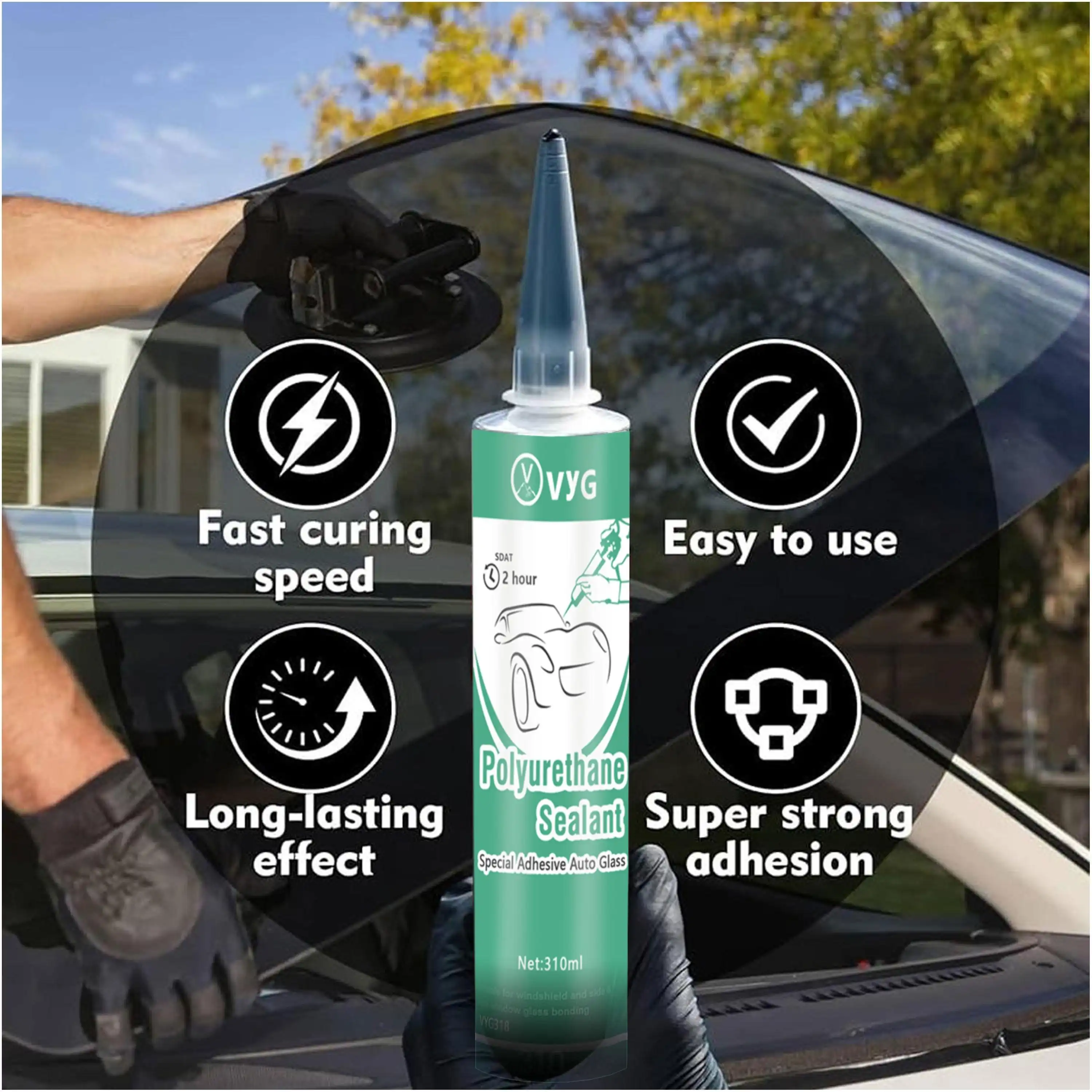
If you prepare the area correctly, a high-strength bond will actually work as well as it's supposed to. A special glass cleaner and black primer are required for PU adhesives. This is especially true when applying them over ceramic frit, where UV shadowing can weaken the bond over time. Most current silane-modified polyether sealants stick well to glass that has been primed or cleaned, metal that has been painted, and EPDM rubber without the need for a separate primer step. This makes the process easier to do on production lines.
Each type of sealant needs a surface that is clean, dry, and free of any contaminants. Use a pneumatic or hand cartridge gun to make a continuous bead. Keep the pressure steady to avoid gaps. PU auto glass sealant high strength from Jiaobao comes in 300 ml cartridges and 600 ml sausage packs, and it can be used with normal pumping equipment. Because it has a solid content of about 99%, it doesn't shrink much during curing, which is important for keeping the shape of the beads and the contact area.
PU adhesives usually have higher VOC and danger ratings when it comes to isocyanates. Silane-modified polyether sealants have a better risk rate for workers. When production teams use hybrid silicone-chemistry products in enclosed assembly areas, they need less ventilation and don't have to wear as much PPE.
When buying automotive sealants, picking a supplier comes with more risk than when buying most adhesives. If a supply is missed, the production line will be down for hours, which costs thousands of dollars per hour. An out-of-spec batch starts a study into a PPAP deviation. Because of these facts, any sensible buying matrix puts certification and the dependability of the supply chain above unit price.
Procurement professionals should check that a PU auto glass sealant high strength provider follows the IATF 16949 quality system, has full PPAP paperwork packages, and has third-party tensile and shear test data that matches current TDS standards. Jiaobao was established in 2013 and has ISO and CE certifications.
They offer full scientific data sheets, SDS paperwork, and OEM/ODM customization options for color, packaging style, and rheological specification. With flexible sea or land freight choices and production lead times of one to two weeks, global supply chain integration is possible without the lead-time risk that smaller specialty makers often face.
The choice to buy comes down to the bond's structural role in the vehicle in the end. If you choose the wrong range, you will either lose safety or have to pay more than you need to. Take a look at this framework:
Choose high-modulus PU adhesive when:
Choose silane-modified polyether or silicone-based sealant when:
Jiaobao's silane-modified polyether product perfectly fits the second category: it has no sag, a tensile strength of about 2.2 MPa, an elongation at break of about 400%, and can be made to match white, black, gray, or unique color specs. It works especially well for weatherstrips, door and window gaps, and gluing body panels together, where flexibility and substrate suitability are more important than maximum shear modulus.
Polyurethane is better for main windshield bonding because it has tensile strength much higher than the 2.2 MPa level needed for crash and airbag compliance. PU auto glass sealant high strength formulations are especially suited for this role. Silicone sealants and silane-modified polyether sealants meet different but equally important needs, such as long-lasting surfaces, flexibility, resistance to UV light, and interaction with multiple substrates.
It's not a matter of choosing between them; it's a matter of specification based on the bond's mechanical role. Jiaobao makes both types of products to certified standards. They have been making the same products consistently for over ten years and have all the technical paperwork to back their qualification as an automotive provider.
These are the main variables: shear modulus, isocyanate content, and moisture cure rate. The tensile strength of high-modulus PU formulations designed for OEM windshield bonding is usually between 6 and 9 MPa, but this depends on how the base is prepared and how long it takes to fix. The primer you choose has a big effect on how long the adhesion lasts.
Silicone and silane-modified polyether seals are very good at blocking UV light, changing temperatures, and letting water in. Products like Jiaobao's silane-modified polyether sealant can be stored for 12 months and still work well even when the temperature changes with the seasons. This makes them reliable for sealing the outside of cars.
For aftermarket glass replacements that need to meet DOT or ECE R43 drive-away safety standards, a PU glue that has been shown to work with SDAT is needed. A silane-modified polyether product with a tensile strength of about 2.2 MPa and a stretch of up to 400% is a reliable and affordable choice for weatherproofing, secondary sealing, or trim bonding.
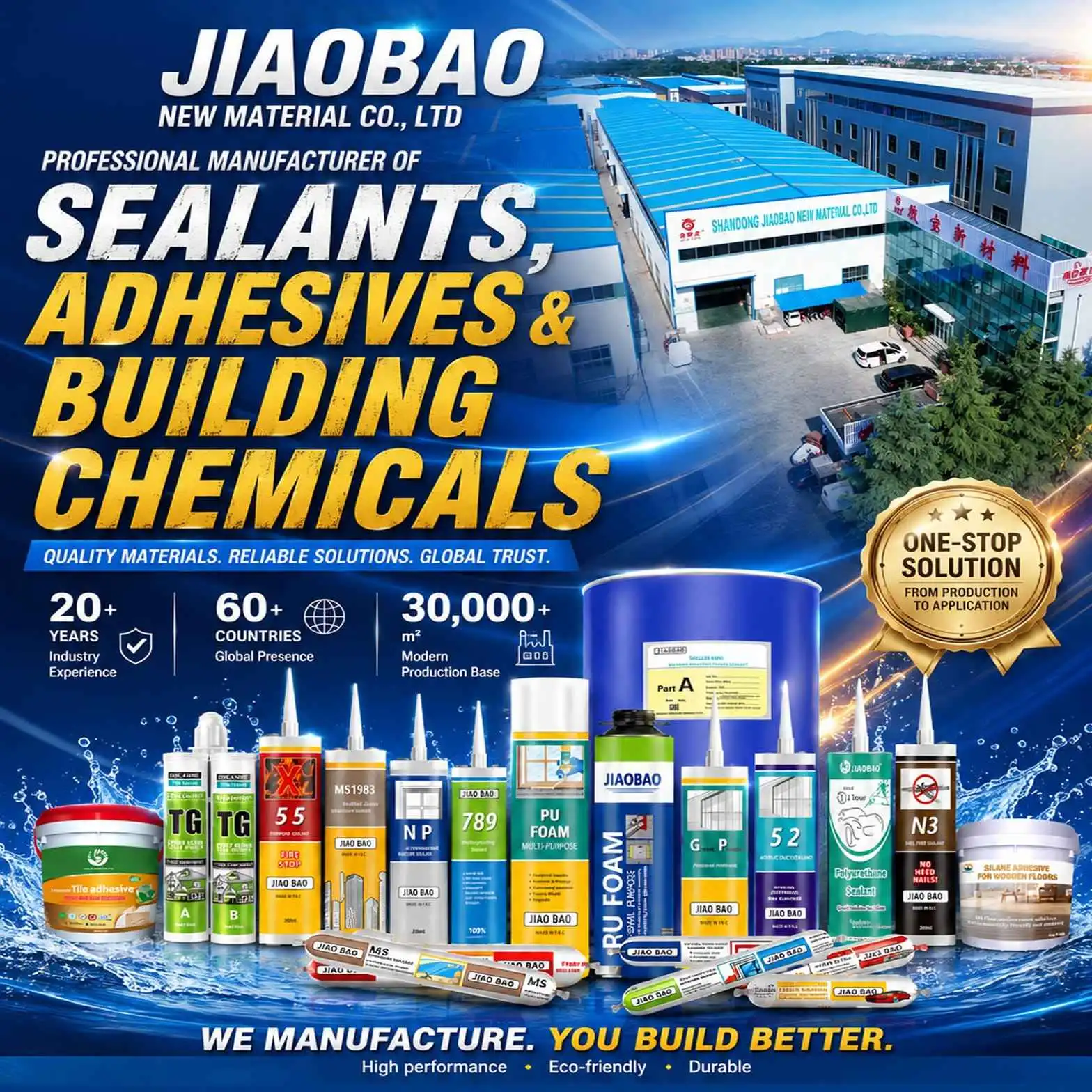
From 2013 to present, Jiaobao has sold approved car seals to companies in Asia, Europe, and North America. We have ISO and CE certifications, offer lead times of one to two weeks, and support full OEM/ODM modification as a reliable PU Auto Glass Sealant High-Strength and silane-modified polyether sealant maker. You can email our technology team at dorashen@cnjiaobao.com or go to shandongjiaobao.com to get samples, PPAP documentation, or bulk prices right now.
1. Adhesives & Sealants Industry Magazine, 2022
2. Journal of Adhesion Science and Technology, 2021
3. SAE International Technical Paper Series, 2020
4. ASTM International Standards for Sealant Testing (C794, C639), 2023
5. ECE Regulation No. 43 — Uniform Provisions Concerning the Approval of Safety Glazing Materials, United Nations Economic Commission for Europe, 2022
6. FMVSS 212: Windshield Mounting Standard, National Highway Traffic Safety Administration (NHTSA), 2021
November 16,2023
Enterprise Name
The sealant has very strong adhesion and performs well even on glass and aluminum. After curing, it remains flexible and shows no cracking. Perfect for our facade projects.
November 16,2023
Enterprise Name
Stable quality across batches. Our customers especially like the smooth application and consistent extrusion. It helps reduce installation time on site.
November 16,2023
Enterprise Name
I used it for bathroom sealing. Excellent waterproof performance and no mold issues so far. It's been holding up very well in humid conditions.
November 16,2023
Enterprise Name
The neutral silicone works well on sensitive materials without corrosion. Very suitable for industrial applications requiring stable performance.
_1779347426672.webp)