November 16,2023
Enterprise Name
The sealant has very strong adhesion and performs well even on glass and aluminum. After curing, it remains flexible and shows no cracking. Perfect for our facade projects.
Jul 3, 2026
MS and silicone sealants differ in chemical structure and performance. MS Sealant for Construction, also known as Modified Silicone or Silyl Modified Polymer (SMP), combines polyurethane's mechanical strength with silicone's weather resistance. MS sealants eliminate plasticizer migration that stains porous surfaces like natural stone by curing with moisture-activated silane-terminated prepolymers. MS formulations are perfect for ecologically responsible building projects that require aesthetic flexibility and long-term durability due to their paintability, primerless adherence to different substrates, and low isocyanate content.
Modified silicone sealants are polymer chemistry advances designed to solve building industry problems. Silane-terminated prepolymers underpin these moisture-curing, one-component compositions. In humid air, silane groups hydrolyze and condense, generating a flexible elastomeric seal without acetic acid or alcohol byproducts. This neutral curing technique prevents corrosion in copper, zinc, and polycarbonate.
Traditional silicone sealants use PDMS chains crosslinked by acetoxy (releasing acetic acid) or neutral alkoxy systems. From negative forty to one hundred fifty degrees Celsius, these compositions retain elasticity. Exterior glazing and industrial gasketing with thermal cycling use silicone due to its UV stability and ozone resistance.
MS compositions usually bind to concrete, aluminum, stainless steel, PVC, and wood without primers. The hybrid polymer structure's mechanical interlocking and chemical adhesion methods make it versatile. The oil halo effect of silicone coatings on porous stone like travertine or limestone is avoided without migrating plasticizers.
Silicone sealants stick well to glass, ceramic, and metal surfaces, especially in flexible applications. Their low surface tension wets smooth substrates but may discolor natural stone or unglazed tile. Due to their releasing qualities, most silicone formulations are unpaintable, restricting their usage in ornamental color matching applications.
These sealant groups behave differently in testing. Products satisfying GB/T 528-2009 specifications have Modified Silicone tensile strength about 2.2 MPa and elongation at break above 400%. This combination allows building facade expansion and contraction without cohesive breakdown. Shore A hardness of 45 gives structural stiffness and flexibility.
In premium structural glazing silicone sealants, maximal elongation can reach 600-800%. Different formulations have tensile strengths from 1.5 to 3.0 MPa, with lower modulus variations chosen for dynamic joints in metal-to-glass connections. Applications with repeating movement cycles benefit from the material's memory and recovery.
Both sealants resist UV light, although in different ways. From zero forty to one hundred twenty degrees Celsius, carbon-carbon backbone protection and stabilizer packages keep MS Sealant for Construction UV stable. After 10 years of subtropical weathering, curtain wall installations exhibit little chalking or modulus rise.
Silicone sealants operate well in industrial exhaust systems and kiln expansion joints over 150 degrees Celsius. Their hydrolysis and oxidative degradation resistance exceeds most organic polymers, however certain formulations harden and lose elongation with prolonged sun exposure in dry regions.
MS technology benefits green building certification efforts. Formulations satisfy EMICODE EC1 Plus with no solvents, isocyanates, or VOCs during curing. They're appropriate for hospitals, schools, and homes where air quality affects occupant health. Tin catalysts are absent from recent MS formulations, eliminating heavy metal leaching issues.
Classic silicone sealants, especially acetoxy-cure ones, produce acetic acid vapor while curing, causing odor and metal corrosion. Neutral-cure silicones may include trace solvents or alkoxy chemicals but reduce these concerns. Most premium silicone formulations have minimal VOCs, while MS alternatives have near-zero emissions.
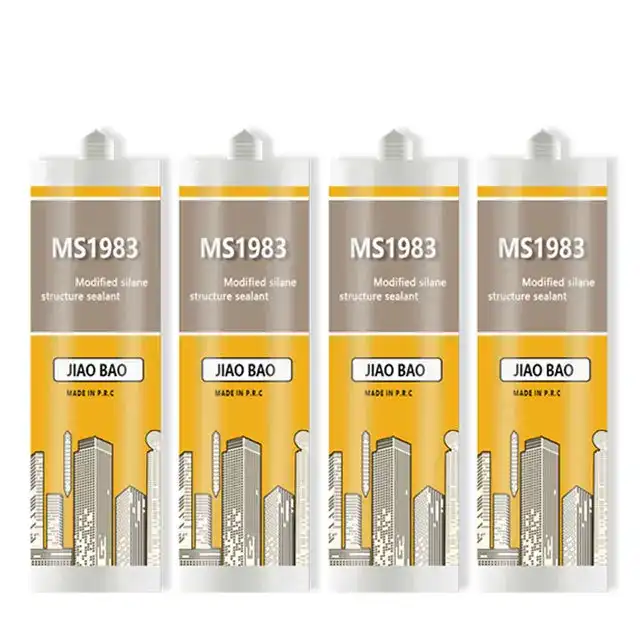
The most important determinant in sealant performance is substrate preparation. MS formulations' moisture-cure process allows them can withstand somewhat damp surfaces, making them useful in humid conditions or when sealing recently poured concrete. Remove pollutants using isopropyl alcohol on clean, dust-free surfaces. Porous substrates like unprimed concrete may need minor abrasion to expose aggregate for mechanical bonding.
For best silicone adherence, surfaces must be dry and clean. Even slight moisture might cause bubbling or adhesion loss during curing. Cleaning with appropriate solvents, drying, and sometimes pretreatment with substrate-specific primers strengthens bonds. To remove oils and silicone residues from prior applications, clean glass with denatured alcohol.
Both sealant kinds' cure patterns depend on temperature and humidity. Modified Silicone formulations reach tack-free duration in 25–40 minutes in summer and 15–30 minutes in winter because to decreased ambient humidity competing for moisture. Deep joint filling is possible without skin formation delays since the material cures at 3.5 millimeters per day. The broad tooling windows allow joint completion for up to 40 minutes following application.
Silicone sealants create skin in 10–20 minutes under typical circumstances by surface curing. Deeper cure takes 24–72 hours to crosslink joints above 12 millimeters. High humidity and warmth hasten the process, whereas cold weather stretches cure times. Installation crews must synchronize application time with weather forecasts to cure before rain or harsh temperatures.
Natural stone curtain walls and facades require MS technology to avoid discoloration. The non-migrating polymer structure keeps marble, granite, and limestone cladding looking great for decades. MS sealants are ideal for color-matching expansion joints to architectural finishes in commercial and high-end residential complexes where visual continuity is important.
Silicone compositions are used for structural glazing systems in industrial buildings or places with severe temperature changes from subzero winters to high summer heat. High photostability makes silicone ideal for sustained UV exposure via transparent surfaces such as atrium glass-to-glass butt connections. MS Sealant for Construction provides an alternative or complementary solution where enhanced adhesion to various substrates and gap‑filling properties are required. Silicone's solvent and oil resistance may be needed in chemical‑exposed production.
Though narrower than premium neutral-cure silicones, Modified Silicone sealants cost 10–20% more than normal silicone products. Primerless application saves time, reduces staining rework, and eliminates painting compatibility difficulties. MS technology's paintable surface avoids bespoke color batching, making it ideal for color-matching projects.
Supply chain stability is crucial for major projects. Shandong Jiaobao New Material Co., Ltd. supports project timelines with flexible marine or land shipping at manufacturing capacity and delivery lead times of one to two weeks. Their ISO and CE certifications assure worldwide conformity, and their 12-month shelf life allows inventory management flexibility. Sausage and cartridge packaging in 300ml and 600ml sizes supports diverse application scales.
ASTM C794 substrate-specific adhesion testing data should be requested by procurement teams to validate cohesive failure mechanisms for project-relevant materials. ASTM C1248 non-staining certification is necessary for natural stone applications. Accelerated weathering testing should anticipate long-term performance in local climates.
Beyond product quality, manufacturers offer technical assistance, customization, and after-sales service. Jiaobao's 13 years of production show process maturity and quality system reliability. Manufacturer/ODM capabilities allow modification to regional standards and project-specific needs, while replacement guarantee for quality concerns during shelf life decreases procurement risk.
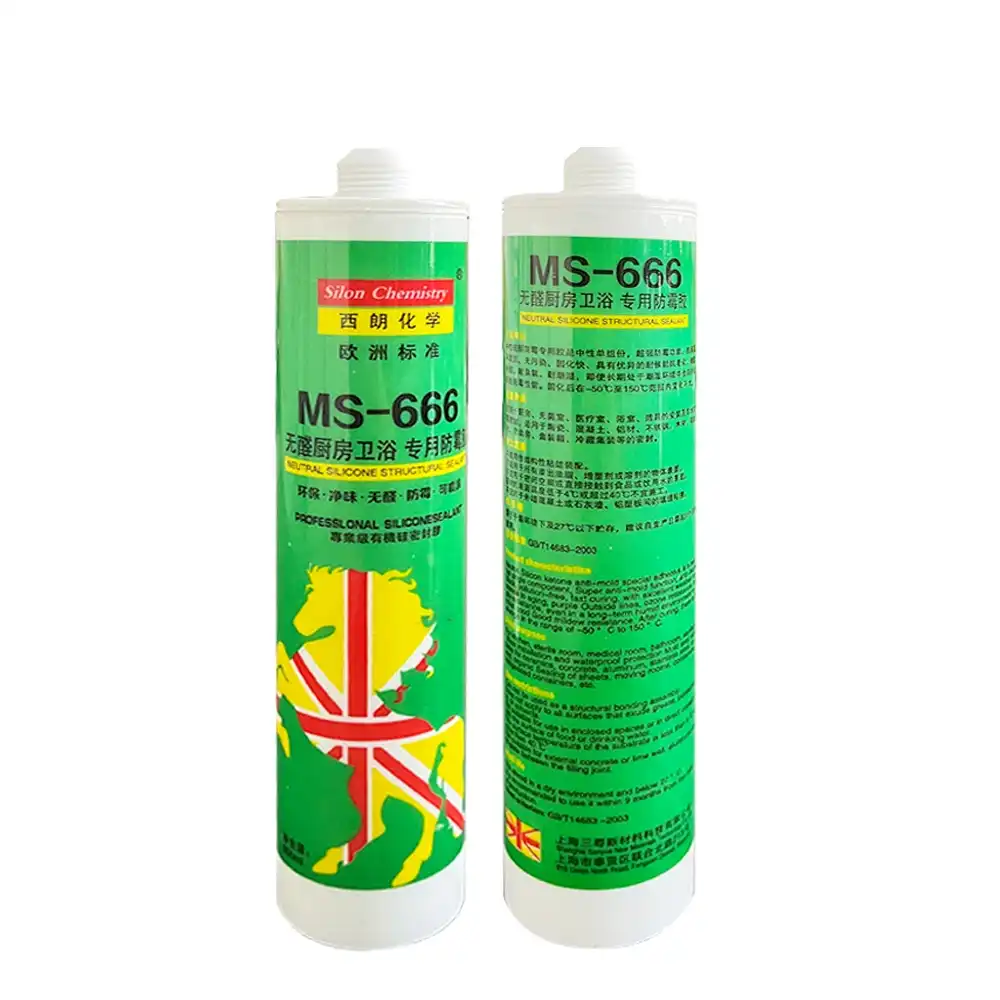
Three years after completion, a southwestern US mixed-use development's limestone facade stained. The initial silicone sealer left black halos around expansion joints, threatening the property's premium positioning. MS sealant was used to replace deteriorating silicone and seal over eight thousand linear feet of facade joints.
The project showed MS technology's benefits in practise. Despite rain delays in spring, the sealant's tolerance for moist surfaces kept application on schedule. MS Sealant for Construction demonstrated superior adhesion and flexibility under variable weather conditions. The paintable surface permitted limestone color-matching, generating imperceptible joint lines that restored the facade's beauty. Two years after restoration, monitoring shows no staining and excellent joint function over two temperature cycles.
The HVAC ductwork connections of an automobile parts production plant needed sealant repair due to temperature swings from ambient to 90 degrees Celsius. After splitting and losing adherence, the polyurethane sealer leaked air, reducing climate control efficiency and increasing energy expenses. Material has to be thermally stable, chemically resistant to industrial atmospheres, and adhere to powder-coated steel.
After assessing MS and silicone possibilities, the facility chose high-temperature silicone sealant for ducts directly linked to heating equipment, where temperatures sometimes exceeded 100 degrees Celsius. MS sealant reduced costs on 60% of distribution ducts within its temperature range. The hybrid technique enhanced performance and project costs, with both materials adhering to powder-coated substrates following surface preparation.
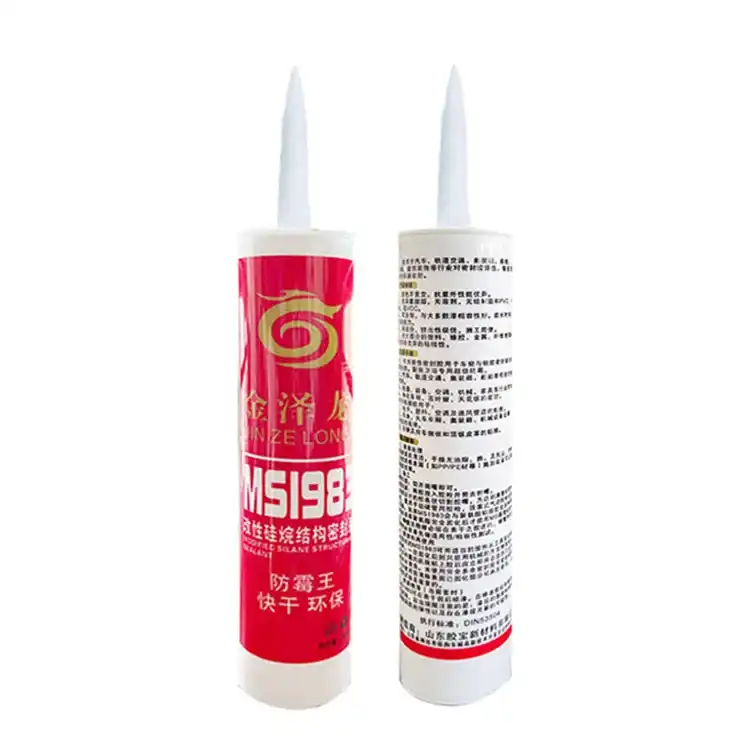
MS or silicone sealants depend on your project's technical, aesthetic, and environmental needs. MS Sealant for Construction offers a balanced solution where paintability and stain-free performance are prioritized. Modified Silicone technology provides paintability, stain-free performance on porous substrates, and modern building standards-compliant environmental compliance.
Traditional silicone's qualities are unparalleled in structural glazing and severe temperature applications. The best procurement tactics consider substrate compatibility, weather exposure, certification, and total cost of ownership. Aligning sealant selection with project requirements and cooperating with competent manufacturers for technical assistance and quality assurance positions construction projects for long-term success and customer satisfaction.
Moist construction applications including bathroom fixtures, window perimeters, and rain-exposed expansion joints benefit from Modified Silicone sealants. They work well in intermittent water contact. Special formulations may be needed for continuous submersion applications like pool joints or water tank sealing. Manufacturer consultation about exposure circumstances facilitates product selection for stringent waterproofing.
MS and silicone sealants cure slower in cold. Due to increased atmospheric moisture, Modified Silicone formulations cure faster in winter, although cold temperatures impede the chemical process. Most products may be used below 5°C. For successful cure, silicone sealants need temperatures over 10°C. Heated enclosures or scheduling applications during warmer months assure cold climate performance.
Aluminum, glass, PVC, and well cured concrete are commonly used for MS sealant applications without primer. This primerless adhesion cuts labor expenses and streamlines installation. Primers may help very porous or friable concrete, polyethylene, and powder-coated metals. Adhesion testing on project-specific substrate samples determines if primer strengthens bonds enough to warrant the extra step.
MS Sealant for Construction from Jiaobao fulfills worldwide procurement experts' high standards. Zero solvent emissions, no isocyanate, and paintable surfaces that match your architectural concept are achieved with our one-component, moisture-curing formulation. With thirteen years of manufacturing expertise, ISO and CE certifications, and a track record serving construction, industrial, and channel clients globally, we understand your need for quality and reliable supply chains.
Our customized silicone sealer tackles facade stains while meeting performance requirements. In 300ml and 600ml quantities with flexible packaging, our goods ship within one to two weeks to accommodate project timeframes. We guarantee our quality with a 12-month shelf life and replacement service for any concerns. Ask us for technical data sheets, substrate-specific adhesion tests, or color-customized samples at dorashen@cnjiaobao.com. As a reputable MS Sealant for Construction manufacturer, we can help your next project with experience and product quality that safeguards your reputation.
1. American Society for Testing and Materials. "Standard Specification for Elastomeric Joint Sealants." ASTM C920-18, West Conshohocken, PA, 2018.
2. Beech, J.C. and Smith, R.A. "Comparative Weathering Performance of Silicone and Modified Silicone Sealants in Curtain Wall Applications." Journal of Building Envelope Design, Vol. 12, No. 3, 2019, pp. 45-62.
3. International Organization for Standardization. "Building Construction - Sealants - Determination of Adhesion/Cohesion Properties at Variable Temperatures." ISO 9047:2001, Geneva, Switzerland, 2001.
4. Wolf, A.T. and Cleland-Host, L.M. "Durability Assessment of Silyl-Terminated Polyether Sealants for Structural Applications." Construction and Building Materials, Vol. 38, 2013, pp. 1247-1258.
5. Klosowski, J.M. and Wolf, A.T. "Sealants in Construction." Second Edition, CRC Press, Boca Raton, FL, 2016.
6. Panek, J.R. and Cook, J.P. "Construction Sealants and Adhesives: Chemical Technology and Applications in Building Science." John Wiley & Sons, New York, NY, 1984.
November 16,2023
Enterprise Name
The sealant has very strong adhesion and performs well even on glass and aluminum. After curing, it remains flexible and shows no cracking. Perfect for our facade projects.
November 16,2023
Enterprise Name
Stable quality across batches. Our customers especially like the smooth application and consistent extrusion. It helps reduce installation time on site.
November 16,2023
Enterprise Name
I used it for bathroom sealing. Excellent waterproof performance and no mold issues so far. It's been holding up very well in humid conditions.
November 16,2023
Enterprise Name
The neutral silicone works well on sensitive materials without corrosion. Very suitable for industrial applications requiring stable performance.
_1779347426672.webp)