November 16,2023
Enterprise Name
The sealant has very strong adhesion and performs well even on glass and aluminum. After curing, it remains flexible and shows no cracking. Perfect for our facade projects.
Aug 5, 2026
When it comes to achieving flawless interior finishes, the choice of sealant can make or break a project's aesthetic outcome. An Acrylic Sealant Decorative Joint Seal represents a specialized water-based solution engineered specifically for interior designers and contractors who demand paintable, seamless joints between dissimilar materials. Unlike silicone alternatives that repel paint and create visible boundaries, acrylic formulations integrate chemically with both substrates and topcoat finishes, delivering the invisible perfection that defines professional-grade wall finishing.
This one-component paste provides the flexibility needed to absorb minor structural movements while maintaining surface integrity, making it indispensable for crown molding installations, door frame perimeters, and drywall transitions where traditional rigid fillers inevitably crack.
Should you want perfect indoor finishes, the sealant you choose can make or break the look of the job. An Acrylic Sealant Decorative Joint Seal is a special water-based product made for builders and interior designers who need gaps between different materials that are smooth and can be painted. Instead of silicone options that don't let paint stick and leave lines that can be seen, acrylic formulations chemically bond with both substrates and topcoat finishes, providing the flawless finish that marks professional wall finishing.
This one-component paste is perfect for areas where crown molding needs to be put in, door frame edges need to be sealed, and drywall transitions need to be smoothed out. Its flexibility lets it handle small changes in the structure without damaging the surface.
Acrylic dispersions that are based on water work very differently from those that are based on solvents. The chemistry is based on acrylic polymer emulsions that are mixed with water carriers. The water carriers disappear during curing, leaving behind an elastomeric material that is bendable. This structure sticks to porous surfaces like wood, plaster, and concrete chemically and mechanically through micropore penetration, making adhesion strengths that are as strong as the substrate material itself. The high solids content—usually 80–85% in professional-grade formulations—means that the joints won't shrink much during curing. This is a key difference between high-quality products and cheaper ones that leave hollow valleys in the joints when they're done.
Professional acrylic sealants have carefully balanced formulas that include UV stabilizers to keep the color from turning yellow, plasticizers to make the sealant flexible, and thixotropic agents to keep it from sagging on vertical surfaces. Quality products have a tensile strength of 0.64 MPa, which means they are flexible enough to allow joint movements of 7.5 to 12.5% without breaking. This movement may not seem as good as that of polyurethane or silicone sealants, but it's just right for static decorative joints where too much movement is a sign of structural problems rather than normal thermal cycling.
70% of the final performance results depend on how well the surface is prepared. The substrates need to be clean, dry, and free of any small particles, oil remains, or leftover sealant. For the best stress distribution, the joint design should have a width-to-depth ratio of 2:1. This means that a joint that is 10 mm wide needs a depth of 5 mm. Continuous bead extrusion at a rate of 150–200 ml/min is used for application, followed by tooling with wet tools to get smooth surface profiles. The quick skin formation time of 30 minutes means that work needs to be planned out well, especially on big jobs where sequential joint finishing keeps the paint from drying too much before it's painted.
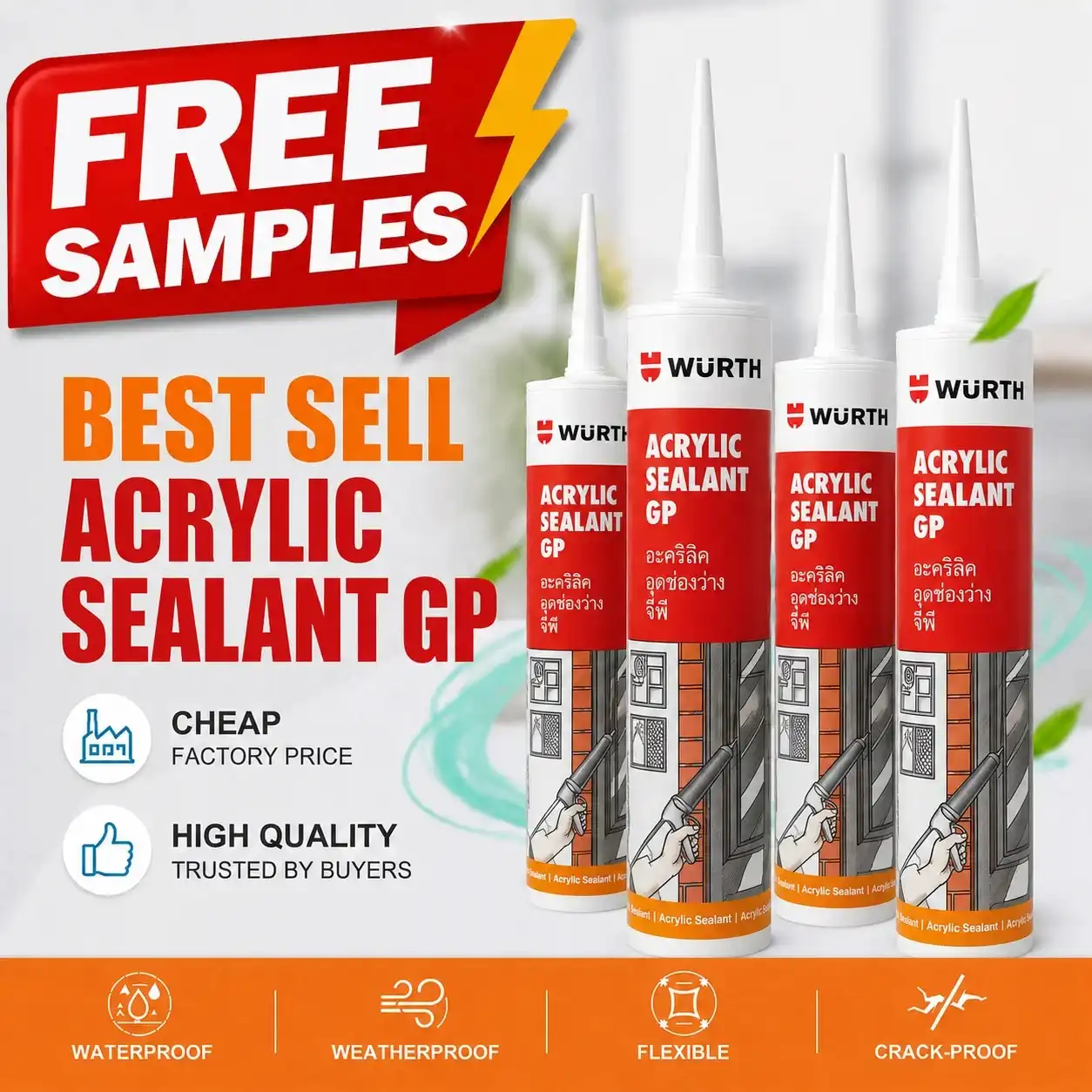
There are a number of performance benefits that directly affect project outcomes and client satisfaction that make interior designers choose Acrylic Sealant Decorative Joint Seal types over traditional ones. When you combine environmental responsibility, beautiful blending, and cost-effectiveness, you get strong value arguments for buying choices.
The water-based chemistry can handle both latex and alkyd paints without the need for a primer. Silicone sealants, on the other hand, can't do this because their surface chemistry isn't polar. This paint compatibility gets rid of the visual break that detracts from high-end finishes. This lets designers make surfaces that look like one solid piece, since joints disappear completely under paint films. Jiaobao's RTV (room temperature vulcanizing) acrylic sealant clearly shows this benefit; its 0.5-hour skin formation lets you paint the same day, which cuts project timelines by a lot compared to alternatives that take longer to cure.
One of the most common ways that ornamental joint sealing fails is when the material loses volume while it cures. Acrylics that aren't very good and have too much water in them can shrink 20 to 30 percent, leaving depressions that can be seen through paint layers and need expensive repairs. Professional-grade pastes, like Jiaobao's one-part paste, keep loss below 12% by using better filler systems and higher solids ratios. When used for crown molding, this physical stability is especially helpful because even millimeter-scale differences become very noticeable in raking light, which is common in home and business spaces.
Low-VOC formulations have gone from being a preference to a requirement in many places because of the move toward green building certifications and health-conscious building practices. Compared to solvent-based polyurethanes or mixed polymers, water-based acrylic sealants give off much less volatile organic substances, usually less than 10 g/L compared to 300+ g/L for standard options. This benefit goes beyond following the rules; it also has real-world benefits in occupied repair situations where off-gassing can make it hard to run a business or live in a house. Acrylic sealants are necessary for projects that want to get LEED approval or similar standards so they can get points for indoor environmental quality without sacrificing performance.
When choosing a sealant, procurement workers can make better decisions if they know how the performance of different types of materials compares. Each chemistry has its own benefits that make it better for certain uses, but Acrylic Sealant Decorative Joint Seal formulas are the only ones that really work well in artistic finishing jobs.
Because they don't let water through and can move better than 50% of the time, silicone seals are great for use in bathrooms and to keep out the weather outside. But these strengths don't matter for interior decorating, where being able to paint is more important than being waterproof. Curing silicone creates a surface that doesn't stick to paint, which creates permanent visual boundaries that go against the goal of a seamless look for trim installations. Silicone is also more expensive per linear meter than acrylic—usually 40–60% more expensive—which adds extra cost to interior projects that don't need its unique properties.
Polyurethane sealants stick very well and last a long time in tough conditions, especially outside where they are exposed to UV light and changing temperatures. Their solvent content and long fix times (72 hours or more) make work more difficult and require too much air flow for occupied spaces. While latex-based caulks look a lot like acrylics on the surface, they usually have smaller solids and weaker polymers that cause them to shrink too much and not be flexible over time. Buyers often don't understand the difference between high-quality acrylic dispersions and basic latex caulks, which is why reviewing technical specifications is an important part of the buying process.
The cost of materials is only one part of the overall economics of a project. Because acrylic seals dry quickly, painting can be done more quickly, which could save 15-20% on labor costs compared to alternatives that take longer to dry and require more site trips. Manufacturers like Jiaobao offer 300ml and 600ml packaging choices that let you order exactly the right amount for both small home renovation jobs and big business installations. Taking into account the total cost of ownership, which includes material costs, labor costs, and the chance of having to redo the job, professional acrylic sealants are usually 25–30% more valuable than what seem to be "budget" alternatives that skimp on formulation quality.
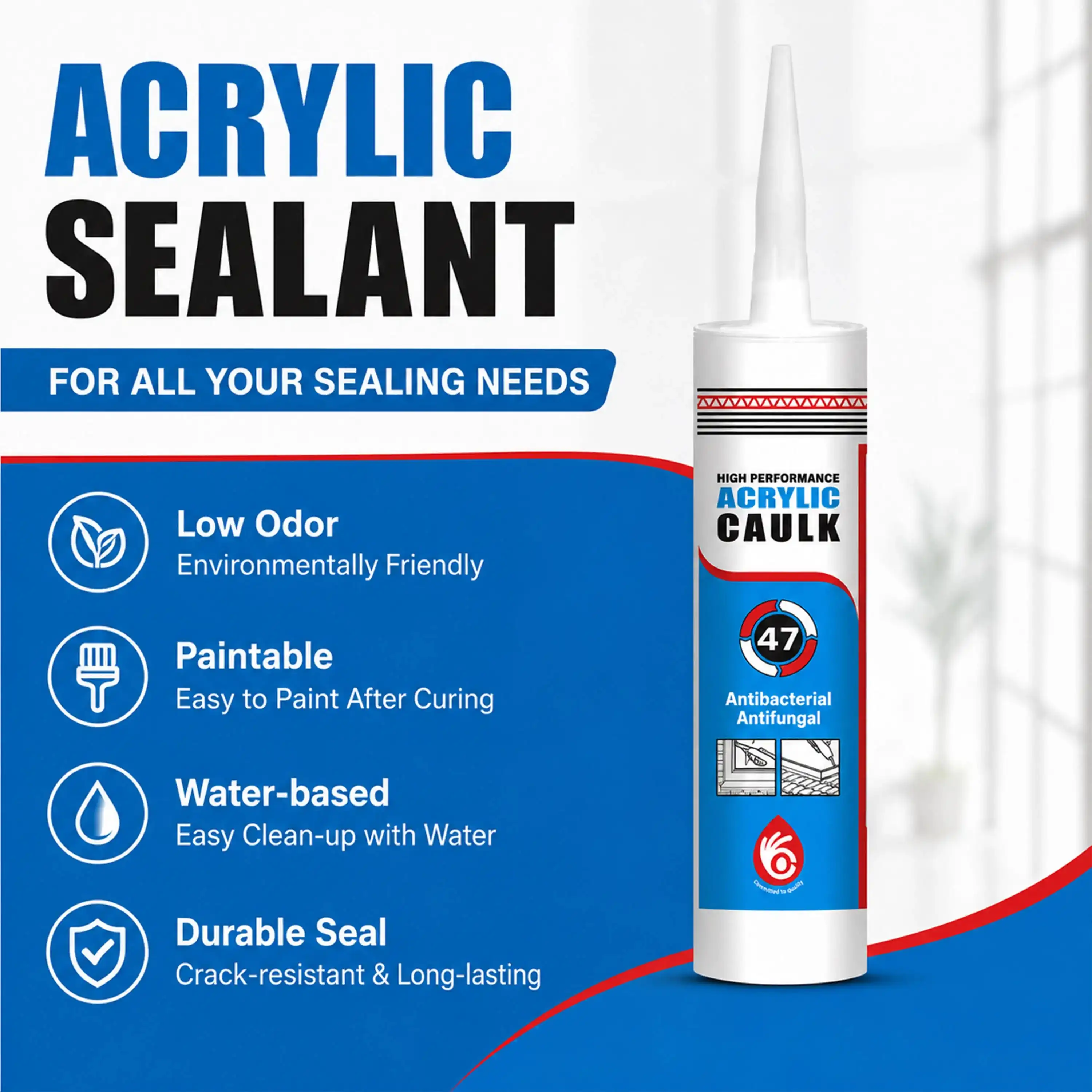
When strategically finding Acrylic Sealant Decorative Joint Seal materials, you need to think about more than just the price per unit. Whether procurement decisions help or hurt project success depends on how reliable the suppliers are, how well they can help with technical issues, and how well the logistics infrastructure works.
Quality approvals give clear proof of consistent production and good product performance. Systematic quality management is shown by ISO 9001 approval, and product-specific standards, such as ASTM C834 for latex sealing solutions, make sure that the company meets industry standards. With 13 years of manufacturing experience and ISO and CE certifications, Shandong Jiaobao has the organizational stability needed for quality that is uniform from batch to batch. In addition to saving time, asking for technical data sheets with real test values instead of just specification ranges shows that suppliers are sure of how well their formulations work.
The price of acrylic sealant depends on the cost of the raw materials (acrylic polymers, fillers, and additives), the cost of packaging, and where the supplier stands in the market. Because it uses more materials, cartridge packing usually costs 10–15 percent more per volume than sausage formats. However, it is easier for smaller companies to use. Prices can go down by 15 to 25 percent if you sign a contract for a whole year. Volume discounts usually start at 500 units. Jiaobao's recipe has an extrusion rate of 163 ml/min, which is over 100% faster than the industry standard. This directly leads to higher worker productivity, which justifies the higher price by cutting down on application time.
Reliability in delivery has a huge effect on project schedules, especially for just-in-time procurement strategies that keep inventory costs as low as possible. Manufacturers with production lead times of one to two weeks give you the freedom to adapt to changes in project requirements or specifications that come up out of the blue. Properly stored acrylic sealants can last for 12 months, which is enough time to build up a good inventory buffer.
However, because they are sensitive to frost, they need to be kept in temperature-controlled storage above 5°C to keep the emulsion from breaking down. International purchasing has to take into account things like how long it takes to clear customs and how hot or cold the goods might get while being shipped by sea. For this reason, knowledge with international logistics is a key factor in choosing a seller.
Professional setups last longer than inexperienced ones because they are based on technical knowledge. Knowing how the surroundings, the substrate, and the Acrylic Sealant Decorative Joint Seal qualities affect each other lets you predict results in a wide range of project situations.
In sealant uses, contamination is the main reason why bonding fails. Molecular contact between the sealant and the substrate is blocked by dust particles, and chemical incompatibility is caused by oils from handling or manufacturing residues. For the best preparation, vacuum the surface and then wipe it down with rubbing alcohol. Let the solvent evaporate completely before applying the sealer. If you want to cover porous materials like unprimed drywall, you may need to use diluted PVA primers so that the sealer doesn't soak up too much and leave the joint without enough material, which can lead to cracks and shrinkage.
The 0.5-hour skin forming time means that there is a small window for tooling that needs to be well organized. High humidity slows the loss of water, which extends the curing time. On the other hand, too much heat can cause the surface to skin before proper tooling, hiding uncured material below. Temperatures below 10°C slow down the curing process a lot, which could stop crosslinking completely and leave joints soft and tacky even after long periods of time. Professional workers keep an eye on the weather at the job site and make changes to the plans as needed. During the off-season, they may use dehumidifiers or temporary heaters to make the curing environment better.
When you overfill joints, you waste material and cause the beads to shrink too much because they take longer to cure and lose more volume as a result. To account for shrinkage and keep structural contact across the full joint width, the best joint shape sits slightly depressed (0.5 to 1 mm). Painting too soon, before all the water has dried out, leads to "mud cracking" because the paint film dries faster than the sealant underneath, making differences in surface tension. It is technically possible to paint over wet paint if the paints are compatible, but it is best to wait 24 hours for joints that are more than 5 mm deep to make sure that the paint cures all the way from the surface to the depth.
In conclusion, when finishing walls professionally, you need materials that are both technically good and aesthetically pleasing. High-quality Acrylic Sealant Decorative Joint Seal formulations are better at combining these qualities than other technologies. Modern acrylics are paintable, have low volatile organic compounds (VOCs), and stay the same size over time. These properties make them perfect for interior decorating projects that care about both looks and the environment. When you know the differences between professional-grade products and cheaper options, you can make better purchasing decisions that improve both the cost and quality of the work. This turns choosing the right sealant from an afterthought into a strategic advantage.
Some paint systems let you apply them wet on wet, but professionals say you should wait until the skin forms completely, which can take anywhere from two to twenty-four hours based on the thickness of the joint and the humidity in the air. Painting too soon can leave flaws on the surface because the paint and sealant dry at different rates, putting stress on the paint film.
Standard interior-grade acrylics are porous before they harden, which means that rain can wash them away during the hardening process. For use outside, you need special types of acrylic that don't get damaged by the weather or other chemicals like silicone or polyurethane that don't need water to cure and have better UV resistance.
Cracking generally happens when the joint moves more than the sealant can handle (10–12% for acrylics) or when low-quality high-water formulas shrink too much. Most cracking problems can be avoided by designing joints correctly with the right width-to-depth ratios and using professional-grade products with a high solids content.
Shandong Jiaobao New Material can help you with your interior finishing projects by combining factory know-how with customer-focused service. We have been a well-known seller of Acrylic Sealant Decorative Joint Seal for over 13 years, and our methods are ISO and CE approved to ensure uniform quality. Our one-component RTV formula can form a skin in half an hour, can be extruded at a rate of 163 ml/min, and has a tensile strength of 0.64 MPa. It comes in white, black, and gray, among other colors, and can be customized.
Our products come in 300ml and 600ml sizes and can be packaged in sausage or cartridge style. They ship within 1-2 weeks and have a variety of shipping options. You can email our team at dorashen@cnjiaobao.com to talk about your unique needs, ask for technical data, or set up sample testing that shows how professional-grade acrylic sealants work better.
1. Construction Sealants and Adhesives Technology Manual, Building Research Institute Professional Standards Committee, 2021.
2. Interior Finishing Materials: Selection and Application Guide for Commercial Projects, American Institute of Architects Technical Standards Division, 2020.
3. Performance Evaluation of Water-Based Acrylic Sealants in Decorative Applications, Journal of Construction Materials Science, Volume 34, Issue 2, 2022.
4. Green Building Materials Specification Guide: Low-VOC Sealants and Adhesives, U.S. Green Building Council Technical Reference, 2023.
5. Comparative Analysis of Sealant Technologies for Interior Joint Applications, International Association of Certified Building Contractors Research Report, 2021.
6. Procurement Best Practices for Construction Sealing Materials, National Association of Purchasing Management Construction Division White Paper, 2022.
November 16,2023
Enterprise Name
The sealant has very strong adhesion and performs well even on glass and aluminum. After curing, it remains flexible and shows no cracking. Perfect for our facade projects.
November 16,2023
Enterprise Name
Stable quality across batches. Our customers especially like the smooth application and consistent extrusion. It helps reduce installation time on site.
November 16,2023
Enterprise Name
I used it for bathroom sealing. Excellent waterproof performance and no mold issues so far. It's been holding up very well in humid conditions.
November 16,2023
Enterprise Name
The neutral silicone works well on sensitive materials without corrosion. Very suitable for industrial applications requiring stable performance.
_1779347426672.webp)