November 16,2023
Enterprise Name
The sealant has very strong adhesion and performs well even on glass and aluminum. After curing, it remains flexible and shows no cracking. Perfect for our facade projects.
Jul 13, 2026
When people who write specifications and handle purchases want to know what the best outdoor silicone sealant is, the answer depends on real-world performance standards. NP Silicone Sealant Exterior Grade is always rated as one of the best options because it has the right amount of weather protection, adhesion flexibility, and compatibility with a wide range of surfaces. Exterior-grade neutral-cure silicone sealants don't break down when exposed to UV light or high temperatures like generic formulas do. They keep their structure strong in all climates. Because of this, they are necessary for curtain wall systems, window perimeter sealing, and expansion joints in business surfaces where something going wrong is not an option.
Outdoor silicone seals are the first line of defence against water getting in, air leaking out, and temperature changes in building surfaces. These things have to be able to handle constant UV light, freeze-thaw cycles, and pollution that break down materials faster. The best formulas have a polysiloxane polymer backbone that doesn't oxidise and stays flexible for decades.
Seals for the outside are very different from seals for the inside. They have stabilisers in them that keep them from chalking and changing colour when they're in the sun. Sealants that don't break down in the weather also have better adhesives that stick to non-porous surfaces like anodised aluminium and glazed ceramic without the need for starters. The building must be able to move more than 25%, which is shown as a portion of the joint width expanding and contracting. This is so it can handle changes in temperature and wind loads.
The biggest market for weather-resistant silicone seals is on the outside of buildings. Curtain wall builders use these items to seal the edges where glass panels and aluminium framing systems meet. The caulk needs to make a shield that keeps water out while still letting different materials move freely. Exterior-grade products are used by people who install doors and windows to fill in gaps between frames and rough spots in brick, concrete, and fibre cement siding.
Marine equipment makers use silicone sealants for deck gear and portlight installations that will be exposed to saltwater and need to be resistant to rust. Exterior-grade goods are used by auto suppliers to bond windscreens and fix body panels. When HVAC workers fix outdoor unit penetrations through building walls, they need sealants that can stick to both painted and galvanised steel.
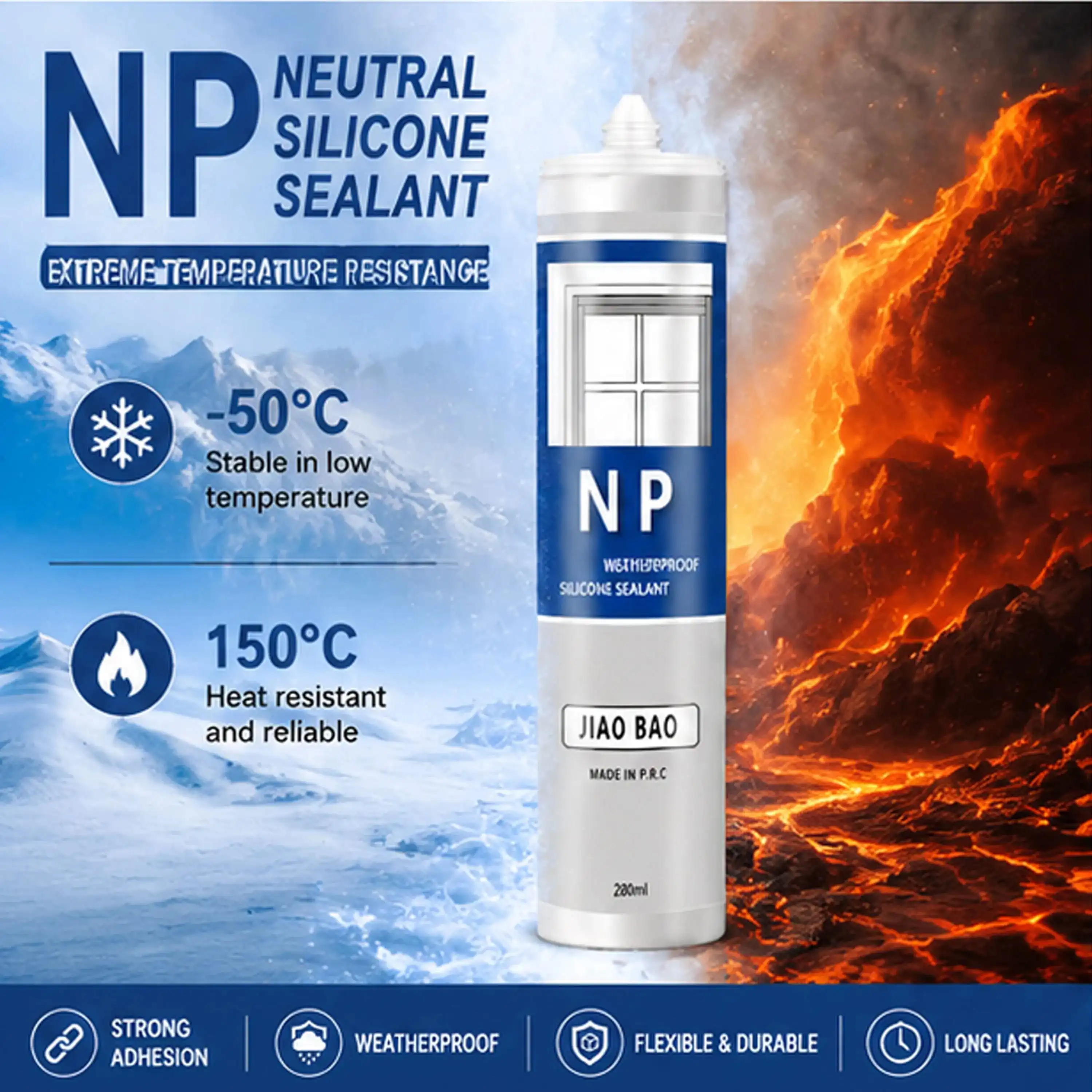
Material choice has a big effect on how much a job will cost in the long run. When it comes to performance, NP Silicone Sealant Exterior Grade stands out. When you pick the wrong caulk, joints break down early, water damage happens, and you have to pay a lot of money to fix the problems. Procurement teams can make better decisions when they know how different chemicals work.
Residential workers working on wood siding jobs like polyurethane sealants because they can be painted over. But if they are exposed to UV light for a long time, they break down and lose their flexibility within five to seven years. Polyurethane also needs dry surfaces to be applied, which makes it hard to schedule installations when the weather is uncertain. Acrylic latex caulks are a cheap choice for joints that don't move, but they aren't durable enough for business outdoor uses.
Because their molecules are not biological, neutral-cure silicone seals get around these problems. From -50°C to +150°C, they stay stable, so they can handle big changes in temperature without getting harder or softer. The material stays as hard as it was at 25 to 35 Shore A, which is the right level of flexibility and support for structures. Acetoxy silicones release acetic acid, which is harmful, when they cure. But neutral-cure products are safe to use on delicate surfaces like natural stone, concrete, and metals that have been covered.
Testing data shows that different types of products are different in important ways. High-quality silicone seals made for the outside have tensile strengths of more than 0.7 MPa and elongation at break of more than 400%. Because of this mix, the cloth can be stretched many times without breaking. The thixotropic features of the sealant keep vertical joints from sliding, so the tooled look stays the same without any extra support. According to ASTM C1248, weathering tests show that high-quality silicone formulas don't stain porous surfaces. This is important when sealing joints next to marble, granite, or limestone, because oil from bad sealants can cause lasting discolouration. Pollution protection tests show that silicone surfaces don't let dirt or living things grow as easily as organic seals.
Marine-grade sealants have extra fungicides in them to stop mildew from growing in damp seaside areas. Cost and efficiency are balanced in general-purpose exterior formulations for normal business construction. Standard weather sealants can't hold as much weight as structural silicone sealants, which are made for window uses. Instead of automatically choosing the cheapest choice, project specifications should make sure that the products chosen meet the real performance needs.
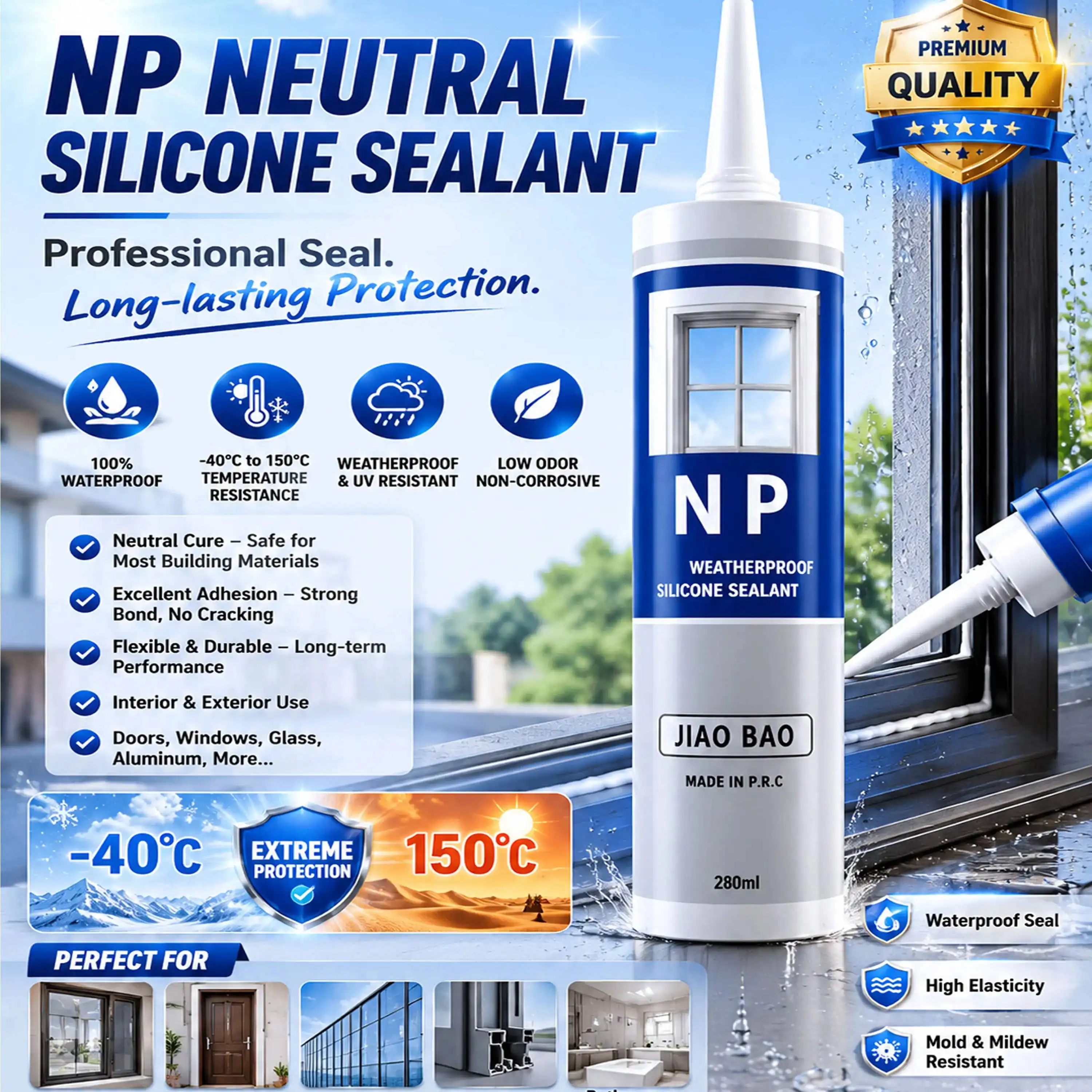
Whether a sealer works as intended depends on how it is applied correctly. When it comes to using NP Silicone Sealant Exterior Grade, even the best mix doesn't work when applied to dirty surfaces or parts that are the wrong size. Following the manufacturer's instructions will protect your guarantee and make sure the product works well for a long time.
To get the stated adhesive strength, surfaces must be clean and dry. Use a motorised brush or solvent wiping to get rid of all the dust, grease, old sealant residue, and loose material on the joint sides. Concrete and other porous bases may need to be primed to make the top layer stronger and the bond stronger. When properly cleaned, non-porous materials like glass and aluminium usually stick well enough without binders. Surface preparation is important, but joint shape is even more so. For best results, width-to-depth ratios should be between 2:1 and 1:1. Deeper joints lose material and don't make things work better, while shallow joints combine stress and make it more likely that the glue will fail. Closed-cell polyethylene brace rod can help you control the depth and stop three-sided binding, which makes it hard to move.
At normal temperatures of 25°C and 50% relative humidity, surface skinning happens in 30 minutes. This short time without tack lets you use tools, but you need to finish the joint quickly. The full fix depth moves forward at a rate of about 2 to 3 mm every 24 hours. This means that deep joints need 7 to 14 days to reach their rated qualities. When it's cold, healing takes longer, but when it's warm, it happens faster. Temperature ranges for applications are usually between 5°C and 40°C, but some formulas go higher. Do not use sealer on surfaces that are frozen or when it is raining. The uniformity of the tools is affected by the temperature of the surface. Hot surfaces skin quickly, while cold surfaces take longer to work on. To get the best results, plan assembly times around weather predictions.
Today's neutral-cure silicone sealants are very strict about volatile organic compounds (VOCs) and have less than 80 g/L of them. Because they meet SCAQMD and LEED standards, they can be used in green building projects. Products come with safety data sheets that list airflow needs and suggested personal protective equipment. Even though these materials are safer than solvent-based options, it is still important to have enough air flow while they are being used.
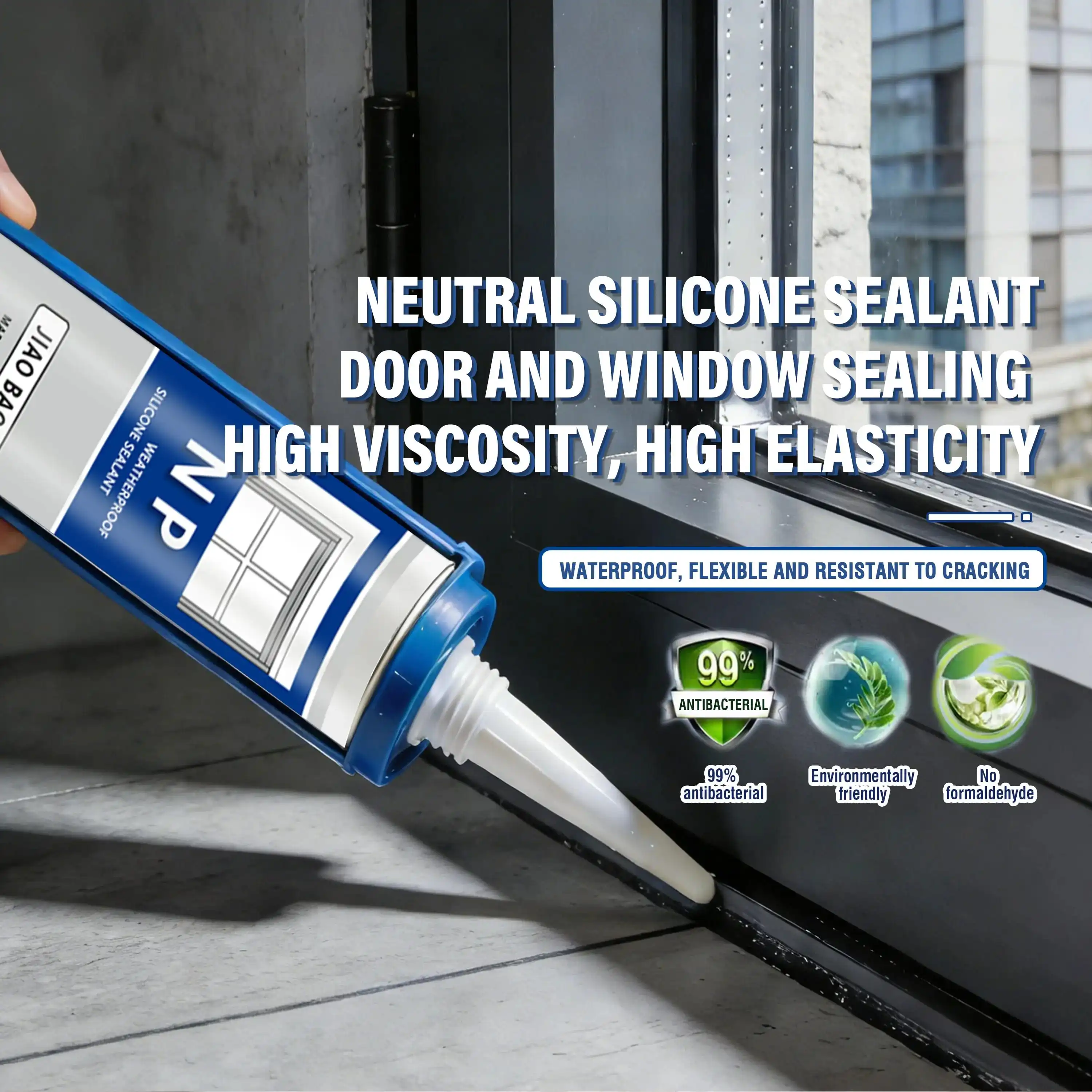
Comparing unit prices is only one part of strategic buying for NP Silicone Sealant Exterior Grade. Total project costs are affected by delivery dependability, expert help, and product consistency in a big way. Building ties with reliable sellers lowers risk and speeds up future purchases.
Professional sealant products come in 300ml and 600ml sizes and are packed as sausages or cartridges, based on the tools used to use them. Because banger packaging cuts down on waste and costs less per unit amount, it's the best choice for big jobs. Cartridge packing is useful for smaller setups because it gets rid of the need for special guns. As normal, the colour choices are white, black, and grey. Custom colour matching is also possible for building projects that need to match specific looks.
Bulk buying programs offer savings based on the amount bought and make sure that supplies will always be available during the project. The lowest amount you can buy varies from supplier to supplier, but it's usually more than one load. Setting up blanket purchase orders with planned releases helps keep track of goods without needing too much storage space on-site.
Standard colours take between one and two weeks to make after the order is confirmed. Custom colour formulations might need more time for quality checks and matches. Suppliers who have a lot of manufacturing capacity can meet pressing needs quickly while keeping quality high. For foreign sales, ocean freight is one way to ship, and land transportation is one way to ship within the United States. When full pallet amounts are combined, they make filling containers faster. When compared to direct plant shipments, distributors with warehouse networks can get goods to area markets faster.
Specification mismatches can be avoided by asking for product samples before making big purchases. Samples let testing happen on real project surfaces in real life. According to ASTM C794, test the field adhesion by putting down sample beads, letting them dry completely, and then pulling them at an angle of 180 degrees to make sure they fail cohesively instead of adhesively. Certifications like ISO 9001 quality control systems show that the producing process is uniform. Products that meet the standards of ASTM C920 Type S, Grade NS, Class 25 have been shown to work well in the past. During the evaluation phase, ask for test results and compliance certificates to back up promises.
Specification experts know that a product's image is based on how well it works in the field, not on what the company says it can do. Long-term relationships with dependable makers lower the risk of a project and make writing specifications easier.
Commercial curtain wall projects along the coast show how well high-quality exterior-grade silicone seals work in tough circumstances. When quality goods are used to seal joints, buildings that are exposed to salt spray, high winds, and strong sunlight for ten years show no signs of wear and tear. When restoration projects use silicone sealants instead of failed polyurethane sealants, they get rid of the need for regular upkeep.
Since 2013, Shandong Jiaobao New Material Co., Ltd. has been making coloured silicone sealants and has become an expert in neutral and acetic formulas for structural and weather-resistant uses. Their factory keeps its ISO license and makes goods that are CE-compliant, which means they meet international safety standards. Their quality control methods have been improved over 13 years of manufacturing experience, making sure that consistency from batch to batch is something that buying managers can count on.
The company can do both OEM and ODM, which means that it can support private labelling for wholesalers and make unique formulations for specific projects. Their technical team works with clients to make products that meet performance and area standards. This gives builders and specifiers who work in a variety of areas more options.
To choose the best outdoor silicone sealant like NP Silicone Sealant Exterior Grade, you have to weigh the performance requirements, the application needs, and the logistics of getting it. Exterior-grade neutral-cure silicone formulations are better at withstanding weather, staying stable at low and high temperatures, and working with different types of substrates than other chemicals. Because they don't lose their flexibility over time, they are the best choice for important building envelope uses. Working with well-known manufacturers that offer expert support, consistent quality, and on-time delivery saves project schedules and budgets and ensures long-term success for both parties.
A: When the material temperature drops between 5°C and 40°C, the application should happen. The cured sealant can resist temperatures from -50°C to +150°C, but installing it outside of the suggested range slows down the curing process and lowers the quality of the tools used. Moisture-cure processes happen more slowly on cold substrates, but faster on hot surfaces before they are properly shaped. Installing something should always be planned for when the weather isn't too bad.
A: When it comes to UV protection and temperature changes, silicone is better than polyurethane. Polyurethane breaks down in the sun and needs to be replaced every seven years, but silicone stays the same for decades. Silicone can handle bigger changes in temperature without becoming less flexible. Paintability is an important feature of polyurethane on wood, but it doesn't help with metal or concrete, where paint bonding to silicone isn't needed.
A: Even though neutral-cure formulas don't give off many fumes, make sure there is enough air flow. Put on safety glasses to avoid getting hit by something. Wear gloves to keep from touching your skin, though these items aren't as sensitive as acetoxy silicones. Before you start working, read the safety data sheet to learn about the unique risks and how to give first aid.
Jiaobao manufactures and sells trustworthy neutral silicone seals for the outside of buildings that are designed for tough industrial and business uses. Our formulas are approved to meet ASTM C920 and ISO standards, so you can be sure they will do what you want them to do. We have reasonable prices for large orders, easy customisation options, including RAL colour matching, and quick production wait times of one to two weeks. Our knowledge with export approval and our ability to ship by sea or land make us a good choice for international buyers. If there are any quality problems during the shelf life, we will either repay or replace the item. You can email our expert team at dorashen@cnjiaobao.com to get samples, talk about the details of your project, or get a personalised quote. Discover why builders and dealers all over the world choose Jiaobao as their go-to place for important weatherproofing jobs that require exterior silicone sealant.
1. American Society for Testing and Materials. Standard Specification for Elastomeric Joint Sealants. ASTM International, West Conshohocken, PA, 2021.
2. Building Envelope Design Guide. Weather Seal Performance in Curtain Wall Systems. Whole Building Design Guide, National Institute of Building Sciences, 2020.
3. Klosowski, John M. Handbook of Building Envelope Sealants. Construction Science Publishing, 2018.
4. Panek, Julian R. and Cook, John P. Construction Sealants and Adhesives. Fourth Edition, John Wiley & Sons, New York, 2019.
5. Sealant, Waterproofing and Restoration Institute. Guide to the Use of Joint Sealants in Commercial Construction. SWRI Technical Manual, Kansas City, 2022.
6. Wolf, Alfred T. Durability of Building and Construction Sealants and Adhesives. Woodhead Publishing, Cambridge, 2020.
November 16,2023
Enterprise Name
The sealant has very strong adhesion and performs well even on glass and aluminum. After curing, it remains flexible and shows no cracking. Perfect for our facade projects.
November 16,2023
Enterprise Name
Stable quality across batches. Our customers especially like the smooth application and consistent extrusion. It helps reduce installation time on site.
November 16,2023
Enterprise Name
I used it for bathroom sealing. Excellent waterproof performance and no mold issues so far. It's been holding up very well in humid conditions.
November 16,2023
Enterprise Name
The neutral silicone works well on sensitive materials without corrosion. Very suitable for industrial applications requiring stable performance.
_1779347426672.webp)