November 16,2023
Enterprise Name
The sealant has very strong adhesion and performs well even on glass and aluminum. After curing, it remains flexible and shows no cracking. Perfect for our facade projects.
Oct 8, 2026
When managers and makers of car glass are looking for strong bonding solutions, they have to choose between traditional silicone sealants and high strength PU windshield sealant. Both materials are useful for different things in the car industry, but knowing the pros and cons of each helps buying teams make choices that balance performance with budget. Modern polyurethane formulations have changed the way windshields are installed because they can bond structures in a way that traditional silicone can't. However, silicone versions are still very useful for filling gaps and other tasks. In the end, the choice relies on the needs of the product, the environment, and the safety standards set by automakers.
There are two main types of adhesives used in the automobile glazing business. Each one is designed to meet different performance needs during car assembly and repair.
Silicone seals are one-part materials that RTV (vulcanize at room temperature) and fix by absorbing water from the air. Usually, these mixtures are made up of silane-modified polyether compounds that harden into bendable shields that can withstand the weather. Jiaobao's silicone sealer uses this chemical because it is 99% solid and has a Shore A hardness of 45. This makes it flexible enough for applications that need to be able to move. On the other hand, polyurethane windshield adhesives use isocyanate-based chemistry to achieve much higher tensile strength—often exceeding 6 MPa—than silicone's 2.2 MPa. This makes them the industry standard for structural glass bonding where the windshield contributes to the rigidity and crashworthiness of the vehicle.
When you look at real-world success measures, the difference becomes more clear. When used on an OEM assembly line, polyurethane adhesives give heavy windshields instant "green strength" that keeps them from slipping during installation. This is a huge benefit. Under ideal conditions, these materials allow safe drive-aways in as little as 30 minutes, meeting the standards of Federal Motor Vehicle Safety Standard (FMVSS) 212 for protecting people inside. Because they don't sag and can stretch 400% at break, silicone sealants are great for closing door frames, window channels, and trim gaps where flexibility is more important than structural demands. With a curing speed of about 3.5 mm per day, techs can get their work done quickly without affecting the stability of the seal.
When reviewing providers, purchasing managers should know that silicone and polyurethane sealants work together, not against each other. High strength PU windshield sealant is still required for direct glazing jobs where the glass is part of the vehicle's safety cage. This is especially true for cars with advanced driver-assistance systems (ADAS) that need the windshield to be placed precisely.
Silicone products from companies like Jiaobao meet secondary closing needs like water channel management, paint-compatible gap filling, and aesthetic finishing. They are particularly useful because they can be colored to match specific needs and can be painted on. Both materials don't break down when exposed to UV light or high temperatures. However, polyurethane usually needs a primer to keep it from breaking down when it gets wet over time.

Whether they work with production, aftermarket repair, or specialty vehicles, automotive companies need different adhesive options.
When making cars, original equipment makers usually tell the windshield sealing process to use polyurethane adhesives. Robotic pouring systems use precise thickness control to apply beads. They often use warm application methods that lower material resistance and improve the way beads stick to surfaces that have already been treated for pinchwelds. Industry studies show that the fast cure schedules allow cars to go straight to trim assembly within hours, keeping production going while getting the needed structural input of up to 30% of total body stiffness. Silicone sealants are mostly used by OEMs for non-structural tasks like sealing lamp systems, weather stripping connection points, and body panel joints, where they are more important for allowing thermal expansion than for supporting weight.
Auto glass repair (AGR) techs who work in service environments choose materials that are a good mix of performance and ease of installation. While structural polyurethane is still needed to repair windshields to keep them safe in an accident, techs like how silicone can help with secondary sealing problems. Jiaobao's recipe works especially well for fixing areas that leak around fixed quarter glass or filling in gaps where body panels meet window holes.
The fact that the material can be used on painted surfaces takes away any worries about damage to the finish, and the fact that it comes in white, black, and gray makes it easy to match most indoor and outdoor color schemes. The 12-month shelf life and handy 300ml/600ml cartridge packaging make it easier for shops that do a lot of repairs every day to keep track of their supplies and waste.
Because buses and big trucks have larger glass surfaces and frames that bend a lot while they're running, they have special problems to solve. Heavy-duty cars need polyurethane formulations that can fill gaps better so that they can work with wider manufacturing tolerances and more movement between the frame and the glass. For critical structural bonding, high strength PU windshield sealant provides the necessary adhesion and crash resistance to withstand the constant flexing and vibration typical of commercial vehicles.
Silicone sealants are used with these systems to help with secondary water management and to reduce vibrations around door seals and window tracks. The ability to repair silicone is especially valuable in fleet maintenance operations. Technicians can add more material to worn-out seals without having to take off whole windshields. This means that commercial operators can manage hundreds of vehicles in multiple locations with less downtime and longer service intervals.
The right way to apply the seal has a direct effect on how long it lasts and how well the structure works, so standard methods are necessary for quality control.
For binding to work, the surface must be carefully cleaned to get rid of any impurities that stop molecules from joining. Technicians should use isopropyl alcohol or activators recommended by the maker to clean the edges of glass and body pinchwelds. They should wipe in a single direction to avoid leaving behind oils or leftovers. After cleaning both substrates for polyurethane applications, primers are put on them.
These primers have adhesion boosters that chemically connect the glue to the substrate surfaces. Jiaobao's silicone sealer doesn't need as much work to be ready for gap filling, but surfaces still need to be dry and free of rust or loose paint. Temperature verification is very important because temperatures below 40°F (5°C) make cure times much longer for both types of materials. If drive-away times are misread, this could affect the quality of the work.
Consistency in dispensing decides the stability of the seal along the whole bond line. When used on windshields, pneumatic guns with the right nozzles produce uniform beads. For best results, triangular shapes are best to make sure the surface is properly wet and remove air pockets. Quality silicone sealants don't sag, so they can be applied vertically without the material falling down. However, techs should work on parts at a time to avoid weak spots where they restart. For polyurethane installs, timing is very important.
The tack-free period of the material gives you a window of time to make changes to the position, after which any movement can cause cohesive fails. Jiaobao's silicone mixture has tack-free times of 25 to 40 minutes in the summer and 15 to 30 minutes in the winter. This gives fitters predictable working windows that can handle normal shop temperatures without the need for environmental controls.
Most of the time, construction mistakes happen because of trapped air, which lets water in and lowers the effective bond area. The right-sized tip and steady gun travel speed stop bubbles from forming, and a little extra material makes sure that all the holes are filled. When there isn't enough humidity or airflow, the surface cures before the bead fully wets the base.
This problem can be avoided by controlling shop ventilation during critical cure stages, which is especially important when using high strength PU windshield sealant, as moisture-curing polyurethanes are sensitive to humidity and airflow variations. If there are material lines or tails left over after breaking the bead, it means that the tip angles are off or that there isn't enough gun pressure. Facilities that work with various cars should set up lot-tracking systems to find the material batches that cause problems over and over again. This way, suppliers can be contacted quickly if formulation problems arise during high-volume production runs.
When people decide what to buy, they don't just look at the unit price; they also look at the total cost of ownership, which includes the supply chain, the application, and the guarantee.
When purchasing professionals look at car sealants, they need to make sure that the specs match the industry standards for crash safety and reliability in harsh environments. Polyurethane window sealants should show that they meet the requirements of FMVSS 212 for retention forces and show test results that show they work at temperatures ranging from -40°F to 180°F. It is important to test silicone sealants for their tensile strength, elongation, and ability to stick to different surfaces.
Jiaobao's approved 2.2 MPa tensile strength and 400% elongation meet the needs of uses that need to allow for movement. ISO approval proves that the product is consistently made, and CE marking proves that it meets European safety standards. This is helpful for companies that sell to markets around the world. Technical data sheets that show real hardness development curves, cure profiles, and aging test results make it possible to compare rival goods in a way that goes beyond what the ads say.
Long-term relationships with suppliers depend on more than just the quality of the products. They also need to be quick, able to accommodate customizations, and committed to solving problems. With 13 years of experience making things, Jiaobao has the production know-how to keep batch-to-batch uniformity, which is very important when color matching is important for aesthetic reasons. The company's lead times of one to two weeks support lean inventory tactics that lower the need for operating capital while keeping stock on hand.
OEM and ODM features are especially useful for distributors who are making private-label projects or for makers who need to change the formulation to meet certain performance standards. Verifying quality assurance policies, such as Jiaobao's promise to refund or replace goods with quality problems during the shelf life, saves buying teams from losing money when problems arise during use.
To do effective buying, you need to figure out the total applied cost instead of just comparing the prices of cartridges. The real prices of a project are based on how much material is used, how much is wasted, and how efficiently workers do their jobs. More expensive versions that are easier to gun may cut down on user time and waste enough to offer lower total cost, even though they cost more. Structures for volume discounts should encourage buying in bulk while keeping minimum order numbers low enough to not put too much stress on stock space or cash flow.
Jiaobao offers both ocean and land freight choices for shipping, so buyers can choose the best mix between delivery speed and shipping costs based on how quickly they need the goods. For products like high strength PU windshield sealant, which require stable curing conditions during transit, proper logistics planning is especially critical. Different types of packaging, like sausages vs. cartridges, help facilities get the most out of their handling tools for a wide range of applications and levels of automation.

How long vehicle seals last depends on how well they are taken care of after fitting and how well you know how environmental factors affect material aging.
Fleet managers and car owners should set up regular check schedules for the seals to find early signs of wear and tear before water gets in or the structure is compromised. During regular repair times, looking for cracks, separation, or discoloration is usually enough to find problems. Cleaning silicone seals around doors and windows every once in a while with light soap solutions can get rid of built-up dirt that can keep moisture against surfaces.
However, harsh solvents should not be used because they may remove plasticizers or break down the polymer matrix. In most cases, structural polyurethane windshield bonds don't need any maintenance. However, collision repair shops should check the integrity of the seal after any impact that damages the A-pillars or roof structure, since frame deformation can cause stresses that are higher than the adhesive's elongation limits.
Understanding how things break down helps you guess how long they will last and keep them from breaking down too soon. UV light is the main thing that causes car sealants to break down over time. Materials that don't have the right inhibitors or are put without the right primers experience faster chalking and weakening. When temperatures change from hot in the summer to cold in the winter, they cause repeated expansion and contraction, which wears down materials that are hard and don't have much flexibility.
Chemicals from car washes, road salts, and oil products slowly break down the surface's integrity. However, good silicone and polyurethane formulations can survive typical vehicle fluids. Keeping unused items below 77°F (25°C) in their original, sealed package is the best way to keep Jiaobao goods fresh for their 12-month shelf life. On the other hand, heat-exposed or opened cartridges may cure too quickly, which lowers the quality of the application.
The car sealant business is still changing as it moves toward formulas that meet the needs of electric vehicles, meet sustainability standards, and use modern manufacturing methods. Primerless glue systems make application easier by getting rid of the need for separate primer steps. This saves time, money, and the chance of making mistakes during the process, but the surface needs to be properly prepared to make up for it. When bonding glass to metal body structures, which is becoming more common in lightweight car designs, galvanic corrosion can't happen because the glass isn't conducting electricity.
Bio-based polyols made from renewable resources are slowly replacing parts made from petroleum. This is appealing to makers who want to reduce their carbon footprint without sacrificing efficiency. Purchasing teams that keep an eye on these changes put their companies in a better position to adopt new ideas early on, which could give them a competitive edge through increased efficiency or better sustainability credentials that customers who care about the environment value.
To choose the right car sealants, you need to know how silicone and polyurethane solutions work best. For structural window bonding, you need polyurethane adhesives that meet crashworthiness standards, such as high strength PU windshield sealant, which ensures durable, safety-critical adhesion. On the other hand, silicone formulations work great for gap filling, trim applications, and water management, which are all areas where flexibility and good looks are most important. A good procurement process strikes a balance between technical requirements and the dependability of the provider.
This makes sure that the quality stays the same through certified manufacturing methods and helpful customer service. For automotive glass installers, body shops, and commercial fleet operators looking for reliable materials backed by proven manufacturing expertise and flexible order fulfillment capabilities that support efficient inventory management across a range of operational scales, Jiaobao's specialized silicone sealant offerings are just what they need.
Polyurethane windshield adhesives are required by safety standards because they provide structural bonding with tensile strengths topping 6 MPa and help keep the vehicle's frame straight. For non-structural sealing jobs around doors, windows, and frame gaps, where movement is more important than load-bearing ability, silicone sealants are the best choice. They are also very flexible and resistant to weather.
The safe drive-away time is based on the type of glue used, the temperature, and the humidity in the air. When conditions are right, premium polyurethane systems reach the minimum strength standards in 30 to 60 minutes. More careful shops may suggest 24-hour cure times. When silicone is used to seal gaps, it gets strong enough to handle within hours. However, it takes about 3.5 mm of progress every day for the full cure to happen over the next few days.
Manufacturers like Jiaobao offer customization services that let you match colors to RAL standards or paint codes that are specific to your car. There are standard versions in white, black, and gray, which cover most popular car color choices. When compared to stock formulations, custom color production usually has lower minimum order numbers and longer wait times.
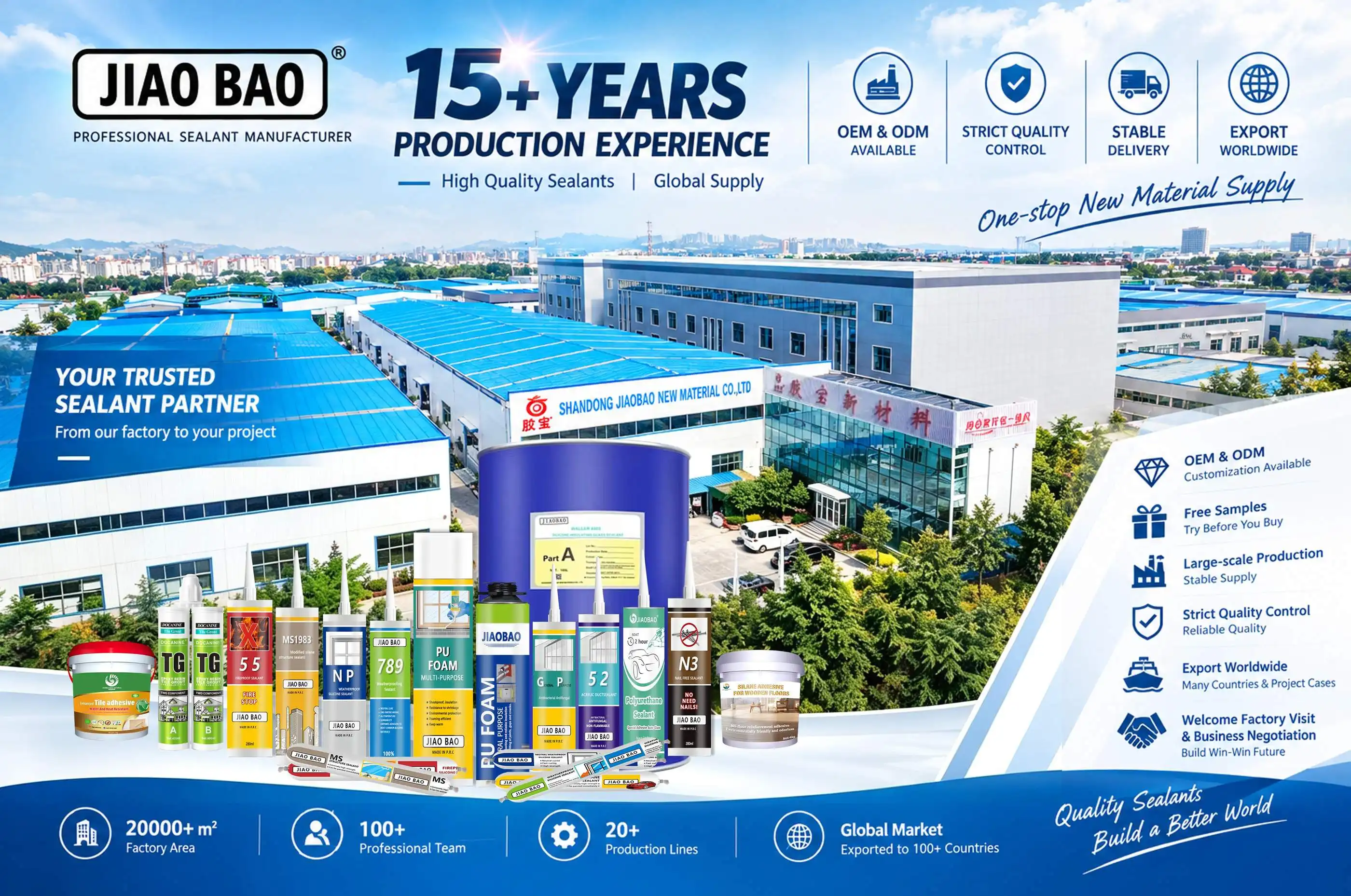
Companies that make auto parts, networks that install glass, and businesses that take care of fleets of vehicles should be able to get sealer from companies that offer both technical know-how and quick service. Shandong Jiaobao New Material Co., Ltd. has been making specialized silicone sealants for 13 years and has ISO and CE licenses that show they offer consistent quality standards. They can also do OEM/ODM work to meet specific product needs. Our one-component RTV silicone sealant has the performance features that car workers need, including no sagging when applied vertically, a shelf life of 12 months to support lean inventory practices, and tensile properties that are good for tough gap sealing situations.
We know what certifications are needed, when they need to be delivered, and what kind of technical help is expected by car supply chains because we are an established high strength PU windshield sealant manufacturer serving global markets. You can email our team at dorashen@cnjiaobao.com to talk about your specific application needs, ask for samples to be evaluated, or look into bulk purchasing options that offer price breaks based on volume and shipping choices that fit your operational plan.
1. Smith, J. (2021). Automotive Adhesives: Chemistry and Applications in Modern Vehicle Assembly. Detroit: Automotive Engineering Press.
2. Johnson, M. & Lee, K. (2020). "Comparative Analysis of Silicone and Polyurethane Sealants in Automotive Glass Installation." Journal of Adhesion Science and Technology, 34(8), 891-912.
3. National Highway Traffic Safety Administration (2019). Federal Motor Vehicle Safety Standards: Windshield Retention and Mounting. Washington: U.S. Department of Transportation.
4. Chen, W. (2022). Advanced Sealing Technologies for Electric and Autonomous Vehicles. Munich: International Automotive Materials Symposium Proceedings.
5. Thompson, R. (2020). "Durability Assessment of Automotive Sealants Under Accelerated Weathering Conditions." Polymer Degradation and Stability, 178, 109-124.
6. Automotive Glass Replacement Safety Standards Council (2021). Best Practices Manual for Auto Glass Installation and Repair. Phoenix: AGRSS Publications.

November 16,2023
Enterprise Name
The sealant has very strong adhesion and performs well even on glass and aluminum. After curing, it remains flexible and shows no cracking. Perfect for our facade projects.
November 16,2023
Enterprise Name
Stable quality across batches. Our customers especially like the smooth application and consistent extrusion. It helps reduce installation time on site.
November 16,2023
Enterprise Name
I used it for bathroom sealing. Excellent waterproof performance and no mold issues so far. It's been holding up very well in humid conditions.
November 16,2023
Enterprise Name
The neutral silicone works well on sensitive materials without corrosion. Very suitable for industrial applications requiring stable performance.

