November 16,2023
Enterprise Name
The sealant has very strong adhesion and performs well even on glass and aluminum. After curing, it remains flexible and shows no cracking. Perfect for our facade projects.
Jul 13, 2026
Acrylic sealant is a water-based sealant made for use in industrial, building, and repair projects where paintability and resistance to water are important. If we talk about Acrylic Sealant Waterproof Grade, we're talking about a recipe that's made to handle rain, humidity, and short periods of water contact without losing its stickiness or flexibility. This one-part caulk is commonly used to seal the edges of doors and windows, joints on the outside of buildings, gaps inside buildings, and HVAC systems. Regular caulks wash off when they get wet, but waterproof-grade formulas contain hydrophobic modifiers and silane coupling agents that keep the seal even after being exposed to weather factors for a short time.
Acrylic sealants are made up of acrylic polymer dispersions mixed with water, as well as fillers, plasticizers, and performance enhancers. As the water evaporates, these materials harden, creating a plasto-elastic seal that works for joints with low to medium movement. The chemistry is very different from silicone or polyurethane systems, which makes it useful for certain tasks.
Modern acrylic sealants use advanced polymer structures that make them flexible while still being strong when stretched. At 23°C, our waterproof product has a tensile strength of 0.64 MPa, which is higher than the minimum of 0.4 MPa. The mixture has carefully chosen acrylic copolymers that stick better to porous surfaces like concrete, brick, and gypsum while still working well with non-porous materials like painted surfaces, glass, and aluminum. The paste-like texture makes extrusion easy at 163 ml/min, which is much faster than the minimum 80 ml/min industry standard. This means that your projects will be finished faster and with less labor.
Acrylic sealants are very useful in both building and industry because they can be used in many different ways. Curtain wall companies use these products to keep out the weather around non-structural frame placements, where being able to paint them is important for keeping the look consistent. In factories that make doors and windows, Acrylic Sealant Waterproof Grade formulas are used to seal the outer joints between frames and brickwork. This keeps wind-driven rain out and lets the paint match the color later. Custom furniture makers like to seal the gaps in bathroom cabinets and kitchen setups where splash resistance is important but not full immersion. HVAC workers use these patches to fix holes in ducts and seams between panels where condensation can cause problems with moisture.
When purchasing managers choose Acrylic Sealant Waterproof Grade for big jobs, they like a number of practical benefits. The water-based recipe gets rid of strong solvent smells, so it can be used indoors without having to worry about air or stopping work. The material doesn't sag when used vertically, and our product showed no sag when tried standing up. This means that clean bead shapes can be made without having to do any extra work.
The 30-minute skin formation time lets trades move quickly to the next one, which shortens project plans. The ability to be painted solves a problem that general builders have had for a long time: how to make the color blend smoothly between sealant joints and nearby surfaces without leaving silicone lines that look bad on the finished product. The 12-month shelf life gives distributors who are working on various projects with different due dates more inventory freedom.
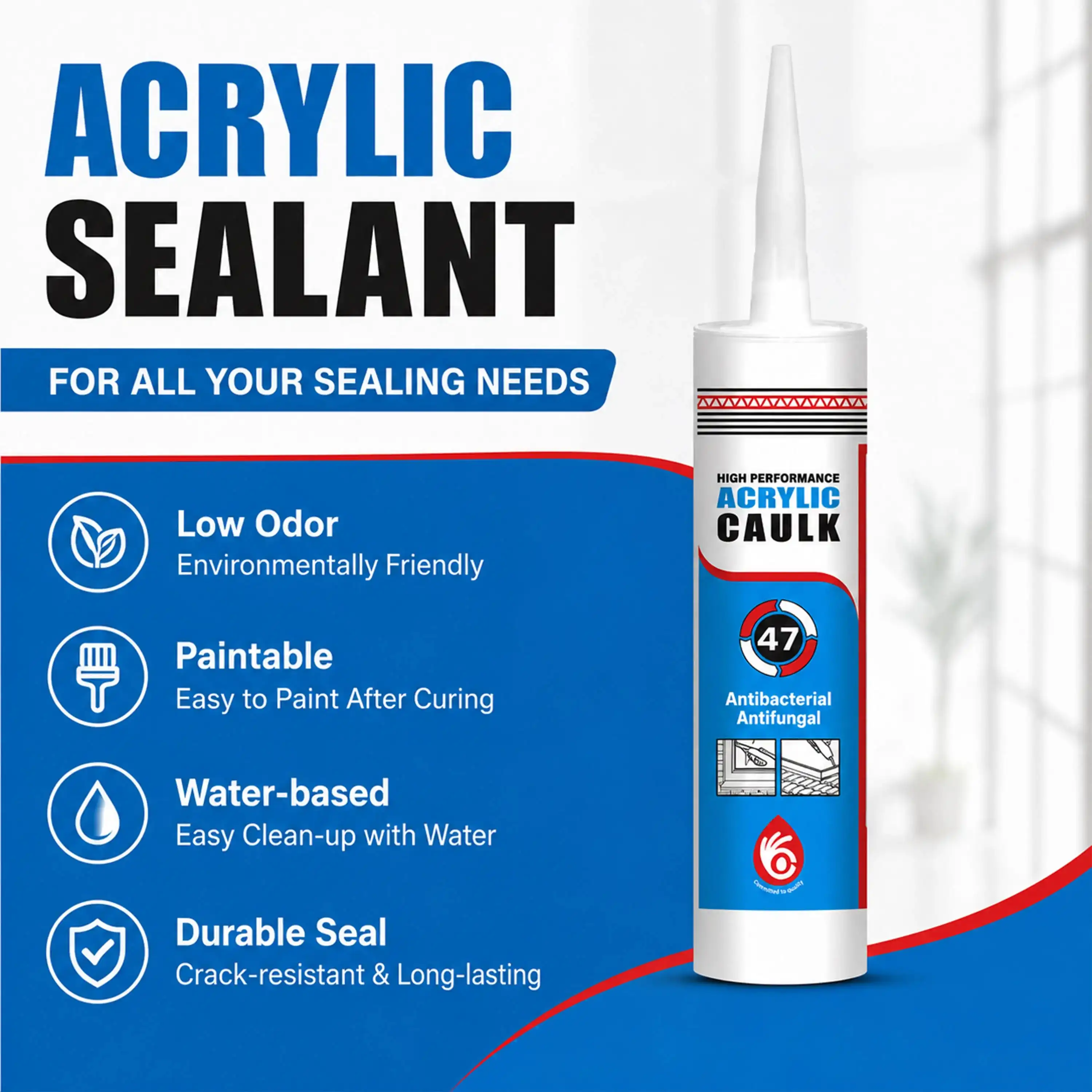
Knowing the different types of waterproofing helps buying teams choose the right goods for the job. Acrylic Sealant Waterproof Grade tells the difference between professional formulas and regular painter's caulk, which re-emulsifies when it gets wet.
Waterproof acrylic sealants are put through a lot of tests to make sure they work as claimed. The most important test for moisture protection is ASTM C794, which checks adhesion-in-peel after seven days of being submerged in water. Products that are good must have over 90% cohesive failure, which means that the glue tears instead of coming apart from the base. Our formula meets strict standard requirements by passing binding tests without breaking the bond.
Type OP (One-Part) Grade -18°C labels show that the material can move and be flexible at low temperatures, while ASTM C834 classifications say that it can be used outside in mild areas. According to ASTM C731, the material must also show stable rheology through freeze-thaw cycles. This makes sure that it works well after being shipped and stored at different temperatures.
The waterproof label refers to certain types of failure that can happen in the field. When rain hits uncured acrylic surfaces within hours of application, the standard acrylics wash out. This causes joints to fail and expensive repair to be done. Waterproof formulas have hydrophobic ingredients that keep water out during the important healing window. However, they still need 12 to 24 hours to cure before they can survive heavy rain. When installed outside, UV stability is very important because chalking and yellowing can ruin the look and integrity of the seal. Our weather-resistant recipe stays flexible through temperature changes from -20°C to 80°C. This keeps the cracks from forming that happen when cheaper goods get too hard in the summer and break during expansion and contraction.
Distributors and OEM partners should make sure that providers of Acrylic Sealant Waterproof Grade back up their waterproof claims with proof. ISO standards show that quality management is being done in a planned way, and low-VOC compliance shows that you care about the environment, which is becoming more and more important in building codes. Not just claims of conformance should be on technical data sheets; they need to show real test results as well. We clearly show all of our performance information, including our 0.5-hour skin dry time and zero parallel sag deformation, which is backed up by lab testing. This openness helps build the trust that is needed for long-term business relationships.
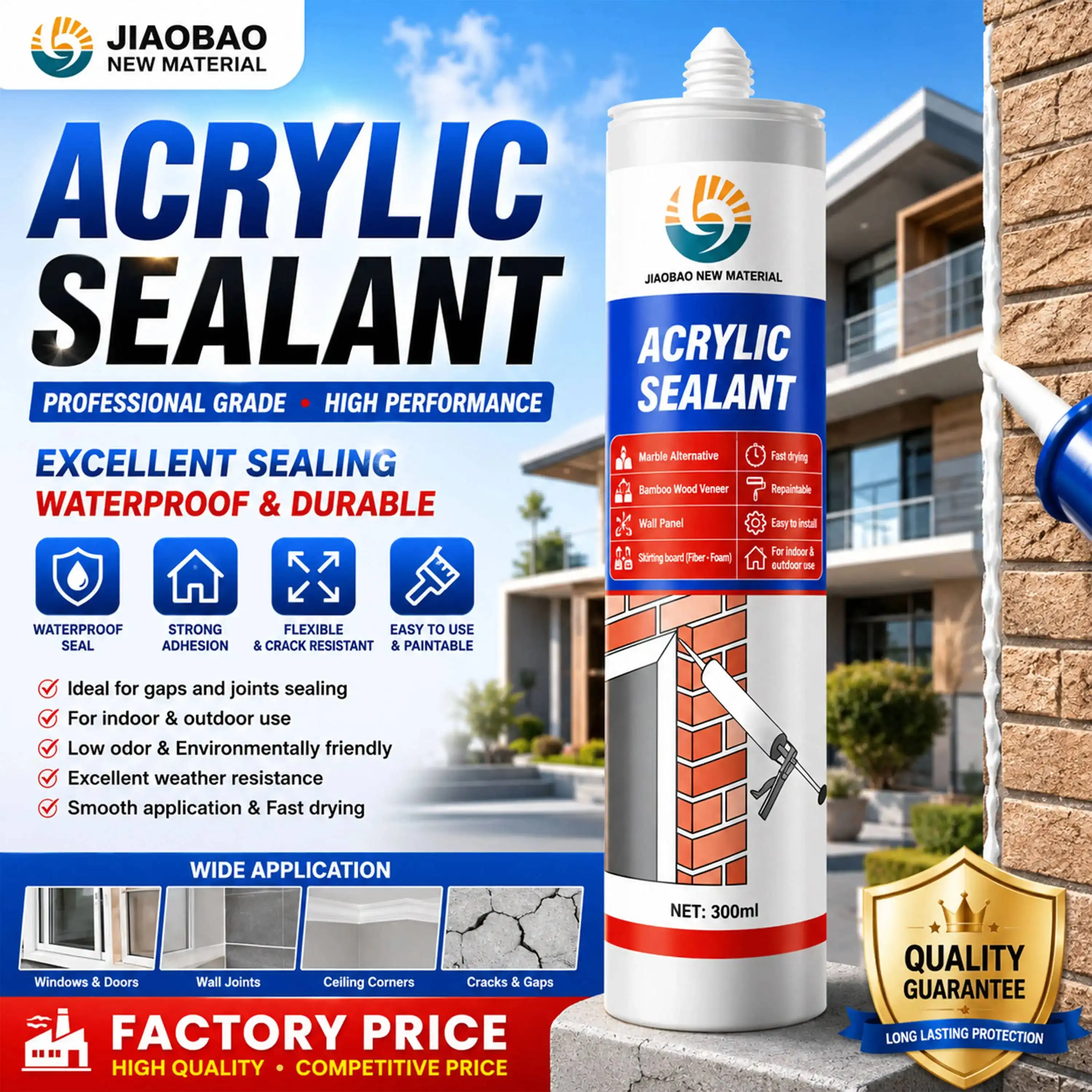
Choices about materials have a big effect on how projects turn out, how much they cost, and when they need to be maintained. Figuring out how different performances compare, especially for Acrylic Sealant Waterproof Grade, helps you make the best design choices.
Silicone sealants can withstand more movement than acrylics (±50% vs. ±12.5%), and they are still the best choice for structural parts that move a lot and uses that are submerged in water all the time, like tank sealing. Silicone hardens through a reaction with air moisture. It stops being vulnerable to rain in 30 minutes, no matter how wet it is. But silicone can't be painted, which can be a problem when color matching is important for looks. Silicone also costs a lot more than waterproof acrylic alternatives—usually 40% to 60% more. If you want to keep the look of painted parts that don't move much, like window trim against walls or gaps between baseboards, waterproof acrylic works well enough at a much lower cost while still letting you blend colors seamlessly.
In between acrylics and silicones, polyurethane seals are in the middle. They allow for ±25% movement and stick well to tough surfaces. Polyurethanes are better at resisting wear and tear than other materials when it comes to traffic-bearing areas, like expansion joints in concrete floors. During application, the cure process makes toxic isocyanates, which means that breathing protection is needed and indoor use is limited.
Polyurethanes also don't take paint as well as acrylics do because their shiny surface needs to be worn down before it can be coated. Polyurethanes are 30% more expensive than acrylics but less expensive than silicones. Polyurethane should be used for projects that need some movement but don't need to be painted, while Acrylic Sealant Waterproof Grade should be used for projects that need to be painted but are on a budget.
For structural glazing parts that experience a lot of thermal movement, curtain wall builders should use silicone. For exterior trim where frames meet brickwork and need to be painted to match building facades, they should use Acrylic Sealant Waterproof Grade. When working on high-end home projects, interior designers can be sure that colored acrylic sealants will keep the gaps between baseboards and crown moldings looking good. They know that the joints will be able to accept paint and keep their look without bacteria growing in them. Acrylic formulations are better for HVAC installers than more expensive options because they are easy to clean and don't smell bad when they seal pipes and wall penetrations in conditioned areas.
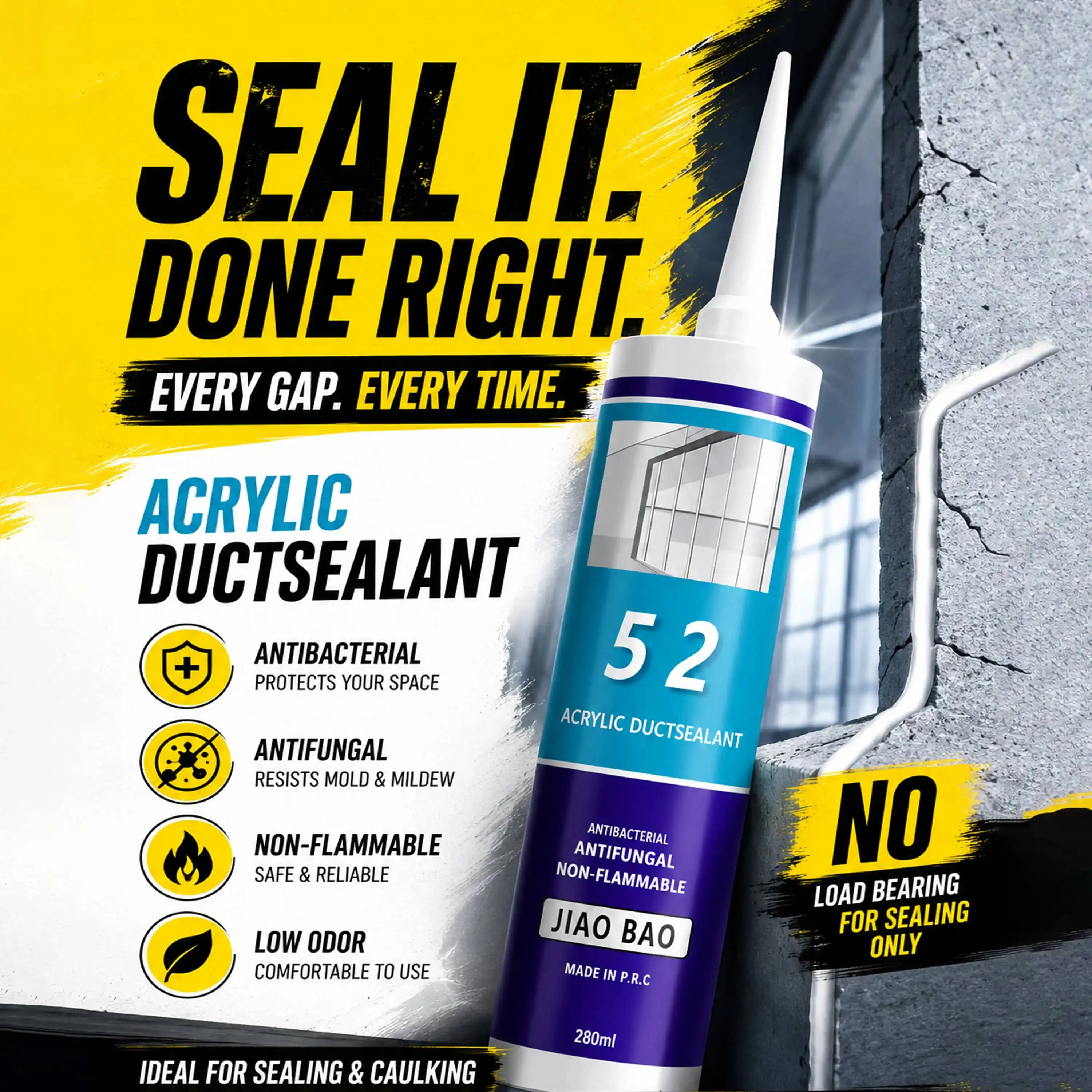
To choose the right materials, you need to make sure that the product's features match the needs of the business and the stresses of the surroundings.
First, figure out how much the joint should move based on the type of material and the temperature range when using Acrylic Sealant Waterproof Grade. Masonry-to-masonry joints in stable temperatures don't move much, which is well within the range of what acrylic can handle. In places where temperatures change a lot from season to season, wood-to-masonry links may get close to the moving limits of Acrylic Sealant Waterproof Grade, so they need to be carefully looked at. Find out how much wetness the joint is exposed to: does it get a few drops of rain here and there, or does it get hard rain all the time?
Our waterproof-grade solution can handle normal outdoor exposure on vertical surfaces, but it shouldn't be used in places where water is standing. Carefully think about what you need in terms of looks. Acrylics are the only ones that can be painted, which is why they are perfect for projects like restoring historic buildings or painting high-end business interiors that need gaps that can't be seen afterward. Spec compliance needs should be written down early on in the planning stages of buying. This will help you make sure that the goods you choose have the right certifications for your local building codes.
Working with well-known makers lowers the risk in the supply chain and makes sure that quality is maintained across all big projects. Shandong Jiaobao New Material Co., Ltd. has been making sealants for over 13 years and has made millions of units for markets in China and around the world. Our production ability can handle both big project orders and flexible smaller orders from distributors who are building up their stock. We keep our ISO certification up to date and give full test records for every batch of output. This gives procurement managers the records they need for quality checks. Companies that make curtain walls and furniture need to be able to match RAL colors, and our color customization feature meets their needs. Strict quality control methods ensure stability from batch to batch.
To negotiate well, you need to know how suppliers set their prices and how long their lead times are. Our production cycle of one to two weeks lets us respond quickly to orders without making buyers pay too much for keeping supplies. You can choose from 300ml and 600ml packaging, as well as cartridge or sausage forms, so that your project portfolio can work with a variety of application tools.
Setting up framework deals with yearly volume promises can often get you better prices and make sure you have supplies during busy building seasons. With OEM and private label choices, distributors can build their own brands while using our production know-how and quality control systems. Before placing a full order, ask for a sample to be tested to make sure the material works as expected in your specific situation. This is especially important when bringing goods to new markets or uses.
No matter how good the product is, the right way to put it has a direct effect on how long the joint lasts and how well it waterproofs.
Before sealer is put on, the joint areas must be clean, dry, and free of any dirt or debris for Acrylic Sealant Waterproof Grade. Use wire brushes or compressed air to get rid of dust, oil, and other small particles. Porous surfaces like concrete and brick shouldn't be too dry or too wet; in fact, slightly damp surfaces help water-based acrylics stick better. Solvent cleaning is needed to get rid of surface films that could make bonding less effective on non-porous materials. Our Acrylic Sealant Waterproof Grade sticks well to most common building materials without starters, which cuts down on the steps needed to prepare them and the costs that come with them. But, in important situations, highly porous surfaces may benefit from a primer that evens out absorption and improves the consistency of bonding.
Cartridge holes should be cut at 45-degree angles to match the size of the bead you want, which is usually between 6mm and 10mm for normal building joints. Keep the gun's speed steady and the trigger pressure steady to get even bead patterns with no gaps or air pockets. Tool joints should be done 5 to 10 minutes after application, before surface skinning starts. Wet tools should be used to get smooth, curved profiles that shed water well.
Our product's discharge rate of 163 ml/min lets experienced applicators finish linear meters quickly without having to work too hard or get hand tiredness from long hours of work. Do not apply when it is raining or when rain is expected within 24 hours. Exposure to water too soon can affect drying, even in waterproof-grade formulas. Heavy rain should not hit new systems for at least 12 hours after they were tooling.
Three-sided adhesion is a common fitting mistake that happens when the glue touches the joint backing material, making it hard to move and leading to failure before its time. Use bond breaker tape or backer rod to make sure that the sealant only sticks to the two faces that are opposite each other. When you overfill joints, you lose material and make too much buildup that makes painting harder. Beads should be the right size to fill the joint depth without having extra material that goes past the base surfaces.
If you try to paint too fast, before the acrylic has fully set, the paint film will crack because the sealing will continue to shrink. Our fast-skinning recipe lets you paint in hours, but for the best effects, wait 24 hours. This is especially true in cool or humid weather that makes water evaporate more slowly. By using the right construction methods, these precautions will protect your investment in high-quality materials.
Acrylic seals that are waterproof, like Acrylic Sealant Waterproof Grade, are an important part of modern manufacturing and building. They are a middle ground between basic caulks and high-end silicone systems. Procurement managers, engineers, and contractors can safely select these materials for the right uses when they know the technical specs, performance limits, and correct ways to use them. Because they can be painted, are safe for the environment, don't cost much, and provide adequate moisture resistance, Acrylic Sealant Waterproof Grade formulations are the best choice for sealing doors and windows, filling gaps inside, and covering moderately exposed outdoor parts where looks are important.
A: Acrylics that are waterproof can handle splashes, rain, and short periods of wetness, but they aren't made to withstand hydrostatic pressure or long-term soaking. Swimming pools, fish tanks, and sealing below grade all need silicone or hybrid seals that are made to stay in contact with water all the time. The Acrylic Sealant Waterproof Grade label means that the caulk is better at blocking rain than regular painter's caulk, not that it can be used underwater.
A: Acrylic sealants dry when the water evaporates, which takes 12 to 24 hours. After that, they can survive heavy rain. In normal conditions, our mixture dries in 30 minutes and is splash-resistant, but heavy rain within 4 hours of application may wash it off. Plan when to apply based on the weather report, especially for projects outside.
A: Without primers, our Acrylic Sealant Waterproof Grade sticks well to concrete, brick, wood, aluminum, glass, and painted surfaces. Primers can help stabilize surfaces and make bonding better on very porous materials like bare cinder block or highly alkaline new concrete, but this is only used in a small number of normal situations.
Procurement decisions impact project timelines, budgets, and long-term performance. Shandong Jiaobao New Material Co., Ltd. stands ready as your trusted Acrylic Sealant Waterproof Grade manufacturer, delivering consistent quality backed by 13 years of production expertise and comprehensive ISO certification. Our waterproof-grade formulation meets ASTM standards while offering the fast-curing, paintable performance your projects demand. We provide flexible order quantities from single pallets to container loads, accommodating both large construction projects and distributor inventory needs.
Our 1-to-2-week lead times ensure responsive delivery, while OEM and color customization capabilities support your brand-building and specification-matching requirements. We back our products with replacement guarantees for any quality issues within the 12-month shelf life, demonstrating our commitment to customer satisfaction. Contact our team at dorashen@cnjiaobao.com to discuss your specific requirements, request technical documentation, or arrange sample testing. Let us support your procurement goals with reliable products, competitive pricing, and the responsive service that builds lasting business partnerships.
1. Beech, J.C., "Acrylic Sealant Technology: Chemistry and Performance in Modern Construction," Journal of Building Materials Science, Vol. 45, 2021, pp. 112-128.
2. American Society for Testing and Materials, "ASTM C834-20: Standard Specification for Latex Sealing Compounds," ASTM International Standards, West Conshohocken, PA, 2020.
3. Wilson, R.T. and Chen, M., "Comparative Analysis of Waterproofing Performance in Building Sealants," Construction Engineering Quarterly, Vol. 38, No. 2, 2022, pp. 67-83.
4. National Fenestration Rating Council, "Sealant Selection Guide for Window and Door Installation," NFRC Technical Report Series, 2019, pp. 24-41.
5. Thompson, K.L., "Water-Based Sealant Formulations: Advances in Adhesion and Weather Resistance," Polymer Applications in Construction, Vol. 29, 2023, pp. 201-219.
6. European Sealant Association, "Technical Guidelines for Acrylic Joint Sealants in Building Applications," ESA Industry Standards, Brussels, 2021, pp. 15-33.
November 16,2023
Enterprise Name
The sealant has very strong adhesion and performs well even on glass and aluminum. After curing, it remains flexible and shows no cracking. Perfect for our facade projects.
November 16,2023
Enterprise Name
Stable quality across batches. Our customers especially like the smooth application and consistent extrusion. It helps reduce installation time on site.
November 16,2023
Enterprise Name
I used it for bathroom sealing. Excellent waterproof performance and no mold issues so far. It's been holding up very well in humid conditions.
November 16,2023
Enterprise Name
The neutral silicone works well on sensitive materials without corrosion. Very suitable for industrial applications requiring stable performance.
_1779347426672.webp)