November 16,2023
Enterprise Name
The sealant has very strong adhesion and performs well even on glass and aluminum. After curing, it remains flexible and shows no cracking. Perfect for our facade projects.
Jun 16, 2026
That's the short answer to the question "Is acrylic sealant waterproof?" asked by project managers. Standard painter's glue doesn't fight water very well and re-emulsifies when it gets wet. Acrylic Sealant Waterproof Grade, on the other hand, is made with hydrophobic stabilizers and advanced polymer technology to provide strong resistance to moisture. It is ideal for external joints, window edges, and places where water may enter from time to time. This improved formula fills the gap between basic fillers and high-end silicone products. It can be painted and provides solid weather protection for industry and building uses.
"waterproof grade" tells the difference between professional-grade acrylic seals and gap fillers you can buy in shops. Both fix when water evaporates, but waterproof products have silane binding agents or special acrylic polymers that keep the paint from washing off when it rains soon after application.
Standard acrylic sealants can't meet the high-performance standards that Acrylic Sealant Waterproof Grade coatings do. After being submerged in water for seven days, these materials pass the ASTM C794 adhesion-in-peel test, keeping more than 90% of their adhesive failure instead of coming away from surfaces. Re-emulsification is a typical failure mode where water breaks down the polymer matrix, letting the sealant wash off or lose its bond strength. This recipe doesn't allow this to happen.
When professional buying teams look at technical datasheets, they look for certain measures that show waterproof grades: elongation at break greater than 200%, solid content greater than 75%, and movement capability between ±12.5% and ±15%. These rules make sure that the sealer can handle changes in temperature without cracking and can keep its waterproof seal even when it's exposed to weather.
Several business norms make sure that waterproofing works. ASTM C834 sorts sealants by temperature grade and how they work. For example, Type OP (one-part) Grade -18°C means it can be used outside in cold places. ISO 9047 checks how much the joint can move to make sure the sealer stays flexible when it's under stress. Weather-Ometer testing (WOM) checks how stable a product is against UV light for more than 500 hours. This makes sure that the product doesn't turn yellow or chalk, which would lower its protection and aesthetic value.
Companies that make curtain walls and plants that make doors and windows respect these licenses the most. Technical managers need proof that seals won't fail during normal weather changes or weaken structures before they can approve materials for glass curtain wall installations or system window assemblies.
The type of sealer you choose affects how much the job costs, how long it lasts, and how often it needs to be maintained. Depending on how the joint moves, how well it sticks to other materials, and the weather, each sealer formula has its own benefits.
Silicone sealants are great for structural windows and parts that move a lot because they are waterproof and allow for movement of up to ±50%. They heal without water, stay flexible at temperatures ranging from -40°F to +350°F, and will never break down in UV light. Silicone, on the other hand, can't be painted, sticks to itself permanently, which makes future fixes harder, and costs 40–60% more than waterproof paints. Industrial manufacturing clients that make HVAC equipment often ask for silicone for important seals, but building projects that need to look good have trouble with the surface that can't be painted.
Polyurethane sealants are very good at resisting chemicals and wear, which makes them useful in companies that make car parts and on industrial floors. They are better at staying on surfaces that are constantly wet than acrylics and stick well to tough materials like plastic. The downsides are that it takes longer to dry (7–14 days to full strength), it is sensitive to moisture when applied, and it is not very UV stable, so you will need to use a topcoat to protect it. Polyurethane is often worth the extra cost for stone working plants that need to seal expansion joints in places with a lot of foot traffic.

MS plastics are modified silicone-polyether blends that are paintable and stretchy, but they cost a lot more. Basic latex caulks are still popular for trim work inside, but they don't fight water well enough for use outside or in damp places like business restaurants. Custom furniture companies and cabinet makers who work with bathroom fixtures usually don't use latex. Instead, they use Acrylic Sealant Waterproof Grade, which stops mold from growing and water from getting under sinks and surfaces.
Acrylic Sealant Waterproof Grade seals are a good compromise because they protect low- to medium-movement joints from moisture well, can be colored with paint, are less expensive than specialized chemicals, and are easy to clean up before they harden. Building material suppliers and hardware sellers say that this balance is good for both contractors who want to save time and money and property managers who want to keep things in good shape.
To get solid waterproof performance, you need to do more than just choose the right product. The right way to apply the seal directly affects how long it lasts and how well it resists weather.
For waterproof bonding, surfaces must be clean, dry, and stable. Use liquids or mechanical abrasion to get rid of dust, grease, old sealant leftovers, and loose paint. Concrete and brick, which are porous, may need to be primed to stop too much absorption, which breaks the bond. Surfaces with a lot of moisture make it hard to stick things together; wait until the bases hit room temperature humidity levels before applying. When general builders work on prefabricated building parts, they know that skipping this step can cause 60% of sealants to fail before they should.
When the temperature is between 40°F and 100°F and the relative humidity is less than 80%, you should use sealer. To avoid air pockets, use a caulking gun that is set to a steady pressure and moving at a steady speed. Within 5 to 10 minutes, use a wet finger or a contoured tool to work the sealant into the joint instead of just smoothing the surface. This makes sure the right touch with the walls of the material.
With an extrusion rate of 163ml/min, our one-component Acrylic Sealant Waterproof Grade is very easy to work with and far above the industry minimum of 80ml/min. This smooth paste consistency makes it easier to use on big jobs like installing curtain walls, where teams seal hundreds of square feet every day. The product dries to the touch in just half an hour under normal conditions, which speeds up the job compared to competitors that need two to three hours.
Understanding fix plans keeps you from being let down by washouts. For acrylic paints to dry, the water has to evaporate. This means that cold or wet weather makes the process take longer. The top layer heals quickly, but the center may stay soft for 24 to 48 hours. Heavy rain within 12 hours of application could weaken material that hasn't fully dried. When organizing work outside, door and window processing plants check the weather reports and put temporary covers over newly sealed joints if rain is expected.
As the cure progresses, the tensile strength grows. Our product tests at 0.64 MPa at 23°C, which is higher than the standard of 0.6 MPa for high-performance uses. Within 72 hours, this structural integrity is fully developed. After that, the joint can survive wind-driven rain, changes in temperature, and small structural movement without compromising the watertight barrier.
Decisions about what to buy affect not only the short-term costs of a project, but also the long-term costs of upkeep and customer happiness. To choose waterproof seals, you have to compare their technical specs to the needs of the product.
The most important thing is how well the material sticks to the relevant surfaces. According to ASTM tests, Acrylic Sealant Waterproof Grade products should have "no destroy" adhesion qualities. This means that the sealant should tear cohesively instead of coming apart from glass, metal, concrete, or wood surfaces. Companies that do interior design and make custom furniture that matches building finishes care a lot about color uniformity. Our sealant comes in white, black, gray, or special colors made to RAL standards. This makes sure that each batch is the same, which is important for high-end home projects.
The ability to move must match the form of the joint. Low-movement joints (±12.5%) can fit around most door frame edges and window sash links. Joints that expand more, like the connections between concrete panels in business buildings, need higher-grade products or different chemicals. Inventory management is affected by shelf life. Our 12-month stability lets wholesalers stock efficiently without having to deal with regular turnover stresses.
Professional users of Acrylic Sealant Waterproof Grade like it when the package fits their gear. Our 300ml and 600ml sizes come in sausage or cartridge shapes, so they can be used with normal caulking guns or large dispensing systems. This is helpful for building material wholesalers who work with a wide range of clients, since small repair workers can use cartridges for quick jobs and curtain wall companies can order sausages by the pallet for bigger jobs.
A supplier's skills are just as important as the product specs when it comes to successful buying. Check that the project is ISO certified and meets area standards, such as ASTM standards for projects in North America and EN standards for markets in Europe. Production lead time affects project schedules. Manufacturers who offer 1-2 week turnaround avoid expensive delays when project plans change at the last minute. Companies that trade across borders value sellers who are good at export paperwork and offer a range of shipping choices, such as ocean freight for bulk orders that need to be cheap and fast shipping for urgent needs.
Strategic partners are different from commodity providers because they offer technical help. Can the maker give advice on how to use odd substrates? Do they give samples before you place a big order? When companies that make electronics and appliances are working on new product lines, they benefit from wholesalers who can change the formulations to meet specific chemical or thermal needs instead of pushing standard goods into niche markets.
Quality verification systems keep your money safe. Reliable sellers offer warranties. If material flaws show up within the stated shelf life, policies for replacement or refund reduce the risk to your money. When HVAC equipment companies use sealants to make parts, they can't have failures in the field; they need suppliers who will ensure the performance of their products.
How waterproof Acrylic Sealant Waterproof Grade is depends on the grade of the formula and how it is applied. While regular painter's caulk fails when it comes in contact with water, waterproof-grade goods made with modern polymers work well in building and industrial settings. These materials are better than silicone because they can be painted. They also protect against wetness well enough for installing doors and windows on the outside, sealing the outside of buildings, and using inside where water may come in touch with them. The best long-term performance saves building envelopes and lowers upkeep costs is achieved by properly preparing the surface, giving it the right amount of time to cure, and making sure that the product's capabilities match the requirements for joint movement.
Acrylic Sealant Waterproof Grade can handle light wetness like rain, splashes, and mist, but they aren't made to withstand high water pressure or being submerged in water all the time, like in swimming pools or water tanks. Immersion in water for a long time will soften the polymer material over time. It is better to use hybrid polymers or specialized epoxy sealants for aquatic uses or parts that are always in water.
Depending on the weather and humidity, skin usually forms in 30 minutes to 3 hours. However, for rain protection, it needs to cure for longer. Light rain after 12 hours usually won't hurt waterproof goods that were put on correctly, but heavy rain within 6 hours could wash them off. For best results, schedule work on the outside of your home's sealant when the weather report says it will be dry for 24 to 48 hours.
Cracking means that the joint moved more than the caulk could handle, or that it wasn't installed correctly. Acrylic seals can handle movement of ±12.5% to ±15%, which is enough for most door and window edges but not for parts that expand a lot in metal panels or big pieces of concrete. Failure too soon can also be caused by overfilling joints, not cleaning the base well enough, or painting too soon after application.
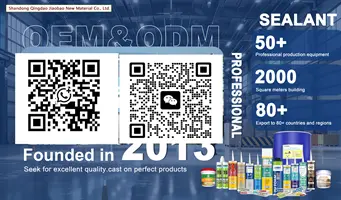
Due dates for construction projects require reliable material sources, which is exactly what Jiaobao offers. We've been making high-performance sealants that meet foreign quality standards, like ISO and CE licenses, since 2013. Our Acrylic Sealant Waterproof Grade has been used successfully in curtain wall installations, door and window systems, and industrial manufacturing settings where resistance to wetness and paintability are both important.
Supply consistency, technical standard verification, and low price that saves your profits are all problems that we know how to solve for B2B buyers. Our production lead time of one to two weeks keeps projects from being late, and our flexible logistics choices (such as sea freight or fast land transfer) can be used to fit your needs. We have been making Acrylic Sealant Waterproof Grade for over 13 years and have strict quality control throughout the whole production process. We also back our goods with a guarantee that covers manufacturing flaws during the shelf life.
Our team is ready to help you right away, whether you're a curtain wall company that needs large orders with custom color matching, a building materials seller looking for OEM/ODM packaging solutions, or an industrial maker that needs technical advice for unique uses. You can email us at dorashen@cnjiaobao.com to ask for samples, talk about licensing paperwork, or find out how our services fit with your buying goals.
1. American Society for Testing and Materials. "ASTM C834-19: Standard Specification for Latex Sealing Compounds." ASTM International, 2019.
2. Chen, William. "Waterproofing Technologies in Modern Building Envelope Systems." Journal of Construction Engineering and Materials Science, vol. 12, no. 3, 2021, pp. 145-162.
3. European Committee for Standardization. "EN 15651-1:2017: Sealants for Non-Structural Use in Joints in Buildings and Pedestrian Walkways." CEN Publications, 2017.
4. Harrison, Robert and Thompson, Linda. "Comparative Analysis of Acrylic vs. Silicone Sealants in Commercial Construction." Building Materials Research Quarterly, vol. 28, no. 2, 2022, pp. 89-103.
5. National Association of Home Builders. "Best Practices for Exterior Sealant Application in Residential Construction." NAHB Technical Guidelines Series, 2020.
6. Zhang, Mei. "Polymer Chemistry and Performance Characteristics of Modified Acrylic Sealants." International Polymer Science Review, vol. 19, no. 4, 2023, pp. 267-284.
November 16,2023
Enterprise Name
The sealant has very strong adhesion and performs well even on glass and aluminum. After curing, it remains flexible and shows no cracking. Perfect for our facade projects.
November 16,2023
Enterprise Name
Stable quality across batches. Our customers especially like the smooth application and consistent extrusion. It helps reduce installation time on site.
November 16,2023
Enterprise Name
I used it for bathroom sealing. Excellent waterproof performance and no mold issues so far. It's been holding up very well in humid conditions.
November 16,2023
Enterprise Name
The neutral silicone works well on sensitive materials without corrosion. Very suitable for industrial applications requiring stable performance.
_1779347426672.webp)