November 16,2023
Enterprise Name
The sealant has very strong adhesion and performs well even on glass and aluminum. After curing, it remains flexible and shows no cracking. Perfect for our facade projects.
Aug 7, 2026
Finding reliable suppliers of NP Silicone Sealant for Curtain Wall applications starts with identifying certified manufacturers who meet international standards and understand the technical demands of modern facade systems. Qingdao Jiaobao New Materials stands as a proven source with over 13 years of manufacturing excellence, offering one-component RTV neutral silicone sealants specifically formulated for glass and aluminum curtain wall systems. Our products are available through direct manufacturer engagement at shandongjiaobao.com, where procurement teams access ISO and CE certified sealants with consistent batch quality, competitive pricing structures, and comprehensive technical support that extends beyond simple product supply to include sealing system design consultation and long-term partnership benefits.
NP Silicone Sealant for Curtain Walls are a big step forward in the technology used to seal facades compared to older options. These materials are made of moisture-cured elastomers that release alcohol byproducts instead of acetic acid as they fix. This means they can be used with sensitive substrates that are popular in curtain wall building.
The mixture is made up of polydimethylsiloxane polymers and cross-linking agents that react with water in the air. This method makes a three-dimensional elastomeric network without making any harmful byproducts that could hurt natural stone or aluminium frames. Our NP Silicone Sealant for Curtain Wall usually cures in 7–14 days at normal conditions (25℃, 50% relative humidity), and the skin starts to form on the surface in just 30 minutes. This gives workers enough time to prepare their tools while keeping them from getting dusty too soon. The fully cured material is Shore A 30 hard, which is the right mix of flexibility and structural strength for dynamic joint uses.
Curtain wall designers often look at NP Silicone Sealant for Curtain Wall, polyurethane, and polysulphide as sealing materials and compare them. When it comes to weather resistance, silicone is better than these other options. It stays flexible at temperatures ranging from -50℃ to +150℃ without hardening or shrinking. Polyurethane sealants break down after being exposed to UV light for a long time, but silicone stays molecularly stable for decades. The material also has great recovery properties, allowing for 25% movement, which can handle thermal expansion and wind-induced building sway without breaking down. Even though polysulphide sealants stick well, they can't beat the long-term flexibility retention of neutral cure silicone in high-rise situations where joints move a lot and all the time.
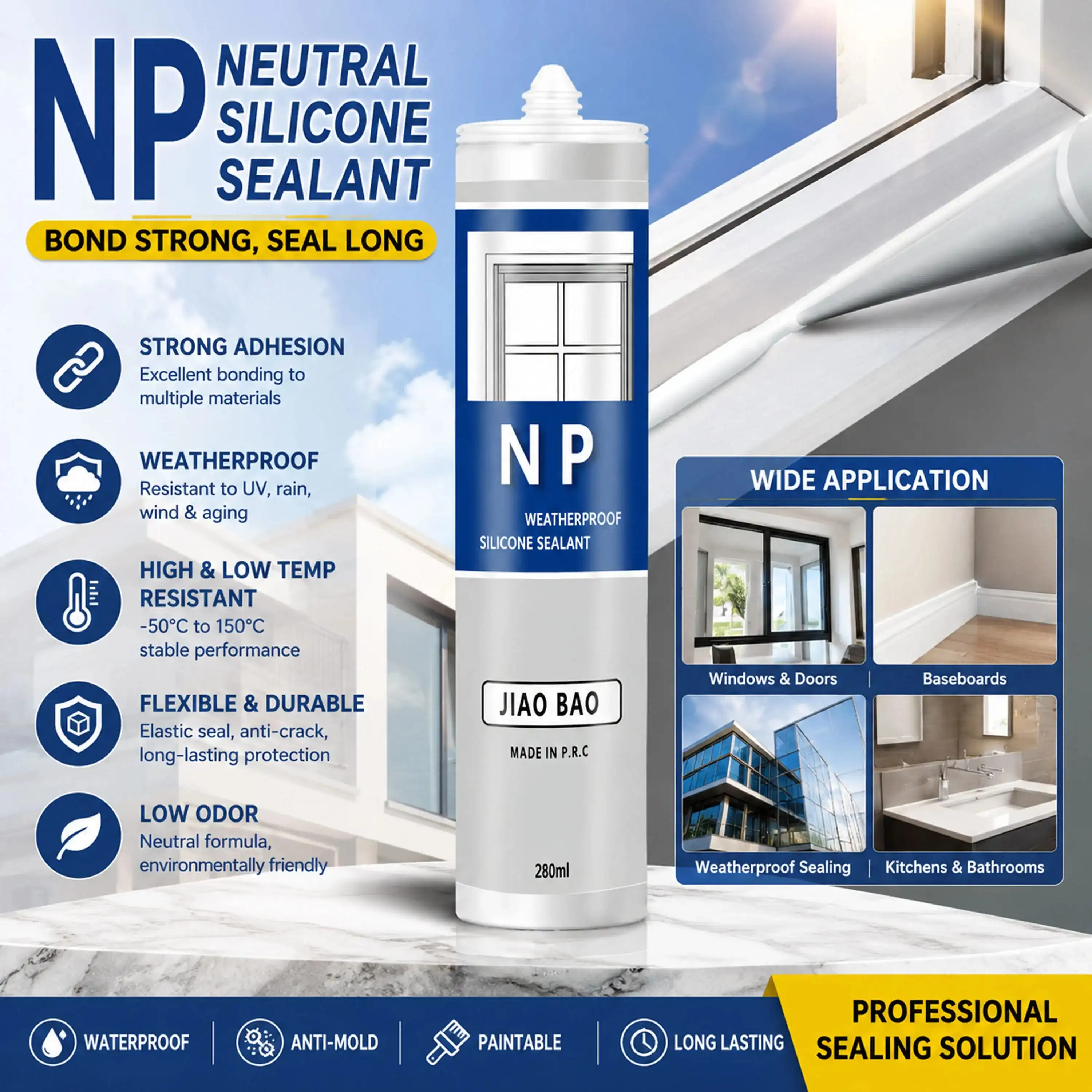
Before buying wall sealing materials, you need to carefully check that they meet certain performance standards that are in line with the project requirements and the surrounding environment. Technical teams need to think about more than just adhesion to make sure that the materials are compatible with the overall strategy for the building envelope and the NP Silicone Sealant for Curtain Wall specifications.
The most important technical feature for curtain wall sealants is their ability to allow movement. Thermal cycles, wind loads, and base settling all cause a lot of structural movement in high-rise buildings. Our NP Silicone Sealant for Curtain Wall allows joints to move 25% of the way. This means that a 10mm joint can safely grow or shrink by 2.5mm without the seal breaking. You need to test the adhesion for all of the different substrates in your system. For example, the surfaces of glass, anodised aluminium, powder-coated metals, natural stone, and composite panels are all different. As much as possible, primerless bonding should be confirmed through testing so that installation is easier and costs less. Service life is based on how well something can stand up to weathering. For 20 years or more, neutral silicone seals that are used correctly can withstand UV degradation, ozone attack, and changes in temperature without chalking or breaking.
International standards make sure that the quality of the sealant you buy is consistent. Our goods meet the requirements of ASTM C920 Type S, Grade NS, Class 25 and ISO 11600 F&G standards, which describe how well they move and stick together. These labels show that materials have been through strict tests in the lab to check their tensile strength, stretch, compression recovery, and how quickly they break down in the elements. In B2B procurement, supplier credentials are just as important as product certifications. Manufacturing companies should keep up with ISO 9001 quality control systems to make sure that stability from batch to batch is maintained, which is important for big projects. CE marking shows that a product meets European safety standards. This is especially important when choosing materials for foreign projects or meeting client demands for quality standards that are known all over the world.
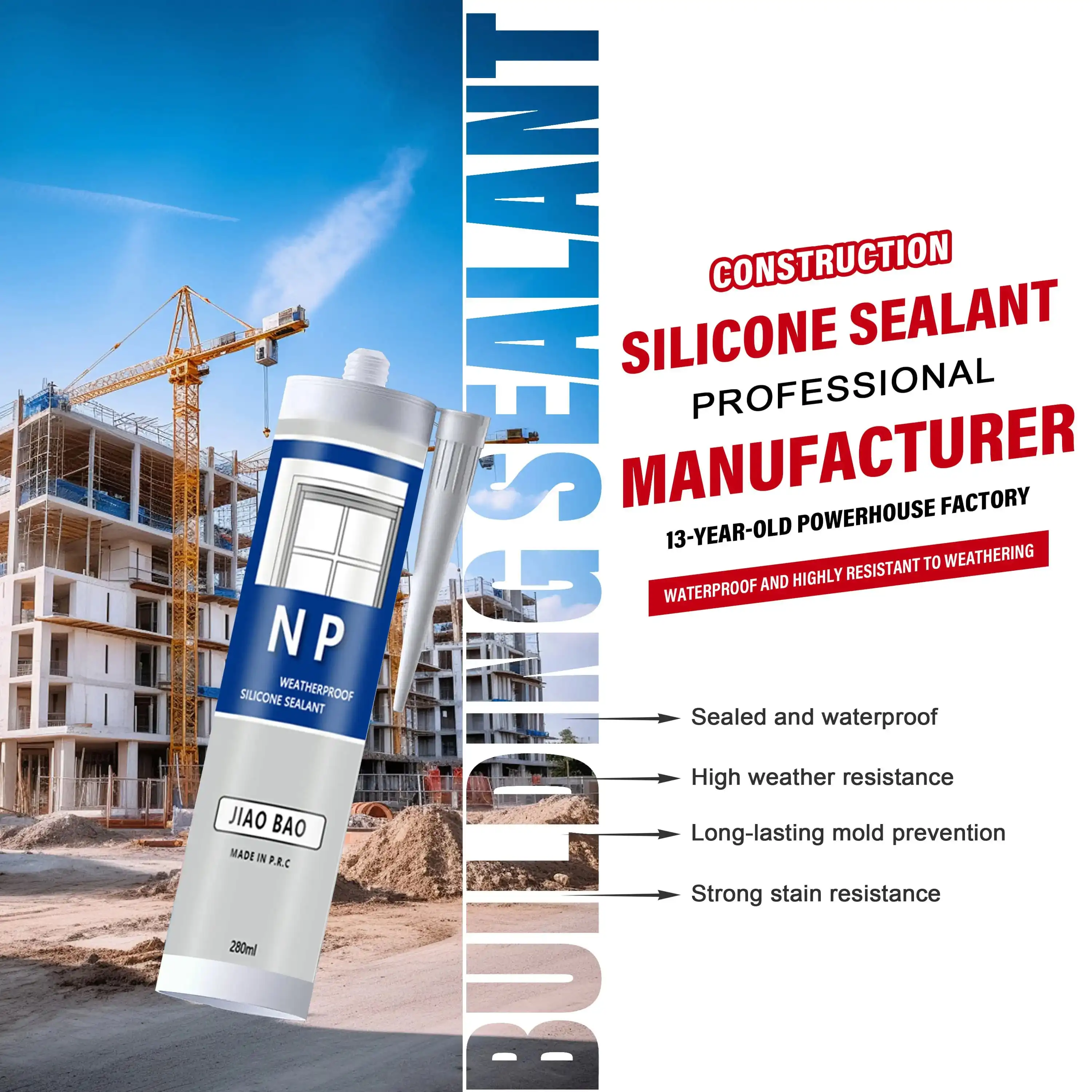
Reliability in the supply chain has a direct effect on project timelines and the performance of materials. Buying NP Silicone Sealant for Curtain Walls from manufacturers directly instead of going through middlemen can help with quality control, technical support, and cutting down on costs.
Working directly with well-known manufacturers like Shandong Jiaobao New Material Co., Ltd. cuts out the middlemen and gives you access to technical knowledge that you can't get from general dealers. Since 2013, when we started making things, we've improved our production methods so that they work the same way every time, even for big orders. Direct engagement lets you change the way the packaging looks. For example, our NP Silicone Sealant for Curtain Wall comes in 300ml and 600ml sizes and can be packed as cartridges or sausages, based on the application tools you use. This flexibility cuts down on waste and helps workers put things more quickly and efficiently. When choosing materials and fixing problems, technical help from the manufacturer's research teams is very helpful. Our experts look at the different types of substrates, the shapes of the joints, and the conditions of the surroundings to figure out what products will work best with your curtain wall system and how to install them.
When choosing a supplier, doing your research is important to avoid quality problems and supply interruptions. A manufacturing capacity assessment should show that the supplier can meet your volume needs and project deadlines. For example, our facility delivers standard orders within one to two weeks. Documentation for quality control makes testing protocols and batch verification procedures clear. Ask for technical data sheets, safety data sheets, and test results that show the product meets certain standards. Referrals from finished projects of a similar size and level of difficulty are a useful way to check how well a provider did. Logistics capabilities in different areas affect how reliable deliveries are and how much they cost. Our shipping choices by sea or land are flexible enough to suit project sites all over North America, and we offer competitive freight rates and reliable transit times.
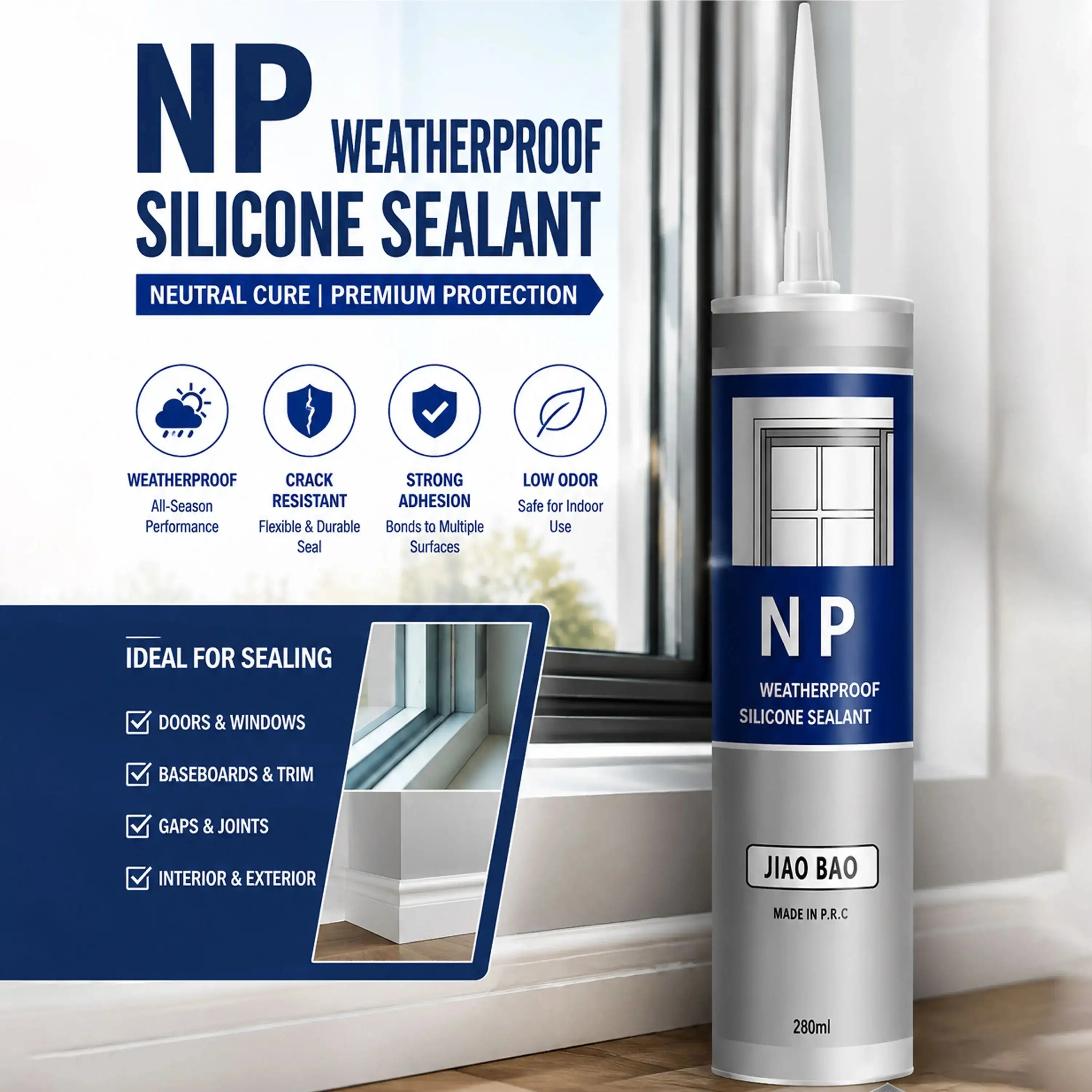
When buying NP Silicone Sealant for Curtain Wall, it's important to look at more than just the unit price. You should also think about the total cost of the purchase and how much it will be worth in the long run. Strategic buying methods find a balance between immediate budget constraints, quality needs, and building relationships with suppliers.
The main thing that changes the price of silicone is the cost of the raw materials. The price of polydimethylsiloxane polymer changes because of changes in the world supply chain. More expensive versions with better plastics and non-polluting additives are worth it compared to cheaper ones that might have fillers that hurt their long-term performance. Through economy of scale effects, the amount of production has a big effect on unit costs. Manufacturers can offer better prices on large orders by adjusting batch sizes and cutting down on setup costs. Our minimum order quantities are set up to give big projects a competitive edge while still making our products available for medium-sized installations. Formats of packaging also affect prices. For example, sausage packaging is often cheaper than single cartridges for large-volume uses involving bulk dispensing equipment. Shipping costs depend on the number of items ordered, the distance to the location, and the goods method chosen. For accurate budget planning, landing cost analysis is a must.
When your project needs large amounts of something within a certain amount of time, volume agreements can help you negotiate prices. When manufacturers know all of the project needs up front, they can make competitive bids that show the full value of the relationship. If you negotiate payment terms, you may get small discounts for paying right away, and if you have a history of good credit, you may be able to get longer terms that make managing your cash flow easier. The terms of the quality promise should be written down clearly. This should include things like warranty coverage, replacement procedures for broken materials, and expert help. As part of our after-sales service, we promise to refund or replace any problems with quality that happen during the shelf life period. Building long-term relationships with dependable makers has benefits that go beyond the price of a single transaction. Customers who buy from us more than once get priority for fast orders, requests for customisation, and access to expert consultations that are useful for more than one project.
The way NP Silicone Sealant for Curtain Walls work in real-life installation and long-term service settings can be seen through experience. These cases show important factors that led to success and lessons that can be applied to your buying decisions.
The conditions for protecting the outside of a 35-story mixed-use building near the coast were tough. The project called for an aluminum-framed unitised curtain wall with protected glass units that would be able to handle salt spray, temperature changes from -10°C to 35°C, and wind speeds equivalent to a storm. Our NP Silicone Sealant for Curtain Wall was chosen to seal the outer joints because it has been shown to be resistant to salt water and be able to move. Installation happened in several stages over the course of 18 months, so each batch had to be of the same quality to avoid visible colour differences. The project used our gray-colored formulation in 600ml sausages, and pneumatic dispensers were used to make the application process as efficient as possible. Five annual rounds of tracking after installation have shown that there have been no joint failures, no stains on nearby glass surfaces, and continued weatherproofing integrity, which was confirmed by testing for water penetration. The building owner says that there have been no upkeep costs linked to the performance of the sealant. This shows how important it is to choose high-quality materials at the start instead of fixing problems as they happen.
A cultural center with curtain wall panels made of granite and marble needed a sealant that wouldn't pollute the environment to stop oil from penetrating the stone and staining it. Most traditional silicone sealants have plasticisers in them that seep into natural stone and make ugly dark rings around joints. Our NP Silicone Sealant for Curtain Wall specifically addresses this issue with non-polluting chemicals that have been tested and proven to be safe by ASTM C1248. The installation team liked that the tooling time was longer before the surface was skinned. This made it possible to profile the joints correctly even when it was warm outside. Stone producers and builders tested mock-ups before the actual placement and found that there was no staining after 90 days of observation. This case shows how important it is to match the chemistry of the glue to the properties of the substrate. If the wrong materials are chosen based only on price, expensive repairs will have to be made later.
For curtain wall projects, getting high-performance NP Silicone Sealant for Curtain Wall means working with manufacturers who offer reliable supply chain execution, comprehensive technical support, and products that have been tested for quality. Moving ability, resistance to weathering, suitability with substrates, and certification compliance should be given more weight than price alone during the evaluation process. Jiaobao New Materials meets these needs with goods that are ISO and CE certified, production experience of more than 13 years, and helpful customer service that includes help with initial specifications and long-term project support. Our reasonable prices come from producing quickly without lowering the quality, and our delivery options make sure that your project stays on schedule.
Under normal conditions (25℃, 50% relative humidity), the surface of NP Silicone Sealant for Curtain Wall cures in 30 minutes, which lets the tools be finished without any dust. The full cure depth moves forward at a rate of about 3 mm per day, and full polymerisation is reached in 7–14 days, based on the size of the joint and the factors outside. When it's cold or there isn't much humidity, curing takes longer. When it's warmer and more humid, the process goes faster.
In exterior joints, NP Silicone Sealant for Curtain Wall keeps out the weather, and structural window sealants stick glass to frames so they can hold weight. Both are made from silicone, but they are made in different ways. Neutral weatherproofing sealants focus on being flexible and able to accommodate movement, while structural sealants have higher modulus and tensile strength to support glass weight. A lot of curtain wall systems use structural sealant to hold the glass together and neutral sealer to keep out the weather. Each is best for its own job.
Depending on the seller, the minimum number of cartridges needed to get a normal price range is between 1,000 and 5,000. Our facility can handle smaller orders at first for project testing and sampling, and we offer better prices for larger orders that are good for full building installations. For very big projects that use automatic dispensing equipment, bulk packaging choices like 20-liter pails can save money.
Through our NP Silicone Sealant for Curtain Wall product line, which is specifically designed for curtain wall applications, Jiaobao gives procurement teams complete solutions for problems with sealing facades. Our technical specs—25% moving capacity, weather performance from -50°C to +150°C, and Shore A 30 hardness—meet the strict needs of high-rise buildings while keeping our prices low. In addition to supplying products, we also offer OEM/ODM customisation to fit the needs of different regions, different packaging choices that lower the cost of installation, and quality warranties that protect your investment. Email our team at dorashen@cnjiaobao.com to talk about the details of your project and get personalised suggestions along with detailed technical information to help you choose the right materials.
1. American Society for Testing and Materials. Standard Specification for Elastomeric Joint Sealants (ASTM C920-18). West Conshohocken: ASTM International, 2018.
2. Glass Association of North America. Glazing Manual. Topeka: Glass Association of North America, 2020.
3. International Organization for Standardization. Building Construction—Jointing Products—Classification and Requirements for Sealants (ISO 11600:2002). Geneva: ISO, 2002.
4. Klosowski, John M. and Wolf, Arnold T. Sealants in Construction, 2nd Edition. Boca Raton: CRC Press, 2016.
5. National Glass Association. Sealant Application for Architectural Glazing Systems. Vienna: National Glass Association, 2019.
6. Panek, Julian R. and Cook, J. P. Construction Sealants and Adhesives, 3rd Edition. New York: John Wiley & Sons, 1991.
November 16,2023
Enterprise Name
The sealant has very strong adhesion and performs well even on glass and aluminum. After curing, it remains flexible and shows no cracking. Perfect for our facade projects.
November 16,2023
Enterprise Name
Stable quality across batches. Our customers especially like the smooth application and consistent extrusion. It helps reduce installation time on site.
November 16,2023
Enterprise Name
I used it for bathroom sealing. Excellent waterproof performance and no mold issues so far. It's been holding up very well in humid conditions.
November 16,2023
Enterprise Name
The neutral silicone works well on sensitive materials without corrosion. Very suitable for industrial applications requiring stable performance.
_1779347426672.webp)