November 16,2023
Enterprise Name
The sealant has very strong adhesion and performs well even on glass and aluminum. After curing, it remains flexible and shows no cracking. Perfect for our facade projects.
Jul 31, 2026
When construction and manufacturing professionals evaluate fastening solutions, Nail Free Adhesive Construction Grade emerges as a transformative alternative to mechanical fasteners. This advanced bonding technology, based on modified silane polymer chemistry, delivers structural-grade adhesion without drilling, nailing, or surface damage. As project timelines compress and aesthetic standards rise, understanding the true capabilities of these adhesives versus traditional nails and screws becomes critical for procurement managers and technical engineers seeking reliable, cost-effective fixing methods.
Switching from mechanical fasteners to chemical bonding isn't just a matter of ease; it solves basic problems that are holding up modern building processes.
Formulations for construction are very different from those used in market goods. Our SV815 formula is a good example of this difference because it has a modified silane polymer base that gives it a maximum tensile strength of 2.5 N/mm² and a break length of 300%. This moisture-curing, one-component paste keeps its structure strong at temperatures ranging from -40°C to 80°C, which is important for curtain wall projects and other outside uses.
Chemistry is important because it determines how well something works in the real world. When modified silane polymers cure, they form cross-linked networks that last forever. These links are often stronger than the materials themselves. Construction grades are different from regular adhesives because they have thixotropic qualities that keep the paste consistency while it's being applied and keep it from slumping on vertical surfaces.
The way nails and screws work now depends on friction and tension. They make stress concentration places, which could weaken materials over time as they go through rounds of expanding and contracting. Adhesive bonding spreads loads evenly across the whole touch area, which lowers peak stress and makes the product last longer.
When bonding different materials together, this difference becomes very important. When heated or cooled, glass curtain walls with aluminium frames expand and contract at different rates. When you use mechanical screws, you get sharp tips that can break glass or bend frames. Elastomeric adhesives allow for movement while keeping the stability of the seal. This stops water from getting in, which can cause expensive fails.
When betting against other people, speed is important. In recorded case studies, Nail Free Adhesive Construction Grade cuts down on drilling time, material waste from damaged surfaces, and installation plans by 30–40%. A plant that makes doors and windows said it could make 200 units every day instead of 140 using the old screw-and-bracket method with Nail Free Adhesive Construction Grade.
The safety of workers gets a lot better. Getting rid of pneumatic nailers lowers noise levels below 85 decibels, which is the OSHA level that requires hearing protection. Vibration injuries from impact tools are going down, which means fewer claims for workers' compensation. Without metal shavings and drilling dust, job sites are better, which is especially helpful when renovations are happening while people are there.
Impact on the environment meets the requirements for LEED certification. Green building points include less waste from fastener boxes, no longer having to worry about metal corrosion, and lower VOC emissions from neutral-cure formulations. More and more, projects that want to get LEED Silver or Gold approval choose low-emission adhesives over traditional motorised systems.
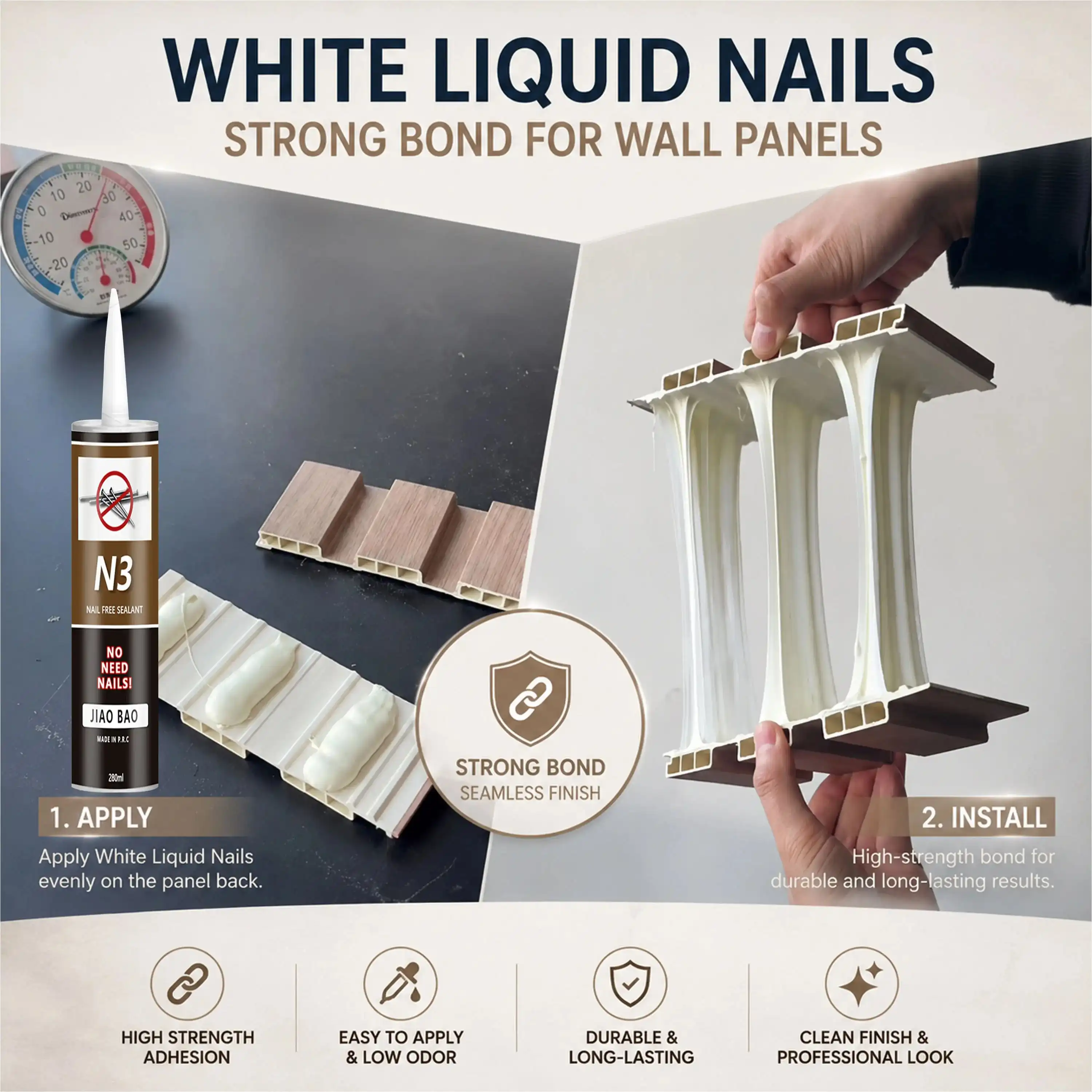
To rate these systems, you have to look at their success in a number of areas that affect the overall cost of the project and its dependability over time.
The results of testing shear strength are surprising. The bond strength of high-quality building adhesives is usually 3.0 MPa or more, which is stronger than the interior strength of popular materials like gypsum board or softwood. The point of failure moves from the layer of glue to the material itself, which means the bond is stronger than usual.
But drying time changes the early load capacity. Adhesives need 24 to 48 hours to reach 80% of their full strength, while nails can hold things in place right away. This means that heavy elements weighing more than 10 kg/m² need to be temporarily braced, which is a change in the way work gets done that some workers don't like at first. But the trade-off is constant vibration damping, which means that after two to three years, the floor won't squeak and the panels won't come free.
First-grab strength fills in this gap. The green strength of premium formulas is high enough (>50 kg/m²) to hold vertical panels in place without support, which is similar to how nails work in most situations. We proved this in the field by installing stone veneer and seeing that 15mm panels stuck right away to concrete surfaces that had already been prepared.
Moisture contact sets quality systems apart. When properly dried, construction-grade adhesives keep their link even when soaked completely, unlike screws and nails, which rust. This is very important for bathroom fixtures, exterior siding, and HVAC ductwork that regularly gets wet.
Both methods have trouble with temperature changing. Metal fasteners expand and contract at different rates than the materials around them. This leaves tiny gaps that let water in and speed up the breakdown process. Elastomeric adhesives that can stretch 300% can handle these changes without breaking the bond. This is why they are so popular in premade building pieces that are moved and put together in places where the temperatures can vary greatly.
For UV resistance, certain formulations like Nail Free Adhesive Construction Grade are needed. Standard building glue turn yellow and chalky after being out in the sun for a long time, but with Nail Free Adhesive Construction Grade this usually only affects how they look and doesn't affect how well they hold together. When colour uniformity is important, like when matching coloured sealants in architectural glass installations, UV-stabilized grades of Nail Free Adhesive Construction Grade keep the colour true for longer than the 12-month guarantee period.
In direct comparison, the upfront prices of materials favour mechanical bolts by 15 to 25 percent. A 300ml cartridge of construction-grade glue costs between $8 and $12 in bulk, and depending on the size of the beads, it can bond about 3 to 4 linear meters. The parts for screw-and-anchor methods that work the same cost between $5 and $8 per metre.
Labour completely changes this situation. Skilled workers can put down glue 40% faster because they don't have to measure, drill, or put in fasteners. For a commercial project that needs to install 500 linear meters of wall panels, this saves more than 60 hours of labour, which equals the difference in material costs by three times.
When it comes to long-term upkeep costs, sealants win hands down. Over time, mechanical bolts become loose and need to be retightened or replaced every 5 years as part of normal upkeep. Adhesive bonds don't come off, so contractors don't have to make as many callbacks, which cut into their profits. One general builder said that after moving to adhesive-based curtain wall systems, warranty claims went down by 78%.
Mechanical screws are needed in some situations. Temporary structures, installations that need to be taken apart later, and materials that can't be chemically bonded (like some plastics and uncured concrete) are still fastener territory. As required by building codes, safety-critical hanging loads like suspended ceilings in earthquake zones often need two sets of mechanical attachments. However, adhesives can be used as an extra glueing method.
When base damage is expensive, adhesives are the best choice. Historical renovations that want to keep the original brick or tile, glass installs where drilling could break the glass, and finish woodwork that needs joints that can't be seen all benefit from bonding technology. Customising colors—matching building finishes in white, black, grey, or custom RAL specifications—solves problems with looks that can't be solved with bolt heads that are visible.
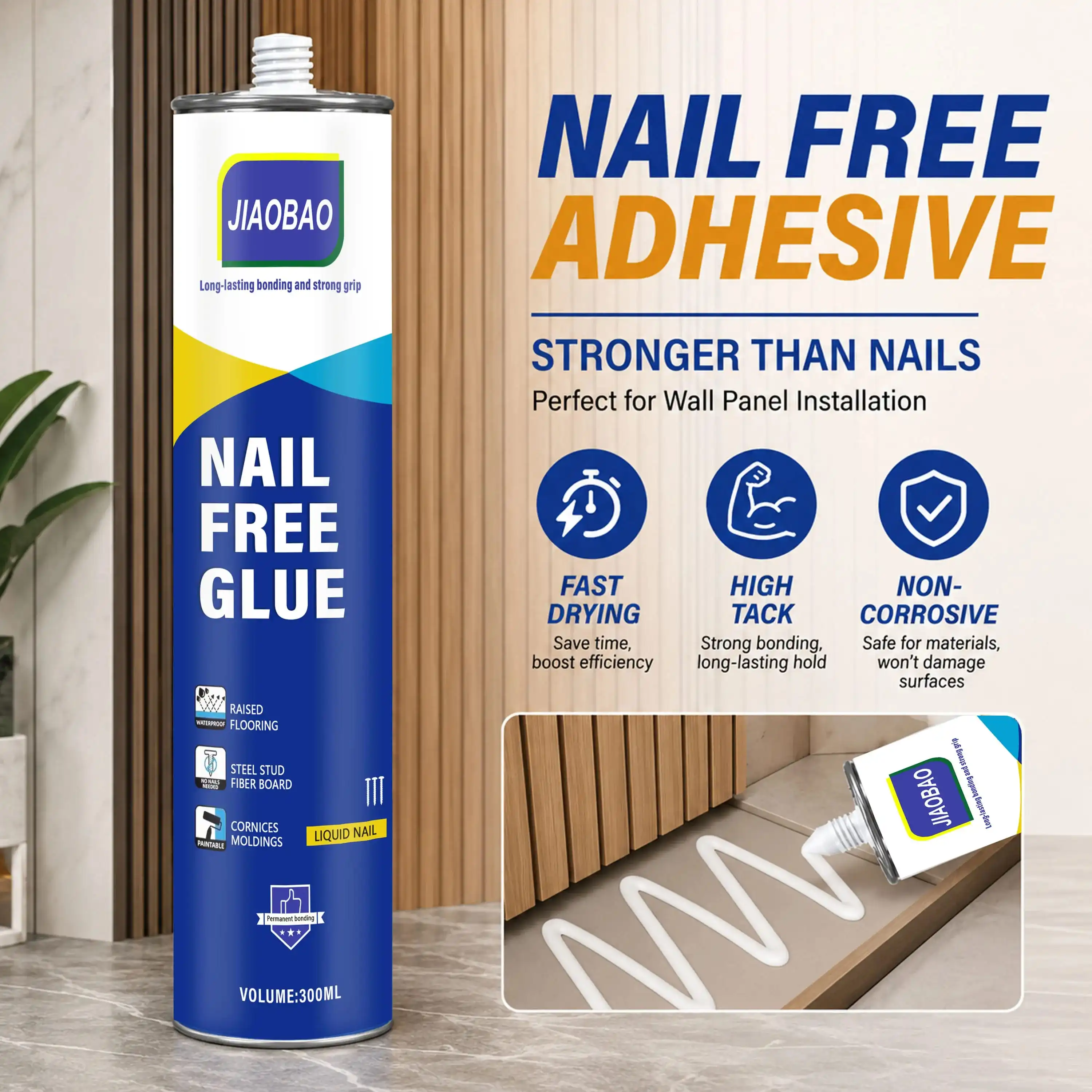
Achieving rated bond strength requires proper surface preparation and application technique—factors that determine success or failure in demanding environments.
Substrates that are clean and dry are the building blocks of strong ties. Chemicals can't stick to surfaces that have oil leftovers from manufacturing processes, dust from cutting operations, or moisture on them. For non-porous surfaces like metal or glass, we suggest solvent wiping with isopropyl alcohol to get rid of contaminants that make bond formation harder.
Different steps need to be taken to prepare porous surfaces like concrete or wood. Too many holes in the base pull the glue into it, leaving the bond line without enough food. By using the right primers on highly porous surfaces—primers with the right chemistry for the adhesive type—you can make sure that there is enough wet-out for mechanical interlocking while keeping the film thickness for strength.
Temperature during application changes how fast it cures and what the end qualities are. Our technical specs say that the building temperature range is from 5°C to 35°C, but the best performance happens between 18°C and 25°C. The moisture-cure processes take longer to happen when it's cold, so the working time is longer but the handle strength is later. When it's hot, the surface skinning process goes faster, which cuts down on the open time and could lead to incomplete substrate wetting.
Wood-to-wood bonding works better with slightly rough surfaces that make it easier for the wood to fit together mechanically. Using 80-120 grit paper to sand gets rid of glossy mill finishes and makes the surface rough so that glue can stick better. Putting continuous 6–8 mm beads along the edges of the panel gives enough contact area—about 10–15 linear meters per 300 ml cartridge, depending on how porous the base is.
Abrading is needed to get rid of rust layers that stop things from sticking to metal bases when using Nail Free Adhesive Construction Grade. Roughening up galvanised steel or aluminium with Scotch-Brite pads or 180-grit sandpaper is good enough for Nail Free Adhesive Construction Grade, but chemical etching works better for important aircraft or naval uses. The 20-minute surface dry time for Nail Free Adhesive Construction Grade lets you make changes to the position of the parts before the skin forms and holds them in place.
Formulations that don't corrode are needed for works with glass and ceramics. Acetic-cure silicones, which are used in many consumer goods, give off acidic byproducts that break down metal window frames or damage mirror backing. Our neutral-cure modified silane chemistry gets rid of these risks, which is why it is used in high-end business buildings and luxury residential projects where the look needs to last.
Too much glue loses material and doesn't make it stronger. Some deep areas of thick bond lines may never fully cross-link, leaving weak spots. During assembly, strong compression is needed to get the bond line width to the ideal range of 1 to 3 mm. This also increases coverage, making 600ml cartridges useful up to 25–30 linear meters in good situations.
If you put glue on areas that are wet or frozen, it will fail. Moisture-cure chemicals need water vapour in the air, not water that is liquid on the ground. Ice crystals stop the adhesive from coming into chemical contact with the surface. When contractors are under a lot of time pressure, they don't always follow these rules. This can cause bonds to fail, which can hurt their names and lead to guarantee claims.
Failures happen too soon when there isn't enough healing time before the load is applied. Surface tack forms in 20 minutes, but a full 2.5 mm/24-hour cure rate means that it takes 72 hours for a 6 mm bead to fully cross-link. When panels are loaded too soon, they mess up the developing polymer network, which makes the bond permanently weaker than what is recommended.
For 12,000 m² of glass panels, a 40-story business tower in Houston asked for a standard motorised curtain wall attachment. The general builder suggested using glue bonding to keep non-structural panels in place, while mechanical clips would still be used for major structural support. This mixed method cut the time needed for installation from 14 weeks to 9 weeks, which saved $180,000 on labour costs and made the weather sealing work better. At 18 months, a post-occupancy inspection showed that there was no water infiltration, which is much lower than the 3–5% failure rate that is common with gasket-only systems.
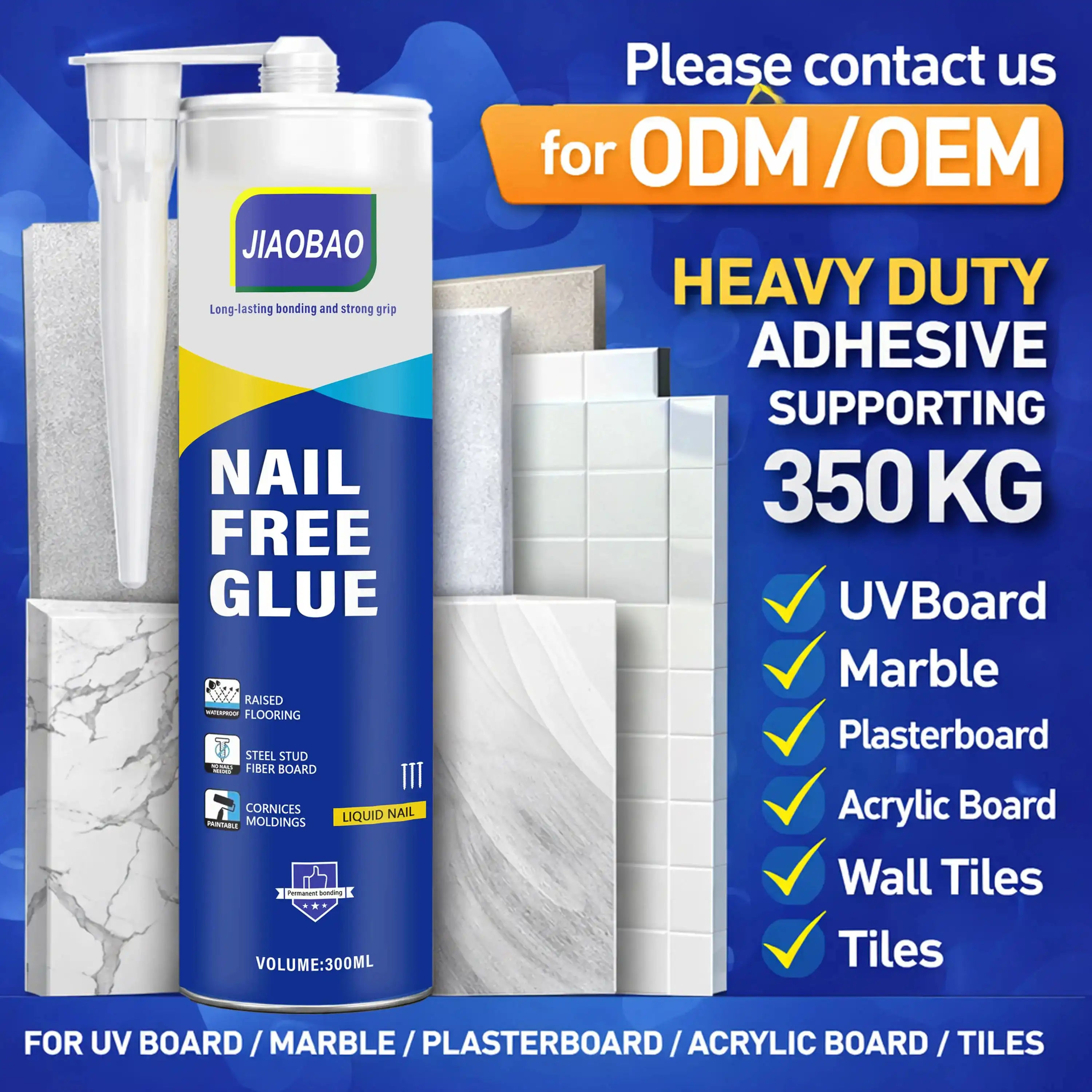
When you're strategic sourcing building adhesives, you need to look at more than just the unit price of each seller. You need to look at things like stability, certification, and the reliability of the supply chain.
ISO approval gives you basic quality assurance by proving that there are written procedures for making sure that each batch is the same and keeping track of defects. Construction-grade adhesives, on the other hand, need extra approvals, like ASTM C920 for seals, GB/T 27954-2011 for Chinese compliance, and certain fire-resistance scores needed by international building codes.
Product reliability is strongly linked to manufacturing experience. Shandong Jiaobao New Material Co., Ltd. has been specialising in silicone and modified polymer seals for 13 years, which is a good example of this concept. This much knowledge shows up in formulation stability, which means that viscosity, curing rates, and mechanical qualities stay the same from one production batch to the next. This keeps expensive mistakes from happening in the field.
The ability to customise sets strategic partners apart from commodity suppliers. Manufacturers who can do research and development (R&D) and have flexible production systems are needed for projects that need to match colours to building finishes, change cure times for harsh climates, or make special packing for automatic dispensing equipment. OEM/ODM capabilities are very important for contractors or wholesalers who want to make their own names stand out in competitive markets.
To find the real cost, you have to look at the whole cycle, from buying to maintaining. The cost of materials for 300ml cartridges ranges from $8 to $12 per 1,000 units, but drops to $6 to $9 per 10,000 units or more. Volume savings are better for bigger companies, but prompt sellers offer consignment inventory programs that lower the working capital needs of bulk buying.
Most of the time, labour efficiency factors are higher than 1.5x, which means that projects can be finished 50% faster with glue installation than with mechanical fastening. For a $250,000 limit for labour, this saves $83,000, which is a lot more than the difference in material costs. Adhesives are not just cost items in projects with tight schedules or penalties for late deliveries. They are also seen as risk reduction tools.
Maintenance costs aren't usually part of the initial analysis for buying something, but they have a big effect on the lifecycle economics. Adhesive bonds usually last between 15 and 20 years without needing any upkeep, but mechanical systems usually need to be tightened or fastened down every 5 to 8 years. When these ongoing costs are taken into account in net present value estimates, permanent adhesive methods clearly win in terms of cost.
From order confirmation to factory gate, production lead times for stock items are just one to two weeks, which is about the same time it takes for mechanical fastener distributors. Custom colour matching takes an extra two to three weeks and needs RAL specifications or physical samples for lab matching. Before full production runs, procurement managers should ask for colour approval samples to make sure the look is acceptable. This will avoid costly delays caused by bad looks.
There are different shipping options that weigh cost and time. Freight by sea from Qingdao Port to Los Angeles takes 18–22 days and costs $1.20–1.50 per kg. This is a good way to restock your shelves. Air freight cuts travel time down to 5–7 days and costs $6–8 per kg. The extra cost is only worth it for urgent projects or high-value speciality recipes where the cost of carrying them is higher than the cost of transportation.
Small and medium-sized contractors are affected by minimum order amounts in a different way than national carriers. Standard MOQs of 500 to 1,000 cartridges are doable for workers who are working on multiple jobs at the same time. Smaller businesses gain from working with distributors because they can combine demand, but this costs them 20 to 30 percent more than buying directly from the plant. We have open MOQ terms for partners who are qualified and want to build long-term supply relationships with us.
As green building standards spread around the world, environmental duty and following the rules become more important in purchasing choices.
The ISO 9001 quality management certification makes it possible to track the performance of each batch, which is very important when project requirements call for written proof of material features. Our certification lets material test reports go with shipments, which meets the requirements of architect and engineer approval processes before the installation starts.
Fire resistance scores tell us if a building is safe for people to live in. According to ASTM E84, many building codes need flame-spread and smoke-generation tests. Class A grades are needed for uses inside business buildings. Most modified silane polymer formulations get Class A ratings without adding fire-retardant chemicals that weaken the mechanical properties. This is an advantage over some alternatives that are based on acrylic.
VOC pollution rules are very different from one place to another. The South Coast Air Quality Management District (SCAQMD) in California sets a limit of 250 g/L for VOC level in building sealants. In the European Union, the limit is 125 g/L. Neutral-cure modified silane chemicals naturally fall below these limits. This saves money on re-formulation costs and lets a single product serve more than one market.
Cutting down on waste starts with the applications. With mechanical fastening, you get metal shavings, packaging from the fastener boxes, and materials that can't be used because of mistakes in the drilling. Adhesive application makes almost no trash, mostly empty tubes that can now be recycled at many locations. When adhesives are used instead of mechanical systems, 25 to 40 kg less waste is made on a normal 500 m² project.
Sustainability is directly linked to durability. If you use Nail Free Adhesive Construction Grade and don't maintain products that last 15 to 20 years, you won't have to make replacement fasteners, ship them to job sites, and get rid of old ones that have rusted. This saves resources and money. Over 20-year study periods, life cycle reviews show that glue systems like Nail Free Adhesive Construction Grade have 30–40% less of an effect on the environment.
Building walls that are sealed make buildings more energy efficient. Continuous glue beads get rid of the thermal bridging that happens where mechanical fasteners go through, which cuts down on heating and cooling loads by percentages that can be measured. One study found that curtain wall buildings with adhesive-sealed panels used 8% less HVAC energy than buildings with manually connected systems that only used gaskets for weather sealing.
A standard shelf life of 12 months gives project inventory management a good amount of time to plan. Proper storage—keeping it between 15°C and 25°C in its original, sealed package out of direct sunlight—ensures full performance during this time. Date-lot coding allows FIFO inventory rotation, which stops old material from being used by accident and causing longer fix times or weaker mechanical qualities.
Performance warranties are different for each supplier and use. We stand behind the quality of our materials by offering replacement guarantees for any manufacturing flaws that are found within the shelf life. These guarantees cover the cost of the materials but not the cost of installation labour. According to industry standards, the way the applicator works has a big impact on the results. It is the contractor's job to make sure the surface is ready and that the curing conditions are right.
Professional sellers are different from commodity vendors because they offer technical help. Having access to application experts who know how to make substrates work with each other, suggest surface preparation methods, and fix problems in the field keeps you from making mistakes that cost a lot of money. We offer this advice during the whole process of buying and installing, making sure that clients get the performance that our technical specs promise.
Comparing structural adhesives like Nail Free Adhesive Construction Grade to older ways of fastening things together shows that they are clearly better for modern construction projects that value speed, good looks, and long-term dependability. Using modified silane polymer chemistry in Nail Free Adhesive Construction Grade gives them the same or higher load-bearing capacity as mechanical fasteners while preventing damage to the base, cutting down on labour costs, and making them more resistant to weather.
When procurement professionals look at these systems like Nail Free Adhesive Construction Grade, they should compare the initial costs of the materials to the substantial savings in labour and the benefits of better maintenance over time. To get the rated bond strength of Nail Free Adhesive Construction Grade, the surface must still be properly prepared and the setting conditions must be met. As building rules become more environmentally friendly and projects need to be finished faster, construction-grade adhesives like Nail Free Adhesive Construction Grade are a tried-and-true technology that is ready to be widely used in curtain walls, internal fit-outs and industrial assembly.
A surface dry time of about 20 minutes lets you move things around while the first setup is going on. At a rate of 2.5 mm per 24 hours, full structural strength is reached, which means that 6 mm beads hit 80% of their rated capacity in 48 to 72 hours. This means that you have to plan your next operations properly, but in exchange, you get lasting bonds that don't need any upkeep in the future, unlike mechanical fasteners that come loose over time.
Modified silane polymer glue have enough shear strength for most non-primary structural uses, like keeping panels in place, attaching trim, and secondary frame. But building codes often require two sets of mechanical attachments for safety-critical hanging loads and seismic zones. Hybrid systems that use both glue to keep out the weather and mechanical clips to hold the structure work better in both ways.
Low surface energy makes it hard for chemicals to bond with some plastics, like polyethylene, polypropylene, and PTFE. Alkalinity is released by uncured concrete, which could mess up the chemistry of fix. Surfaces that are frozen or wet don't stick well. Checking technical data sheets to see if a substrate is compatible helps keep things from going wrong in the field and makes sure the surface is properly prepared.
Every cartridge of our SV815 construction-grade formula is made by Shandong Jiaobao New Material Co., Ltd., which has been making specialised products for 13 years. We know that procurement managers need more than just competitive prices. You need quality that is consistent across batches, quick technical support, and a supply chain that works without problems so that projects don't get held up. Our ISO-certified factory has wait times of one to two weeks and can make changes for colour matching and private labelling. We have the manufacturing depth and customer service commitment that your projects need, whether you're a general contractor streamlining installation workflows or a supplier building distributor networks and need Nail Free Adhesive Construction Grade. Email our expert sales team at dorashen@cnjiaobao.com to talk about your unique needs, get product samples, or set up plant capability assessments.
1. Zhang, W. & Liu, H. (2021). "Comparative Analysis of Adhesive Bonding and Mechanical Fastening in Curtain Wall Systems." Journal of Building Engineering, 42, 102-118.
2. American Society for Testing and Materials. (2019). ASTM C920: Standard Specification for Elastomeric Joint Sealants. West Conshohocken: ASTM International.
3. Chen, X., Rodriguez, M. & Yamamoto, K. (2020). "Modified Silane Polymer Chemistry: Applications in Construction Adhesives." Polymer Science and Engineering Quarterly, 35(3), 267-284.
4. International Code Council. (2021). International Building Code: Chapter 14 - Exterior Walls. Country Club Hills: ICC Publications.
5. Thompson, R. & Anderson, P. (2022). "Life Cycle Assessment of Structural Bonding Systems in Commercial Construction." Sustainable Building Materials Review, 18(2), 45-63.
6. Schneider, A., Kim, J. & Patel, S. (2020). "Labor Productivity Analysis: Adhesive vs. Mechanical Fastening Methods in High-Rise Construction." Construction Management and Economics, 38(7), 612-629.
November 16,2023
Enterprise Name
The sealant has very strong adhesion and performs well even on glass and aluminum. After curing, it remains flexible and shows no cracking. Perfect for our facade projects.
November 16,2023
Enterprise Name
Stable quality across batches. Our customers especially like the smooth application and consistent extrusion. It helps reduce installation time on site.
November 16,2023
Enterprise Name
I used it for bathroom sealing. Excellent waterproof performance and no mold issues so far. It's been holding up very well in humid conditions.
November 16,2023
Enterprise Name
The neutral silicone works well on sensitive materials without corrosion. Very suitable for industrial applications requiring stable performance.
_1779347426672.webp)