November 16,2023
Enterprise Name
The sealant has very strong adhesion and performs well even on glass and aluminum. After curing, it remains flexible and shows no cracking. Perfect for our facade projects.
Oct 9, 2026
When it comes to sealing concrete joints in modern buildings, choosing the right product directly affects how long a structure holds up. MS sealant for construction — based on silyl-modified polymer (SMP) technology — has become a go-to solution for engineers and procurement teams who need both performance and environmental compliance. This guide walks through what makes this polymer sealant work, how to apply it correctly on concrete joints, how it compares against other sealant types, and what to look for when sourcing it at scale.
Modified silane polymer sealant is one of a kind in the market for building supplies. It has the best mechanical qualities of polyurethane and the best weathering stability of silicone. It doesn't have any of the problems that come with either of those materials.
The curing process depends on silane-terminated prepolymers that are triggered by wetness. When the material is introduced to air humidity, it cross-links to form a strong elastic bead. There are no chemicals, isocyanates, or formaldehyde used in this moisture-curing process, which is a big plus for projects that want to get LEED or BREEAM approval.
Because it is porous, concrete can expand and contract with temperature changes and settle over time. ISO 9047 says that a coating used on concrete expansion or control joints must allow for movement of ±25% to ±50% of the joint width. With a tensile strength of about 2.2 MPa and an elongation at break of about 400%, this silyl-modified polymer regularly meets that need.
This type of MS sealant for construction is used by procurement teams and site engineers on exterior facade joints, prefabricated concrete panel assemblies, the edges of windows and doors, and the joints between walls inside buildings. It can stick to glass, aluminum, stone, wood, and PVC without a primer, which makes it useful for large commercial builds with a lot of different substrates.

Correct use makes the difference between a joint that lasts 20 years and one that breaks in two. Here is a useful order that professional installation teams follow when they are on-site.
Clean the joint faces of any dust, oil, loose particles, and old sealant that is still there. The structure of the concrete must be sound, and any surfaces that are likely to break or powder must be primed before they are used. The surface should be dry, but slightly damp surfaces are fine because SMP chemistry is hydrophilic. This means that the chemical can be used in more situations when it's raining.
Use a manual or pneumatic sealant gun with a nozzle that is the right size for the joint. As a general rule, the sealant should go at least 6 mm deep, which is half the thickness of the joint. For a 300-ml cartridge or a 600-ml sausage pack, cut the tip of the nozzle so that it fits perfectly into the joint. Apply in a continuous bead, and then use a tool to smooth out the surface within the tack-free window, which is between 25 and 40 minutes in the summer and 15 to 30 minutes in the winter.
Under normal conditions, the speed of curing is about 3.5 mm per day. Depending on the weather and humidity, full mechanical strength is reached in 5 to 7 days. Once fully cured, the sealant can work in temperatures ranging from -40°C to 120°C. This means it can be used for building in cold climates as well as in structures that will be open to heat sources.
Purchasing managers often want to know how SMP-based goods compare to other options. The comparison is important because making the wrong choice can lead to expensive repairs or checks that don't pass.
Standard silicone seals leave behind an oily film that seeps into porous materials like natural stone and stain them permanently dark. They also can't be painted over, which means they can't be used for most finishing work in homes or buildings. MS polymer sealer doesn't let silicone oil move around, leaves stone and glass clean, and most water-based paints can be used right away after drying. For that, silicone has an edge that stays sharp above 150°C, which isn't usually a problem in normal building envelopes.
Isocyanates are chemicals that are known to make the lungs more sensitive that are found in polyurethane seals. When they heal in wet conditions, they give off carbon dioxide gas, which makes bubbles and holes in the joint. MS sealant for construction gets rid of both risks. It has the same tensile strength as PU, but it is more stable against UV light and doesn't yellow or chalk when left out in the sun for a long time. The zero-isocyanate formulation is clearly better for projects that need to meet indoor air quality standards.
Over time, acrylic seals soak up water and become less flexible in places that allow for a lot of movement. They're good for small holes inside, but not for external concrete expansion joints where the structure can move. The Shore A hardness of MS polymer sealant stays around 45 throughout its entire service life. This makes it the more lasting choice for building surface uses.
For B2B construction buyers, choosing a supplier is about more than just price per unit. Here are the things that professional procurement directors always put first:
Before you decide on a supplier, make sure you get VOC test reports, EMICODE EC1 or EC1 Plus certification records, and ISO conformance documentation. To sell your products in Europe, you often have to meet the GEV-EMICODE standards before you can get into high-end building material stores or green building projects. Early on, suppliers who can't show third-party lab results on VOC content and formaldehyde lack should be ruled out.
A lot of brand owners and engineering procurement directors get MS polymer sealant to sell under their own names. When looking for an MS sealant manufacturer or supplier, make sure you know how much OEM production they can do, how long the lead times are (usually one to two weeks), and if they are willing to sign a non-disclosure agreement that protects formula details and brand assets. You should make sure that the 300 ml cartridges and 600 ml sausage packs that are available meet your downstream packing needs.
Shipping options by sea or land, a shelf life of 12 months from the date of production, and a clear policy for replacing or refunding faulty goods within the shelf period all greatly lower the risk of purchase. Before you place your first large order, ask for sample batches to test how well they stick to your unique substrates.

If you use silyl-modified polymer joints correctly, they won't need much care, but you should check on them every so often to protect your investment.
Every 12 months, check the sealed joints on the outside of the building and every 24 months, check the protected joints inside when using MS sealant for construction. Check for crazing on the top, rising of the edges, or cohesive failure inside the bead. Early detection lets you fix small problems before water gets in and damages the substrate.
If adhesion loss happens at the bond line instead of inside the sealant, it's usually because the surface wasn't prepared well enough before adding the sealant. Clean the base again, sand it down if needed, and then apply it again. In places where there are a lot of freeze-thaw cycles, make sure that the product you install has a temperature resistance rating that has been checked and proven to be at least -40°C.
Low-VOC, zero-solvent SMP sealants directly help earn points for indoor air quality under LEED v4 and other green building standards. By specifying compliant materials from the start, you can avoid having to make expensive substitutions during project audits.
When it comes to sealing concrete joints, silyl-modified polymer sealant works better than silicone, polyurethane, and acrylic alternatives. Its non-solvent and isocyanate-free recipe meets the needs of green building, its paintable surface supports finishing work in architecture, and its 400% stretch and 2.2 MPa tensile strength handle the movement needs of real structures. When procurement teams are making a unique, specification-grade product line, it is a smart and valuable move to choose a certified MS sealant for construction that comes with full environmental documentation and OEM flexibility.
Surface time without tack varies by season and can be anywhere from 15 to 40 minutes. It takes about 3.5 mm per day for the full depth to cure. It takes a normal 10 mm joint about 3 to 4 days to reach full mechanical strength in warm, wet places, and up to 7 days in cold or dry places.
Yes. Polyurethane bubbles when it comes in contact with wet surfaces, but silyl-modified polymer glue sticks well to surfaces that are only slightly damp. Make sure the concrete is structurally sound before you put it down, and don't let water or frost build up on the joint faces.
Plasticizers and flowing silicone oils in silicone sealants can move into porous stone and leave a lasting oil stain. MS polymer formulations don't have any of these migratory parts, so marble, granite, and sandstone facades stay clean for the whole service life.
Aluminum, glass, PVC, and clean concrete are just a few of the common things that don't need primer. For better long-term bonding, use a suitable primer on concrete surfaces that are very weak or easily broken. Before finalizing the standard, you should always do a pull-off adhesion test on example substrate samples.
Yes, MS polymer is as strong and flexible as PU or even stronger than it, and it doesn't contain isocyanates or cause bonding problems that are caused by dampness. A lot of people agree that it directly improves the performance of construction joints.
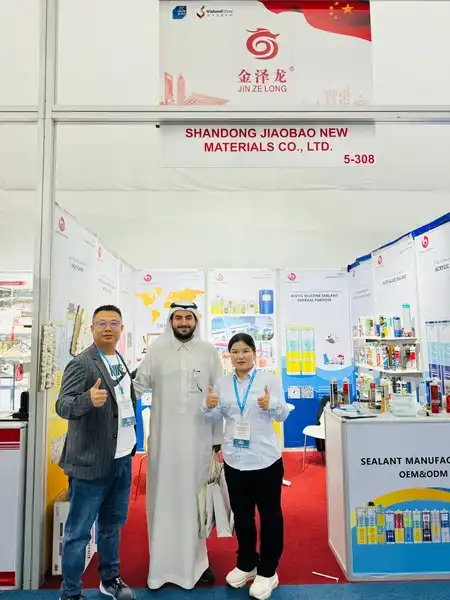
Jiaobao was established in 2013 and is based in Shandong, China. For more than ten years, it has been making special sealants for construction projects in China and other countries. Jiaobao is a reliable provider of MS sealant for construction. They make SMP sealants that are ISO and CE-certified and come in white, black, gray, and custom colors. They come in 300 ml cartridges and 600 ml sausage packs and have a shelf life of 12 months. Lead times for production are one to two weeks, OEM and ODM orders are welcome with full NDA protection, and any quality problem that is proven during the shelf life is covered by a refund or replacement. Send a list of the substrates you need and the details of your project to dorashen@cnjiaobao.com.
1. Petrie, E. M. Handbook of Adhesives and Sealants. McGraw-Hill, 2007.
2. ASTM International. ASTM C920: Standard Specification for Elastomeric Joint Sealants. ASTM International, 2022.
3. GEV — Gemeinschaft Emissionskontrollierte Verlegewerkstoffe. EMICODE Classification System for Building Products. GEV, 2021.
4. ISO. ISO 9047: Building Construction — Jointing Products — Determination of Adhesion/Cohesion Properties of Sealants at Variable Temperatures. ISO, 2001.
5. Brydson, J. A. Plastics Materials, 7th ed. Butterworth-Heinemann, 1999.
6. U.S. Green Building Council. LEED v4 Reference Guide for Building Design and Construction. USGBC, 2019.
November 16,2023
Enterprise Name
The sealant has very strong adhesion and performs well even on glass and aluminum. After curing, it remains flexible and shows no cracking. Perfect for our facade projects.
November 16,2023
Enterprise Name
Stable quality across batches. Our customers especially like the smooth application and consistent extrusion. It helps reduce installation time on site.
November 16,2023
Enterprise Name
I used it for bathroom sealing. Excellent waterproof performance and no mold issues so far. It's been holding up very well in humid conditions.
November 16,2023
Enterprise Name
The neutral silicone works well on sensitive materials without corrosion. Very suitable for industrial applications requiring stable performance.