November 16,2023
Enterprise Name
The sealant has very strong adhesion and performs well even on glass and aluminum. After curing, it remains flexible and shows no cracking. Perfect for our facade projects.
Jul 4, 2026
Nail Free Adhesive Strong Bond works by using a modified silane polymer chemistry that cures when it comes in contact with water. This makes strong molecular links between surfaces without the need for mechanical fasteners. These polymers cross-link when they are introduced to air humidity after being used. They change from a paste to a stretchy solid with a tensile strength of up to 2.5 N/mm². This chemical bonding process spreads stress evenly across the entire touch surface. This gets rid of the concentrated stress that screws and nails cause in one area. It also fills in small gaps and allows for thermal expansion to ensure long-term structural stability.
Nail Free Adhesive Strong Bond has changed the way we build things and put them together in factories. Instead of using traditional fixings that leave holes and stress points, these new bonding methods use chemical processes to fix structures together.
Modified silane polymers are at the heart of the science that makes Nail Free Adhesive Strong Bond work. These chemicals stay safe in sealed containers, but they start to react right away when they come into touch with water in the air. Cross-linking reactions are started by water molecules. These reactions join polymer chains to make a three-dimensional network. This process starts on the visible surface and forms a skin in about 20 minutes at room temperature. It then moves inward at a rate of about 2.5 mm per 24 hours, depending on the weather and how permeable the material is.
Modified silane polymers are a big step forward from older binding technologies. The structure of the molecules has reactive silane groups that break down when they come in contact with water, creating silanol groups that then join with molecules nearby and become more compact. This makes strong covalent bonds within the glue mass and with base surfaces, especially those with hydroxyl groups, like glass, concrete, and metals that have been treated.
Preparing the surface is the first step in a professional fitting. The substrates need to be dry, clean, and free of any oils or small bits that could get in the way of molecules contacting each other. The 300ml or 600ml cartridges or sausage boxes that hold the glue paste should be used to apply it in continuous pieces that are the right size for the joint width. The 20 minutes before surface skinning are a good time to move and place materials. As moisture slowly seeps into the glue mass, it cures all the way through. This process usually takes 24 to 72 hours, but it depends on the thickness of the bond and the humidity level in the air.
Moisture-cure adhesives are very useful because they can stick different kinds of materials together. If you prepare the surface correctly, you can join wood, metal, glass, clay, stone, and many types of plastics reliably. Because these products work with a lot of different materials, they are very useful in complicated assemblies where those materials come together, like curtain wall systems that use metal frames and glass panels or internal trim installations that connect PVC moldings to gypsum wallboard.
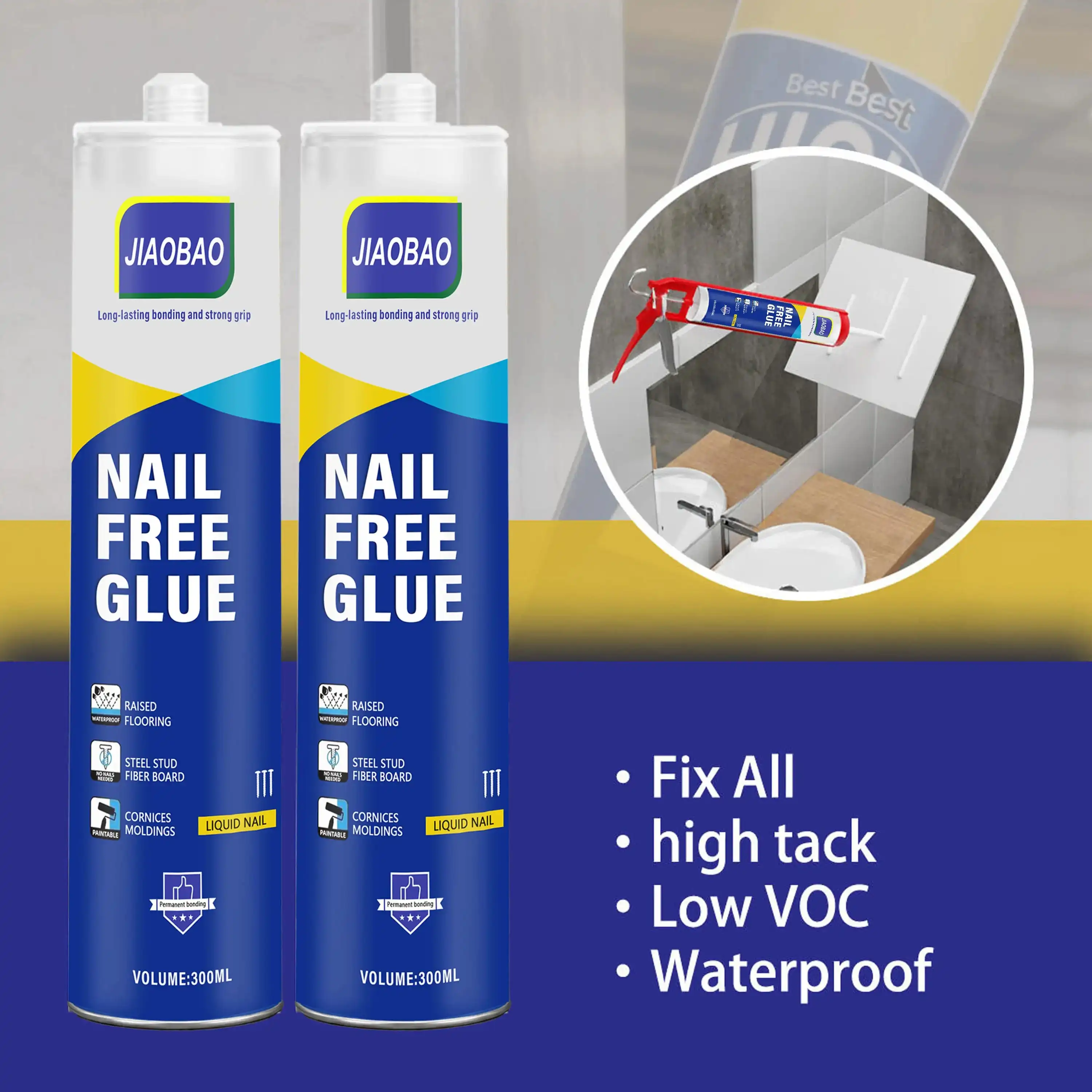
Modern Nail Free Adhesive Strong Bond technology has many useful features that make work easier and better, which directly affects the cost and quality of a project. The switch from mechanical to chemical fastening solves a number of problems that have been around for a long time in industry and building.
ISO 37 tests show that the highest tensile strength is 2.5 N/mm², and the material can stretch 300% before breaking. In both shear and tension stress situations, these numbers show performance that is on par with or better than mechanical fasteners. Instead of putting stress on specific fastener spots, the Nail Free Adhesive Strong Bond spreads forces across the whole touch area. This spread out makes it less likely that the base will crack or bend, which is especially important when working with ceramic tile or tempered glass, which are both very fragile.
Visible screws mess up clean design lines and make upkeep harder. Screw heads that are out in the open get dirty, rust over time, and send signals through painted surfaces. These problems don't happen at all with Nail Free Adhesive Strong Bond gluing, which makes parts that look like they were always there. Customized colors, such as white, black, gray, and RAL-matched choices, make adhesive joints blend in with surrounding surfaces, meeting the high standards of high-end business and domestic projects.
When teams skip steps like drilling, countersinking, and putting in fasteners, installation goes much faster. It only takes one person a fraction of the time it takes to use mechanical binding to apply glue and place parts. Safety also gets better because there are fewer chances of drill bits breaking, secret utility line damage, and injuries from using pneumatic nailers over and over again. A big drop in noise is important to keep in mind in crowded buildings or places where noise is a problem.
For green building standards and indoor air quality goals, products that don't use solvents and don't release any VOCs are helpful. The 12-month shelf life cuts down on waste from old products, and the exact cartridge delivery cuts down on application waste. Buildings put together with flexible adhesive ties can handle changes in temperature without cracking. This makes the buildings last longer and requires less upkeep, which uses resources over the building's lifetime.
When making a purchasing choice, it's important to carefully look at performance factors, application needs, and overall cost. When used in different situations, not all Nail Free Adhesive Strong Bond products work the same way.
Important specs include the initial grab strength, which tells you if you need temporary support while the concrete cures, and the final shear strength, which tells you the highest load that can be supported. Project plans are affected by how fast the concrete cures. A normal moisture-cure rate is 2.5 mm per day. In harsh climates, temperature range is important. The -40°C to 80°C service range is good for most industry and building uses. Shore A hardness of 50 ± 5 means the material is neither too stiff nor too flexible, so it can move in joints without delaminating.
Mechanical fasteners give you full strength right away, but they also cause stress concentration, need to be pre-drilled into the substrate, and leave behind obvious proof. Traditional adhesives that are based on solvents dry faster, but they give off dangerous fumes and can't fill gaps. Even though double-sided tape is convenient, it can't cover rough areas or hold heavy loads. Moisture-cure adhesives have all the best qualities: they form strong, lasting bonds, fill gaps, don't damage the material, and are safe for the environment.
Adhesives that are good at penetrating weak materials like wood or concrete are useful for projects that use them. Metals and glass, which don't have pores, need products that can successfully wet surfaces even though the surface energy is low. Nail Free Adhesive Strong Bond excels in these cases, as its formulation ensures reliable wetting and adhesion on both porous and non‑porous substrates. Whether normal or high‑temperature formulas are needed depends on how the product will be used and how hot or cold it will be. It's important for waterproofing to work in wet areas, outside uses, and HVAC systems that get condensation on them.
When you buy in bulk from reputable companies that are ISO certified, the quality will stay the same throughout the whole job. With lead times of one to two weeks, just-in-time inventory management can be used without worrying about running out of materials. Regional transportation infrastructure works well with shipping choices that can be used for both sea and land travel. OEM and ODM capabilities let distributors build their own brands through private labeling, while quality standards are met by using standard production methods.
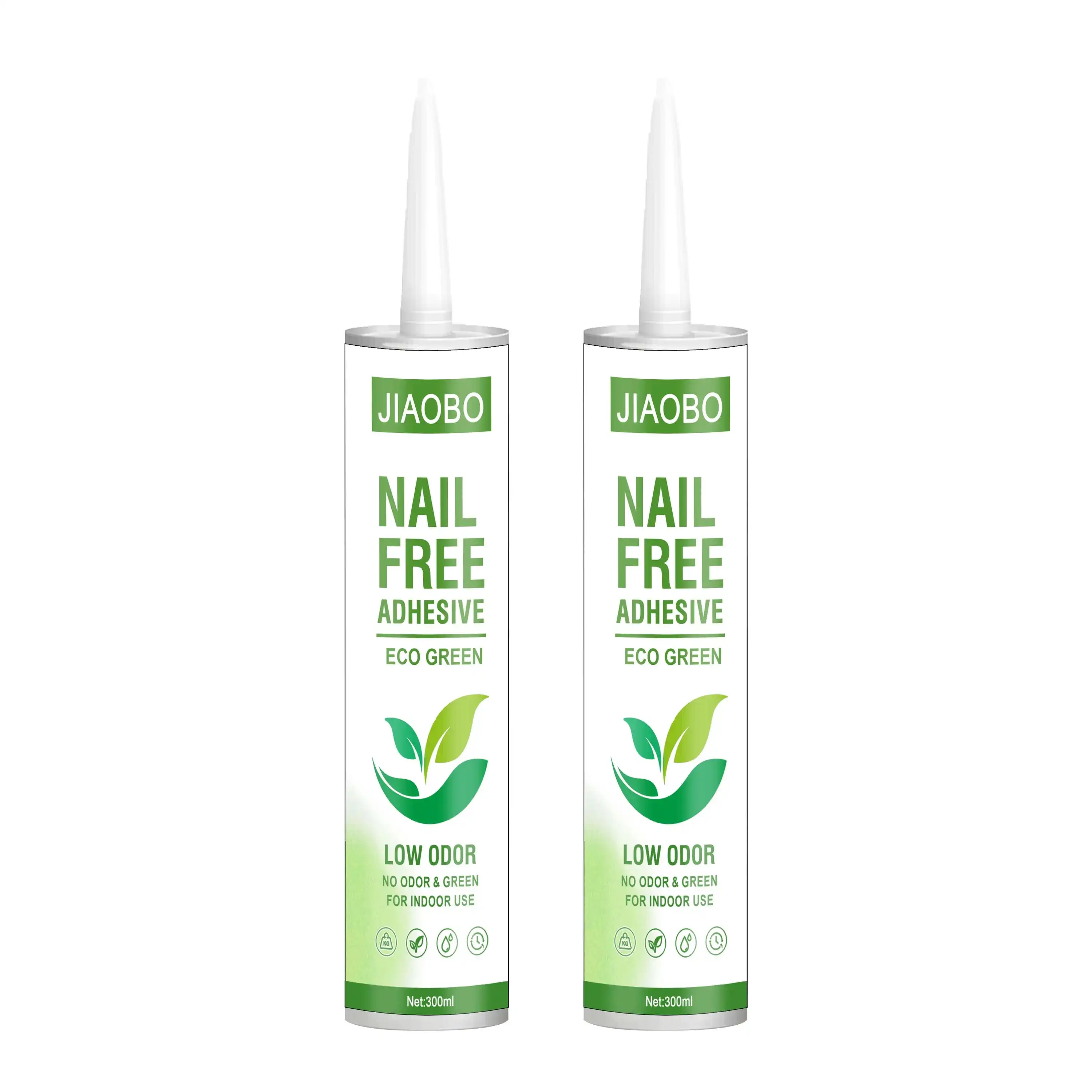
The right way to apply Nail Free Adhesive Strong Bond directly affects how long it lasts and how well the project turns out. Understanding how to prepare the base, the external conditions, and how to fix problems is what separates good results from outstanding performance.
Surfaces must always be clean. Molecular contact between the glue and the base is harmed by dust, oils, old coatings, and wetness. Using rough pads or wire brushes for mechanical cleaning gets rid of loose dirt and grime, and washing with a fluid gets rid of oils. Porous materials might need to be primed to stop the glue from absorbing too much and starving the bond line. Light abrasion makes mechanical fitting better on materials that don't have pores.
Continuously applying beads stops air from getting trapped, which breaks ties. The size of the bead should fit the width of the joint. For most interior trim uses, the diameter should be about 5 mm, but for heavy structural elements, it should be bigger. When pouring from a cartridge, use even pressure to keep the flow steady. During the open time before surface skinning, carefully place the parts and apply firm pressure to make sure they touch all the way across the bond area. If you move the object after the initial tack has formed, you will mess up the polymer network that is still forming.
Conditions in the environment have a big effect on the rate of curing and the end qualities. Temperatures below 5°C make it take longer for moisture to activate, and temperatures above 35°C can cause skinning to happen too soon, which traps glue that hasn't fully dried below. The best conditions for drying are when the relative humidity is between 40% and 70%. In places that are very dry, surfaces may need to be misted with water before they are applied to make sure they have enough wetness to fully cure, especially in areas with thick bond lines or bases that don't let water through.
If the vertical applications sag, it means that too much glue was used or the thickness wasn't right for the temperature. Smallen the beads or give brief mechanical support until the first grab forms. Incomplete cure means that wetness can't get to thick parts or bases that don't let it through. Give it more time to cure, or put in smaller layers. Poor bonding is usually caused by surfaces that are dirty, not by failed glue, so the surface needs to be cleaned and prepared thoroughly.
Comparing unit prices is only one part of strategic shopping for Nail Free Adhesive Strong Bond. Long-term procurement success depends on the skills of the suppliers, the processes in place to make sure quality, and the framework for quick support.
Having experience in manufacturing gives you trust in the consistency of the recipe and the quality control. Shandong Jiaobao New Material Co., Ltd. has been making color-matched silicone seals and advanced sealing technologies for more than 13 years. Nail Free Adhesive Strong Bond is one such product that benefits from this deep expertise, ensuring reliable batch-to-batch performance. ISO certification shows that a company follows written quality management systems. Product-specific certifications, such as CE marking, show that a product meets the rules for foreign markets. These certificates lower the risk of procurement by making sure that all goods meet performance standards in every batch.
Short production processes make it possible to fill orders quickly. Standard lead times of one to two weeks work for most project plans and don't need a lot of extra stock. Standard delivery tools that contractors already have is compatible with the cartridge and sausage packaging. The 300ml and 600ml sizes are a good mix between usability and waste. For high-volume applications, the bigger sizes are more cost-effective, while the smaller sizes are better for one-time or specialized use.
OEM and ODM features help distributors and builders build their market position by letting them differentiate their brands. Custom color matching against RAL charts or project-specific samples makes sure that the colors look good in places where they will be seen. Formulations that have been changed to meet specific needs, like better fire resistance or longer working time, show that the provider is able to serve a wide range of market groups. When channel partners use private labeling, they can build brand value while using well-known production quality.
People can trust large-scale procurement agreements that include warranty clauses that protect against quality defects. Policies that allow refunds or replacements for materials that don't meet standards limit the company's financial risk. Technical support from staff who know what they're doing helps solve application problems before they become big enough to cause project delays. Responding customer service through direct methods like dorashen@cnjiaobao.com makes sure that important questions are answered quickly during the installation process.
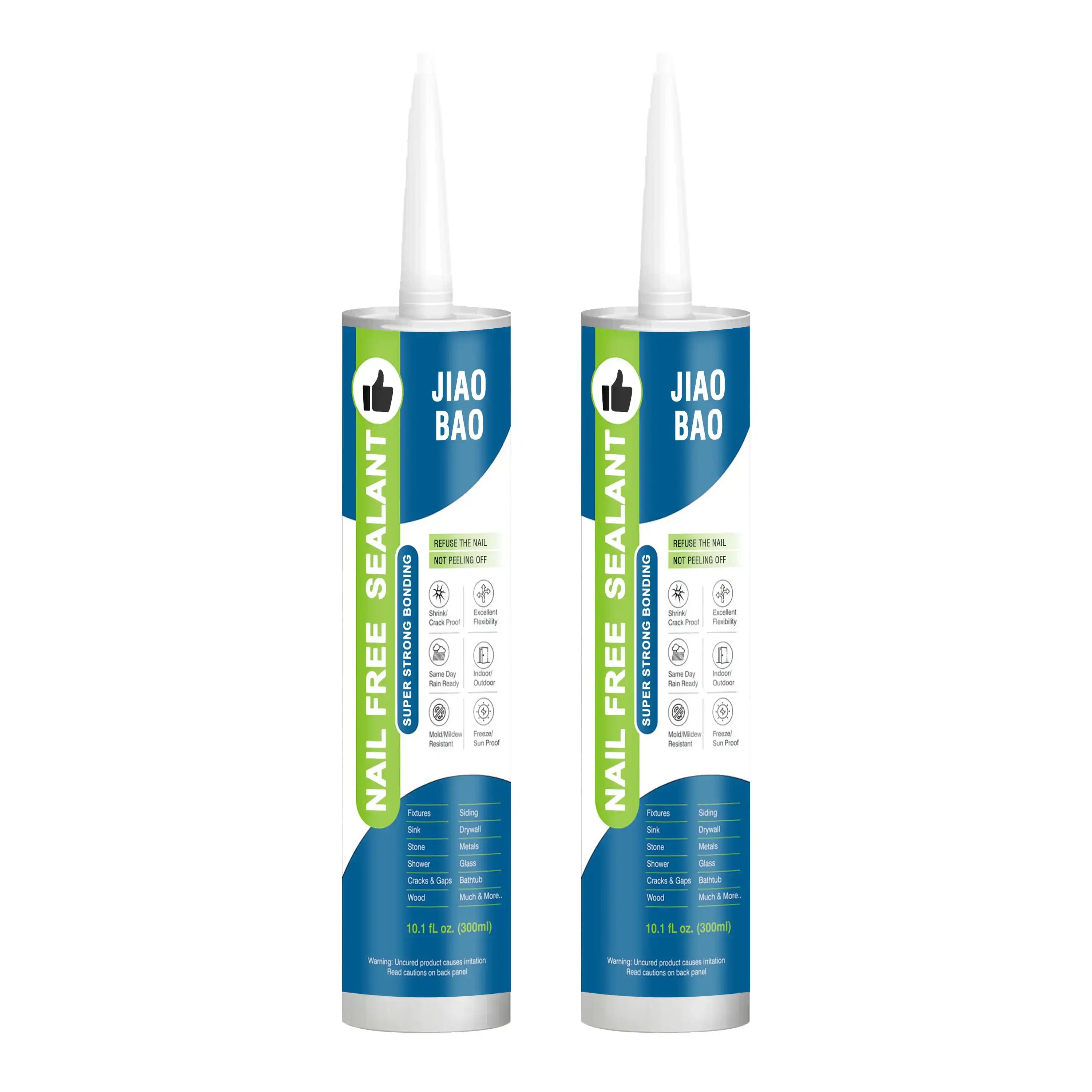
Procurement experts and technical teams can make good use of modern bonding technology when they understand how Nail Free Adhesive Strong Bond works. Using modified silane polymer chemistry gives structures the same level of strength as mechanical fasteners while preventing damage to the base, making the job look better, and cutting down on installation time. Long-lasting ties are only possible if the surface is properly prepared, the right product is chosen based on performance needs, and the curing conditions in the surroundings are carefully monitored.
Finding experienced makers with well-documented quality systems and quick-response support systems is the best way to reduce buying risk and improve the overall economics of a project. When it comes to technical performance, working efficiency, and long-lasting formulation, moisture-cure adhesives are the best choice for current building and industry assembly tasks.
At normal temperatures of 23°C and 50% relative humidity, surface tack forms in about 20 minutes, which lets the materials hold their own weight. The moisture-cure process moves forward at a rate of 2.5 mm per 24 hours. This means that within one day, thin bond lines become very strong. For thicker uses, it takes 48 to 72 hours to fully dry, but this depends on the joint depth, the substrate's ability to let water through, and the humidity in the air. It is best not to apply full design loads until the whole bond mass has cured.
Modified silane polymer formulations are very good at withstanding the weather and keeping their bond strength and flexibility across a temperature range of -40°C to 80°C, which is ideal for industrial uses. These items are good for outer curtain walls, facade panels, and outdoor signs because they don't fade in UV light, don't absorb water, and keep their shape when heated and cooled. The 300% elongation at break allows for thermal expansion and contracting without delamination, which is important for the surface to last for a long time.
These items can stick to a lot of different things, like stone, metals (like aluminum and steel), concrete, brick, ceramic tile, glass, and many types of plastic. Different materials need different ways to be prepared for the surface. For example, porous substrates may need starters, while non-porous surfaces can be prepared by rubbing them against something hard. When it comes to joining, low surface energy plastics like polyethylene and polypropylene usually need special primers or different glue chemicals.
Jiaobao is an expert at making high-performance silicone sealants and Nail Free Adhesive Strong Bond products that are perfect for tough industrial uses. Our changed silane polymer mixes give your projects the Nail Free Adhesive Strong Bond performance they need. They are backed by ISO approval and over 13 years of production experience. Our prices are reasonable, our wait times are only one to two weeks, and we can fully customize your OEM order to meet your exact needs.
During every step of the buying process, our expert team is available to help you, whether you need standard colors or custom RAL matching. You can email us at dorashen@cnjiaobao.com to talk about bulk prices, get samples, or find out how working with a reliable Nail Free Adhesive Strong Bond provider can help your supply chain work better.
1. Petrie, Edward M. Handbook of Adhesives and Sealants. McGraw-Hill Professional, 2020.
2. Cognard, Philippe. Adhesives and Sealants: General Knowledge, Application Techniques, New Curing Techniques. Technical Publishing, 2018.
3. Habenicht, Gerd. Applied Adhesive Bonding: A Practical Guide for Flawless Results. Wiley-VCH, 2019.
4. Pizzi, Antonio and Mittal, K.L. Handbook of Adhesive Technology, Third Edition. CRC Press, 2017.
5. Dillard, David A. Advances in Structural Adhesive Bonding. Woodhead Publishing, 2021.
6. Packham, D.E. Handbook of Adhesion Technology, Second Edition. Springer International Publishing, 2018.
November 16,2023
Enterprise Name
The sealant has very strong adhesion and performs well even on glass and aluminum. After curing, it remains flexible and shows no cracking. Perfect for our facade projects.
November 16,2023
Enterprise Name
Stable quality across batches. Our customers especially like the smooth application and consistent extrusion. It helps reduce installation time on site.
November 16,2023
Enterprise Name
I used it for bathroom sealing. Excellent waterproof performance and no mold issues so far. It's been holding up very well in humid conditions.
November 16,2023
Enterprise Name
The neutral silicone works well on sensitive materials without corrosion. Very suitable for industrial applications requiring stable performance.
_1779347426672.webp)