November 16,2023
Enterprise Name
The sealant has very strong adhesion and performs well even on glass and aluminum. After curing, it remains flexible and shows no cracking. Perfect for our facade projects.
Aug 4, 2026
Fire rated silicone sealants for joints—including Fire Rated Silicone Sealant for Joints—must comply with strict fire safety standards. North America requires ASTM E84 for surface burning, UL 2079 and ASTM E1966 for joint fire resistance. European markets follow EN 1366-4 and EN 13501-2 classifications for integrity, insulation, and smoke control. These standards evaluate performance at temperatures exceeding 1000°C, ensuring building compartmentation safety. Certified products ensure local building code compliance and protect against catastrophic fire spread through structural joints.
To follow fire safety rules, you need to know what standards govern how well sealants work in your area. There are different testing rules for each market, but they all have the same goal: to make sure that joint sealants keep their barrier function even when they're very hot.
ASTM E84 is still the most important standard for measuring smoke development and flame spread index. Products with a Class A grade have the least amount of flame spread, so they can be used in sealed vertical exitways and hallways. ASTM E1966 goes even further by testing whole joint systems, such as combinations of backing materials and substrates, in real-life fire situations. This standard checks for both integrity (making sure flames can't get through) and insulation (keeping the side that isn't being heated from rising too much).
UL 2079 certification gives makers a way to put things together that has been tried and is on the list. What does a UL listing mean? It means that the exact joint configuration—width, depth, substrate type, and backing material—has been tested for fire safety and passed. This takes the guessing out of specifying and protects you legally during checks.
EN 1366-4 talks about tests for the fire resistance of service installations and joints in particular. The final EN 13501-2 classification is based on letters and numbers. For example, "EI 120" means the joint stays intact and insulated for one hour. Adding a "S" means controlling smoke leakage, which is very important for keeping exit paths safe.
Knowing these categories helps you match the performance of the sealer to the needs of the building. For perimeter joints, high-rise residential towers usually need EI 120 or higher, while industrial facilities might ask for EI 60 with better movement capability.
Joint assemblies are put through controlled temperature curves during fire testing, which usually follows ISO 834 or ASTM E119 rules. Within 30 minutes, the furnace reaches 842°C, and after two hours, it is over 1000°C. Sealants have to be able to stand up to both heat and changes in pressure that let smoke and gases pass through broken walls.
Several things affect how well a test does. Sealant chemistry is very important—silicone polymers stay flexible at high temperatures better than organic options. Joint shape is very important; for example, to keep sealant from burning through, bigger joints need stronger backing systems. The materials used for the substrate affect how quickly heat moves and how well things stick together when they expand.
Different types of projects present different sealing challenges for professional firestop contractors. Knowing where and how to use approved seals makes sure that buildings meet building codes and work well for as long as they are built.
Curtain wall perimeter joints are the most difficult to work with. These head-of-wall links have to be able to handle building movement caused by wind loads and changes in temperature while also stopping fires from spreading from floor to floor. We call the "chimney effect" when joints that aren't sealed well let smoke and fire quickly spread up outside walls what we're addressing by using a Fire Rated Silicone Sealant for Joints.
In concrete buildings, expansion joints need sealants that can keep the structure fire-safe even when there is a lot of movement—often ±25% of the joint width. Because they are flexible, silicone-based goods are different from hard intumescent materials that break when stressed over and over again. Data centers and clean rooms add to the complexity by needing not only fire protection but also airtightness to keep the pressure up and stop contamination.
When HVAC systems go through fire-rated assemblies, they need annular sealing that lets the pipes move when the temperature rises. The glue has to stick to different kinds of materials, like galvanised steel, copper, and PVC, while still acting as a fire barrier. Sealants used in infrastructure, like tube expansion joints, are exposed to water, vibration, and the possibility of hydrocarbon fires. This means that goods need to be able to last in tough circumstances.
Ratings usually run from one hour to four hours of safety, depending on the height and occupancy of the building. For vertical compartmentation, one-hour ratings are common for industrial buildings with only one story, but two- or three-hour ratings are needed for high-rise residential buildings. Knowing what the local code says will keep you from having to do expensive repairs during inspections.
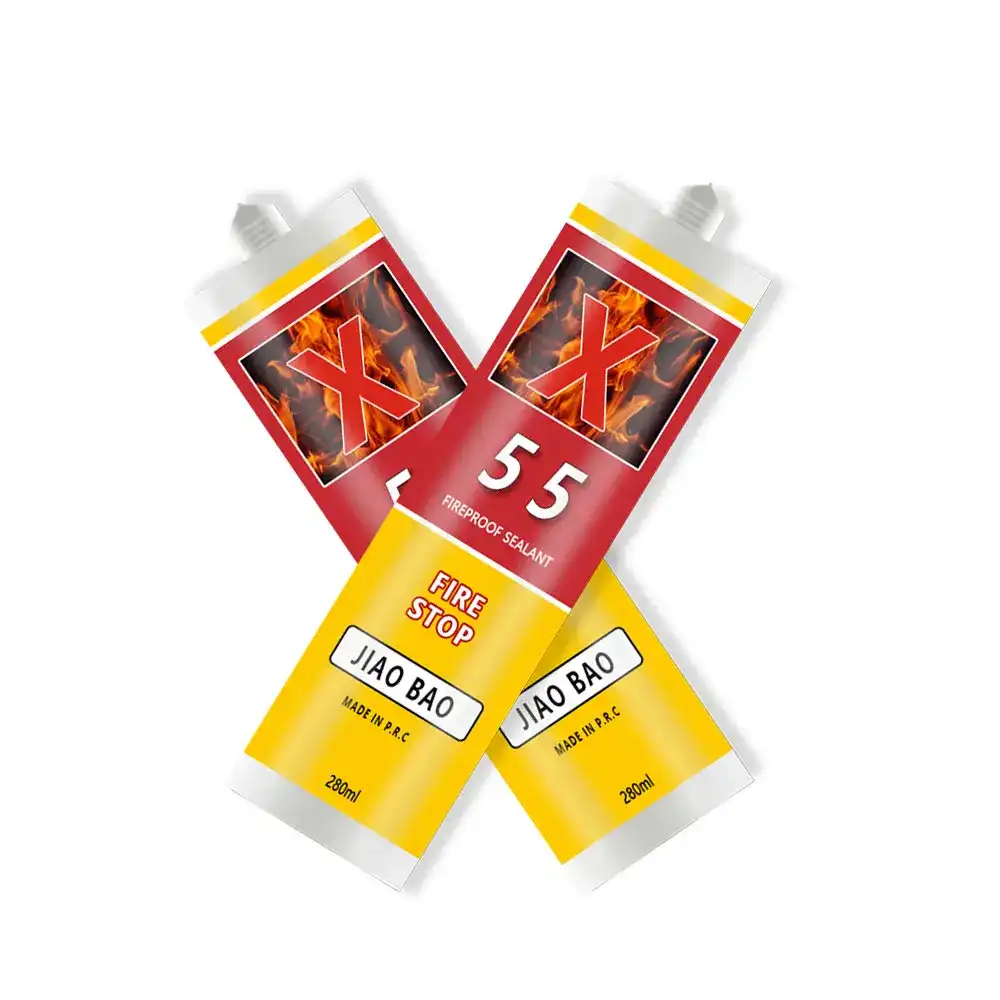
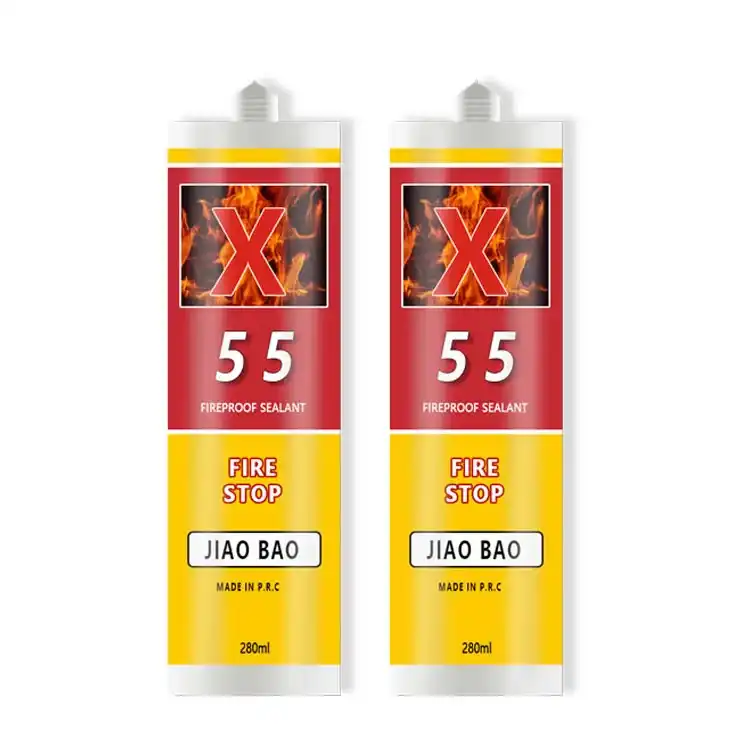
Jiaobao's fire-resistant RTV silicone sealant is very stable at high and low temperatures, staying sealed from -50°C to +150°C in real-world use. This temperature range is important for exterior applications that are exposed to extreme weather and for interior joints that are close to mechanical equipment. It takes 24 hours for the one-part acidic mixture to dry, creating a bendable seal with a Class 1 W Rating that is very resistant to water. The product comes in 300ml and 600ml containers that are easy to use and come in white, black, grey, or custom colours. These sizes are good for both small retrofit jobs and big installs.
Adding approved fire coatings makes things safer in a way that can be measured. Compartmentation slows the spread of fire, giving people more time to get out of the building and limiting damage to property. When silicone sealants are properly applied, they resist UV degradation, ozone exposure, and moisture intrusion for decades without needing to be maintained.
Less toxic fumes during fires protect people inside and first rescuers. Low-VOC formulations are used in many current products, which helps green building standards like LEED v4. As sustainability requirements spread around the world, this environmental factor becomes more important in purchasing decisions.
When choosing Fire Rated Silicone Sealant for Joints, people who work in procurement have to look at a number of factors. It is easier to manage project risk and make sure long-term performance when you compare different types of products and suppliers with the right information.
When heated, intumescent acrylics spread and make a char that keeps fire from getting through. These products work well in interior joints that are static and dry, but they can't move and aren't resistant to weather. Painting over intumescent sealants usually breaks down their ability to expand, which limits their aesthetic versatility.
Silicone-based systems are more flexible and can handle ±50% joint movement without the adhesive failing. This quality is very important for facades and places where buildings move more than hard materials can handle during earthquakes. Silicone is the only material that can be used outside or in wet places like mechanical rooms because it doesn't absorb water.
Hybrid polymer technologies try to fill in the gaps in performance, but they often have to give up fire rating length or the ability to move. When looking at different options, make sure that the goods you're thinking about have the same fire test certifications for your particular joint configuration.
Manufacturers with a good reputation provide detailed technical documentation. Not just marketing claims should you look for, but also test reports from a third party that show compliance with ASTM E1966, UL 2079, or EN 1366-4. These reports list the approved joint sizes, depths, backing materials, and combinations of substrates. If you change the proven settings, the fire rating is null and void.
Curing time changes the schedule for a job. Surface-drying sealants that take less than an hour to dry let building go more quickly. Jiaobao's formula makes surfaces free of tack in 45 to 60 minutes at normal conditions (25°C, 50% relative humidity), which lets many follow-on deals happen the same day.
VOC level is important for both the cleanliness of the air inside and following the rules. Products that meet SCAQMD Rule 1168 are guaranteed to work with California's strict emission standards and are often used as a standard for health-conscious projects around the world. Formulations without halogens stop corrosive gases from escaping during combustion, which keeps sensitive electronics in hospitals and data centers safe.
Premium goods are different from cheap options because they can stick to difficult substrates for a long time. ASTM C794 testing confirms the bond strength to anodised aluminium, powder-coated steel, and worn concrete, which are all typical places where things fail in real life. Some substrates need primers, and knowing what they are during the specification process keeps the field from having to wait.
Service life is affected by thermal resistance outside of fires. Sealants that are close to moving parts or that are used in hot places age faster if the recipes are not thermally stable. Products that can withstand being exposed to 150°C for a long time keep their flexibility and stickiness, while other materials harden and crack.
When looking for certified Fire Rated Silicone Sealant for Joints, you need to think about how reliable the supplier is, how the materials will be delivered, and the total cost of ownership. Strategic choices about procurement weigh the original cost of the goods with the guarantee of performance dependability and compliance.
Companies that have been around for a while and have ISO recognition show that they are committed to quality management systems. Shandong Jiaobao New Material Co., Ltd. is a good example of this approach because they have been making things for over 13 years and have all kinds of product certifications, like ISO and CE marks. This track record gives buyers confidence that the products will always meet international standards.
Direct relationships with manufacturers are better than relationships with distributors. Customisation options become available; OEM and ODM services let you change the colours, formats, and performance qualities of sealant to fit the needs of a particular project. Jiaobao can match colours to your specifications and offers 300ml and 600ml sausage and cartridge packaging, so it can work with a wide range of application equipment and project sizes.
Total landed costs are affected by geography and logistics. Flexible shipping choices from suppliers, like sea freight for big orders or fast land transport for urgent needs, help improve inventory management. Jiaobao's production wait time of one to two weeks supports just-in-time purchasing tactics. This means that less inventory needs to be stored on-site, and less capital is wasted on extra inventory.
Prices are higher for brands with good reputations, but the extra money is usually worth it because the brands offer better technical help and warranties. Products from companies that show a lot of fire tests take less time to build and get approved. When comparing quotes, you should think about the total cost, which should include any rework that might be needed because of unsafe materials or failed inspections.
When you work on big projects or sign a yearly supply deal, volume savings add up. Buyers who are in charge of more than one site should combine their needs in order to get better prices. Buying in bulk also ensures supply during market shortages, which is important because the availability of silicone raw materials changes around the world.
Environmental approvals are becoming more and more important in buying choices. Low-VOC and halogen-free formulations may cost a little more, but they help companies meet their sustainability goals and get LEED certification. These "green" choices do the same job in fire tests as the other options, but they are better for the earth.
Fake and wrongly labelled building materials are very dangerous and can get you in trouble with the law. Before you buy, make sure you have full test documentation, not just claims of certification. Real test records have photos of the test assemblies, full descriptions of the substrates, and diagrams of how the joints are set up. Compare what the maker says with databases kept by UL and other certification groups that are run by independent testing laboratories.
Being able to check suppliers gives you more peace of mind. When companies let people visit their factories and look over their quality systems, they show that they are honest. As part of Jiaobao's commitment to quality control, they offer full after-sales support. For example, all of their goods come with a 12-month shelf-life guarantee that lets you get your money back or a new one if there are any quality problems during that time.
Whether an approved Fire Rated Silicone Sealant for Joints works as well as it's supposed to depends on how it was installed. Even the best sealants don't work if the way they're applied hurts the bonding or fix conditions.
For bonds to last, the surfaces must be clean. Use the right liquids or mechanical ways to get rid of dust, oil, release agents, and loose material. Concrete and brickwork need extra care because efflorescence and form oil often make bonding fail. Let areas that have been cleaned with water dry completely before applying sealer.
For best performance, joint geometry follows certain ratios. Ratios of 2:1 between width and depth are best for distributing stress. It takes longer for the glue to cure in joints that are too shallow, and more material is wasted in joints that are too deep. When you put backing materials down, use bond-breaker tape to stop three-sided adhesion, which makes it hard to move.
The choice of backing material has a direct effect on the fire rating. When fire tests are done, standard polyethylene backer rod melts, which weakens the system. As stated in the fire test paperwork, use mineral wool backing with a density of at least 100 kg/m³ or ceramic fibre backing. No matter how good the sealer is, the fire grade is null and void if the wrong backing material is installed.
Professional-grade application tools makes sure that bead shapes are always the same and cuts down on waste. When it comes to ceiling or vertical parts, pneumatic guns are easier to control than hand tools. To get the right shape for the tooling, cut the nozzles at 45-degree angles that match the width of the joint.
Surface finish and adhesion are affected by the way the tools are used. While the sealant is still wet, use steady pressure to push it against the surfaces and get rid of any air spaces. Do not use too many tools, as this can pull the sealer away from the bond lines. It takes 45 to 60 minutes for Jiaobao's formulation to become tack-free, which gives you time to make any necessary tooling changes during this time.
The environment affects how fast things cure and what their final properties are. If it's below 5°C or above 40°C, the fix will take longer and the physical traits may change. High humidity speeds up the moisture-curing process for silicones, but it can make some formulas bubble. Low humidity conditions make surface skinning take longer, which raises the risk of contamination from dust in the air. Plan when to apply based on the weather and the rules for the building's surroundings.
Visual checking finds flaws that are easy to see, like holes, bad tooling, or contamination. Make sure that the sealant fills the joints all the way, leaving no gaps or bubbles. Try to peel back a corner with a rough tool to make sure that the glue is sticking in several places along each joint. When properly bonded, sealant can stand up to this test without coming loose from its substrates.
Documentation keeps responsibility issues from happening in the future. Take pictures of finished projects that show how the joints are set up, the materials used for the backing, and the glue that was used. Keep track of the records that connect installed goods to specific certification lists and test report numbers. This paperwork is very helpful during inspections by the building authority and insurance reviews after accidents.
For some projects, a third party has to certify the quality of the installation. There are independent inspection firms that make sure that field conditions match what was tested on assemblies. This gives owners confidence in their performance. This investment pays off big time in important places like hospital fire barriers and separating apartments in high-rise buildings.
To choose the right Fire Rated Silicone Sealant for Joints, you need to know the relevant standards, which are ASTM E1966 and UL 2079 in North America and EN 1366-4 in Europe. You also need to know how these standards measure things like strength, insulation, and smoke control. When compared to intumescent acrylics, silicone-based systems are better at moving and standing up to the weather. This makes them necessary for dynamic joints and outdoor uses. Verifying third-party licenses, judging the reliability of suppliers, and making sure the right installation methods are used are all important parts of successful procurement. Fire-resistant RTV silicone from Jiaobao is one example of a product that meets international safety standards and has the thermal stability and flexibility needed for tough uses. Knowing these technical and procedural requirements helps you make sure that your specification choices protect building occupants and pass strict code inspections.
Fire Rated Silicone Sealant for Joints products are tested to make sure they meet standards like ASTM E1966 or EN 1366-4 and can keep out flames and smoke for a certain amount of time, usually between one and four hours. Standard seals don't have these approvals, so they don't work in a fire. Using non-rated materials in fire barrier uses is against the law and can lead to major problems.
Under normal conditions, curing happens about 3 mm per 24 hours from the surface inward. Surface time without tacks is between 45 and 60 minutes. Long fix times are needed for deep joints to reach their full physical features. Temperature and humidity have a big effect on these times—cold weather makes fixing take longer, and high humidity speeds up chemicals that heal in water.
Certified systems list the allowed combos of substrates. If the surfaces are ready, most fire-rated silicones stick well to steel, aluminium, and concrete. For best bonding, some metals, especially those with anodised or galvanised finishes, may need priming. Always look at the manufacturer's fire test records to make sure that the mix of substrates you are using has been tried and approved.
Jiaobao offers professional-grade fire safety products and has been making them for over 13 years. Our fire-resistant RTV silicone sealant is certified to meet foreign standards, such as ISO and CE, so it can be used in all places around the world. We offer OEM and ODM services that can be customised, and our production lead times are as short as one to two weeks. This means that we can meet your project deadlines without sacrificing quality. We help procurement workers meet strict fire safety standards while lowering the risks of sourcing by giving them a range of shipping choices and full technical support.
Our promise to you after the sale includes guarantees that we will replace the product within 12 months of its expiration date. Get in touch with our technical team at dorashen@cnjiaobao.com to talk about your specific joint sealing needs. As a well-known company that sells Fire Rated Silicone Sealant for Joints, we offer thorough test reports, advice on how to use the product and low bulk prices that save you money over the life of your building.
1. American Society for Testing and Materials. "ASTM E1966-21 Standard Test Method for Fire-Resistive Joint Systems." ASTM International, West Conshohocken, PA, 2021.
2. European Committee for Standardization. "EN 1366-4:2006+A1:2010 Fire Resistance Tests for Service Installations - Part 4: Linear Joint Seals." CEN, Brussels, Belgium, 2010.
3. Underwriters Laboratories. "UL 2079 Standard for Tests for Fire Resistance of Building Joint Systems." UL LLC, Northbrook, IL, 2020.
4. British Standards Institution. "BS 476-20:1987 Fire Tests on Building Materials and Structures - Method for Determination of the Fire Resistance of Elements of Construction." BSI, London, UK, 1987.
5. International Organization for Standardization. "ISO 11600:2010 Building Construction - Jointing Products - Classification and Requirements for Sealants." ISO, Geneva, Switzerland, 2010.
6. National Fire Protection Association. "NFPA 101 Life Safety Code - Chapter 8: Features of Fire Protection." NFPA, Quincy, MA, 2021 Edition.
November 16,2023
Enterprise Name
The sealant has very strong adhesion and performs well even on glass and aluminum. After curing, it remains flexible and shows no cracking. Perfect for our facade projects.
November 16,2023
Enterprise Name
Stable quality across batches. Our customers especially like the smooth application and consistent extrusion. It helps reduce installation time on site.
November 16,2023
Enterprise Name
I used it for bathroom sealing. Excellent waterproof performance and no mold issues so far. It's been holding up very well in humid conditions.
November 16,2023
Enterprise Name
The neutral silicone works well on sensitive materials without corrosion. Very suitable for industrial applications requiring stable performance.
_1779347426672.webp)