November 16,2023
Enterprise Name
The sealant has very strong adhesion and performs well even on glass and aluminum. After curing, it remains flexible and shows no cracking. Perfect for our facade projects.
Aug 4, 2026
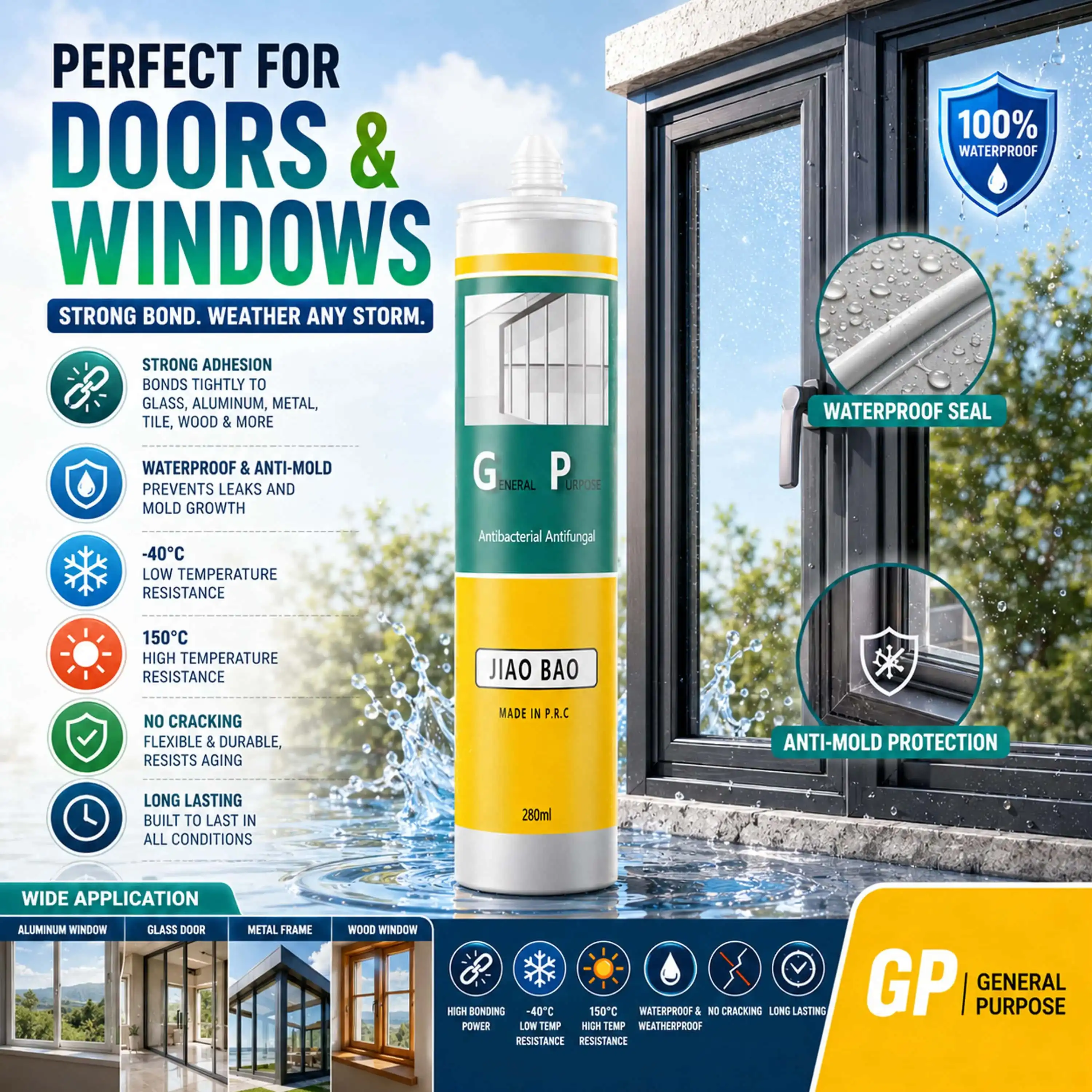
GP door and window silicone sealant is a one-component room temperature vulcanizing (RTV) elastomer specifically engineered for glazing and weatherproofing in the fenestration industry. It transforms from a paste into a flexible rubber seal upon exposure to moisture, delivering reliable adhesion between glass and aluminum or PVC frames. Its primary function centers on preventing air infiltration and water ingress in residential and commercial window installations while accommodating thermal expansion differences between dissimilar materials.
GP door and window silicone sealants are a special type of building glue that is made to meet the strict needs of assembly lines that make doors and windows. In contrast to structural sealants used in curtain wall systems, these all-purpose formulations focus on being cost-effective without sacrificing important performance characteristics. Usually, these products are made with acetoxy-cure systems that release acetic acid when they cure. However, neutral-cure versions are being used more and more for substrates that are sensitive.
The strict rules for making these materials show how important they are for building envelopes. Products that meet the standards of ISO 11600 and ASTM C920 will always work the same way, even when exposed to extreme temperatures and conditions. Our recipe at Jiaobao gets a Shore A hardness of 18, which is the perfect level of flexibility and structural strength. This level of hardness lets the cured sealant handle movement caused by thermal cycling without breaking down or pulling away from the substrates.
The three main use cases tell procurement managers how to judge these products. The most common use of the sealer is in residential window glass, where it works as both a bedding compound and a perimeter seal. Materials that don't stick to each other for long periods of time are needed on assembly lines. Our 15-minute skin formation lets you work with the material quickly without affecting the cure depth. This quick drying of the surface keeps dust from getting on it and speeds up production lines.
Installing a shopfront for a business comes with its own set of problems. Display screens and entry systems need to be kept clear and able to withstand vibrations. The elastomeric qualities are very important here because street traffic and door opening and closing make tiny moves all the time. Sealants need to stay stuck to anodised aluminium and toughened glass and not break down in UV light, which can turn them yellow or chalky. Our formula keeps over 300% elongation at break, which is a lot more than the 250% level required by most industrial building rules.
Applications inside, like bathroom windows and roof edges, need to be resistant to wetness in places with a lot of humidity. The sealant stops water from getting in, which would otherwise cause the frame to rust and the insulation to break down. The temperature range of -50°C to +150°C means that it can be used in cold climates and in skylights that get a lot of sun without losing any performance.
Professional-grade products are different from consumer-grade ones in terms of their technical specs. Tensile strength of up to 1.5 MPa makes sure that the seal stays in place even when the building moves and the wind blows on it. Together, the high stretch and bond strength make a dynamic seal that acts as a sacrifice layer, taking stress that would otherwise be transferred to the glass or frame parts.
In industrial and coastal settings, chemical resistance is very important. Cleaning solvents, salt spray, and airborne pollution all speed up the breakdown of poor formulas. Our acetoxy system is very good at resisting water, weak acids, and hydrocarbon oils that are often found in building maintenance. The finished elastomer doesn't react with ozone or UV light, so the surface doesn't crack and harden like cheaper options do after five to seven years, which makes the seal less effective.
Another important property that is often missed in procurement specifications is thixotropic behaviour. It's important that the paste doesn't slump in vertical joints, but it should flow easily when it's extruded. Our recipe has an extrusion rate of more than 300ml/min at normal gas pressures, which lets operators of all skill levels apply beads consistently. It has a direct effect on labour costs and the number of times things need to be fixed on assembly lines.
Knowing the trade-offs in performance between GP door and window silicone sealant chemicals helps you make better choices about what to buy. Acrylic latex seals can be painted over and cost less, which makes them a good choice for internal trim jobs. But because they can only stretch so far—usually less than 200%—they can't be used around the edges of outdoor windows where thermal movement is greater than their elastic rebound. Also, acrylics don't fight water as well as silicones do, which means that seals that are exposed to water will fail early in joints.
Polyurethane sealants have better mechanical qualities and stick to weak materials like concrete and wood better than other sealants. Their chemistry cures in water, so they can bond many building materials together permanently without starters. The bad things show up in UV stability and temperature efficiency. Polyurethanes turn yellow over time when they are exposed to sunlight and become less flexible when temperatures drop or rise. This is especially true when it's cold outside, when window frames get much smaller. Because finished polyurethane has a harder durometer, stress is concentrated at the bond lines instead of being spread out across the length of the seal.
The cost of materials per square metre is only one part of the total value of the purchase. Our GP door and window silicone sealant has enterprise-level quality at a reasonable price because it doesn't take long to dry. This cuts down on the need for work-in-process inventory and floor space. Instead of waiting hours for slower-curing options, windows can be moved to packaging stations in just 30 minutes. This increase in throughput means that the capacity has grown, but no new equipment has been bought.
The 12-month shelf life keeps you from throwing away old stock, which is a typical problem with two-part systems that start healing as soon as they are mixed. Single-component kits get rid of the need for mixing tools, cleanup liquids, and the quality variations that come with not controlling the ratios correctly. These practical benefits add up over the course of a year, especially for companies that process 30 to 150 window units every day. Manufacturers of doors and windows in Shandong and Guangdong provinces regularly say that cure speed and shelf stability are more important than small changes in cost per unit.
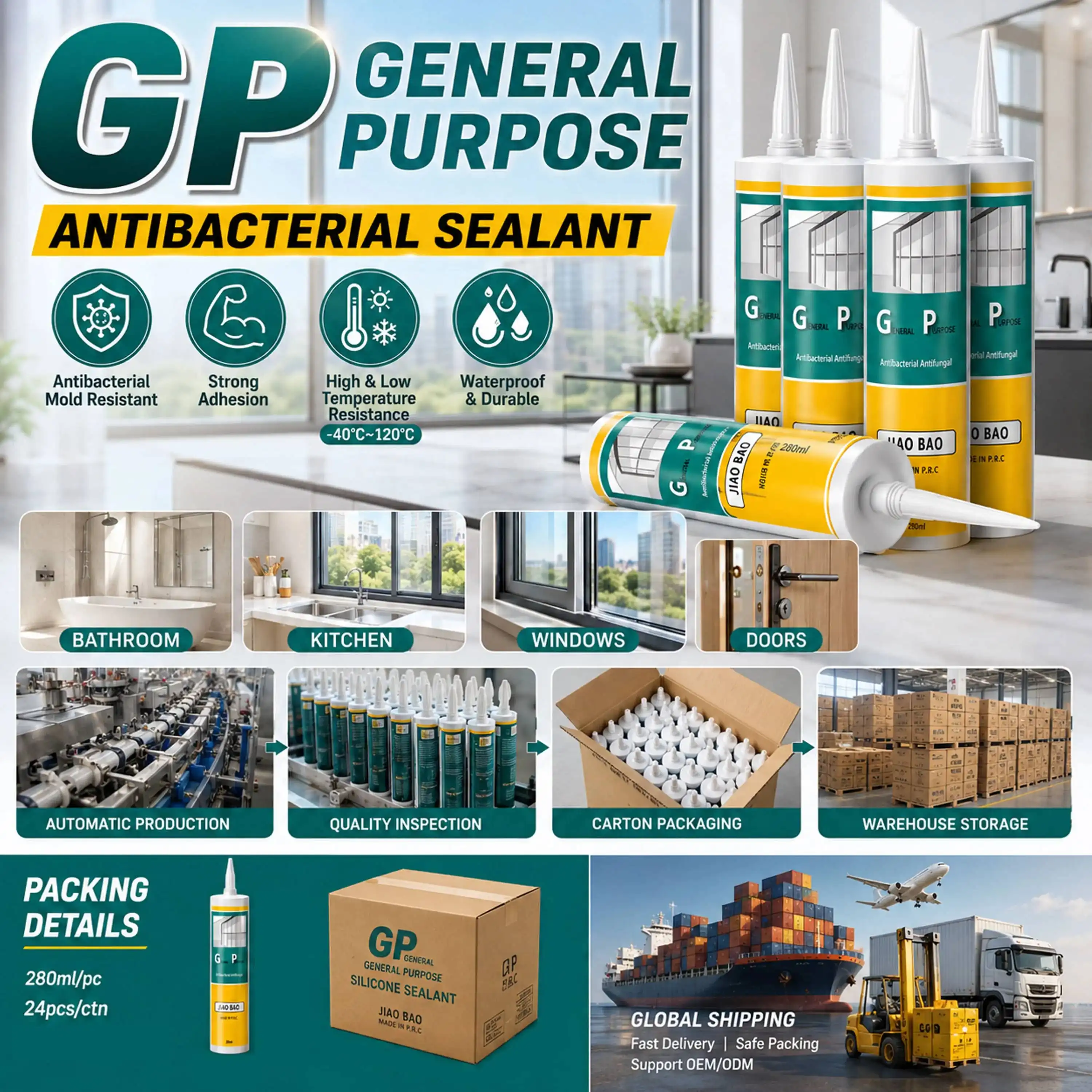
It's not necessary to keep a lot of different sealant formulations on hand because they all stick to different types of substrates. Our item sticks well to float glass, anodised and powder-coated aluminium, PVC extrusions, and painted pottery without the need for primers. This substrate's flexibility makes managing supplies easier and gets rid of application mistakes caused by using the wrong goods. Our highest bond strength of 1.5 MPa is higher than what is usually needed for home uses. This gives you extra protection in case the bond fails, which would lead to a warranty claim.
The most important thing that decides how long a seal lasts is how well the surface is prepared. The surface has to be dry, clean, and free of oils, dust, or release agents. Most dirt can be removed by wiping with isopropyl alcohol as a solvent. However, powder residue from drilling and machining needs to be cleaned with compressed air. Conditions in the area during application affect how fast the material cures and how well it sticks. For acetoxy cure systems, the best wetness range for GP door and window silicone sealant is between 40% and 80% relative humidity. Temperatures below 5°C, on the other hand, make cure move too slowly to be acceptable.
The shape of a bead affects both how it looks and how well it works. A joint's width should be two to three times its estimated range of motion, and its depth should be half of its width. This will make sure that stress is spread out evenly. Overfilling makes thick spots that take a long time to harden and put a lot of stress on the inside, while underfilling doesn't leave enough material to allow for movement without cohesive tearing. Tooling the bead right away after applying it makes the surface smoother, better wets the substrate, and gets rid of air pockets that cause leaks.
Ergonomic applicator guns that keep the same pressure throughout cartridge discharge are helpful for people who work on assembly lines. When making a lot of things, pneumatic guns are better than regular ratchet guns because they don't tire out your hands as quickly and make the bead width more uniform. There are 300ml and 600ml sausage and cartridge formats in our packaging options, so they can be used with a variety of guns and production levels. The quality of the application is also affected by the nozzle you choose. For example, 45-degree cuts make corner features look better than straight cuts.
As airborne wetness moves through the open face, the curing process moves from the surface to the inside. The 15-minute tack-free time shows that the skin is forming on the surface, but the full cure depth moves at a rate of about 3 mm per 24 hours, which depends on the temperature and humidity. Cross-linking lasts for several days, and within 24 hours, handle power starts to rise. Avoiding mechanical stress during the initial curing process keeps the bond from breaking and makes sure the elastomer develops all of its tensile properties. Most testing protocols say that sealed assemblies must cure for seven days before they can be tested with water spray or pressure.
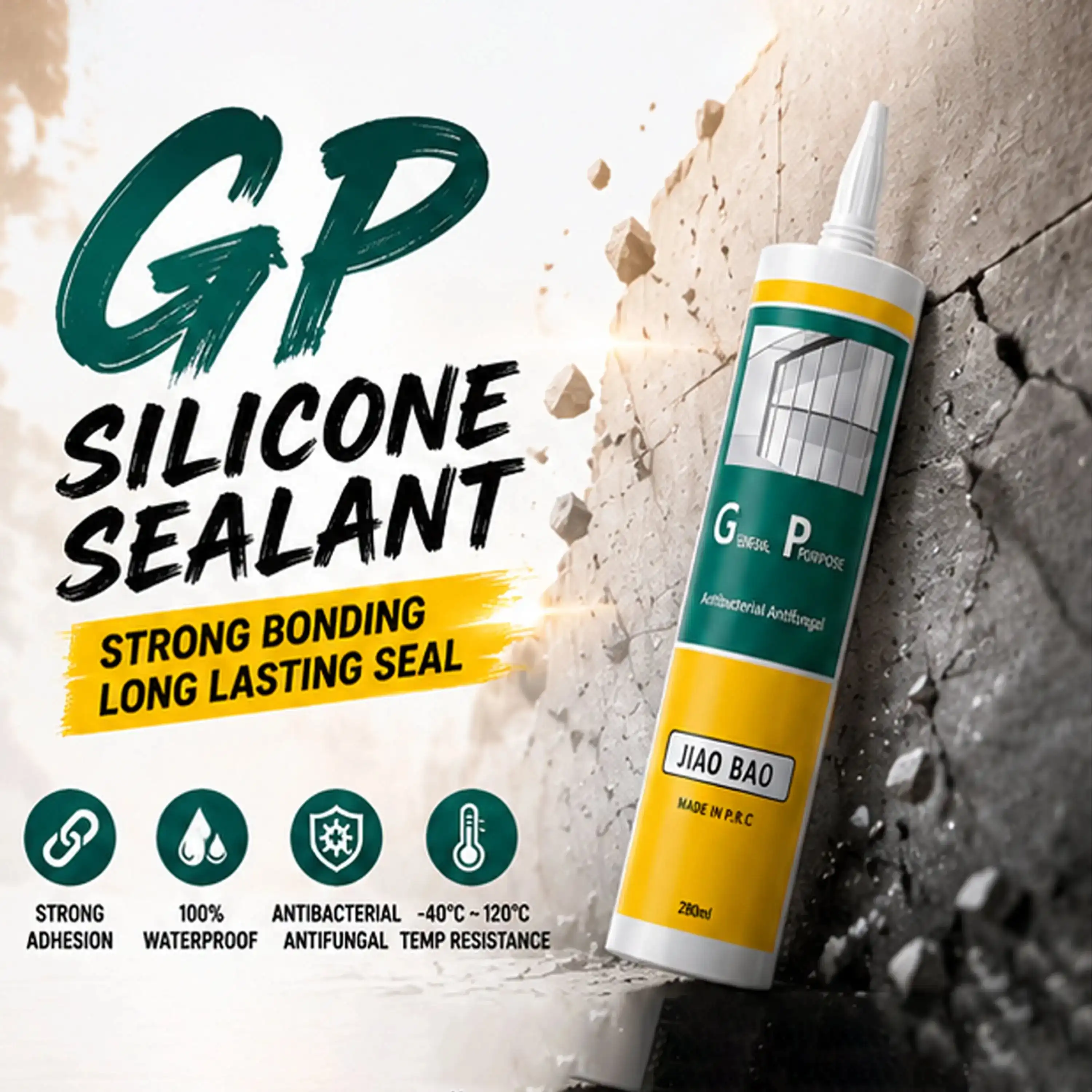
Buying on a large scale and buying things for personal use have very different sourcing methods. With volume agreements, you can negotiate prices that lower the cost per unit while still making sure you have a steady supply. Our factory can make anywhere from 5,000 to 50,000 cartridges per month, and standard colour lead times are between one and two weeks. Custom colour matching adds about a week to the wait time for recipe development and quality assurance, but it makes it possible to blend in perfectly with branded window frame colours.
When judging a supplier's skills, you need to look at more than just their prices and service claims. Instead of testing a single batch, ISO and CE certifications show that the process is controlled and the product is always the same. With 13 years of experience making things, we've set up quality systems that keep track of lots of raw materials, production, and finished goods. This lets us quickly find the root cause of problems in the field. This ability to track becomes very important when production batches cover several months of installation projects and a single failure of the GP door and window silicone sealant could lead to large-scale warranty actions.
The true procurement value can be seen by looking at the relationship between the quality of the sealant and the costs of service after installation. When seals fail too soon, window makers have to pay a lot of money for callbacks that require technicians to be sent out, materials to be replaced, and maybe even damage compensation. Customers complain that water and air leaks happen, but our chemical stability formula stops them. The longer service life—usually more than ten years for properly designed joints—splits the initial cost of the material over a lot longer amounts of time than cheaper options.
Logistics that is flexible can work with a variety of business models. Less-than-container loads are used for smaller businesses or market testing, while containers are used for foreign trade and buyers who buy a lot. Because we are in Shandong province, we have easy access to major ports for shipping goods by sea and to road routes that serve industry hubs in China. Manufacturers of doors and windows in Central Asia and Africa really value our knowledge with export paperwork and changing formulas to fit different climates, from dry deserts to humid warm areas.
Technical support services set plant suppliers apart from wholesalers who only store goods. Our application engineers help with joint design, testing substrate compatibility, and fixing installation problems that come up when production levels are increased. Instead of just sending materials, this consultative approach helps customers improve how they put things together. The partnership model works especially well when adding new frame materials or going into architectural markets with stricter performance requirements.
Regular inspections make seals last longer and find small problems before they get worse and cause water damage or energy loss. Visual inspection should happen every six months, with a focus on areas that move a lot, like corners and the points where different frame members meet. Surface cracks, hardening that makes the material less flexible, and glue separation that can be seen as holes between the sealant and base are all early signs that the material is about to fail. By noticing these signs, you can reseal the cracks before they get worse during routine maintenance instead of waiting for emergency fixes.
When compared to residential areas, environmental risks in industrial zones speed up decline. Particles and chemicals in the air settle on seal surfaces and may react with the silicone polymer or wear down the seal during thermal cycling. Cleaning the elastomer with light soap solutions on a regular basis gets rid of these contaminants without hurting it. You should stay away from harsh cleaners and chemicals that remove plasticisers because they make surfaces rough, which lets water into the GP door and window silicone sealant joints.
Rather than arbitrary age limits, the seal's functional condition tells you when it needs to be replaced. Minor surface wear doesn't affect performance as long as the material stays bendable and sticks well to both substrates. But if gaps show up or the sealing gets hard and rigid, the whole thing needs to be taken off and replaced. Old stuff is taken off with cutting tools and solvents, and then the surface is cleaned very well to make sure that the new sealant sticks to the original surfaces and not to any contamination that is still there.
Local rules about how to get rid of building waste say how to properly get rid of removed sealant. Cured silicone is chemically inert and not dangerous, but it should be thrown away in a way that follows commercial waste management rules. When joints are replaced, they can be made better if the original designs weren't good enough for how the building actually moves. Talking to technical representatives during resealing projects can help find ways to improve the design so that the next service cycle lasts longer.
GP door and window silicone sealant is an important part of making fenestration because it keeps out the weather reliably thanks to its balanced performance characteristics. It's great for production settings where speed and accuracy are important for making money because it cures quickly, is very flexible, and sticks to a wide range of substrates. Our formula meets international quality standards, and we offer reasonable prices and a range of shipping options to help producers who focus on both local and foreign sales. Knowing the technical features, how it should be used, and how often it needs to be maintained over time helps you make smart purchasing choices that lower the overall cost of ownership while still ensuring the quality of the end result.
Our product works reliably in temperatures ranging from -50°C to +150°C, so it can be used in harsh cold climates and in direct sunlight without losing its flexibility or stickiness. This range goes well beyond what is usually needed for a building covering.
When acetoxy systems cure, they give off acetic acid, which can eat away at copper, brass, and aluminium that isn't covered in anything. Anodised and powder-coated aluminium, which is often used in window frames, is safe to use with our formula. Alternatives that use neutral fix are needed for sensitive metals.
The moisture-cure process starts slowly once a cartridge is opened and exposed to air. For best results, cartridges that have been opened should be used within 48 hours. If you store an unopened cartridge of GP door and window silicone sealant below 27°C for a year, it will keep all of its original qualities.
Our manufacturing process is certified by ISO 9001 for quality control, and all of our goods have the CE mark, which means they meet European safety standards. There is testing paperwork to help with customs clearance and building code approvals in the areas that are being targeted.
Finding a reliable maker for GP door and window silicone sealant has a direct effect on how well your products are made and how well they are known. With 13 years of experience making colour silicone sealants and weatherproofing systems, Jiaobao can offer enterprise-grade formulations. Our production capabilities allow for flexible order volumes and delivery windows of one to two weeks, which makes sure that your assembly lines always have the materials they need. Our quality systems are approved by ISO and CE certifications, which means we meet the foreign standards needed for businesses that focus on exports. Our OEM and ODM services can be tailored to your needs, whether you need standard colours or formulations that are exactly the same for branded window systems. Production managers and purchasing teams can email our technical support at dorashen@cnjiaobao.com to talk about application needs, ask for samples to test on the production line, or set up monthly supply deals.
1. ASTM International. (2018). ASTM C920: Standard Specification for Elastomeric Joint Sealants. West Conshohocken: ASTM International Publications.
2. International Organization for Standardization. (2016). ISO 11600: Building Construction – Jointing Products – Classification and Requirements for Sealants. Geneva: ISO Publications.
3. Klosowski, J. M., & Wolf, A. T. (2012). Sealants in Construction (2nd ed.). Boca Raton: CRC Press.
4. Panek, J. R., & Cook, J. P. (1991). Construction Sealants and Adhesives (3rd ed.). New York: John Wiley & Sons.
5. Beech, J. C. (2002). The Chemistry and Technology of Silicone Sealants. London: Rapra Technology Limited.
6. Wolf, A. T. (2006). Durability of Building Sealants: A State-of-the-Art Review. Building Research & Information, 34(4), 331-349.
November 16,2023
Enterprise Name
The sealant has very strong adhesion and performs well even on glass and aluminum. After curing, it remains flexible and shows no cracking. Perfect for our facade projects.
November 16,2023
Enterprise Name
Stable quality across batches. Our customers especially like the smooth application and consistent extrusion. It helps reduce installation time on site.
November 16,2023
Enterprise Name
I used it for bathroom sealing. Excellent waterproof performance and no mold issues so far. It's been holding up very well in humid conditions.
November 16,2023
Enterprise Name
The neutral silicone works well on sensitive materials without corrosion. Very suitable for industrial applications requiring stable performance.
_1779347426672.webp)