November 16,2023
Enterprise Name
The sealant has very strong adhesion and performs well even on glass and aluminum. After curing, it remains flexible and shows no cracking. Perfect for our facade projects.
Sep 29, 2026
When sourcing an acrylic sealant waterproof grade product, the decision goes well beyond unit price. The right supplier must demonstrate consistent waterproof performance backed by verifiable test data, relevant certifications, and reliable delivery capacity. Whether you run a home improvement retail shop or manage a cross-border e-commerce operation, choosing a supplier who understands moisture-resistance standards—and can prove them—directly protects your store ratings, your margins, and your customers' satisfaction. This guide walks you through every stage of that evaluation.
Different kinds of acrylic sealants are made to handle water in different ways. The acrylic sealant waterproof grade of a sealer tells you how well it is designed to keep out irregular wetness, humidity, and keep the bond strong after multiple wet-dry cycles. This is something that regular painters' caulk just can't do.
Real waterproof-grade acrylic sealant has to meet certain physical standards that can be measured. ASTM D412 says that the elongation at break should be more than 200–300%. This lets the joint bend without cracking during thermal expansion. A 75% to 85% solid content is common, which keeps shrinkage to a minimum while the concrete cures. ASTM C794 says that the finished bead must still stick together after being submerged in water for 7 days.
This is the most important quality sign. According to ISO 9047, the product can move within a range of ±12.5% to ±15%, which means it can be used for connection parts in door and window frames. According to ASTM D2202, sagging resistance makes sure that the paste stays in place on vertical surfaces and doesn't fall over.
Higher-grade acrylics, which are sometimes called siliconized or hydrophobic-modified acrylics, have silane coupling agents that make them stick better to glass and other non-porous surfaces and make them less likely to wash off in the rain. A normal interior-grade acrylic works well in dry places like baseboards and cracks in the wall. For outdoor window edges, facade joints, and high-humidity areas inside, like kitchen and bathroom borders outside the wet-splash area, a waterproof-grade version is the right choice.
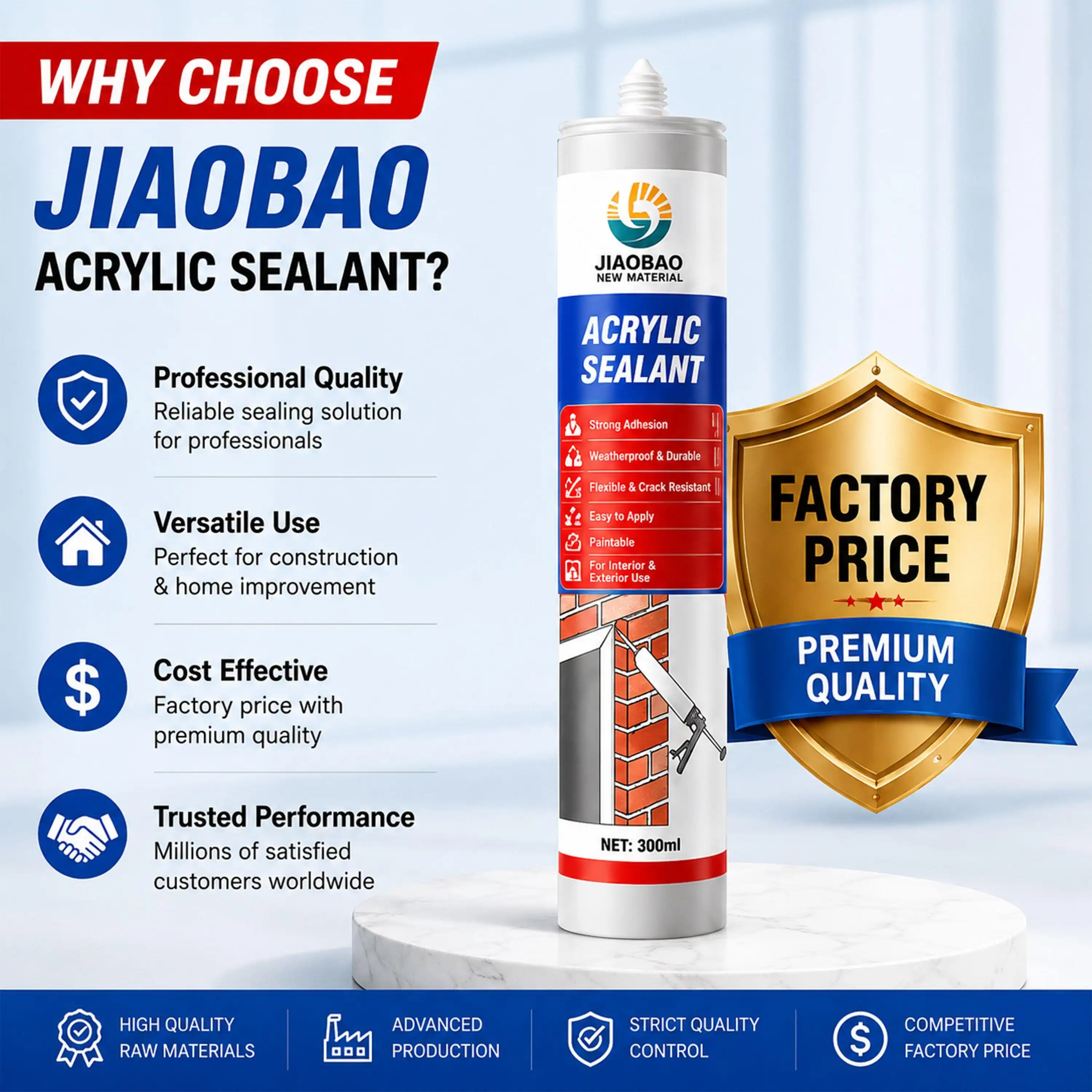
A structured screening process should be used to evaluate suppliers instead of just looking at what they say in their catalogs. The goal is to match the written skills of each supplier with the needs of your project. An experienced acrylic sealant waterproof grade provider will offer transparency throughout this process.
Certifications are the entry filter for the baseline. If the goods are going to Europe, look for ISO 9001 quality management certification and, if necessary, CE marking. For the U.S. market, look for ASTM C834 compliance documentation. In addition to certificates, you should ask for batch test reports that include results for freeze-thaw stability and adhesion-in-peel after immersion in water according to ASTM C731. A big procurement risk comes from suppliers who can't give you batch-level data instead of just one pre-sale sample report.
Make sure the seller can keep up the same level of work on more than one sale, not just the sample batch. When your retail channel needs private-label packaging or color choices that are specific to an area, being able to do both OEM and ODM is important. Small to medium-sized stores that need to keep track of their cash flow without overstocking must have flexible minimum order amounts, preferably as low as 50 to 100 boxes. When wait times are one to two weeks, there is less pressure to reorder, which helps keep products on the shelves.
Physical transit quality is a real issue that buying teams often don't give enough attention to. A 300ml hard-tube cartridge or a 600ml sausage pack must be able to be shipped on a pallet without leaking or changing shape. Make sure the seller uses strong outer boxes and has experience with both sea freight and land transport paths that serve your target markets.
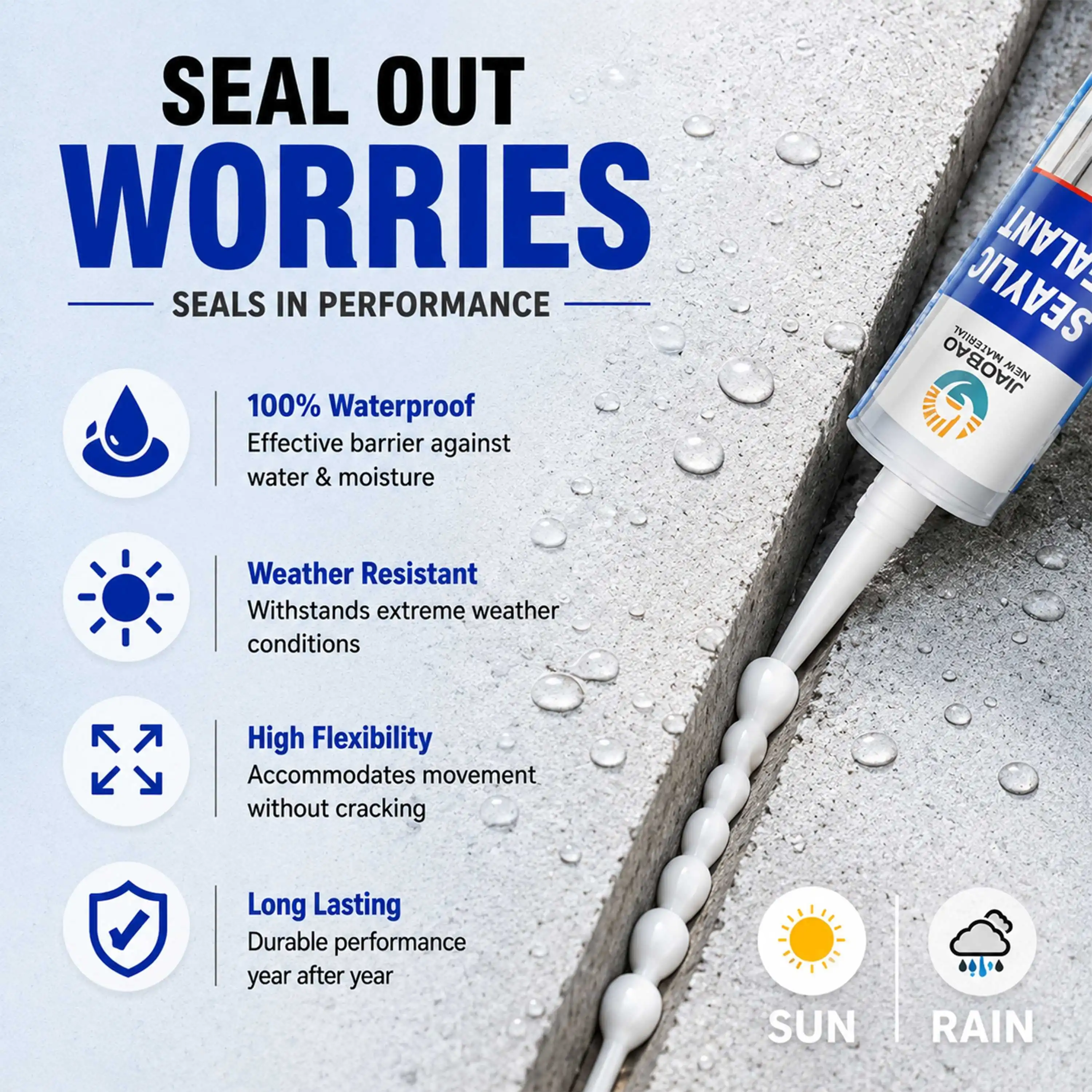
It helps to make smarter decisions about where to get acrylic sealant waterproof grade products by knowing where they stand in relation to silicone and polyurethane sealants.
Silicone sealants are the most common choice for bathroom stalls and pool covers because they are very flexible and can handle being submerged in water for a long time. But silicone can't be painted over, which is a big problem for renovations where a smooth painted finish is needed. Polyurethane sealants can be used on structural parts that move a lot, but they cost more per unit and take longer to dry.
The sensible middle ground is waterproof-grade plastic. It won't get wet in the rain, can be painted over with latex paint after a short curing time, sticks to concrete, brick, ceramic tile, drywall, wood, metal, glass, and painted surfaces without a primer coat, and it can be cleaned up with water before it dries. This mix of paintability and moisture protection covers the most common jobsite situations at a price point that supports big sales for stores that sell materials for home renovations. The downside is that it is not designed to be submerged for long periods of time or to have joints move more than about ±15%.
Before committing to a full purchase order, the supplier's claims need to be checked by a third party. Here is a practical testing sequence that strikes a good balance between rigor and the time constraints of a decision cycle for an acrylic sealant waterproof grade that lasts one to two weeks.
Use the sample sealant on ceramic tile, concrete blocks, and a painted piece of plywood as examples of surfaces. Keep track of how long it takes for the skin to dry; a waterproof product should dry in 30 minutes under normal conditions. Once the glue has been dry for 24 hours, put the bonded strip in water for 7 days and check to see if the bead peels off cohesively or delaminates at the substrate interface. Delamination at the interface is a red flag; cohesive failure is a sign of a strong link.
Compare the test reports that the seller gives you with the standard that is said to be met. Make sure that the lab that is giving you the report has CNAS or a similar certificate. Make sure that the tried product lot number is for a new batch and not an old sample from an earlier version. Documentation of stain resistance according to ASTM C510 is an extra but useful check, especially for people who are going to use the sealer next to natural stone or unglazed tile.
To find an acrylic sealant waterproof grade quickly, you need to make sure that the logistics of your search match the needs of the product standard.
When figuring out prices, you should use the total landed cost instead of the ex-factory unit price. Shipping costs, customs fees, and damaged packaging from shipping all add to the real cost per box. If your supplier offers both sea and land freight, you can choose how to balance speed and cost based on how quickly you need to get your goods. Bulk purchase levels usually start to save you money when you buy 200 cartons or more, but a seller who is willing to take trial orders of 50 to 100 boxes shows that they are confident in getting you to buy from them again, not just once.
For online shopping sites like 1688, Shopee, Lazada, or direct B2B inquiries, ask for video proof of the production facility and a current ISO certificate with an expiration date that can be seen. Suppliers who are honest like this openness. Check that the color code, size (300ml or 600ml), and shelf life (12 months from the date of manufacture) on the product sticker match those on the specification sheet.
It takes technical knowledge, careful reading of paperwork, and planning for logistics to choose an acrylic sealant waterproof grade supplier. Before placing a large order, buyers who take the time to check the adhesion after submersion in water, make sure the certification is real, and stress-test a sample batch consistently report fewer returns, lower customer complaint rates, and stronger supplier relationships. A claim that something is waterproof is not just advertising; it can be measured and tested, and if you ask the right provider, they will always be able to back it up.
No, acrylic seals that are waterproof can stand up to rain, splashes, and short periods of moisture contact. They aren't made to be submerged in water all the time or to handle hydrostatic pressure. For pools or areas that stay wet all the time, a hybrid or epoxy-based glue is best.
For acrylic paints to dry, the water has to evaporate. In normal conditions, the skin forms in 30 minutes, but it usually takes 12 to 24 hours for it to be fully waterproof. Heavy rain in the 4 hours after application could wash out outer joints.
Yes, one of the best things about it over rubber is that it can be painted. Wait at least two to four hours before painting with latex paint. While the sealant cures, painting over a core that is still wet may cause cracks in the surface.
Put ISO 9001, ASTM C834 compliance documentation, and ASTM C794 batch-level adhesion test reports at the top of the list. Ask for LEED or SCAQMD compliance statistics for markets that need low-VOC products.
Cracking usually happens when the joint moves more than the caulk can handle (usually ±12.5% to ±15%) or when high-filler, low-grade formulas are not flexible enough. Before defining for thermally active joints, you should always check the elongation-at-break data.
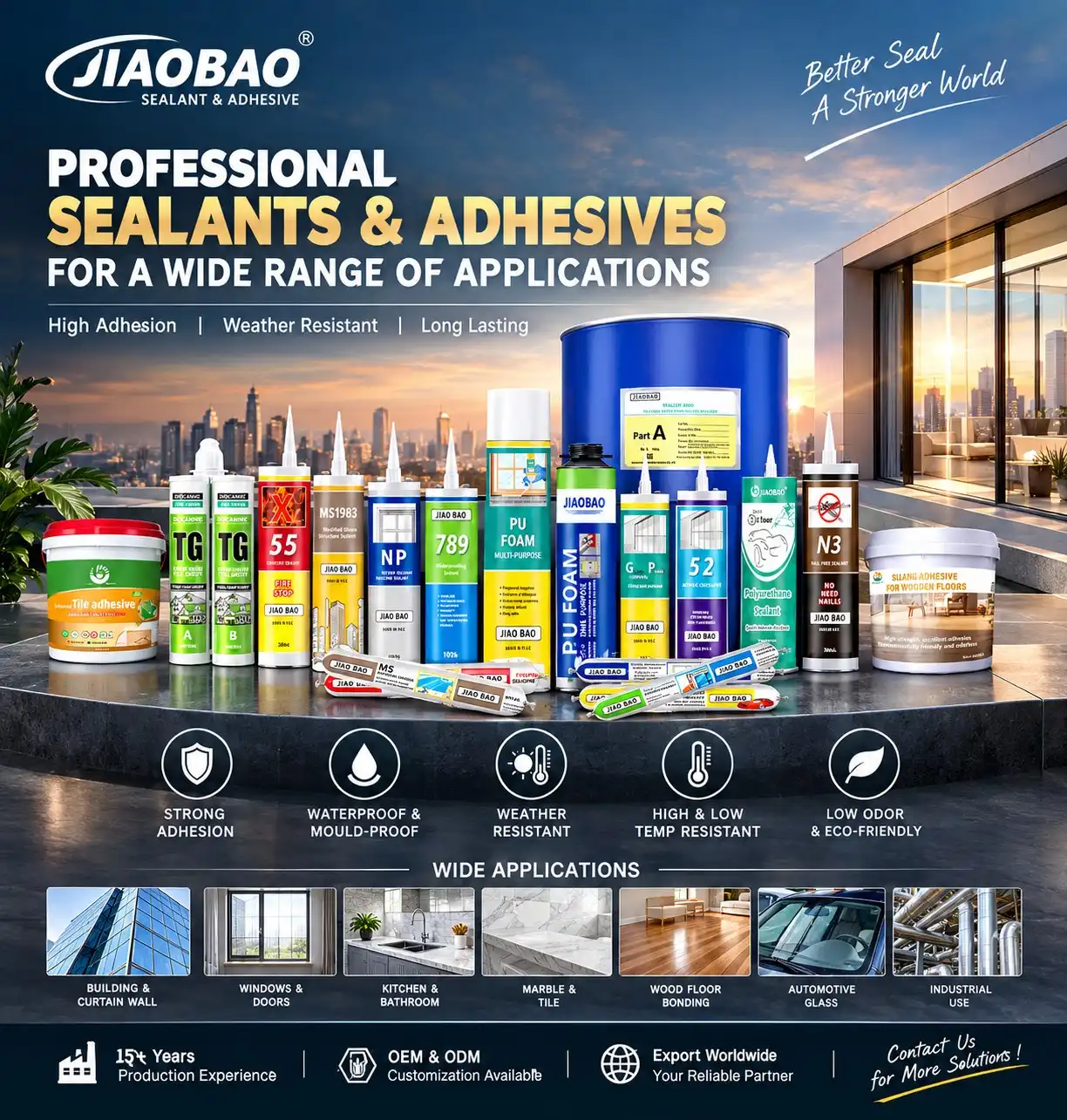
Since 2013, Jiaobao has been making high-performance sealants. They have ISO-certified quality control, OEM/ODM flexibility, and lead times of only one to two weeks. Low MOQs start at 50 boxes for our acrylic sealant waterproof grade supplier program. It comes in 300ml cartridge and 600ml sausage forms and can be colored white, black, gray, or any other color you want. You can email our team at dorashen@cnjiaobao.com or go to shandongjiaobao.com to get examples and a price right away.
1. ASTM International. ASTM C834: Standard Specification for Latex Sealants. ASTM International, 2023.
2. ASTM International. ASTM C794: Standard Test Method for Adhesion-in-Peel of Elastomeric Joint Sealants. ASTM International, 2018.
3. ISO. ISO 9047: Building Construction — Jointing Products — Determination of Adhesion/Cohesion Properties of Sealants at Variable Temperatures. ISO, 2001.
4. Skeist, I. Handbook of Adhesives, 3rd ed. Van Nostrand Reinhold, 1990.
5. Panek, J. R., & Cook, J. P. Construction Sealants and Adhesives, 3rd ed. Wiley-Interscience, 1991.
6. U.S. Green Building Council. LEED v4 Reference Guide for Building Design and Construction. USGBC, 2019.
November 16,2023
Enterprise Name
The sealant has very strong adhesion and performs well even on glass and aluminum. After curing, it remains flexible and shows no cracking. Perfect for our facade projects.
November 16,2023
Enterprise Name
Stable quality across batches. Our customers especially like the smooth application and consistent extrusion. It helps reduce installation time on site.
November 16,2023
Enterprise Name
I used it for bathroom sealing. Excellent waterproof performance and no mold issues so far. It's been holding up very well in humid conditions.
November 16,2023
Enterprise Name
The neutral silicone works well on sensitive materials without corrosion. Very suitable for industrial applications requiring stable performance.
_1779347426672.webp)