November 16,2023
Enterprise Name
The sealant has very strong adhesion and performs well even on glass and aluminum. After curing, it remains flexible and shows no cracking. Perfect for our facade projects.
Aug 5, 2026
Industrial sealant technology is undergoing remarkable transformation, driven by stricter fire safety regulations and the demand for materials that perform reliably in extreme conditions. Among the most significant developments is the advancement of Fireproof Silicone Sealant Fire Rated solutions, which combine fire containment capabilities with flexibility and durability. These high-performance sealants are now engineered to resist temperatures ranging from -50℃ to +150℃, maintain elasticity under thermal stress, and provide critical firestop protection in construction joints, through-penetrations, and curtain wall systems.
Modern formulations incorporate flame-retardant additives and achieve certification under international standards like UL, ASTM, and EN, making them indispensable for B2B procurement professionals managing projects in Russia, Kazakhstan, Turkey, Poland, and similar markets where EAC and GOST certifications are mandatory.
It's important for procurement managers to know the difference between fire resistance and simple heat tolerance when choosing sealants for regulated construction projects. Fire resistance is a material's ability to keep flames, smoke, and poisonous gases from getting through building walls during a fire. It is usually measured in hours, with numbers like EI 120 or EI 240.
When it comes to products, heat resistance just means how well they can keep their shape at high temperatures without catching fire. Fire-rated silicone sealants have been tested to stop the spread of fire by creating a charred barrier that melts or gets denser in very high temperatures. This effectively closes gaps and keeps things separate.
Quality fire-rated sealants change chemically when they come into contact with fire, making a safe char layer. The silicone polymer base is naturally thermally stable, and flame-retardant fillers like alumina trihydrate or ceramic nanoparticles are carefully added. These dissolve endothermically, absorbing heat and releasing water vapor that cools the joint.
This reaction slows down the flow of heat and keeps structural parts on the side that isn't exposed from reaching temperatures high enough to catch fire. When procurement professionals understand this process, they can better understand why certified firestop sealants work better than generic adhesives in life-safety situations. This is especially true in high-rise buildings, data centers, and industrial facilities where seconds count during escape.
Fire safety certifications can be hard to understand, but being familiar with the main standards makes it easier to evaluate products and follow the rules. In North America, joint systems are governed by UL (Underwriters Laboratories) standards like UL 2079. In Europe, ASTM E1966 sets the rules for how to test fire-resistant joint systems. EN 1366-4 is used on European markets to check the quality of joint seals in fire-resistant assemblies.
If a buyer wants to sell goods in the Eurasian Economic Union, they need to make sure that the goods are certified by the EAC and meet GOST R standards, which say what the fire hazard class is and how toxic the smoke is. Verifying these qualifications in technical paperwork, ideally in both English and Russian, cuts down on customs delays and makes sure that the local fire marshal will accept the goods, which is a problem that importers in Eastern Europe and Central Asia often have.
Fireproof Silicone Sealant Fire Rated must be explicitly included in the product documentation and test reports, because its fire-resistant performance directly affects the assigned fire hazard class and smoke toxicity rating, and without this specific sealant type clearly listed, customs and fire authorities may reject the submission even if other certifications are in place.
Concern for the environment is changing the way industrial sealants are made. This is pushing makers to make low-VOC and solvent-free formulas that meet green building standards like LEED and BREEAM. Modern neutral-cure silicone sealants don't have any acetic acid byproducts that are harmful, so they can be used around copper wiring and sensitive electronic parts.
This change meets two needs in the market: following the rules in areas that are controlled by environmental laws and keeping important infrastructure safe in places like power plants and phone exchanges. Importers who work on green building projects can make their products stand out by finding sealants with proven emissions levels and sustainability certifications. This will make their products more appealing to architects and general contractors who have to go through strict environmental audits.
Today's industrial sealants are expected to do more than one thing at once, so they don't have to be used separately. This makes application logistics easier. New fire-rated formulations now contain fire and reduce noise, which makes them perfect for closing expansion joints in recording studios and performance halls. Other types have electrical insulating qualities that make them safe to use around wire bundles and busbar holes in substations.
It can stick to many surfaces, like anodized metal, stainless steel, concrete, and fire-rated gypsum board, without needing primers made just for those surfaces. This makes installation much faster and cheaper. To lower the risk of problems in the field and guarantee calls backs, procurement managers should focus on sealants that have been tested and shown to adhere to a variety of substrates.
The digitization of business-to-business (B2B) procurement has changed how importers find and assess sealant providers. Online platforms now give you instant access to technical datasheets, test reports from a third party, and safety data sheets (SDS) in multiple languages. This makes it possible to do your research quickly. Suppliers with clear manufacturing credentials, like ISO 9001 quality management and CE marking, gain trust more quickly than rivals who only meet people at trade shows.
Lead times for urgent projects can be cut from 8 to 12 weeks to as little as 2 to 3 weeks with real-time inventory visibility and faster shipping options, such as both sea freight and land transport via Belt and Road corridors. This change gives procurement workers the ability to quickly meet the needs of projects while still upholding high quality standards. This gives them an edge in fast-paced building markets.
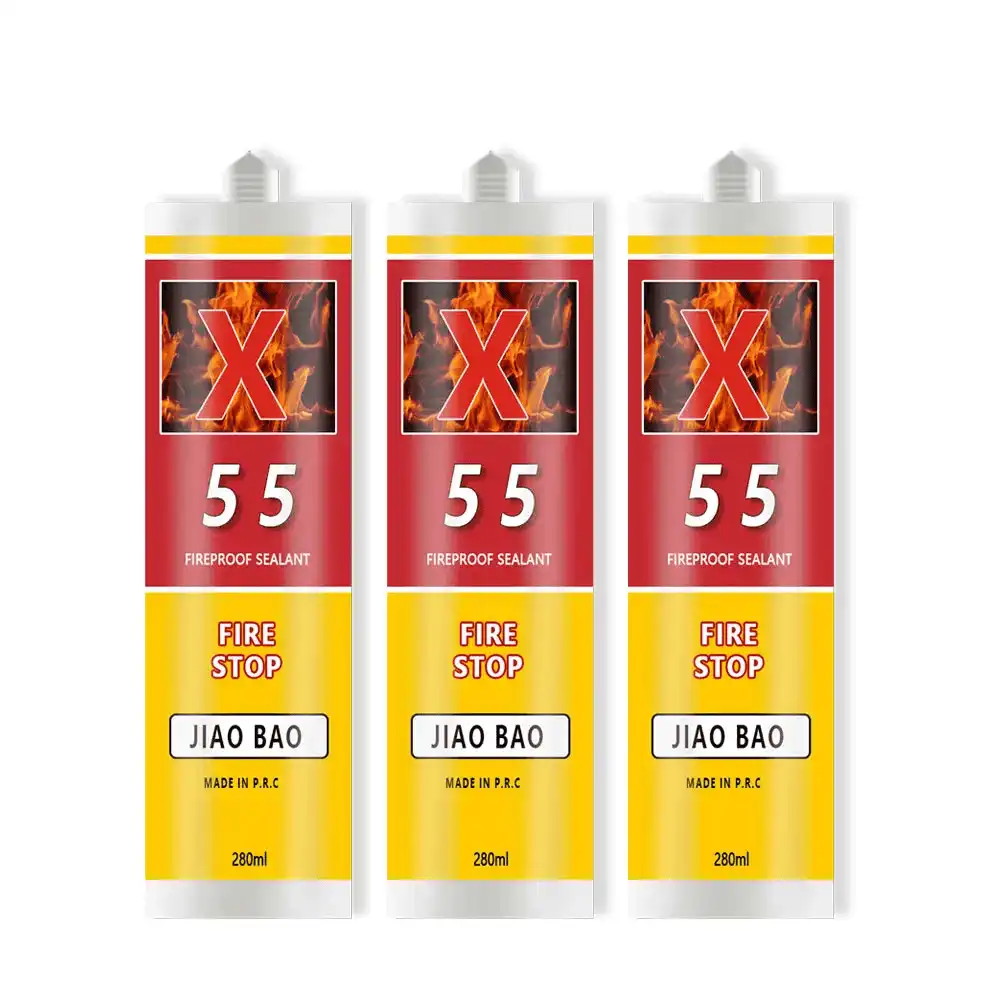
Picking the best sealant chemistry varies on the surroundings and performance needs of the product. Silicone sealants are great for use outside because they are resistant to UV light, don't break down in harsh weather, and stay flexible at high and low temperatures. They can stay flexible from -50℃ in Siberia in the winter to +150℃ near roofing membranes in the summer. When heated, intumescent acrylic sealants expand quickly, which makes them perfect for sealing around flammable penetrations like PVC pipes.
However, they aren't weatherproof enough for façade joints, and they break down after being exposed to water for a long time. Acrylic types can be painted and are cheap, but they harden into a solid state when they dry, so they can't be used for parts that move because of earthquakes or wind. When managing projects in harsh climates like Kazakhstan's temperature swings or Turkey's coastal humidity, procurement managers should focus on silicone-based solutions that last a long time without needing to be maintained often.
Fireproof Silicone Sealant Fire Rated is a critical exception to consider, as it combines the durability of standard silicones with enhanced resistance to high temperatures and fire exposure, making it uniquely suitable for both weather-exposed and fire-safety-critical joints in these demanding environments.
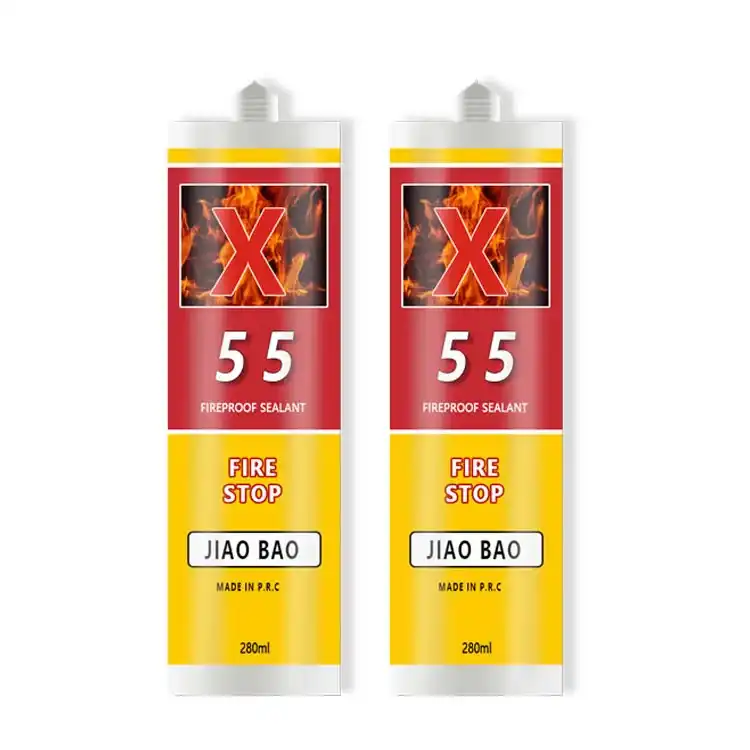
Global brands like 3M Fire Barrier, Tremco FireStopper, Sikaflex, and Dow Corning are the market leaders in premium segments. However, new Chinese companies like Shandong Jiaobao New Material Co., Ltd. offer great deals for importers who want to save money. Jiaobao was founded in 2013 and has 13 years of experience making things. They have strict quality control and make one-part RTV silicone seals that meet international standards at prices that are 40–60% less than European versions.
Their fire-rated formulas have 99.5% non-volatile material, no drooping, and a surface drying time of 45 to 60 minutes, which is the same as what well-known competitors offer. Jiaobao's goods come with ISO and CE certifications, making them easy to clear customs in all EAC member states. They come in 300ml and 600ml cartridges with unique color options. Payment terms like L/C and T/T are flexible, which is good for procurement professionals because they lower the financial risk of first trial orders.
For the best adhesion and fire performance, different building materials need different sealant formulations. Metal surfaces like steel stud frame and aluminum curtain wall mullions need sealants with low thermal expansion coefficients to keep them from coming apart when the temperature changes. Sealants that can handle hygroscopic movement are helpful for wood and composite materials, which are used a lot in residential and low-rise business building. This is because lumber's moisture content changes with the seasons.
Because concrete and brickwork are porous, a primer may be needed to make sure the bond is strong enough, especially in high-stress areas like earthquake joints. By knowing these details, procurement managers can choose the right product variant and surface preparation routine, which lowers the chance of expensive mistakes in the field. It's very helpful when sellers offer substrate-specific installation instructions in both English and Russian. This is especially true for importers who work with builders who don't have much experience with firestops.
For rated fire performance and long-term seal stability, the surface must be properly prepared. All of the surfaces of the joints must be clean, dry, and free of any dust, oil, release agents, or other loose materials that could make them less sticky. Laitance and friable material can be taken off of concrete and brickwork by wire brushing and then cleaning. Solvent cleaners should be used to wipe down metal surfaces to get rid of mill scale and rust.
The construction of the joint is also very important. For example, fire-rated joints usually need a minimum depth-to-width ratio of 1:2 so that they can accommodate movement well. A backer rod should be placed to control the sealant's depth and stop it from sticking to all three sides. To make sure contractors follow tested and listed systems, procurement specifications should clearly state joint sizes and preparation needs. Deviations from these requirements can void fire ratings and put building owners at risk of liability.
To put sealant without any gaps, you need to use the right tools and keep the surroundings under control. Continuous beads from cartridge guns should be used to apply sealant. This will make sure that the joint is completely filled without any air gaps that could let smoke and fire in. Tooling right away after application makes a smooth curved shape that improves the seal against the weather and the way it looks. Conditions in the air during application and curing are very important. For best results, the temperature should be 25℃ and the humidity should be 50%.
Curing should happen at a rate of about 3mm per 24 hours. When it's below 5℃, curing takes a lot longer, and when it's humid, the surface can skin before it's time to tool. In installation contracts, procurement managers should include weather windows and require workers to use temperature-monitoring tools to make sure curing goes according to the manufacturer's instructions. Fireproof Silicone Sealant Fire Rated adds an extra layer of reliability here, as its curing profile remains stable under moderate temperature fluctuations, but even so, strict adherence to weather windows is still essential to avoid premature skinning or delayed cure times. This attention to detail keeps things from breaking down too soon and cuts down on guarantee claims.
When installing fire-rated sealants in complex industrial settings, even experienced contractors run into problems. If you use overhead applications in ceiling penetrations, they might sag before they cure, so you need to use zero-slump formulations like Jiaobao's product, which has been shown to have 0mm flow characteristics. When sealing around equipment that moves, like HVAC pipes and mechanical lines, you need sealants that don't harden or crack when stressed over and over again. Through-penetrations involving multiple trades, like electrical conduits and plumbing pipes, need to be coordinated to make sure that the sealant goes all the way through without any gaps.
Giving installers technical notices in multiple languages and teaching them on-site makes it easier for them to follow listed systems, which cuts down on expensive rework. When procurement professionals work with suppliers that offer technical support and troubleshooting in the field, they gain a competitive edge that helps them make sure projects meet inspection and certification deadlines on time.
To find trusted suppliers, you need to look at more than just the product specs. Certification portfolios must have more than just CE marking. They must also have EAC attestation for markets in Eurasia, GOST compliance for Russia and Kazakhstan, and fire testing reports from third-party accredited laboratories. Manufacturing capacity and lead time response separate providers who can deliver from those who can't. For example, facilities that can make 50,000 or more cartridges per month with turnaround times of just one to two weeks can use just-in-time stocking strategies that lower the cost of storing goods.
Customization options, such as OEM branding, custom colors that meet architectural specs, and private labels, help wholesalers build brand recognition in their regions. Clear communication in English and Russian helps people understand technical details, shipping logistics, and payment terms more easily. This speeds up the buying process and lowers the chance of specification mistakes that cause projects to be delayed.
By looking at the total arrived cost instead of just the FOB price, you can see what the real value of each provider is. European names may list FOB prices that are 40–60% higher than Chinese brands, but when you add in freight, insurance, and import taxes, the real cost difference is much smaller. But Chinese companies that offer competitive FOB prices and flexible Incoterms, like CIF to Black Sea ports or direct delivery to Poland via the China-Europe Railway Express, still have big cost benefits.
Most of the time, volume discounts start at orders of 5,000 units, and prices get even better at 20,000 units or more for big infrastructure projects. Procurement managers should make situations that compare single-container orders to multi-container promises. They should do this by weighing the costs of keeping inventory against price drops per unit. Setting up framework deals with yearly volume promises gets better pricing while still allowing for project-specific call-offs, which improves the efficiency of working capital.
Strong quality control systems keep importers safe from groups of low-quality goods that could delay projects or fail to get regulatory approvals. Reliable suppliers give test certificates for each batch that show the density, viscosity, cure speed, and fire rating compliance. This lets quality control check the products when they come in. There are 12-month shelf life promises from the date of production, and batch numbers are clearly written on the cartridges to stop the installation of old material that doesn't work as well.
After-sales support features, such as guarantees for replacements of broken products and technical help for fixing problems, lower the risk of purchasing something. Buyers should insist on written warranty terms that cover performance failures within the stated shelf life and include free replacement and fast shipping. New suppliers who haven't done much business in foreign trade yet but have a portfolio of return customers and case studies from similar markets give buyers more confidence in suppliers who have been in business for a while.
The industrial caulk industry is still changing to improve performance, care for the environment, and make buying more efficient. Fire-rated silicone sealants have become important parts of passive fire protection plans because they are more flexible, resistant to weather, and compatible with more than one substrate than traditional options. Fireproof Silicone Sealant Fire Rated represents a key subset of these products, specifically engineered to withstand both fire exposure and long-term environmental stress, making it a preferred choice for high-risk façade and penetration seals. As global building rules get stricter and digital supply chains develop, procurement professionals have more access than ever before to high-quality products from companies like Jiaobao, which offer low prices while strictly following certification rules.
To successfully find these important materials, you need to know how the product works chemically, check the skills of the suppliers, and set up strict quality control measures. Importers can get reliable fire safety solutions that meet local rules and help them make the most money in growing Eurasian markets by giving preference to suppliers with full certification portfolios, fast delivery, and expert support in multiple languages.
Fire-rated silicone sealants are designed and tested to stop fire, smoke, and toxic gases from getting through building joints for a set amount of time, usually between one and four hours. Unlike regular caulks that just fill in gaps, these products are put through strict fire tests according to standards such as UL, ASTM, and EN. In extreme heat, they form protective char barriers. They don't crack when the temperature changes from -50℃ to +150℃, so they can handle thermal expansion and seismic movement. This is important for keeping fire compartmentation intact during emergencies.
Ask for original certificates instead of copies, and then check the accreditation of the organization that issued the certificates through official databases like the European Accreditation (EA) database for CE marks or the Eurasian Conformity portal for EAC certificates. Check license numbers against records from the testing lab and demand test results that are specific to each batch that show fire rating compliance. Reliable sellers, like Jiaobao, provide clear paperwork, such as ISO 9001 quality management certificates, so that customers can check them out on their own before placing big orders.
Good silicone-based fire-rated seals stay flexible and stick even at -50℃, so they can be used in Kazakhstan, Siberia, and northern Russia, where the weather is tough. The silicone polymer chain doesn't break down like plastic options do when it freezes. When buying something, be clear about the temperature range you need it to work in and ask for cold-weather performance data, especially elongation and tensile strength at low service temperatures. This will help you make sure the product works well through the winter without cracking or coming loose from surfaces.
Shandong Jiaobao New Material Co., Ltd. is a reliable company that makes Fireproof Silicone Sealant Fire Rated for customers in Russia, Kazakhstan, Turkey, Poland, and the rest of Eurasian countries. Our one-part RTV silicone sealant is very good at containing fires and has a Class 1 W water resistance rating. It comes in 300ml and 600ml cartridges in white, black, gray, or custom colors. Jiaobao products meet strict EAC and GOST standards because they have ISO and CE certifications that have been checked by recognized labs.
This makes sure that they go through customs smoothly and are approved by local fire marshals. With 13 years of experience making things, quick production cycles of one to two weeks, flexible sea and land logistics, and dedicated technical support in both English and Russian, we can be your strategic partner for high-margin fire safety projects. You can email our export team at dorashen@cnjiaobao.com to get samples, detailed datasheets, and cheap quotes that are made just for your project.
1. National Fire Protection Association (NFPA), NFPA 101: Life Safety Code, 2021 Edition, National Fire Protection Association, Quincy, MA.
2. American Society for Testing and Materials (ASTM), ASTM E1966-19: Standard Test Method for Fire-Resistive Joint Systems, ASTM International, West Conshohocken, PA, 2019.
3. European Committee for Standardization (CEN), EN 1366-4:2006+A1:2010: Fire Resistance Tests for Service Installations - Part 4: Linear Joint Seals, Brussels, Belgium.
4. Underwriters Laboratories Inc., UL 2079: Standard for Tests for Fire Resistance of Building Joint Systems, 2018 Edition, Northbrook, IL.
5. Eurasian Economic Commission, Technical Regulation on Fire Safety Requirements (TR EAEU 043/2017), Moscow, Russian Federation, 2017.
6. International Code Council, International Building Code (IBC) 2021, Chapter 7: Fire and Smoke Protection Features, Country Club Hills, IL, 2021.
November 16,2023
Enterprise Name
The sealant has very strong adhesion and performs well even on glass and aluminum. After curing, it remains flexible and shows no cracking. Perfect for our facade projects.
November 16,2023
Enterprise Name
Stable quality across batches. Our customers especially like the smooth application and consistent extrusion. It helps reduce installation time on site.
November 16,2023
Enterprise Name
I used it for bathroom sealing. Excellent waterproof performance and no mold issues so far. It's been holding up very well in humid conditions.
November 16,2023
Enterprise Name
The neutral silicone works well on sensitive materials without corrosion. Very suitable for industrial applications requiring stable performance.
_1779347426672.webp)