November 16,2023
Enterprise Name
The sealant has very strong adhesion and performs well even on glass and aluminum. After curing, it remains flexible and shows no cracking. Perfect for our facade projects.
Jul 25, 2026
When sourcing reliable sealing solutions for construction projects, understanding what defines professional-grade materials becomes essential. Acrylic sealant construction grade represents a water-based elastomeric compound engineered specifically for structural applications requiring paintability, substrate compatibility, and compliance with industry standards like ASTM C834. Unlike general-purpose fillers, construction-grade formulations deliver superior flexibility, reduced shrinkage, and lasting adhesion to porous substrates including concrete, masonry, and drywall—making them indispensable for door and window perimeter sealing, acoustic partitions, and weather-resistant joint treatment.
High-solids acrylic emulsions and artificial fillers are used to make Acrylic Sealant Construction Grades that are made to meet strict performance standards. These products are fundamentally different from consumer-grade mastics because they can move more freely (usually within ±12.5% to ±15%) and can handle thermal expansion without breaking down. The science behind these sealants relies on water evaporation instead of chemical reaction to cure. This makes them odourless enough to use in busy areas and in line with the low-VOC standards needed for LEED-certified projects.
Professional formulas have a solid content of between 75% and 85%, which keeps the volume from shrinking too much during curing, which is a key factor in keeping joints from cracking inward. The elongation at break is usually more than 200%, which makes sure that the sealing bead stays intact even when the building moves. When acrylic sealants are dry, they can be painted. This solves a problem that silicone sealants have had for a long time: paint crawling and "shiners" make products look bad. Testing for water resistance according to ASTM C794 shows that joints that have been properly sealed keep their bond strength even after being exposed to water for a long time. UV stability also stops joints from turning yellow and chalky over time.
Most indoor and covered outdoor uses can be met with standard water-based building sealants. Specialised types include fire-rated formulations that meet ASTM E84 flame spread requirements for use in fire-resistance-rated assemblies and siliconised acrylics that are better at withstanding weather and can move up to ±25% more. Figuring out which version fits the needs of your project saves you money on unnecessary changes and makes sure you follow building codes and performance standards.
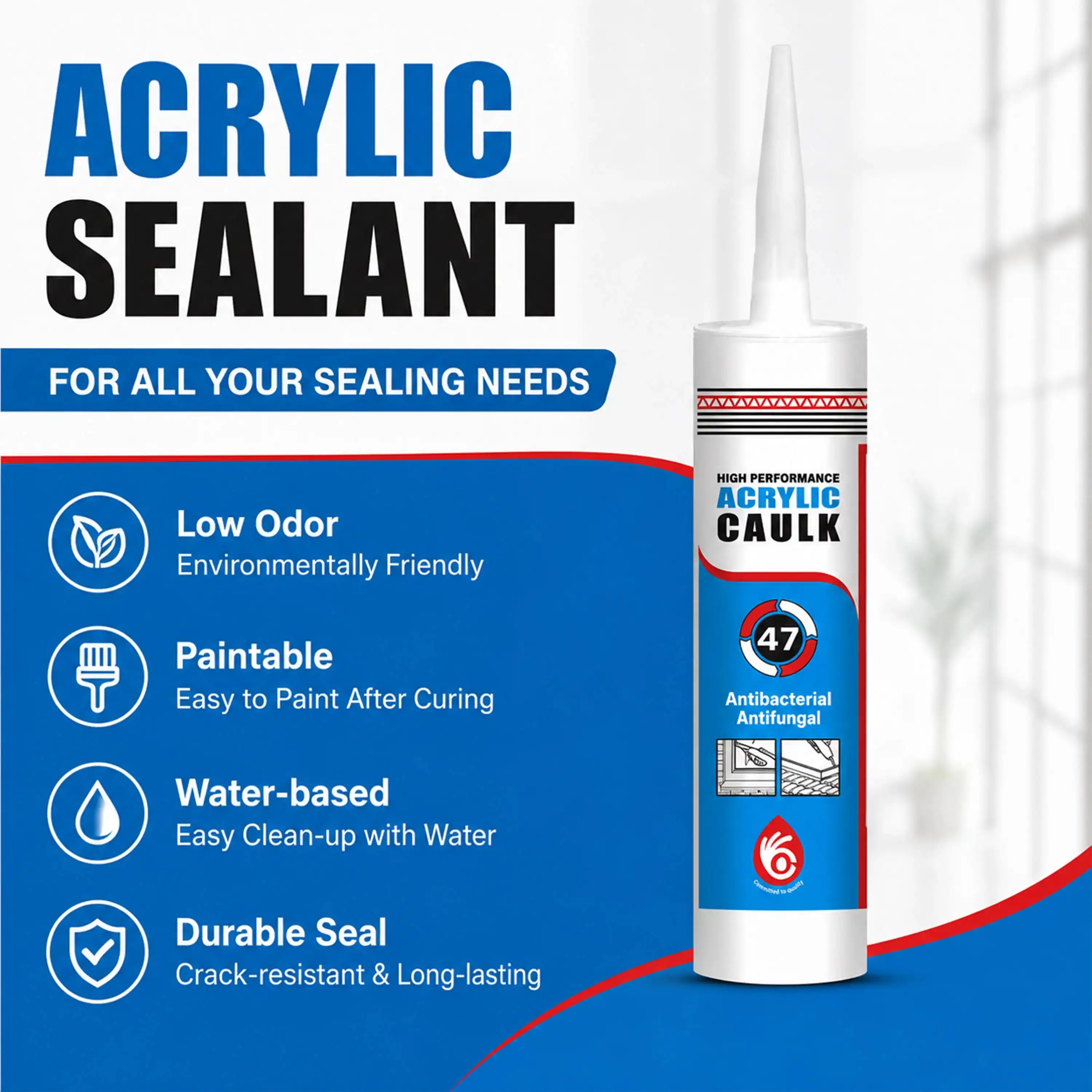
Direct performance comparisons with other glue chemicals help with purchasing choices. When it comes to extreme weather and places that move a lot, silicone sealants are great. However, they can't take paint and don't stick well to brickwork without primers, which limits their use in the finishing trades. Polyurethane seals are better at protecting surfaces from wear and tear and being used by people, but they take a long time to dry and smell bad while they're being installed. Latex caulks are cheap and can fill in small gaps, but they can't move and last as long as structural parts need to.
Acrylic Sealant Construction Grades stick strongly to porous, water-loving surfaces without primers, which is a big plus when sealing concrete, brick, plasterboard, and wood. This is because of the surfactant chemical in them, which helps them wet and penetrate substrate surfaces. Tensile stickiness is usually between 0.4 and 0.6 MPa, which is enough for links with low to medium movement. The flexibility profile can handle daily and seasonal changes in temperature without compromising the integrity of the seal. This keeps air and moisture from getting in and lowering the performance of the building envelope.
From the point of view of total cost, acrylic sealants offer reasonable prices and make work easier. The quick skin-over time of 10 to 20 minutes under normal conditions lets you clean up and use tools before skinning the surface. The fact that the surface is fully paintable within hours also speeds up project timelines. Environmental credentials include having no solvents, a mild smell, and adhering to strict VOC limits. These qualities support green building certifications and worker safety rules. When you combine lower material prices with shorter application times, you get better project economics without sacrificing performance.
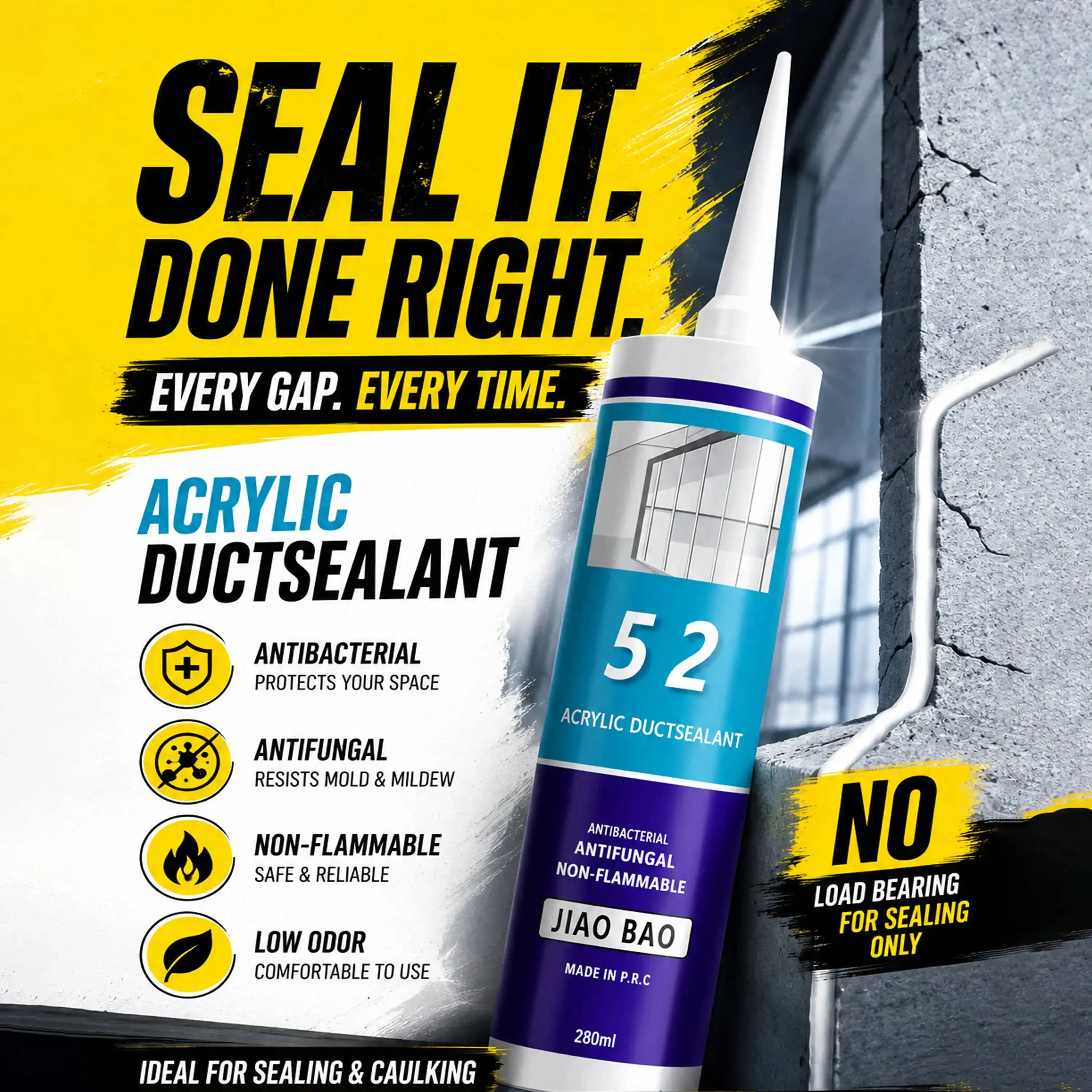
To choose the right sealer, you need to carefully look at the factors that are unique to your job. The first step is to identify the substrate. To figure out compatibility, you need to know whether the joints are made of porous materials like concrete and brickwork or non-porous surfaces like painted metal or vinyl. The expected movement is then found by using the joint width, the expected temperature expansion coefficients, and the structure's deflection properties. For projects that need to be painted after the paint is applied, Acrylic Sealant Construction Grades are required. For purely useful uses, other chemicals may be used.
Adhesion testing should make sure that the materials are compatible with the project substrates. Requesting sample cartridges for field trials takes the guesswork out of things and confirms how well they work in real-world circumstances. Drying and drying times affect schedules. Products that can be painted the same day and have 30-minute skin-over times help keep critical path delays to a minimum. The amount of VOCs is important, especially for indoor uses and places with strict rules about air quality. Formulations that meet the requirements of SCAQMD Rule 1168 make sure that all markets that need them follow the rules.
Global providers like Sika, 3M, and Bostik have a history of success and give a lot of professional help and certifications. New companies that make things, especially ones that have ISO certification and have shown they can make things, offer cheap options that are easy to customise. When looking at different providers, make sure they offer batch consistency tests, shelf life guarantees, and quick expert help. When a manufacturer offers OEM/ODM services, they can make changes to the recipe and private labelling to meet the needs of different regions or to help the brand place itself.
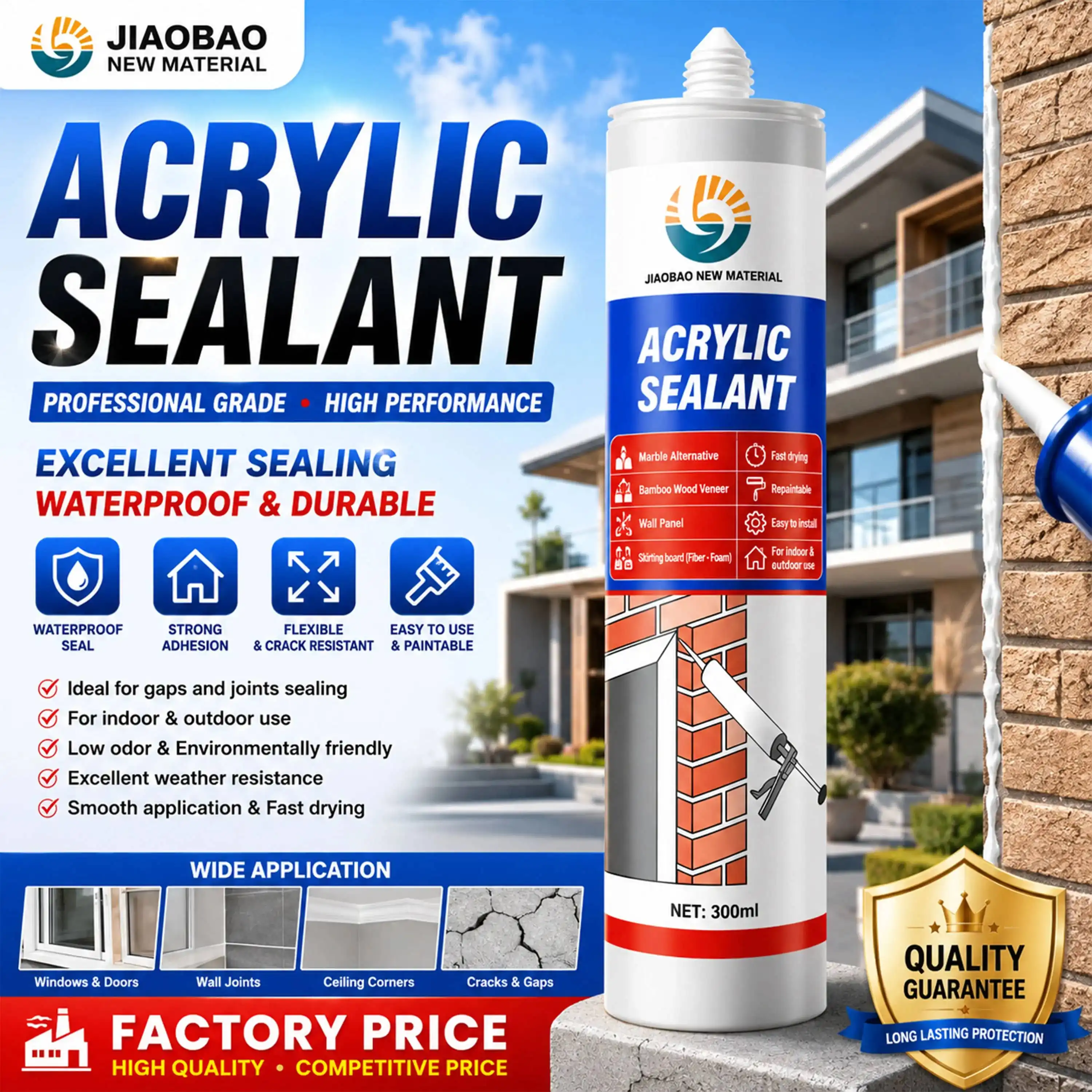
Different sourcing strategies are used for different projects with different due dates. Direct connections with manufacturers work well for big projects that need a steady supply and the chance to make changes. Shandong Jiaobao New Material Co., Ltd. is a good example of this method because they have ISO and CE approval and production lead times of one to two weeks. This makes them able to meet tight deadlines for even projects. Wholesale distributors offer instant availability and orders with a mix of products, but the cost per unit is usually higher. Online B2B sites let you compare prices and place smaller test orders, which can be helpful while you're qualifying vendors.
The price of Acrylic Sealant Construction Grade depends on the cost of the raw materials, the amount of solids in the material, and how complicated the mixture is. When you buy in bulk, you usually get tiered discounts, with break points at truck loads and container loads. Requests for customisation, such as exact colour matching to RAL standards, private labelling, or changed package formats, can change prices but allow products to be different and brand unity across projects. Environmental licenses and proof of third-party tests may add a small amount to the cost, but they are necessary for projects with strict standards.
Reliability in lead times keeps projects from being late. Manufacturers who have a steady production capacity and a range of shipping choices, such as sea or land freight, can meet a wide range of supply needs. The terms of a warranty reduce the risk, and quality promises that cover the product's shelf life and performance as specified set the standard for responsibility. After-sales help, such as technical troubleshooting, application advice, and replacement methods for materials that don't meet standards, keeps the supply chain running smoothly and strengthens partnerships with suppliers that are based on mutual accountability.
Preparing the surface correctly is the first step to a successful installation. The surface must be clean, dry, and free of any dust, oils, or other loose particles that could make it harder for the paint to stick. For the best performance, joint sizes should follow the ratio of width to depth, with depths usually staying between one-third and one-half of joint width. Backer rods make sure that the geometry is correct and stop three-sided adhesion, which makes it hard to move and causes the structure to fail early.
A consistent bead extrusion with either a manual or pneumatic caulking gun makes sure that the joint fills evenly with Acrylic Sealant Construction Grade. Shandong Jiaobao's recipe for Acrylic Sealant Construction Grade has an extrusion rate of 163 ml/min, which is much higher than the industry standard of 80 ml/min and lets installation go faster without making the workers tired. Tooling for Acrylic Sealant Construction Grade should be done during the product's skin-over time, which is usually 10 to 30 minutes. Moist tools should be used to get smooth, concave profiles that help Acrylic Sealant Construction Grade shed water and look better. In vertical uses, Acrylic Sealant Construction Grade's 0mm sag degree stops material from slumping and cuts down on waste.
Visual checks for cracks, loss of adhesion, or too much dirt buildup should be part of regular maintenance plans. Early detection lets problems be fixed locally before they get worse and cause moisture or air leaks that hurt the building's performance. If you fail to remove an Acrylic Sealant Construction Grade, you have to cut out the damaged material, clean the surfaces again, and reapply the sealer using the same best practices that were used the first time. Safety compliance means reading Safety Data Sheets for handling measures, making sure there is enough air flow during application, and getting rid of packaging waste in a way that follows local environmental rules.
Acrylic Sealant Construction Grades made for construction offer the right balance of performance, cost, and application flexibility that is needed for modern building projects. Their ability to be painted solves problems with finishing, and their strong binding to porous bases gets rid of the need for priming, which cuts down on installation time. Products that meet ASTM C834 standards and have low-VOC formulations help with meeting regulations and promoting sustainability goals without lowering the durability or weather resistance of the product. Procurement success depends on carefully choosing suppliers based on their production ability, certification paperwork, and customer service after the sale. By knowing about technical factors like movement, solid content, and curing profiles, you can make design choices that meet the needs of the project and meet long-term performance standards.
Yes, latex paint and most coating systems can be used on Acrylic Sealant Construction Grades once they are fully cured, which can take a few hours or more depending on the temperature and humidity. They can be painted, which makes them different from silicone seals, which don't let paint stick and leave flaws in the finish.
At 23°C and 50% relative humidity, surface skinning happens in 10 to 30 minutes. About 2 to 3 millimetres of full cure depth are added every 24 hours. These times take longer when it's cooler or there is a lot of humidity, but drying happens faster when it's warmer and drier.
In protected outdoor areas and moderate climate zones, they do well. For expansion joints that move a lot or are exposed to harsh weather, siliconised acrylic or silicone sealants last longer and are more resistant to UV light.
If you keep sealed cartridges and sausages in a cool, dry place out of direct sunlight for a year, they will still work. To keep the material from cracking and breaking down, cartridges that have only been partially used should be resealed and used within a few weeks.
Since 2005, Shandong Jiaobao New Material Co., Ltd. has been making high-quality binding products for professionals. Our one-part RTV Acrylic Sealant Construction Grade has a 163 ml/min extrusion rate, a 0mm sag in vertical uses, and a 0.5-hour surface drying time, which are all better than the standards in the industry. Our construction-grade solution comes in 300ml and 600ml sizes and can be customised to be white, black, grey, or a colour of your choice. It can be used to close doors and windows and has a 12-month shelf life.
Production that is ISO and CE certified guarantees consistent quality, and lead times of one to two weeks and the option to ship by sea or land help keep project schedules on track. As a dedicated supplier of Acrylic Sealant Construction Grade, we offer OEM/ODM customisation, low bulk prices, quick customer service after the sale, and quality guarantees for the entire shelf life. Email our procurement experts at dorashen@cnjiaobao.com to talk about your project needs and get custom solutions that lower risk and stay within your budget.
1. American Society for Testing and Materials. (2020). ASTM C834-20: Standard Specification for Latex Sealing Compounds. West Conshohocken, PA: ASTM International.
2. International Organization for Standardization. (2018). ISO 11600:2018 Building Construction - Jointing Products - Classification and Requirements for Sealants. Geneva: ISO.
3. Panek, J. R., & Cook, J. P. (1991). Construction Sealants and Adhesives (3rd ed.). New York: John Wiley & Sons.
4. Wolf, A. T. (2006). Durability of Building Sealants: RILEM State-of-the-Art Report. Paris: RILEM Publications.
5. U.S. Green Building Council. (2019). LEED v4.1 Building Design and Construction Guide. Washington, DC: USGBC.
6. Beech, J. C. (2002). The Chemistry and Technology of Sealants and Adhesives in Construction. London: Blackwell Science Ltd.
November 16,2023
Enterprise Name
The sealant has very strong adhesion and performs well even on glass and aluminum. After curing, it remains flexible and shows no cracking. Perfect for our facade projects.
November 16,2023
Enterprise Name
Stable quality across batches. Our customers especially like the smooth application and consistent extrusion. It helps reduce installation time on site.
November 16,2023
Enterprise Name
I used it for bathroom sealing. Excellent waterproof performance and no mold issues so far. It's been holding up very well in humid conditions.
November 16,2023
Enterprise Name
The neutral silicone works well on sensitive materials without corrosion. Very suitable for industrial applications requiring stable performance.
_1779347426672.webp)