November 16,2023
Enterprise Name
The sealant has very strong adhesion and performs well even on glass and aluminum. After curing, it remains flexible and shows no cracking. Perfect for our facade projects.
Sep 16, 2026
When sourcing a reliable sealing solution for doors, windows, or commercial glazing, GP general purpose silicone sealant consistently ranks as the go-to choice for distributors and procurement managers worldwide. Its moisture-curing acetoxy chemistry delivers a permanently flexible, waterproof rubber bond on glass, aluminum, and ceramic tile — all without heating or pressurizing equipment. This guide breaks down the five buying factors that matter most: technical performance, safety compliance, competitive alternatives, supplier reliability, and correct application. Whether you are placing a trial order of 100 cartons or negotiating a quarterly supply agreement, this article helps you make a decision you will not regret.
The GP general purpose silicone sealant is a one-part acetic compound that can be vulcanized at room temperature. It turns from a smooth paste into a tough, stretchy rubber when exposed to moisture in the air. There is no need to mix it or heat it.
This product is widely used in the spread of building materials because it has these main performance benefits:
These benefits directly address a problem that comes up a lot in the wholesale channel: contractors sending back goods because they crack or don't stick properly. Having a technically sound GP general purpose silicone sealant on hand will protect your image with both clients and delivery teams.
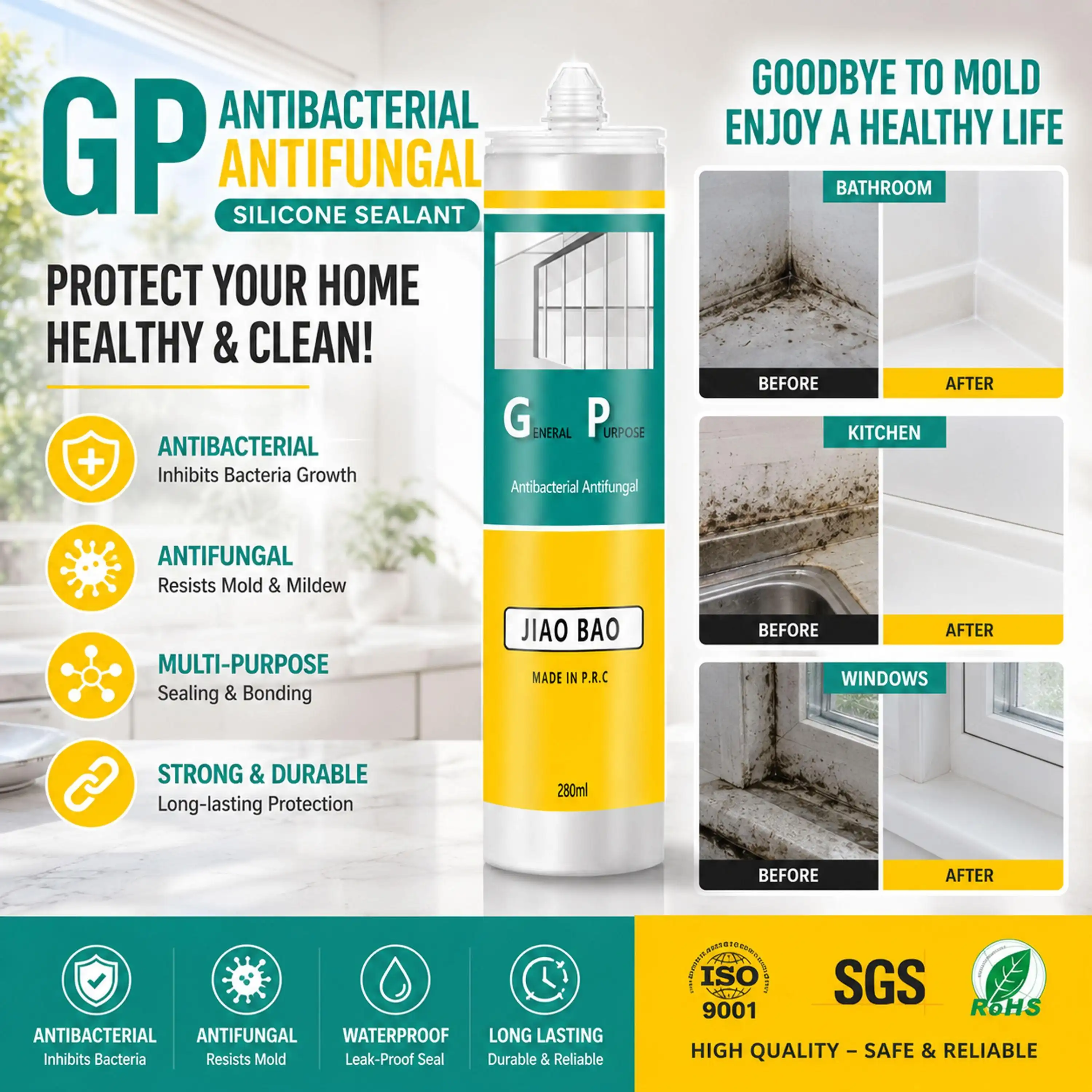
The table below reflects the actual product data for Jiaobao's GP acetic silicone sealant:
| Property | Value |
|---|---|
| Composition | One-part RTV, Acetic Cure |
| Tack-Free Time | 15 minutes |
| Shore A Hardness | 18 |
| Max Bond Strength | 1.5 MPa |
| Tensile Rate | >300% |
| Specific Gravity | 0.87 |
| Available Colors | White, Black, Grey, Custom |
| Shelf Life | 12 months |
| Packaging | 300ml / 600ml cartridge & sausage |
At 23°C and 50% relative humidity, skin-over happens in 15 minutes. Fully cured depth is based on joint width and the amount of moisture in the air. Tack-free time of less than 15 minutes is useful for making windows on a production line, where handling time affects output directly.
During the drying window, acetoxy-cure silicone gives off acetic acid gas. Enclosed spaces need to have enough air flow. It is not suggested that the product be used directly on copper, brass, or zinc, which are all sensitive metals, because the acidic leftovers can damage the surface. A neutral-cure silicone is the right choice for alkaline surfaces like cement or concrete. All of Jiaobao's batches meet the standards for ISO and CE approval, which helps with import clearance in controlled markets.
Procurement managers regularly evaluate acetoxy silicone against acrylic, polyurethane, and neutral-cure silicone sealants. Each chemistry serves a different application scenario, and choosing the wrong one inflates maintenance costs significantly.
Acrylic sealants are cheaper and can be painted, but they rarely stretch more than 25%, which means they can't be used for window joints that move. Polyurethane works well on porous surfaces, but it breaks down after a while of UV exposure without a protective coat, which makes it hard to maintain on exterior walls that are open to the elements. Neutral-cure silicone doesn't have the acid-release problem and works well with metals and stones that are sensitive, but it usually costs more per unit.
For most glass jobs, GP general purpose silicone sealant is the best compromise between two options. It has a specific gravity of 0.87, which means that the cartridge weighs less per unit volume than budget types that are loaded with calcium carbonate, which usually have a specific gravity above 1.05. A common sign of a low-quality product is a higher filler load, which makes the product less flexible and speeds up UV yellowing. Any warehouse supervisor can quickly check the quality of arriving goods by looking at their specific gravity.
Color consistency across production batches is another differentiator worth evaluating. Standard colors are white, black, and gray, but distributors can also match colors to meet the needs of high-end window fabricators who need the look of a project facade to be consistent.
Make sure the seller is ISO 9001 certified and that their goods meet ASTM C920 or an international standard that is the same as it. With every shipment, you should ask for a Certificate of Analysis (COA). When your downstream customers are running production lines, it's especially important that the tack-free time and hardness are the same from batch to batch. Any variation slows their output, which affects your supply chain.
A production lead time of one to two weeks is the bare minimum for most regional distributors who manage monthly restocking cycles. When suppliers can't keep this deadline, it puts pressure on inventory. When a new product is first introduced, capital lock-up risk is lower when minimum order quantities are flexible and trial shipments of 100 to 200 cartons are allowed. You should be able to choose between sea and land freight so that you can make the best cost-to-speed decision for your market.
Instead of a combined rate, ask for a price sheet with individual prices. Figuring out the margin is easier when you know how much the base silicone costs compared to the cost of packing. A big procurement risk is taken away when suppliers offer a replacement or refund policy for confirmed quality defects within the shelf life period. This is the kind of promise that makes a long-term supply system possible instead of a transactional one.
The most important thing that can be changed to improve the quality of an application is how well the area is prepared. Surfaces need to be clean, dry, and free of oil, dust, or old lubricant. When used in the field, wiping down glass or metal surfaces with isopropyl alcohol makes bonding much stronger.
Apply the GP general purpose silicone sealant in a continuous bead, making sure there are no breaks. Within 5 minutes, tool the joint to make sure it makes full contact with both substrates before the skin-over starts. When you apply too much pressure beyond the joint depth, you lose material. A good-sized joint with a width of 6–12 mm and a depth that matches it improves both performance and material output per cartridge.
A clean, cured silicone surface bonds well with new acetoxy silicone, so re-sealing silicone to silicone is easy for maintenance. A sharp tool blade and liquid cleaning are needed to remove failed sealant. By checking the sealed joints on the outside of buildings once a year, problems with bonding can be found early, before water gets in.
There are five practical things you need to think about when choosing the right GP general purpose silicone sealant: tested technical performance, batch consistency, the right chemistry for the substrate, a supplier who can meet your replenishment schedule, and clear pricing. For most door and window closing jobs in both home and business building, an acetoxy-cure silicone with a tack-free time of 15 minutes, tensile elongation above 300%, and a shore hardness of 18 is sufficient. When you buy in bulk, the biggest risks are taken away when you find a seller with ISO certification, an open minimum order quantity, and a clear policy for what to do after the sale.
When acetoxy-cure silicone cures, it releases acetic acid. This acid reacts with alkaline surfaces like concrete and mortar and stops the adhesion. To meet those needs, neutral-cure silicone is the right specification.
RTV rubber hardens when it comes in contact with water. Curing stops in a closed space with little air flow or very low humidity. Make sure there is air flow at the joint and that the product is still within its 12-month shelf life.
Products that are stretched with mineral oil or too much calcium carbonate filler yellow faster in UV light, don't stretch as far, and last less long. If the specific gravity is above 1.05, it means that there is a lot of filler in the material. The specific gravity of a good GP general purpose silicone sealant stays around 0.87.
Most people use white, black, and gray. For project-specific needs, custom color matching is possible, which is helpful for fabricators who need to keep the colors on the facade consistent.
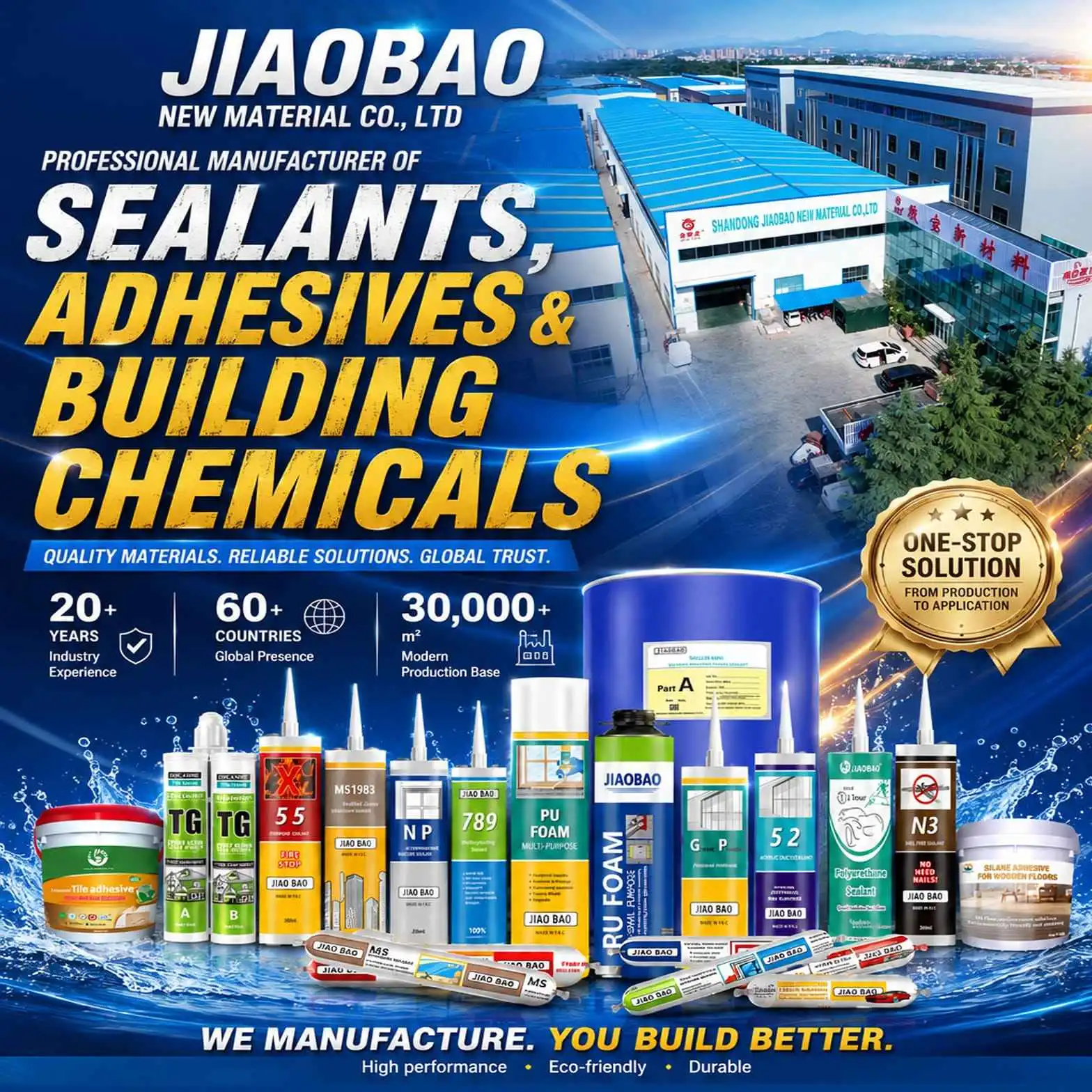
Since 2013, Jiaobao has been making approved silicone seals with an ISO and CE-compliant production lead time of one to two weeks. As a reliable company that makes GP general purpose silicone sealant, we offer a flexible MOQ, OEM/ODM customization, and a quality guaranty that covers repair or return within the product's shelf life. To get samples and a reasonable bulk price sheet right away, email our team at dorashen@cnjiaobao.com.
1. ASTM International. ASTM C920: Standard Specification for Elastomeric Joint Sealants. ASTM International, 2022.
2. ISO. ISO 11600: Building Construction — Jointing Products — Classification and Requirements for Sealants. International Organization for Standardization, 2022.
3. Petrie, Edward M. Handbook of Adhesives and Sealants. McGraw-Hill, 2007.
4. Cognard, Philippe. Handbook of Adhesives and Sealants, Volume 2: General Knowledge, Application of Adhesives, New Curing Techniques. Elsevier, 2006.
5. Wolf, Alan T. Durability of Building Sealants. RILEM Publications, 1999.
6. Construction Specifier. "Selecting the Right Sealant for Glazing Applications." Construction Specifier Magazine, 2021.

November 16,2023
Enterprise Name
The sealant has very strong adhesion and performs well even on glass and aluminum. After curing, it remains flexible and shows no cracking. Perfect for our facade projects.
November 16,2023
Enterprise Name
Stable quality across batches. Our customers especially like the smooth application and consistent extrusion. It helps reduce installation time on site.
November 16,2023
Enterprise Name
I used it for bathroom sealing. Excellent waterproof performance and no mold issues so far. It's been holding up very well in humid conditions.
November 16,2023
Enterprise Name
The neutral silicone works well on sensitive materials without corrosion. Very suitable for industrial applications requiring stable performance.
_1779347426672.webp)