November 16,2023
Enterprise Name
The sealant has very strong adhesion and performs well even on glass and aluminum. After curing, it remains flexible and shows no cracking. Perfect for our facade projects.
Sep 17, 2026
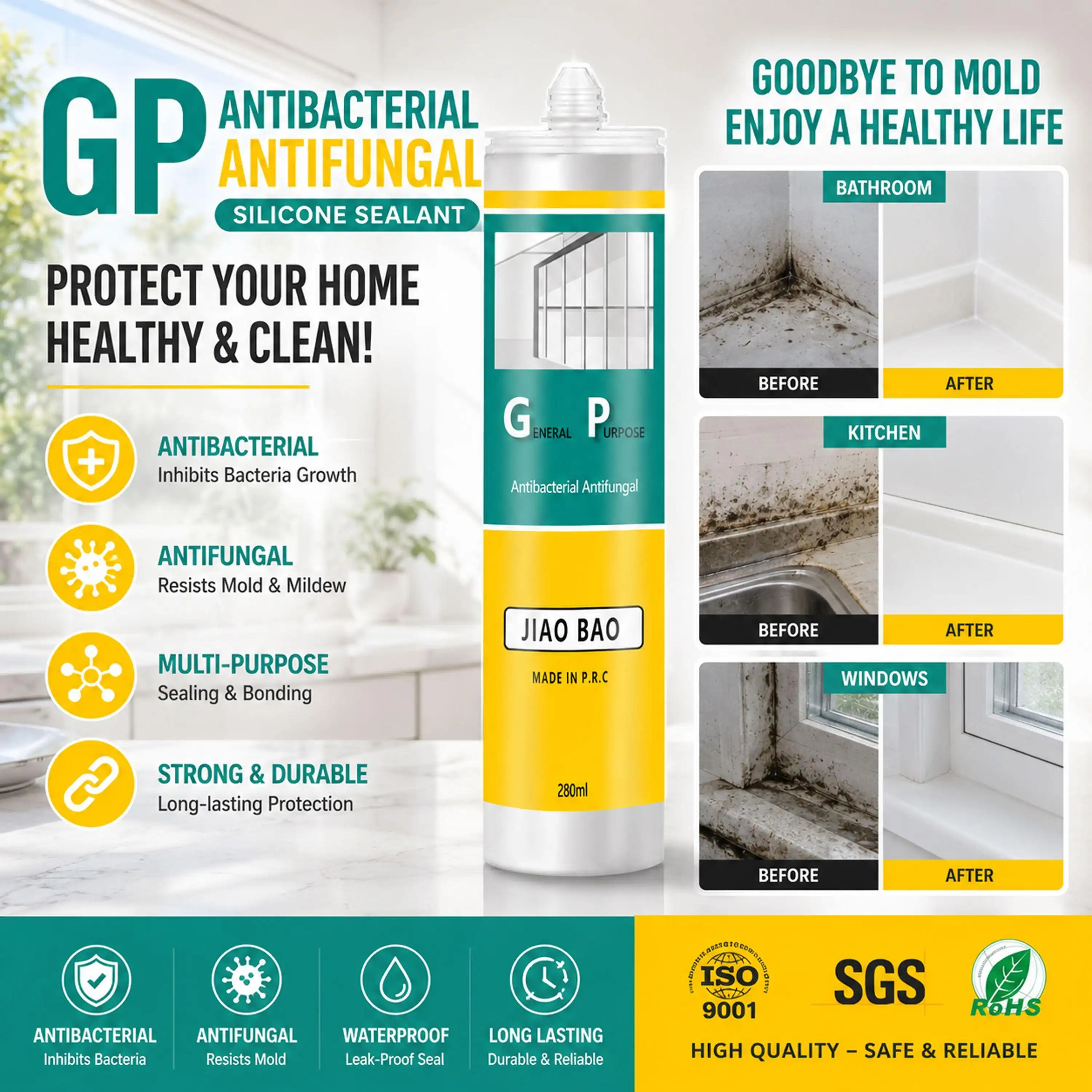
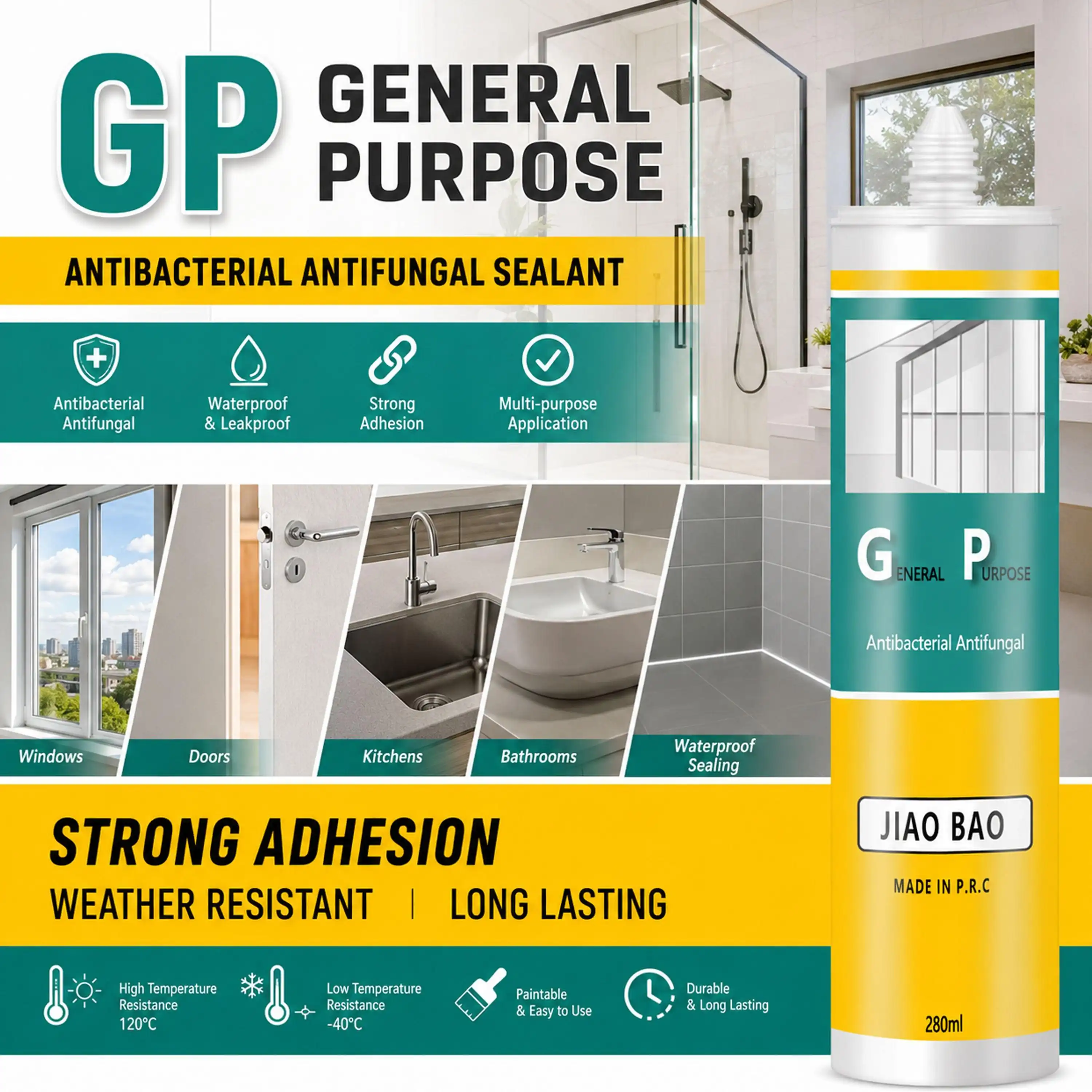
Yes — GP multi-purpose silicone sealant bonds glass and metal reliably, and it does so without requiring primers on most non-porous surfaces. As a one-component RTV (Room Temperature Vulcanizing) system, it cures upon contact with atmospheric moisture to form a permanently flexible silicone rubber. With a maximum bond strength of 1.5 MPa and tensile elongation exceeding 300%, it handles the thermal expansion and vibration that commonly cause organic sealants to fail. Whether you're sealing aluminum window frames, glass facades, or metal HVAC joints, this sealant delivers durable, waterproof bonds across a wide substrate range.
Find out about GP multi-purpose silicone sealant and how it can help you bond.
At the molecular level, siloxane polymer strands stick to surfaces that don't have pores, like metal and glass. This is how silicone sealants stick. When GP multi-purpose silicone sealant sets, silicone stays bendable, but epoxy and polyurethane don't. With a Shore A hardness of 18, it doesn't get stiff but instead bends. It is flexible and can move about ±25%. This stops the small cracks that weaken stiff seals over time.
The cleanness of the surface is the most important thing for the bond. Before putting on acetoxy-cure silicone, wipe down metal and glass with rubbing alcohol to get rid of oils, dust, and old paint. Allow everything to dry completely. To get to the base substrate on aluminum that has been anodized or powder-coated, lightly scuff the bonding zone with fine grains. When the surface is ready, the ASTM C794 adhesion-in-peel test always shows cohesive failure (sealant tears inside) instead of adhesive failure (sealant peels clean). This step alone can make the peel much stronger.
When this glue dries, it turns into a continuous layer of rubber that keeps water out. It doesn't chalk or break easily like acrylic does because it can stand up to UV light and ozone. It works from -50°C to +150°C, so it can be used in both cold storage facilities and roof glazing that gets direct sunlight. It doesn't melt or break in the summer or winter.
GP multi-purpose silicone sealant is put up against other sealants for sticking metal and glass together. Lots of the time, when people buy coatings, they look at three different ones. What's different about them that's important for business-to-business buying:
Procurement teams can pick the best product for each job when they know about these trade-offs. For instance, they might use acetoxy-cure GP multi-purpose silicone sealant in places that will be exposed to bad weather and acrylic for parts inside that need to be painted for decoration.
The best way to use GP multi-purpose silicone sealant to stick glass and metal together.
It's simple to use the correct app. Put in the 300ml or 600ml cartridge of a regular caulking gun. Cut the tip at a 45-degree angle to fit the joint's width, and work slowly. In the last few minutes, before the 15-minute tack-free window ends, smooth the bead with a wet finger or spoon. To get a consistent fix level, work in temps between 5°C and 40°C with low humidity.
As long as everything stays the same, full cure takes about 2–3 mm per 24 hours. A 10 mm deep joint's full mechanical strength is reached in four to five days. It's important to remember that normal silicone technology doesn't let oil or water-based paint stick to it because the surface doesn't like water. Pick a tube that is the same color as the bead if you don't want to paint over it. You can get them in white, black, gray, or any color you want. This gets rid of all problems with finishes not working together.
Where to buy GP multi-purpose silicone sealant, how much it costs, and how to get help.
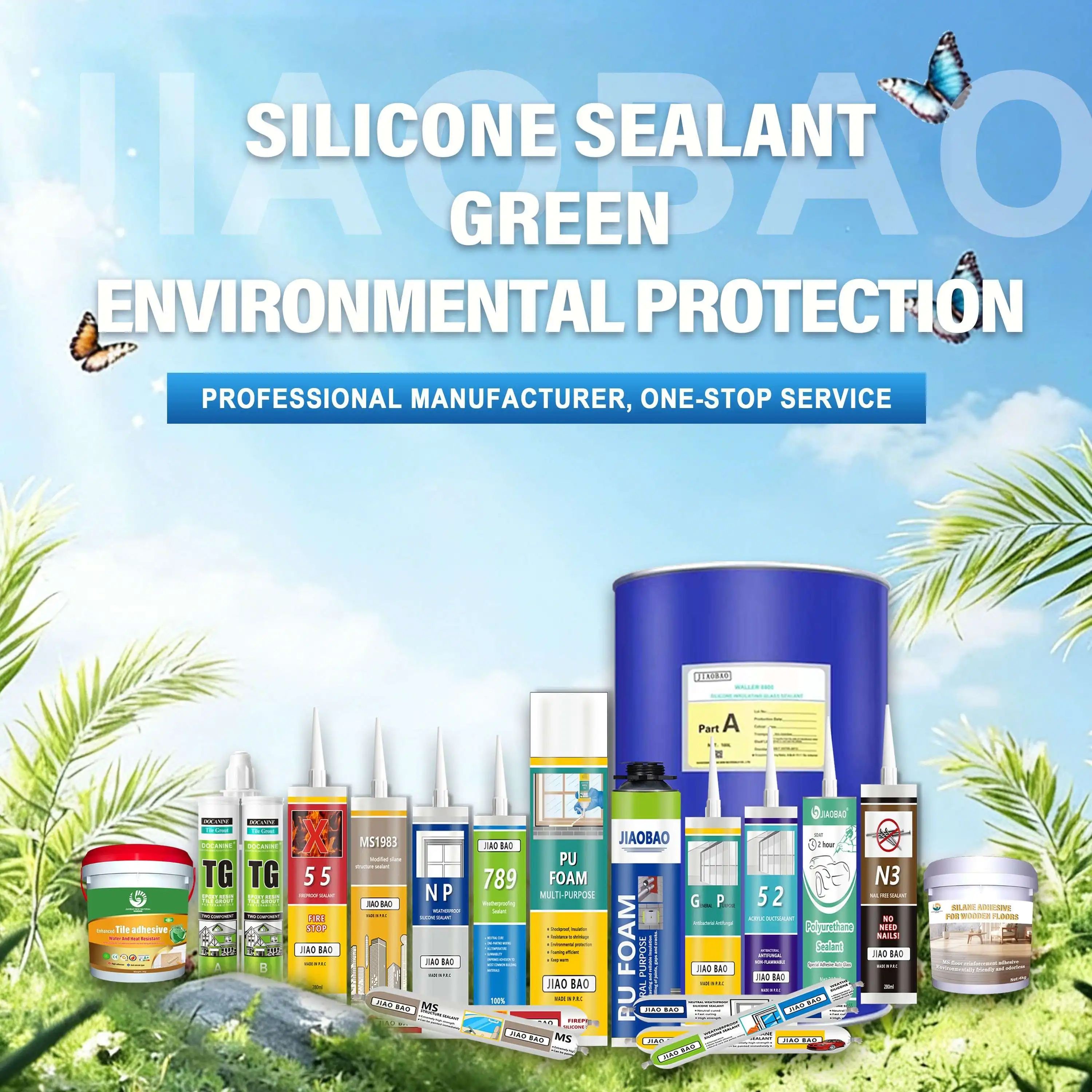
The GP multi-purpose silicone sealant from Jiaobao comes in 300ml cartridges or 600ml sausage packs, so buyers can pick the shape that works best for the job. For repair teams and store sales, smaller cartridges work better. When a lot of work needs to be done, sausage packs lower the cost per unit. The item is certified by both ISO and CE, which means it meets quality standards in other countries and is easier to sell in many places.
It takes one to two weeks for Jiaobao to make something. They've been making things for more than 13 years. They also do OEM/ODM production for people who need things with their own name or that are made to their exact specifications. A shelf life of 12 months helps you plan what you need. During the shelf life, if there is a quality problem, Jiaobao will either cash back or replace the item. This is a clear warranty promise that makes buying less risky. People who want to buy from Southeast Asia, North America, and other places can use flexible transportation by land or sea.
There have been many tough times when building and industrial teams have used this tool. The sealant in curtain wall glass can stand up to UV light and allow for ±25% movement. This keeps seal failures that cost a lot of money from happening. People who work in HVAC use it to seal gaps in metal ducts because polyurethane would break down over time because of changes in humidity and temperature. Companies that make fittings for glass-to-aluminum show cases use the smooth, even bead finish because it looks good and keeps water out.
In all of these areas, maintenance is happening less often, which can be measured. The whole job would take less time and cost less money if there was a lubricant that worked well on both metal and glass without having to be prepared, mixed, or put on with special tools. Purchasing teams only need to keep one item in stock instead of four because it can be used on metal, glass, stone, ceramic tile, and concrete, among other things. This makes it easier to keep track of supplies and lessens the need to deal with providers.
GP multi-purpose silicone sealant firmly and for a long time holds metal and glass together. It can be used in temperatures from -50°C to +150°C and can stick things together with 1.5 MPa of force. Because of this, it can be used for business building, industrial sealing, and artistic glazing. If you make sure the surface is ready and the right conditions are kept for curing, this sealant will last longer and be more weatherproof than polyurethane and acrylic alternatives. Business buyers who want low maintenance costs, solid wait times, and quality that has been checked out will have no trouble making this choice.
Glazed metal and glass don't need a primer because they are clean and don't have any holes. Just wipe it off with isopropyl alcohol before putting it on. Adhesion-in-peel works better on porous surfaces like natural stone or concrete if you use the right primer.
If the temperature is 23°C and the humidity is 50%, the surface stops sticking after 15 minutes. Every 24 hours, about 2–3 mm of damage is fixed. A joint takes longer to cure when it is in a place with less heat or moisture.
As acetoxy-cure silicone cures, it gives off acetic acid, which smells like mild vinegar. Make sure the air flow keeps going until the joint is fully healed. You should check with the seller to make sure it is safe for food before putting it on areas that will touch food or tank water.
Yes. So it can be used in storefronts, window openings, and aluminum-framed glass panels where two different materials meet at a single point. This sealant sticks to both surfaces at the same time.
Pick from black, white, or gray. Jiaobao also lets OEM buyers ask for special colors, so they can meet the needs of a brand or project in terms of style.
As of 2013, Jiaobao has sold approved silicone sealants to people all over the world who work in construction and industry. We are the straight manufacturer of GP multi-purpose silicone sealant and can get it to you in one to two weeks. Our 300ml and 600ml sizes come with ISO/CE certifications and a 12-month quality guarantee. You can email dorashen@cnjiaobao.com with your needs or to ask for a sample.
1. ASTM International. ASTM C920: Standard Specification for Elastomeric Joint Sealants. ASTM International, 2022.
2. ISO. ISO 11600: Building Construction — Jointing Products — Classification and Requirements for Sealants. International Organization for Standardization, 2022.
3. Petrie, Edward M. Handbook of Adhesives and Sealants. McGraw-Hill, 2007.
4. Cognard, Philippe. Handbook of Adhesives and Sealants, Volume 2: General Knowledge, Application Techniques, New Curing Techniques. Elsevier, 2006.
5. Wolf, Andrew T. Durability of Building Sealants. RILEM Publications, 1999.
6. Brydson, J. A. Rubbery Materials and Their Compounds. Elsevier Applied Science, 1988.
November 16,2023
Enterprise Name
The sealant has very strong adhesion and performs well even on glass and aluminum. After curing, it remains flexible and shows no cracking. Perfect for our facade projects.
November 16,2023
Enterprise Name
Stable quality across batches. Our customers especially like the smooth application and consistent extrusion. It helps reduce installation time on site.
November 16,2023
Enterprise Name
I used it for bathroom sealing. Excellent waterproof performance and no mold issues so far. It's been holding up very well in humid conditions.
November 16,2023
Enterprise Name
The neutral silicone works well on sensitive materials without corrosion. Very suitable for industrial applications requiring stable performance.
_1779347426672.webp)