November 16,2023
Enterprise Name
The sealant has very strong adhesion and performs well even on glass and aluminum. After curing, it remains flexible and shows no cracking. Perfect for our facade projects.
Jul 9, 2026
Today, MS Sealant for Construction offers a new option that fits in between silicone and polyurethane technologies. These blend polymer mixtures work great for waterproofing, sealing, and bonding on a wide range of building jobs. Their chemical structure, which is made up of silane-terminated prepolymers, hardens when exposed to water, making strong, stretchy ties without giving off any harmful chemicals. These goods are popular with project managers because they can stick to glass, metal, stone, and concrete even when the structure moves. Because the material can be painted and doesn't absorb oil, it's perfect for uses that care about how things look and where keeping the surface clean is important.
MS polymer technology is a big step forward in the field of building science. Unlike most sealants, which force you to make sacrifices, these formulas offer full performance without major costs.
The chemical structure of MS polymers blends benefits that could only be found separately before. Silicone seals are very good at withstanding weather, but they stain porous materials and won't let paint stick to them. Polyurethane sticks well, but it breaks down when exposed to UV light and gives off isocyanates when it cures. MS technology gets rid of these problems by using a mixed chemistry that crosses-links through silane groups. This makes flexible bonds without using solvents or giving off harmful fumes. This new development is very important when sealing natural stone surfaces because silicone oil would color them permanently, or when working in buildings that are already occupied and air quality can't be compromised.
The technical details show why MS seals work so well in tough situations. Shore A hardness of about 45 is the perfect balance—it's soft enough to let joints move but solid enough to keep the structure together. When the elongation at break is more than 400%, it can handle periods of thermal expansion and contraction without breaking. Tensile strength close to 2.2 MPa makes sure that bonds don't break when they're under mechanical stress. Because these materials can withstand temperatures from -40°C to 120°C, they can be used in a wide range of climates, from the cold of the Arctic to the hot desert. Since the solid material is close to 99%, it won't shrink much when it cures, keeping the joint measurements that are important for waterproofing.
Concerns about sustainability guide the choice of materials used in current building. MS polymer formulas don't have any solvents, give off very little VOCs, and don't give off any formaldehyde or isocyanates. These qualities help meet the standards for LEED approval and protect workers' health during application. Lack of plasticizers stops long-term breakdown and keeps the product's elastic qualities throughout its service life, which lowers the need for upkeep and increases the longevity of the building envelope. More and more, procurement managers are aware that the initial costs of materials are only a small part of the total costs of running a building. This means that long-lasting, low-maintenance solutions are economically appealing, even if they cost a little more.
How well things work in the real world is what matters, not how well they work in the lab. In difficult building situations, MS polymer seals show their worth.
To seal the edges around fenestration systems, you need materials that can successfully stick to different surfaces while also allowing for different levels of movement. Most of the time, MS Sealant for Construction doesn't need starters to stick to metal frames, PVC profiles, and nearby brick or concrete. The material's flexibility takes in the changes in thermal growth between metal and stone, so there are no gaps that let water and air in. Because it can be painted, the color can be matched to finishes around it, which is important for keeping aesthetic continuity in building designs. In the summer, the surface starts to cure in 25 to 40 minutes, making the joint dust-resistant, which is important for busy building sites.
Movement joints allow structures to move when temperatures change, when buildings settle, or when there is earthquake action. These high-stress areas are great places for MS sealants because they have great stretch and healing qualities. When used in the right joint sizes—usually between 2:1 and 1:1 for width to depth ratios—these materials can be stretched and compressed many times without losing their stickiness or breaking.
The zero-sag formula keeps its shape in vertical joints without sinking before it hardens, which is very important for curtain wall installations where joint widths are common to be more than 25 mm. Chemical resistance to common building exposures, such as water, alkalinity from concrete, and weak acids, makes sure that performance lasts for a long time without breaking down too quickly.
For high-end jobs that use marble, granite, or limestone, you need special finishing products. Standard silicone seals have oils in them that move into porous stone and leave dark rings around joints that will never look good again. This risk is eliminated by MS technology's oil-free makeup, which keeps the perfect look of high-quality materials. This feature is very important in places like hotel lobbies, business building entrances, and high-end housing projects where expensive materials are used and the way something looks has a direct effect on its value. Customizing colors to meet RAL standards or specific stone tones makes it possible for joints to blend in so well that they are almost unnoticeable while still keeping the waterproofing.
MS sealants are used in demanding industry settings as well as in standard building settings. The material can withstand high temperatures and seal metal ducts and house joints, which makes it useful for installing HVAC equipment. These goods are used to build cleanrooms in places that make electronics where VOC emissions need to be kept to a minimum. When it comes to weatherstripping and body panel bonding, where flexibility and toughness under vibration are important, automotive component makers specify MS formulations. Because these materials can be changed in terms of hardness, cure speed, and chemical resistance, recipe improvement can be used to meet specific needs that standard goods can't.
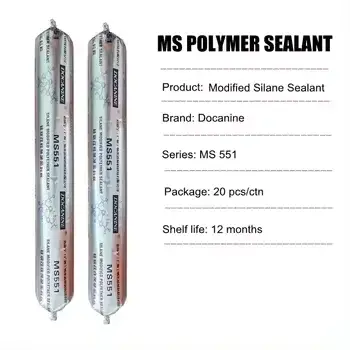
How well a material works depends a lot on how it is installed. Understanding the basics of an application is what separates successful projects from ones that fail too soon.
Cleanliness of the substrate has a direct effect on how well something sticks to it. Dust, oil, wetness, and other loose particles that get in the way of chemical bonds must not be on the surface. Solvent wiping is a good way to get rid of industrial oils on metal surfaces. For concrete and brickwork, you may need to wire brush or grind the top to get to the sound material underneath.
Sometimes porous bases need to be sealed so that too much sealant doesn't soak in and starve the joint contact. Even though MS adhesives usually stick to surfaces without primers, it's safer to try certain substrate combinations first, especially when working with plastics or treated surfaces where compatibility can vary.
Joints that are designed and built correctly will last for a long time. Backing bars or bond breaks stop three-sided bonding, which makes it hard for the sealant to move and leads to failure too soon. Cartridge guns with thrust ratios that are right for the viscosity of the material let the operator place beads consistently without getting tired. Angled needle cuts that match the width of the joint make beads of the right size that fill all the gaps.
Right after the MS Sealant for Construction is applied, it is shaped with tools that press the material against the surfaces to make close contact and get rid of any extra before skin formation starts. These technical steps have an equal effect on how the end product looks and how well it works.
MS polymers harden through chemical processes that are set off by wetness. Ambient temperature and humidity affect healing rates. Crosslinking happens faster in warm, wet conditions, while it takes longer in cold, dry conditions. Depending on the time of year, the surface skinning happens in 15 to 40 minutes. However, the full cure takes about 3.5 mm per day. It takes days for thick joints to heal all the way through.
Knowing these dates helps you plan the next steps in the building process so that you don't damage the partially dried sealant by loading it or exposing it too soon. During its skin development time, the material can still be worked with, so mistakes can be fixed before crosslinking starts.
To choose a product, you have to match the qualities of the material to the needs of the job. Generic specs aren't always enough to get the best performance and value for money.
Conditions of the project determine the success traits that are needed. For exterior uses, UV protection and weatherability are important, but not for indoor uses. Static links don't need as much elongation ability as joints that move a lot. Chemical contact from manufacturing processes or cleaning products means that you need to show that you are resistant to certain substances. Extreme temperatures, like those caused by climate change or process heat, require recipes that are rated for the ranges that are predicted. Doing this analysis in a planned way makes sure that the goods chosen work as needed, instead of finding problems after installation, when fixing them costs a lot more.
Different areas, types of applications, and building classifications have different rules. For fire-rated parts to keep their fire resistance ratings, sealants may need to be checked and mentioned. A lot of the time, healthcare and school buildings need low-VOC goods that meet strict air quality standards.
As part of international projects, it may be necessary to meet ASTM C920, EN 15651, or other local standards. Instead of taking claims without checking them, procurement paperwork should ask for certificates that show compliance. Manufacturers spend a lot of money on tests to get these certifications, which give customers confidence that the goods will work as promised in standard circumstances.
Reliable relationships are more than just doing what they say they will do. Suppliers that let you change the colors make it easier to combine the look of custom goods with stock items. Costly mistakes can be avoided by getting technical help during design and fixing. MS Sealant for Construction also benefits from this support, as its application and performance rely on proper guidance. Reasonable lead times—usually one to two weeks for normal formulations—help keep projects on schedule without making it too expensive to keep a collection on hand.
Flexible package choices, like cartridges for small jobs or huge cases for big ones, make dealing more efficient. Before committing to full amounts, sample programs let you do pre-qualification testing to make sure that everything works together. These operating factors have just as much of an effect on the overall costs and risks of a project as unit prices do.
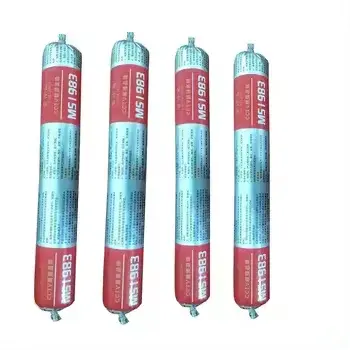
As industries change, they keep pushing the limits of performance while also meeting environmental needs. Figuring out how things grow over time helps us guess what they will be able to do in the future.
Additives that make things last longer are the subject of ongoing study. Better UV protectors make things last longer in places with a lot of radiation. Better fungicides stop mold growth in damp places without releasing harmful chemicals. Rheology modifiers keep the stability of the application over a bigger range of temperatures, which means that more weather windows can be used for installation. Over time, these small changes add up to make recipes that work much better than ones from even ten years ago. Companies that spend money on research stay ahead of the competition by making products that work better and need less upkeep over time.
New technologies are adding tracking and showing features to sealant systems. Color-changing lights could let you know when joints need to be replaced before they break in a way that you can see. Self-healing materials might be able to close tiny cracks that form when they are stressed. Better application equipment, like automatic delivery systems that check quality in real time, lowers installation variation that leads to early failures. Some innovations are still being tested, but others are getting close to being able to be sold, which means they could make stability and lifecycle management better.
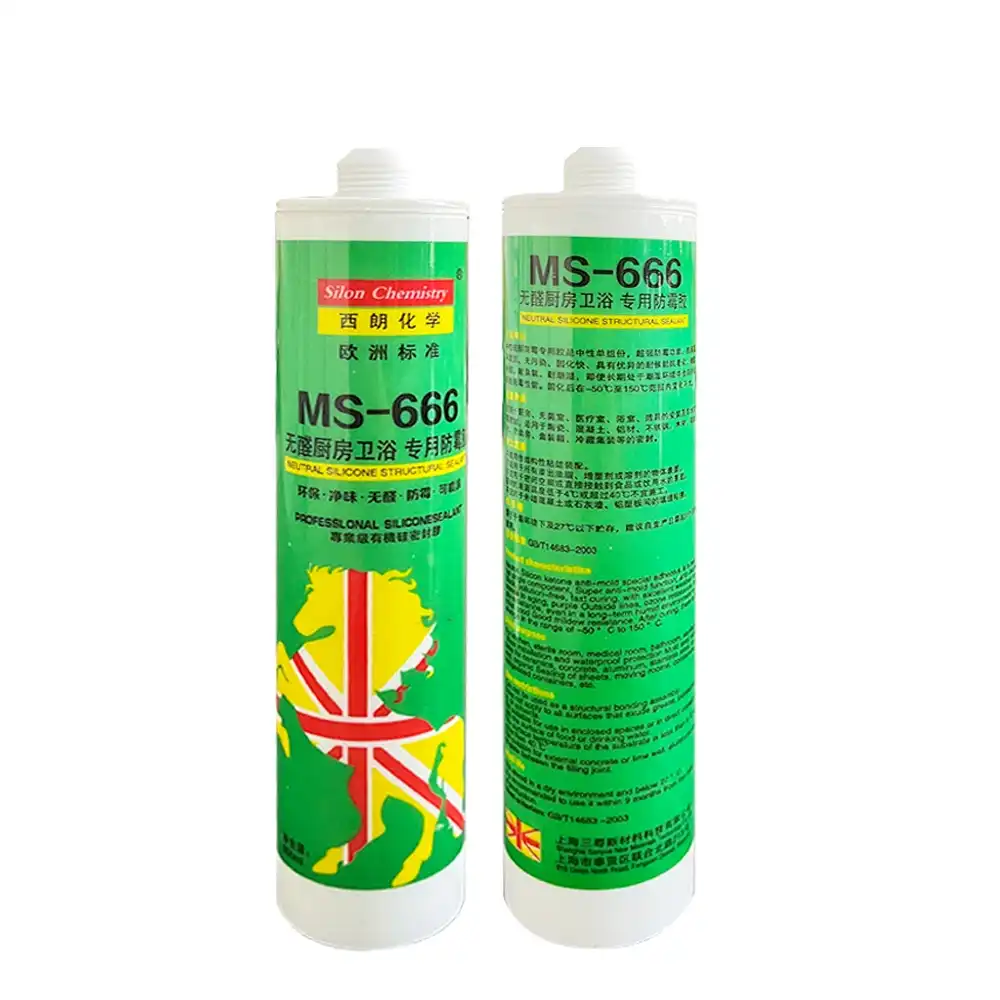
In conclusion, MS polymer coatings are an advanced technology that has real benefits for many building uses. Their hybrid chemical gets rid of the need to choose between weather protection, adhesion, and safety for the environment. The right choice of materials for the job, along with skilled installation following standard procedures, guarantees long-lasting performance that protects building walls and keeps the quality of the look.
MS Sealant for Construction plays a key role in such installations, especially in joint sealing and surface protection. The technology keeps getting better, with new formulas that meet higher standards for performance and efficiency. Procurement workers can make better choices that balance short-term costs with long-term benefits when they know what these materials can and can't do.
Can MS polymer coatings always be used instead of silicone? In most building situations, MS polymers work better than other materials, especially when paintability is important or natural stone needs to be protected from oil stains. Silicone still has benefits in extreme high-temperature situations (above 150°C) and in some chemical environments. Instead of thinking that all materials can be used in any project, material choosing should take into account the specifics of each one.
Are starters needed for MS sealants to stick? Aluminum, glass, PVC, painted surfaces, and thick concrete are some of the most popular materials that don't need primers to bond well. Some plastics, porous stonework, and specialty paints may need to have their surfaces prepared or primed. Before the full installation, bonding tests on real project materials are done to make sure that the materials are compatible and to see if primers improve performance enough to justify the extra costs of labor and materials.
What effects does the weather have on coating and curing? Because MS polymers fix through a moisture reaction, the amount of humidity affects how fast they cure. Temperatures between 5°C and 35°C are best for drying and applying. Extreme cold makes drying take a lot longer, and too much heat can cause skinning before the right tooling is done. It may change the way the surface looks if it rains soon after application, but it usually doesn't affect how well it cures because water helps the crosslinking reaction happen.
Join forces with Jiaobao to get the best MS sealant solutions. With more than 13 years of experience making specialized goods, Shandong Jiaobao New Material Co., Ltd. has created MS Sealant for Construction that meets strict international standards. Our ISO and CE-certified production sites make sure that the quality of every batch is the same, and they can back up your project requirements with written performance data. We know that procurement managers need more than just technical compliance. They also need stable supply chains, quick contact, and the ability to make changes as needed. These are the things that set true partners apart from vendors.
Our MS polymer formulations come in unique colors that match your exact RAL standards. This makes sure that curtain wall assemblies, natural stone installations, and building facades all look good together. Production lead times of one to two weeks and flexible logistics choices help you meet your schedule goals without having to buy too much inventory. We offer full OEM/ODM services, and we can change formulas to fit the temperature in your area or meet specific performance needs for your projects.
Quality assurance lasts for the whole duration of a product. If you store our goods correctly, they will stay intact for 12 months, and if you have any quality concerns, we offer refund or replacement policies. Contact our team at dorashen@cnjiaobao.com if you are a buying professional looking for a reliable MS Sealant for Construction provider with technical knowledge, consistent quality, and quick service. Before placing a large order, ask for examples to make sure they will work with your material and meet your application needs. You can look at our whole line of products at shandongjiaobao.com and find out how our solutions can help with the problems your projects are having.
1. ASTM International. "ASTM C920: Standard Specification for Elastomeric Joint Sealants." Annual Book of ASTM Standards, Vol. 04.07, 2021.
2. Klosowski, J.M. and Wolf, A.T. "Sealants in Construction: Second Edition." CRC Press, 2016.
3. European Committee for Standardization. "EN 15651: Sealants for Non-Structural Use in Joints in Buildings and Pedestrian Walkways." Brussels, Belgium, 2017.
4. Lacasse, M.A. and O'Connor, T. "Advances in Building Envelope Performance Testing." Journal of ASTM International, Vol. 5, No. 4, 2008.
5. Building Research Establishment. "BRE Digest 514: Accommodating Movement in Buildings." IHS BRE Press, Watford, UK, 2012.
6. Panek, J.R. and Cook, J.P. "Construction Sealants and Adhesives: Third Edition." John Wiley & Sons, 1991.
November 16,2023
Enterprise Name
The sealant has very strong adhesion and performs well even on glass and aluminum. After curing, it remains flexible and shows no cracking. Perfect for our facade projects.
November 16,2023
Enterprise Name
Stable quality across batches. Our customers especially like the smooth application and consistent extrusion. It helps reduce installation time on site.
November 16,2023
Enterprise Name
I used it for bathroom sealing. Excellent waterproof performance and no mold issues so far. It's been holding up very well in humid conditions.
November 16,2023
Enterprise Name
The neutral silicone works well on sensitive materials without corrosion. Very suitable for industrial applications requiring stable performance.
_1779347426672.webp)