November 16,2023
Enterprise Name
The sealant has very strong adhesion and performs well even on glass and aluminum. After curing, it remains flexible and shows no cracking. Perfect for our facade projects.
Jul 10, 2026
Building projects require scheduling to close holes and joints. Acrylic Sealant for Wall and Ceiling adheres better, cures quicker, and finishes perfectly when applied at the correct time. Best to apply after surfaces are cleaned and dried but before final painting. Conditions in the environment matter. Temperatures between 40°F and 100°F (5°C to 38°C) and humidity are ideal. Avoid application in cold weather, on damp surfaces, or in poorly ventilated areas to avoid adhesion, curing, and cracking. Workers and buying managers may better organize work flows using these principles.
This book informs procurement managers, engineers, distributors, and OEM clients about Acrylic Sealants' interior building and finishing applications. When Sealant is applied affects work duration, appearance, and durability. Building and renovation industries demand sturdy, paintable materials for door frames, window edges, and cornices. By eliminating chemical odors and maintaining professional performance, water-based formulations have revolutionized interior sealing. Knowing when and how to utilize these products reduces reworking costs and speeds up workflow. The following sections discuss technical difficulties, product use, and buying methods to assist B2B clients identify reliable, eco-friendly closure solutions.
Water-based Acrylic Sealants for Wall and Ceiling cover interior building gaps that don't shift. Seals dry out from paste to plasto-elastic rubber by shedding water. Hydrolyzed silicone elastomers harden differently. Their curing process makes them excellent for open surfaces like gypsum board, plaster, concrete, brick, and wood.
Contemporary one-component RTV (Room Temperature Vulcanizing) formulations contain acrylic emulsions, water, and other additives to stick, be flexible, and resist mold. High-quality items maintain solid makeup between 80 and 85% and volume loss below 15%, per ASTM C733. Standard room settings (23°C/50% relative humidity) need 5–15 minutes for skin-over. This expedites industrial painting projects.
Silicone sealants can't be painted, unlike acrylic seals. Silicones don't like water, thus paint doesn't attach to them, causing fissures. Latex and alkyd paints cling on acrylic without slipping. Acrylics are simpler to clean up with water before they solidify and smell less terrible than polyurethane. Low VOC levels fulfill indoor air quality guidelines in hospitals and businesses.
ISO 11600 F 12.5 P standards indicate water-based joint seals accommodate movement factors (MAF) between ±7.5% and ±12.5%. This range performs well inside, but high-movement joints with significant thermal expansion should utilize polyurethane or hybrid polymers. Knowing these constraints helps consumers pick suitable products.
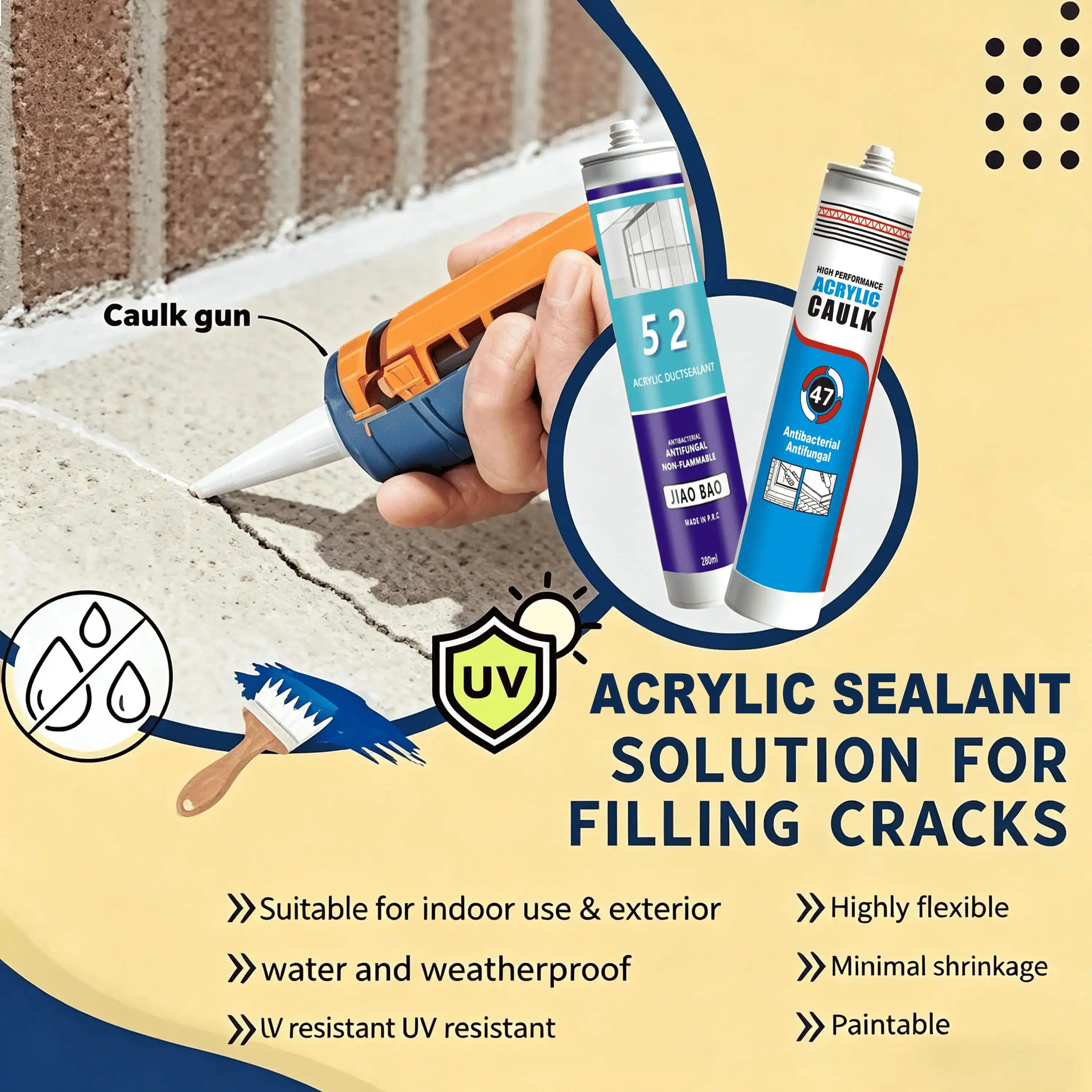
Timing and weather affect Sealant performance and longevity. Applying at the proper moment prevents errors and ensures solid sealing.
It must be clean, dry, and free of dust, grease, old Sealant film, and other loose debris. Since water-based sealants dry via drainage, moisture under the bead prevents drying. Plastered or painted surfaces in new structures should dry for 24–48 hours, depending on the foundation's porousness and the room's temperature and humidity. Porous concrete and brick may take longer to dry after cleaning.
The optimal temperature for this application is 40°F to 100°F (5°C to 38°C). Very cold promotes healing, but too much heat increases skin formation before the correct instruments can be employed. Best conditions are 40%–80% relative humidity. Acrylic Sealant for Wall and Ceiling should be avoided during rainstorms or condensation since the added moisture can prevent healing evaporation.
Seal new construction after installing door and window frames but before painting. This sequence allows the Sealant to cure before painting it on during finishing. Reseal cornice-wall cracks during remodeling. The Sealant absorbs tiny motions, preventing stress fractures. Inspections every three to five years and resealing when joints shrink, crack, or lose stickiness are part of routine maintenance.
Holes between the Sealant bead and base indicate adhesive failure. Concave grooves on the Sealant surface indicate a poor mixture and excessive shrinkage. If final Sealant contains hairline cracks, it was moved too far. Sealing surfaces that become discolored or moldy must be repaired immediately, especially in moist areas.
Systematic application yields professional-looking results and extends Sealant life. The instructions below apply to skilled personnel and building maintenance teams.
A caulking gun that works with 300ml cartridges or 600ml sausages, a utility knife to cut the tip, masking tape to form neat lines, a putty knife or smoothing tool, and clean, moist cloths are needed for normal use. Our easy-to-use quick-drying mixture comes in cylinders and sausages in white, black, gray, or distinctive hues.
Remove any old Sealant using a scraping or knife. Clean surfaces with a moist cloth to remove dust and other debris. Clean areas should dry fully. Leave the same gap between masking tape pieces on both sides of the junction for a straight bead. This preparation stops spreading when using tools and creates professional lines.
Cut the Sealant nozzle at 45 degrees to acquire the desired bead size, commonly 6mm to 10mm for regular joints. Punch a hole in cartridge inner caps. Hold the caulking gun trigger and advance steadily along the junction. Its 163 ml/min extrusion rate is greater than the industry standard of 80, making it convenient to utilize on large tasks. The water-based treatment dries on the skin in 30 minutes, compared to the industry norm of three hours. It cures rapidly, so workers may start painting sooner, speeding up the task. Form the bead into a slightly curved form with a soapy water-soaked smoothing instrument in 5–10 minutes to help it cling and not slide.
Remove the covering tape after you're done working with wet Sealant. Acrylic Sealant for Wall and Ceiling will form a firm edge that won't break now. Let the repaired area dry for an hour before painting. Best results after overnight drying. The paste-like texture solidifies into a paintable surface that coats uniformly without bases. Our formulation provides stable performance on vertical walls and high ceilings, with no horizontal distortion and no vertical sag (≤3 mm standard). The seal will endure longer since its tensile strength is 0.64 MPa, greater than the typical range of 0.4 to 0.6 MPa.
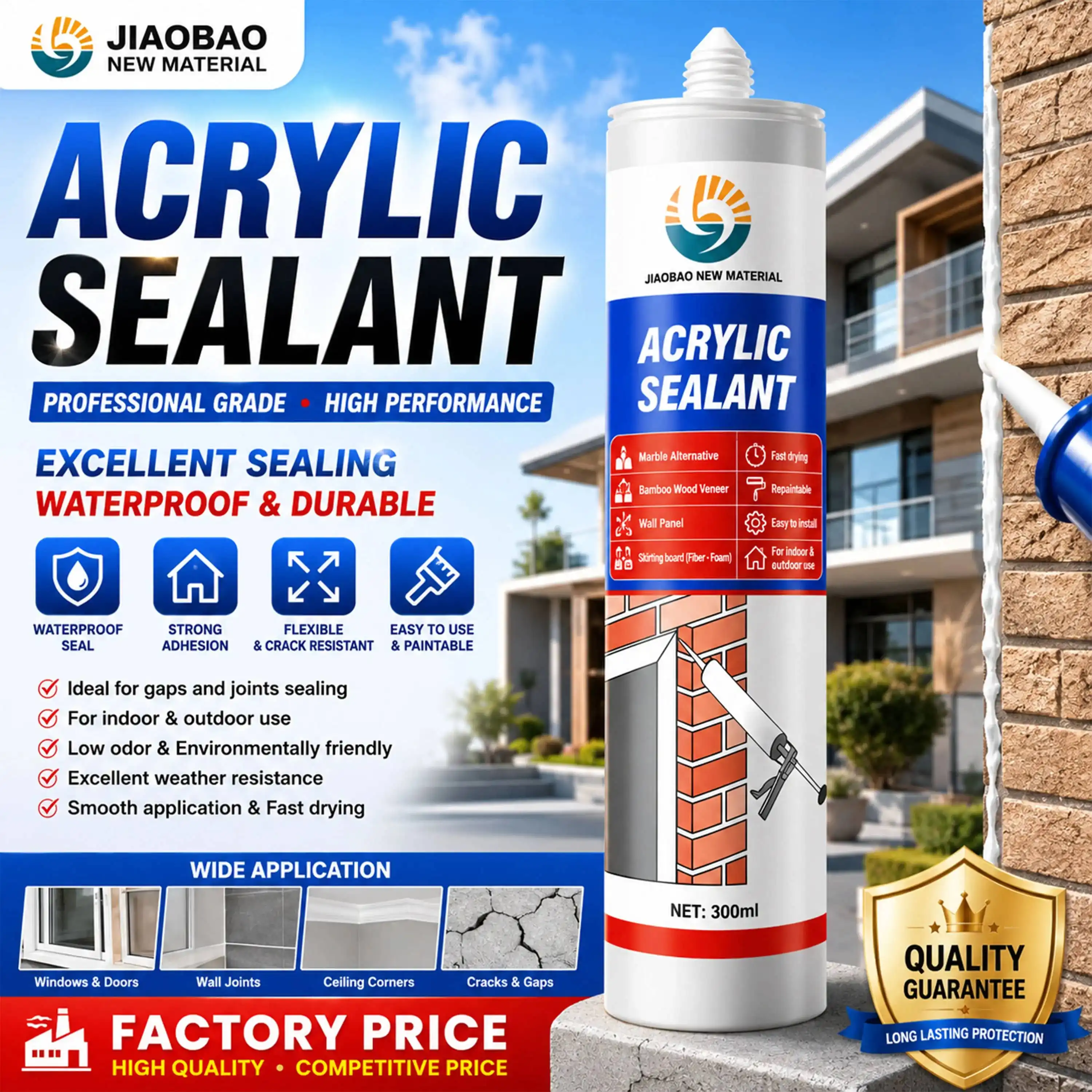
Sealants should be chosen based on more than price. Project success depends on performance, credentials, and provider reliability.
Acrylic compositions perform well indoors but poorly outside. Modern UV defenders prevent sealants from yellowing, but water can re-emulsify them. This material is easy to paint and doesn't smell terrible, making it ideal for door frames, window edges, cornices, and HVAC penetrations.
Our combination adheres to brick, concrete, plasterboard, gypsum board, wood, metal frames, ceramic tiles, glass panels, and painted surfaces. Acrylic Sealant for Wall and Ceiling mechanically locks into porous substrates, making it ideal for mixed-material interfaces in corporate buildings. Silicone alternatives are needed to attach two non-porous surfaces like PVC to glass since acrylic curing relies on water evaporating through a porous foundation.
Professional-grade products exceed ASTM C834 (Standard Specification for Latex Sealants) and undergo rigorous testing to ensure they can be extruded (ASTM C1183), don't shrink (ASTM C1241), and don't droop (ASTM D2202). ISO certification ensures quality control throughout manufacturing at our facilities. Storing the combination between 5°C and 25°C keeps it stable for 12 months.
For bulk purchases, direct manufacturer relationships are helpful. Suppliers who offer flexible delivery options (sea or land freight) and manufacturing wait times of one to two weeks help keep project timetables and inventory costs low. OEM/ODM manufacture lets distributors produce private-label items that fit regional color preferences. Sellers who fulfill certification criteria, provide after-sales assistance, and have explicit refund or replacement procedures for quality issues make buying safer.
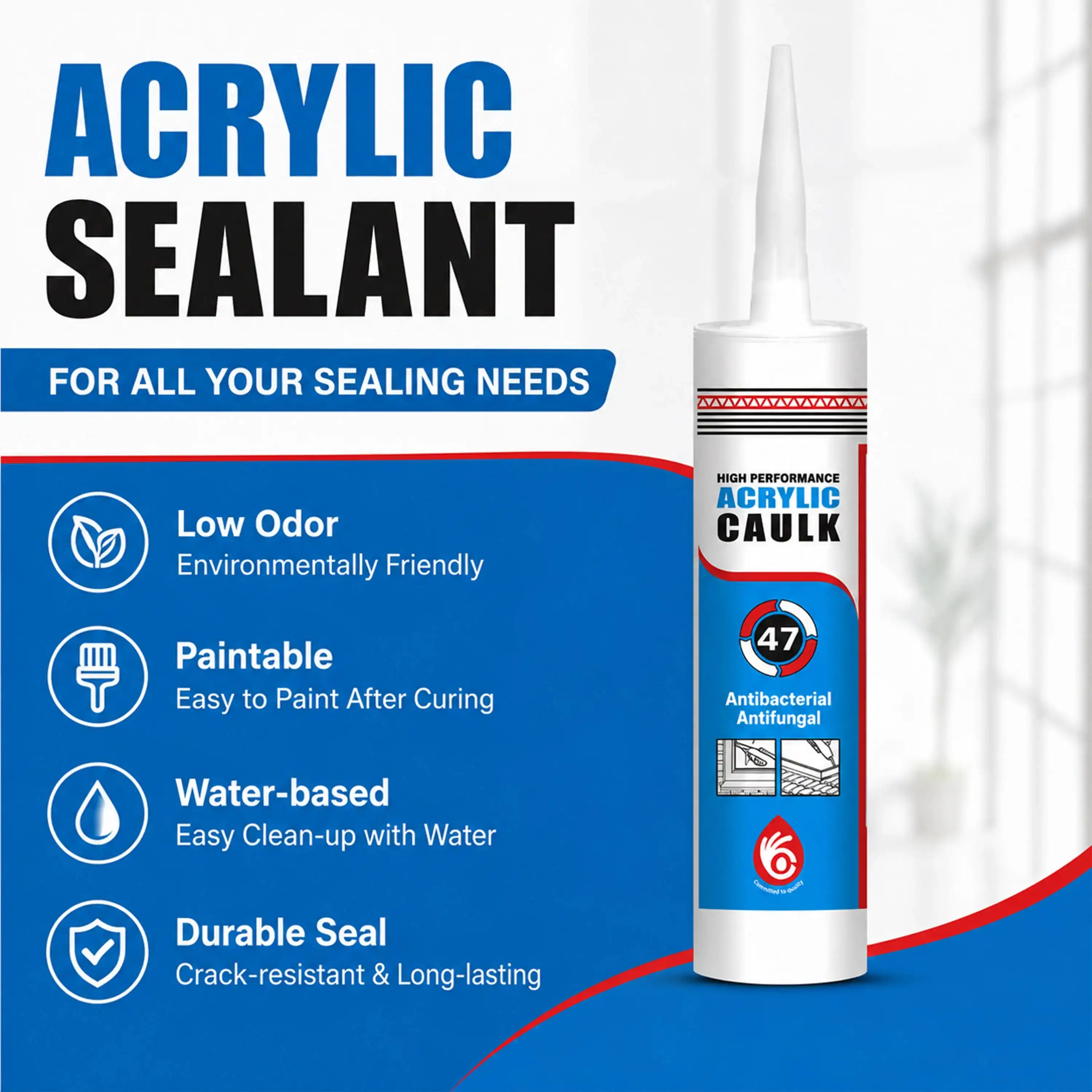
Acrylic Sealant for Wall and Ceiling generates strong, long-lasting seals in construction and remodeling projects when used appropriately, after surface preparation, and in the suitable environment. Understanding water-based formulations helps contractors and procurement managers pick the proper products for each work. Our quick-drying, paintable solution addresses industrial demands for minimal VOC emissions, beautiful appearance, and versatility. Skin-drying takes 30 minutes and speeds up project work without sacrificing quality. Sealant performs better, lowers callbacks, and makes business and residential customers happier when placed appropriately and planned.
Wait for firm skin after applying cream. This normally takes 30–60 minutes. Our fast-drying formula dries things in a fraction of the time it takes conventional products. If you paint too early, the Sealant will shrink as water evaporates, cracking the paint coat. Wet-on-wet solutions are available for immediate painting, but overnight curing yields the greatest results.
Always-wet areas shouldn't use standard acrylic formulae. A water-based composition that stays moist can re-emulsify and produce mold, even if it contains mildew-resistant components. Water-prone areas like shower tubs, bathroom edges, and worktops benefit from sanitary silicone sealants or S-hybrid polymers.
Joint fractures often indicate movement above the Sealant's capacity (±12.5%). A cured bead can be strained beyond its flexibility by thermal expansion, structural settling, or shaking. This can cause cohesive failure. Flexible polyurethane or mix sealants are essential for moving parts. Poor surface preparation or application over contaminated materials can potentially cause glue loss early failure.
Shandong Jiaobao New Material Co., Ltd. has made high-performance construction and industrial sealants since 2013. We manufacture Acrylic Sealant for Wall and Ceiling, match RAL colors, handle OEM/ODM, and ship swiftly. Our affordable prices, ISO-certified quality processes, and one- to two-week delivery periods please procurement managers. For demanding applications that require fast work and high-quality paint finishes, the low-odor, quick-drying combination is ideal. For samples, wholesale rates, and project-specific application advice, email our experts at dorashen@cnjiaobao.com. Within 12 months, we will refund or replace quality issues as part of our after-sales service. This ensures that your buying investment always pays off.
1. American Society for Testing and Materials. (2020). ASTM C834-18: Standard Specification for Latex Sealing Compounds. ASTM International.
2. International Organization for Standardization. (2019). ISO 11600: Building Construction – Jointing Products – Classification and Requirements for Sealants. ISO Standards Catalogue.
3. Peterson, Mark R. (2021). Construction Sealants and Adhesives: Selection and Performance Guide. Technical Press Publishing.
4. Building Research Institute. (2022). Water-Based Sealant Technology: Advances in Acrylic Formulations for Interior Applications. Construction Materials Journal, Volume 47, Issue 3.
5. National Association of Building Contractors. (2023). Best Practices for Sealant Application in Commercial Construction Projects. NABC Technical Manual Series.
6. Chen, William and Rodriguez, Maria. (2021). Comparative Analysis of Sealant Technologies for Building Envelope Performance. Journal of Architectural Engineering Materials, Volume 15, Number 2.
November 16,2023
Enterprise Name
The sealant has very strong adhesion and performs well even on glass and aluminum. After curing, it remains flexible and shows no cracking. Perfect for our facade projects.
November 16,2023
Enterprise Name
Stable quality across batches. Our customers especially like the smooth application and consistent extrusion. It helps reduce installation time on site.
November 16,2023
Enterprise Name
I used it for bathroom sealing. Excellent waterproof performance and no mold issues so far. It's been holding up very well in humid conditions.
November 16,2023
Enterprise Name
The neutral silicone works well on sensitive materials without corrosion. Very suitable for industrial applications requiring stable performance.
_1779347426672.webp)