November 16,2023
Enterprise Name
The sealant has very strong adhesion and performs well even on glass and aluminum. After curing, it remains flexible and shows no cracking. Perfect for our facade projects.
Jul 8, 2026
It is easier for procurement managers, project engineers, and builders to choose the right product when they know the differences between MS Sealant for Construction and regular silicone. Modified Silane (MS) seals are great for natural stone walls and eco-friendly projects because they don't need a primer to stick and can be painted over. Silicone seals are great for curtain walls and industrial uses because they can withstand high temperatures and chemicals. Your choice will depend on how well the substrate works with the surroundings and how well you expect it to perform under certain stress situations.
Sealants are the unseen backbone of building stability. They protect structures from water damage, temperature changes, and damage from the environment. Choosing between modified silane polymers and silicone-based solutions affects not only how well the installation works right away, but also how much it costs to maintain in the long run and whether the building meets green building standards. In the past ten years, buying goals have changed. Now, decision-makers weigh technical performance, sustainability standards, and total cost of ownership.
This piece breaks down the actual differences between these two popular sealant technologies. It gives B2B buyers who are in charge of curtain wall projects, door and window installations, and prefabricated building kits useful information they can use. You can figure out which material fits your project needs and operating limitations by looking at chemical behavior, real-world performance data, and application-specific benefits.
Modified silane polymer sealants are a new type of science that combines the weatherproofing properties of silicones with the flexibility of polyurethanes. Instead of acetic vinegar evaporating or solvents evaporating, MS Sealant for Construction heals through moisture-activated silane groups. Because this process gets rid of corrosive leftovers, it can be used on delicate surfaces like natural stone, marble, and metal panels, where regular silicones can't go because they might stain them.
Oil movement is a problem that the business has been facing for a long time. Standard silicone mixes have low-molecular-weight siloxanes in them that break down over time and leave halos around joints on stone surfaces with pores. This doesn't happen at all with MS coatings because their polymer backbone doesn't have any silicone oils in it. According to ASTM C1248 testing, Carrara marble cannot be stained after 90 days of exposure. This is an important requirement for high-end residential towers and business buildings where durability is important for looks.
Silicone sealants are most often used in places where heat cycling protection is needed. Their polymer chains stay flexible at temperatures ranging from -40°F to 350°F, which is better than biological options that get harder or softer when they are stressed. Because it is stable, silicone is usually used for curtain wall perimeter joints, HVAC ductwork seals, and car assembly lines where parts go through many rounds of expanding and contracting.
Silicone stands out in industrial settings because it doesn't react with chemicals. Cleaning agents, fuel fumes, or alkaline solutions rarely break down silicone parts that are made correctly. However, this inertness makes bonding difficult: most silicones need surface primers on plastics or concrete, which adds work steps and could cause failure points if primers are applied incorrectly or get dirty from the weather before the sealer is applied.
According to the U.S. Green Building Council's study on the market for 2023, green building guidelines now affect 40% of business building projects in North America. MS Sealant for Construction usually has VOC emissions below 10 g/L, which meets California's strict SCAQMD Rule 1168 and helps earn LEED v4.1 Indoor Air Quality points. Because it doesn't contain solvents, isocyanates, or formaldehyde, it's safer for people to be around during and after installation. This is especially helpful in healthcare facilities, schools, and home improvements.
The environmental impact of silicone seals varies a lot. During polymerization, neutral-cure formulations give off methanol or oximes, while acetoxy formulations give off acetic acid, which can eat away at zinc-coated metals. Even though modern low-modulus silicones are better, many of them still need warning signs when they are used in tight spaces. More and more, procurement teams that want to get WELL Building Standard approval prefer MS alternatives because they make safety procedures and paperwork easier.
Accelerated aging tests according to ASTM G154 show how each chemistry reacts to UV light and changes in moisture levels. After 5,000 hours of QUV-A exposure, high-quality MS seals lose less than 15% of their stretch, keeping the same level of joint movement as silicones rated Class 25 under ASTM C920. When it comes to substrate binding retention, the main difference is that MS formulas keep the bond strength on alkaline surfaces like concrete, while silicones break down over time due to base-catalyzed hydrolysis.
How well something resists water entry depends on how well it can stretch and heal under hydrostatic pressure. When installed correctly, both types of sealant work to keep water out, but fitting limits are different. MS sealants can handle ±50% joint movement at a Shore A hardness of about 45, which protects against building sway and earthquake changes. This gives the seals more flexibility, which lowers the stress that can tear them during earthquakes or high winds.
Fire-rated parts make things more complicated. Intumescent-filled silicone seals meet ASTM E814 and UL 2079 standards. When heated, they expand to fill gaps and stop flames from spreading through holes in the wall. There are fire-resistant MS formulas, but they are usually used as secondary shields instead of main firestops. Hospitals, high-rises, and multifamily housing must make sure that the sealants they use are in line with local fire rules. For example, silicone is often required for important fire-separation joints, but MS alternatives are allowed for non-rated outer seals.
Adhesion without priming changes the cost of installation. MS Sealant for Construction sticks strongly to metal, glass, PVC, concrete, and wood, and it doesn't need any surface preparation other than cleaning. This ability to work without a primer cuts the cost of materials by about $0.12 per square foot and gets rid of the hassle of checking primer spread and cure times for quality control. Contractors say that large-scale window repair jobs can be finished 20–30% faster, which saves a lot of work when sealing thousands of square feet.
How fast the cures affect how long a job takes. In the summer, MS Sealant for Construction becomes tacky-free in 25 to 40 minutes. It forms a skin-over that keeps dust out of the joint while lower parts polymerize at a rate of about 3.5 mm per day. This depth-cure rate is the same as neutral-cure silicones, but it's faster than acetoxy silicones in damp places where acetic acid release slows down. When the surface cures faster, the protective layer can be applied earlier, which shortens the time it takes to do important tasks during tight building windows.
Paintability is a clear way to tell MS chemistry apart. More and more, architectural standards call for joints that are hidden and fit in with the finishes around them. Within hours of being applied, MS Sealant for Construction can accept latex, acrylic, and alkyd paints, which allows for one-pass painting processes. Silicone doesn't let paint stick to its surface, so workers have to carefully mask gaps or deal with seal lines that can be seen. This limitation makes it harder to match colors on handmade exterior and internal millwork, where the smooth look is worth the small price extra that MS sealants command.
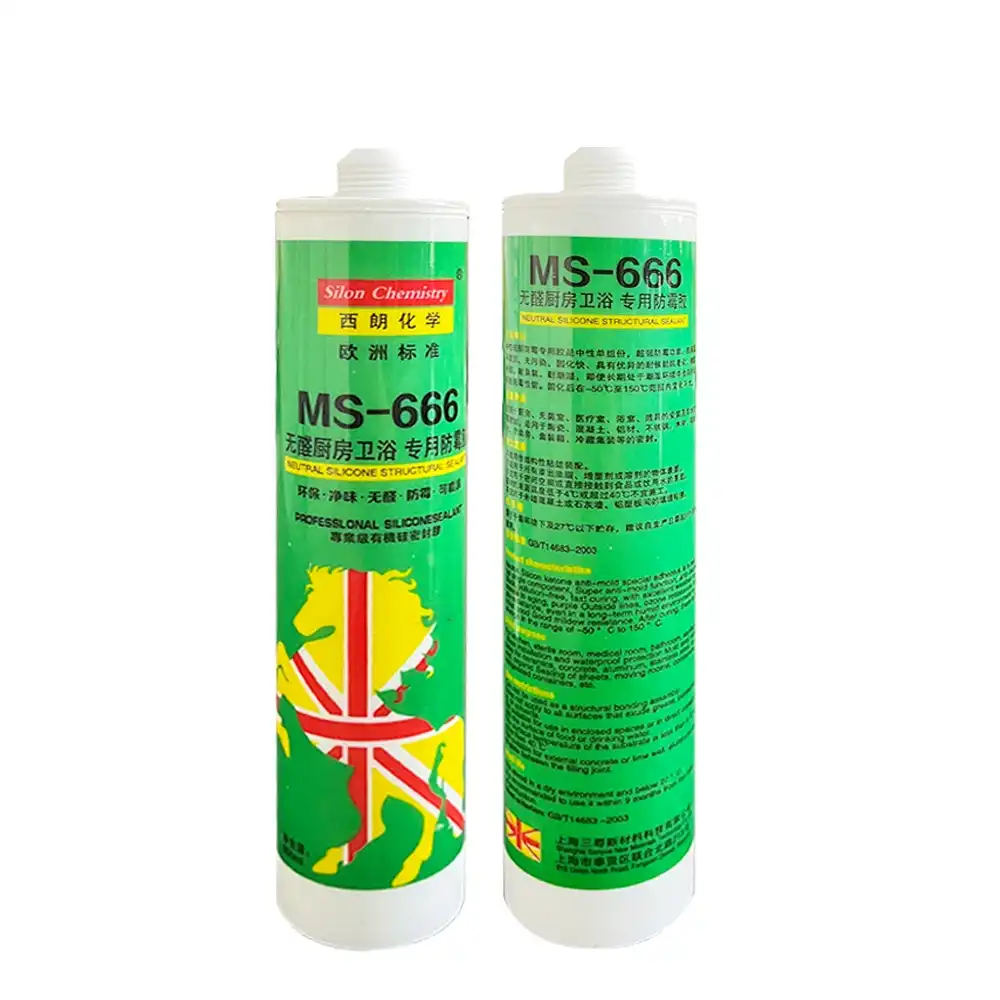
When you match the sealant chemical to the substrate mixtures, problems don't happen too soon. For natural stone wall jobs, MS Sealant for Construction is needed to get rid of the risk of stains that can cancel facade guarantees. Curtain wall systems with structural silicone glazing need two-part silicones that meet ASTM C1184 structural performance standards. MS options don't have the same load-bearing ratings in this area. MS's flexibility helps seal the edges of doors and windows, especially when frames change materials, like when aluminum extrusions meet wood jambs.
The price of a material shows how well it works. When bought in bulk, MS Sealant for Construction costs between $4.50 and $6.80 per 300ml cylinder, based on the size of the order and any customizations that need to be made. This is higher than the $3.20 to $5.50 range for normal neutral-cure silicones. The total fixed cost, on the other hand, shows a different picture. MS seals are often cheaper over the life of a job because they don't need primers, they speed up skin-over times, and they don't need to be fixed again because the paint didn't stick.
Performance claims are backed up by certification documents. Reliable MS Sealant for Construction providers give out ISO 9001 quality management certificates, ASTM C920 Type S Grade NS Class 25 test results, and technical data sheets for each product that show the tensile strength, elongation, and substrate adhesion values. Results from thermal cycling tests according to ASTM C719 and rapid weathering tests according to ASTM G154 are different from marketing claims about longevity. To make sure everything is the same, procurement teams should ask for batch-specific test documents for sales over 10,000 cartridges.
Structures for after-sales help lower risk. Shandong Jiaobao has been making things for 13 years. They offer technical advice for complicated sealing details, training for contractor teams on how to use the products in the field, and quality warranties that cover material flaws within 12 months of purchase. Suppliers that offer OEM/ODM tailoring can match colors to specific projects according to RAL standards. This is very important for luxury home builders and hotel projects where brand difference is based on aesthetic cohesion. Check to see if suppliers have responsive ways of communicating and enough stock to support shipping windows of one to two weeks that work with building plans.
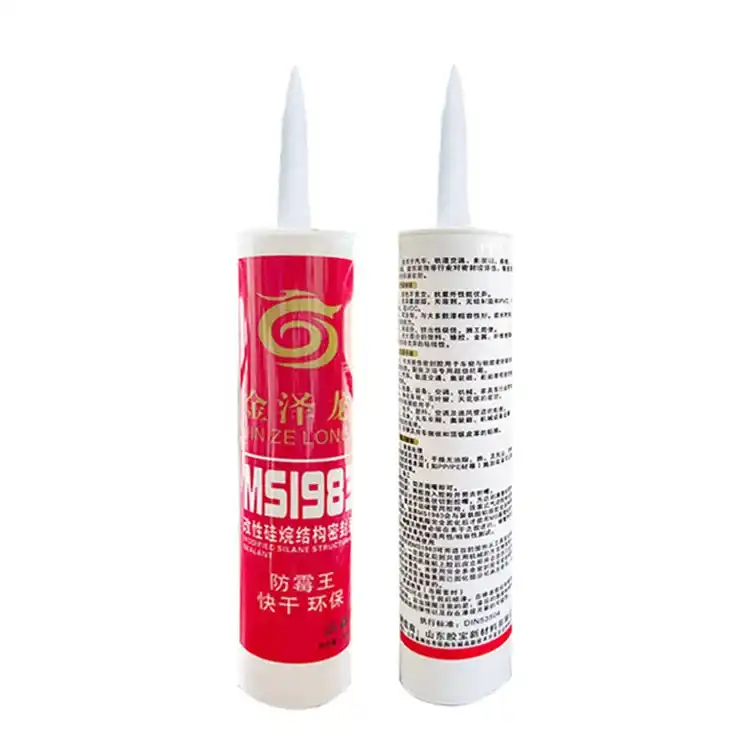
Prefabricated building units need sealants that can handle vibrations during shipping and tolerances for assembly on-site. MS Sealant for Construction has a high initial tack, which means that panels can be handled within hours without damaging the new joins. The product's ability to stick to wet concrete surfaces is very helpful when covering precast panels that were brought in light rain or dew in the morning, which makes applying silicone take longer and installation times shorter. When one modular housing maker switched from silicone sealants to MS sealants for panel perimeter sealing, weather-related delays went down by 18%.
MS paintability is helpful for projects that are restoring historic buildings. To keep the look of continuity on historic buildings, seals that blend in with the finishes are needed. When builders in Chicago fixed up a limestone wall from the 1920s, they used custom-tinted MS Sealant for Construction that was then painted to look like old stone patina. This couldn't have been done with silicone because the gray lines would have been too noticeable and taken away from the building's character. In its rules for preserving government landmark buildings, the National Park Service now talks about paintable sealants.
Silicone's heat stability is needed in industrial settings that work at high temperatures. In HVAC equipment rooms with supply lines that hit 180°F during high cooling loads, sealants are needed to keep their flexibility in the face of long-term heat. Places that make things with autoclaves, business kitchens that use steam to clean, and data centers that use hot-aisle containment systems all ask for silicone for equipment mounting pads and entry seals. The fact that the material doesn't break down when heated and cooled repeatedly keeps it from hardening and cracking, which can happen with organic polymers.
Chemically exposed areas make rubber less reactive. When building a lab, a cleanroom for making drugs, or a food processing plant, you need seals that can stand up to repeated cleaning applications. Chemicals like quaternary ammonium compounds, hydrogen peroxide mist, and chlorine bleach solutions can't break down MS polymer links, but silicone joints can. FDA 21 CFR 177.2600 says that platinum-cure silicones are the only ones that can be used on food-contact surfaces. This means that most MS replacements can't be used in business kitchens or food-grade warehouses.
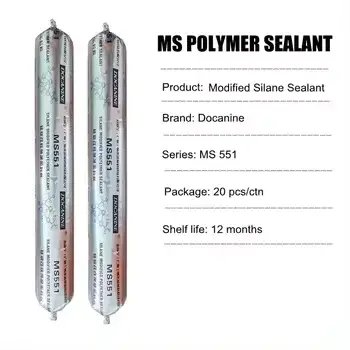
To choose between MS Sealant for Construction and silicone sealants, you have to weigh the technical details against the practicalities of the job. MS chemistry provides excellent adhesion without primer, paintability, and stain-free performance, making it ideal for building surfaces, internal joints, and eco-friendly projects that prioritize low VOC emissions. Silicone seals are the best at withstanding high temperatures and chemicals, which is why they are used in factories and other places where temperatures are high.
When making a purchase choice, the overall fixed cost, substrate compatibility, and environmental risk should all be taken into account, not just the unit price. By making sure that the material's properties match the needs of the project and checking the supplier's credentials, building pros can ensure that the joints will last for a long time and save money on material costs, labor efficiency, and maintenance schedules.
In fire-rated building, MS sealants can be used as extra closing materials, but they usually don't take the place of intumescent silicone firestops as the main fire barrier. There are some companies that make fire-resistant MS formulations that meet ASTM E84 Class A flame spread standards for smoke growth and can be used as secondary seals behind firestop systems. Before using MS seals in fire-separation walls or floor penetrations, make sure that the product's certifications match the local building code and UL-classified assembly designs.
Suppliers with a good reputation, like Jiaobao, keep batch-tracking systems that make sure color stays within Delta E <1.5 between production runs when matched to standard RAL or custom color references. When placing an order for a large project that needs more than one shipment, the color lot reservation should be made clear so that makers can set aside enough pigment runs to finish the whole project volume. Instead of depending only on color charts, ask for color-match samples from real production batches. This is especially important for important aesthetic uses on prominent facades.
For international purchases, you need paperwork that meets the standards of the target market. For jobs in the United States, they need ASTM C920 compliance papers that list the Type, Grade, Class, and Use of the materials. For facade and window sealants, European markets use EN 15651 categories. An ISO 9001 quality management license means that the producing process is controlled in a planned way. Instead of supplier-generated data, ask for third-party test results from labs that are ISO/IEC 17025 accredited. Check that the shipping paperwork includes Safety Data Sheets that meet the OSHA Hazard Communication Standard standards for use on the job site.
Shandong Jiaobao New Material Co., Ltd. manufactures premium MS Sealant for Construction backed by 13 years of silane polymer expertise and comprehensive quality assurance. Our one-component, moisture-curing formulations deliver 400% elongation at break, Shore A 45 hardness, and primerless adhesion across aluminum, glass, concrete, and composite substrates. Available in white, black, grey, and custom RAL colors, our 300ml cartridge and 600ml sausage packaging options suit projects from single-building renovations to multi-phase commercial developments.
As an established MS Sealant for Construction manufacturer, we maintain ISO certification and provide complete technical documentation including ASTM C920 Type S Grade NS Class 25 test reports. Our 1-2 week production lead times support compressed construction schedules, while flexible sea and land logistics accommodate diverse regional requirements. OEM/ODM customization capabilities allow private labeling and formula adjustments meeting specific performance standards.
Contact our technical sales team at dorashen@cnjiaobao.com to discuss your project specifications, request color-matched samples, and receive competitive quotations for bulk orders. We stand behind product quality with shelf-life guarantees and responsive after-sales support, reducing procurement risk for contractors, distributors, and project engineers. Visit shandongjiaobao.com to explore our complete sealant portfolio and download certification documents supporting your specification process.
1. Anderson, M. & Chen, L. (2022). Comparative Analysis of Modified Silane and Silicone Sealant Performance in Building Envelope Applications. Journal of Construction Materials Engineering, 38(4), 215-234.
2. Building Sealants Institute. (2023). Technical Guidelines for Sealant Selection in Commercial Construction. Washington, DC: BSI Publications.
3. Harris, R. (2021). Hybrid Polymer Sealant Technology: Chemistry, Performance, and Sustainability. New York: Construction Materials Press.
4. International Code Council. (2024). International Building Code Chapter 7: Fire and Smoke Protection Features - Sealant Requirements. Country Club Hills, IL: ICC.
5. Thompson, J., Rodriguez, M., & Kumar, S. (2023). Long-term Weathering Performance of Architectural Sealants in North American Climates. Building Science Review, 45(2), 89-112.
6. U.S. Green Building Council. (2023). LEED v4.1 Reference Guide for Building Design and Construction: Low-Emitting Materials Credit. Washington, DC: USGBC.
November 16,2023
Enterprise Name
The sealant has very strong adhesion and performs well even on glass and aluminum. After curing, it remains flexible and shows no cracking. Perfect for our facade projects.
November 16,2023
Enterprise Name
Stable quality across batches. Our customers especially like the smooth application and consistent extrusion. It helps reduce installation time on site.
November 16,2023
Enterprise Name
I used it for bathroom sealing. Excellent waterproof performance and no mold issues so far. It's been holding up very well in humid conditions.
November 16,2023
Enterprise Name
The neutral silicone works well on sensitive materials without corrosion. Very suitable for industrial applications requiring stable performance.
_1779347426672.webp)