November 16,2023
Enterprise Name
The sealant has very strong adhesion and performs well even on glass and aluminum. After curing, it remains flexible and shows no cracking. Perfect for our facade projects.
Jul 6, 2026
People often ask, "Are adhesive sealants and glue the same thing?" when they are in the hardware aisle or going over their purchase specs. No is the short answer. Adhesive seals and regular glues both stick things together, but they do so in very different and important ways. When it comes to flexibility, weather resistance, and binding, adhesive sealants, especially more advanced ones like MS Sealant Multi-Purpose Adhesive, are better than regular glues. When sealants dry, they form strong, flexible ties that can handle movement and external stress. Most glues, on the other hand, make connections that are rigid and only work for static situations. It is very important to know the difference between these two types of products when choosing them for building, manufacturing, or industry projects.
People often get sticky seals and glue mixed up because they both stick things together, but their chemicals, how they work, and what they're meant to be used for are very different.
Traditional glues, like PVA (polyvinyl acetate), cyanoacrylate (super glue), or epoxy, use chemical reactions or liquid absorption to make bonds that are hard and can't be bent. These items are great for connecting things that don't move and need to be strong. On the other hand, sticky seals use elastomeric materials like polyurethane, silicone, or technology that changes silane. When they dry, they respond with moisture in the air to make connections that are bendable and rubber-like. These connections can stretch and compress without breaking.
Modified Silane sealants are a big step forward in the science of bonding. These new sealants are better than older silicones because they don't leave behind oily residues or polyurethanes that give off dangerous isocyanates. Instead, they mix the best parts of both types of chemicals. They stick to a lot of different surfaces, like glass, metal, concrete, and plastics, without primers. They also stay flexible, so they can handle changes in temperature and pressure.
Materials that work reliably under stress are needed by procurement managers and engineers. Adhesive seals can protect against weather, UV light, and water damage in ways that regular glues can't. When curtain wall companies put up glass panels on tall buildings, they need materials that keep out wind-driven rain and allow the building to move. In these conditions, a hard glue would break, but a bendable sealant stays together.
Temperature stability is another thing that sets these materials apart. Quality seals don't lose their stickiness or flexibility when they are exposed to temperatures between -40°C and 120°C. Because of this range, they are essential for installing HVAC systems, putting together cars, and outdoor building jobs where temperatures change every day.
Depending on the needs of your job, you can use either sealer or glue. For its strong and long-lasting hold, glue may be preferred by custom furniture companies that want to join artistic veneers together. Glass making plants that seal shower walls need sealants that are waterproof and don't grow mildew. Manufacturers of auto parts need materials that can stop vibrations and fight chemicals. Sealants can do both of these things because they are pliable.
Knowing how well a material works with others also affects choosing. Sealants that won't damage sensitive parts are helpful for metal-to-glass sealing in the electronics industry. Stone making plants don't use silicone sealants because they stain porous materials. Instead, they use silane-modified sealants that stop oil from moving.
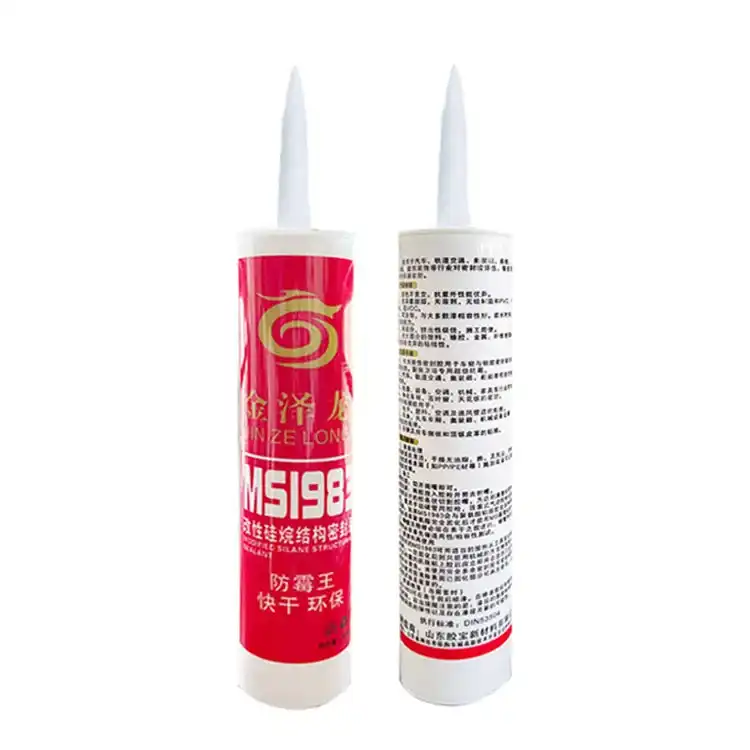
Modified Silane technology fixes problems that have been around for a long time with industrial adhesives. This RTV (room temperature vulcanizing) one-part adhesive hardens when it comes into contact with water, turning into a paste-like substance. It comes in white, black, gray, or unique colors to match the look of the project.
Health and safety rules are making it harder to use dangerous materials in building and industry. Solvents, formaldehyde, and toxic isocyanates are typical ingredients in standard polyurethane goods, but this sealant doesn't have any of those. It only releases small amounts of alcohol when it cures, so it can be used indoors in places like hospitals, homes, and places where food is handled. This material can be safely specified by procurement teams that want to get LEED approval or follow strict VOC (volatile organic compound) rules.
Standard silicone sealants have a recurring issue: their silicone oils move to nearby surfaces, attracting dust and leaving ugly black lines on painted, stone, and concrete surfaces. This problem has cost curtain wall builders millions of dollars to fix. This risk is completely eliminated by modified silane formulas. Your glass windows, metal panels, and natural stone installs will stay spotless because oily residues won't affect their look or require extra cleaning steps.
When planning finishes across large jobs, design flexibility is important. This glue will stick to most water-based and synthetic surfaces after it has dried, while silicone seals don't let paint stick to them. When working on business buildings, interior designers can seal joints and start painting right away, which keeps projects on schedule. This feature speeds up work processes in the door and window industry, where color-matched finishes help set high-end products apart.
The detailed data sheet shows performance qualities that are important for people making B2B decisions, including the MS Sealant Multi-Purpose Adhesive, which stands out for its versatility. With a solid content of about 99%, this material doesn't sag when used vertically, which is very important for curtain wall assembly where gravity can weaken materials. In the summer, the sealant forms surfaces that don't stick within 25 to 40 minutes, so they can be handled quickly without affecting the strength of the bond.
Curing goes along at a rate of about 3.5 mm per day, which makes it possible to plan production schedules accurately. Shore A hardness of 45 is the right amount of flexible and structurally sound for expansion joints. Tensile strength of up to 2.2 MPa and 400% extension at break make sure that the sealant can handle movement without breaking. This is exactly what general builders need in areas prone to earthquakes or for buildings that are subject to wind loads.
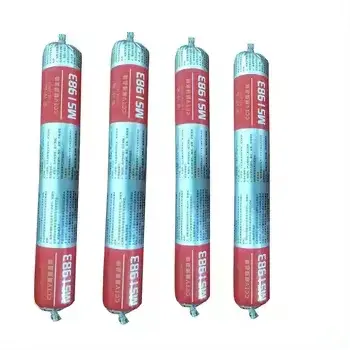
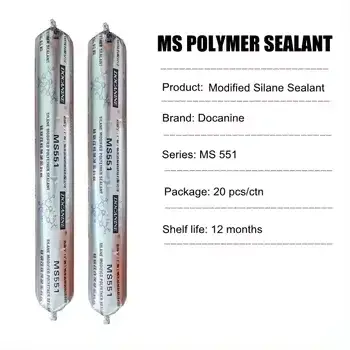
The product comes in 300ml and 600ml sizes and is packed as sausages or cartridges so that it can be used with a variety of dispensers. When kept properly, it has a shelf life of 12 months, which makes inventory management easy for wholesalers who keep stock for many clients.
It's helpful for procurement plans to know how different adhesive methods compare to the needs of a given project.
Standard silicone sealants are often used for outdoor windows because they are good at withstanding both weather and temperature changes. That being said, they have a few problems. The problem with oil movement hurts surfaces that are porous. They can't be painted, which limits the style choices. Most of them need bases on some materials, which increases the cost of work and makes the installation process take longer.
Modified Silane options get around these problems while keeping the good qualities of silicone. You get better bonding to most boards without primer, the ability to paint, and a clean surface. These benefits lower the overall cost of the project, even if the material units cost more.
Products made of polyurethane stick well and don't wear down easily, so they can be used for heavy-duty tasks and industrial floors. Still, when they dry, processes happen that make carbon dioxide, which makes thick applications bubble. The isocyanates they contain are dangerous to your lungs and need to be handled carefully. Many polyurethane seals turn yellow and break down when they come into contact with UV light.
Switching to Modified Silane technology gets rid of health risks while keeping the same level of bonding strength for door and window processing plants that care about worker safety and long-term look. Because it is more resistant to UV light, outdoor uses will keep their color for decades.
Epoxy systems make bonds that are very strong and don't react with chemicals. This makes them perfect for structural uses in the naval and aircraft industries. Their stiffness, on the other hand, is a problem when there is movement. Epoxies break when they are put under repeated stress, but seals can easily handle it. They also need exact mixing ratios and have short working times, which makes them harder to use in the field.
When custom furniture companies glue together hard parts, they might like epoxy, but flexible sealants work better in the long run for joints that are exposed to changes in humidity and temperature.
Acrylic paints are cheaper and easier to paint, which makes them appealing to projects that want to save money. It's easy to see that they don't work as well as silicone or modified silane goods because they don't fight water well, aren't very flexible, and don't last as long. Building material dealers who sell to price-conscious customers carry acrylics, but builders who have warranty responsibilities are increasingly asking for premium sealants that stop callbacks and damage to their image.
Successful buying includes more than just knowing what the product is. It also includes evaluating suppliers, managing shipping, and providing ongoing support.
Authorized sellers do more than just sell goods; they also guarantee quality through certifications that can be checked. ISO 9001 certification means that the production process is constant. The CE mark shows that the product meets European safety standards. When comparing providers, make sure you get test results that show the adhesion, curing, and environmental resistance meet the written standards.
Shandong Jiaobao New Material Co., Ltd. has been in business since 2013 and makes colored silicone seals and weather-resistant mixtures. Their ISO-certified factory has strict quality control throughout the whole production process, making sure that the stability from batch to batch that big projects need. With more than 13 years of experience, they've gotten better at making things that meet foreign standards.
When buying things for a project, it's common to have to balance inventory prices and material supply, and the MS Sealant Multi-Purpose Adhesive exemplifies this trade-off well. When suppliers have low minimum order numbers (MOQs), wholesalers can stock a wide range of colors without having to spend a lot of money. On the other hand, general builders who are in charge of multi-phase building projects benefit from big order discounts.
Lead times for production affect how projects are scheduled. Construction schedules stay on track thanks to manufacturers who can turn orders around in one to two weeks. When unexpected shortages of materials happen, proactive providers go from being just vendors to being very useful partners.
Flexible shipping options are needed for global supply chains. Sea freight is cheaper for big amounts, but it takes longer to arrive. Land transportation is faster and better for serving area markets. Expert suppliers in export logistics know how to handle customs paperwork, making sure that packages arrive on time and without any delays caused by regulations.
Options for packaging affect how well things can be handled. Curtain wall building shops often use pneumatic dispensing equipment that works well with sausage packing. Standard caulking guns, which are chosen by smaller companies, can use cartridges. Offering both versions shows that you understand how different customers work.
When used correctly, quality sealants almost never fail, but guarantee policies show how confident the company is in their goods. Suppliers who give replacements or returns for problems with shelf life show that they are responsible. Technical support teams that help with problems with applications or questions about specifications are worth more than the material itself.
When purchasing managers are trying to build long-term ties with suppliers, they give more weight to those who see business as a partnership. When building growth projects need to match colors that were used in the original installation years later, responsive providers who keep formulation records make sure that the look stays the same.
The trustworthiness of a brand and its suppliers have a direct effect on the results of a project and the control of procurement risk.
Major sealant makers spend money on research and development to improve recipe technology. When companies work with curtain wall experts and industry users, they make products that solve real-world problems instead of just copying existing ones. Jiaobao's attention on colored sealants shows that they have a deep knowledge of how buildings should look and the high-end market segment where looks are just as important as performance.
Stable output comes from having experience making things. Suppliers who have been in business for more than ten years have seen changes in the prices of raw materials, improved their quality control systems, and built networks of suppliers that make sure the quality of their ingredients stays the same. This level of development lowers the chance that design changes will happen in the middle of a project and change its requirements.
For international projects, the products need to meet the standards of the area. In North American markets, sealants must meet the requirements set by ASTM C920. All of Europe follows EN norms. When suppliers give test results that prove compliance, buying teams can definitely choose materials without having to pay for expensive retesting or wait for certification.
Environmental laws are making it harder to use dangerous chemicals. Europe's use of harmful chemicals is limited by REACH. California's VOC rules set very high limits on emissions. The MS Sealant Multi-Purpose Adhesive is formulated to meet these stringent standards, and sealants made to these guidelines protect the health of end users and applicators while opening up new market possibilities.
Fake building materials aren't as safe or effective as real ones. Purchasing teams should check out suppliers in a number of ways, such as by asking for building certifications, calling past customers for references, and making sure the suppliers are registered as a business. Legitimate makers welcome openness and back up their claims with legal proof.
The quality of the packaging can give you hints about how real a product is. Labels with batch numbers, safety information, and technical specs show that the production process is advanced. Product tracking and quality control are both affected by labels that aren't clear or that are missing data.
When projects go well, they often bring in more business and recommendations. Suppliers who consistently provide good product, keep their prices low, and communicate clearly become chosen suppliers. When it comes to colored sealants, being able to make custom colors is very important. Once a client accepts a certain shade for a high-end residential job, they need to know that all future orders will match exactly.
This need is met by Jiaobao's focus on customization through OEM/ODM services. Distributors can make private-label goods that are specific to the tastes of people in their area, and makers can get formulations that work best with the substrates they use and the way they use them.
In conclusion, adhesive sealants and glue are used in different ways in modern production and building. Glues make connections that are hard for static systems, but modern sealants, such as Modified Silane formulations, make connections that are flexible, weather-resistant, and can handle movement and environmental stress. The MS Sealant Multi-Purpose Adhesive is a prime example of this advanced category, and when buying managers, engineers, and workers know about these differences, they can choose the right materials to make sure that projects last and work well.
The technical benefits of silane-modified technology, such as primer-less adhesion, paintability, and lack of silicone oil contamination, solve major problems in many fields, ranging from curtain wall building to car assembly. When looking at suppliers, give more weight to companies that have a track record of experience, full certifications, and a promise to help customers throughout the lifetime of the product.
Modified Silane coatings stop the silicone oil from moving around and coloring porous materials like natural stone and concrete. Unlike regular silicones, which don't like most finishes, these also let paint coats stick to them after they dry. Because of this, they are perfect for building uses where looks are important.
Modified Silane technology works well on slightly damp bases, but clean, dry surfaces are best for bonding. This moisture tolerance gives you options when installing in wet places or outside, where drying completely isn't possible.
In warm conditions, the surface cures (reaches tack-free time) in 25 to 40 minutes. Full through-cure moves forward at a rate of about 3.5 mm per day, which means that a 10 mm bead needs about three days to cure fully. The curing time is slightly longer for thicker coatings.
Without primers, most popular surfaces, like glass, metal, steel, and concrete, stick very well. Primers may help some plastics or covered surfaces work better. Testing on real project materials removes any doubt and proves suitability.
The glue stays flexible and sticks even when it's -40°C to 120°C after it's fully dried. This range covers very cold areas in the north and very hot walls that get a lot of sun, so it can be used in almost any place and at any time of the year.
Picking the right adhesive sealer provider will keep your projects safe and make you more competitive. Jiaobao offers tried-and-true Modified Silane technology that is backed by ISO certification, a lot of customization options, and quick expert help. We've been making things for over 13 years and have improved our production methods to make sure that the quality of every batch is the same.
Our OEM/ODM services give you the freedom to make formulations that exactly match your needs, whether you need standard colors or special RAL matches for high-end building projects. Production lead times of 1-2 weeks keep your project on track, and our flexible MOQs work for both contractors handling unique project needs and shippers building inventory. Quality control doesn't stop with making. Our shelf-life promise guarantees that the material will work, and if there are any quality problems, we will replace it or give you a refund.
Get in touch with us to find out how Jiaobao's MS Sealant Multi-Purpose Adhesive maker can help you reach your buying goals. You can email our team at dorashen@cnjiaobao.com for technical details, to ask for samples, or to find out about prices. You can look at our whole product line at shandongjiaobao.com and learn why top building companies, industrial makers, and distributors in North America trust Jiaobao for important bonding and sealing jobs.
1. Construction Specifier Editorial Staff. "Sealants and Adhesives: Understanding the Differences." Construction Specifier, Volume 74, Issue 3, March 2021, pages 42-48.
2. Peterson, Mark A., and Jennifer L. Thompson. "Modified Silane Polymer Technology in Modern Construction Applications." Journal of Building Materials Science, Volume 18, Number 2, 2020, pages 156-173.
3. American Society for Testing and Materials. "ASTM C920-18: Standard Specification for Elastomeric Joint Sealants." ASTM International, West Conshohocken, PA, 2018.
4. Williams, Robert D. "Comparative Performance Analysis of Silicone, Polyurethane, and Modified Silane Sealants in Curtain Wall Applications." Architectural Engineering Quarterly, Volume 29, Issue 4, Winter 2019, pages 88-104.
5. International Organization for Standardization. "ISO 11600:2018 Building Construction – Jointing Products – Classification and Requirements for Sealants." ISO, Geneva, Switzerland, 2018.
6. Chen, Linda K., and Michael R. Bradford. "Environmental and Health Considerations in Modern Sealant Formulations." Green Building Materials Review, Volume 12, Number 3, September 2020, pages 234-251.
November 16,2023
Enterprise Name
The sealant has very strong adhesion and performs well even on glass and aluminum. After curing, it remains flexible and shows no cracking. Perfect for our facade projects.
November 16,2023
Enterprise Name
Stable quality across batches. Our customers especially like the smooth application and consistent extrusion. It helps reduce installation time on site.
November 16,2023
Enterprise Name
I used it for bathroom sealing. Excellent waterproof performance and no mold issues so far. It's been holding up very well in humid conditions.
November 16,2023
Enterprise Name
The neutral silicone works well on sensitive materials without corrosion. Very suitable for industrial applications requiring stable performance.
_1779347426672.webp)