November 16,2023
Enterprise Name
The sealant has very strong adhesion and performs well even on glass and aluminum. After curing, it remains flexible and shows no cracking. Perfect for our facade projects.
Oct 2, 2026
Applying PU auto glass sealant correctly is the single most important factor in achieving a watertight, structurally sound windshield installation. When applied with proper surface preparation, accurate bead placement, and controlled curing conditions, a quality polyurethane windshield adhesive delivers tensile strength of approximately 2.2 MPa and elongation at break of up to 400%—performance benchmarks that keep glass secure through vibrations, thermal cycling, and road impact. This guide walks procurement managers, distributors, and installation teams through every critical stage, from material selection to post-cure inspection.
When it comes to structural bonding, polyurethane-based window glue works better than butyl tape and regular silicone because it moisture-cure into a high-strength elastomer instead of just drying. This cross-linking reaction makes it possible for the hardened material to bend without losing its stickiness.
This is very important for vehicles that are constantly shaking and whose temperatures change from -40°C to +90°C. One-component polyurethane formulations don't need to be mixed like two-part epoxy systems do. This means that there are no ratio mistakes and fewer mistakes made by technicians on the shop floor.
Most failures in the field can be traced back to three main reasons: bond surfaces that are dirty, waiting too long, and not applying enough primer. If the worker puts in the glass after the glue bead has started to skin over, the sealant won't be able to wet the substrate on the other side. The result is that there is no chemical bond, which is dangerous in case of a collision. When viscosity and tack-free time change between cartridges, techs can't come up with reliable installation methods. This is made worse by batch inconsistency from a low-quality supplier.
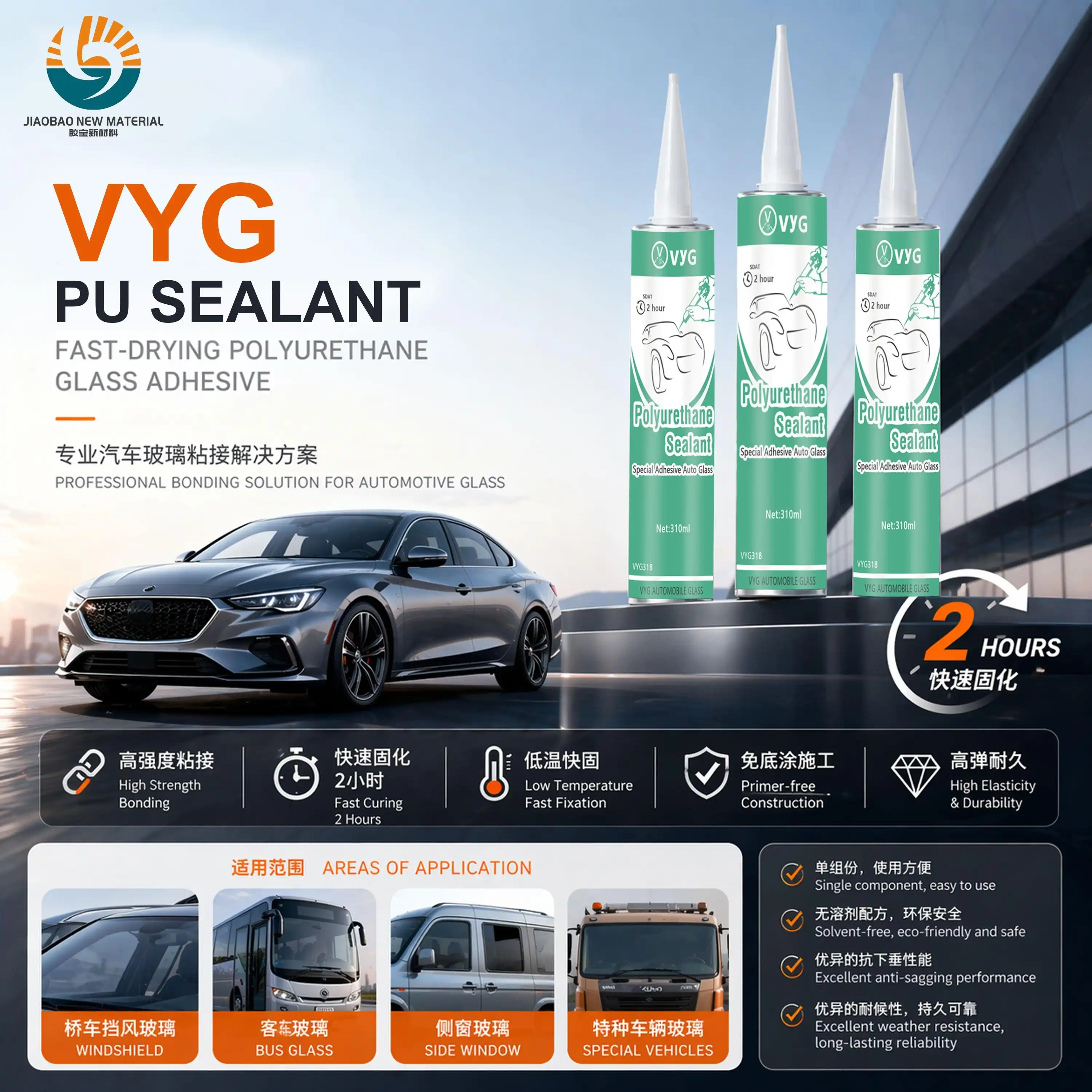
In direct-glazing applications, surface preparation is responsible for about 80% of the bond quality. Before you put down any new material, get rid of all the old glue, dirt, oils, and water. Use rubbing alcohol to clean the pinch weld and glass frit band, and then let the alcohol evaporate completely. This should take about two to three minutes at room temperature. No matter how strong the underlying formulation of the PU auto glass sealant is, any leftover contamination makes a weak boundary layer that the adhesive can't pass through.
The right way to store things directly extends their shelf life. Keep sausage packs and cartridges sealed in a cool, dry place below 25°C. When the temperature outside goes above this level, moisture-cure adhesives speed up the cross-linking process inside the package. This makes the adhesives thicker and cuts down on the time they can be used.
Check the production date before using; our formula has a 12-month shelf life when stored in a sealed container. Put cartridges into a professional caulking gun, cut the nozzle at a 45-degree angle to get the bead diameter you want, and make sure the flow is even before putting the glass in place.
A consistent application methodology takes away the need to guess and protects the reputation of your installation. Here are the main steps that skilled technicians always take when they do a job:
These steps directly lead to fewer rework jobs, faster shop turnover, and fewer warranty claims. Every three months, procurement managers and operations directors check on the results of the PU auto glass sealant process.
After each step, check the edge of the bead to make sure there are no air holes or gaps. Finding flaws at this stage takes minutes, but finding them after someone complains about a leak takes trust.
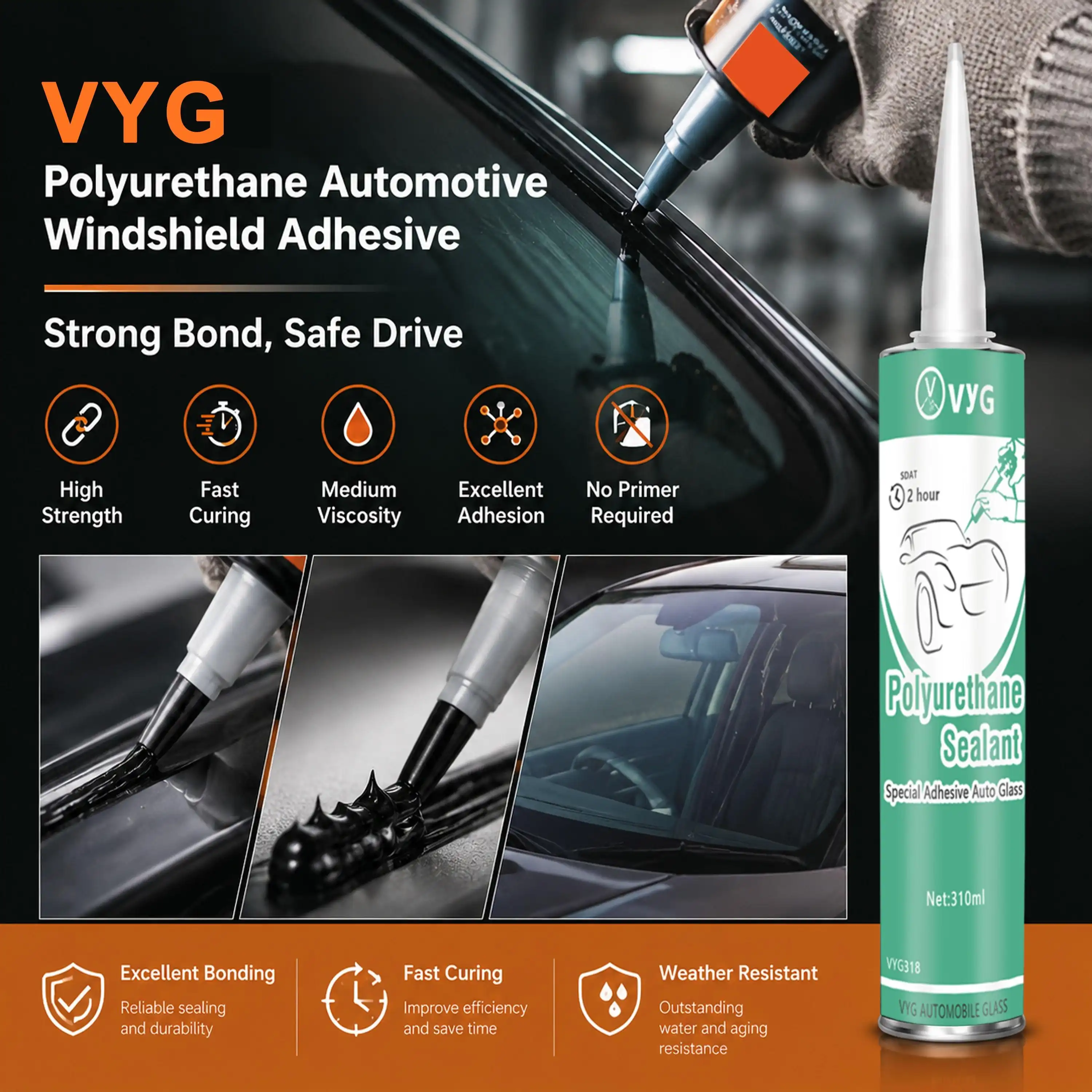
Butyl tape is easy to work with, but it doesn't add much to the structure and doesn't stand up well to car fluids. Standard silicone is very stable in UV light, but it doesn't have the shear stiffness needed for direct glazing in FMVSS 212 crash tests. Urethane blends are in the middle, but their elongation at break rarely goes over 250%, which is much less than the 400% that a quality polyurethane window adhesive can do.
When purchasing for OEM production lines or service chains with multiple locations, procurement professionals should look for tensile strength of at least 2.0 MPa, no sliding on vertical surfaces, and a healing speed of about 3.5 mm per day under normal conditions. These guidelines are in line with what DOT and ECE say about installing car glass, and they directly support safe drive-away time promises to customers.
A trustworthy company that makes PU auto glass sealant must show that their products are consistent from batch to batch in terms of Shore A hardness, extrudability, and the way the glue fails. Ask for proof of cohesive failure from peel adhesion tests; the material should tear within itself, not separate from the base. This one test tells the difference between a product that is structurally sound and one that only looks similar on paper.
When distributors and service chains look into private-label opportunities, they must be able to customize OEM products. Make sure the manufacturer offers custom color choices like black, white, gray, or matched tones. They should also offer flexible volume formats like 300 ml cartridges or 600 ml sausage packs, as well as branded packaging. Lead time is also very important. A production window of one to two weeks with reliable delivery operations keeps high-volume workshops from running out of stock.
Three things are needed to install car glass that doesn't leak and is structurally sound: choosing a chemically consistent PU auto glass sealant, properly preparing the surface, and sticking to the curing time window. Standardizing on a tried-and-true formulation—one that has a tensile strength of at least 2.2 MPa, a stretchiness of 400%, and no sagging—protects both the safety of car occupants and the organization's liability risk. Quality doesn't just happen; it's planned out with carefully chosen materials and consistent installation methods.
The safe drive-away time is based on the temperature and humidity of the area. At 25°C and mild humidity, our formula cures completely in about 60 minutes, which is enough time for short-distance drive. It takes 24 to 48 hours for the full structure cure to happen. If it's below 5°C where you live, you should make this window longer.
A black primer should be used on ceramic frit glass and bare metal pinch welds. It stops UV light from getting through, which weakens the bond between the glue and substrate over time, and helps chemicals stick to the substrate. Depending on the material, direct application may be okay on surfaces that have already been primed or painted and are in good shape.
The product can be kept for 12 months after it was made as long as it is sealed and kept below 25°C in a dry place. Before the cartridge is opened, being exposed to water or high temperatures speeds up internal cross-linking and makes it harder to work with.
Yes. When the surface is fully cured, it can be painted with standard car topcoats without the need for adhesion primers. This allows for smooth color integration on installs that can be seen.
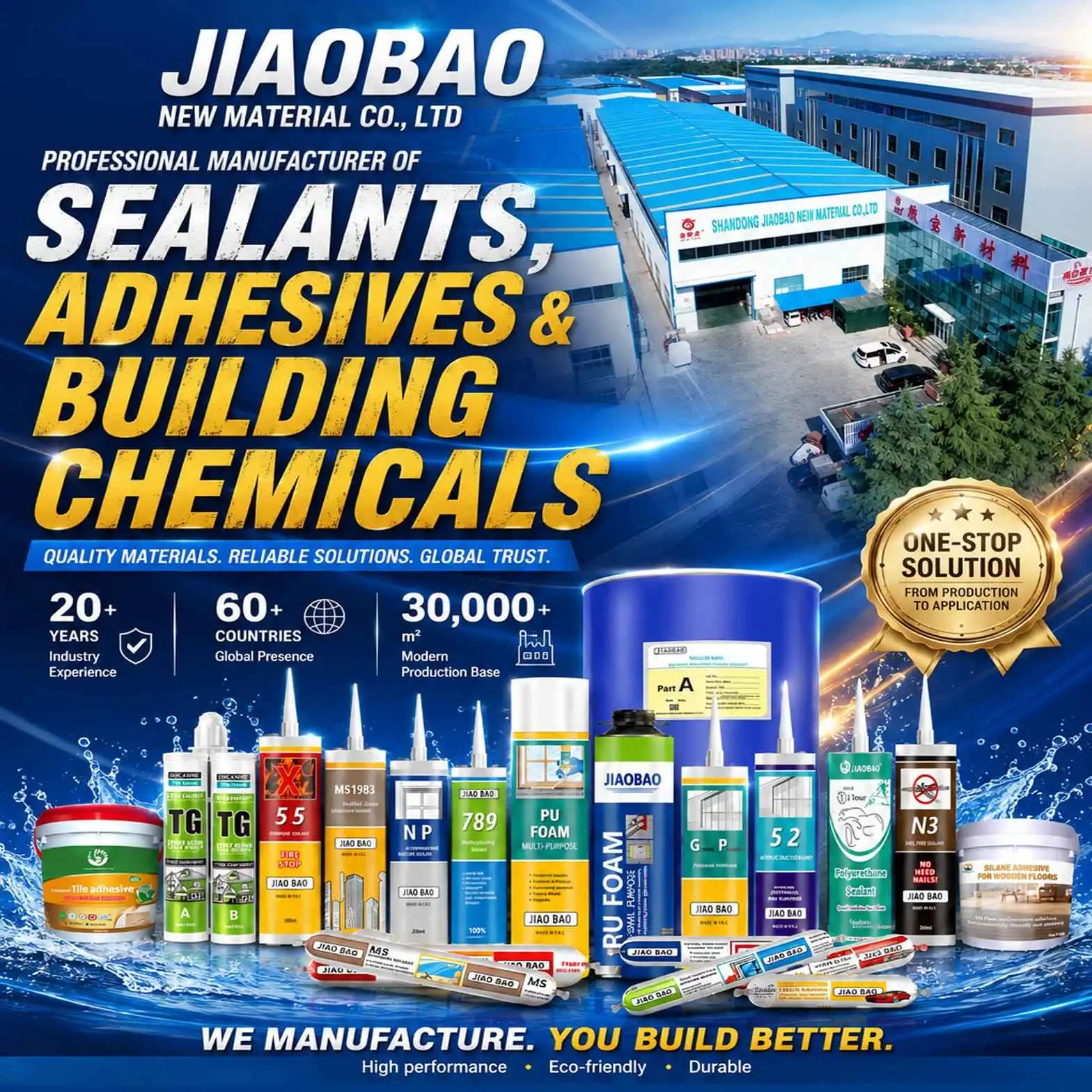
Jiaobao has been making specialty sealants since 2013. They have 13 years of experience making them and their quality systems are ISO and CE approved. As a reliable company that makes PU auto glass sealant, we can handle large orders, lead times of one to two weeks, and full OEM/ODM customization in 300 ml and 600 ml sizes. You can email our team at dorashen@cnjiaobao.com or visit shandongjiaobao.com to ask for a technical sample or talk about a private-label program.
1. Adhesives & Sealants Industry Magazine — "Polyurethane Windshield Adhesive Technology and Automotive Direct Glazing Standards," 2022.
2. SAE International Journal of Materials and Manufacturing — "Structural Performance of Moisture-Cure Polyurethane Adhesives in Automotive Glazing Applications," 2021.
3. ASTM D412 Standard Test Methods for Vulcanized Rubber and Thermoplastic Elastomers—Tension, ASTM International, 2021.
4. Journal of Adhesion Science and Technology — "Surface Preparation and Its Effect on Polyurethane Bond Integrity in Automotive Assembly," 2020.
5. National Highway Traffic Safety Administration (NHTSA) — "Federal Motor Vehicle Safety Standard No. 212: Windshield Mounting," 2019.
6. Progress in Organic Coatings — "Durability and Weathering Resistance of One-Component Polyurethane Sealants for Automotive Applications," 2023.
November 16,2023
Enterprise Name
The sealant has very strong adhesion and performs well even on glass and aluminum. After curing, it remains flexible and shows no cracking. Perfect for our facade projects.
November 16,2023
Enterprise Name
Stable quality across batches. Our customers especially like the smooth application and consistent extrusion. It helps reduce installation time on site.
November 16,2023
Enterprise Name
I used it for bathroom sealing. Excellent waterproof performance and no mold issues so far. It's been holding up very well in humid conditions.
November 16,2023
Enterprise Name
The neutral silicone works well on sensitive materials without corrosion. Very suitable for industrial applications requiring stable performance.
_1779347426672.webp)