November 16,2023
Enterprise Name
The sealant has very strong adhesion and performs well even on glass and aluminum. After curing, it remains flexible and shows no cracking. Perfect for our facade projects.
Jul 6, 2026
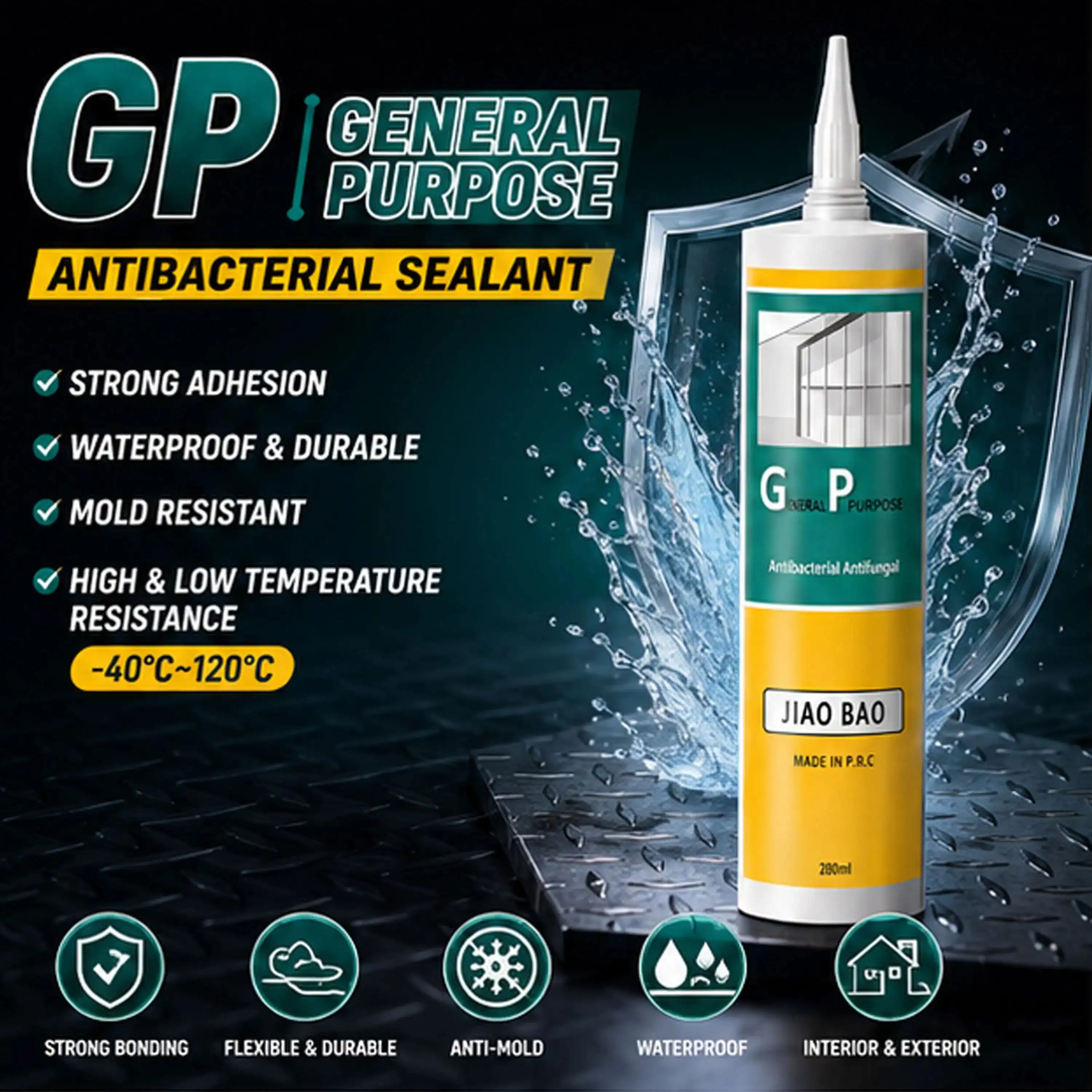
Multi-purpose silicone sealants can be used in many different industries to bond and seal things. They are useful in construction, manufacturing, and home improvement. GP Multi-Purpose Silicone Sealant is designed to solve common problems like water getting in, temperature changes, and substrate adhesion. This one-component RTV cures at room temperature using moisture from the air, making a flexible rubber barrier that works well in a wide range of temperatures. Knowing what silicone can do can help you choose the right product for tough B2B jobs where dependability affects project results and long-term maintenance costs. For example, you can use silicone to waterproof bathroom fixtures, seal curtain wall joints, or install HVAC ductwork.
Organic sealants like polyurethane or acrylic compounds are very different from silicone sealants. The backbone of polymers is made up of silicon-oxygen bonds instead of carbon-carbon chains. This is why they are so resistant to UV light, ozone, and changes in temperature. Silicone polymers, curing agents, and functional additives that improve properties like mold resistance and mechanical strength are all in GP Multi-Purpose Silicone Sealant.
While the rubber is being vulcanized, the acetoxy cure system gives off acetic acid vapor, which smells like vinegar. This chemistry makes skin form quickly—usually in 15 minutes or less—which speeds up handling times on busy construction sites or production lines. The sealant cures slowly from the outside in, about 2 to 3 mm every 24 hours, depending on the humidity in the air and the depth of the joint. This predictable behavior is liked by procurement managers because it makes planning projects easier and cuts down on the time needed between steps of application and assembly.
The technical details explain why silicone works better in changing situations than other seals. GP Multi-Purpose Silicone Sealant has a Shore A hardness of 18, which is just the right amount of firmness and flexibility. The strongest bond is 1.5 MPa, which is strong enough for general sealing and non-structural glazing. The tensile rate is more than 300%, which means that the sealant can handle ±25% joint movement without breaking. This elasticity becomes important in curtain wall systems where thermal expansion causes metal frames to shift several millimeters during daily temperature changes.
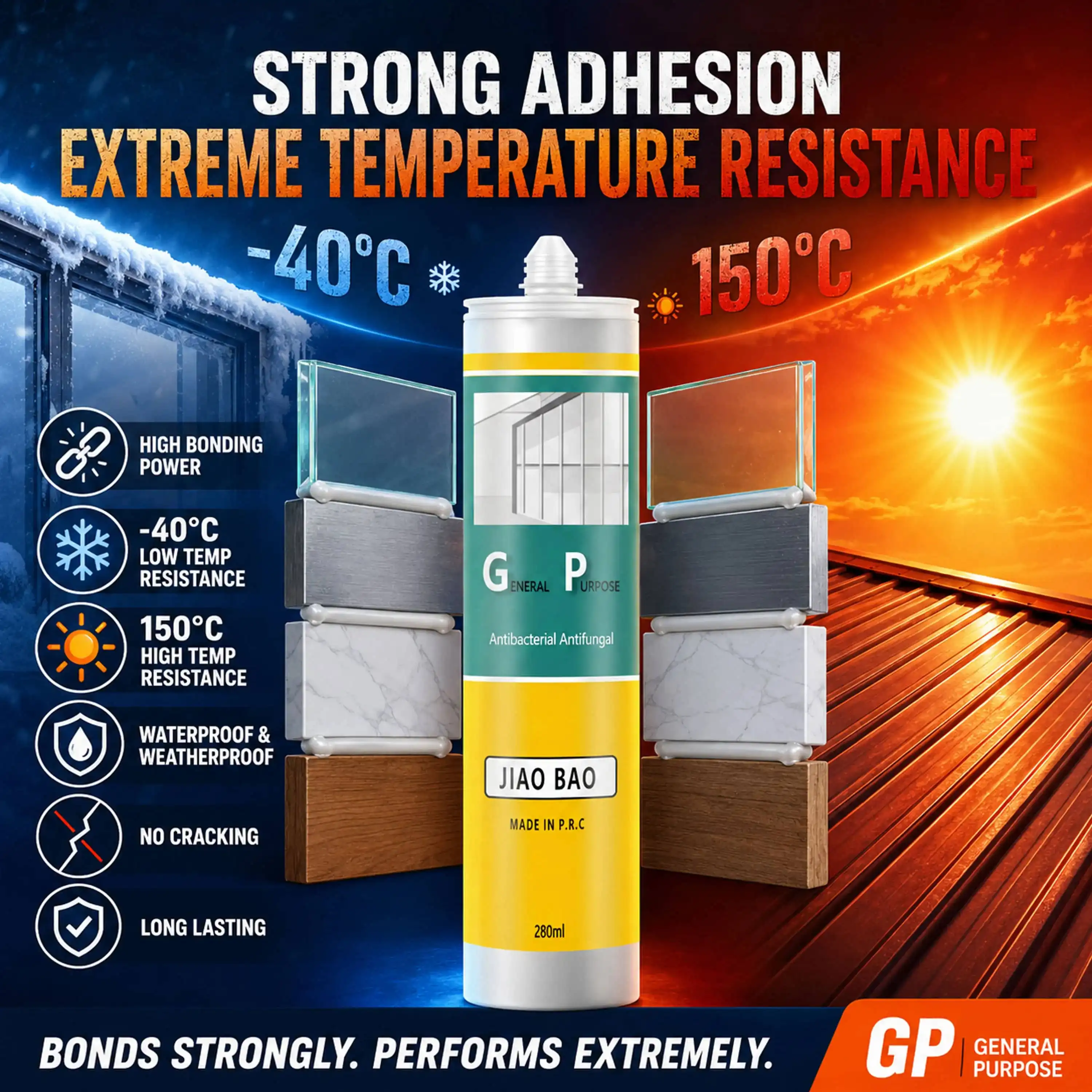
Polyurethane sealants offer paintability and strong adhesion to porous surfaces like concrete, but they deteriorate faster under UV exposure and generally handle less joint movement. Acrylic sealants provide economical solutions for indoor uses yet lack the water protection and temperature stability needed for outdoor facades or industrial settings. Silicone technology crosses these gaps, providing better longevity even when constantly exposed to rain, sunlight, and temperature swings from -50℃ to +150℃.
Proper application method determines whether your seal works for years or fails within months. We've refined installation methods based on feedback from curtain wall contractors, door and window makers, and HVAC techs who handle thousands of linear meters annually.
Surfaces must always be clean. Remove dust, oil, wetness, loose particles, and old sealant film using suitable solvents like isopropyl alcohol or acetone. Allow areas to dry completely before application. Porous media like concrete may require priming to avoid excessive absorption and ensure proper adhesion. Non-porous materials including glass, aluminum, and glazed ceramic usually bond well without primers, though testing on real project surfaces proves compatibility.
GP Multi-Purpose Silicone Sealant is the recommended product for this task. Load the 300ml or 600ml cylinder into a normal caulking gun. Cut the needle tip at a 45-degree angle to match the chosen bead size. Apply constant pressure while moving the gun slowly along the joint. Tooling should happen between 5 and 10 minutes before the skin starts to form. To make good surface contact, press the glue into the joint with a smoothing tool or a finger that has been wet. Do not use the same tools over and over, as this can trap air and make weak spots.
A 15-minute surface tack-free time lets you make quick changes to the position, but the full mechanical strength doesn't show up for a few days because the moisture has to work its way deeper into the layers. Plan your work so that you don't put too much stress on your joints in the first 24 to 48 hours. Curing goes faster in places with a lot of wetness and slower in dry places or deep joints. Teams in charge of buying things for big projects should keep these factors in mind when planning how to work with installation plans.
Keep cartridges out of direct sunlight and in a cool, dry place. It will last for 12 months if it is stored properly at temperatures between 5°C and 25°C. When applying, make sure you have on the right safety gear, like gloves and safety glasses. Make sure there is enough air flow to get rid of the acetic acid fumes, especially in small areas. Follow the rules in your area for how to properly dispose of empty cartridges because uncured sealer has explosive parts.
A thorough cost-benefit analysis across multiple performance factors is often needed to make choices about what to buy. While silicone technology costs more up front than acrylic or rubber options, it ends up being cheaper in the long run.
The best thing about silicone is that it doesn't get damaged by the weather. Unlike polyurethane compounds, which start to break down after 5 to 7 years outside, our recipe can stand up to constant UV exposure without chalking or losing its elasticity. Temperature performance stays the same from -50°F to +150°F, so it can be used for building projects in the Arctic and in warm regions where the surface temperature is higher than 70°F. Chemical resistance to gentle acids, cleaning agents, and alkaline solutions makes sure that equipment lasts a long time in industrial settings where it is cleaned often.
The initial cost of the materials is about 30–50% higher than that of polyurethane seals, but they usually last twice or three times as long. If you fix a curtain wall with good silicone, it won't need any upkeep for 20 to 25 years. However, polyurethane joints usually need to be resealed every 10 to 12 years. The cost of labor to get to high-rise surfaces and remove failed sealant is much higher than the cost of the material itself. This makes silicone the more cost-effective choice for projects where access issues or repair delays cost a lot.
We make things that meet foreign standards, like ISO 11600, so the quality is the same from one production batch to the next. As part of our customization services, we can match colors using RAL reference charts, which is very important for building projects that need to look good together. We have 300ml cartridges for pouring by hand and 600ml sausages for pneumatic application guns that are used on production lines with a lot of products. The acidity-cured formulation gives faster working strength than neutral-cure options, which helps makers who use just-in-time assembly methods get more done.
Learning about how different industries use silicone that can be used for more than one thing helps buying teams find chances in their own operations.
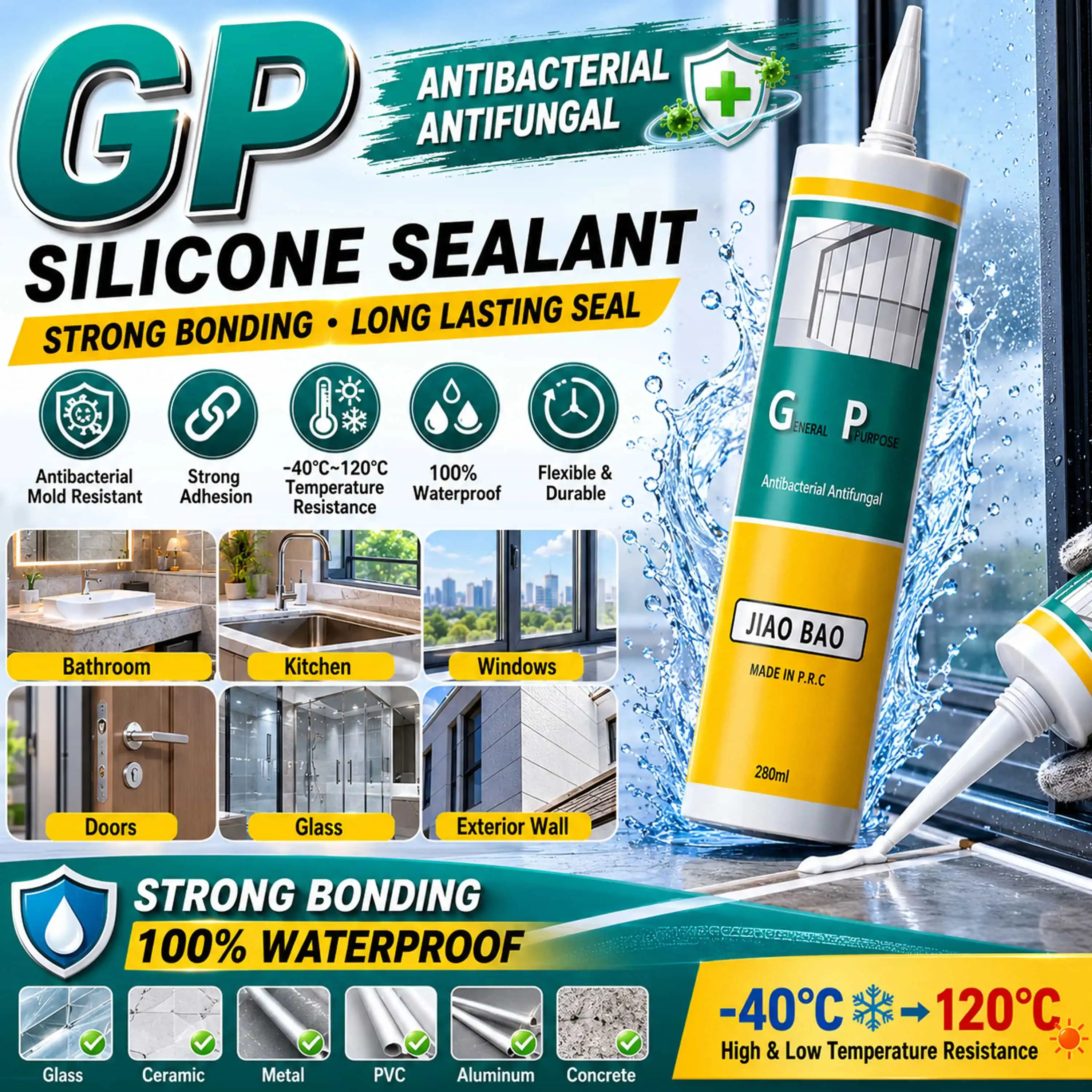
GP Multi-Purpose Silicone Sealant is used by curtain wall builders to seal the perimeter gaps where glass meets metal framing against the weather. The sealant's ability to move around allows for different materials to expand at different rates. Manufacturers of doors and windows put beads along the joints between the frame assemblies. This makes watertight shields that can stand up to wind-driven rain tests according to ASTM E331 standards. GP Multi-Purpose Silicone Sealant is also chosen by general builders for expansion joints in concrete surfaces, because they know it won't harden and crack like older materials did.
Manufacturers of HVAC equipment seal the seams and flange joints in ducts to stop air from leaking out and making the system less efficient. Because it doesn't easily break when the temperature or pressure changes, the sealant is perfect for use near heaters or air conditioners. When electronics are put together, silicone is used to protect the parts and keep moisture away from sensitive circuits. The food-safe qualities of the material and its resistance to cleaning chemicals help home device manufacturers seal refrigerator door gaskets and range hood connections.
Custom furniture makers use color-matched sealants that blend in with the installation to hide the joints between stone slabs and borders. Silicone is used in glass making plants to put together shower walls and display cases. When it comes to bathrooms, where humidity is always a problem, interior designers choose mold-resistant formulas. Because it sticks to ceramic tile, natural stone, plastic laminate, and metal, you don't need to keep a lot of different kinds of glue on hand.
B2B buyers need more than just product specs. They also need reliable supply lines, the ability to change their orders, and quick technology help.
Shandong Jiaobao New Material Co., Ltd. keeps production wait times at one to two weeks for standard colors and configurations. This makes sure that project-driven buying can be done quickly. We can ship your items in a variety of ways, including by sea freight for big container sales or quickly by land for urgent needs. Our 300ml and 600ml box sizes are good for both carry-on jobsites and large-scale distribution from warehouses. When it comes to pallet amounts, volume rates help carriers keep prices competitive at retail while protecting margins.
Our factory uses ISO 9001 quality control systems, and compliance is checked by a third party on a frequent basis. Products meet foreign standards, such as ASTM C920 for rubber joint sealants. This gives the US market the proof it needs for design requirements. We test each batch for important factors like extrusion rate, slump resistance, and binding strength to make sure that all packages have the same level of performance.
Since it began in 2013, Jiaobao has been a leader in color silicone sealing technology. The building market wants visual unity, and we can meet their needs with our knowledge of pigment dispersion and color stability. We keep close ties with providers of raw materials, which gives us steady access to high-purity silicone resins even when there are problems in the supply chain. Our OEM and ODM services help wholesalers build regional brands through private labeling. You can customize everything from the graphics on the package to the colors used and how well the products work in different climates.
Any problems with the quality during the shelf life period lead to an instant replacement or return, which keeps the customer's operations as smooth as possible. Our expert team helps with program advice, troubleshooting, and testing for compatibility. With direct access to engineers who understand the realities of production plans and jobsite limitations, procurement managers get more than just a product seller. They get a trusted partner.
In many fields, where the success of a project depends on how well it performs mechanically and in harsh environments, multi-purpose silicone sealants have developed into essential components. GP Multi-Purpose Silicone Sealant has a tried-and-true acetoxy-cure formula, useful packing choices, and colors that can be changed to fit a wide range of B2B needs. It performs well in all kinds of weather, stays stable at high and low temperatures, and works with a lot of different substrates.
This makes the investment worthwhile because it lasts longer and needs less upkeep. Whether you're covering thousands of window units every month or working on a high-profile curtain wall project, choosing a good silicone formulation with quick technical support lowers risk and saves long-term value.
Silicone's slippery surface chemistry makes it hard for most paints to stick well. Coatings made with water or oil tend to bead up and peel off. If you want to paint over finished material, you should choose a color-matched sealant when you make the initial design. You could also paint the surfaces next to the sealant first, making sure the edges are clean with masking tape.
Most adhesive problems are caused by dirty surfaces. Weak surfaces are caused by oil left over from manufacturing, moisture during application, or dust buildup. Bonds can also be broken by not having enough healing time before a joint moves or is put under mechanical stress. These problems can be avoided by testing suitability on real project materials and following the steps for surface preparation.
Because of its chemical makeup, our acetoxy-cure mixture is somewhat resistant to mold, but it doesn't have the added fungicides that are found in sanitary-grade goods. For places with a lot of humidity and constant contact to water, we suggest talking about improved formulas made just for wet-area uses where black mold prevention is very important.
People who work in procurement who are in charge of curtain wall projects, window manufacturing, or HVAC assembly lines need reliable GP Multi-Purpose Silicone Sealant sources who know what is needed for production and what is expected in terms of quality. Jiaobao has been specialized in production for more than 13 years and offers OEM services, reasonable prices, and quick technical support. Our ISO-certified factory makes batches that are uniform and meet international standards.
Our 1-2 week lead times also work for projects that need to be done quickly. We have the knowledge and production ability to help your business grow, whether you need custom color matching for building codes or private labeling for delivery channels. Email our team at dorashen@cnjiaobao.com to talk about prices for large orders, trying samples, or technical requirements for your next purchase cycle. Find out why top builders and makers around the world trust Jiaobao as their go-to manufacturer of multi-purpose silicone sealant.
1. American Society for Testing and Materials. (2020). ASTM C920: Standard Specification for Elastomeric Joint Sealants. West Conshohocken: ASTM International.
2. Klosowski, J. M., & Wolf, A. T. (2018). Silicone Sealants: Chemistry, Technology and Applications. Berlin: De Gruyter Publishing.
3. International Organization for Standardization. (2019). ISO 11600: Building Construction—Jointing Products—Classification and Requirements for Sealants. Geneva: ISO Publications.
4. Panek, J. R., & Cook, J. P. (2017). Construction Sealants and Adhesives: Performance Testing and Material Selection. New York: Wiley-Interscience.
5. Beech, J. C. (2016). The Chemistry and Technology of Silicones in Building and Construction Applications. London: Springer Publishing.
6. National Glass Association. (2021). Glazing Manual: Structural Silicone Glazing Systems and Weather Seal Applications. Vienna: NGA Technical Publications.
November 16,2023
Enterprise Name
The sealant has very strong adhesion and performs well even on glass and aluminum. After curing, it remains flexible and shows no cracking. Perfect for our facade projects.
November 16,2023
Enterprise Name
Stable quality across batches. Our customers especially like the smooth application and consistent extrusion. It helps reduce installation time on site.
November 16,2023
Enterprise Name
I used it for bathroom sealing. Excellent waterproof performance and no mold issues so far. It's been holding up very well in humid conditions.
November 16,2023
Enterprise Name
The neutral silicone works well on sensitive materials without corrosion. Very suitable for industrial applications requiring stable performance.
_1779347426672.webp)