November 16,2023
Enterprise Name
The sealant has very strong adhesion and performs well even on glass and aluminum. After curing, it remains flexible and shows no cracking. Perfect for our facade projects.
Jul 18, 2026
When you know what to look for, it's easy to tell if a silicone sealant uses neutral cure chemistry. When neutral cure silicones harden, they give off byproducts that aren't harmful, like alcohols or oximes instead of acetic acid. On the product label, look for words like "neutral cure," "non-corrosive," or "suitable for metal substrates." You can also smell the sealant to tell if it's neutral cure: if it doesn't give off a strong vinegar-like smell when you apply it, it probably is. When buying Neutral Weatherproof Silicone Sealant for installing windows or curtain walls, make sure you get the technical document (TDS) and materials safety data sheet (MSDS) from the company you buy it from. These papers prove the type of cure, suitability with the medium, and chemical make-up. This keeps you from making costly mistakes with the materials.
Neutral cure silicone technology fills in a major hole in the sealing industry in both building and industry. Acetoxy cure silicones give off acetic acid, which can eat away at aluminum frames or damage glass backings. Neutral cure formulations, on the other hand, use different chemical processes that make harmless byproducts. Because of this basic difference, they can't be used for private tasks.
Cross-linking polymers form when neutral cure silicone is exposed to moisture in the air without acidic emissions. Usually, alkoxy or oxime groups produce alcohols or oximes, which are harmless substances that don't react badly with metals, stone, or protected glass. This chemical stability makes sure that the substrate doesn't break down over time, which is a typical way for acidic options in high-performance building shells to fail.
Curtain wall businesses and stone preparation plants have different problems to solve. Acidic sealants can bleach natural stone surfaces or cause galvanic rusting on aluminum mullions, which can lead to expensive repairs and guarantee claims. These risks are taken away by neutral cure solutions. They stick well to metal, glass, concrete, marble, ceramic tiles, and metal without damaging the structure or look of the medium. Because of this similarity, the whole system will last longer.
Low VOC content is becoming more and more important in modern building codes. Neutral cure coatings of good quality meet ASTM C920 and GB 13477 norms and have VOC levels below 80 g/L. This rule protects the quality of the air inside and meets green building standards like LEED. In addition to following the rules, the lack of smelly fumes makes the workplace better for installation teams, which lowers the number of health issues on the job.
Using the right identification stops mistakes in buying that can throw off project schedules and costs. There are a lot of different ways to check, from simple eye checks to thorough chemistry tests.
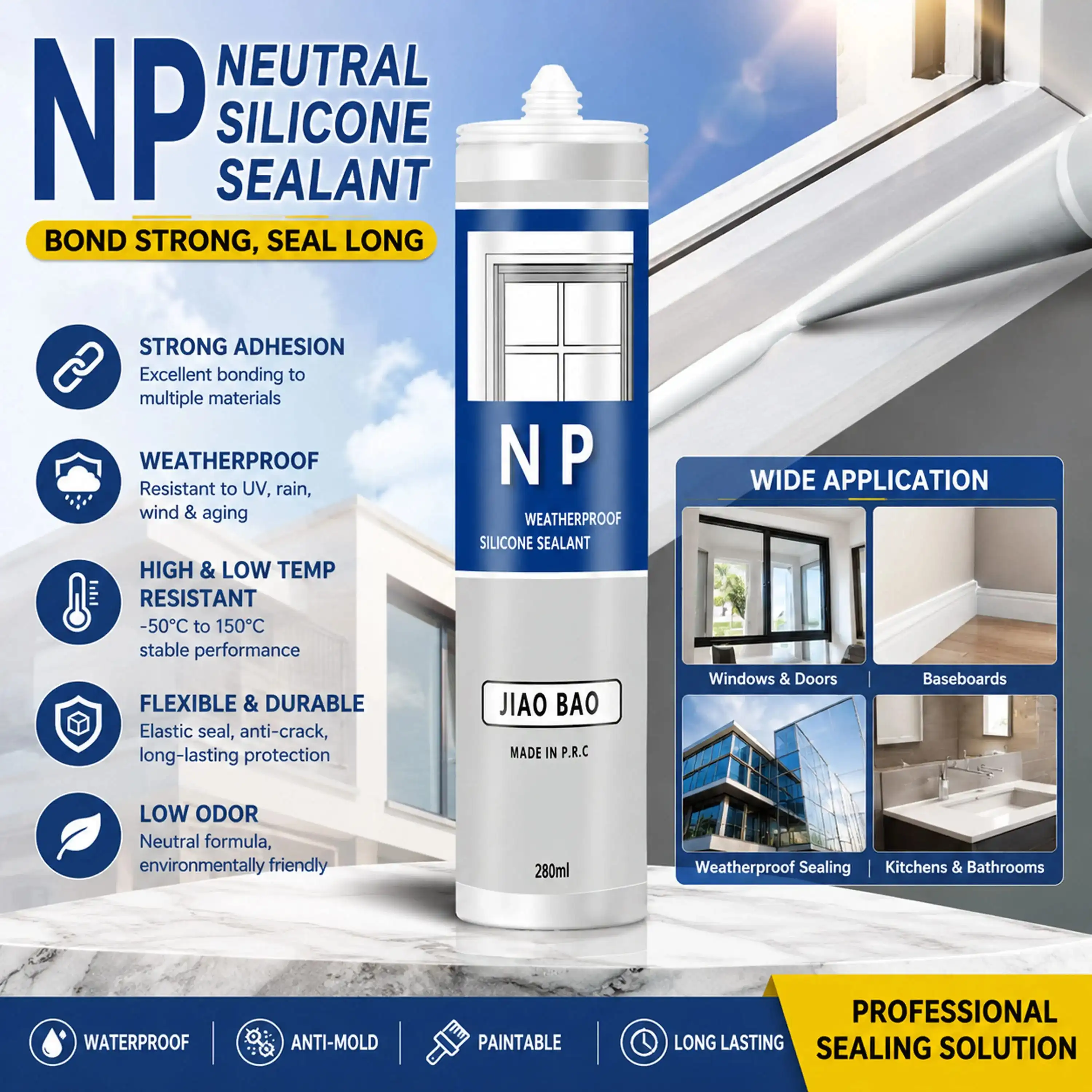
Start with how the product is packed for Neutral Weatherproof Silicone Sealant. "Neutral cure" or "non-acidic formula" should be very clear on the back of a reputable cartridge or sausage. Look for claims that the material can work with it. Phrases like "safe for metals" or "suitable for mirrors" mean that the chemistry is neutral. Professional-grade neutral cure products made for building uses usually come in white, black, grey, or RAL-matched color choices that can be changed. Cartridges and sausages that come in 300ml or 600ml packaging volumes are standard in the business.
The TDS shows exact information about how the cure works. Look for words like "oxime cure," "alkoxy cure," or "dealkoholization." The paper should have information about how long it takes to cure (usually 7–14 days), how much the joint can move (25% for outdoor grades), and how it can handle temperatures from -50°C to +150°C. A surface that dries in about 30 minutes is a sign of good makeup. These specs help project managers figure out if the sealant meets the needs for structure movement under situations of thermal cycles.
A real pH test can show that the chemistry is neutral. Put a small bead on a piece of non-porous plastic. After 10 minutes, use pH paper to check the surface to see if it has hardened. The pH level of neutral cure silicones is between 6 and 8, while the pH level of acetoxy types is below 5 because they release acetic acid. In a different test, the glue is put on a clean piece of aluminum. After 24 hours, look for changes in color or rust. Acidic formulations may oxidize or scratch the metal surface, while neutral formulas leave the surface unaltered.
Choosing the right sealing formula affects both how well it works right away and how well it works in the long long run. Knowing the differences helps buying managers match the qualities of materials to the needs of the project.
Acidic cure silicones dry faster and usually cost less per cartridge, which makes them a good choice for projects that need to stay within a budget. But the release of acetic acid limits how they can be used. They won't work on copper, brass, zinc-coated metals, natural marble, or porous stone without staining or rusting them. Neutral cure solutions are more compatible, but they need a little longer to cure. When joining granite cladding panels or sealing glass curtain walls with aluminum frames, the neutral choice stops material degradation that causes the seal to fail too soon.
Polyurethane seals are very resistant to wear and can be painted over, which is not possible with silicones like Neutral Weatherproof Silicone Sealant. They work well in places where people walk and in expansion joints that need to be compatible with topcoats. But polyurethanes break down faster than silicone when used outside because they lose their flexibility more quickly when exposed to UV light for a long time. Acrylic seals work well for gaps inside that need to be able to be painted, but they don't have the weather strength and ability to move that is needed for outside walls. They aren't right for joints that move a lot or places where temperatures change a lot.
Hybrid polymer coatings, also known as MS polymers or SMP, have properties of both polyurethane and silicone. They are easy to paint, stick well, and don't block UV light too well. They can take movement better than acrylics, but they don't last as long or be as resistant to changes in temperature as expensive neutral cure silicones. Clients in industrial production, especially those that make HVAC equipment or car parts, often ask for neutral cure silicone because it is chemically stable and performs well even when subjected to harsh thermal cycles.
When making strategic buying choices, you have to think about both short-term cost savings and long-term dependability. For B2B buyers to properly analyze sellers and goods, they need frameworks.
Make sure that the goods your seller sells are ISO-certified and meet the requirements of ASTM C920 Class 25 or GB 13477. These approvals make sure that the product can move, stick, and keep out the weather (minimum 0.7 MPa tensile strength). Request test results that prove the product doesn't sag when used vertically and is resistant to pollution according to ASTM C1248. A Shore A hardness of around 30 is a sign of good rubbery qualities. Suppliers who share these certifications openly show that they care about quality assurance.
The wait time for production has a big effect on how the job is scheduled. Contractors can avoid plan delays when manufacturers offer shipping times of one to two weeks. Check to see how well the provider can control their inventory. For example, can they handle the volume changes that come up between big projects and steady industrial production runs? Offering different shipping choices, such as sea freight for cost savings or express for pressing orders, shows that the business is operationally mature. Suppliers who offer OEM/ODM services can use RAL charts to match specific color requirements. This is very important for facade builders who need to make sure that all of the building's sides look the same.
Pricing tiers based on volume for Neutral Weatherproof Silicone Sealant reward smart planning for purchases. Initial purchases are based on trying samples, but the best way to save money is to build relationships with makers who can handle both small trial orders and large project needs. Think about the total landed cost, which includes the type of packing (cartridges for small jobs, sausages for high-volume use), how the product is stored (12 months on average), and any help after the sale. Buying from suppliers who promise refunds or replacements for quality problems within the shelf life lowers the risk of the purchase.
How the sealer is applied directly affects how well it works. When fitting isn't done right, even high-end goods don't work.
Substrates that are clean must be used. Use the two-cloth method: first wipe the joint faces with a cloth that has been wet with a solvent (isopropyl alcohol works well), and then use a dry cloth right away to get rid of any leftover residue. The surface must be clean and dry. Primer may be needed to improve bonding on porous surfaces like concrete. For the right cure to start, the temperature should stay above 5°C during treatment. Humidity levels between 40 and 80% are best for hardening quickly without slowing down the formation of elastomers.
Cut the cartridge tip so that it fits the joint width by 45 degrees. Consistently apply pressure to make the bead thickness the same. For best movement flexibility, joints should be designed with width-to-depth ratios of 2:1. To stop three-sided binding, which limits the movement of flexible materials, use a backing rod or bond-breaker tape. Work with the glue no more than 5 to 10 minutes before the surface starts to peel. A curved outline sheds water better than a convex shape, which lowers the chance of water getting in.
It takes about 30 minutes for the surface to be tack-free, but it can take 7–14 days for the joint to fully cure, based on how deep it is and the weather. During this time, keep the sealer away from wet and rough surfaces. To make sure the joints are properly adhered, slowly pull on one of the edges. It should stretch without coming away from the base. If you see holes, bubbles, or tears, that means the coating wasn't done right. When neutral weatherproof seals are placed correctly, they stay flexible even after years of changing temperatures. This keeps the waterproof barriers that protect structure elements in place.
To find Neutral Weatherproof Silicone Sealant, you need to pay attention to the label, the scientific documents, and the testing methods that are actually used. The difference in chemicals between neutral and acidic cure processes has a big effect on substrate compatibility, so it's important to get the right identification for the project to go well. Neutral cure formulas protect delicate materials from rust and offer better weather protection, temperature stability, and flexibility when compared to other sealant chemistries. When you do strategic buying, you look at things like a supplier's certifications, shipping options, and customization options, as well as the cost. Even the best goods work better when they are applied correctly, from preparing the area to making sure it is fully cured. Procurement managers get reliable materials that meet both short-term project needs and long-term performance goals by working with experienced manufacturers who know how to meet the technical needs of building and industrial uses.
A: When neutral cure silicones harden, they give off byproducts that are safe for metals, stone, and protected glass, such as alcohols or oximes. Acetoxy cure types give off acetic acid, which can damage delicate surfaces but usually cures faster and costs less. To keep the materials from getting damaged, use a neutral cure when working with aluminum, copper, marble, or glass backings.
A: Ask for the Technical Data Sheet (TDS) and the Materials Safety Data Sheet (MSDS) to check the type of cure, the VOC content, the ability to move, and the strength of the bond. Third-party test results can help you make sure that the product meets ASTM C920 or GB 13477 standards. Before buying in bulk, test the adhesion on real project surfaces to make sure it works.
A: Not at all. Silicone seals make surfaces that don't let paint stick by making them non-porous. As the joint moves, the sealant will bend and cause the paint to peel or crack. Use RAL color charts to choose color-matched sealant when you're buying it so you can get the look you want without painting afterward.
A: Some common reasons are: the sealant has passed its expiration date (check the date code), there isn't enough humidity (below 30% relative humidity slows drying), or it was used in a protected area where moisture can't reach the sealant's depth. Make sure the temperature outside is higher than 5°C and the joint level isn't deeper than what the maker says is acceptable for moisture to pass through.
Shandong Jiaobao New Material Co., Ltd. makes high-performance silicone seals that are specifically designed for tough business-to-business uses. Since we started making things in 2013, more than 13 years ago, we've become a reliable supplier for curtain wall companies, door and window makers, and industrial production facilities on several countries.
In our line of products, we have one-component RTV pastes that come in white, black, grey or unique colors that are made to fit your exact needs. Our flexible packaging comes in cartridge and sausage shapes and comes in 300ml and 600ml sizes to fit a range of application sizes. Each batch goes through strict quality control to make sure it meets ASTM C679, GB 13477, and ASTM C1248 standards. Testing shows that there is no vertical sagging, the VOC content is less than 80 g/L, and the material can move 25% of the way it's supposed to.
When you shop at Jiaobao, we care about your success more than anything else. We offer production wait times of one to two weeks, so we can meet the needs of important projects without sacrificing quality. Our OEM and ODM services make it possible to precisely match colors to RAL charts, which is important for wall builders who need to keep the look of their work consistent. Our ISO and CE certifications prove that our production methods are safe, and our 12-month warranty covers any quality problems with refunds or replacements.
Our expert team can help you choose the best solution based on your material compatibility and weather exposure needs, whether you're sealing glass curtain walls, bonding stone cladding, or waterproofing the edges of windows. Email dorashen@cnjiaobao.com to get detailed datasheets, set up sample tests, or talk to our application engineers about your project requirements. We are a committed producer of Neutral Weatherproof Silicone Sealant, so we can be your long-term purchasing partner.
1. American Society for Testing and Materials (2019). "ASTM C920: Standard Specification for Elastomeric Joint Sealants." ASTM International, West Conshohocken, PA.
2. Gutowski, W. S. (2016). "Adhesion and Bonding in Composites: Volume 2 - Weatherproof Sealant Performance in Building Envelopes." John Wiley & Sons, New York.
3. National Standardization Committee of China (2017). "GB 13477: Test Methods for Architectural Sealants." Standards Press of China, Beijing.
4. Klosowski, J. M., and Wolf, A. T. (2012). "Silicone Sealants: Chemistry and Technology of Neutral Cure Systems." International Journal of Adhesion and Adhesives, Vol. 38, pp. 96-104.
5. Building Envelope Council (2020). "Best Practices for Weatherproofing Joint Design in Glass Curtain Wall Systems." Technical Bulletin Series, Washington, DC.
6. Chen, H., and Liu, M. (2018). "Comparative Performance Analysis of Neutral Cure Versus Acetoxy Cure Silicone Sealants in High-Movement Building Applications." Construction and Building Materials Journal, Vol. 165, pp. 427-436.
November 16,2023
Enterprise Name
The sealant has very strong adhesion and performs well even on glass and aluminum. After curing, it remains flexible and shows no cracking. Perfect for our facade projects.
November 16,2023
Enterprise Name
Stable quality across batches. Our customers especially like the smooth application and consistent extrusion. It helps reduce installation time on site.
November 16,2023
Enterprise Name
I used it for bathroom sealing. Excellent waterproof performance and no mold issues so far. It's been holding up very well in humid conditions.
November 16,2023
Enterprise Name
The neutral silicone works well on sensitive materials without corrosion. Very suitable for industrial applications requiring stable performance.
_1779347426672.webp)