November 16,2023
Enterprise Name
The sealant has very strong adhesion and performs well even on glass and aluminum. After curing, it remains flexible and shows no cracking. Perfect for our facade projects.
Oct 8, 2026
Buying high-quality sealants is a smart move that will have a direct effect on the life of the project, the cost of upkeep, and the happiness of the client. When you choose high-performance exterior silicone sealant, you're not only creating a waterproof shield, but you're also protecting your investment from damage from the elements, structural movement, and failure before its time. Premium-quality goods work the same way in all temperatures, don't break down in UV light, and stay flexible for decades instead of years. The difference in price between budget and premium sealants is almost unnoticeable when you consider how often they need to be replaced, how much it costs to hire workers, and how good the brand's image gets. This way of thinking about investments makes a lot of sense to procurement managers, project engineers, and contractors, who know that material failures directly lead to guarantee claims, schedule delays, and bad relationships with clients.
High-end exterior silicone sealants use modern polymer chemistry that is made to work in tough outdoor conditions. Basic acrylics harden and crack when exposed to UV light, but silicone-based goods keep their chemical flexibility even after decades of being outside. The strength comes from the siloxane backbone structure, which is much better at resisting oxidation and photodegradation than organic options.
Silicone sealants have a chemical structure that makes them very good at joining while also allowing for structural movement. Quality neutral-cure formulas get rid of the rust risk that comes with acetoxy products. This means that they can be used on sensitive surfaces like natural stone, aluminum panels, and metals that have been coated. This compatibility is very important for curtain wall setups, since sealants that don't work with the wall can leave lasting stains or damage the metal.
Modern neutral-cure technology can stick to both porous surfaces like concrete and brick and non-porous materials like glass and glazed pottery without the need for a primer. This versatility cuts down on application time and gets rid of the need for expensive and complicated primer systems. This saves workers who are working on tight project plans time right away.
Premium formulations are amazingly resistant to external factors that break down cheaper ones. UV stabilizers built into the polymer matrix stop the chain scission that makes the material chalky and rigid. Ozone resistance makes sure that the product works well in urban and industrial settings where air pollutants speed up the breakdown of materials. The ability to stay solid at temperatures ranging from -50°C to +150°C means that the glue can be used in harsh climates, from the Arctic to the desert.
Biological resistance is another very important benefit. Good outdoor sealants have antimicrobials in them that stop mold and mildew from growing. This keeps the building's look and gets rid of the health risks that come with fungal contamination. This feature is especially useful in places like hospitals, food processing plants, and apartment buildings where choosing the right materials for the people who live there depends on their health.
When compared to polyurethane and acrylic options, silicone seals have a better value over time. Polyurethane goods stick well at first, but they break down over time when exposed to UV light, so they usually need to be replaced every 5 to 10 years. Acrylic sealants aren't flexible enough for dynamic joints, so they don't stick when building materials expand and contract due to changes in temperature. For as long as they're used, silicone formulations stay flexible, allowing joints to move up to 50% in luxury types that meet ISO 11600 standards for Class 50 performance. This ability to move stops the cohesive tears and glue separation that happen in business and industrial projects and need expensive repairs.

Use the right methods when using even high-end goods so they work as well as they can. Long-term resilience and binding power are directly affected by how the surface is prepared, the conditions in the area during application, and how the curing process is managed. To maximize the life of exterior silicone sealants, following professional protocols is essential.
To properly prepare a joint, you must first clean it well to get rid of dust, oils, release agents, and any sealant residue that is still there. Surfaces need to be dry and free of snow because water under the sealant makes it fail to stick and forms bubbles. For weak surfaces like concrete, getting rid of dust with a wire brush or compressed air makes sure that the adhesive can penetrate and stick well. Solvent cleaning is needed to get rid of contaminants on non-porous surfaces that make it hard for things to stick. Acetone or isopropyl alcohol can get rid of oils and residues well without leaving behind film. After cleaning, surfaces should be checked to make sure all dirt and grime are gone before applying sealer.
Ambient weather and humidity have a big effect on how well the drying process works and how the end product turns out. The best conditions for use are temperatures between 5°C and 40°C and relative humidity below 80%. Extreme cold slows sealing and raises stickiness, which can make tools hard to use and trap solvents in the sealant. Too much heat speeds up surface skinning, which can stop proper shaping and even create internal holes.
Professional installers use commercial-grade caulking guns that make sure the bead thickness is always the same and get rid of air gaps. The right joint shape has a width-to-depth ratio of 2:1. This makes sure that stress is spread out evenly and stops three-sided binding, which can cause cohesive failure. Tooling should be done right away, while the sealant is still workable, which could be anywhere from 5 to 10 minutes based on the weather and humidity.
Knowing when to apply pressure stops loading too soon, which harms sealant that hasn't fully dried. Most of the time, the surface doesn't tack up for 20 to 40 minutes. However, it takes 7 to 14 days for the joint to fully cure, based on its depth, temperature, and humidity. During polymerization, neutral-cure formulas give off alcohol or oxime byproducts, which means that enclosed areas need to have enough air flow.
Protocols for regular inspections find problems before they get so bad that they need a lot of work to fix. Visual inspections are done once a year to look for glue breakup, cohesive tears, and surface wear and tear. Cleaning to get rid of built-up dirt and bacterial growth is part of proactive care. This extends the appearance of the item and keeps nearby surfaces from getting stained. Recording what was found during a check sets the standard for guarantee claims and helps with planning preventative maintenance.
When choosing a product, you need to carefully look at its performance requirements, whether it meets licensing requirements, and the supplier's abilities. By knowing about these things, you can make smart choices about buying that balance cost, quality, and the needs of your particular project. Choosing the best premium exterior silicone sealant for your projects requires a thorough evaluation of technical specifications.
Quality sealants have to pass strict international tests that check how well they stick, move and stand up to the elements. According to ASTM C920 certification, there are different types of performance, such as Type S (single-component), Grade NS (non-sag for vertical uses), and Class 25 or 50 (movement capability of ±25% or ±50%). For European markets, ISO 11600 is used as a guide. It sets similar performance levels, with F being used for facade uses and G for glass systems.
Shore A hardness levels between 20 and 35 are the best compromise between ease and toughness. Lower hardness values are better for allowing movement, but they might not have enough combined power for joints that are under a lot of stress. Higher hardness makes things last longer, but it also makes them less flexible, which could cause adhesives to fail in dynamic situations. When the tensile strength is higher than 1.0 MPa, the structure stays strong under load, and when the stretch at break is higher than 400%, the joint can move a lot without breaking. These qualities are very important for places where there are earthquakes and for buildings that are subject to a lot of changes in temperature or wind loads.
A supplier's reliability in shipping, expert help, and quality control are some of the other factors that affect the success of a project besides product specifications. Established makers have strict quality control systems that are approved under ISO 9001. This makes sure that the quality is the same from batch to batch, which is very important for big projects that need to be shipped in many shipments over long periods of time.
Premium suppliers are different from basic suppliers because they offer technical help. For difficult projects, having access to application experts who can test substrate compatibility, offer shared design advice, and help with fixing is very helpful. This support is especially helpful when dealing with odd materials, tough environmental conditions, or specific performance needs. Warranty terms show how confident the maker is in the product's ability to work. When you follow the right steps for application, most premium brands come with warranties that cover material flaws and performance fails for 10 to 20 years. These guarantees move the risk from the contractor to the maker. This keeps project budgets safe from repair costs that were not planned for.
Customized formulas are often needed in addition to standard product options because of the needs of a particular project. Architectural paints can match colors so they look great with curtain wall systems, natural stone, and artistic concrete. RAL color chart matching makes sure that the look is the same from different sources and project stages, which is very important for keeping the look of high-end business developments.
Custom formulation includes more than just changing the color. It also includes changing the rheology for specific application methods, the fire resistance grades for life-safety uses, and the fix chemistry for situations where the temperature or humidity is not normal. Distributors and builders looking for unique products that appeal to niche markets can get a competitive edge from manufacturers that offer OEM and ODM services.
Strategic buying methods lower the total cost of ownership while maintaining the quality of the materials and the dependability of the supply chain. Professionals in procurement weigh the cost of a product against the supplier's skills, the need for certification, and the ease of logistics to quickly find high-quality exterior silicone sealants.
The price of sealant depends on how well it is made, how the name is positioned, and how much is bought. Premium neutral-cure goods usually cost 20–40% more than cheaper acetoxy options, but they last two to three times longer, which means they cost less over their entire life. Tiered pricing systems that lower unit costs by 15–30% compared to spot purchases are made possible by volume promises. This makes yearly deals appealing for freelancers whose consumption patterns are reliable.
The right container size combines how easy it is to handle with how much it costs. For large projects, bulk packing in sausages can save you money and keep materials fresh by keeping them out of the air. Cartridge packing makes uses easier and cuts down on waste for smaller ones, but it costs more per volume.
When a qualified provider is evaluated, their manufacturing skills, quality systems, and shipping performance are all looked at. ISO approval checks the rules that make sure the quality of the products is always the same. Manufacturing experience covering more than ten years means well-established production methods and a wealth of application knowledge that helps customers through technical support and fixing.
Pre-purchase sample lets you check that the product meets the requirements and works well with the project materials and the surroundings. When you try a sample, you should make sure it sticks to real project materials, let it sit in temperature ranges that you expect, and make sure it can be worked with in the conditions you expect. This validation stops design mistakes that could cost a lot of money and mean the product has to be replaced during building.
Logistics skills have a direct effect on how projects are scheduled and how material is managed. Suppliers with production wait times of one to two weeks give you the freedom to adapt to changing schedules and lower the cost of keeping supplies on hand. With ocean freight and overland transport as well as other shipping choices, costs can be optimized based on urgency and location. When buying things from other countries, sellers who have export certifications like ASTM, CE, and ISO paperwork make it easier to clear customs and follow the rules.
A full cost analysis looks at more than just the unit price. It also looks at application labor, failure risk, and guarantee exposure. Premium sealants that are easier to work with cut down on the time it takes to apply by making tools more useful and giving them more time to work. When failure rates go down, repair costs go down too, which can be more than 10 times the cost of the original material when you add in the cost of access tools, surface preparation, and time lost from work.
Support after the sale, such as expert help and warranty coverage, shifts the risk to the maker and gives you a way to get help for material defects or performance problems. Suppliers who repair or refund products with quality problems within the shelf life time show that they are confident in their manufacturing processes and want to make sure their customers are happy.
The results of real-world projects show that choosing a quality exterior silicone sealant is better for both function and cost. These examples show measured returns on investment by lowering the need for upkeep, increasing customer happiness, and extending the time between service visits.
Commercial curtain wall installations show how long-lasting expensive neutral-cure formulas can be. A high-end hotel project in Miami needed color-matched silicone seals for the glass walls that go from floor to ceiling and are exposed to strong UV rays, salt spray, and hurricane-force winds. After eight years of use, yearly checks showed no glue failures, cohesive tears, or discoloration. This meant that the planned repairs would not cost more than $200,000. Because the project went well, the developer's other products were also made to work with the same product line. This led to a long-term relationship based on performance.
Chemical-resistant formulations are useful in harsh settings, as shown by industrial manufacturing sites. A company that makes parts for cars needed seals that could stand up to hydraulic fluids, cleaning solvents, and temperature changes from -40°C to +120°C. Custom-made silicone seals kept their integrity for five years of continuous use, keeping clean-room assembly areas clean and getting rid of the need for unplanned repair shutdowns that used to cost $15,000 per incident in lost production.
Distributor relationships show how offering a wide range of high-quality products can set you apart from competitors and keep customers coming back. A local building materials wholesaler created a one-of-a-kind color-matching service using customizable silicone sealants. This service lets contractors choose sealant colors that go well together for high-end home and business projects. This new service raised average order values by 35% and lowered customer turnover to less than 5% per year, showing that high-quality products and the ability to customize them are what make a business grow.
High-quality exterior silicone sealants are smart investments that pay off in the long run by increasing project results, extending service life, and lowering upkeep costs. Neutral-cure technology has performance benefits like being compatible with substrates, being resistant to weather, and being able to accommodate movement. These benefits make up for small cost increases through lower lifetime costs. These benefits are at their best when these methods are used correctly, the right products are chosen, and smart partnerships with suppliers are formed. This way, procurement professionals and project teams can get better results while staying within their budgets. Premium sealants are becoming more and more valuable in the construction, industrial, and transportation industries as building performance standards change and projects get more complicated.
A: Curing happens in steps. The first step is a surface tack-free time of 20 to 40 minutes. The next step is through-cure, which happens at a depth of about 2 to 3 mm every 24 hours. For normal 10mm joints, it takes 7–14 days, based on the temperature and humidity, to fully cure. Neutral-cure formulas may fix a little more slowly than acetoxy types, but they are better at sticking to different types of substrates.
A: Premium neutral-cure formulas stick very well to porous building materials like brick, concrete, and mortar, even without bases. To prepare a surface, you have to get rid of dust, efflorescence, and form-release agents. If the surface is wet or covered in frost, don't apply because the trapped moisture will stop the glue from sticking properly and cause bubbles to form.
A: When compared to polyurethane, silicone goods are better at resisting UV light, staying stable at room temperature, and lasting longer. Polyurethane seals stick well at first and can be painted over, but they break down in the sun and usually need to be replaced every 5 to 10 years. Silicone formulations stay flexible and stick together for 20 years or more, so they offer better lifetime value even though they cost more at first.
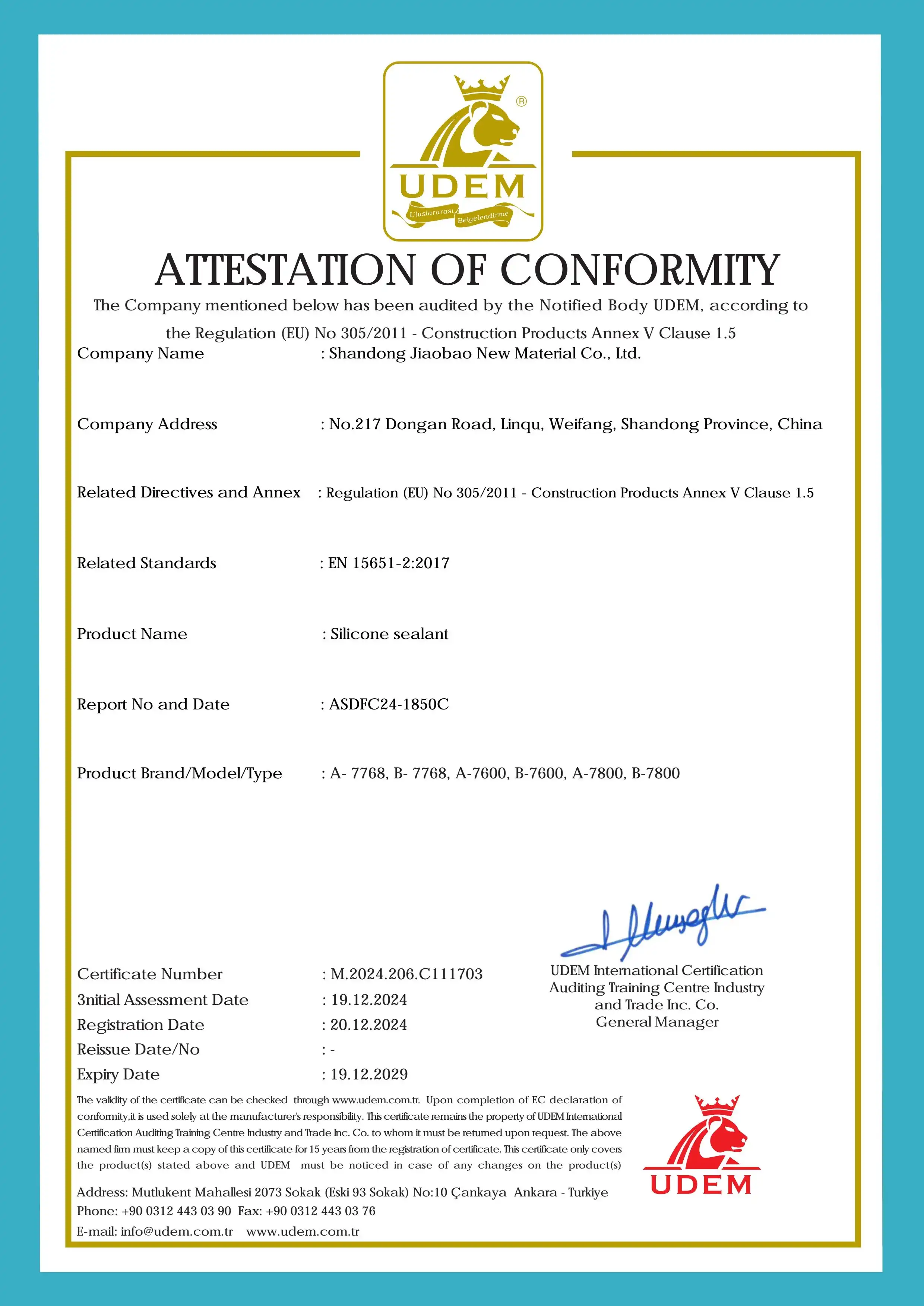
For quality seals to be made, they need partners who are just as skilled. Shandong Jiaobao New Material Co., Ltd. has been making neutral-cure and color-customized exterior silicone sealants for over 13 years. These sealants meet the strict needs of workers in building, manufacturing, and distribution. We keep our ISO and CE certifications as a company that makes outdoor silicone sealant to make sure that every batch passes international performance standards like ASTM C920 and GB 13477.
Our NP Silicone Sealant Exterior Grade has been tested and shown to work well in a wide range of difficult situations. It has a Shore A 30 hardness, can move 25% of the way, and stays stable at temperatures ranging from -50°C to +150°C. Our goods come in 300ml and 600ml sizes and come in standard colors like white, black, and grey. They can also be custom-matched to your RAL specs, giving you the options your projects need.
With production lead times of only one to two weeks and a variety of shipping choices by sea and land, you can keep your project plans on track. OEM and ODM features allow for private labeling and custom formulas that meet the needs of regional markets. If you have any problems with the quality of our goods during the 12-month shelf life, we will replace them or give you your money back. Email our expert team at dorashen@cnjiaobao.com to talk about your unique application needs, get performance samples, or look into ways to work together.

1. American Society for Testing and Materials. (2020). ASTM C920: Standard Specification for Elastomeric Joint Sealants. West Conshohocken, PA: ASTM International.
2. International Organization for Standardization. (2019). ISO 11600: Building Construction – Jointing Products – Classification and Requirements for Sealants. Geneva, Switzerland: ISO.
3. Building Sealing and Insulation Contractors Association. (2021). Guide to High-Performance Sealant Selection and Application for Commercial Construction. Arlington, VA: BSICA Publications.
4. Wolf, A.T. & Cleland-Host, C. (2018). Durability Study of Silicone Sealants in Building Applications: Twenty-Year Performance Analysis. Journal of Building Materials and Structures, 15(3), 234-251.
5. National Institute of Building Sciences. (2022). Whole Building Design Guide: Sealants and Caulking for Building Envelopes. Washington, DC: NIBS Technical Resources.
6. Chen, L., Martinez, R., & Thompson, K. (2021). Comparative Lifecycle Cost Analysis of Premium versus Economy Sealants in Commercial Curtain Wall Systems. Construction Economics Review, 28(4), 412-429.
November 16,2023
Enterprise Name
The sealant has very strong adhesion and performs well even on glass and aluminum. After curing, it remains flexible and shows no cracking. Perfect for our facade projects.
November 16,2023
Enterprise Name
Stable quality across batches. Our customers especially like the smooth application and consistent extrusion. It helps reduce installation time on site.
November 16,2023
Enterprise Name
I used it for bathroom sealing. Excellent waterproof performance and no mold issues so far. It's been holding up very well in humid conditions.
November 16,2023
Enterprise Name
The neutral silicone works well on sensitive materials without corrosion. Very suitable for industrial applications requiring stable performance.