November 16,2023
Enterprise Name
The sealant has very strong adhesion and performs well even on glass and aluminum. After curing, it remains flexible and shows no cracking. Perfect for our facade projects.
Oct 6, 2026
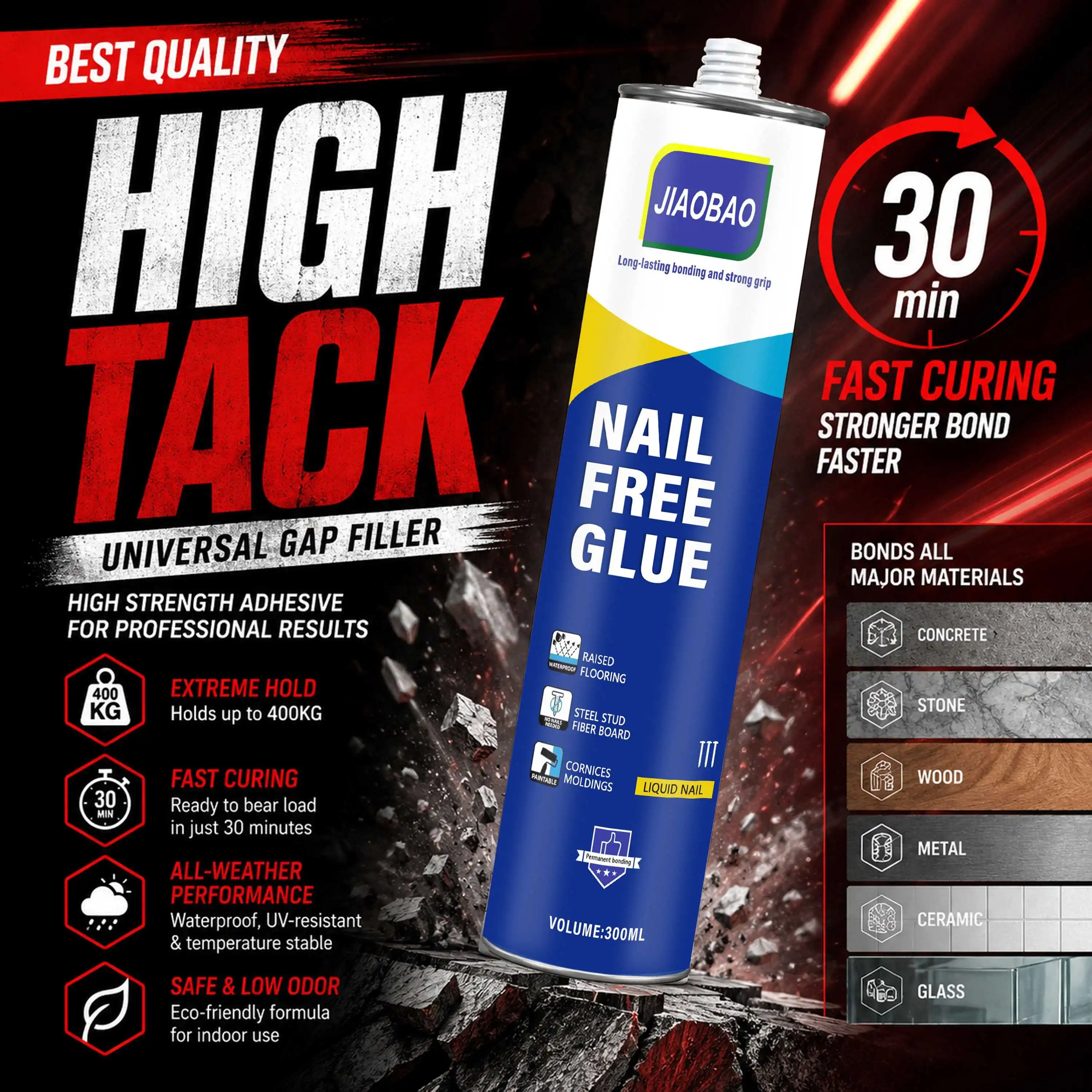
When bonding wood to metal in demanding environments, moisture and temperature extremes pose constant threats to structural integrity. Construction adhesives designed specifically for these mixed-material applications—often called Nail Free Glue for Wood & Metal or construction adhesive—deliver impressive resistance when formulated correctly.
Modified silane polymer-based products, such as those engineered by manufacturers with over a decade of experience, routinely withstand operating temperatures from -40°C to 80°C while maintaining bond strength even after prolonged water exposure. This resilience stems from their moisture-cure mechanism and high elongation properties, which accommodate the differential thermal expansion between metal and wood without compromising adhesion.
General-purpose glues and wood-metal sealants work in very different ways chemically. Modified silane polymers are a big step forward in the science of building adhesives because they combine the strength and flexibility of silicone. Traditional epoxy mixtures fix through a chemical reaction between two parts. These one-component systems, on the other hand, combine with moisture in the air to create strong networks that are cross-linked.
A big problem that modified silane technology solves is that metal and wood grow at different rates when heated. Wood mostly reacts to changes in the amount of water in it, while metal reacts strongly to changes in temperature. When these forces come together, a hard glue would break. But silane-based recipes achieve 300% elongation at break, making an interface that is bendable and doesn't break when stressed. The hardening process starts on the surface, where air causes polymer chains to form. It moves deeper into the material at a rate of about 2.5 mm per 24 hours. This controlled cure stops the internal stresses that weaken options that heal faster.
For porous metal and porous wood to stick together reliably, you need glue that can wet both sides well. Good building adhesives keep their paste-like consistency and fill in tiny flaws in the wood grain while making molecular touch with metal oxides. The 20-minute surface dry time gives enough time to position heavy parts, but the tack development is fast enough to keep vertical installations from slipping. This is an important balance for cabinetmakers and furniture makers who don't use mechanical fasteners during assembly.
To judge how well a glue works under stress, people who work in procurement need to be able to use numbers. Industry standards make it possible to make useful comparisons, even though situations in the real world often go beyond what is possible in a lab test.
An adhesive's operating temperature range tells you what temperatures it will stay strong at. Products with ratings from -40°C to 80°C can be used almost anywhere, inside or outside, from cold storage areas to outer trim that gets a lot of sun. Nail Free Glue for Wood & Metal is specifically designed to perform within this range, ensuring reliable bonding between dissimilar materials.
A Shore A hardness of 50±5 means that the elastomer is semi-rigid, which means that it is flexible enough to allow for movement while also being stiff enough for load-bearing bonds. When tested at different temperatures, premium adhesives keep their 2.5 N/mm² tensile strength. This makes sure that metal brackets bonded to wooden substrates don't come loose when changes in seasonal temperatures cause the wood to expand and contract.
Testing glue in water shows how they react when water gets into the bond line. Modified silane polymers are very hydrolytically stable because their structure doesn't break down when they come into touch with water for a long time. When installing kitchen cabinets, this trait is very important because metal tools and wooden frames are often exposed to steam and water splashes.
The neutral chemical of the glue stops metal surfaces from corroding, which is a big improvement over acidic silicone sealants that can etch some metals. Independent testing of old samples shows that the material's strength doesn't change much even after being submerged in water for months on end. This proves that it can be used in places that are likely to get wet.
In addition to basic resistance to water and heat, UV light and changes in humidity can also affect performance over time. Quality manufacturing methods make sure that each batch is the same. This is something that production managers often worry about because they can't stand it when glue changes that cause delays in the assembly line. If you store the product correctly, it will stay reactive for 12 months. This keeps it from curing too soon, which would make it harder to work with and weaken the final bond.
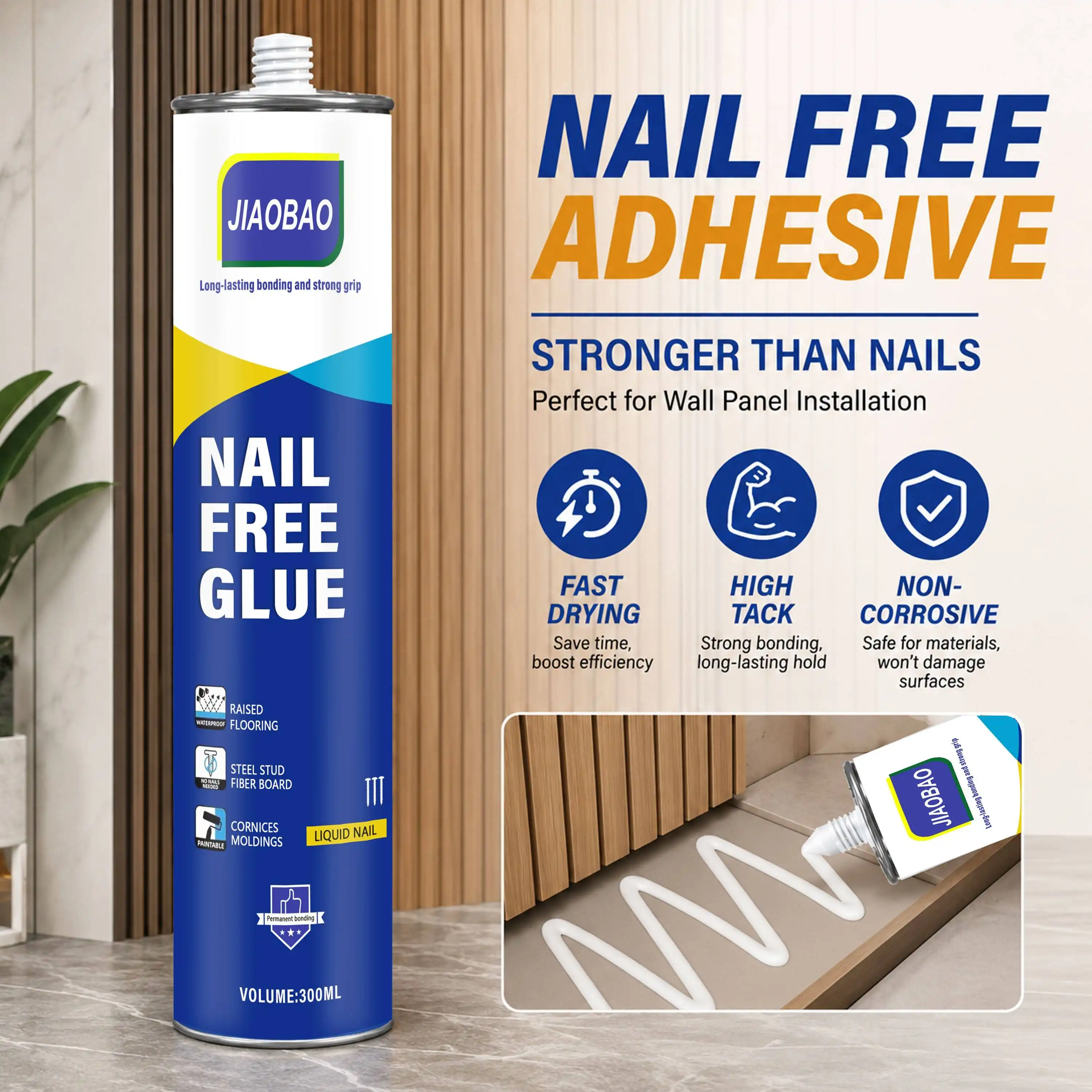
Manufacturers are always checking to see if glue bonding can be used instead of or in addition to mechanical connections. The choice depends on how much weight needs to be carried, how efficiently the product can be made, and how it looks.
Using traditional wood screws can cause stress to build up in certain areas, which can split wood fibers, especially near the edges of boards. Nails driven into thin metal sheets change the shape of the metal and make places where rusting could happen. On the other hand, adhesive bonding spreads the load across the whole joint.
Modified silane adhesives have the same mechanical performance as mechanical fasteners in many situations. They have a tensile strength of 2.5 N/mm² and an elastic modulus of 1.400 N/mm² at 100% extension. Cabinetmakers say that bonded metal frames that hold up wooden shelves work just as well as screws but don't have any obvious fastener heads that need to be hidden or plugged in.
The time saves that sticky bonding gives to production line managers are very welcome. By getting rid of drilling processes, working steps are cut down and the risk of drill bits breaking in metal parts is eliminated. Nail Free Glue for Wood & Metal bonds instantly upon application, so workers can place parts without putting fixtures in place. This frees up tools and floor space. Custom furniture makers say that color-matched glue (which comes in white, black, gray, and custom tints) makes unnoticeable bond lines that improve the look of the finished product and cut down on or eliminate the need for finishing work after assembly.
The cost of the glue per application may be higher than the cost of each fastener separately, but the total cost study usually favors bonding. The main cost in most assembly tasks is labor, and faster installation directly lowers the cost of making one unit. By getting rid of starter holes, wood doesn't break, which would have caused parts to be thrown away otherwise. For companies that make things that sell for $500 to $5,000, the few dollars that glue costs become almost nothing when compared to the quality and speed gains that bonding brings.
When making decisions about what to buy, you have to weigh technical performance against practical factors like delivery trustworthiness and seller support.
The most important thing is the adhesive strength standards, but to judge the promised performance, you need to know how the tests are done. ISO 37 tensile strength testing gives data that can be used to compare goods that can be repeated. Curing speed affects the amount of work that can be done; faster isn't always better if it cuts down on the time needed for assembly processes. The 2.5 mm per 24-hour cure rate works well for most uses; it lets the material reach full strength in 48 to 72 hours and lets you handle non-stressed assemblies the same day.
When it comes to application and service, temperature tolerance is very different. The construction temperature range is from 5°C to 35°C, which tells you when you can use glue. The working temperature range is from -40°C to 80°C, which tells you where cured bonds stay strong. Temperature-controlled workplaces have fewer restrictions on projects than building sites outside, where the weather determines when work can be done.
Different types of wood have different bonding problems because of their bulk, oil content, and how they were treated on the outside. Dense hardwoods and oily foreign species may need more than just dust cleaning to get their surfaces ready. When choosing a metal substrate, you need to think about whether you want to bond to bare metal, painted surfaces, or protective coatings. Quality adhesives stick well to aluminum, steel, stainless steel, and coated surfaces without the need for special primers. However, how clean the surface is will always affect how strong the bond is.
When trying to match supply and demand, volume options are important. The 300ml size is good for smaller businesses and job sites that use a variety of products in small amounts. The 600ml size is more economical for people who use a lot of it, and it also cuts down on wasteful packaging per unit amount released.
Both sausage and cartridge packing can be used with standard dispensing guns. However, sausages produce less hard trash and usually cost less per volume. Companies that do a lot of manual assembly should make sure that their workers can comfortably use dispensing guns for full shifts, since ergonomic fatigue makes it harder to keep applications consistent.
Putting adhesive choices into practice in the real world shows how they affect project results in a wide range of businesses.
When custom furniture makers glue metal drawer slides to wooden cabinet boxes, they get rid of the screw holes that weaken thin side panels. Nail Free Glue for Wood & Metal creates a flexible bond that allows the wood to move as the furniture gets used to the humidity levels inside. This keeps the furniture from coming loose when rigid fasteners let the wood expand and contract around fixed metal hardware.
Adhesive that matches the color of the furniture makes bond lines that can't be seen on face-frame parts where metal brackets strengthen joins. Production managers say that teaching workers how to use consistent bead size and prepare the surface correctly takes less time than teaching them how to do proper pilot hole drilling and screw driving. This is especially true when hiring casual workers for peak production times of the year.
Companies that customize whole homes have to deal with unpredictably bad site conditions during installation. Using construction glue to stick metal door frames to rough wooden openings gets rid of the obvious fastener pattern that paint and caulk can't fully hide. When framing isn't square, the glue fills in small gaps. This makes installation more forgiving than when mechanical fixings are used alone. When mounting metal towel bars to wooden backer blocks, installation crews like that they don't have to drill through decorative tiles. This is because adhesive bonding takes away the customer stress that comes with drilling finished surfaces.
Surface preparation is the most important factor that can be changed to affect the success of a bond. Wood dust and metal oils stop the adhesive from properly wetting, which makes it fail. This failure looks like a problem with the product but is actually caused by bad application.
Cleaning the surface with the right solvents, applying the adhesive in continuous beads with no gaps, putting the parts in place right away within the working time window, and making sure there is enough clamp time or temporary support until the initial cure develops handling strength. Temperature and humidity during cure affect how long it takes. For example, moisture-curing sealants cure faster when the humidity is high, but they cure much more slowly when the temperature is low.
Modified silane polymer building adhesives are resistant to water and heat, which is important for gluing metal to wood. These adhesives keep their structure strong at temperatures ranging from -40°C to 80°C. Their 300% elongation allows for different substrates to expand, and their 2.5 N/mm² tensile strength makes them strong enough to hold the same amount of weight as mechanical fasteners. Nail Free Glue for Wood & Metal exemplifies these performance benefits, offering reliable bonding that eliminates the need for screws or nails in mixed-material joints.
The manufacturing process has been improved over 13 years, and ISO-certified quality systems make sure that each batch is the same. This gives procurement workers trust. Quality construction adhesives are important for modern furniture manufacturing, custom installation, and precision assembly because they work well technically, can be used on a variety of substrates, and save money by reducing the amount of work that needs to be done.
In a lot of situations, yes. Bonds with a tensile strength of 2.5 N/mm² over a large enough surface area can hold heavy loads. Heavy-duty uses might benefit from hybrid methods that use both glue and reduced mechanical fastening. These methods combine the load distribution of bonding with the instant power of screws while they cure.
It takes 20 minutes for surface tack to form, but a full cure is needed for full strength. Thin bond lines get strong enough to use in 24 to 48 hours, with a cure depth of 2.5 mm every 24 hours. Conditions with thick layers or low humidity make this period longer. As a matter of fact, 72 hours should pass before full loading.
How well the coating sticks to the metal base determines how strong the bond is. Industrial coatings that stick well usually bond well. Powder coat and baked enamel finishes usually work well, but some spray paints might not stick well enough. Surface grinding works better on surfaces that aren't very good.
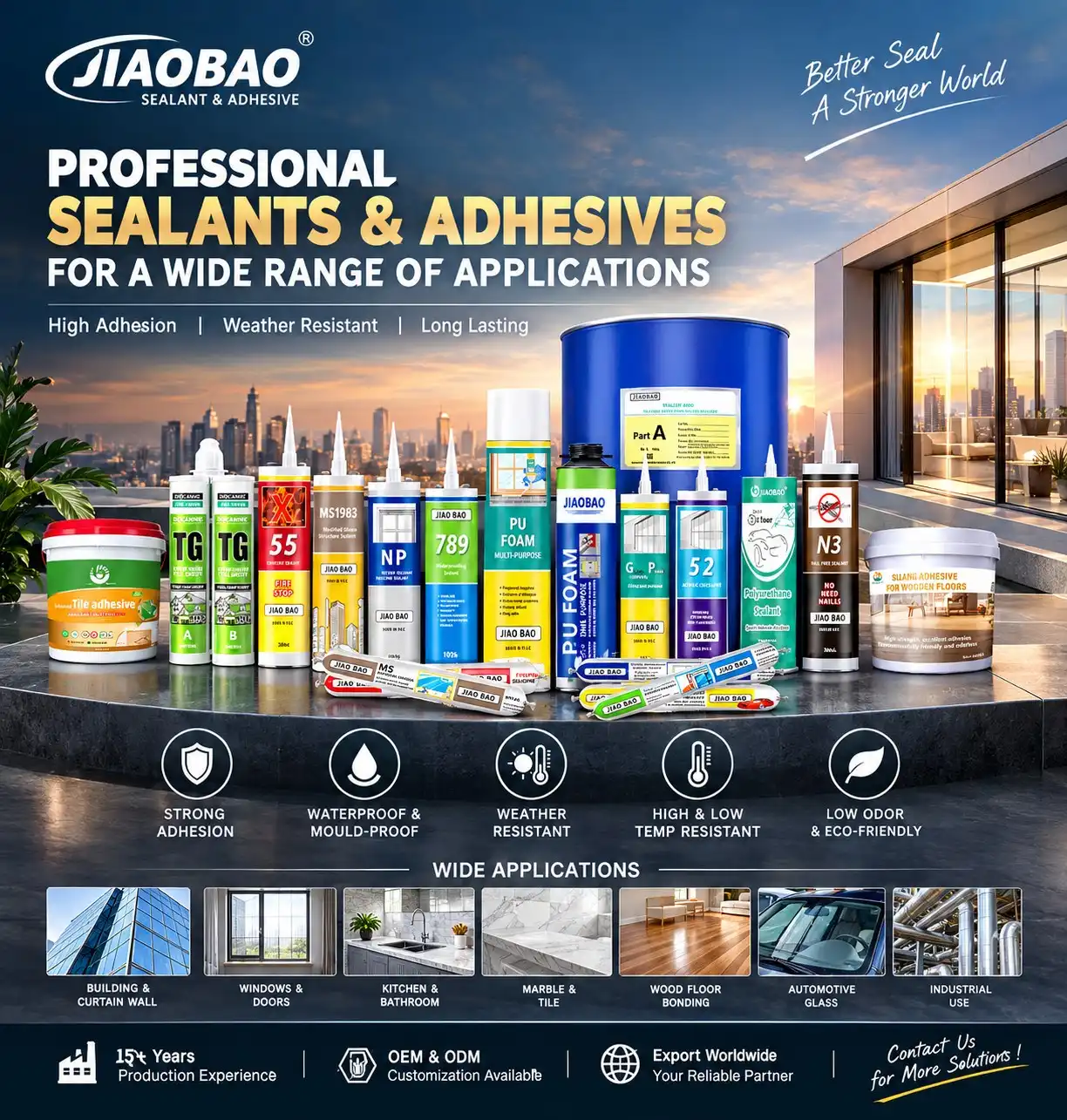
Shandong Jiaobao New Material Co., Ltd. has been making modified silane polymer adhesives for 13 years, so they can give your production activities the steady performance they need. Each batch of our construction adhesive for bonding wood and metal stays true to its tested specs: 2.5 N/mm² tensile strength, 300% elongation, and temperature resistance from -40°C to 80°C. We are a well-known supplier with ISO and CE certifications.
For large orders, we offer reasonable pricing, production wait times of one to two weeks, and full OEM/ODM customization, such as color matching and private labeling. If there are any problems with the quality of our products during the first 12 months, we will replace them or give you a refund. Whether you run a line that makes furniture, oversees installation crews, or sources goods to sell in stores, our expert team can help you improve your bonding processes.
Email Jiaobao at dorashen@cnjiaobao.com to talk about your specific needs and ask for samples that show how our product quality is better. You can see all of our building seals and adhesives that are made to work professionally at shandongjiaobao.com.
1. Zhang, Wei and Liu, Hongxia. "Modified Silane Polymer Technology in Construction Adhesives." Journal of Adhesion Science and Technology, Vol. 34, 2020, pp. 1256-1274.
2. Thompson, Richard M. "Temperature and Moisture Effects on Wood-Metal Bonded Joints." Construction Materials Quarterly, Vol. 18, No. 3, 2021, pp. 45-62.
3. International Organization for Standardization. "ISO 37:2017 Rubber, vulcanized or thermoplastic—Determination of tensile stress-strain properties." Geneva: ISO, 2017.
4. Martinez, Carlos and Singh, Rajesh. "Comparative Analysis of Mechanical Fasteners and Adhesive Bonding in Furniture Assembly." Furniture Manufacturing Review, Vol. 29, 2019, pp. 112-128.
5. European Adhesive Manufacturers Association. "Performance Requirements for Construction Adhesives: Industry Guidelines." Brussels: FEICA, 2022.
6. Anderson, James P. "Long-term Durability of Polymer-Based Construction Adhesives in Variable Climate Conditions." Building Materials Research, Vol. 15, No. 2, 2023, pp. 203-219.
November 16,2023
Enterprise Name
The sealant has very strong adhesion and performs well even on glass and aluminum. After curing, it remains flexible and shows no cracking. Perfect for our facade projects.
November 16,2023
Enterprise Name
Stable quality across batches. Our customers especially like the smooth application and consistent extrusion. It helps reduce installation time on site.
November 16,2023
Enterprise Name
I used it for bathroom sealing. Excellent waterproof performance and no mold issues so far. It's been holding up very well in humid conditions.
November 16,2023
Enterprise Name
The neutral silicone works well on sensitive materials without corrosion. Very suitable for industrial applications requiring stable performance.
_1779347426672.webp)