November 16,2023
Enterprise Name
The sealant has very strong adhesion and performs well even on glass and aluminum. After curing, it remains flexible and shows no cracking. Perfect for our facade projects.
Sep 15, 2026
MS sealant high bonding strength is no longer a secondary option in structural assembly — it has become a serious contender against traditional mechanical fasteners. With tensile strength reaching approximately 2.2 MPa and elongation at break of around 400%, modern modified silane adhesive sealants distribute stress evenly across bonded surfaces rather than concentrating it at discrete points. In many non-extreme-load scenarios, this performance profile is sufficient to fully replace screws, rivets, and bolts — while simultaneously providing sealing, vibration dampening, and corrosion resistance in a single application.
Modified silane (MS) polymer sealants harden when they come in contact with water. The silane end-groups break down and condense when they come into contact with airborne humidity, creating a thick, stretchy polymer network. It is much safer than isocyanate-based polyurethane glue because this process doesn't give off any harmful by-products. Under normal conditions, the cure rate is about 3.5 mm per day, and the tack-free window is 25–40 minutes in the summer and 15–30 minutes in the winter. These are useful windows that work for most production and construction schedules.
MS-based structural adhesives are different from rigid ones like epoxy because they can usually bond different types of materials together without a primer. For example, they can bond aluminum to steel, glass to PVC, and concrete to fiber composites. A Shore A hardness of about 45 means that the sealant is strong enough to handle bending loads but flexible enough to adapt to changes in temperature. With a solid content of about 99% and no solvent emissions, this chemistry meets the low-VOC standards that are being required more and more in commercial construction and industrial manufacturing settings in the US.
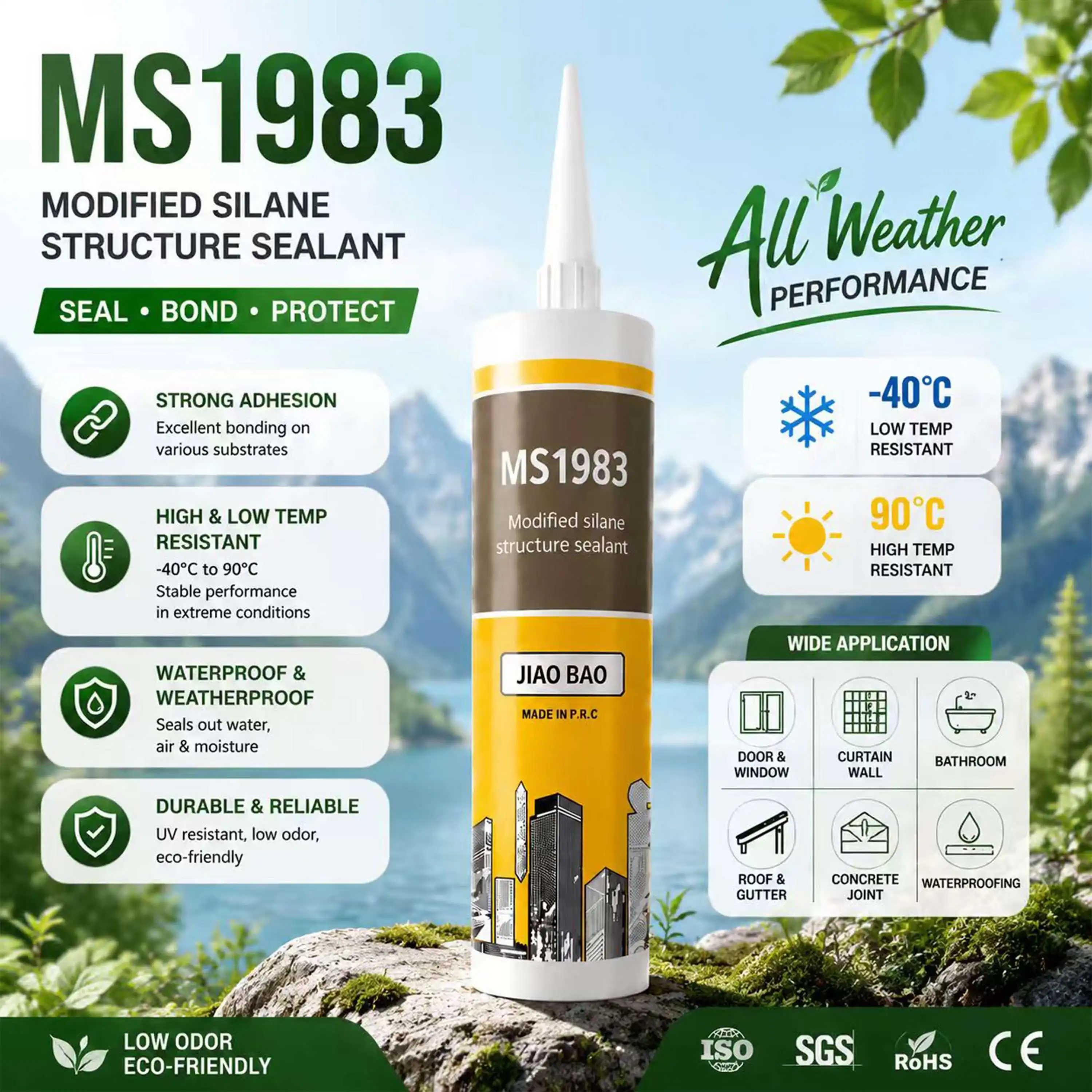
Screws, bolts, and nails have been used successfully in business for many years. But at each entry point, they create localized stress concentrations, which is a known place where metal wear and corrosion can start. When mechanical fasteners are used to place thin-gauge aluminum cladding or composite panel systems, they can crack the substrates. Long-term galvanic rust between metals that are not the same at the points where fasteners touch adds to the cost of upkeep over the life of a building or vehicle, making MS sealant high bonding strength a more reliable alternative.
Load is evenly spread along the whole bond line when structural elastic bonding is used. A flexible adhesive bond can handle cyclic stress without breaking without fatigue in situations where there is dynamic vibration, like in train cars, bus panels, and curtain wall systems. Published research on adhesive bonding consistently shows that lap shear values above 2.0 MPa are enough for non-primary structural members in construction and vehicle body applications. Because silane-modified polymer seals can hold up to 400% extension at break, the bond can withstand a lot of substrate movement before it breaks.
When procurement managers look at lifecycle costs, they should think about three useful things:
These practical benefits add up over the life of a building and often outweigh the difference in cost per unit between adhesive and mechanical joining methods at the start.
Using a structural elastic glue to attach side panels and floors to metal frames gets rid of the need for rivet lines that look bad and make noise when moving things around. This is done in bus bodies, rail car interiors, and specialty vehicle assembly. Rigid screws always have trouble with the difference in thermal expansion between aluminum skins and steel frames. The sealant's flexibility lets it work in temperatures ranging from -40°C to 120°C.
Putting together elevator carriages and flooring for shipping containers both need solutions that can bond and seal against salt spray and moisture at the same time. MS sealant high bonding strength does both jobs without the need for extra waterproofing layers. In ventilated façade cladding, heavy stone, ceramic, or HPL panels bonded invisibly to aluminum subframes give the building a cleaner look, and the sealant's flexibility handles wind load cycling and seasonal thermal movement in a way that visible rivets and brackets simply can't, both in terms of how they look and how they work.
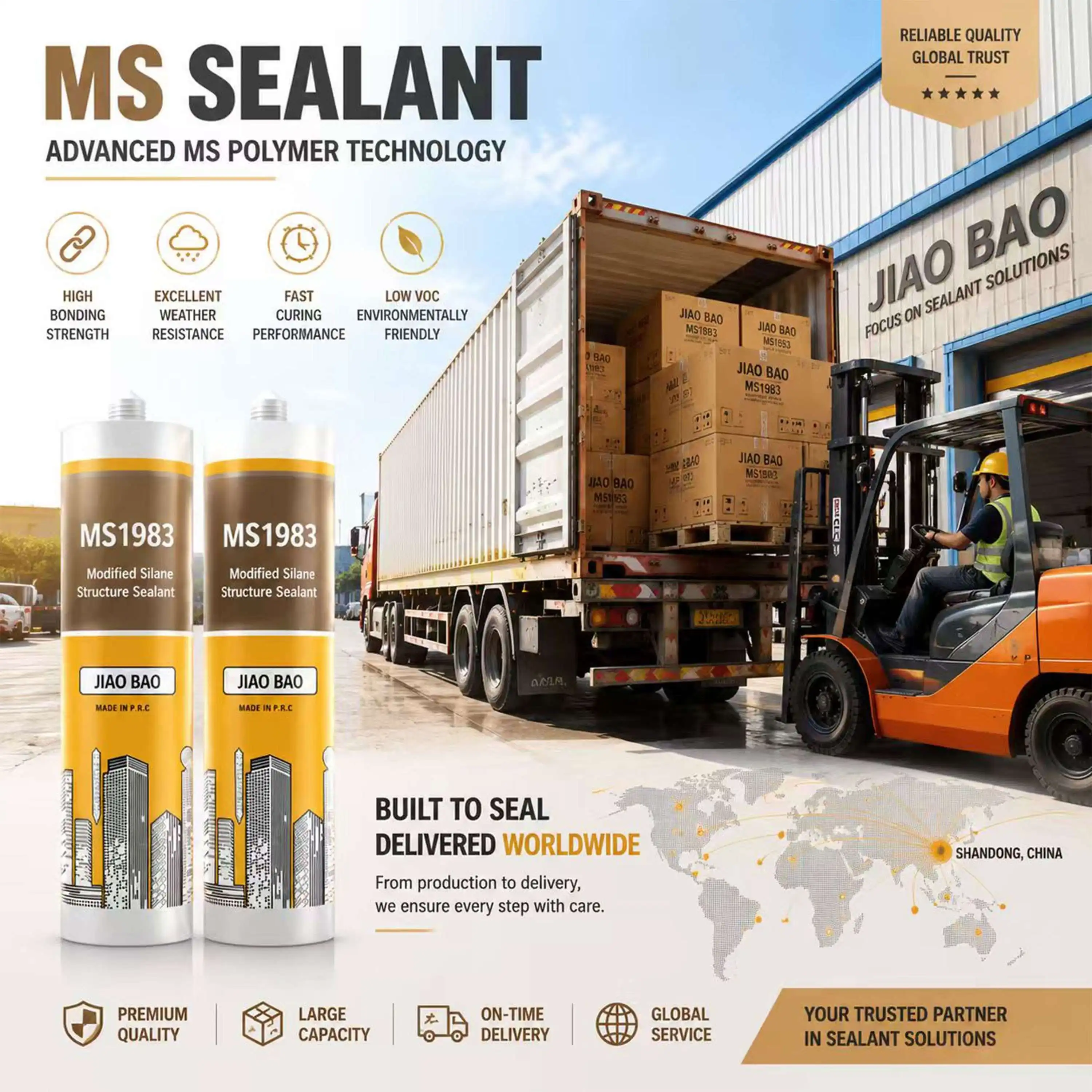
Many well-known brands, like Sika, Henkel Teroson, and 3M, make structural MS adhesives that have tensile strengths between 2.5 MPa and 5.0 MPa according to ASTM D412. This shows that the technology class works well enough to replace structural bolts. Jiaobao's RTV MS Sealant has a tensile strength of about 2.2 MPa and an elongation of 400%. This makes it competitive in the market for architectural sealing and light structural bonding.
One big difference between MS sealants and polyurethane alternatives is how well they stand up to UV light. Long-term UV exposure breaks down polyurethane adhesives, causing surface chalking and less elongation, which is a big problem for uses on outdoor walls. MS polymer seals keep their stretchy qualities even when exposed to UV light, which helps the bond last longer in harsh outdoor circumstances.
When looking for structural bonding sealants, business-to-business buyers should make sure of four things before choosing a supplier: ISO and CE certification coverage, availability of English-language TDS and SDS documentation, confirmed batch consistency data from third-party testing, and OEM/ODM packaging capability if private-label deployment is needed. Jiaobao's RTV MS Sealant comes in 300 ml cartridges and 600 ml sausage packs, and can be white, black, gray, or a custom color. It has a shelf life of 12 months and a production lead time of 1–2 weeks, which are useful details for planning purchases across different construction project timelines.
How well the surface is prepared affects whether a strong adhesive works as expected or fails too soon at the interface. Before applying MS sealant high bonding strength, the substrate surface must be clean, dry, and free of oils, dust, and other loose materials. Mechanical abrasion followed by solvent wiping makes adhesion much better on non-porous surfaces like anodized aluminum or stainless steel. The application should happen between 5°C and 40°C, and the relative humidity should be above 40% to make sure there is enough water for drying.
Applying a consistent bead of the same thickness—usually 3–8 mm for structural uses—makes sure that the load is spread out evenly along the bond line. To keep air from getting trapped, tool the bead right away after applying it. As part of quality assurance, cohesive failure verification should be done. When a healed bond is peeled off of a substrate, the sealant body should tear before the adhesive interface breaks, showing that the substrate is fully adhered. By checking bonded parts every 12 months, you can find any problems with UV damage or base movement before they affect the structure's ability to do its job.
MS sealant high bonding strength can be used instead of mechanical bolts in certain industry and building settings because they are more practical and technically sound. They get rid of the risk of corrosion at entry points, spread stress more evenly, and seal and join in one material at the same time. Structural elastic adhesives improve performance in situations where standard fastening methods can't be used because of changing loads, temperature, or looks. When procurement workers and engineers are planning their next bonding standard, MS sealant with its high bonding strength should be seriously considered as a main way to join things.
Not all the time. Mechanical fasteners are still the best way to connect main structural members that have to handle heavy tensile or compressive loads. Examples include structural steel connections and concrete anchor systems. As long as the shear and peel loads are within the rated capacity of the adhesive, MS sealant substitution works best for secondary structural bonding, panel assembly, and facade cladding.
Depending on the temperature, skin forms in 15 to 40 minutes. At 23°C and 50% relative humidity, full mechanical strength usually develops in 24 to 72 hours. Within a few hours, handling strength that is good enough for moving usually comes through, but structural loading shouldn't happen until the concrete is completely cured.
Not at all. MS polymer sealants don't stain or bleed into porous materials like marble or granite because they don't contain silicone oils. This is a big benefit over regular silicone sealants in high-end building uses.
The service temperature range is from -40°C to 120°C. The rubbery qualities stay the same at these temperatures; they don't break down at low temperatures or soften at high temperatures.
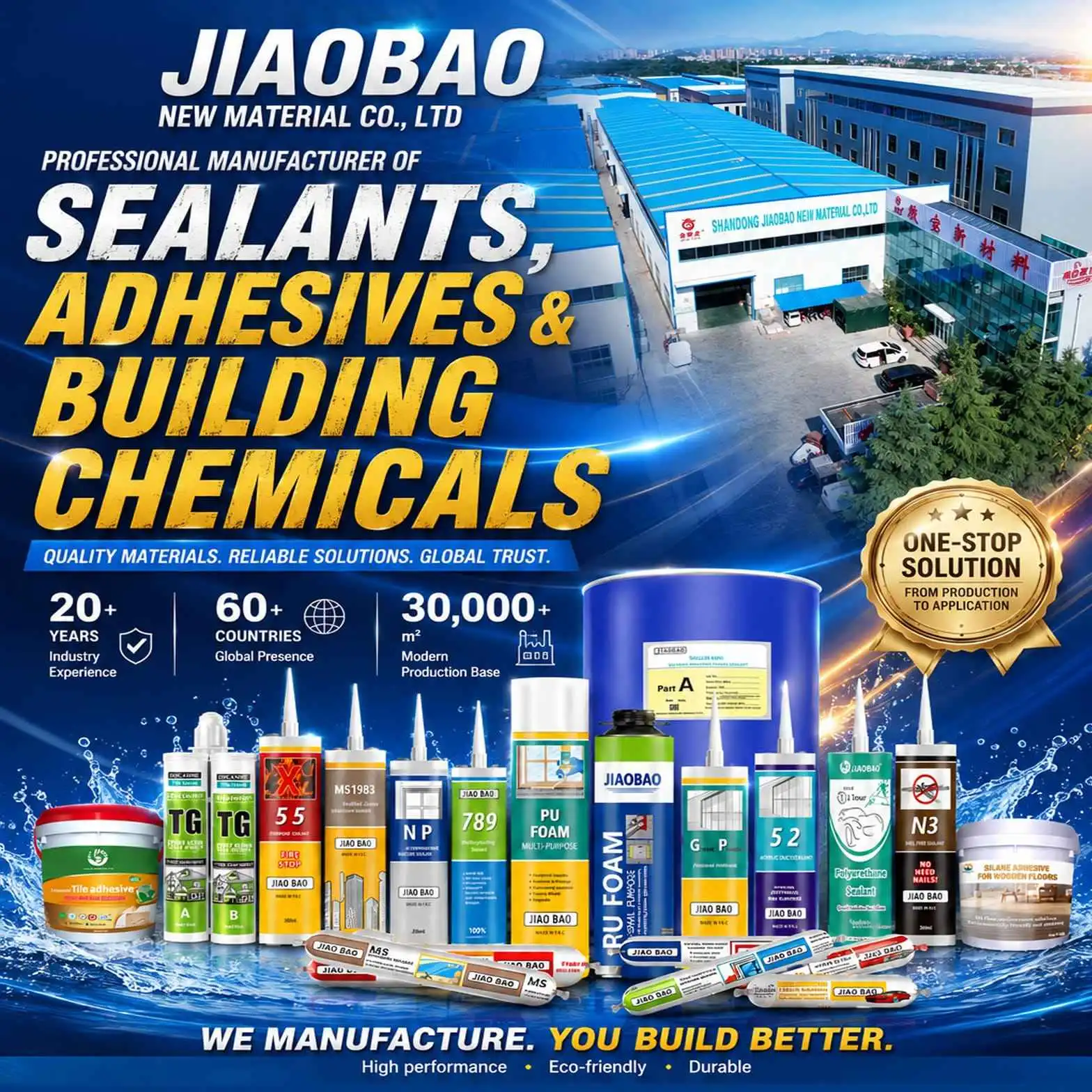
Jiaobao has been making things for over 13 years and is ISO and CE-certified, so they can consistently make high-performance gluing solutions. Our RTV MS Sealant can be bought in bulk by businesses and comes in custom colors and cartridge or sausage shapes. It has a shelf life of 12 months and a lead time of 1 to 2 weeks. Email dorashen@cnjiaobao.com to get samples or information on OEM packaging.
1. Petrie, E. M. Handbook of Adhesives and Sealants. McGraw-Hill, 2007.
2. Cognard, P. Handbook of Adhesives and Surface Preparation: Technology, Applications and Manufacturing. Elsevier, 2006.
3. Brockmann, W., Geiß, P. L., Klingen, J., & Schröder, K. B. Adhesive Bonding: Materials, Applications and Technology. Wiley-VCH, 2008.
4. da Silva, L. F. M., Öchsner, A., & Adams, R. D. Handbook of Adhesion Technology. Springer, 2011.
5. Wolf, A. T. "Durability of Silicone Sealants." Construction and Building Materials, Elsevier, 2004.
6. Loctite. Design Guide for Bonding Plastics and Metals with Structural Adhesives. Henkel Corporation, 2011.
November 16,2023
Enterprise Name
The sealant has very strong adhesion and performs well even on glass and aluminum. After curing, it remains flexible and shows no cracking. Perfect for our facade projects.
November 16,2023
Enterprise Name
Stable quality across batches. Our customers especially like the smooth application and consistent extrusion. It helps reduce installation time on site.
November 16,2023
Enterprise Name
I used it for bathroom sealing. Excellent waterproof performance and no mold issues so far. It's been holding up very well in humid conditions.
November 16,2023
Enterprise Name
The neutral silicone works well on sensitive materials without corrosion. Very suitable for industrial applications requiring stable performance.
_1779347426672.webp)