November 16,2023
Enterprise Name
The sealant has very strong adhesion and performs well even on glass and aluminum. After curing, it remains flexible and shows no cracking. Perfect for our facade projects.
Sep 14, 2026
GP acetic silicone sealant for construction is a one-component, moisture-curing elastomeric adhesive engineered to seal gaps around doors, windows, facades, and wet areas. It cures by releasing acetic acid upon contact with atmospheric moisture, forming a permanently flexible, waterproof rubber seal. With a tack-free time of just 15 minutes, a tensile rate exceeding 300%, and a maximum bond strength of 1.5 MPa, this acidic silicone sealant delivers reliable performance on non-porous substrates including glass, anodized aluminum, and glazed ceramics — making it a practical, cost-effective choice for residential and commercial building projects alike.
A one-part RTV (Room Temperature Vulcanizing) silicone paste is what GP acetic silicone sealer is mostly made of. This paste sticks together when it comes in contact with humid air. It is the acetoxy curing system that makes acetic acid, which gives things the smell of vinegar. Once the seal is fully set, this smell will never come back.
It has been proven that Jiaobao's acidic silicone sealer works like this:
If the glue strength is up to 1.5 MPa, it can be used for glazing and artistic joints.>300% tensile strength; base can change size and shape a lot.- Service Temperature Range: -40°C to +150°C—works well in all weather
The item can be kept for a year and is safe to use if stored correctly.
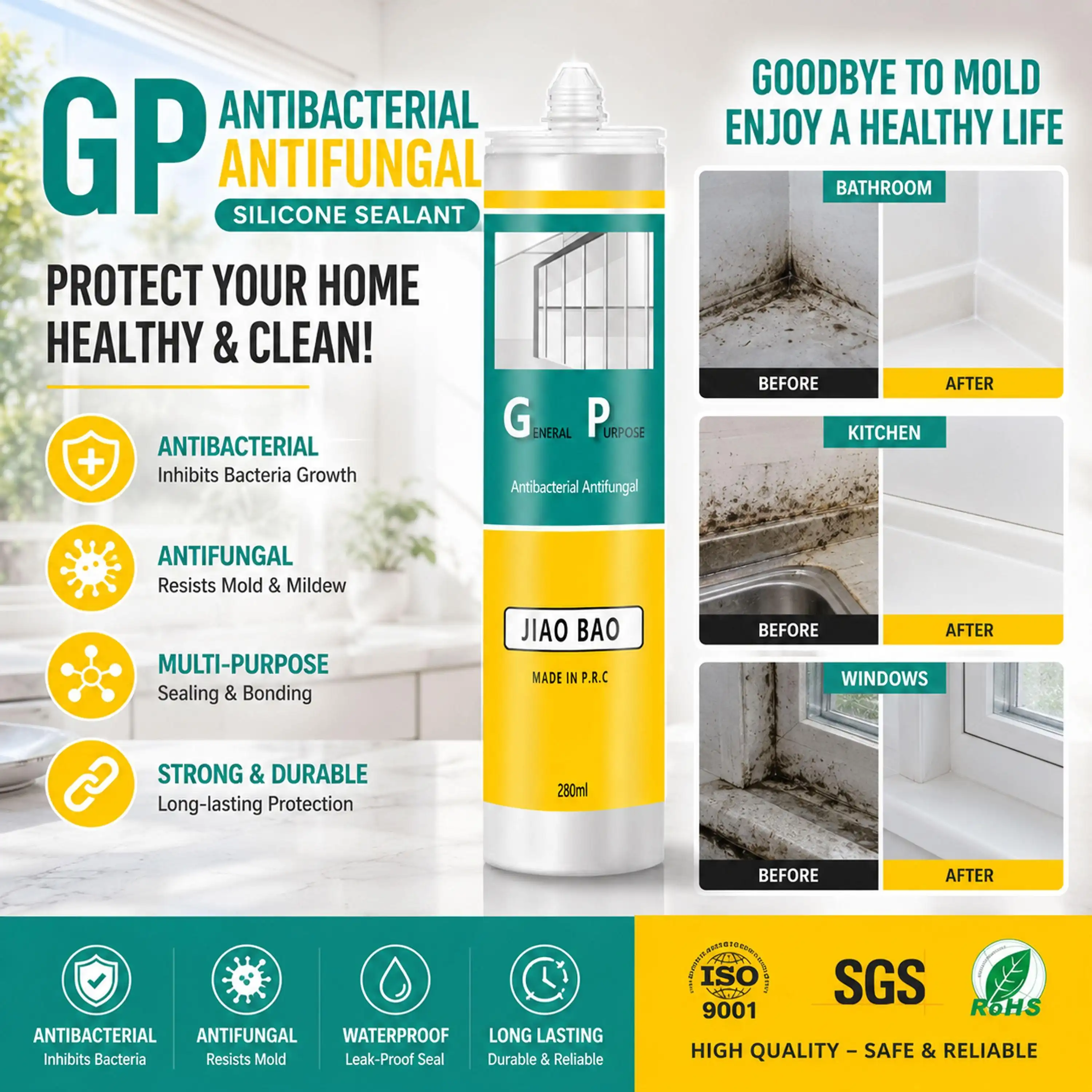
When makers and buyers know where this sealant works best, they can find the right product without having to spend a lot of money on more specialized ones. To stick quickly and stay strong in bad weather, acetic silicone works best on flat, smooth surfaces that don't have pores.
It's mostly used to cover the edges of door and window frames made of metal or UPVC. The sealant hardens quickly, which helps glass jobs go quickly. It also doesn't chalk or shrink after years of being outside because it is UV stable. The bead is used to seal the butt gaps between glass panels in curtain walls and storefronts, where it's important that the glass is clear. GP acetic silicone sealant for construction is designed for these glazing and frame-sealing applications, combining fast cure with long-term outdoor durability.
This caulk goes around sinks, tubs, and shower stalls in bathrooms and kitchens to seal off the edges. Good ones have fungicides in them that stop mildew from growing in places that stay wet for a long time. Because cured silicone is elastomeric, joints don't break when they are heated and cooled every day with hot water.
Acetic silicone isn't just used for glass by people who build envelopes. It's also used to seal the edges of skylights, air conditioners, and the flanges on metal pipes. To save energy, an airtight seal is very important in HVAC systems. This type of seal can handle changes in temperature and pressure. When pipes or cables leave the building, it keeps water out of the roofing assemblies where those parts meet.
Remember that you shouldn't use acetic silicone on surfaces that are alkaline, like natural stone, concrete, or mortar. These things don't stick together when acetic acid mixes with them, and the medium may get damaged. In that case, neutral cure silicone is the best thing to use.
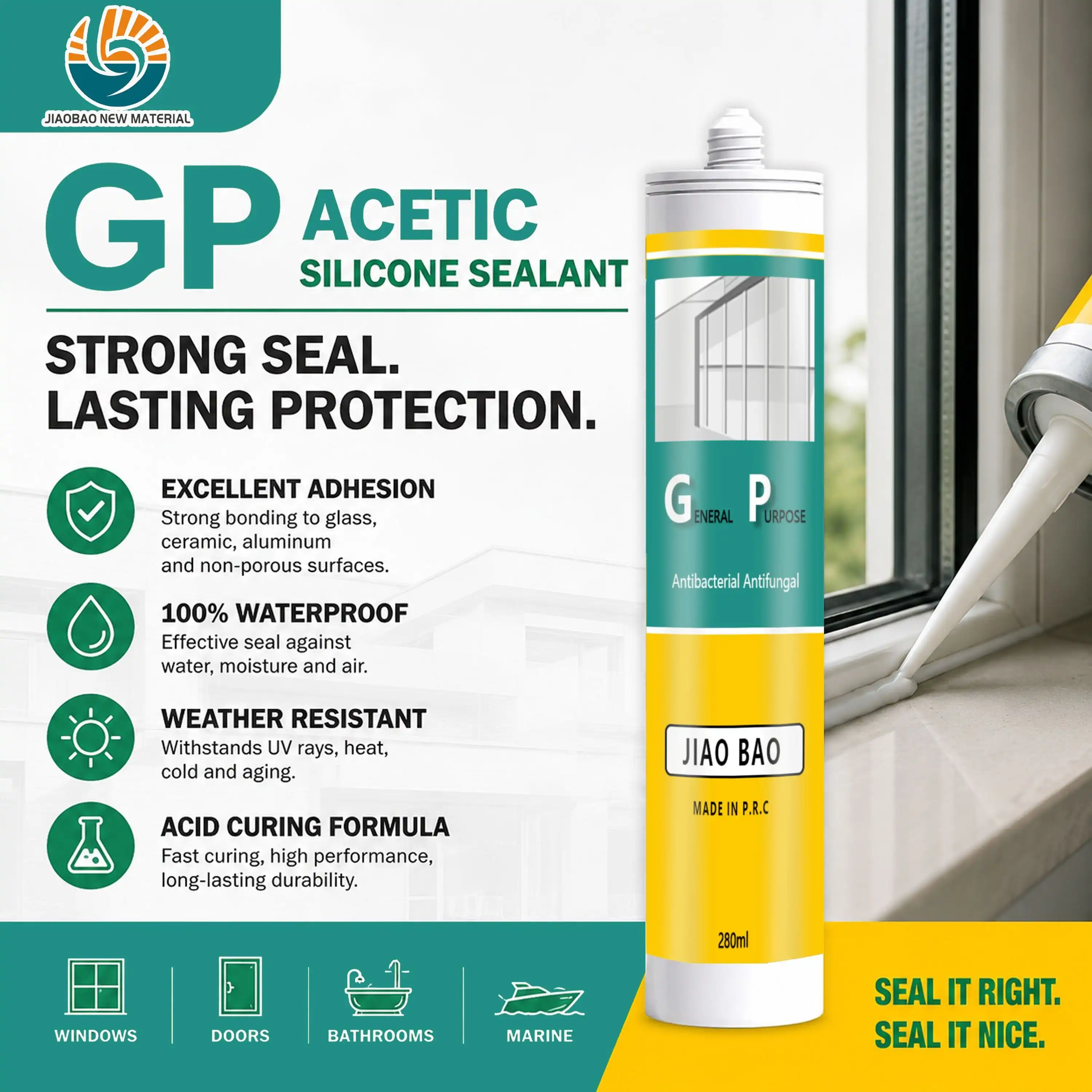
Purchasing managers often look at polyurethane, neutral silicone, acrylic, and acetic silicone next to each other. Each one delivers a different set of results.
Neutral cure silicone costs more and takes longer to set than acetic silicone. It also doesn't work with as many surfaces. When marble, copper, zinc, and concrete mix with acid, it's best to use neutral silicone. Acetic silicone sealants are better at standing up to UV light and weather than polyurethane coatings. The fact that polyurethane can be put over is a big plus when finishing is needed. Plus, acrylic seals don't smell bad and can be painted over. But, they shrink over time and don't bend as well as silicone does. You can find acetic silicone in the middle. It's cheap, cures quickly, and lasts a long time as long as the substrate doesn't matter. GP acetic silicone sealant for construction occupies this practical middle ground, delivering speed, cost efficiency, and weather resistance for compatible substrates.
How well the sealant is put on determines whether it works as planned or fails too soon. You can't skip getting the surface ready.
The base needs to be dry, clean, and free of any dust, oil, or sealant that is still on it. If the surface is wet, it can mess up the bonding process and the two pieces will come apart right away. Make a 45-degree cut in the cartridge tip so that it fits the joint's width once the surface is ready. Then, use a caulking gun to make a band that goes all the way around. The tack-free window lasts for about 10 to 15 minutes. Use a tool to smooth the bead so that it touches both joint faces all the way.
People putting on the sealant should do so in well-ventilated areas because the acetic acid mist can make the lungs a little itchy before the sealant sets. As a normal safety step, you should wear gloves and eye protection. When you throw away empty cartridges, make sure you follow the rules in your area. Most of the time, cured silicone trash is safe.
Buyers around the world should put seller honesty above price when they are looking for building sealants. A cheap sealant with a lot of solvents may shrink a lot after it's been used, leaving holes that let water in. Good GP acetic silicone seals should shrink by less than 5%. This means they have a lot of silicone polymer in them. GP acetic silicone sealant for construction with low shrinkage and high polymer content is what protects a project from callbacks and water damage.
These are the most important things to look for in a company that sells GP acetic silicone sealant:
If a distributor wants to make their own brand, they should ask the manufacturer if they can make private-label packaging and formulations in different colors.
GP acetic silicone sealant remains one of the most practical and widely deployed sealing materials in construction. Its fast tack-free time, strong bond strength, and long-term weather resistance make it a reliable workhorse for window and door installations, glazing systems, and general building envelope sealing. Choosing the right formulation and a credible supplier directly impacts project quality, rework costs, and client satisfaction. For B2B buyers, the investment in proper evaluation upfront pays dividends through consistent, long-lasting results on site. GP acetic silicone sealant for construction sits at the center of this value proposition, delivering proven performance where it matters most.
No. The acetic acid released during curing reacts with alkaline substrates like concrete, cement, and mortar, causing adhesion failure and potential surface corrosion. Neutral cure silicone is the appropriate choice for those materials.
The vinegar odor is a natural byproduct of the acetoxy curing mechanism. It indicates the sealant is actively crosslinking. The smell dissipates completely once curing is finished.
Standard silicone sealants do not accept paint adhesion once cured. If painting over the joint is necessary, apply paint to the surrounding surface before sealing, or select a modified polymer sealant designed for paintable applications.
Noticeable shrinkage usually signals a low-quality formulation containing excessive solvents or plasticizer extenders. A premium-grade acidic silicone should contain close to 100% silicone polymer and show minimal joint volume loss after curing.
No. The substrate must be clean and fully dry. Moisture present at the bond line interferes with adhesion and can cause immediate seal failure.
Jiaobao has supplied certified construction sealants to global markets since 2013, with ISO and CE-compliant products, a 1–2 week lead time, and full OEM/ODM support. Whether you need a GP acetic silicone sealant manufacturer for bulk wholesale orders or private-label customization, our team is ready to assist. Contact us today at dorashen@cnjiaobao.com to request samples or a competitive quote.

1. ASTM C920: Standard Specification for Elastomeric Joint Sealants — ASTM International, 2022.
2. ISO 11600: Building Construction — Jointing Products — Classification and Requirements for Sealants — International Organization for Standardization, 2020.
3. Handbook of Sealant Technology — K.L. Mittal & A. Pizzi, CRC Press, 2009.
4. Silicones in Industry: Applications and Performance — Wacker Chemie AG Technical Report, 2018.
5. Construction Sealants: Properties, Applications, and Performance — Building Research Establishment (BRE), 2015.
6. ASTM C794: Standard Test Method for Adhesion-in-Peel of Elastomeric Joint Sealants — ASTM International, 2021.
November 16,2023
Enterprise Name
The sealant has very strong adhesion and performs well even on glass and aluminum. After curing, it remains flexible and shows no cracking. Perfect for our facade projects.
November 16,2023
Enterprise Name
Stable quality across batches. Our customers especially like the smooth application and consistent extrusion. It helps reduce installation time on site.
November 16,2023
Enterprise Name
I used it for bathroom sealing. Excellent waterproof performance and no mold issues so far. It's been holding up very well in humid conditions.
November 16,2023
Enterprise Name
The neutral silicone works well on sensitive materials without corrosion. Very suitable for industrial applications requiring stable performance.
_1779347426672.webp)