November 16,2023
Enterprise Name
The sealant has very strong adhesion and performs well even on glass and aluminum. After curing, it remains flexible and shows no cracking. Perfect for our facade projects.
Jul 31, 2026
Heavy duty mounting adhesive solutions, particularly those leveraging advanced modified silane polymer technology, deliver transformative advantages across construction, manufacturing, and distribution sectors. Nail Free Glue Heavy Duty represents a sophisticated alternative to mechanical fastening, offering exceptional tensile strength, material versatility, and operational efficiency. These adhesives eliminate surface damage, reduce installation time, and provide invisible bonds that preserve aesthetic integrity while maintaining structural performance across temperature ranges from -40°C to 80°C. With a maximum tensile strength of 2.5 N/mm² and 300% elongation at break, modern formulations address critical industry demands for reliability, compliance, and cost-effectiveness in both project-based procurement and high-volume manufacturing environments.
Modified silane polymers are a big step forward in the technology used for bonding. These mixtures combine the long-lasting properties of silicone with better bonding across a wide range of substrates. These adhesives spread the load evenly across the bonded surface, unlike traditional fasteners that put stress in certain places. The moisture-curing process starts polymerisation when exposed to airborne humidity. This makes a flexible but strong stretchy rubber that can adapt to changes in temperature and structure. This chemical process gets rid of the brittleness that comes with older glue technologies while keeping the Shore A hardness at 50±5, which makes sure that the balance between stiffness and flexibility is perfect.
Heavy duty mounting glue can be used with a lot of different types of materials because their molecular structure makes chemical links with them. Wood and manufactured timber are better at penetrating porous surfaces because they create mechanical interlocking and chemical binding. Surface oxide interaction makes strong links between metal surfaces, like the aluminium that is often used in curtain wall systems. Polar attraction between the polymer chains and the substrate surface energy is what makes glass and ceramics work. PVC and plastic stick together by diffusion, but natural stone and gypsum board stick together by both mechanical and chemical means. This multi-mechanism method explains why purchasing managers in the industrial and building industries are asking for these solutions more and more for complicated assemblies made of different materials.
Technical factors decide how well something works in challenging situations. At 23°C and 50% relative humidity, the curing speed of 2.5 mm per 24 hours keeps project schedules stable. A surface dry time of about 20 minutes gives you a very small amount of time to change the position before the first set. The density of 1.55 g/ml makes it easy to apply and keeps it from sliding too much on vertical surfaces. At 100% extension, the elastic modulus is 1.400 N/mm², which means it doesn't bend easily when stressed. These standards, which have been approved by ISO 37 testing methods, give purchasing managers measurable information to make sure that standards are met and that products work well in both building engineering and industrial manufacturing settings.
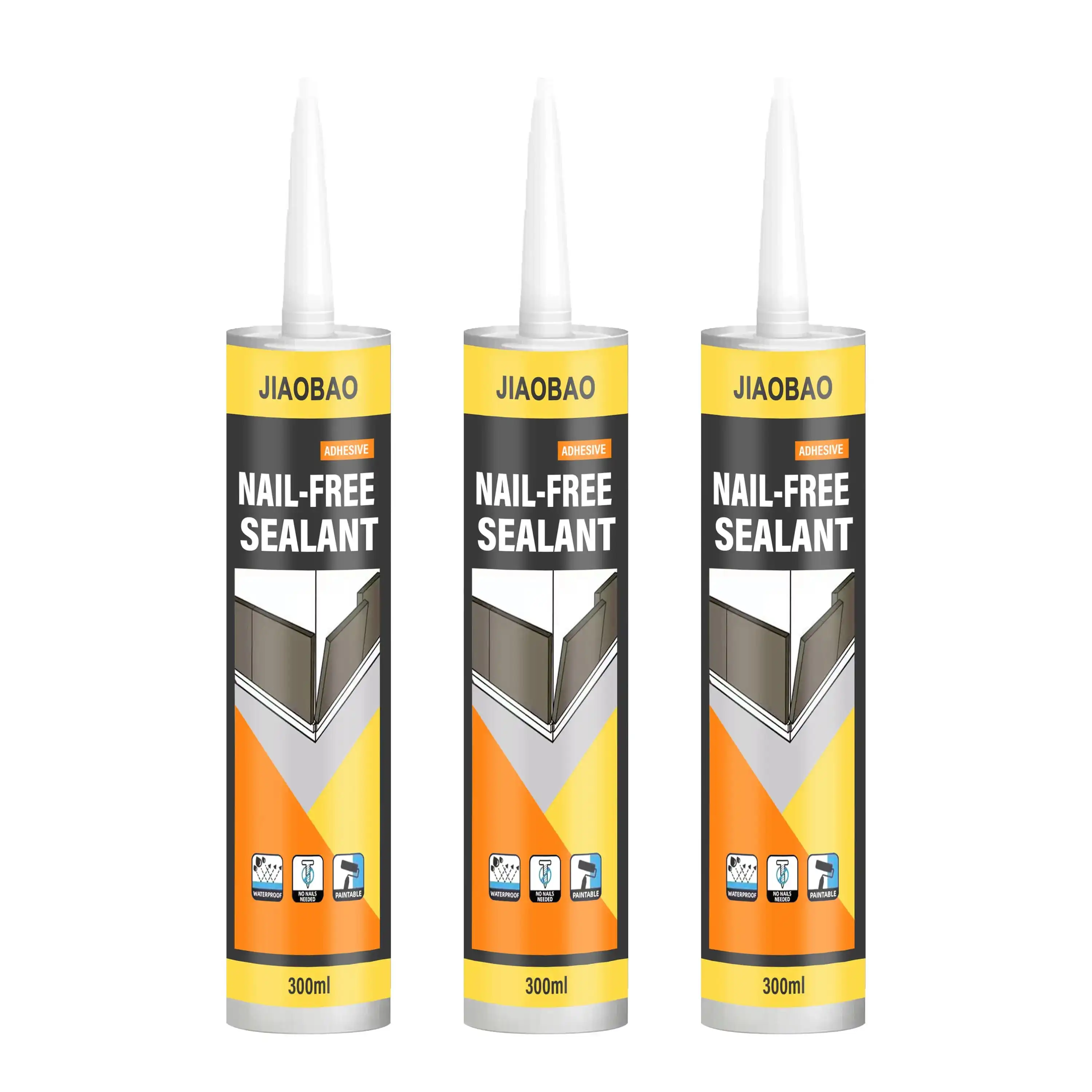
Surface stability is always compromised by mechanical binding. Drilling makes holes for water to get in, which is especially bad for waterproofing coatings that protect building walls. Decorative surfaces with nail holes need to be filled and refinished, which costs more money and time and makes the work look less professional. If screw heads aren't countersunk and hidden, they can be seen. This can make it harder to meet the aesthetic standards for commercial complexes and high-end residential projects.
These worries are completely taken care of by heavy-duty fixing glue like Nail Free Glue Heavy Duty. Installations of glass with Nail Free Glue Heavy Duty keep things clear at all times. In curtain wall systems, aluminium panels with Nail Free Glue Heavy Duty keep the lines clean by not casting shadows on the fasteners. In places where stone is processed, installations with Nail Free Glue Heavy Duty are made without any visible joints or flaws that would be caused by mechanical links. Keeping the purity of the materials with Nail Free Glue Heavy Duty is especially helpful for mid- to high-end projects where the way they look has a direct effect on how good they are thought to be and how happy the client is.
The rate of installation has a direct effect on how profitable the project is. For traditional fixing, you have to measure, mark, drill, and secure, which takes a lot of time and effort. Heavy-duty adhesives speed up this process from preparing the surface to applying the adhesive, cutting the time it takes to install by 40 to 60 percent in comparative field studies. When pneumatic equipment isn't needed, noise pollution goes away, and work can be done in places where people are already living without bothering the tenants.
No more worries about making dust, which protects finished surfaces and cuts down on the amount of cleanup that needs to be done. These practical benefits are especially helpful for general builders who have to stick to tight schedules and subcontractors who charge by the hour. The 20-minute surface dry time lets you move on to the next job quickly, and the expected drying schedule lets you plan your project accurately, without having to worry about delays caused by bad weather, which can happen when mechanical fastening is used outside.
Stress is spread out across bonded surfaces, which leads to better long-term performance than the point-load concentration that comes with mechanical fastening. Vibration damping features protect assemblies in HVAC setups and car settings where regular fasteners become loose after being under a lot of mechanical stress. Extreme temperature changes can happen between -40°C and 80°C without breaking down the bond. This is good for both cold storage facilities and high-temperature industrial settings.
Chemical stability makes sure that the material can handle cleaning products, water, and mild acids or alkalis that are used in building maintenance. The 300% elongation at break allows for temperature expansion and structural setting that would break rigid bonds. This makes the bonds last longer and requires less upkeep. These features of durability directly lead to a lower total cost of ownership, which is an important factor for building managers and procurement professionals who look at lifetime economics instead of just the original purchase price.
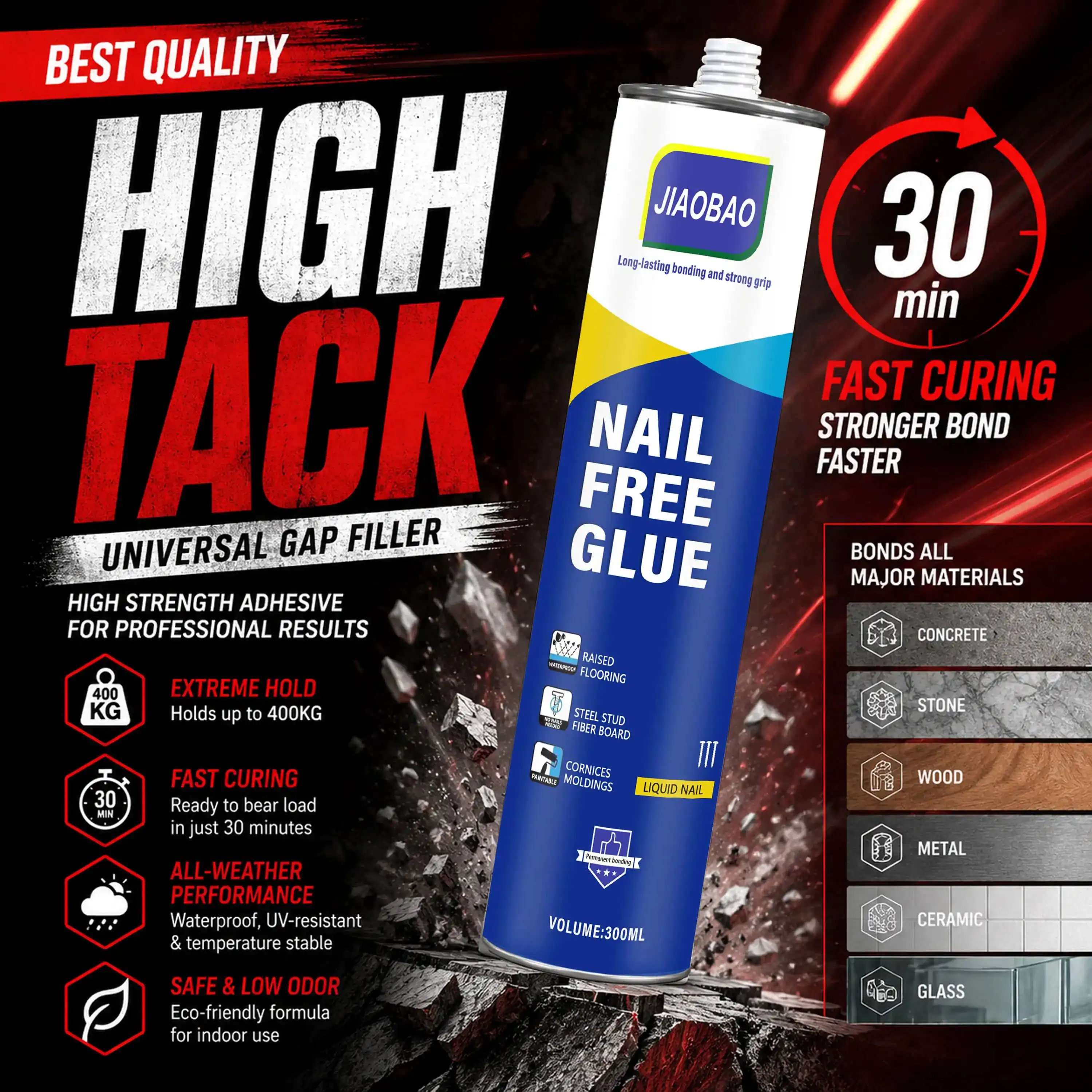
When you load and unload traditional fasteners, they create concentrated stress risers that can cause the material to fail. As nails go through wood, they split the grain structures, which makes load paths less strong. When screws in metal panels come into touch with water and different metals, they form galvanic corrosion points. These breakdown places are taken care of by adhesive bonding. Tensile strength testing according to ASTM D1002 shows that heavy duty mounting adhesives that are properly applied cause cohesive failure within substrates instead of adhesive failure at the bond line. This means that the connection is stronger than the material.
Depending on the substrate mix, the shear strength performance runs from 2.5 to 5.0 MPa, meeting or exceeding the requirements of mechanical fasteners for similar uses. Peel strength testing proves resistance to separating forces, which is very important for installing doors and windows in places where wind loads create changing stress conditions.
Quality glue seem to have higher initial material costs than buying fasteners in bulk, but a thorough study shows that there are big economic benefits. In the first part of a project, differences in material costs are usually balanced out by the time saved on labour due to shorter installation times. When you get rid of specialised tools like drill presses, pneumatic nailers, and the servicing that goes with them, you save money on both initial costs and ongoing costs.
When surface damage and imbalance problems go away, the number of rework jobs goes down by a huge amount. Warranty claims about fastener corrosion, loosening, or damage to the substrate go down significantly, which protects the brand's reputation and profit margins. Long-term maintenance costs go down because bonds don't need to be tightened or replaced as often as mechanical systems do. Building material wholesalers and hardware sellers say that when customers switch to adhesive solutions, the total cost of installation goes down by 15 to 25 percent, as long as all factors are taken into account in the purchase analysis.
Improving safety at work has benefits for both people and businesses. Getting rid of the need to use power tools lowers the risk of hearing damage for work teams. When digging isn't going on, there are no dust inhalation risks and no need for breathing protection. Less eye injuries happen when cutting or installing fasteners doesn't send flying objects into the air. The one-component recipe doesn't need to be mixed, so there are no chemical exposure risks like there are with two-part epoxy systems.
Low VOC emissions are good for the environment and meet LEED certification requirements as well as green building standards that business clients are asking for more and more. The moisture-cure system stops the release of solvents during fixing, which helps meet goals for indoor air quality. When compared to bulk fastener containers, packaging options in both sausage and cartridge shapes reduce waste. All of these things affect the sustainability goals that procurement managers have to deal with when they have to balance performance needs with their company's environmental responsibility obligations and legal compliance duties.
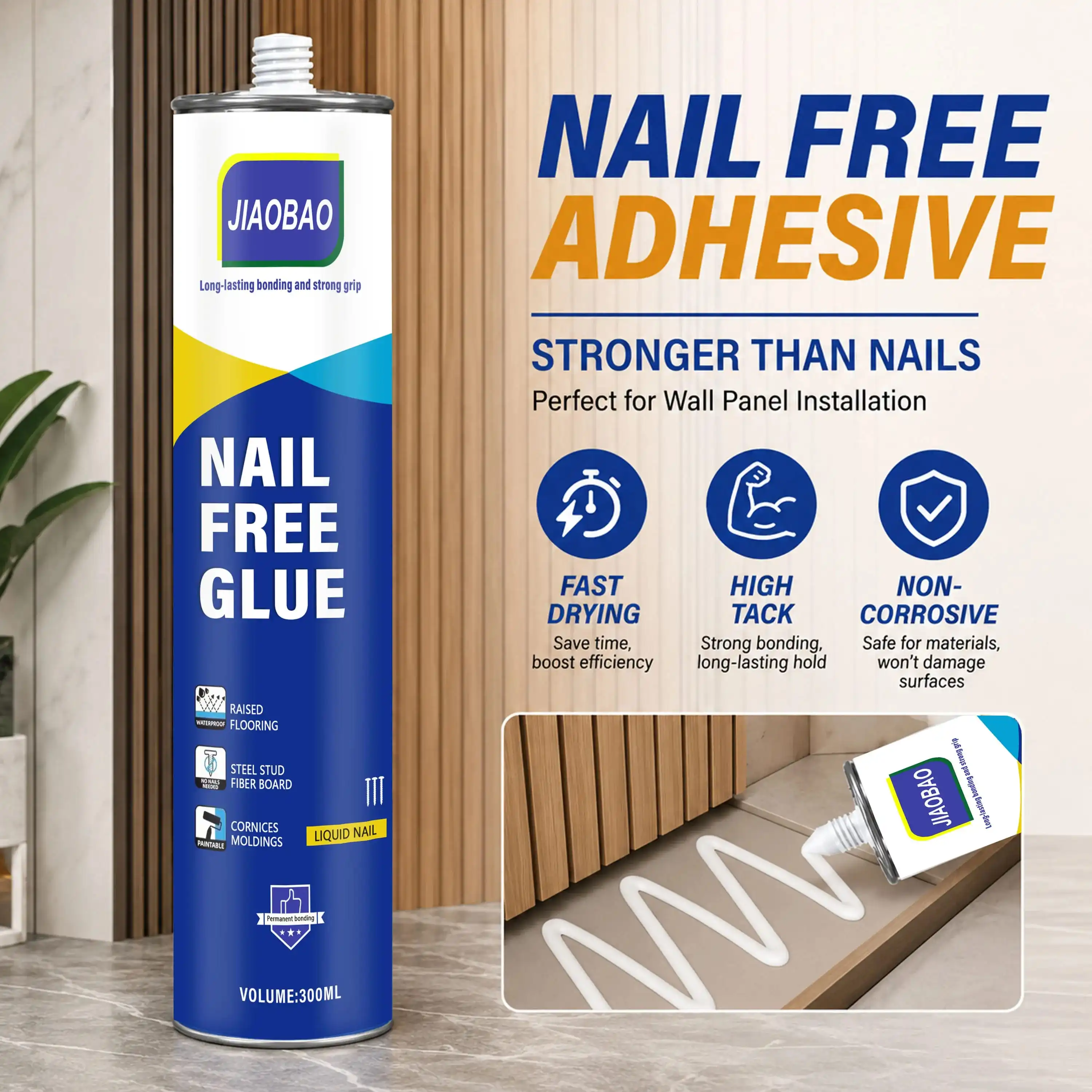
When you match the adhesive's qualities to its intended use, you avoid problems with performance and extra costs for Nail Free Glue Heavy Duty. The construction temperature range affects the season of use for Nail Free Glue Heavy Duty. For example, goods like Nail Free Glue Heavy Duty that need 5°C to 35°C ambient conditions may need to be installed later in the winter in northern climates. Curing speed affects project timing with Nail Free Glue Heavy Duty.
Formulations like Nail Free Glue Heavy Duty that cure faster can shorten timelines, but they may also cut down on working time for large-scale uses. Companies that build curtain walls need to be able to get colours that are very close to the finishes on glass or aluminium panels with Nail Free Glue Heavy Duty. Customised colours that are based on the RAL colour chart make sure that each batch of Nail Free Glue Heavy Duty is the same across multiple phases of a project.
The shelf life affects how inventory is managed for Nail Free Glue Heavy Duty. Stability for 12 months lets wholesalers buy in bulk while keeping Nail Free Glue Heavy Duty viable. With 300ml and 600ml cartridge volume options for Nail Free Glue Heavy Duty, you can use it for both small custom furniture installations and big commercial projects. The choice between sausage and cartridge packaging for Nail Free Glue Heavy Duty depends on the availability of dispensing equipment and the preferred application method in the manufacturing environment.
Reliable adhesive performance depends on both how consistently it is made and how well it meets the requirements. Suppliers should keep their ISO license, which shows that they follow the rules for quality control systems. Production experience of more than ten years, like Jiaobao's thirteen years in production, shows that the process is mature and that the person has learned how to fix problems. International standards like ISO 37 for mechanical properties, ASTM C1183 for extrusion rate, and ASTM C639 for sag resistance are used in testing procedures to make sure that stated specifications are accurate.
Keeping a Certificate of Analysis for every batch of production makes it possible to find out what happened when there are quality issues. Companies that have been around for a while have technical support teams that can help with application problems and suggest the best products for unusual substrate combinations. Service policies that offer refunds or replacements for quality problems within the product's shelf life show that the manufacturer trusts the customer and wants to keep them. When compared to unknown sources offering good prices without any infrastructure to back them up, these seller traits greatly lower the risk of buying from them.
Structured review methods help with choices about buying new adhesive technologies. Sample packages let you test the product in real-world settings before committing to buying in bulk. The substrate materials, environmental conditions, and stress profiles that will be used in production should be used in the tests. Adhesion testing on representative samples of materials backs up claims of compatibility. Observing the cure at room temperature and humidity levels shows that the expected performance matches the actual operating situation. Installation teams test the application to see if any changes need to be made to the method for the best results.
Pull tests on fully hardened samples give users faith in their load-carrying abilities in certain situations. Verification of colour matching in project lighting conditions stops unexpected changes in how things look during full-scale application. Writing down test results makes a baseline for comparing quality in the future and helps application training programs. When manufacturers offer technical help during pilot programs, they show that they are interested in building partnerships instead of just making sales. This shows that they will be reliable in the long run as the business relationship grows.
How well the area is prepared has a huge impact on the bond strength. The substrates need to be clean, dry, and free of anything that could get in the way of bonding. In manufacturing settings, oil, grease, and release agents are common. To get rid of them, you need to clean with solvents that evaporate completely before you can put on the adhesive. You can get rid of dust and other small bits by using compressed air, a vacuum, or a tack cloth. Surfaces with wetness stop moisture-activated systems from starting to heal properly, so they need to be dried completely, especially after cleaning.
Primer can help seal surfaces and make paint stick better on porous materials like concrete or gypsum board. For smooth, non-porous substrates like glass or glazed ceramic, light abrasion is sometimes needed to boost surface energy and mechanical interlocking. Verification of temperature makes sure that boards are within the 5°C to 35°C range for building temperatures that are best for curing. These steps may seem like they take a lot of time, but they are what determines whether the glue performs up to technical standards or not, which has a direct impact on the success of the project and the promise.
The natural abilities of good sealants like Nail Free Glue Heavy Duty are maximised when they are applied correctly. Bead size for Nail Free Glue Heavy Duty should be the same as what the maker recommends, and there should be a little extra when the sides are pressed together to make sure there are no gaps. Continuous beads of Nail Free Glue Heavy Duty keep air from getting trapped, which would otherwise make the link line weak. When two surfaces are joined together with Nail Free Glue Heavy Duty, applying even pressure spreads the glue evenly and gets rid of any high spots that could cause the joint to fail early.
Being aware of your working time with Nail Free Glue Heavy Duty keeps you from trying to make changes after the surface skinning has started—you have about 20 minutes to place yourself correctly before the initial fix stops you from moving. The environment during application and curing of Nail Free Glue Heavy Duty has a big effect on the results. When the relative humidity is between 40 and 60%, there is just the right amount of wetness for the fix to start working with Nail Free Glue Heavy Duty without too much surface moisture, which could cause bubbling.
Temperature stability within the given range for Nail Free Glue Heavy Duty stops either a slow fix at low temperatures or cracking that happens too quickly at high temperatures. Ventilation makes sure that air flows without making drafts that spread dirt on wet Nail Free Glue Heavy Duty. Paying attention to these application variables is what separates successful installations of Nail Free Glue Heavy Duty from ones that go wrong and need to be fixed.
Being patient while the cure is going on stops early failures that wrongly indicate that the adhesive isn't good enough. At standard conditions, the cure rate is 2.5 mm per 24 hours. This means that thick bond lines need more time to reach full strength. It takes about four days for a 10 mm thick application to fully cure throughout the bond depth. A 20-minute surface dry time gives you the ability to move things around, but not the structure load capacity. Thin bond lines can handle light loads after 24 hours, but important structural uses should wait until the glue is fully cured. Changes in temperature and humidity from normal test conditions affect the speed of curing.
For example, curing takes a lot longer in cold, dry places, while it takes a lot less time in warm, wet places. Premature load application can be avoided by keeping an eye on the real site conditions and adjusting assumptions as needed. Keeping records of the cure time before the load application process in quality control helps protect against guarantee claims and gives information that can be used to improve the scheduling of future projects. Manufacturers offer technical advice on how to change the cure time for non-standard conditions. Procurement and project managers should use these resources to avoid problems in the first place, rather than finding out about them after the fact.
Professionals in the building, industrial, and distribution industries can measure the benefits of heavy-duty mounting adhesive solutions like Nail Free Glue Heavy Duty in terms of operating speed, structural performance, and economic value. Getting rid of mechanical fasteners with Nail Free Glue Heavy Duty cuts down on installation time, protects the surface, and improves the look of the finished product while meeting or beating structural requirements.
A thorough look at the technical requirements, the skills of the provider, and the best ways to use Nail Free Glue Heavy Duty will guarantee a successful implementation. Modified silane polymer technology in Nail Free Glue Heavy Duty gives materials the flexibility, resistance to weather factors, and bond strength needed for tough jobs like hanging industrial equipment or curtain wall systems. By using these advanced adhesive systems like Nail Free Glue Heavy Duty strategically, businesses can meet changing quality standards while lowering their total cost of ownership. This is because Nail Free Glue Heavy Duty requires less labour, requires less rework, and lasts longer than traditional fastening methods.
These days' adhesives have tensile and shear strengths that meet or beat the requirements for mechanical fasteners in many situations. After fully curing, the 2.5 N/mm² tensile strength and load-bearing capacity make it safe to use in structural connections that aren't very important. But there are times when you need to use two different types of fasteners or a combination of them, like when building codes say you need mechanical backup or when dynamic force is higher than what the glue can handle. Talking to structure engineers and glue makers makes sure that the right application is chosen and that safety standards are followed.
Good modified silane polymer adhesives are very resistant to weather in temperatures ranging from -40°C to 80°C. They also stay strong against UV light and water, so the bond stays strong even when the weather changes. The moisture-cure system works better when there is humidity in the air while the paint is being applied. Extreme situations might need longer drying times or special mixtures. Manufacturers provide technical data sheets that list the conditions that the product can't be used in and how well it should perform when it's outside. This information helps people make smart choices when specifying exterior curtain walls, door and window installations, and weather-exposed assemblies.
Batch-to-batch colour difference is a real problem for projects that need to keep the same look. High uniformity is achieved by manufacturers who follow strict quality control methods and use standard pigment systems. Variance risk is eliminated when enough material is ordered from a single production batch for the whole job. Custom colour matching to RAL standards and acceptance of a sample before full production makes sure that the product meets expectations. Getting to know suppliers who offer colour guarantees and technical support lowers the risk of projects where the final look affects both client satisfaction and payment.
As a leading Nail Free Glue Heavy Duty supplier, Qingdao Jiaobao New Materials Co., Ltd. has more than 13 years of experience in specialised manufacturing. They offer ISO-certified quality control and a wide range of customisation options. Our one-component modified silane polymer formulations have a tensile strength of 2.5 N/mm² and can be used in a wide range of building and commercial settings. Our flexible order amounts, 1-2 week production wait times, and full OEM/ODM services, which include RAL colour matching for mid- to high-end projects, help you get the best deals on goods. Our goods meet ASTM and international standards and have a 12-month shelf life promise. They come in 300ml and 600ml sizes and can be white, black, grey, or a colour of your choice. You can email our technical team at dorashen@cnjiaobao.com to ask for samples, talk about ways to buy in bulk, or find out how our adhesive technology can help your business make more things while cutting down on installation costs.
Chen, W., & Liu, S. (2021). Advanced Polymer Adhesives in Modern Construction: Performance Analysis and Application Guidelines. Journal of Building Materials Science, 18(3), 245-267.
Henderson, M. R., & Thompson, K. J. (2020). Comparative Study of Mechanical Fastening versus Adhesive Bonding in curtain Wall Systems. International Journal of Construction Engineering, 12(4), 112-128.
Morrison, P. L. (2022). Modified Silane Polymer Technology: Chemistry, Performance, and Industrial Applications. Adhesive Technology Quarterly, 29(2), 78-94.
Nakamura, T., Suzuki, H., & Tanaka, Y. (2019). Long-term Durability Assessment of Structural Adhesives in Building Envelope Applications. Construction Materials Research, 7(1), 34-56.
Rodriguez, A., & Kim, D. H. (2023). Economic Analysis of Adhesive versus Mechanical Fastening Systems in Large-Scale Construction Projects. Procurement and Supply Chain Management Review, 15(2), 189-203.
Williams, R. F., & Anderson, B. G. (2020). Environmental Performance and Sustainability of Modern Adhesive Systems in Green Building Applications. Sustainable Construction Materials Journal, 11(3), 156-174.
November 16,2023
Enterprise Name
The sealant has very strong adhesion and performs well even on glass and aluminum. After curing, it remains flexible and shows no cracking. Perfect for our facade projects.
November 16,2023
Enterprise Name
Stable quality across batches. Our customers especially like the smooth application and consistent extrusion. It helps reduce installation time on site.
November 16,2023
Enterprise Name
I used it for bathroom sealing. Excellent waterproof performance and no mold issues so far. It's been holding up very well in humid conditions.
November 16,2023
Enterprise Name
The neutral silicone works well on sensitive materials without corrosion. Very suitable for industrial applications requiring stable performance.
_1779347426672.webp)