November 16,2023
Enterprise Name
The sealant has very strong adhesion and performs well even on glass and aluminum. After curing, it remains flexible and shows no cracking. Perfect for our facade projects.
Sep 17, 2026
When it comes to interior finishing, the joint between a door frame and a drywall panel can make or break the final look. A paintable acrylic sealant bridges that gap — literally and aesthetically. Unlike standard silicone caulks that repel paint and leave visible lines, an acrylic sealant paintable type is engineered to accept latex and alkyd coatings without color mismatch or surface rejection. It cures through water evaporation, delivers a flexible seal, and produces a monolithic finish once painted over. For contractors, distributors, and brand owners sourcing interior finishing materials, this product solves one of the most persistent quality complaints on the job site.
An acrylic sealant paintable type is a water-based, one-component mixture made from acrylic acid resins. Silicone seals have low surface energy and don't stick to paint films. This substance, on the other hand, makes a surface that is hydrophilic and sticks to both latex and oil-based topcoats. This makes a joint that blends in with the paint instead of showing through it. No matter how many coats are put on top of them, sealants that can't be painted, like most silicones, leave a clear bead.
Performance data from Jiaobao's one-part RTV acrylic sealant show that it has these benefits. On a vertical surface, the sag level is 0mm, which is well within the industry standard of 3mm. This means that the product stays exactly where it is put down. It can extrude up to 163 ml/min, which is faster than the minimum standard of 80 ml/min. This gives applicators a smooth, steady flow. The surface dries in just half an hour, which is six times faster than the three-hour limit. At 23°C, the tensile strength stays at 0.64 MPa, which is above the compliance level. The product comes in 300ml cartridges and 600ml sausage packs, and can be colored white, black, gray, or any other color you want. It can be used for a variety of project formats without any problems with getting it.
Also, low VOC level is important here. Water-based acrylic sealant paintable types meet the requirements for indoor air quality set by standards like LEED and GREENGUARD. These standards are becoming more and more important in deciding what materials are used on business and domestic projects across the United States.
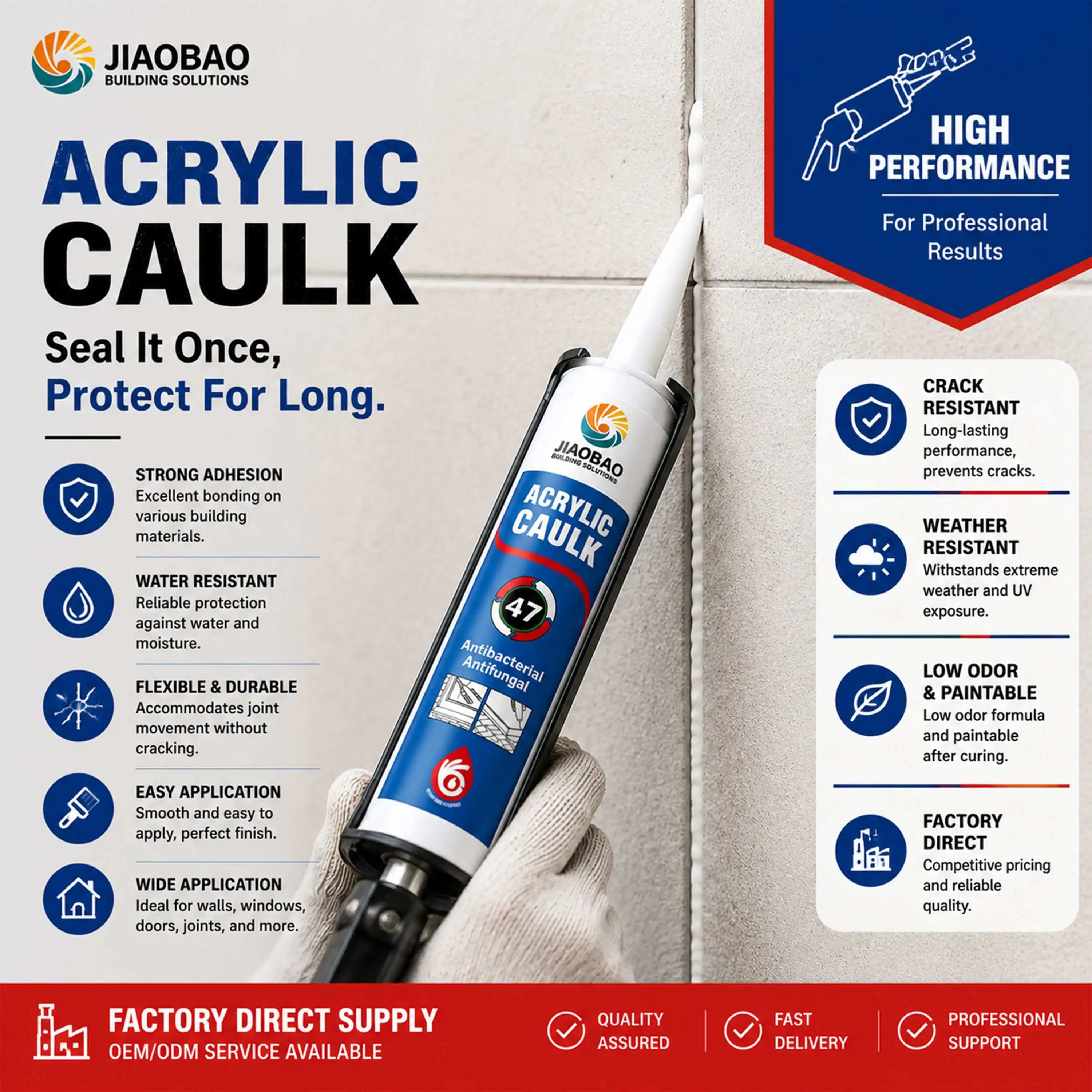
If you pick the wrong type of sealant for an interior joint, it can lead to a lot of problems, from paint not sticking to the wall to having to do expensive repairs. The table below shows how acrylic sealant paintable types compare to two other popular options:
If you want to finish the inside of your home, acrylic sealant paintable type is still the best, most cost-effective option for door frames, window reveals, baseboards, and drywall seams. Polyurethane should be used in structural or high-traffic expansion joints, while silicone should be used outside.
What makes the difference between a clean finish and a repeat is the way it is applied. Preparing the surface is the first thing that must be done. The base needs to be dry, dust-free, and strong. No matter how good the sealant is, it won't stick to loose plaster, chalky surfaces, or damp drywall. When the substrate is very porous or dusty, using a compatible primer makes the bond stronger and stops surfactant from leaching.
Put the cylinder into a normal caulk gun, cut the tip at a 45° angle to fit the joint width, and draw the gun in one continuous pass while applying steady, consistent pressure. This cuts down on air pockets and makes the bead more even. Right away, use a finger that has been dampened or a jointing tool to press the sealant into the gap and make the profile smooth and slightly concave.
When you paint is important. Jiaobao's recipe dries to the touch in half an hour, but professionals say to wait until the bead is hard to the touch, which usually takes one to two hours, so that any remaining moisture doesn't get trapped under the paint film. Within 24 hours, the joint is fully mechanically cured. If necessary, it can then be lightly sanded.
If the part has crazing (fine paint cracks) after painting, it's most likely because the paint was put on before the surface had a chance to fully cure. If there is adhesion loss at the edge of the substrate, check to see if it is dirty or has holes in it that need to be primed. If the application protocol is followed, these failure modes can be avoided and rarely mean that the product is broken.
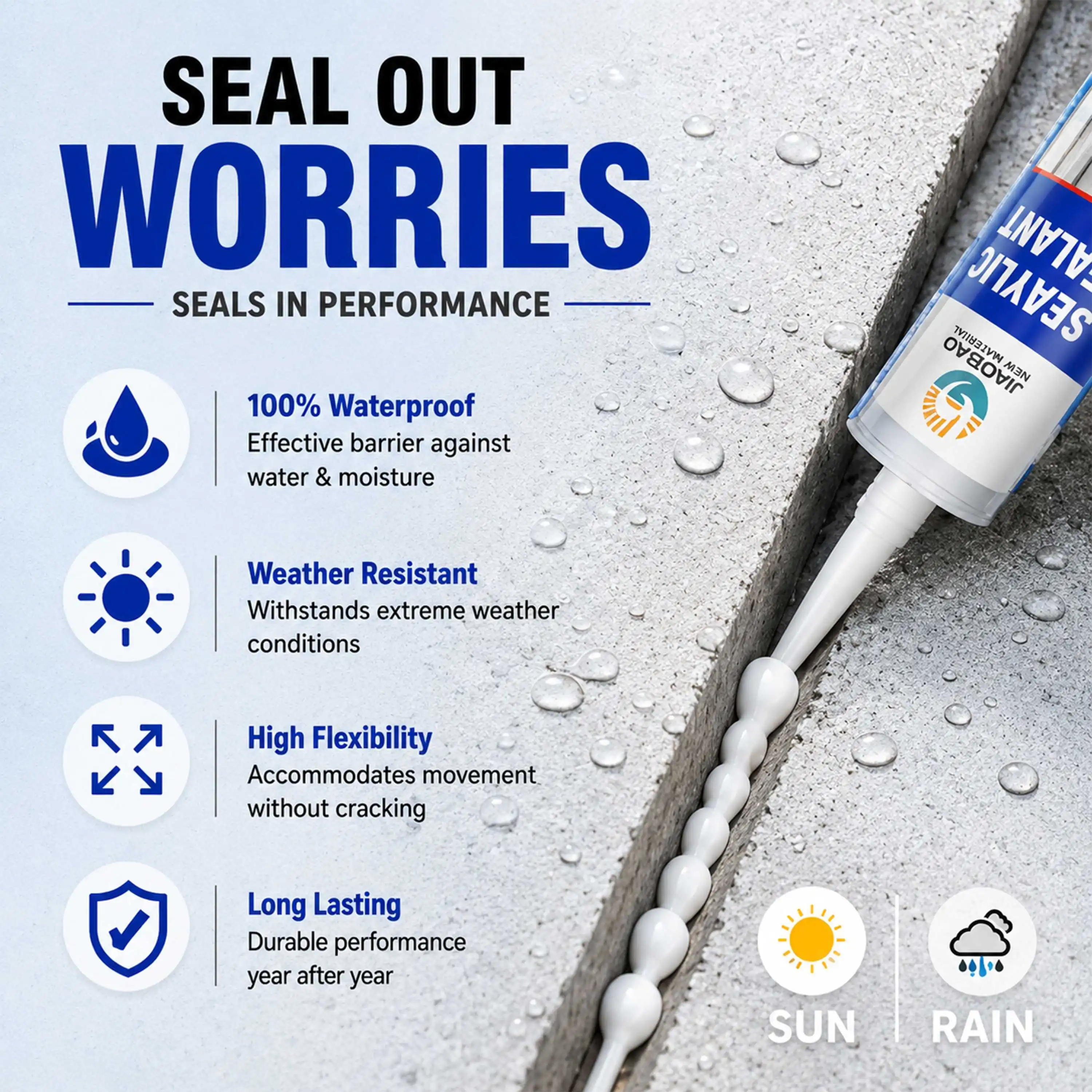
When distributors and brand owners look for acrylic sealant paintable types, they have to do more than just compare prices per unit. A number of things have direct effects on the quality and risk of a job further down the line.
Certification is important. Products going to the U.S. market or other controlled markets must follow the rules about VOC emissions and have valid ISO and CE paperwork for export customers. Jiaobao's factories are ISO and CE-certified, and they've been making things for 13 years. Their quality control system is advanced enough to keep batches consistent, which is something that distributors who are responsible for a product's reputation across large areas often worry about.
Being able to do OEM and ODM is another important way to set yourself apart. Paint brands and hardware stores that want private-label sealant SKUs need to find a manufacturer that can handle custom colors, label design, and packaging that is legal in certain regions. Jiaobao offers flexible volume choices starting at 300ml and full OEM/ODM production with a wait time of one to two weeks. This makes it a good option for wholesalers who need a wide range of products without having too many on hand. If there are any quality problems within the 12-month shelf life, the company will replace or refund the product. This is a clear promise made after the sale that lowers the risk of buying. For questions, you can email dorashen@cnjiaobao.com or go to shandongjiaobao.com.
Acrylic sealant paintable type is the best and most useful choice for closing joints inside of buildings, according to tests that look at its technical performance, substrate suitability, paint adhesion reliability, and indoor environmental compliance. Invisible or peeling joints are the main cause of callbacks and guarantee claims. This method gets rid of them. Its water-based chemistry is in line with green building standards that commercial clients and residential developers are asking for more and more. Its quick dry time speeds up work, and the fact that it works with standard latex paints takes away the uncertainties that lead to disagreements in finishing between trades. This type of product gives reliable results at a price that is reasonable for buying teams building a collection of reliable support materials and construction companies standardizing their finishing process.
Acrylic sealant paintable type works better than silicone and polyurethane alternatives for interior joint applications because it was made to be used indoors, on painted surfaces, and under tight deadlines, which is where most finishing work takes place. The technical information is clear: it dries quickly on the surface, has a high extrusion rate, strong tensile performance, and no sag. The practical benefits are also very clear. For the final paint coat to look smooth, the part below it needs a sealer that is made to do just that. With 13 years of manufacturing experience and global certification, Jiaobao's formula always meets that standard.
Touch the surface only after it is hard and dry. For brush painting, this takes about an hour to two hours. If you paint too soon, the paint film will crack as the sealant shrinks during cure because it has trapped water. It takes about 24 hours to fully heal.
Standard acrylic sealant paintable types are made for use inside or outside where they will be secured. They aren't made to be submerged in water all the time or to have walls that move a lot. For glazing or expansion joints on the outside, a silicone or siliconized acrylic hybrid is better.
When a joint cracks, it usually means that the movement went beyond the sealant's elasticity range, which for acrylic sealant paintable types is about ±12.5%. It's not fully elastic like silicone, but acrylics are plasto-elastic. A combination with more movement is needed for structural or thermally active joints.
Yes, as long as the glue has fully dried on the surface before painting. Jiaobao's recipe works with regular latex paints and doesn't change the sheen or let the plasticizers move around. This makes the joint look the same all the way through.
"Caulk" usually refers to lower-resin fills that shrink a lot and don't bend much. A specification-grade acrylic sealant paintable type has clear elastomeric qualities, doesn't shrink much, and has been shown to meet standards like ASTM C834.
Jiaobao has low prices, fast shipping (1–2 weeks), and full OEM/ODM support for distributors and brand owners who need to buy a lot of acrylic sealant paintable type. We are a reliable provider of acrylic sealant paintable type for customers in North America and around the world. We have ISO and CE certifications, 13 years of experience making products, and a 12-month shelf life guarantee. You can email us at dorashen@cnjiaobao.com right now to get samples or a unique price.

1. ASTM C834: Standard Specification for Latex Sealants — ASTM International, 2020.
2. Construction Sealants: Technology and Applications — Rapra Technology, 2005.
3. Indoor Air Quality Guide: Best Practices for Design, Construction and Commissioning — ASHRAE, 2009.
4. Sealants: The Professional's Guide — Building Research Establishment (BRE), 2018.
5. ISO 11600: Building Construction — Jointing Products — Classification and Requirements for Sealants — ISO, 2016.
6. Paint and Surface Coatings: Theory and Practice — Woodhead Publishing, 1999
November 16,2023
Enterprise Name
The sealant has very strong adhesion and performs well even on glass and aluminum. After curing, it remains flexible and shows no cracking. Perfect for our facade projects.
November 16,2023
Enterprise Name
Stable quality across batches. Our customers especially like the smooth application and consistent extrusion. It helps reduce installation time on site.
November 16,2023
Enterprise Name
I used it for bathroom sealing. Excellent waterproof performance and no mold issues so far. It's been holding up very well in humid conditions.
November 16,2023
Enterprise Name
The neutral silicone works well on sensitive materials without corrosion. Very suitable for industrial applications requiring stable performance.
_1779347426672.webp)