November 16,2023
Enterprise Name
The sealant has very strong adhesion and performs well even on glass and aluminum. After curing, it remains flexible and shows no cracking. Perfect for our facade projects.
Oct 6, 2026
When searching for a dependable sealing solution for industrial metal applications, understanding the versatility of neutral-cure silicone sealants becomes essential. NP Silicone Sealant for Aluminum & Metal delivers exceptional performance across curtain wall installations, HVAC systems, metal door manufacturing, and equipment repairs. This professional-grade material provides non-corrosive bonding, superior weather resistance from -50℃ to +150℃, and reliable adhesion to aluminum, stainless steel, and galvanized surfaces. Throughout this guide, we explore five critical industrial applications where neutral-cure silicone sealants solve real-world challenges for fabricators, contractors, and maintenance professionals.
When putting together an industrial metal frame, you need sealants that protect both the structure and the surroundings. Facilities that make metal doors, windows, and architectural frames are always under pressure to meet quality standards and keep production running smoothly.
When acetoxy silicones cure, they release acetic acid, which can eat away at aluminum surfaces that haven't been treated and make them less durable over time. This risk is completely eliminated by neutral-cure formulations. Quality neutral sealants use oxime to cure, which forms bonds without releasing acidic byproducts. This makes them perfect for anodized aluminum, powder-coated frames, and metal surfaces with a mill finish. This chemical matching keeps installs from failing too soon, which happens when the sealant chemistry is wrong.
How long a link lasts depends on how well the area is prepared. Before applying, clean aluminum surfaces with isopropyl alcohol and lint-free cloths to get rid of oils, dust, and other impurities. Joint design should allow for 25% movement, which lets frames expand and contract with changes in temperature without putting too much stress on the seal. At 25℃ and 50% relative humidity, skin-over time is about 30 minutes, which is enough time to make any necessary changes. In warmer, more humid conditions, the cure happens faster, taking 7–14 days instead.
Shandong Jiaobao New Material Co., Ltd. makes neutral-cure lubricants that are designed to work with aluminum frame assembly. The Shore A 30 hardness and 0.7 MPa tensile strength of our one-component RTV mixture make sure that the bonds are strong enough to last in harsh industrial settings. The product comes in 300ml and 600ml sausage or cartridge containers and works perfectly with automated dispensing systems that are common in production lines for windows and doors.
A medium-sized metal window maker in the Midwest recently switched from acetoxy sealant to neutral-cure sealant because powder-coated aluminum frames were rusting. The switch got rid of warranty claims about seal wear and made the production line more efficient by making the tools better. The 25% movement of the sealant allowed for thermal expansion in big industrial window units. This stopped the joint stress that used to cause cohesive failure when temperatures changed with the seasons.
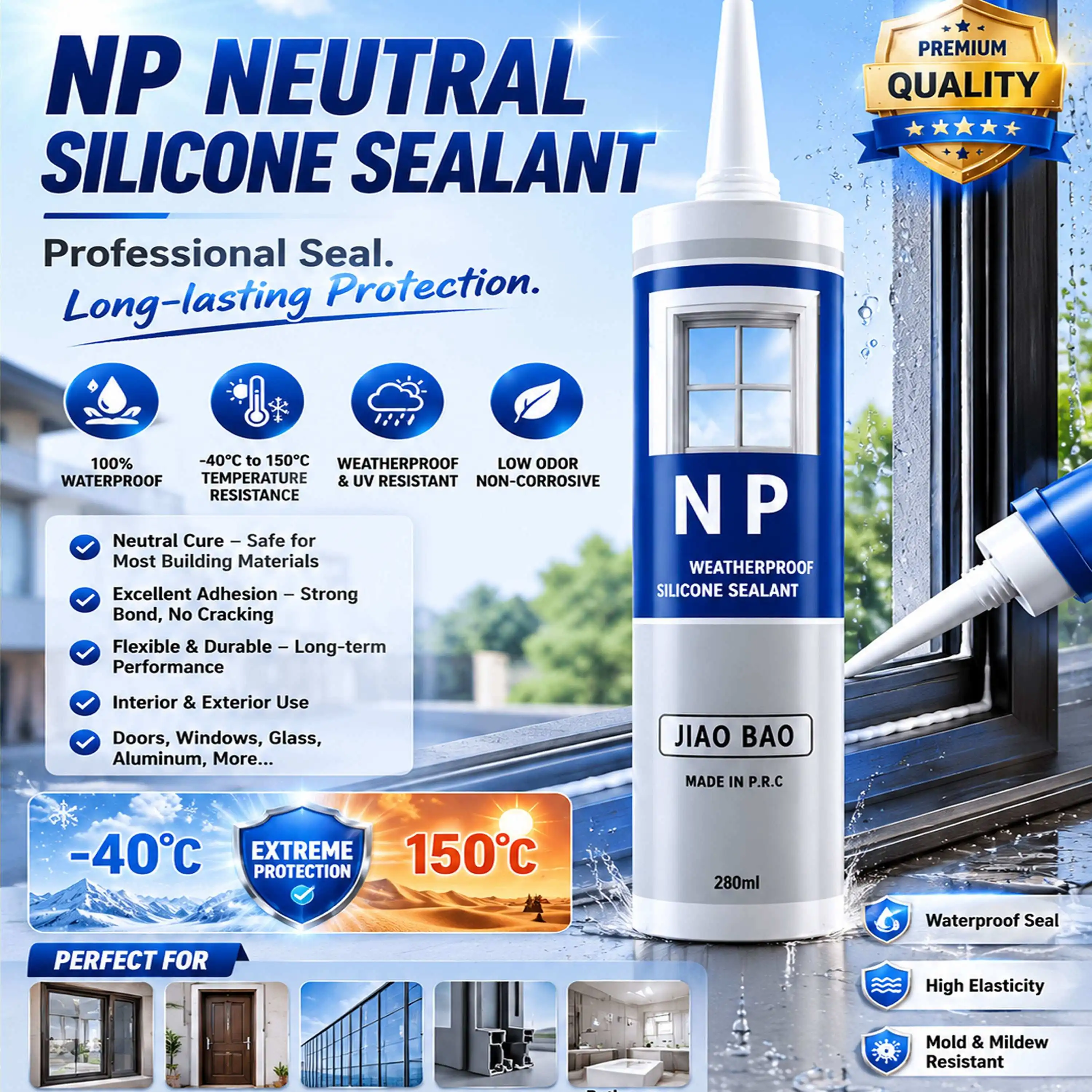
Sealants that stay strong in rain, snow, UV light, and high temperatures are needed on metal parts that are open to the weather. Waterproof sealing keeps important infrastructure safe, from the housing of industrial equipment to HVAC systems outside.
When ultraviolet radiation hits inferior seals, they break down, becoming rigid and cracking, which lets water in. Good neutral-cure silicones have UV protectors in them that keep the flexibility and stickiness even after years of being in the sun. NP Silicone Sealant for Aluminum & Metal is specially formulated to bond strongly to these substrates while resisting thermal expansion, so it maintains a durable, watertight barrier. The siloxane backbone naturally doesn't break down when exposed to ozone or oxygen, so it weathers better than organic sealants like polyurethane or acrylic.
To waterproof well, you need to pay attention to the shape of the joints. Width-to-depth ratios of 2:1 give the best performance, letting enough sealer volume move while keeping stress from building up too much. Backing materials like closed-cell polyethylene foam stop three-sided bonding, which makes it hard to move and causes the material to fail early. When you tool the sealing surface, you make a concave shape that pushes water away from the joint. This lowers the chance of water staying there, which speeds up the breakdown process.
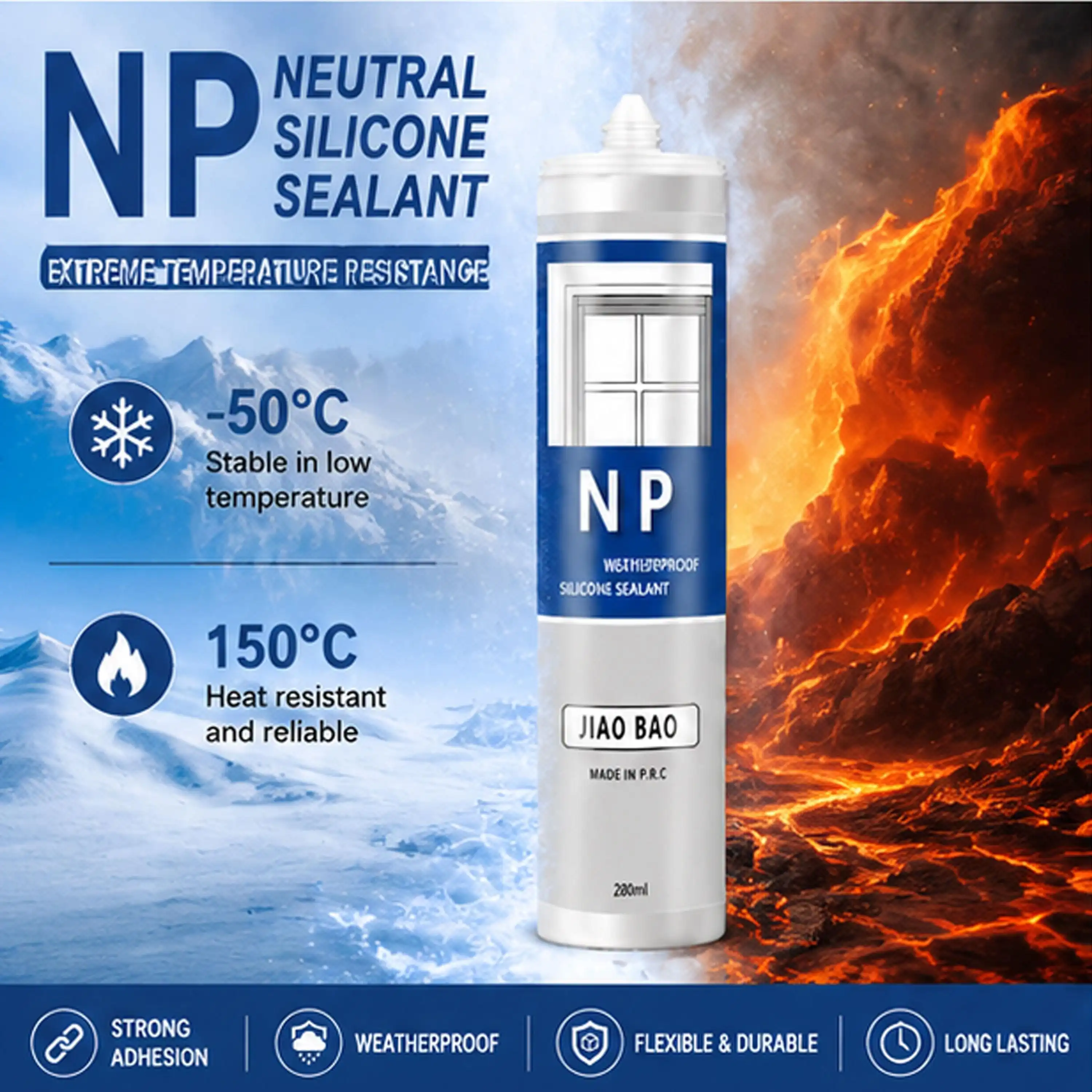
Temperature range of -50°C to +150°C makes sure that the seal works well in a wide range of temperatures. During the winter, metal buildings in cold places shrink a lot, while sites in the desert get very hot in the summer. This temperature range can handle such wide variations without losing its ability to bend or stick. According to ASTM C679 testing, there is no sagging on vertical surfaces, which is very important for facade applications where the sealant needs to stay in place while it cures.
Water getting into industrial buildings that use outdoor machinery and equipment is a constant problem for maintenance. Neutral-cure silicone is used to seal the gaps between aluminum panels on outdoor control boxes at a chemical processing plant in Louisiana. The seals are still completely waterproof after five years of being in the humid Gulf Coast, hurricanes, and strong UV rays. Because it lasts so long, it doesn't need to be maintained as often and keeps sensitive electrical equipment from getting damaged by water.
Metal surfaces in factories are exposed to harsh chemicals that break down regular seals. Chemical factories, food processing plants, and auto plants need sealing materials that can stand up to being exposed to solvents, cleaners, and industrial fluids over and over again.
Neutral-cure silicone formulations are very resistant to weak acids, bases, hydraulic fluids, and oil-based products. Silicone doesn't change shape or lose its mechanical properties when it comes in contact with hydrocarbons, while polyurethane sealants do. This lack of chemical activity keeps both the coating and the metal underneath it from rusting. Because the fixing process doesn't corrode, it can be used on metals like copper, brass, zinc, and coated steel that acetoxy formulations would damage.
Galvanic corrosion is a big problem in industrial equipment where metal joints are not all the same. When you seal these joints with neutral-cure silicone, you make a shield against wetness that stops the formation of electrolytes, which is needed for galvanic reactions. NP Silicone Sealant for Aluminum & Metal is particularly effective in such applications because it adheres reliably to dissimilar metals while maintaining its insulating barrier, thereby reducing the risk of electrochemical corrosion. When stainless steel equipment is used to process food, it needs seals that can stand up to chemicals used to clean while still being FDA-compliant for food contact. Low VOC content (less than 80 g/L) meets stricter guidelines for workplace hygiene.
In a cleanroom environment, a pharmaceutical manufacturing plant in New Jersey used neutral-cure silicone to seal aluminum ductwork. The sealant can be cleaned every day with strong disinfectants and still keep its airtight integrity, which is needed to keep germs from spreading. Even after being exposed to harsh chemicals for three years, the seals have not broken down, been attacked by chemicals, or lost their ability to stick.
Extreme temperature ranges are used by HVAC systems, car parts, and industry machinery. Sealing materials must be able to withstand repeated changes in temperature without becoming stiff, breaking, or losing their ability to stick.
When the temperature changes, metal grows and shrinks a lot. A 10-meter frame can move a few millimeters between summer and winter because of the way aluminum expands when it heats up. Sealants need to be able to handle this movement without putting too much stress on the bond line. Quality neutral-cure silicones are supposed to be able to move 25% of the time. This lets joints expand and contract freely while still being weatherproof.
Test results show that it works well from -50°C to +150°C, which means it can be used in a wide range of situations, from cooling units to exhaust systems. Silicone stays flexible at low temperatures, which keeps it from breaking easily. The material keeps its adhesive strength at high temperatures and doesn't flow or sag. This thermal stability is very important for HVAC ducts because the temperatures change all the time at sealed joints when the system is heating and cooling.
An ISO or CE certification proves that a product is of good quality and that it was made in a consistent way. These standards, which are known all over the world, give procurement professionals peace of mind that products meet strict performance standards. Meeting the requirements of GB 13477 shows that it can be used in tough industry and building settings. The technical information needed for specification reviews on big projects is test results that show the tensile strength, movement capability, and temperature resistance.
HVAC workers who work on business buildings use neutral-cure silicone to seal the joints and links between pieces of equipment and aluminum ductwork. The temperature range makes sure that the seal works well whether the system is heating or cooling. This method is used by a large hospital complex in Arizona to keep energy costs low by stopping air leaks at the thousands of duct connections that are spread out across the building.
Metal manufacturing shops and maintenance teams need reliable sealants for more than just new building. They also need them for repairs, changes, and small-batch production. NP Silicone Sealant for Aluminum & Metal is an ideal choice for these diverse tasks because it offers strong adhesion to both ferrous and non-ferrous substrates, resists workshop chemicals, and cures reliably even in variable shop conditions. Neutral-cure silicone is an important material for workshops because it can be used in many ways, cures quickly, and sticks well to a wide range of surfaces.
Polyurethane seals can be painted over, but they don't stand up well to UV light and chemicals. Epoxy adhesives are very strong, but they aren't flexible enough for joints that move. Acrylic seals harden quickly, but they don't last as long when used outside. These needs are met by neutral-cure silicone, which is flexible, resistant to chemicals, weatherproof, and has a strong enough bond for most metal sealing jobs. The one-component style gets rid of the mixing mistakes that come with two-part systems, and the paste consistency lets you place beads precisely.
Even when fixing something, surface preparation is still very important. Use wire brushes or other rough methods to get rid of rust, old sealant, and coatings. Then, clean with a solvent. Standard caulking guns can be used to apply sealant to cartridges, while pneumatic dispensers can be used for sausage packs. To make sure the surface is smooth and the bead sticks well, you should tool it during the skin-over time. Keep rain or moisture away from sealant that has just been applied until the surface cures.
There are different color choices, like white, black, and gray, and custom formulas let you match the look of metal finishes. This flexibility is important for joints that can be seen in architectural metalwork, since how they look affects how good the whole thing is thought to be. With a shelf life of 12 months, fabrication shops can keep enough stock on hand for current jobs.
Buying in bulk lowers unit costs and makes sure that materials are available on time for production plans. Shandong Jiaobao New Material Co., Ltd. offers shipping times of one to two weeks, which lowers the cost of keeping inventory and supports just-in-time producing methods. OEM and ODM customization options let sellers use their own labels or match specifications for specific projects. When buying teams need expert help choosing materials or fixing problems with applications, quick customer service keeps production from being held up, which costs a lot.
Neutral-cure silicone is used to seal special aluminum cases for electrical equipment at a metal production shop in Ohio. The shop keeps a variety of colors on hand to match different powder coat finishes. Quality control is ensured by consistent products across batches, and profitable project bids are supported by competitive prices. The fabricator has set up a yearly supply deal that guaranties access and gets them good prices for buying in bulk.
Neutral-cure silicone sealing technology solves important problems in the metal and aluminum businesses. These materials stick together without corroding, can handle high temperatures well, and last a long time. They are used for structural bonding in manufacturing and weatherproof sealing in harsh environments. NP Silicone Sealant for Aluminum & Metal exemplifies this technology by delivering superior adhesion to both aluminum and steel surfaces while resisting galvanic corrosion, thermal cycling, and moisture ingress—making it a trusted solution for critical joint sealing.
Chemical resistance keeps industrial equipment safe, and thermal stability makes sure that it works well in all kinds of weather. Neutral-cure formulations are important for fabricators, builders, and maintenance workers because they can be used for both new building and fixes. Choosing high-quality products made by manufacturers with a lot of experience gives industrial applications the consistent performance and technical support they need to work.
At 25°C and 50% relative humidity, the surface dries in about 30 minutes, which gives you time to make tools and changes. It takes between 7 and 14 days for the joint to fully cure, depending on how deep it is, the temperature, and the humidity. Higher temps and more water speed up the drying process. Low temperatures, on the other hand, slow it down. Plan your installation times accordingly, and make sure that you don't put any stress on newly applied sealant until it has had enough time to cure for the intended service conditions.
Compared to polyurethane, neutral-cure silicone is better at resisting UV light, withstanding higher temperatures, and staying chemically stable. Polyurethane can be painted on, but it breaks down more quickly outside and isn't very resistant to many industrial chemicals. Silicone is more flexible than metal, so it can better adapt to metal moving because of heat expansion. Different situations call for different options, but neutral-cure silicone usually works better for long-lasting metal sealing outside.
ISO certification proves that quality control methods and consistent production are in place. The CE mark shows that the product meets European safety standards. Specific performance factors, such as tensile strength, movement capability, and temperature protection, are checked against ASTM and GB standards. Before specifying goods for important uses where failure could lead to safety issues or expensive repairs, make sure you get technical data sheets and test results that show these certifications.
Professional-grade neutral-cure silicone made just for industrial metal uses is available from Jiaobao. We have been making things for more than 13 years, and our technical knowledge and helpful customer service can help you with your purchasing needs. Our ISO and CE-certified products meet quality standards around the world, and our OEM/ODM capabilities let us make changes to meet the needs of any project.
Our team can help you with technical questions and make sure your deliveries are on time, whether you need big supplies for ongoing production or recipes that are made just for you. You can email us at dorashen@cnjiaobao.com to get samples, talk about bulk prices, or set up technical help for your next metal sealing job. You can look at our whole product line at shandongjiaobao.com and learn why major makers trust Jiaobao for their most important closing needs.
1. American Society for Testing and Materials. (2020). ASTM C679 Standard Test Method for Torsional Flexibility of Elastomeric Joint Sealants. West Conshohocken: ASTM International.
2. Chen, W. & Liu, H. (2019). Silicone Sealants: Science and Technology. Materials Science Press.
3. International Organization for Standardization. (2018). ISO 11600 Building Construction - Jointing Products -Classification and Requirements for Sealants. Geneva: ISO.
4. National Standards of China. (2017). GB 13477 Building Sealants: Test Methods. Beijing: Standards Press of China.
5. Patterson, R. (2021). Industrial Sealant Applications: A Practical Guide for Engineers and Specifiers. Technical Publishing House.
6. Zhang, Q., Wang, S. & Li, M. (2022). Metal Surface Preparation and Adhesion Performance of Neutral-Cure Silicone Sealants. Journal of Industrial Materials, 45(3), 287-301.
November 16,2023
Enterprise Name
The sealant has very strong adhesion and performs well even on glass and aluminum. After curing, it remains flexible and shows no cracking. Perfect for our facade projects.
November 16,2023
Enterprise Name
Stable quality across batches. Our customers especially like the smooth application and consistent extrusion. It helps reduce installation time on site.
November 16,2023
Enterprise Name
I used it for bathroom sealing. Excellent waterproof performance and no mold issues so far. It's been holding up very well in humid conditions.
November 16,2023
Enterprise Name
The neutral silicone works well on sensitive materials without corrosion. Very suitable for industrial applications requiring stable performance.
_1779347426672.webp)