November 16,2023
Enterprise Name
The sealant has very strong adhesion and performs well even on glass and aluminum. After curing, it remains flexible and shows no cracking. Perfect for our facade projects.
Jul 2, 2026
To use GP General Purpose Silicone Sealant correctly, you must understand its one-component, moisture-curing recipe. This acetoxy-cure RTV silicone paste forms a watertight, flexible barrier when it comes in touch with air moisture without mixing. The sealer becomes tacky-free in 15 minutes and cures in 24 hours when applied with a standard caulking gun on clean, dry surfaces, leaving a durable rubber barrier that may be used to repair gaps in doors, windows, and non-porous materials like glass and metal.
GP General Purpose Silicone Sealant attaches and weatherproofs non-porous surfaces using one-part, acetoxy-cure sealing. While neutral-cure versions give off alcohol, this acetic variant puts out a little vinegar scent as it cures from paste to rubber. The chemical makeup comprises silicone polymers, cross-linkers, plasticizers, and strengthening fillers. Its specific gravity of 0.87 and consistency of 0.88 make it easy to apply and prevent slumping on vertical surfaces.
This adhesive works well where heat expands and contracts materials. For external glazing, glass curtain wall firms employ metal frames and glass panels to create weathertight walls that flex with the structure. On assembly lines, door and window processors employ the 15-minute gap between tacks to boost productivity. HVAC technicians seal ductwork joints to reduce vibrations. Due of their constant moisture, custom furniture builders utilize it around sinks and tables. It adheres to glass, glazed ceramics, metal, and stainless steel. It should avoid alkaline surfaces like concrete and permeable stone.
Silicone seals don't shatter or soften like acrylic latex caulks from -50°C to +150°C. Acrylic items shrink as they dry because water evaporates, whereas silicone remains the same size due to chemical cross-linking. Silicone sealants can't be painted, whereas polyurethane can. They also degrade faster in UV radiation and are less flexible. Over 300% tensile strength allows silicone joints to tolerate heavy movement. In busy settings like business surfaces and industrial equipment housings, this is great.
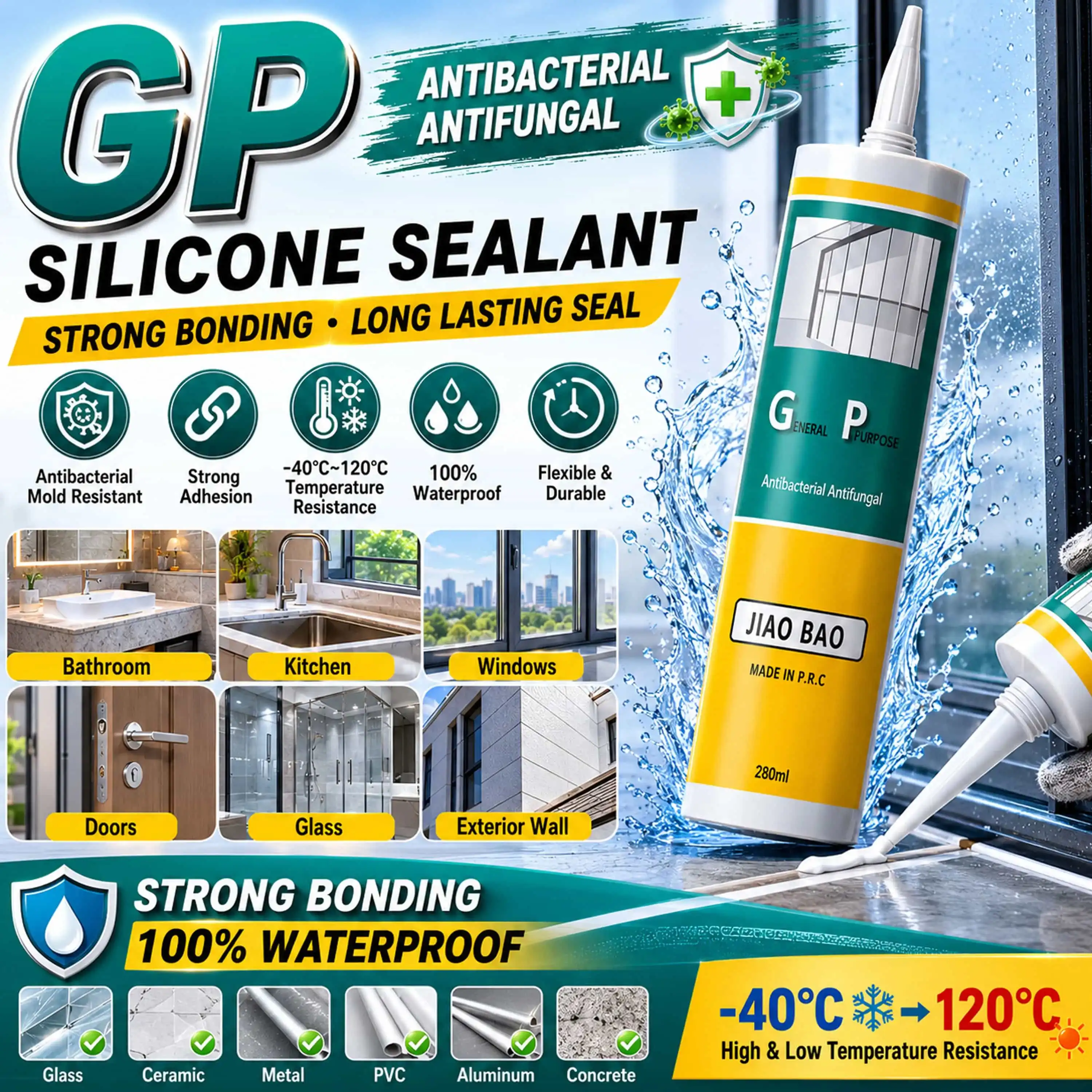
Adhesion begins before you press the trigger. All surfaces must be thoroughly cleaned to remove dust, oils, old sealant layer, and moisture. Rub metal and glass surfaces with rubbing alcohol or silicone surface cleaner and lint-free towels until film is gone. Using a tool knife, remove any old material from sealed seams, ensuring the foundation below is dry and intact. Acetoxy-cure formulations shouldn't be utilized on porous surfaces due to alkaline reactions. Use the maker's recommended primer if you can't avoid them. Air quality matters. Humidity promotes drying, but temperatures below 5°C slow it down significantly.
A normal caulking gun fits the 300ml or 600ml cylinder. Cut the nozzle tip at 45 degrees to acquire the desired bead size, commonly 6–8 mm for joint application. Break the inner lock with a long nail or drill tool. GP General Purpose Silicone Sealant maintains consistent joint pressure and gun speed. Overfill the gap. The paste-like texture prevents vertical slippage, although masking tape may be needed to cleanly line horizontal seams. Smooth the bead immediately with a moist finger, silicone tool, or soapy water and water. Remove excess substance before 15 minutes, when skin forms.
Water hardens sealant from the outside in the bead. At typical circumstances (23°C, 50% relative humidity), joints less than 6 mm deep heal in 24 hours, whereas deeper treatments take one day for 3 mm. Deserts may inhibit this process, whereas dampness speeds it up. Stay out of the rain for six hours and don't move or stress the joint for 24 hours to cure. The material has 18 Shore A hardness when set. This is softer than most industrial sealants, making it more flexible but less wear-resistant in high-traffic areas.
Press carefully on the joint sides once the sealant dries to ensure adhesion. The surface should not lose adequately bonded material. Search for air bubbles or holes that might compromise sealing. These indicate poor tooling or insufficient material. Silicone seals can't be painted, so be sure your white, black, gray, or custom-matched color looks excellent before applying it. Unopened, cold, dry cartridges last 12 months. Partially used cartridges should be sealed and utilized within weeks. Periodically inspect pieces that move more than ±25% for fractures or adhesive failure.
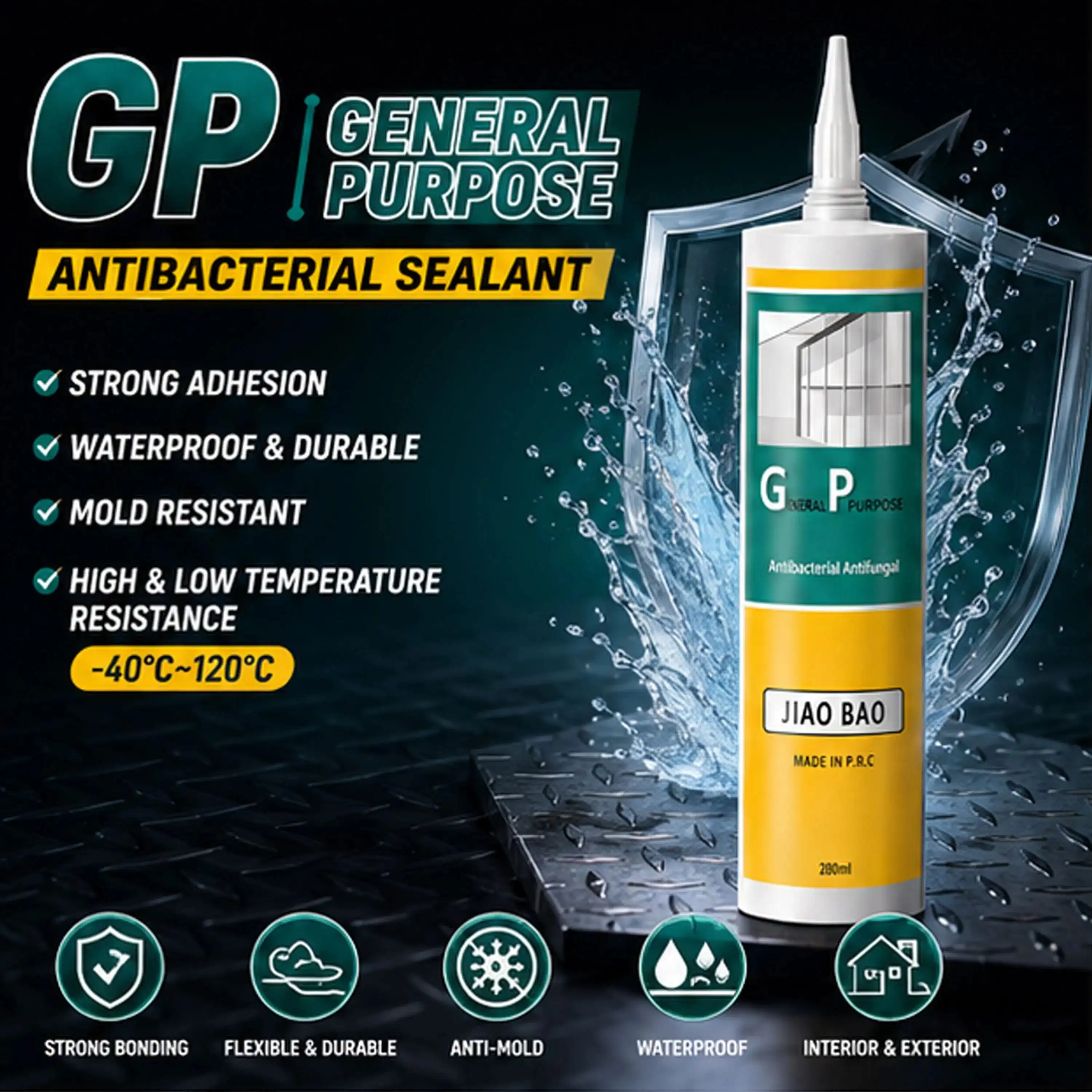
Long-term external exposure reveals its substance. GP General Purpose Silicone Sealant is unaffected by freeze-thaw cycles, UV radiation, ozone, or temperature variations that degrade other polymers. The polymer doesn't yellow, chalk, or crack in three to five years like acrylic and urethane since it doesn't react with oxygen or light. Even though the materials cost more than economy-grade sealants, field usage on building facades shows performance that lasts over twenty years without maintenance, lowering lifetime expenses.
This acetoxy-cure formula resists water, weak acids, oils, and many solvents after curing. Industrial situations with chemicals benefit from this. Remember that acetic acid generated while concrete cures may eat away copper, brass, lead, and zinc, which is critical for electrical systems and metal trim. Combining stainless steel with anodized aluminum is possible. The product's safety datasheets indicate minimal VOC emissions after curing and building material compliance. Acetic vapor generated upon application requires appropriate airflow. Non-structural glass usage can bind at 1.5 MPa, while structural glazing assemblies require high-modulus sealants.
Curtain wall builders claim this sealant fulfills ASTM C920 Type S, Grade NS, Class 25. This product effectively seals exterior joints without traffic and allows for ±25% flexibility. Window manufactures prefer the quick tack-free period because they can handle sealed units immediately without damage or contamination. HVAC installation crews enjoy how vibration resistance seals pipe junctions even while the equipment is functioning. Custom cabinet builders prefer its mold and mildew resistance in bathrooms, where organic seals might fail due to moisture.
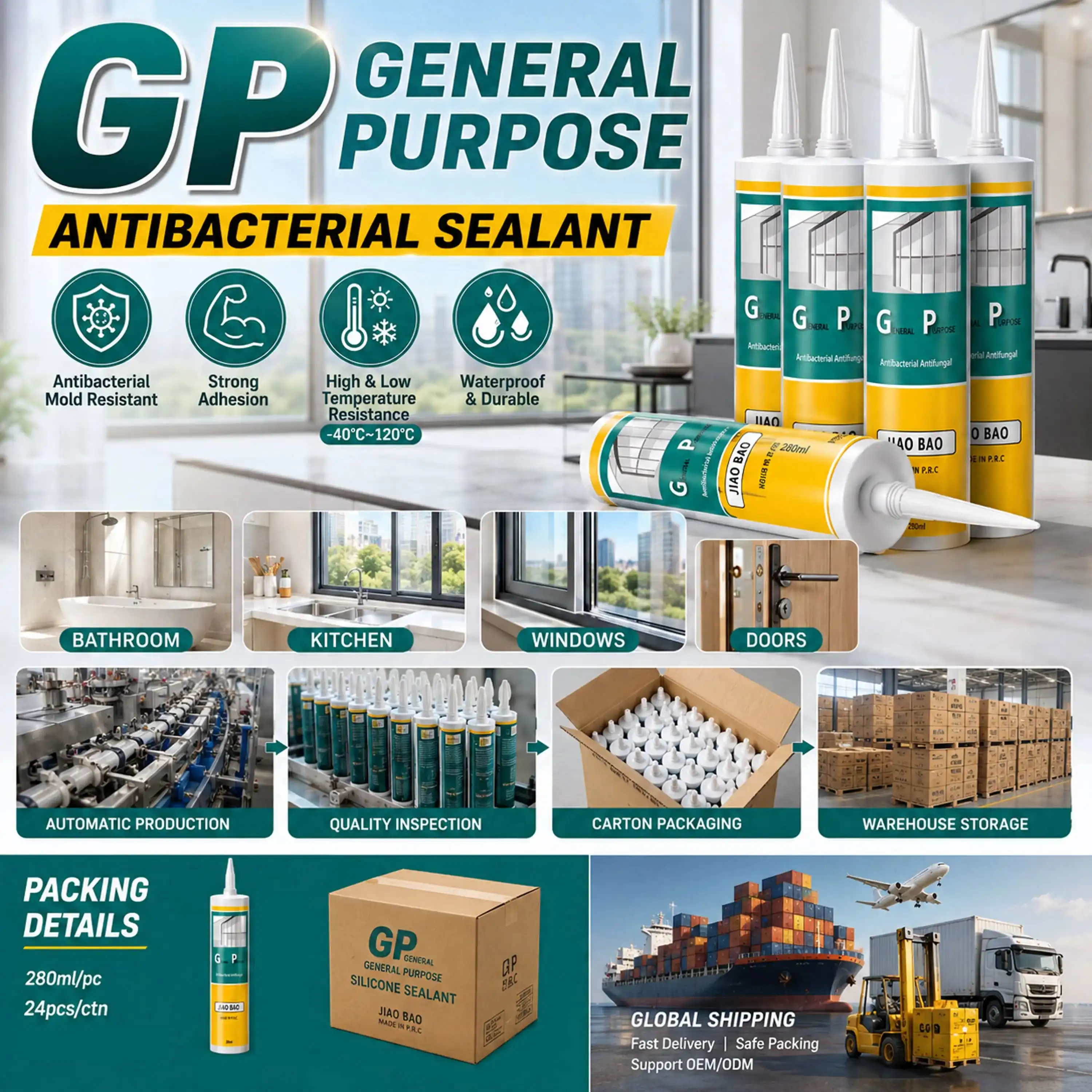
Good sealant comes from manufacturers with stringent formulation regulations and explicit technical requirements. Find ISO-certified vendors with complete product datasheets and batch testing. Since 2013, Shandong Jiaobao New Material Co., Ltd. has made colored silicone sealants. Their items are sold in China and beyond. Their acetoxy-cure formulae meet worldwide standards and may be customized through OEM/ODM agreements. Direct manufacturer connections eliminate distributor markups and provide technical support during design and application.
Buying in bulk reduces unit costs and ensures supply consistency throughout project phases. Manufacturers frequently provide discounts for pallet-sized orders. Normal 300ml and 600ml packages work for many tasks. Smaller cartridges are preferable for precision work, whereas bigger ones are ideal for mass output. With one to two weeks' advance time, you can manage just-in-time items without expensive storage. To comply with local construction rules and import restrictions, ensure sure the vendor can supply local compliance paperwork and labeling for multi-country projects.
Before placing a significant purchase, request production samples instead of personalized ones. Perform real-life side-by-side adhesion tests on your surfaces to assess tack-free time, tooling, and cure. Reliable vendors provide product instructions and assist restore broken components. Jiaobao offers refunds or replacements for things that don't operate within their shelf life. This displays their confidence in their consistency and dedication to client satisfaction.
Acetoxy sealants apply to many non-structural glazing and sealing tasks. However, other varieties are tailored to special purposes. GP General Purpose Silicone Sealant fits this category for everyday applications. Neutral-cure silicones may be used on natural stone, marble, and concrete but cost 20–30% more and fix slower. They don't corrode metal. For curtain walls that carry weight, structural silicone sealants are stiffer and stronger but less flexible. Industrial ovens and autos employ high-temperature versions that can tolerate continual contact above 150°C. Low-modulus versions can endure excessive joint movement in seismic zones or hot plastic panels.
Acrylic latex caulks may be coated and are affordable for inside trim work when appearance is more important than endurance. However, they lack weatherproofing and flexibility for outdoor usage, so they must be replaced every three to five years. Silicone and acrylic make polyurethane seals. They resist wear, painting, and UV radiation better than silicone and acrylics. However, they are less flexible and can't take high temperatures, making them unsuitable for joints that move a lot or are exposed to severe weather.
Government regulations and indoor air quality concerns are boosting demand for eco-friendly, low-odor formulations. Older acetoxy sealants emit acetic acid smells during curing. Newer models minimize emissions without impacting performance. Neutral-cure versions that don't smell are ideal for hospitals, schools, and home renovations where airflow is limited. These solutions usually include green construction certifications and LEED points, making them desirable to sustainable buying strategies. Make sure adhesion and weather resistance fulfill project demands when picking low-odor options. Some eco-friendly formulas lose durability for environmental protection.
Learning to apply GP General Purpose Silicone Sealant may transform maintenance and construction tasks. Knowing how moisture dries and employing the correct surface preparation and tooling processes influences seal longevity and performance. For manufacturing, HVAC, and glass, this acetoxy-cure solution is weatherproof, flexible, and adheres to non-porous surfaces. Experienced manufacturers offer consistent quality, skilled assistance, and affordable costs to maintain your project on track and under budget. After reading this, you may seal a window seam or pick commercial wall materials. This will provide long-lasting, professional effects that withstand time and weather.
Can I use this on marble or bare stone?
Drying acetoxy-cure silicone seals release acetic acid. This acid erodes and colors alkaline materials including marble, limestone, and concrete. Use a neutral-cure silicone mixture with natural stone to avoid this chemical reaction and wear well.
Caulk doesn't usually dry completely. Why?
Incomplete healing usually occurs because the substance didn't acquire enough dampness, went bad after 12 months, or was utilized in an enclosed environment without appropriate airflow. Deep beads above 12 mm may harden outside but not inside since water can't pass through.
Can the sealer be painted to match?
Silicone surfaces repel water- and oil-based paints due to their slipperiness. This makes painting unsteady and impossible. Material selection should match color. Jiaobao's distinctive hues can fulfill RAL or project color requirements before application.
Shandong Jiaobao New Material Co., Ltd. has made specialist materials for over 10 years and can aid with closure. We manufacture ISO-certified GP General Purpose Silicone Sealant and offer 1-2 week shipment, full OEM/ODM customisation for color matching and packaging. Our experts recommend tools for curtain wall installations, industrial production, and construction material processing. If you need to test a sample before ordering in bulk or need ongoing technical support during a project, email dorashen@cnjiaobao.com to discuss how our low prices, reliable supply chains, and quality guarantee can lower your procurement risks and ensure smooth operations.
1. American Society for Testing and Materials. "Standard Specification for Elastomeric Joint Sealants." ASTM C920-18, 2018.
2. Klosowski, John M., and Steven J. Stancil. "Silicone Sealants: Chemistry, Properties, and Applications in Building Construction." Journal of Building Materials Science, vol. 45, no. 3, 2017, pp. 287-302.
3. International Standards Organization. "Building Construction—Jointing Products—Classification and Requirements for Sealants." ISO 11600:2002, 2002.
4. Patterson, David R. "Performance Evaluation of Acetoxy versus Neutral Cure Silicone Sealants in Weathering Environments." Construction Materials Quarterly, vol. 29, no. 2, 2019, pp. 145-163.
5. Chen, Wei, and Margaret Torres. "Adhesion Mechanisms of Silicone Sealants to Non-Porous Substrates." Polymer Adhesion and Interface Science, vol. 12, no. 4, 2020, pp. 421-438.
6. National Glass Association. "Glazing Manual: Sealant Selection and Application Guidelines for Architectural Glass." NGA Technical Publication, 2021.
November 16,2023
Enterprise Name
The sealant has very strong adhesion and performs well even on glass and aluminum. After curing, it remains flexible and shows no cracking. Perfect for our facade projects.
November 16,2023
Enterprise Name
Stable quality across batches. Our customers especially like the smooth application and consistent extrusion. It helps reduce installation time on site.
November 16,2023
Enterprise Name
I used it for bathroom sealing. Excellent waterproof performance and no mold issues so far. It's been holding up very well in humid conditions.
November 16,2023
Enterprise Name
The neutral silicone works well on sensitive materials without corrosion. Very suitable for industrial applications requiring stable performance.
_1779347426672.webp)