November 16,2023
Enterprise Name
The sealant has very strong adhesion and performs well even on glass and aluminum. After curing, it remains flexible and shows no cracking. Perfect for our facade projects.
Jul 30, 2026
Choosing between GP (General Purpose) and NP (Neutral Purpose) silicone sealants directly impacts project durability and material compatibility. GP silicone sealants rely on acetoxy cure chemistry, releasing acetic acid as they harden, making them unsuitable for sensitive substrates like untreated aluminum or natural stone. NP sealants, meanwhile, cure through neutral mechanisms that produce alcohol or oxime byproducts, ensuring broader compatibility with metals, coatings, and porous materials. For applications involving GP Silicone Sealant for Glass and Aluminum, professionals must assess substrate reactivity, environmental exposure, and long-term adhesion requirements before specification.
GP Silicone Sealant for Glass and Aluminium is a type of acetoxy-cure system, which is a one-component RTV (Room Temperature Vulcanising) system. When these mixtures are exposed to wetness in the air, they release acetic acid during polymerisation. The vinegar-like smell is obvious when the sealant is being applied and goes away when it changes from a paste to an elastomer. The healing process takes about 15 minutes to finish, and the full cure depth moves along at a rate of about 3 mm per day, based on the temperature and humidity in the room.
NP sealants use cure systems that are alkoxy, oxime, or acetone-oxime. Instead of corrosive acids, these neutral-cure chemicals make alcohol or ketones as waste. Since there is no acidic release, there are no oxidation processes with metal substrates and there are no chances of stains on porous surfaces. Even though NP formulations usually need a little longer to cure at first (20 to 30 minutes for surface skinning), they work better with a wider range of materials.
Both types of sealants are made of silicone, which has great elasticity, UV stability, and heat durability. A good GP recipe has a tensile strength of more than 1 MPa and an extension rate of more than 300%. Shore A hardness is usually between 15 and 25, which is a good range for matching flexibility with structural strength. Service temperatures range from -50°C to +150°C, so they can handle changes in temperature throughout the year without breaking or softening.
NP coatings have similar mechanical qualities, but they can often move around more easily. Their modulus, which is the force needed to stretch the hardened sealant, is slightly lower than GP variants. This makes them better for joints that move a lot. Both types don't absorb much water, but NP versions sometimes have slightly better hydrophobic performance in situations where they are submerged for a long time.
The performance of silicone sealants is governed by international norms. Both GP and NP products are classified by ASTM C920, which lists requirements for Type S (single component), Grade NS (non-sag), Class 25 (±25% joint movement capability), and different use names. ISO 11600 sets up parallel testing frameworks for Europe. Certification compliance proves that the product is resistant to weathering, water immersion, cycling between compression and extension, and sticking together for a long time.
Environmental concerns are becoming more and more important in procurement decisions. Formulations with low VOC (Volatile Organic Compounds) meet strict pollution rules without lowering performance. When set up properly, both the GP and NP versions can make LEED project contributions. However, because acetoxy sealants are corrosive when they dry, they may require more safety measures in the workplace than neutral options.
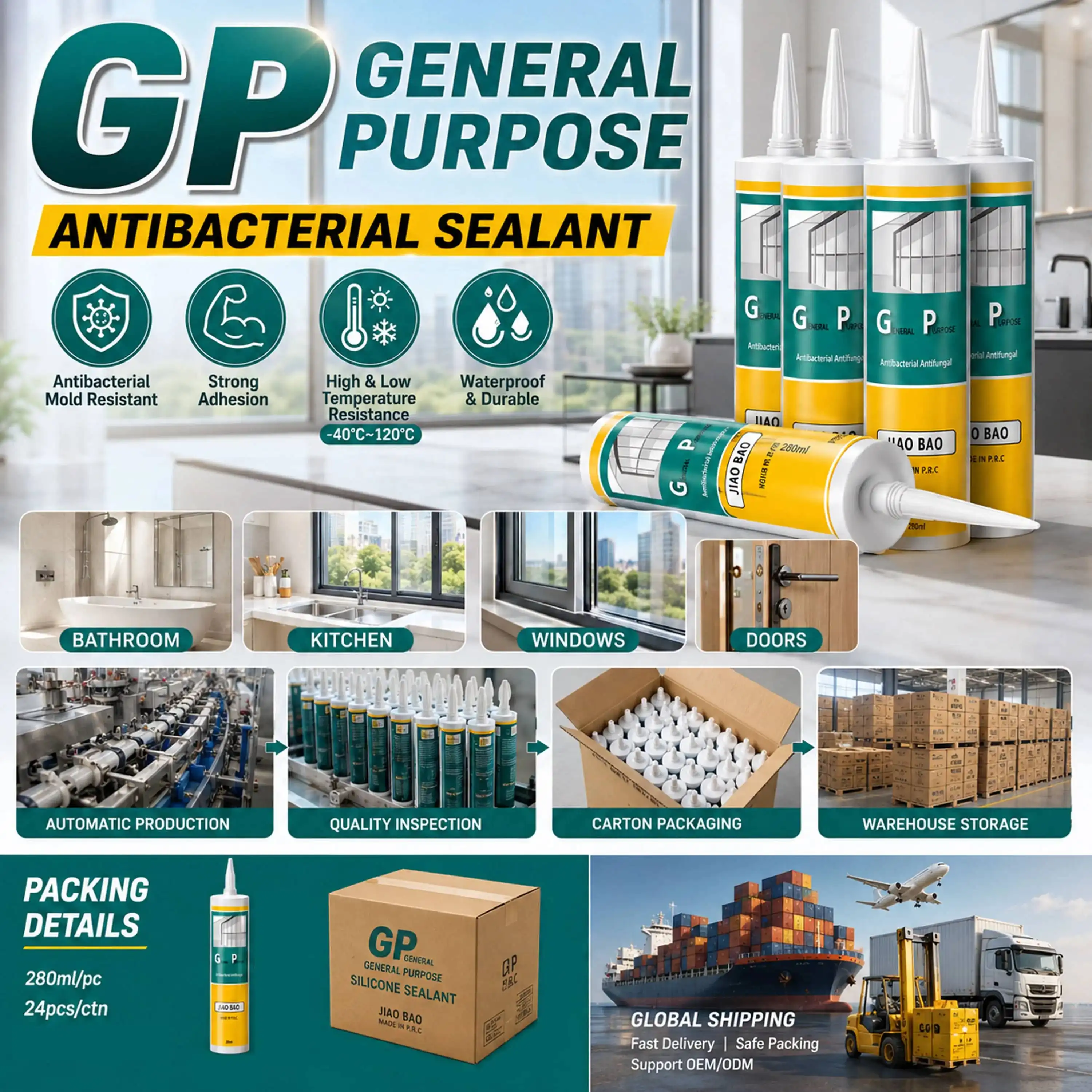
When you want to attach float glass to anodised aluminium or powder-coated shapes, GP Silicone Sealant for Glass and Aluminum works great. The acidic cure chemistry makes it easier for the paint to stick to these non-porous treated surfaces without the need for a primer. Anodised coatings make solid oxide layers that can't be attacked by acids, and powder coats protect well enough during the curing process.
Acetoxy systems don't always work well with mill-finish aluminium. Acetic acid mixes with bare aluminium, which could lead to metal rust, discolouration, or failure to stick together. In this case, NP coatings are required. Their neutral cure chemistry gets rid of the risk of corrosion, so they can be used directly on copper, brass, and zinc-coated surfaces as well as metals that haven't been treated.
Surface preparation remains critical regardless of sealant choice. Applying isopropyl alcohol with one cloth and immediately wiping off any residue with a second clean cloth is called the two-cloth solvent wipe method. It gets rid of oils, dust, and manufacturing residues that make adhesion less effective. To keep contaminants from being re-deposited, this process must be finished before the liquid evaporates.
Sealant works best when the joints are designed correctly. Width-to-depth ratios of 2:1 are best for most glass jobs because they keep stress from building up too much. Backer rods or bond breakers make sure that there is adhesion on both sides, which lets the sealant stretch instead of tear when the joint moves. Backing materials need to be compatible with the sealing chemical so that the plasticiser doesn't move or the adhesive is harmed.
GP and NP adhesives both have thixotropic behaviour, which means they flow when pressure is put on them but don't sag when they're on a vertical surface. Beads are formed evenly when extrusion rates stay the same, which are usually 80 to 120 grams per minute for manual application. Tooling should be done during the sealant's open time, and the surface should be smoothed to help it stick and get rid of any air pockets. When you over-tool, you can make surface flaws and pull the glue away from the materials.
Humidity has a direct effect on how fast something cures. The best conditions are around 23°C and 50% RH. Low humidity conditions slow down polymerisation, which increases the time between tacky and fully cured. Too much wetness speeds up surface skinning, which could trap uncured material under the skin layer and cause it to fail to stick together.
Adhesion loss is usually caused by not cleaning well enough, bases that don't stick well together, or sealants that don't make good contact. Shrinkage cracking is a sign of low-quality formulations that have too many hydrocarbon extenders, which are mineral oils added to save money. As the oils disappear after the sealant has dried, the volume of the sealant drops. This causes stress concentrations that break the seal. Premium formulas from well-known companies keep volatile material to a minimum, which keeps the dimensions stable over the service life.
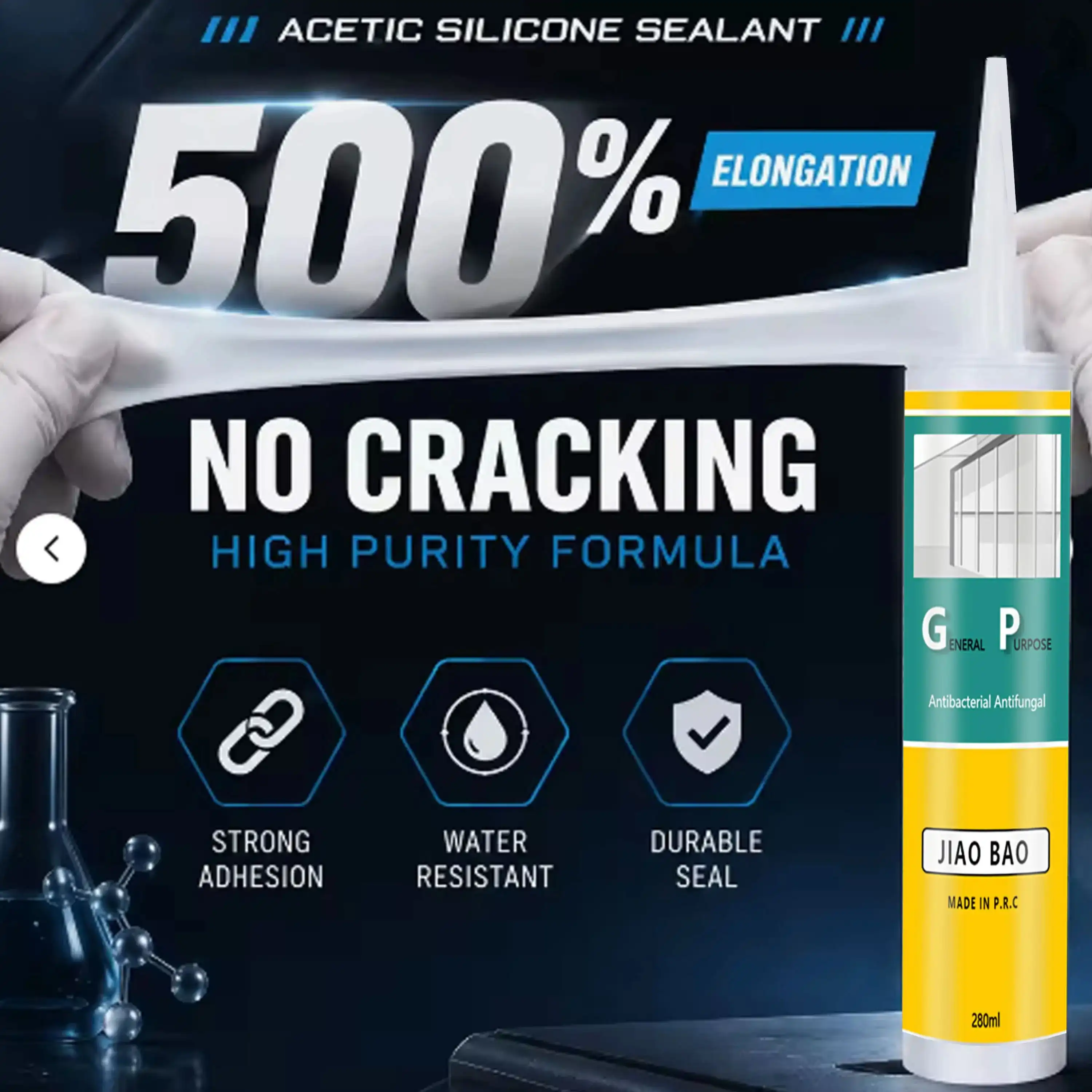
Long-term tests done outside show that there aren't many differences in how well quality GP and NP formulas resist UV breakdown. Both of them don't chalk, yellow, or lose their mechanical properties when put through accelerated weathering processes that are meant to mimic 20-year service times. All silicone chemicals have a siloxane backbone that makes them very resistant to ozone, water, and changes in temperature.
Real-world performance in commercial curtain wall installations confirms laboratory findings. GP sealants keep high-rise facades flexible and stuck together in a wide range of climates, from humid subtropical areas to dry deserts. NP variants last the same amount of time in applications that are just as demanding. The choice of product is based on substrate compatibility rather than weather resistance.
There are more success factors in industrial settings. When washing with alkaline products, which can break down acetoxy-cured materials over time, NP sealants usually work better than GP options. Neutral-cure systems are often used in electronics and auto assembly plants because they can handle process chemicals without affecting the stability of the seal.
Immersion resistance is important for uses that will be in water all the time. Both types of sealant work well when they are periodically wet, but NP formulations are slightly more resistant to hydrolysis when they are continuously submerged. This benefit comes in handy for covering swimming pools, building aquariums and setting up water treatment plants.
Tensile adhesion testing under repeated loading conditions shows that GP and NP systems have similar wear resistance when they are properly defined. Joint movement capability—the sealant's ability to allow the base to grow and shrink—depends more on the quality of the formulation than the fix chemistry. According to ASTM C920, the best products in both groups have a movement classification of ±25%, which makes them ideal for most building glazing uses.
Case studies from door and window makers show that GP Silicone Sealant for Glass and Aluminum works reliably in millions of units that have been installed. When used correctly, acetoxy sealants in residential window assemblies usually last longer than 15 years before they need to be replaced. NP sealants last about as long in situations where base suitability determines which one to use.
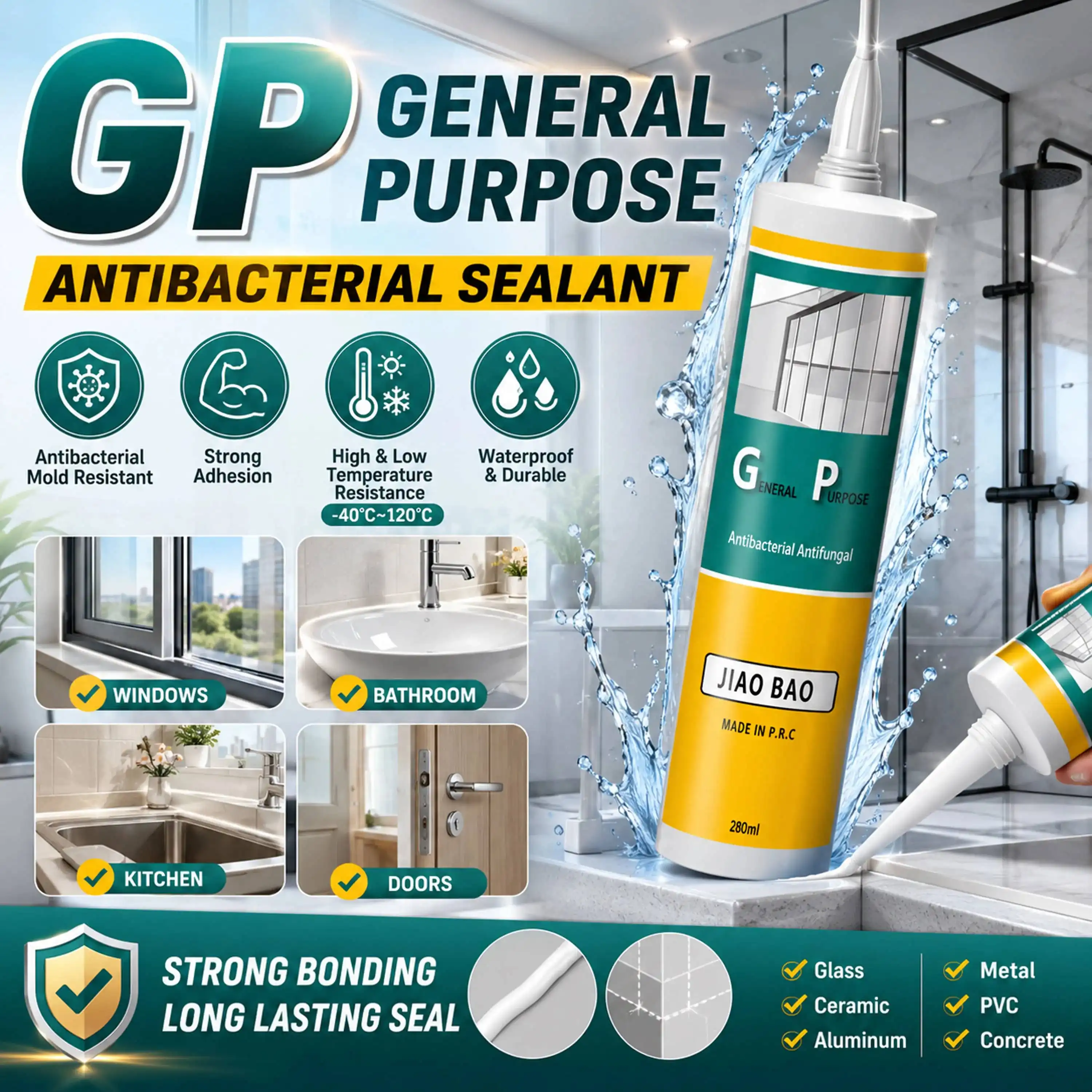
GP Silicone Sealant for Glass and Aluminium usually costs less per unit than NP alternatives because they are easier to make and use less expensive raw materials. These savings are even bigger when you buy in bulk for big jobs. A good GP recipe 300ml refill might cost 15–25% less than a similar NP product. During periods of buying in large quantities, this price difference becomes important.
The total cost of ownership is more than just the price of the car. Application speed, reducing waste, and avoiding extra work all play a role in project costs. The faster initial cure of GP sealants can speed up industrial glazing processes and lower the amount of work-in-process inventory. But substrate incompatibility that needs NP specification takes away any GP cost benefit, because choosing the wrong sealant leads to warranty claims and repair costs that are much higher than the material savings.
Established suppliers keep large distribution networks that make sure their products can be bought in all major markets. Shandong Jiaobao New Material Co., Ltd. is a good example of a seller that offers both GP and NP formulations with stable quality. They have been in business since 2013 and have more than 13 years of experience making things. One-component RTV silicone seals are in their line of products. They come in 300ml and 600ml sizes and in both sausage and cartridge forms.
Lead times affect how purchases are planned. Standard formulations can ship within one to two weeks, which works with just-in-time production schedules. Delivery times may be longer if you need custom colour matching, which is especially important for building uses that need to follow the RAL colour chart. Reliable providers keep enough inventory on hand to keep projects on schedule and offer a range of shipping choices by land or sea.
Service after the sale is what sets luxury sellers apart from commodity providers. Having access to technical datasheets, safety documents, and application guidance helps people choose the right products and install them correctly. Field problems can be fixed quickly with responsive supplier communication, which keeps project delays to a minimum.
Quality control methods make sure that each batch is the same as the last. ISO certification proves that testing and production methods are standardised. Suppliers who offer product promises, like replacement guarantees for quality problems that happen within the shelf life, show that they are confident in their formulas and lower the risk of buying.
The first choice is based on identifying the substrate. GP formulations work well with glass-to-anodized aluminium systems, which take advantage of their good bonding and lower cost. NP seals are needed for projects that use mill-finish aluminium, natural stone, marble, or materials that contain copper to keep them from rusting or staining.
Environmental exposure research helps choose the best products. For use outside, UV-stable formulas that have been shown to withstand the weather are needed. Both the GP and NP versions meet these requirements. Because NP products are better at resisting cleaning agents and alkaline environments, they may be better for interior installations that need to be careful about chemical exposure.
Joint design parameters affect the choice of sealant. Technical specs must be compared to movement standards, joint width, depth, and the fit of backing materials. The sealant's ability to move with the ground without breaking apart or sticking together is based on its Shore hardness and stiffness values. GP Silicone Sealant for Glass and Aluminum offers excellent flexibility and adhesion properties, making it suitable for joints that experience thermal expansion and contraction in glass-and-aluminum curtain wall applications.
Technical datasheets give you important information about efficiency. It is important for procurement managers to make sure that the tensile strength is higher than 1.0 MPa, the elongation is higher than 300%, and the Shore A hardness is in the right range. The tack-free time, full cure depth rate, and service temperature ranges need to be in line with the needs of the application and the production schedule.
Validation of certification proves agreement with regulations. As part of ASTM C920, the Type, Grade, Class, and Use labels spell out the planned uses and expected performance. Compliance with ISO 11600 offers parallel market approval in Europe. Ratings for fire resistance are important for following building codes in some places.
The results of a factory audit show how well the manufacturing system works and how well quality control is in place. Suppliers with well-established production methods, written quality control routines, and programs for ongoing growth provide more consistent goods than businesses that don't have official systems in place.
When there are competitive bids, the price must be weighed against the total value delivered. The cheapest option might have extenders that hurt performance or not meet the requirements of the specification. Most of the time, mid-range prices from well-known brands are the best deal because they balance budget with solid performance.
Building relationships with suppliers has long-term benefits. When you buy in large amounts on a regular basis, you can negotiate prices, get better technical support, and be given priority when supplies are low. OEM/ODM features let wholesalers create custom formulations and private name products to stand out in the market. Before buying a lot of a product, testing a sample makes sure it works well. Specification mistakes can be avoided by asking for samples of the product, trying its adhesion in-house, and looking at how it handles during application.
In glass and aluminium production, GP Silicone Sealant for Glass and Aluminum and NP silicone seals are used for different things. Acetoxy GP formulas are cheaper and work very well with surfaces that are compatible, such as anodised aluminium and glass. Neutral-cure NP goods work with a wider range of materials, which is important for uses that need to work with sensitive metals and porous surfaces. When making purchasing choices, material suitability, environmental conditions, and long-term performance needs should be given more weight than original cost. Reviewing technical specifications, making sure suppliers meet quality standards, and trying the product in use all help choose the best product for the job.
GP Silicone Sealant for Glass and Aluminum works well on anodised and powder-coated aluminium, but it shouldn't be used on bare or mill-finish aluminium. For unwashed aluminium surfaces, the acetic acid that is released during fix can corrode them, discolouring them and making it impossible for them to stick. For these sensitive jobs, NP coatings are suggested.
Standard motorised or hand caulking guns can be used with both types of sealant. Application methods are the same for both GP and NP formulations. The main differences are in how the substrate needs to be prepared, not in the dispensing equipment or tooling methods.
GP acetoxy sealants usually become tack-free in 10 to 15 minutes, which is a little faster than NP options, which take 20 to 30 minutes. However, the full cure depth moves at about the same rate for both chemicals—3 mm every 24 hours in normal conditions.
In both GP and NP systems, good manufacturers can match colours to your exact needs. For building uses, colour uniformity across batches is very important. For high-end curtain wall and facade projects, suppliers who can match colours from the RAL colour chart give you the freedom you need.
To find the best GP Silicone Sealant for Glass and Aluminum, you need a seller with both technical know-how and a track record of reliable production. Shandong Jiaobao New Material Co., Ltd. has been making acetoxy and neutral-cure silicone formulas for more than 13 years. Our one-component RTV sealants have a tack-free time of 15 minutes, a tensile strength of over 300%, and can be used in temperatures ranging from -50°C to +150°C.
Our goods meet ISO and CE certification standards and come in 300ml and 600ml sizes with flexible sausage and cartridge packing. You can get your products in one to two weeks, and we offer OEM/ODM customisation, quality guarantees, and repair assurances while the products are still in stock. Our technical team can help you come up with specifications and give advice on how to use our products, whether you need standard white, black, and grey options or custom RAL colour matching for architectural projects. You can email dorashen@cnjiaobao.com to get product samples, detailed datasheets, or to talk to an expert silicone sealant maker about your unique sealing needs.
1. Wolf, A.T. (2018). Silicone Sealants in Construction: Properties, Performance and Applications. ASTM International Standards Publications.
2. Klosowski, J.M. & Smith, T.L. (2019). Advances in Silicone Technology for Building Envelope Sealing Systems. Journal of Building Materials and Construction Science, Vol. 34, No. 2, pp. 145-167.
3. Patterson, R.K. (2020). Material Compatibility in Architectural Glazing: Understanding Sealant-Substrate Interactions. Construction Specifier Technical Series.
4. European Sealant Association (2021). ESA Technical Guide: Selection and Application of Silicone Sealants for Fenestration. Brussels: ESA Publications.
5. Chen, L. & Rodriguez, M. (2022). Long-Term Performance Evaluation of Acetoxy and Neutral-Cure Silicone Sealants in Curtain Wall Applications. Building and Environment Research, Vol. 198, pp. 107-123.
6. American Architectural Manufacturers Association (2023). AAMA 800-23: Voluntary Specifications and Test Methods for Sealants. Schaumburg: AAMA Standards Division.
November 16,2023
Enterprise Name
The sealant has very strong adhesion and performs well even on glass and aluminum. After curing, it remains flexible and shows no cracking. Perfect for our facade projects.
November 16,2023
Enterprise Name
Stable quality across batches. Our customers especially like the smooth application and consistent extrusion. It helps reduce installation time on site.
November 16,2023
Enterprise Name
I used it for bathroom sealing. Excellent waterproof performance and no mold issues so far. It's been holding up very well in humid conditions.
November 16,2023
Enterprise Name
The neutral silicone works well on sensitive materials without corrosion. Very suitable for industrial applications requiring stable performance.
_1779347426672.webp)