November 16,2023
Enterprise Name
The sealant has very strong adhesion and performs well even on glass and aluminum. After curing, it remains flexible and shows no cracking. Perfect for our facade projects.
Jul 20, 2026
Finding reliable suppliers for Nail Free Glue Heavy Duty starts with identifying manufacturers who combine proven production experience with international certification compliance. Reputable suppliers typically operate modern facilities, maintain strict quality control systems, and demonstrate transparent communication across procurement channels. Leading manufacturers often showcase ISO certification, CE compliance, and robust customer service infrastructure. When sourcing adhesive solutions for industrial, construction, or distribution needs, partnering with established suppliers ensures product consistency, technical support, and competitive pricing structures that align with your operational requirements and project timelines.
Today's manufacturing and construction industries need adhesives that don't damage the surface and stick things together very well. Nail Free Glue Heavy Duty is a big step forward in fastening technology. It replaces mechanical tools with chemical ties that keep the purity of the material. This type of glue mostly uses modified silane polymer chemistry to stick different base materials together at the molecular level, without having to penetrate or damage the surface.
Traditional ways of fastening make holes that stay there, damage waterproof barriers, and make noise during installation. New kinds of adhesives stick things together by combining with moisture in the air to make strong, stretchy links. These goods have tensile strengths higher than 2.5 N/mm² and keep their 300% elongation at break, which means that bonded structures can handle structural movement and thermal expansion without breaking. The chemistry in these adhesives makes them have instant grab properties, which means they can support vertical loads as soon as they are applied, without the need for mechanical bracing or long curing times.
These adhesives are used by builders to put up curtain walls, close door and window frames, and finish the inside of buildings when screws can't be seen for aesthetic reasons. These mixtures are used to join different types of materials, like metal to glass, plastic to wood, and ceramic to aluminium, when mechanical fasteners don't work well enough. They are used in manufacturing industries like automotive parts, HVAC equipment assembly, and appliance production. The adhesive can withstand temperatures from -40°C to 80°C, so it will work well in a wide range of harsh environments, from cold storage rooms to warm regions.
Procurement managers like these materials because they make operations run more smoothly. Cutting out the steps of drilling, fastener insertion, and surface repair speeds up the installation process. Less material is wasted because foundations stay whole and don't get punctured. Labour costs go down when application processes are made easier and require fewer tools. Projects keep work areas cleaner by not making any dust and reducing noise pollution. This is especially helpful in buildings that are already occupied or in manufacturing areas that are sensitive to noise. The waterproofing qualities of the glue give it extra sealing power, so it can be used instead of different gasket materials in many situations.
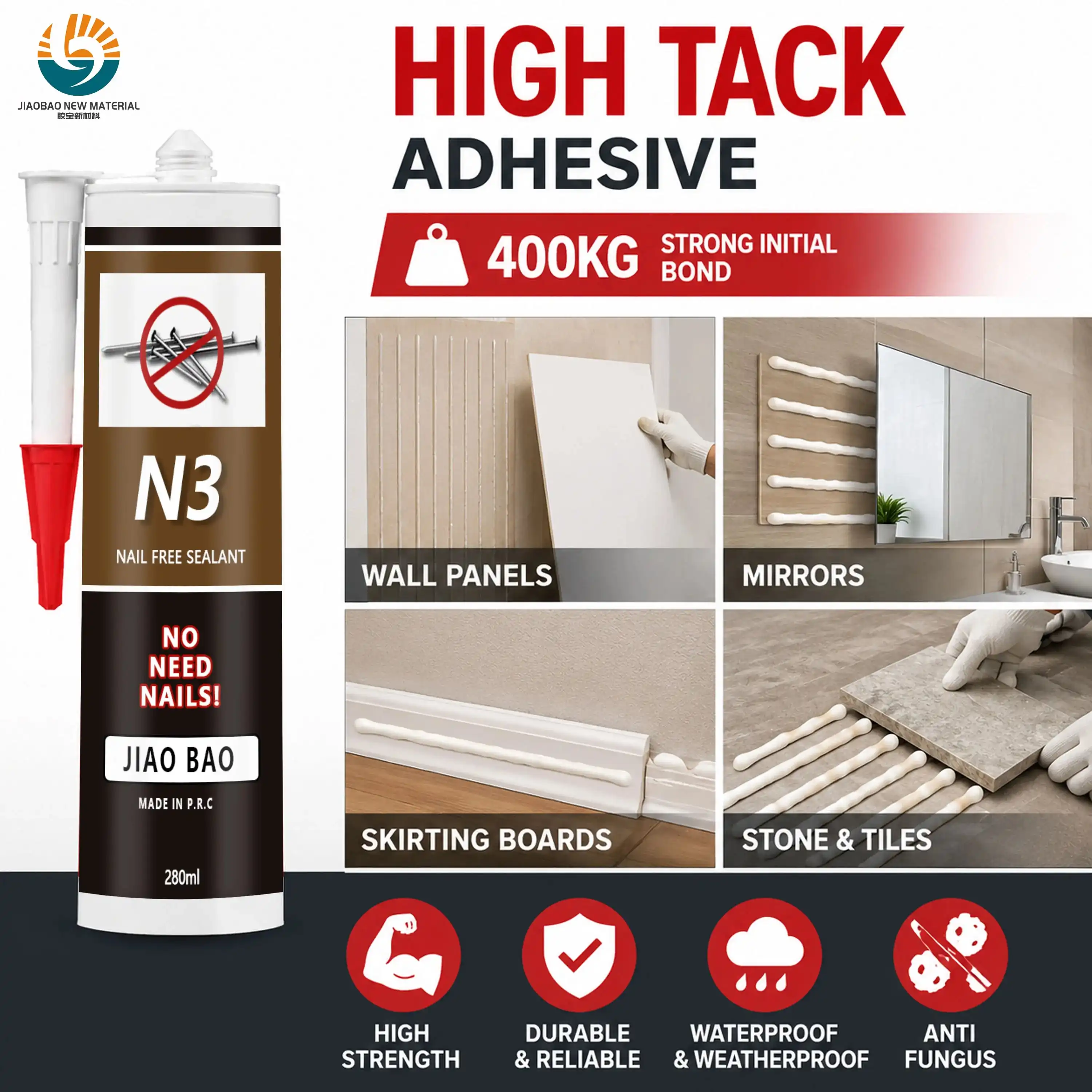
The supplier you choose has a direct effect on the success of the project, the reliability of the product, and the long-term costs of running the business. Manufacturers who are qualified show certain skills that set professional Nail Free Glue Heavy Duty sellers apart from stock vendors. By regularly checking these factors, procurement investments are kept safe and relationships are formed that can adapt to changing business needs.
International accountability is what builds trust in a seller. ISO 9001 approval means that quality is managed in a planned way throughout the whole production process, from checking the raw materials to testing the finished product. The CE mark shows that the product meets European safety and environmental standards, which is important for selling in other countries. Products that meet the ASTM C557 standards for plasterboard glue or the ISO 11600 standards for building sealants show that they are technically sound and have been tested thoroughly. Suppliers with these certifications are audited on a regular basis to make sure they follow written processes and keep quality records that can be tracked.
History of manufacturing shows true capabilities beyond what is said in marketing materials. Suppliers who have been in business for more than ten years usually have a lot of experience with improving processes and formulas, and they also have a lot of established ties with suppliers of high-quality raw materials. One to two weeks for production lead times means that the scheduling system works well and there is enough capacity to handle changes in volume without sacrificing quality. Facilities that handle more than one product line show operating flexibility by letting customisation happen without having to wait for a long time for retooling. Manufacturers with a lot of experience keep expert staff on hand who can help with application problems and make bonding suggestions that are specific to the base.
Full product lines show that a supplier is sophisticated and aware of the market. Leading makers offer different viscosity grades, colour matching services (including compatibility with RAL colour charts), and a range of packing options, from 300ml packs to 600ml sausages. With OEM and ODM capabilities, you can make your own labels, get formulations made just for certain substrates, and make sure that the design of the packaging fits with your brand's needs. Suppliers who offer both neutral-cure and moisture-cure versions show that they know how to formulate products for a wide range of polymer systems. The ability to change colours is especially useful for building projects that need to match the look of cladding, window frames, or internal finishes very precisely.
For global procurement to work, shipping plans and delivery networks need to be able to adapt quickly. Suppliers who offer both sea freight for large orders and fast land transport for urgent needs show that they are good at logistics. Professional supply chain management includes clear minimum order quantities, clear price systems for different volume levels, and written shelf life guarantees (usually 12 months). Customers are protected from lack of raw materials or production delays when suppliers keep enough supplies in reserve. Expertise in export paperwork, such as material safety data sheets, certificates of origin, and help with customs compliance, makes it easier to buy things from other countries.
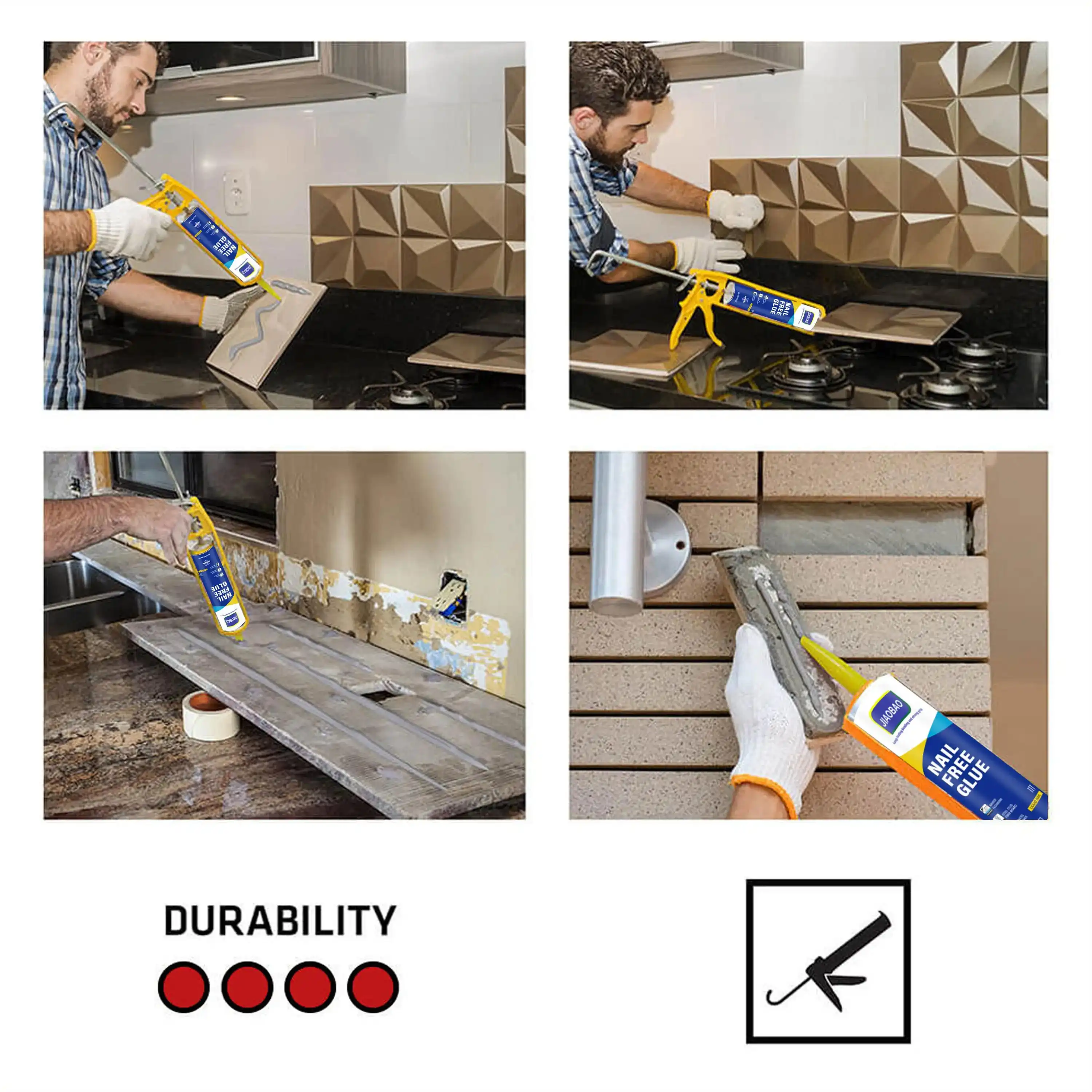
Knowing about the chemistry of adhesives helps you make decisions about specifications that match performance characteristics to application needs. There are different polymer bases that are better for different types of bonding problems, environmental exposures, and substrate mixtures. Choosing the right Nail Free Glue Heavy Duty formulas stops problems in the field and saves the most money.
The current standard for professional-grade adhesive applications is modified silane polymer technology. These one-component systems heal by being exposed to wetness, so there's no need to mix them or make mistakes when applying them. The polymer chains make bendable links that allow different materials to expand and contract at different rates. Curing happens at a rate of about 2.5 mm per 24 hours at 23°C and 50% relative humidity, starting on the outside and working its way inside. The final bond has a Shore A hardness of about 50, which reduces vibrations and spreads stress evenly across bonded parts. This chemistry is very stable against UV light, so it won't break down when exposed to direct sunlight for long periods of time, which is common in outdoor uses.
Curtain wall contractors like these formulations best for structural glazing jobs where the strength of the bond directly impacts how well the building envelope works. The adhesive stays flexible even when the temperature changes, which keeps stress from building up at the edges of the glass. When surface protection is important, interior designers use modified silane products to fix mirrors, install trim, and connect decorative panels. These adhesives are used in factories to put together appliances, like refrigerator door covers and cooking appliances that need to cure in a way that doesn't smell or touch food.
The best bond formation and long-term success are guaranteed by using the right application method. Surfaces need to be cleaned to get rid of dust, oil, and other small bits that make it hard for molecules to stick together. Porous surfaces, like concrete or raw wood, may need to be primed to keep the glue from soaking in too much. When beads are applied, they should completely fill the joint spaces. Tooling should be done within the skin formation time (about 20 minutes) to make sure the beads are properly wet and touch the surface. High-viscosity pastes that don't sag before they fully cure are good for vertical applications.
The design of the joint has a big effect on how well it bonds. For most structural uses, the best joint width is between 6mm and 12mm, which is a good balance between saving material and spreading stress. To make up for the lower point-load capacity of bonded connections compared to fixed connections, the bonded area should be 30% bigger than what is needed for mechanical fasteners. Conditions in the environment during the application—temperatures below 5°C or above 35°C make it harder for the bond to cure and hold together.
Formulation choice is based on environmental exposure and project-specific needs. For outdoor uses, better weather resistance is needed, especially UV stability to keep the material from chalking or changing colour over a long period of time. Products made to be used outside have pigments and stabilisers that keep their mechanical qualities even after being exposed to constant wetness, freeze-thaw cycles, and sunlight. When temperatures drop, formulations must stay flexible, but when temperatures rise in the summer, they must keep their combined power.
When used indoors, low-VOC emissions, quick surface cure, and neutral odour profiles that don't bother people are what are most important. Color-matched formulas are necessary for joints that can be seen in architectural woodwork, ceramic tile borders, and artistic trim where keeping the look of the whole thing consistent is important. Mildew protection is more important in damp places like bathrooms and business kitchens, where fungicides need to be added to the base formulations.
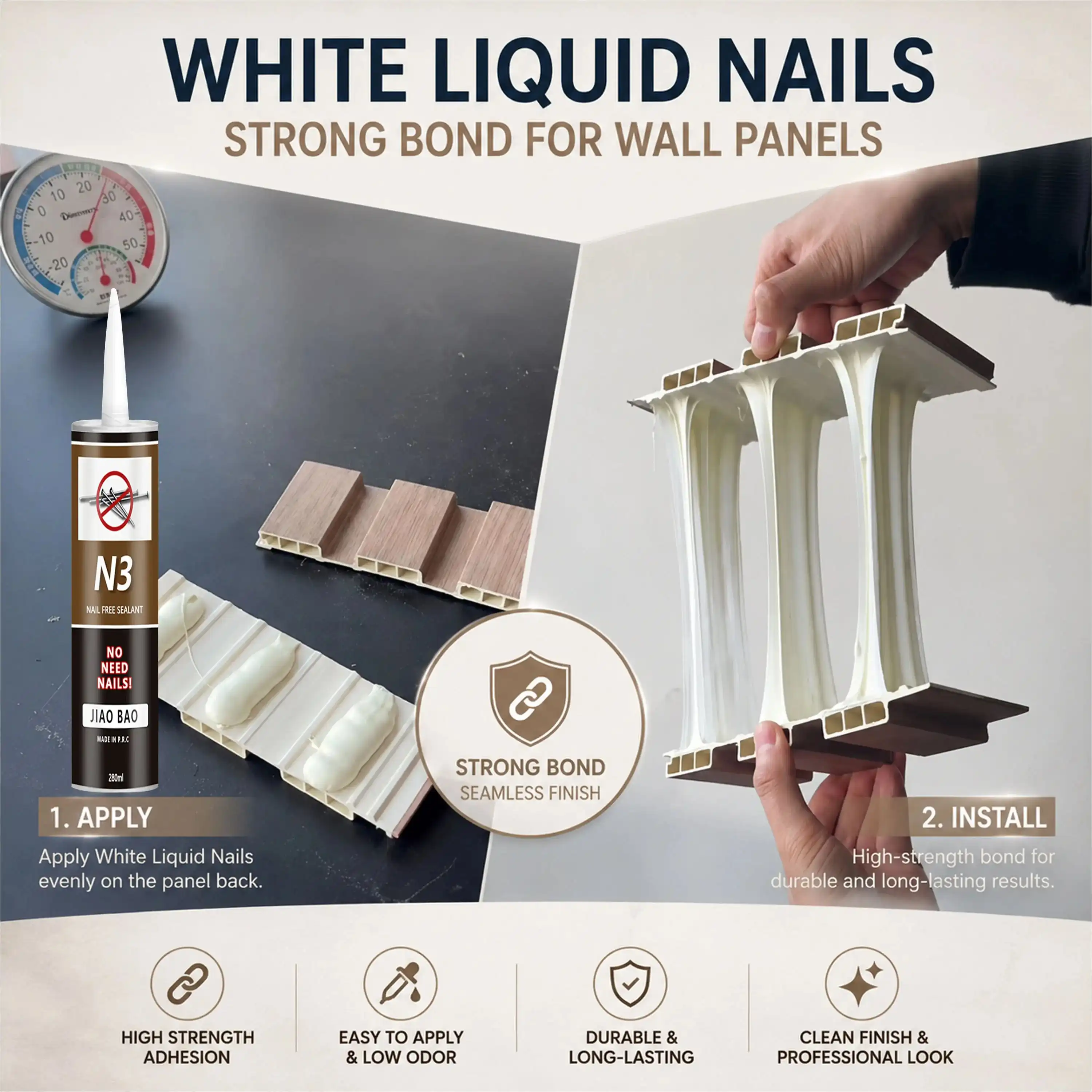
When it comes to performance, installation efficiency, and total cost, adhesive technology is on par with traditional fastening methods and other bonding systems. By understanding these trade-offs, you can choose the right technology for each application when using Nail Free Glue Heavy Duty.
When mechanical fasteners are used, they focus stress at specific places, which can cause brittle materials like glass or ceramics to break. Nail-free adhesives spread loads across the whole bonded area, which lowers peak stress and raises resistance to fatigue. Adhesives are much faster to install than screws or nails because you don't have to drill or fix the surface. Getting rid of noise and dust is helpful for remodelling projects in working buildings. Aesthetic benefits include joints that can't be seen and a surface that doesn't need bolt heads or cover caps.
But mechanical fasteners make full-strength connections right away, while adhesives need time to cure before they can be loaded. Bolted connections make it easier to take things apart for repair or changes, while bonded systems need to be taken apart destructively. Extreme temperatures that are above or below the service ranges of adhesives may require mechanical backing. When figuring out costs, you have to weigh the time saved by installing things faster against the possibility of higher material costs per linear metre.
Construction glue made from synthetic rubber or polyurethane tend to have lower material costs, but they usually don't work as well. These materials tend to creep more when they are loaded for a long time, which limits their use in structure uses. Curing times are very different, and some formulations need longer clamping times. Solvent-based versions give off volatile organic compounds, which can cause exposure problems at work and make it hard to follow the rules.
Epoxy systems have higher final strength, but they need to be mixed with exact amounts and can only be used for a short time. Two-part epoxies cure through exothermic reactions, which can make heat that hurts substrates that are sensitive to temperature. Rigid cured shapes aren't flexible enough to allow big units to move thermally. Modified silane polymers get around these problems by mixing the ability to hold things together with the ability to stretch and make single-component forms that are easy to use.
Environmental impact and technical performance are becoming more and more important in modern procurement. Formulations with low volatile organic compounds (VOCs) and no solvents meet strict emission standards, such as those needed for LEED approval and REACH compliance for European markets. Moisture-cure systems get rid of dangerous hardener parts and the safety steps that go with them. Stable paste consistency keeps workers from breathing in volatile fumes that are common in solvent-based alternatives. For cleanup, normal tools are used; no special chemicals or dumping methods are needed.
Sustainability concerns go beyond application safety to include effects throughout the lifespan. When compared to welded or riveted assemblies, adhesive bonding keeps the integrity of the material and makes it easier to disassemble and recycle parts at the end of their useful lives. Cutting down on the weight of shipping by getting rid of metal fasteners lowers carbon footprints across supply lines. When manufacturers use ISO 14001 environmental management systems, they show that they care more than just following the rules.
Strategic buying strikes a mix between low prices, dependable suppliers, and making sure the quality of the goods is high. Multiple evaluation criteria and relationship management techniques are used in effective sourcing strategies for Nail Free Glue Heavy Duty.
When you work directly with a manufacturer, you can often get the best prices and expert help. Companies like Shandong Jiaobao New Material Co., Ltd., which has been in business since 2013 and has over 13 years of production experience, are examples of well-known makers that keep their ISO certification and wide range of products. You can change the colours, work with OEMs, and get application engineering help from these suppliers that you can't get through distribution channels. Chemical production areas that have been around for a while have supply lines that are well-established and trained labour pools that are ready to go.
Distribution networks are useful when you only need a small amount of a product or want to buy a lot of different types of products at once. Regional distributors keep stock close to home, which cuts down on shipping costs and lead times for urgent needs. By combining sources, multi-line distributors make buying easier, but they usually have to pay more in margins. It is important to check the technical knowledge of the distributors because skilled distributors help with application advice and problems, while commodity distributors only handle transactions.
When you make a volume promise, you can get better prices and terms. A lot of the time, annual buy agreements protect prices against changes in raw materials and make sure that supplies are distributed evenly during times of lack. By asking for thorough quotes with clear cost breakdowns, you can compare sellers in a way that goes beyond just looking at headline prices. Terms of payment, minimum order quantities, and who is responsible for shipping all have a big effect on the total cost of acquisition.
Before committing to a number, a sample should be evaluated. Reliable sellers give you examples of their products to test in real-world situations. The procurement team should test the bond strength on sample surfaces, make sure that the curing rates meet the technical requirements, and make sure that the colour stays the same from one production batch to the next. Long-term performance reliability can be predicted by testing in conditions of extreme temperature and fast ageing. Writing down test procedures and results makes it possible to compare suppliers in an objective way.
B2B relationships that work well go beyond simple transactions and include partnerships where both parties work together. Communication about demand estimates on a regular basis helps sellers make the best decisions about when to schedule production and buy raw materials. Sharing application feedback leads to better formulations that fix problems with field performance. Suppliers that care about their customers' success offer professional training for installation teams, help with application problems, and the release of new products that meet the needs of new projects.
Quality assurance deals make it official what is expected of employees and how to fix materials that don't meet standards. Specifications that list accepted ranges for important factors like stickiness, repair rate, tensile strength, and colour match help avoid disagreements and make roles clear. Consistent quality checks are made possible by agreed-upon sampling and testing protocols. Suppliers who back their products with replacement guarantees if they don't work or last as long as they say they will show confidence in the manufacturing process.
To find trustworthy Nail Free Glue Heavy Duty suppliers, you need to carefully look at their technical skills, quality control systems, production experience, and the way they handle logistics. Modified silane polymer formulations work better than mechanical fasteners in tough industry and building jobs, and they keep the purity of the base. A good procurement strategy strikes a mix between competitive prices, stable suppliers, and full expert support. Before committing to a large order, testing products in real-world situations protects investments and makes sure that specifications are met. Building partnerships with skilled makers makes the supply chain more stable and gives you access to new ideas all the time. The world of adhesive technology is always changing, which is good for procurement teams that keep relationships with suppliers that can meet new needs.
High-quality Nail Free Glue Heavy Duty formulas made for use outside are very resistant to weather. Products made from modified silane polymers keep working well in temperatures ranging from -40°C to 80°C, even when exposed to UV light, water, and changes in temperature. Make sure the product's specs say it can be used outside, and make sure it has enough time to cure before it is exposed to the weather.
At normal temperatures (23°C, 50% relative humidity), skin forms on the surface in 20 minutes. About 2.5 mm of depth is added every 24 hours until the concrete is fully cured. Curing times are longer when thick beads are used or when the air is low. In most cases, handling strength is reached within a few hours. Depending on the joint shape, full mechanical qualities take 7–14 days to form.
Standard safety rules for building apply. Even with low-VOC formulations, make sure there is enough air flow. Protective gloves should be worn to avoid skin contact. Safety glasses protect your eyes from splashes. Uncured materials shouldn't get in your eyes; if they do, rinse them out with water right away. Material safety data sheets have specific instructions on how to handle things.
Shandong Jiaobao New Material Co., Ltd. is ready to help you with your Nail Free Glue Heavy Duty needs. They have been in business for over 13 years and have a track record of success. As an expert in Nail Free Glue Heavy Duty, we keep our ISO approval and thorough quality control systems up to date to make sure that our products always work well. Our modified silane polymer formulations have a tensile strength of 2.5 N/mm² and a stretch of 300%. They come in white, black, grey, or unique colours that are made to fit your exact needs. Production lead times of one to two weeks allow for quick project scheduling, and the 300ml and 600ml forms of flexible packing meet the needs of a wide range of applications. We have reasonable pricing for large orders, OEM options for private labelling, and expert help for the whole process of buying from us. Email our team at dorashen@cnjiaobao.com to get samples, talk about custom formulations, or get detailed quotes that are made just for your project.
1. Chen, M., & Rodriguez, P. (2021). Advances in Modified Silane Polymer Technology for Structural Adhesive Applications. Journal of Industrial Adhesion Science, 38(4), 112-127.
2. International Organization for Standardization. (2019). ISO 11600:2019 Building Construction — Jointing Products — Classification and Requirements for Sealants. Geneva: ISO Press.
3. Williams, K.R. (2020). Modern Adhesive Technologies in Construction: Performance Evaluation and Application Guidelines. Construction Materials Quarterly, 15(2), 45-62.
4. American Society for Testing and Materials. (2018). ASTM C557-19 Standard Specification for Adhesives for Fastening Gypsum Wallboard to Wood Framing. West Conshohocken: ASTM International.
5. Thompson, J.L., & Nakamura, H. (2022). Comparative Analysis of Mechanical Fasteners versus Adhesive Bonding in Building Envelope Systems. Architectural Engineering Review, 29(3), 201-218.
6. European Chemicals Agency. (2020). REACH Compliance Guidelines for Construction Adhesive Manufacturers: Environmental and Safety Standards. Helsinki: ECHA Publications.
November 16,2023
Enterprise Name
The sealant has very strong adhesion and performs well even on glass and aluminum. After curing, it remains flexible and shows no cracking. Perfect for our facade projects.
November 16,2023
Enterprise Name
Stable quality across batches. Our customers especially like the smooth application and consistent extrusion. It helps reduce installation time on site.
November 16,2023
Enterprise Name
I used it for bathroom sealing. Excellent waterproof performance and no mold issues so far. It's been holding up very well in humid conditions.
November 16,2023
Enterprise Name
The neutral silicone works well on sensitive materials without corrosion. Very suitable for industrial applications requiring stable performance.
_1779347426672.webp)