November 16,2023
Enterprise Name
The sealant has very strong adhesion and performs well even on glass and aluminum. After curing, it remains flexible and shows no cracking. Perfect for our facade projects.
Aug 17, 2026
When selecting sealants for industrial applications, understanding the distinction between GP (General Purpose) and NP (Neutral Cure) sealants becomes essential for protecting your investments. GP sealants rely on acetic acid curing systems that release corrosive vapors during hardening, making them unsuitable for sensitive materials like copper circuits or polished aluminum. In contrast, NP Silicone Sealant Non-Corrosive Type uses alcohol-based neutral curing chemistry, eliminating corrosion risks while maintaining excellent adhesion to metals, glass, and plastics—a critical feature for electronics manufacturing and precision assembly operations.
Sealants are the silent guardians of structural integrity in modern manufacturing and construction settings. They keep out moisture, heat stress, and environmental damage. For procurement managers who are in charge of electronics assembly lines or the production of LED lights, the type of glue used has a direct effect on how reliable the product is and how much the guarantee costs.
The chemical differences between GP and NP sealants have real-world effects. For example, PCB traces that are corroded because the wrong sealant was used can fail months after installation, and low-molecular-weight siloxanes that migrate from poor formulations cause contact resistance problems in relays and switches.
This guide talks about the technical issues that engineering teams have to deal with when they have to balance cost concerns with the need to make sure that materials work well together. We look at how neutral cure mechanisms in NP sealants stop the metal from oxidizing like they do in acetoxy systems. We also look at why volume resistivity measurements are important for electrical insulation uses and how batch consistency impacts high-volume production yield rates.
The main difference is in the chemicals used to cure them and the leftovers that are made. GP sealants use acetic acid curing methods that work well for general building jobs where the base is not sensitive. The skin-over times are short, and the first adhesion to porous materials like concrete and unpainted wood is strong. However, the acetic acid released during polymerization reacts with copper, brass, and certain coatings, causing discoloration and structural weakening over time.
NP sealants use methoxy or alkoxy silane chemistry, which lets alcohol compounds out when they dry. This neutral pH system keeps sensitive materials from reacting with acids, which makes them the best choice for mirror backings, electronic housings, and anodized metal frames. The chemical structure of neutral cure recipes makes them naturally resistant to UV light and oxidation. This means that they don't chalk or crack after being exposed to the sun for a long time like lower-quality goods do.
When neutral cure systems respond with moisture in the air, they cross-link by making solid siloxane links without using acidic middle-grounds. Depending on the thickness of the joint and the humidity level in the air, this process completes polymerization in 7–14 days. Because it doesn't produce any corrosive byproducts, it can stick directly to borosilicate glass, stainless steel, and polycarbonate, which are common materials in LED driver enclosures and optical assembly tasks.
GP acetoxy sealants work great on ceramic tiles and painted drywall, but they don't work with copper-containing alloys or natural stone that has calcium carbonate in it. NP formulations meet the requirements set by ISO 11600 for not staining granite and marble. They also keep their adhesive strength on powder-coated aluminum and EPDM rubber gaskets. This flexibility makes it easier for distributors who serve a lot of different market groups to keep track of their goods.
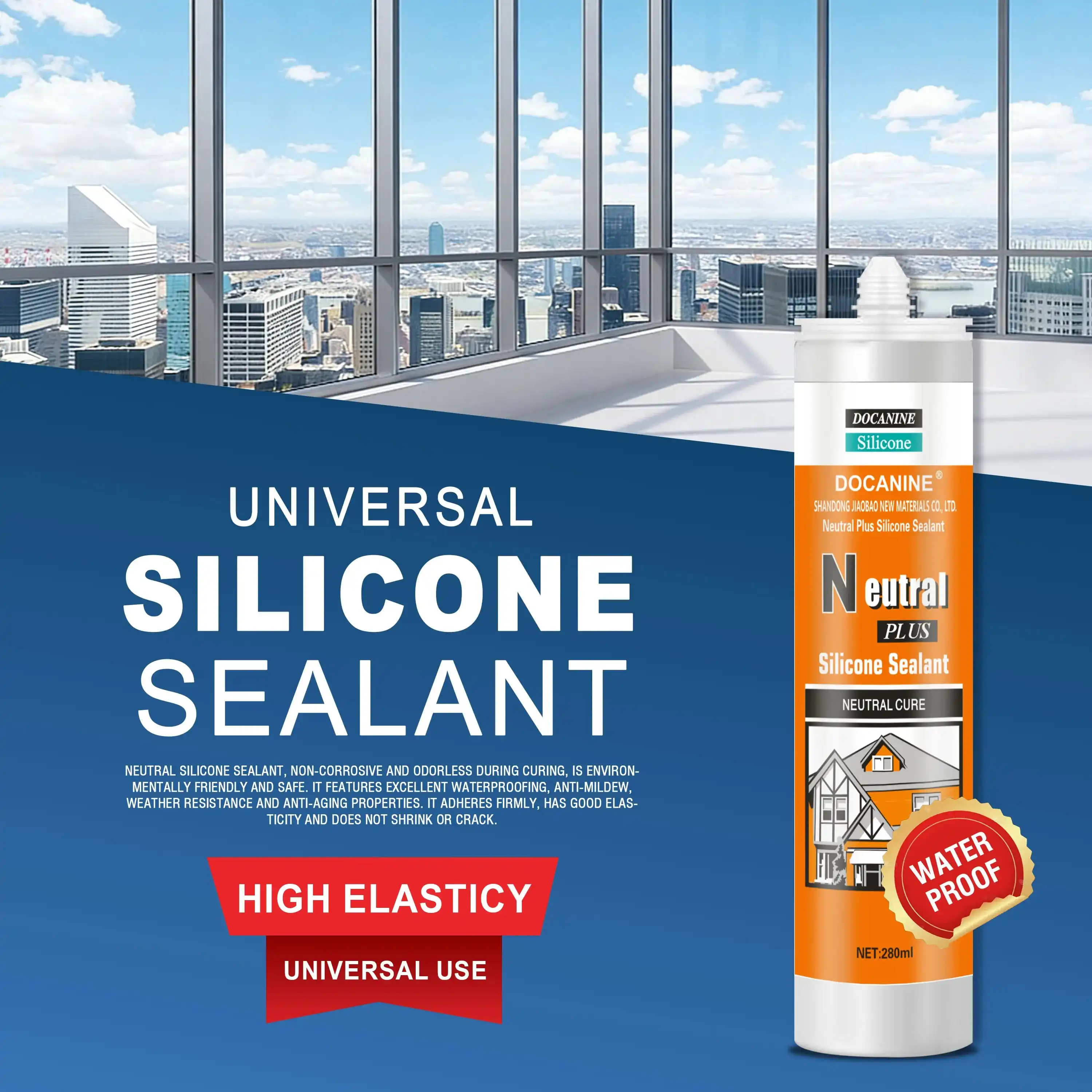
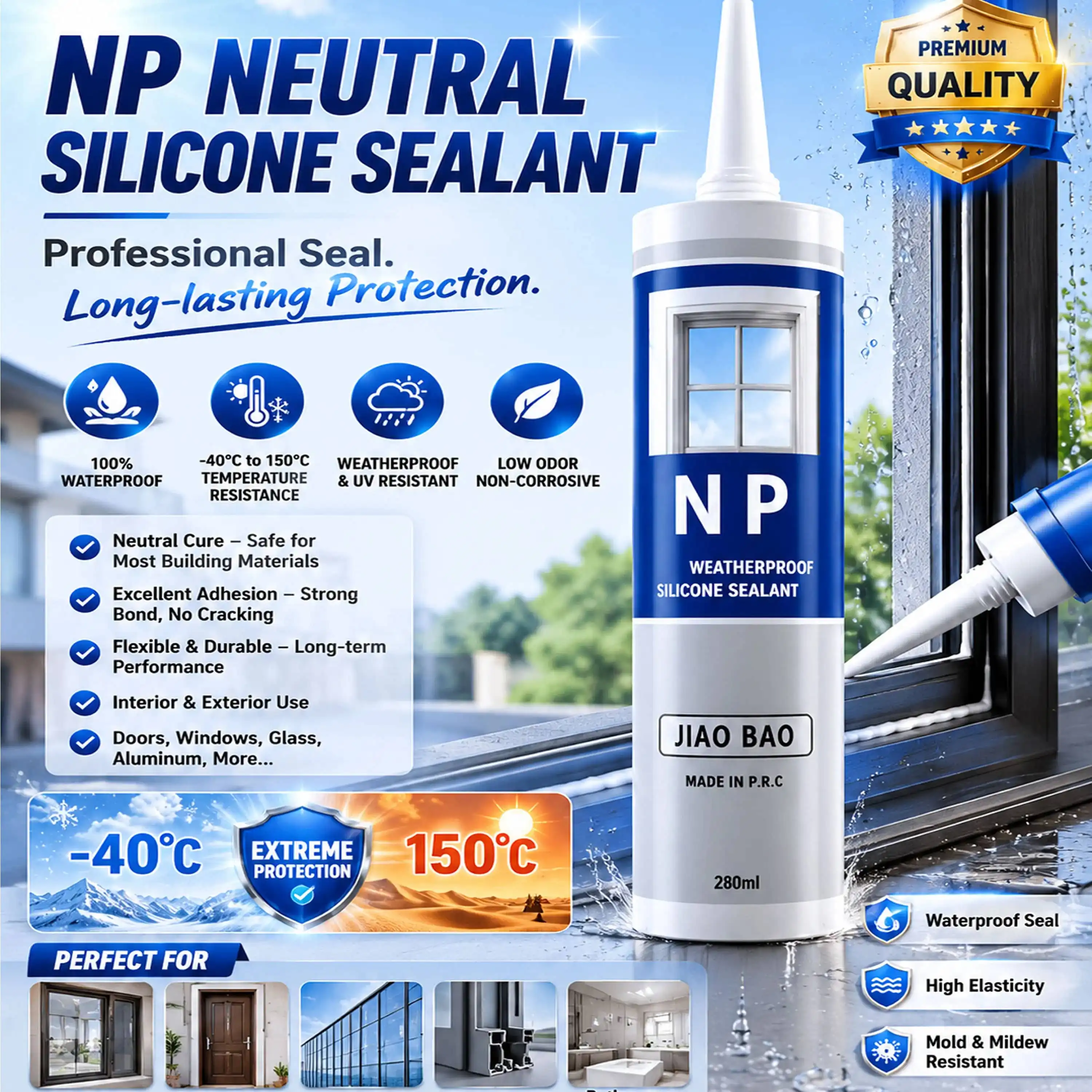
Performance differentiation includes more than just resistance to corrosion. It also includes mechanical properties and durability in harsh environments. This difference can be seen in the temperature ranges they work in. Acetoxy sealants usually work between -40℃ and +120℃, but newer neutral cure formulations can keep their flexibility from -50℃ to +150℃, meeting the needs of electronics in cars and LED installations outside.
Jiaobao makes NP Silicone Sealant Non-Corrosive Type, which has a Shore A hardness of 30. This makes it flexible while still providing structural support. This reading from the durometer means that the joint can move 25%, which means that it can handle the building frame expanding without the adhesive failing or the cohesive tearing. Tensile strength reaches 0.7 MPa under GB 13477 testing protocols, sufficient for weather sealing applications in curtain wall systems and door assemblies. During the thermal expansion cycles that happen when metals change to glasses, elongation properties keep stress from building up at bond lines.
Surface dry time has a direct effect on how fast assembly lines can make things. Our neutral fix formula makes surfaces tack-free in 30 minutes at 23℃ and 50% relative humidity. This means that they can be handled again without the risk of contamination. Full cure depth moves forward at a rate of 2–3 mm every 24 hours, which means that deep-section joints can become structurally sound in the normal 7–14 day cycle. This controlled cure rate stops internal voiding and makes sure that the sealant mass has the same mechanical properties all over. This helps with quality control issues in ISO-certified factories.
VOC content below 80 g/L meets strict emission rules in California and the European Union, which helps business building projects meet LEED certification standards. Zero slump properties under ASTM C 679 tests show that it can be used for vertical joint uses without sagging or deforming the tools. Under controlled storage conditions (below 27℃), the product has a shelf life of 12 months. This gives distributors the inventory freedom they need to deal with yearly changes in demand.
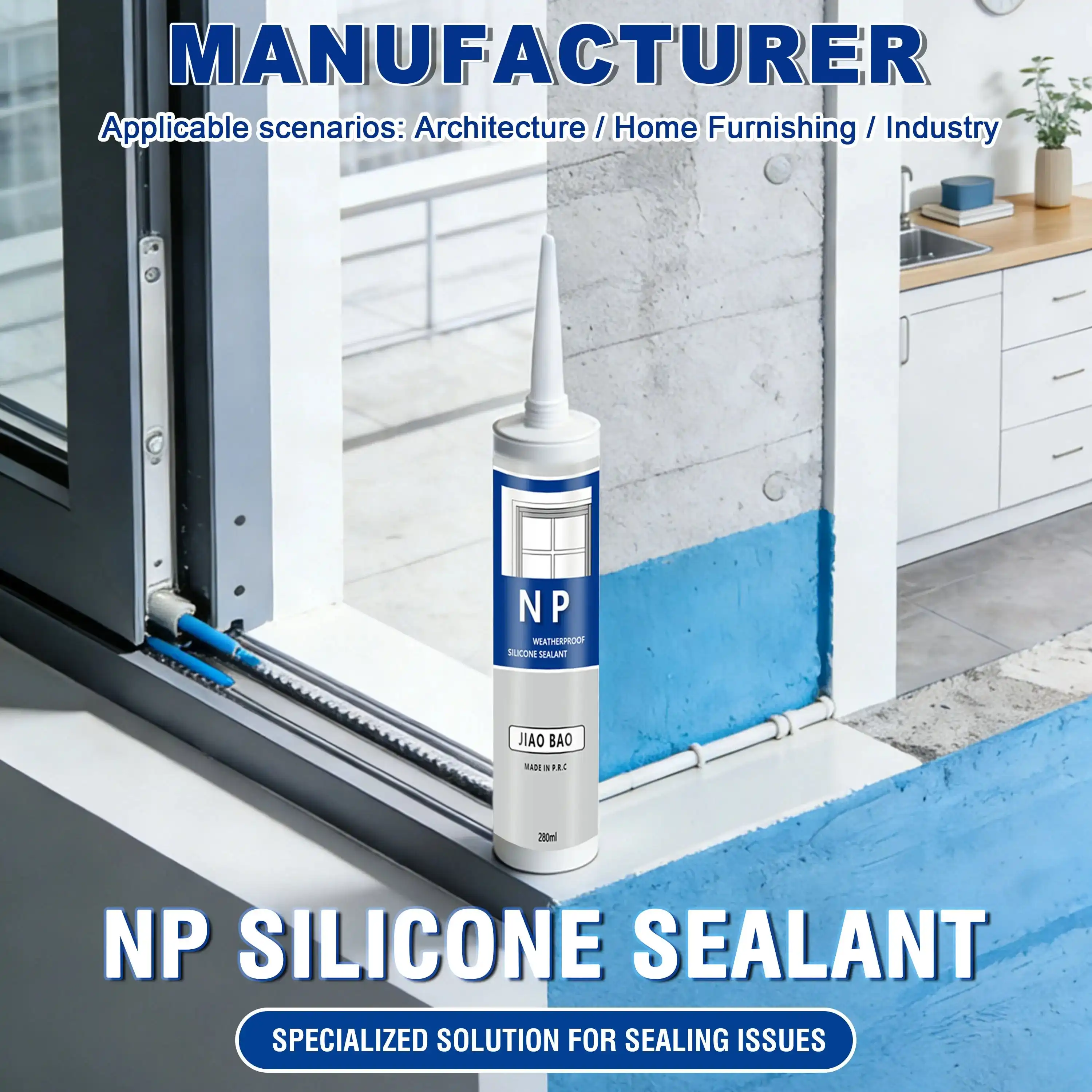
The most important factor in determining long-term adhesion success is how well the area is prepared. Interfacial weaknesses are caused by release agents, cutting oils, or oxidation layers. These weaknesses show up as early bond failure under service loads.
To get rid of processing residues on metal substrates, they need to be wiped with isopropyl alcohol and then dried in the air to keep moisture from building up. Using Scotch-Brite pads for mechanical scratching on anodized metal and powder-coated surfaces makes mechanical keying better. Glass and glazed pottery only need to be cleaned with solvents unless they are contaminated with silicone from earlier uses. In this case, they need to be completely cleaned with specialty cleaners before they can be sealed again.
For example, polycarbonate and acrylic need to be gently wiped with a solvent to keep them from stress cracking, while polyethylene and polypropylene need plasma treatment or special primers because they have a low surface energy. NP Silicone Sealant Non-Corrosive Type is well-suited for such sensitive assemblies, but before applying sealant, electronic parts that still have flux leftovers must go through vapor degreasing or ultrasonic cleaning processes to make sure there are no adhesion problems.
In high-volume production settings, pneumatic dispensing devices make sure that the bead shapes are always the same. Keeping the nozzle angle at 45 degrees and the trip speed constant stops air from getting trapped and makes sure the ground is properly wet. For best stress distribution, the shape of the beads should match what the maker suggests, which is usually a width of 6 to 12 mm and a depth that is half of the width. The material comes in 300ml cartridges that can be used by hand and 600ml sausage shapes that can be used with pneumatic dispensers. This means that it can be used at a range of operational scales, from putting together prototypes to mass production lines.
During the 30-minute skin-over window, tooling operations can be done to smooth the surface and profile the joints without disturbing the healing interface. Using wet spatulas or fingers (along with the right safety gear) to make curved joint profiles moves compression stress away from bond lines during movement cycles.
Most adhesion problems can be traced back to three main causes: a contaminated substrate, problems with moisture during the initial curing process, or too much movement in the joint beyond what was intended. Cohesive splitting means that the joint dimensions are too small compared to how much they are expected to expand when heated. If deep parts don't fully cure, it means that moisture can't get to them.
To fix this, either reduce the joint depth or use multi-pass application methods. NP Silicone Sealant Non-Corrosive Type offers a reliable solution in such cases, as its neutral cure mechanism and low VOC content make the workplace safer compared to acetoxy systems. This means that fewer complaints of respiratory irritation are made during large-scale sealing operations.
Supplier evaluation goes beyond unit price and includes things like the authenticity of certifications, the ease of access to technical support, and the reliability of the supply chain. Because silicone science is so complicated, quality varies between producers, which has a direct effect on how well it works in the field.
Suppliers of genuine NP silicone use ISO 9001 quality control systems and give test results for each batch that show they meet ASTM C920, GB 13477, and ISO 11600 standards. RoHS and REACH certifications show that banned chemicals, like heavy metals and phthalate plasticizers, are not present. This is important for electronics that need to follow environmental rules. Requesting Copper Strip Corrosion Test results (ASTM C1382) is a reliable way to confirm claims that the product is not corrosive, and ASTM C1248 staining tests make sure that it can be used on natural stone facades.
To figure out the total cost of ownership for sealing materials, you have to take into account things like yield loss due to batch differences, field failure rates that affect guarantee reserves, and the availability of expert help during application troubleshooting. NP Silicone Sealant Non-Corrosive Type fits well into this cost analysis because its stable neutral-cure performance reduces batch-related yield loss and minimizes field failures, thereby lowering guarantee reserves.
Prices for bulk purchases usually go down by 15–30% when you buy more than 10,000 units a year, but each maker has different minimum order amounts and packaging options. Well-known companies like Jiaobao, which has been making things for over 13 years, let you change specific parameters to fit your needs. For example, you can change the thermal conductivity for LED applications, the flame retardancy for electrical enclosures, or the viscosity for automated dispensing systems.
With lead times of one to two weeks, just-in-time stocking methods can be used to cut down on costs and worry about shelf life. Shipping options that are flexible, such as ocean freight for containerized loads or land transport for regional distribution, can handle a range of operational sizes. Procurement teams are protected from batch failure risks by after-sales policies that cover quality problems within the product's 12-month shelf life and offer promises of a refund or replacement. Clear lines of communication with engineering support staff make it easy to solve application problems quickly, which cuts down on production downtime when new products are introduced.
Real-world use in industries like building electronics, putting together cars, and glazing for buildings shows how useful non-corrosive formulations are. An LED lighting maker in Guangdong Province saw a 40% drop in field failure rates after switching from GP acetoxy to neutral cure sealants. They said that the changes were due to the fact that copper lead corrosion in driver modules was no longer happening. NP formulations' thermal stability meant that they kept their adhesion even after being heated and cooled many times, from -40℃ to +85℃, during automotive qualification testing. This was in contrast to acetoxy alternatives, which lost their bond after 500 cycles.
To keep current from leaking across circuit lines, PCB conformal coating processes need sealants with a volume resistivity greater than 1×10¹⁴ Ω·cm. Good neutral cure systems can easily meet this requirement. A low molecular weight siloxane content of less than 0.5% keeps contact contamination from happening in relay systems and membrane switches. This stops a type of failure that cost a big appliance maker a lot of money in recalls. Optically clear versions let sensor housings and display units be sealed completely, without blocking light or forming haze when exposed to UV light for a long time.
Curtain wall installations need to be able to move according to ASTM C920 Class 50 so that multistory buildings can bend in the wind and during earthquakes. Neutral fix chemistry keeps marble and granite wall panels from getting stained. This gets rid of the discoloration problems that happened with early structural glazing projects that used the wrong type of sealant. Primerless adhesion to anodized aluminum framing systems cuts down on installation labor costs while keeping the expected 20-year service life under constant weather exposure.
To choose between GP and NP sealants, you have to make sure that the fix chemistry fits the needs of the material and the conditions of its exposure to the environment. Neutral cure systems don't corrode, so they don't cause failure modes like metal oxidation and plastic degradation, which is great for companies that make electronics and do precise assembly.
The technical details of NP Silicone Sealant Non-Corrosive Type—such as its ability to move 25%, its Shore A 30 hardness, and its service range of -50°C to +150°C—meet the strict needs of industrial applications where long-term dependability and material compatibility justify a higher price point than standard GP alternatives. When making purchasing decisions, it's better to look at certifications, technical support, and the total cost of ownership of a supplier rather than just the unit price.
Silicone formulations have release agents that stop paint from sticking, so it's not possible to paint over finishes. Applications that need to be painted after the sealing process should use mixed MS polymer or polyurethane sealants, or paint the surfaces first before sealing. This limitation is caused by the basic chemistry of silicone polymers, not by problems with the structure.
NP neutral sealants have slightly longer skin-over times (10–20 minutes) than acetoxy variants. The cure depth increases by 2–3 mm every 24 hours. This managed cure rate makes the base wetter and increases the strength of the long-term bond, but it takes time, which can be a problem for installations that need to be done quickly. When the field service life is more than 10 years, reliability is more important than speed.
If you keep it below 27°F in a covered container, it should last between 9 and 12 months. If the temperature or humidity is too high, premature curing reactions start. These reactions make the material more viscous and less easy to extrude, which means it can't be used. Proper inventory rotation and climate-controlled keeping keep the performance qualities of materials for as long as they can be used.
Since 2013, Shandong Jiaobao New Material Co., Ltd. has been making neutral cure silicone sealants for electronics manufacturers and precision assembly shops in North America and Europe. As a NP Silicone Sealant Non-Corrosive Type supplier, we have ISO certification, RoHS compliance, and batch-specific testing documentation that shows that the product does not corrode sensitive substrates. We can make OEM modifications to unique formulations by changing factors like thermal conductivity, flame retardancy, or viscosity to fit your production needs.
We can help with both prototype development and high-volume production, with lead times of one to two weeks and a range of 300ml and 600ml packaging options. Email our technical team at dorashen@cnjiaobao.com to talk about your application needs and get sample materials that are compatible so that they can be tested for compatibility in your unique operating system. Visit shandongjiaobao.com to explore our complete product range and access technical datasheets.
1. Klosowski, J.M. (2019). Silicone Sealants: Chemistry and Technology. Smithers Rapra Technology.
2. ASTM International. (2021). ASTM C920: Standard Specification for Elastomeric Joint Sealants. West Conshohocken, PA.
3. Owen, M.J. (2018). The Surface Activity of Silicones: A Short Review. Journal of Coatings Technology Research, 15(4), 653-667.
4. International Organization for Standardization. (2020). ISO 11600: Building Construction—Jointing Products—Classification and Requirements for Sealants. Geneva, Switzerland.
5. Beers, M.D. (2017). Adhesion and Bonding in Industrial Applications. Cambridge University Press.
6. GB/T 13477. (2017). Test Methods for Building Sealants. Standardization Administration of China, Beijing.
November 16,2023
Enterprise Name
The sealant has very strong adhesion and performs well even on glass and aluminum. After curing, it remains flexible and shows no cracking. Perfect for our facade projects.
November 16,2023
Enterprise Name
Stable quality across batches. Our customers especially like the smooth application and consistent extrusion. It helps reduce installation time on site.
November 16,2023
Enterprise Name
I used it for bathroom sealing. Excellent waterproof performance and no mold issues so far. It's been holding up very well in humid conditions.
November 16,2023
Enterprise Name
The neutral silicone works well on sensitive materials without corrosion. Very suitable for industrial applications requiring stable performance.
_1779347426672.webp)