November 16,2023
Enterprise Name
The sealant has very strong adhesion and performs well even on glass and aluminum. After curing, it remains flexible and shows no cracking. Perfect for our facade projects.
Oct 5, 2026
When a fire breaks out in a high-rise building, every minute counts. Firestop silicone sealant plays a quiet but critical role in slowing the spread of flames, smoke, and toxic gases through construction joints, wall penetrations, and door frames. Unlike decorative caulks or general-purpose adhesives, this specialized material is engineered to maintain compartmentation under extreme thermal stress. In high-rise environments where vertical fire travel can turn a single-floor incident into a multi-story disaster, selecting the right passive fire protection sealant is not optional — it is a life-safety obligation.
When there is a fire, high-rise buildings are especially dangerous. There is a "chimney effect" in high-rise buildings where vertical shafts, curtain wall gaps, and utility penetrations help flames and smoke spread faster than in low-rise buildings. There are passive fire protection systems, like fire-rated joint sealants, that are meant to block this path.
With compartmentation, a building is split into fire-rated areas that keep a fire inside and make it safe for people to get out. Every hole in a fire-rated assembly that was made by a pipe, cable tray, or expansion joint needs to be fixed so that it can again withstand fire. Silicone-based firestop materials do this by turning into a char that can't catch fire when heated. They stay stuck to concrete, steel, and glass surfaces even during a live fire.
The International Building Code (IBC) and NFPA 101 (Life Safety Code) say that all through-penetrations in fire-rated assemblies must be protected with marked and listed firestop systems that have been tested under ASTM E814 (UL 1479) for penetrations and ASTM E1966 (UL 2079) for construction joints.
Fire-rated joint patches last longer because they are made with silicone science. Silicone has a steady molecular backbone that makes it resistant to UV damage, water ingress, and temperature cycles. Water-based acrylic firestops can't match these qualities in outdoor or high-motion uses. Shore A hardness values are usually between 20 and 35. This means that the material stays flexible over a range of service temperatures, so the seal can bend without breaking when the building moves or there is an earthquake. This is why firestop silicone sealant is specified for joints that must maintain both fire integrity and long-term movement capability.
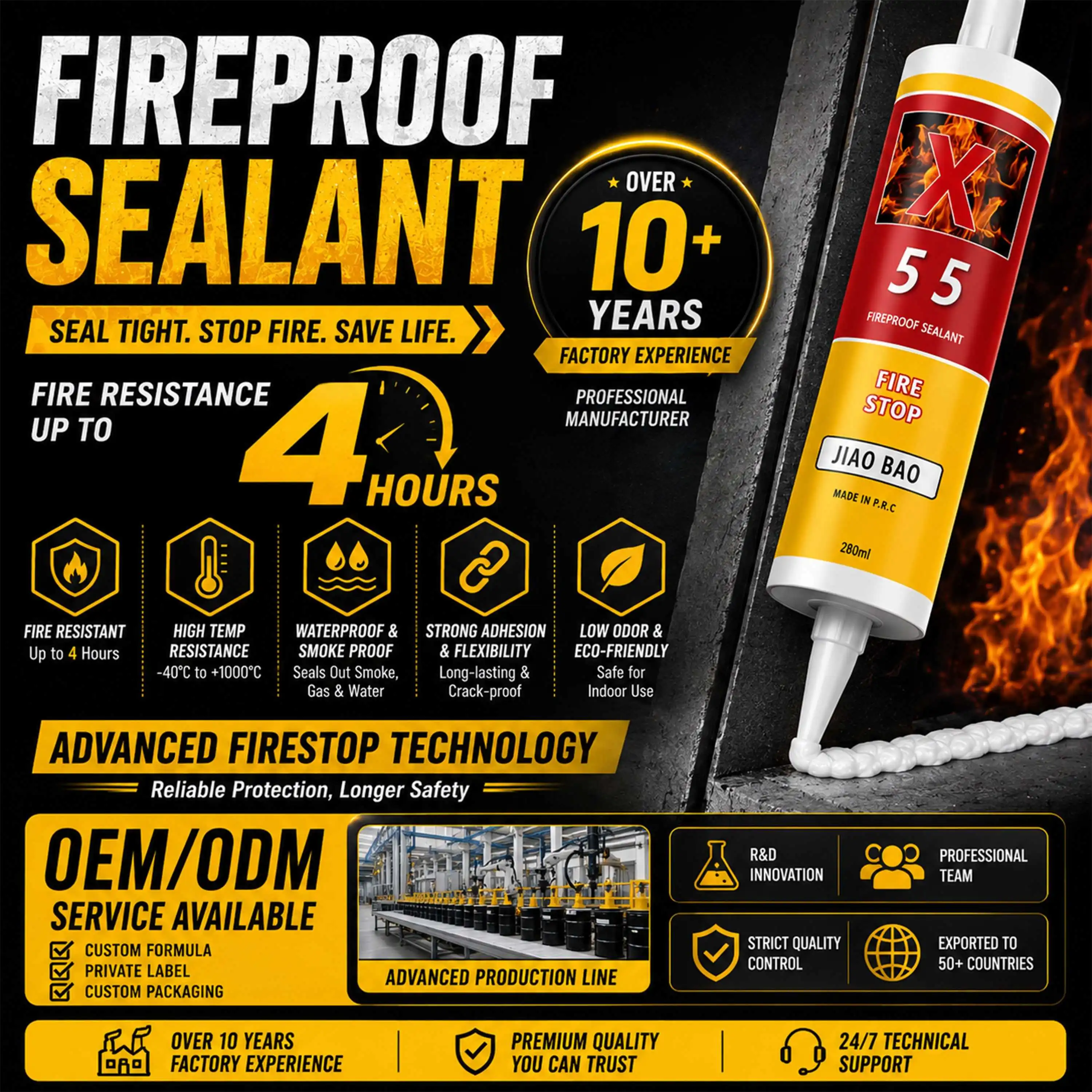
Not every fire-stopping product works the same way in every situation. Procurement teams can make better decisions when they know when silicone works well and when other materials might be better.
Intumescent sealants get bigger when they get hot and fill in the spaces around flammable materials like plastic pipes. This makes them the best choice for PVC or CPVC uses. Mineral wool packing and putty pads are great for bigger spaces because they provide good thermal mass, but they usually need more work to be installed. Acrylic firestop caulks work well in low-movement internal joints and can be painted, but they don't last as long as needed for curtain wall joints outside or high-humidity places like mechanical shafts.
Products made from silicone are in a different performance level. They allow for reliable movement (usually ±25% to ±50% according to ASTM C719) without lowering fire ratings. Silicone is always rated as the best material for dynamic joints, head-of-wall assemblies, and outdoor uses where resistance to weather is just as important as fire containment.
If a firestop device works as tested, it depends on how well it was installed. When the substrate is dirty or the joint geometry is off, even the best sealant won't work as well. This is why firestop silicone sealant performance in the field always comes back to proper surface preparation and correct joint design.
For high-rise jobs, here are the main steps that skilled installers take:
These steps are not just suggestions for good practice; they make the difference between a system that passes a fire inspection and one that needs to be fixed, which will add a lot of time and money to the project timeline.
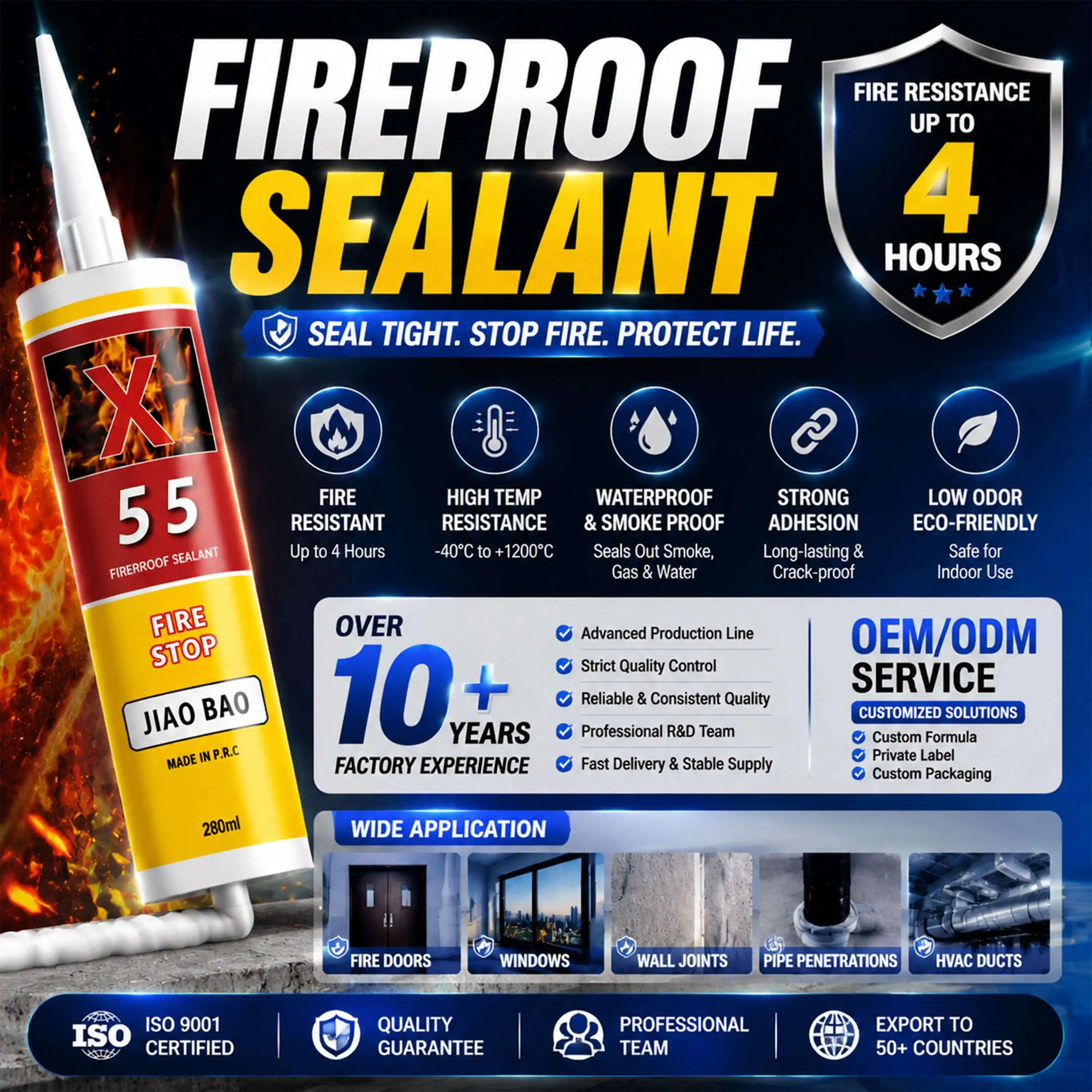
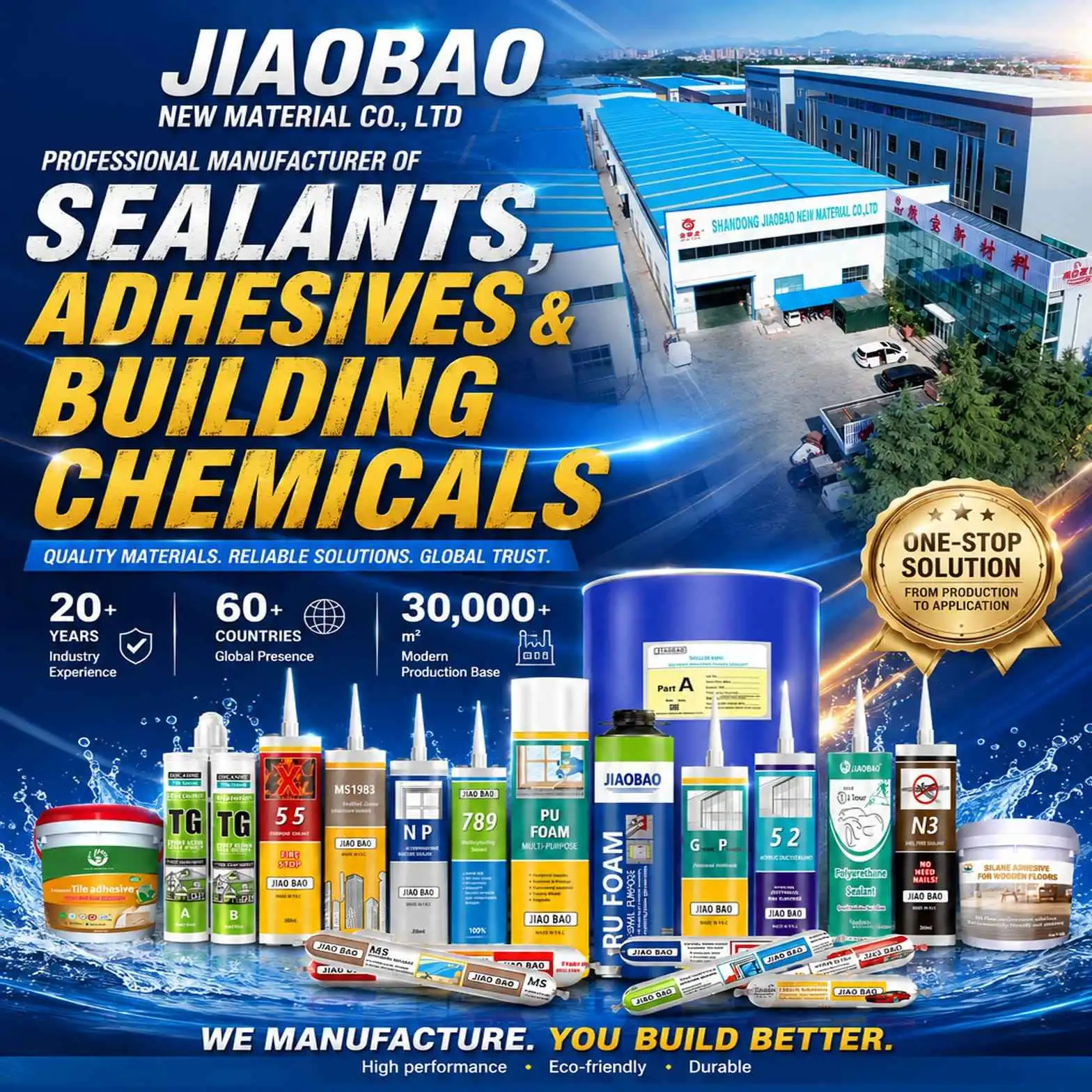
Since 2013, Shandong Jiaobao New Material Co., Ltd. has been making silicone seals. They have over 13 years of experience making both neutral and acidic formulas. The company's firestop silicone sealant is a one-part RTV (room-temperature vulcanizing) acidic-cure product designed to seal fire-rated gaps and joints in public and commercial buildings.
The sealant comes in 300ml cartridges and 600ml sausages. It can be white, black, gray, or your choice of special colors to fit your building's needs. Some important confirmed standards are:
These numbers show actual performance that was tried, not amounts that were guesses. The Class 1 W water resistance grade shows that the sealant can stop water and fire from getting in, which is especially important for mechanical shaft penetrations and external curtain wall joints that are always exposed to water.
This item can be used to seal door and window frames, HVAC ducts, electrical and plumbing through-penetrations, expansion joints in fire barriers, and cable and pipe seal systems. Jiaobao is certified by both ISO and CE, and they offer full technical data sheets (TDS) and safety data sheets (SDS) in English to help with legal review in global markets.
In big buildings, fire safety depends on how well every sealed joint and opening works. Silicone-based passive fire protection materials have become the standard because they include fire resistance, the ability to move, weather resistance, and ease of application all in one system. When procurement teams put an emphasis on verified certifications, tried sag resistance, and recorded batch consistency, they lower the risk of inspection and keep building users safe. It's not just a matter of taste when it comes to buying things; picking a maker with a history of production and full technical support paperwork is also a good way to manage project risk. Firestop silicone sealant sits at the center of this strategy, combining certified fire performance with the durability that high-rise projects demand.
Paints that are based on water or solvents won't stick to silicone. If you need to match the color of a finished surface, you should ask for custom-colored sealant when you place your order. To directly deal with this, Jiaobao lets you choose from white, black, gray, and custom colors.
Silicone sealants are great for exterior joints and high-movement assemblies because they are flexible, don't break easily under UV light, and don't absorb water. Acrylic firestop items are water-based, can be used in low-movement areas inside, and can be painted over. Most of the time, silicone is the best material for high-rise curtain walls and mechanical shafts.
Some firestopping materials made of silicone are highly inflammable, but most of them are ablative. They make a stable char that keeps the joints from breaking without expanding too much. In places where plastic pipes need to be penetrated and an intumescent collar or wrap system is needed to stop the pipe from freezing, caulk is usually not enough.
If you keep it in its original, unused box below 27°C (80°F), it will last for 12 months. If the cartridge is exposed to high heat or humidity before it is opened, the fix process can start too soon.
Since 2013, Jiaobao has sold certified firestop silicone sealant for building and fire protection projects in China and around the world. Our production wait time is one to two weeks, and we have ISO and CE certifications as well as full English TDS/SDS documentation and OEM/ODM capabilities. This means that we can help with both large-scale project procurement and private-label supply plans. We can help you find a reliable company that makes firestop silicone sealant. Contact us today. You can get samples or a quote for your project by emailing us at dorashen@cnjiaobao.com.
1. National Fire Protection Association. NFPA 101: Life Safety Code. 2024.
2. International Code Council. International Building Code (IBC). 2021.
3. ASTM International. ASTM E814: Standard Test Method for Fire Tests of Penetration Firestop Systems. 2023.
4. ASTM International. ASTM E1966: Standard Test Method for Fire-Resistive Joint Systems. 2021.
5. Underwriters Laboratories. UL 1479: Fire Tests of Through-Penetration Firestops. 2022.
6. ASTM International. ASTM C719: Standard Test Method for Adhesion and Cohesion of Elastomeric Joint Sealants Under Cyclic Movement. 2022.
November 16,2023
Enterprise Name
The sealant has very strong adhesion and performs well even on glass and aluminum. After curing, it remains flexible and shows no cracking. Perfect for our facade projects.
November 16,2023
Enterprise Name
Stable quality across batches. Our customers especially like the smooth application and consistent extrusion. It helps reduce installation time on site.
November 16,2023
Enterprise Name
I used it for bathroom sealing. Excellent waterproof performance and no mold issues so far. It's been holding up very well in humid conditions.
November 16,2023
Enterprise Name
The neutral silicone works well on sensitive materials without corrosion. Very suitable for industrial applications requiring stable performance.
_1779347426672.webp)