November 16,2023
Enterprise Name
The sealant has very strong adhesion and performs well even on glass and aluminum. After curing, it remains flexible and shows no cracking. Perfect for our facade projects.
Jul 29, 2026
When choosing between silicone sealant and PU adhesive for your glazing projects, understanding their distinct characteristics makes all the difference. GP Silicone Sealant for Glass and Aluminum stands out as a one-component, moisture-curing solution engineered specifically for fenestration applications, offering exceptional weather resistance and flexibility. In contrast, PU adhesive provides strong initial bonding with excellent paintability. Both materials serve critical sealing functions, yet their chemical compositions, performance profiles, and ideal applications differ significantly, making material selection a strategic decision for your procurement process.
The molecular makeup of these two things is what makes them different. Silicone seals are made up of polysiloxane chains, which give them great flexibility and temperature stability. Our special GP Silicone Sealant for Glass and Aluminum recipe has an acetoxy cure system that releases acetic acid during the curing process to make a strong seal that is always bendable. This one-part RTV (Room Temperature Vulcanizing) sealant starts to harden as soon as it comes into contact with moisture in the air, and the surface is completely dry in just 15 minutes.
PU adhesive, on the other hand, is made up of polyurethane polymers that harden through a different chemical reaction. PU adhesives are great for jobs that need a strong initial bond and the ability to be painted, but they don't usually have the extreme temperature tolerance and UV resistance that silicone chemistry does. There are big differences in their material qualities. Silicone stays flexible at temperatures ranging from -50°C to +150°C, while polyurethanes often break when they freeze.
The right choice of materials is very important for glass and aluminum assemblies in curtain wall systems, window fabrication plants, and door manufacturing plants. Silicone coatings are most often used outside, where weatherproofing is very important. Companies that make curtain walls choose acetoxy or neutral cure silicone for border glazing because these materials can handle changes in temperature without the glue failing. The rate of thermal expansion between glass and aluminum frames causes a lot of movement. Silicone's stretch capacity of over 300% keeps the seal from breaking when temperatures change with the seasons.
PU adhesives are useful for covering inside walls, installing shopfronts, and other tasks where the glue bead needs to be painted to match the overall look. Interior designers and people who make custom furniture like polyurethane because it can accept paint, while silicone naturally doesn't want to because its surface chemistry makes it non-stick. Knowing these limits of the application stops costly specification mistakes from happening during project planning.
When purchasing managers look at different protection choices, they have to consider a number of performance factors. How long a seal lasts depends on how well it sticks to the surface. In most cases, our GP Silicone Sealant for Glass and Aluminum can reach a maximum bond strength of 1.5 MPa on glass and aluminum surfaces without a primer. Flexibility is still very important for building uses where the base is always moving. Because silicone has a low modulus and a high extension, it lets joints move without putting stress on them. On the other hand, PU glue usually has a higher modulus but less movement ability.
The way things cure has a direct effect on production schedules. Our moisture-cure silicone has a 15-minute tack-free time that lets it be handled quickly in manufacturing settings, which cuts down on the amount of work-in-progress that needs to be stored. Depending on the humidity level and the recipe, polyurethane systems may need longer to cure. The biggest difference between these materials is how well they stand up to environmental stress. Silicone is much better at resisting ozone degradation, UV exposure, and moisture entry than normal PU formulas. This makes it the best choice for sealing windows and doors on the outside.
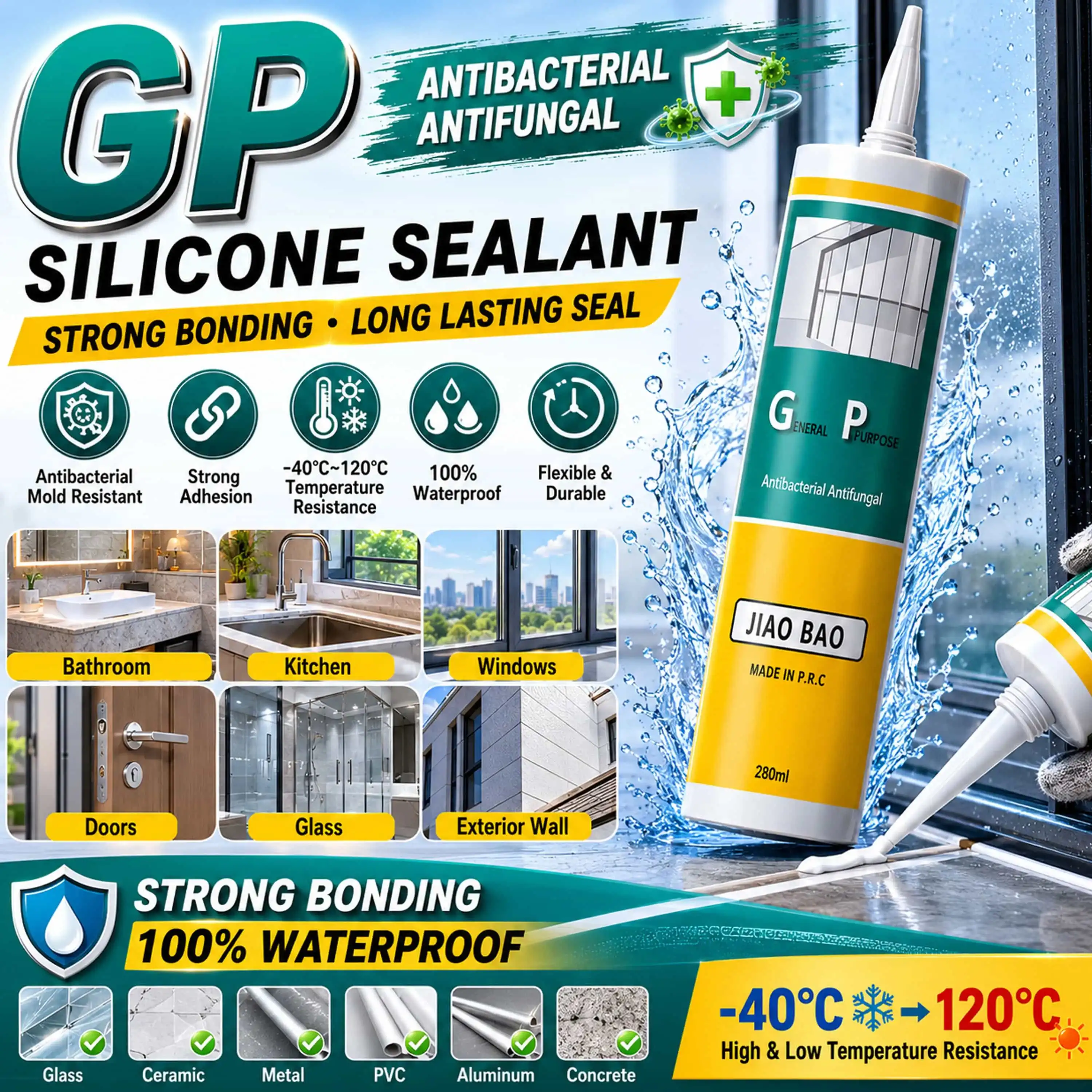
Testing for weather resistance shows big changes in how well things work. For decades, our GP Silicone Sealant for Glass and Aluminum doesn't chalk or crack even after being exposed to UV light, acid rain, and ozone. The anti-ultraviolet formula stops the breakdown of polymer chains that leads to yellowing and breaking in low-quality goods. Curtain wall builders who work on business buildings and high-end apartment towers use silicone because exterior seals need to last 20 to 30 years without any upkeep.
Extreme temperatures put a lot of limits on test materials. Our silicone mixture works effectively from -50°C to +150°C, and it doesn't lose its ability to stick or bend. In the north, works that happen in cold weather can go ahead with confidence because they know that the cold won't break the seals. On the other hand, glass surfaces in direct sunlight can get very hot. Silicone stays stiff and sticks to glass surfaces without melting or flowing.
Polyurethane sealants usually only work in a smaller temperature range. They become less flexible below -20°C and may soften above 80°C. Every day in fenestration applications, thermal cycling happens, where morning cold gives way to afternoon sun warmth. This causes cycles of expansion and contracting. Silicone's low-modulus flexibility lets this movement go through without putting stress on it that would make a glue or cohesive fail. This quality is very important for aluminum-framed systems because the metal's high heat conductivity makes changes in size caused by temperature even worse.
To reliably stick to glass and aluminum, you need to know about surface energy and chemical compatibility. Our GP Silicone Sealant for Glass and Aluminum sticks to float glass very well without a prep, making a waterproof seal that can stand up to wind-load stress and shaking. Aluminum surfaces are more complicated. Anodized and powder-coated finishes usually stick well with acetoxy silicone. However, mill finish aluminum might need neutral cure formulas to stop rusting from the release of acetic acid.
PU adhesives often have higher initial "green strength," which means that the glue that hasn't fully dried holds parts together better while they are being put together. This trait helps industrial processes that need to cut down on fixturing time. On the other hand, when fully cured, the tensile strength and peel resistance of good silicone formulations are the same as or better than polyurethane on metal and glass. The biggest difference is how long the adhesives last. Silicone bonds stay strong forever, while PU bonds can break down over time when they are exposed to water and UV light.
When to start making something depends a lot on how the material cures. When the cartridge is extruded, the moisture-cure mechanism of our silicone sealant starts right away. At 23°C and 50% relative humidity, the surface skinning happens within 15 minutes. As moisture slowly seeps into the sealant bead, it cures all the way through. Under normal conditions, a 6mm joint usually cures all the way through in 24 hours. This reliable cure trait helps producers plan how to handle and package goods efficiently.
The amount of humidity has a big effect on how fast something cures. Conditions with a lot of humidity speed up the curing of silicone, while conditions with very little moisture slow it down. Different types of PU adhesive may cure in different ways. Some use a moisture cure system, which is similar to how silicone does it, while others use chemical catalyst systems. If you understand these cure dynamics, you can avoid quality problems like seal failure due to incomplete cure or joint movement due to premature handling. Technical datasheets give detailed instructions on how to handle the production setting.
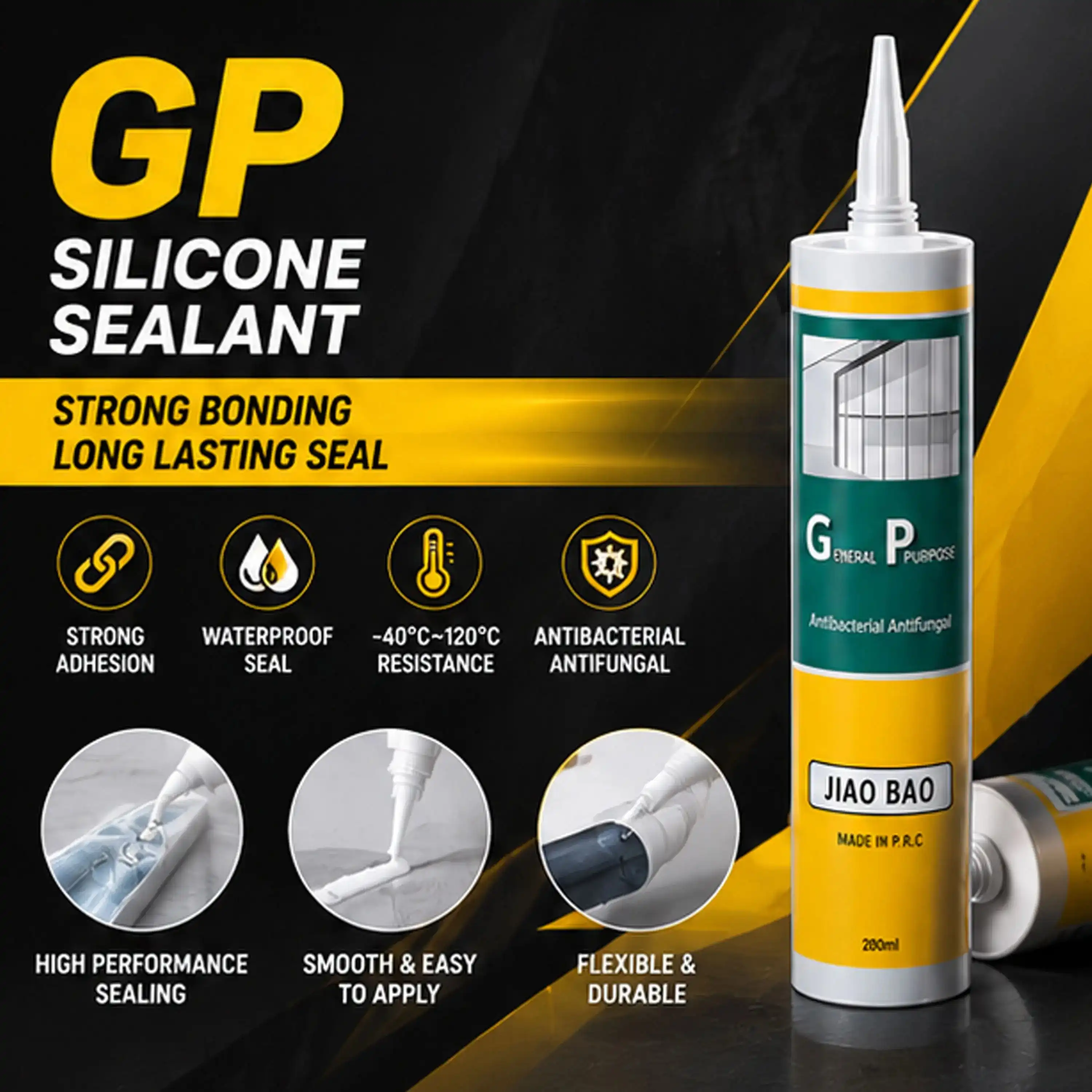
More than anything else, the success of the seal depends on how well the surface is prepared. The Two-Cloth Method is the best way to clean aluminum in the business. It involves using one cloth to apply isopropyl alcohol (IPA) and then wiping right away with a second clean cloth before the solvent evaporates. This method gets rid of manufacturing oils, handling residues, and environmental pollutants that make sticking harder. The most common failure in the field is adhesive failure, which happens when the sealant peels neatly off the base. This is usually caused by poor cleaning.
The same care needs to be taken with glass surfaces, though float glass usually comes pretty clean from the factory. Before applying sealer, you need to get rid of all the dust, fingerprints, and moisture. Anodized aluminum has great surfaces for bonding, but mill finish aluminum needs to be handled with care when using acetoxy formulations because they could cause corrosion. Powder-coated aluminum sticks well as long as the covering is dry and doesn't have any release agents on it. Before committing to buying a lot of something, we suggest trying the adhesion on real GP Silicone Sealant for Glass and Aluminum production platforms. This is especially important when working with special coatings or treatments.
Adhesion problems are annoying for production teams and cause projects to be late. The failure mode shows what went wrong when sealer pulls away from glass or aluminum. If the adhesive fails and the base cleanly separates, it means that the surface is contaminated or doesn't react well with the adhesive. If the sealant tears on the inside, this is a sign of a problem with the quality of the material, like formulas that use too much oil or products that have passed their expiration date. When high-quality GP Silicone Sealant for Glass and Aluminum is stressed, it breaks down cohesively, which shows that the bond to the substrate is stronger than the material itself.
To keep the aesthetic look, removing extra material needs to be done carefully. When you tool the sealant bead right after applying it, you get smooth, professional joints. Once silicone hardens, it's harder to get off because material that hasn't fully cured smears instead of wiping clean. Silicone is chemically resistant, so cleaners can't really get rid of it. Sharp blades and mechanical cutting work better than solvents for getting rid of cured silicone. Planning the joint shape and where to put the masking tape before applying it cuts down on cleanup work by a large amount.
Paying attention to worker safety and following the rules is important when applying industrial sealants. During curing, acetoxy silicone gives off acetic acid vapour. Ensuring there is enough air flow in tight areas keeps people from getting respiratory irritation. Material Safety Data Sheets (MSDS) tell you exactly how much contact is safe and what safety gear you need. To keep things fresh and stop them from drying too quickly from being exposed to moisture, bulk purchases need to be kept in the right kind of storage facilities that keep the temperature between 5°C and 25°C.
For different types of application tools, our sealant comes in both sausage and cartridge packaging. Pneumatic pouring guns need to be set to the right pressure to get a uniform bead size. If the gun is not set correctly, material will be wasted or joints will not be filled properly. Regular checks of the bead weight to make sure of correct pouring rates should be part of quality control processes. The way something is stored has a big effect on how long it will last. Our 12-month shelf life is based on sealed packages kept in climate-controlled areas. If the package is damaged or exposed to heat, wetness can get in and cause the material to cure too quickly, making it useless.
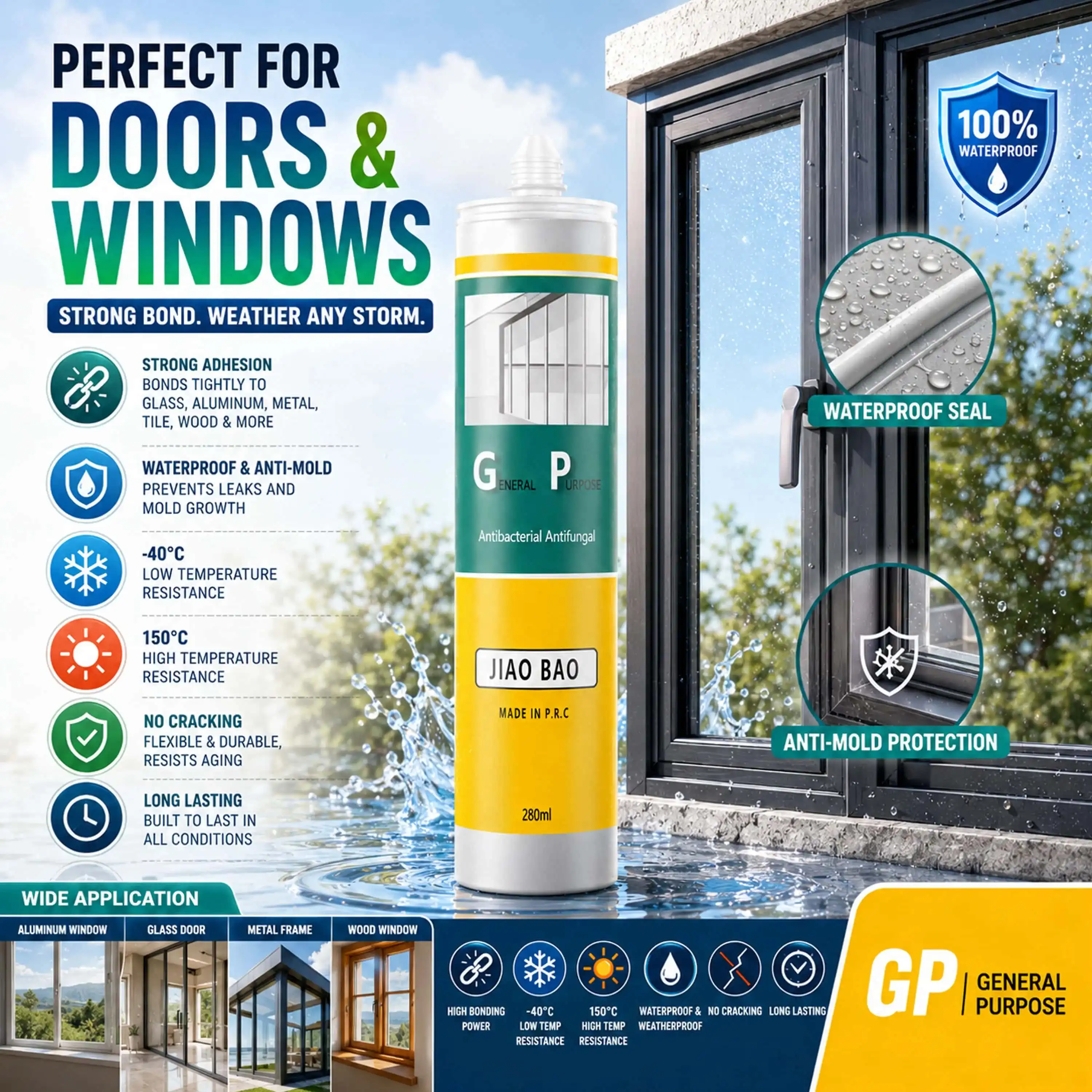
When you buy in bulk, you need to look at more than just the price per unit. You also need to look at the total cost of ownership. Comparing prices, GP Silicone Sealant for Glass and Aluminum typically cost more than basic PU adhesives because they use better raw materials and work better. However, service life changes the economic equation. Silicone lasts for decades, so it doesn't need to be replaced as often as materials that don't last as long. For projects that need to seal the outside against weather, the higher cost of silicone is more than made up for by the lower cost of upkeep and guarantee claims.
Volume purchasing creates economies of scale in several ways. When compared to small package delivery, shipping by container load lowers the cost of operations per unit. Because our production schedule is flexible, we can adapt shipping times to fit each project. This lets us handle our inventory just-in-time, which cuts down on storage costs. Customization options, such as matching colours to RAL standards, make private labelling possible for distributors and big manufacturers who want to build their brands. Our 1-2 week lead time lets you place orders quickly, and our minimum order numbers match how efficiently we can make things with how much space the customer has to store them.
Regulatory compliance is an important factor that can't be changed when buying something. Our factory keeps its ISO approval, which makes sure that quality control stays the same throughout production. Testing materials against ASTM C920 standards confirms claims about how well they can move, stick, and handle the weather. These standards are used in building rules in many places, so certification is needed for design approval. For projects that need fire-resistance ratings, more testing paperwork is needed—flame spread and smoke development ratings are used to make sure that certain applications follow the rules.
When evaluating a supplier, you should look at their production capacity, quality control systems, and technical support. Jiaobao and other manufacturers with more than 13 years of experience in the field show that their production is mature and their recipe control is stable. When colour is important, batch-to-batch uniformity is very important. For example, curtain wall builders who have to match sealant colour to aluminum finishes can't stand it when the shade changes from delivery to delivery. Spectrophotometric colour verification and rheological testing are two of the quality assurance procedures we use to make sure that all production runs meet the requirements.
Material decision reasoning must be based on environmental factors and design requirements. Applications outside that are subject to changes in weather, UV rays, and temperature differences need silicone's proven longevity. The surface chemistry of PU adhesive works best in interior applications where painting is allowed for reasons of aesthetics. Depending on how the structure is loaded, either a general-purpose sealant or a high-modulus structural glazing silicone is needed. Mixing these two types of silicone up can lead to dangerous design mistakes.
Joint design factors have a big effect on the choice of material. Deep, narrow joints may take longer to dry out because they can't get to the air as easily. Wide, shallow joints make it easier to move, but they may sag when they're put together if they don't have the right thixotropic qualities. Our GP Silicone Sealant for Glass and Aluminum mixture doesn't sag and can be used for both vertical and ceiling joints. It also keeps the shape of the bead while it cures. As you work on your design, talking to the manufacturer's technical service teams can help you avoid problems in the field and choose the best materials for your project.
Systematic diagnosis finds causes that can be fixed when seals fail too soon. The failure process can be seen by trying to peel a small piece of cured sealant off of the base. When an adhesive fails because of contamination, poor surface preparation, or material treatment that doesn't work with the adhesive, it shows up as clean separation from glass or aluminum. Internal tearing is a sign of cohesive failure, which means the GP Silicone Sealant for Glass and Aluminum has broken down. This can happen with oil-extended formulations because volatile ingredients evaporate, leaving a weak matrix that is more likely to shrink and crack.
Environmental conditions during application have a big effect on the quality of the cure. Putting sealant on cold surfaces below 5°C slows the fix and might stop the proper development of bonding. Bonding is hampered by too much moisture, like condensation on glass surfaces. On the other hand, conditions below 20% relative humidity slow down the curing of moisture-curing sealants. This increases the time before the sealant is tacky and may allow contaminants to deposit before the skin forms. These failures can be avoided by keeping an eye on and controlling the conditions of the application environment.
In order to replace sealant during upkeep or remodelling, all of the old material has to be taken away. Since most chemical agents can't get through cured silicone, mechanical removal is the only real choice. Sharp utility knives or special tools made to remove sealants quickly and easily cut away the bulk material. You can get rid of residual traces with abrasive pads or special silicone removers, but you need to make sure that the surface is compatible to avoid damaging the substrate. Abrasives that are too rough can scratch anodized aluminum or powder coatings, but they won't scratch glass.
After removal, surface re-preparing follows the same steps as new building. Cleaning with solvents gets rid of any sealant residue that is still there and returns the surface's energy for the best bonding. Over-sealing means putting new sealant over old material that is still well-bonded. This is sometimes okay, but it's usually not a good idea because the underlying damage may keep happening without being seen. The most reliable long-term results come from removing everything and applying it again, especially for important weather closing jobs.
For sealants to last as long as possible, they need to be applied correctly the first time. The size of a joint needs to take into account how it will be used. Joints that are too small can cause stress to build up and fail early, while joints that are too big lose material and look bad. The best joint depth-to-width ratio for silicone is usually between 1:2 and 1:1. This gives the material enough volume to allow for movement without being too bulky. Backing bars or bond breakers stop three-sided bonding, which makes it hard to move and causes the seal to fail.
How unwanted items are stored has a direct effect on their performance and shelf life. If you store sealed cartridges or sausages between 5°C and 25°C for a year, they will keep their qualities. Extreme temperatures, especially heat, speed up ageing and may cause some healing to happen. Moisture getting in through damaged packaging starts curing before it should. Using the first-in, first-out rule to rotate goods makes sure that production lines always have new materials. The expiration dates on the package are very clear, and material that shows signs of only partially curing or having an odd viscosity should not be used.
When choosing between silicone sealant and PU glue for glass and aluminum uses, you need to think about the performance needs of the project, how it will be used, and how long you want it to last. GP Silicone Sealant for Glass and Aluminum is the best when it comes to weather resistance, temperature tolerance, and flexibility for exterior window and door applications that can't skimp on reliability or service life. PU adhesives are good for some indoor uses that need to be able to be painted, but silicone is better for making curtain walls, windows, and architectural glass because it has been used successfully in harsh conditions before. If you know about these changes in materials and use the right surface preparation and application methods, your seal will last for decades.
When acetoxy silicone cures, it creates acetic acid, which can damage metals that are easily damaged, like raw mill finish aluminum, copper, and brass. Most of the time, acetoxy formulas can safely connect to anodized and powder-coated aluminum surfaces. When used on mill-finish aluminum, neutral cure GP Silicone Sealant for Glass and Aluminum completely gets rid of the risk of corrosion. Before buying a lot of something, we suggest trying to see if it will work with the substrate. This is especially important when working with special metal finishes or treatments where chemical interactions are a worry.
Cracking is usually a sign of a low-quality sealant that has too many mineral oils or petroleum extenders. When these flammable parts disappear, the sealant bead gets smaller. This creates stress inside the bead that leads to either cohesive failure (internal breaking) or adhesive failure (separation from base). When you use high-quality GP Silicone Sealant for Glass and Aluminum, its dimensions stay the same over time. Other factors that can cause this problem are joints that are too small, which makes it hard to move, three-sided adhesion, which stops stress from being distributed properly, and substrate contamination, which stops the proper initial bonding.
Seal strength depends on how well the surface is prepared. Isopropyl alcohol can be used in the Two-Cloth Method to clean aluminum. First, use one cloth to apply the solvent, and then use a second clean cloth to wipe it off before the solvent evaporates. This gets rid of oils, residues, and other things that are getting in the way of adhesion. To get rid of dust, fingerprints, and moisture, glass surfaces need to be cleaned in the same way. Before you put sealer on any surface, it must be fully dry. Testing adhesion on real production materials before applying it on a large scale avoids costly fails in the field caused by unexpected surface mismatches.
Since 2013, Jiaobao has been making professional-grade coloured silicone sealant and has built a name for quality and dependability in both the Chinese and foreign markets. Our GP Silicone Sealant for Glass and Aluminum has the performance specs your projects need: it doesn't stick for 15 minutes, can stretch over 300%, and sticks very well to glass and metal surfaces. We keep our ISO certification, can customise your order by matching RAL colours, and offer 1-2 week production lead times to fit your project plans. Our technical team has over 13 years of experience helping people choose the right materials for their projects, whether they need to buy a lot of them for curtain wall manufacturing or make special formulas for specific uses. You can email us at dorashen@cnjiaobao.com to talk about your specific needs, get technical datasheets, or set up sample testing for your quality control process.
1. ASTM International. "ASTM C920: Standard Specification for Elastomeric Joint Sealants." Annual Book of ASTM Standards, Volume 04.07, Construction Sealants and Adhesives.
2. Glass Association of North America. "GANA Glazing Manual." Chapter 7: Sealants and Joint Design for Building Envelope Applications.
3. Klosowski, J.M. and Wolf, A.T. "Sealants in Construction, Second Edition." CRC Press, Taylor & Francis Group, Construction Materials Science.
4. ISO 11600:2018. "Building Construction — Jointing Products — Classification and Requirements for Sealants." International Organization for Standardization.
5. Panek, J.R. and Cook, J.P. "Construction Sealants and Adhesives, Fourth Edition." John Wiley & Sons, Professional Engineering Library.
6. Architectural Aluminum Manufacturers Association. "AAMA 800: Voluntary Specifications and Test Methods for Sealants." Standards for Aluminum Curtain Wall and Window Applications.
November 16,2023
Enterprise Name
The sealant has very strong adhesion and performs well even on glass and aluminum. After curing, it remains flexible and shows no cracking. Perfect for our facade projects.
November 16,2023
Enterprise Name
Stable quality across batches. Our customers especially like the smooth application and consistent extrusion. It helps reduce installation time on site.
November 16,2023
Enterprise Name
I used it for bathroom sealing. Excellent waterproof performance and no mold issues so far. It's been holding up very well in humid conditions.
November 16,2023
Enterprise Name
The neutral silicone works well on sensitive materials without corrosion. Very suitable for industrial applications requiring stable performance.
_1779347426672.webp)