November 16,2023
Enterprise Name
The sealant has very strong adhesion and performs well even on glass and aluminum. After curing, it remains flexible and shows no cracking. Perfect for our facade projects.
Sep 21, 2026
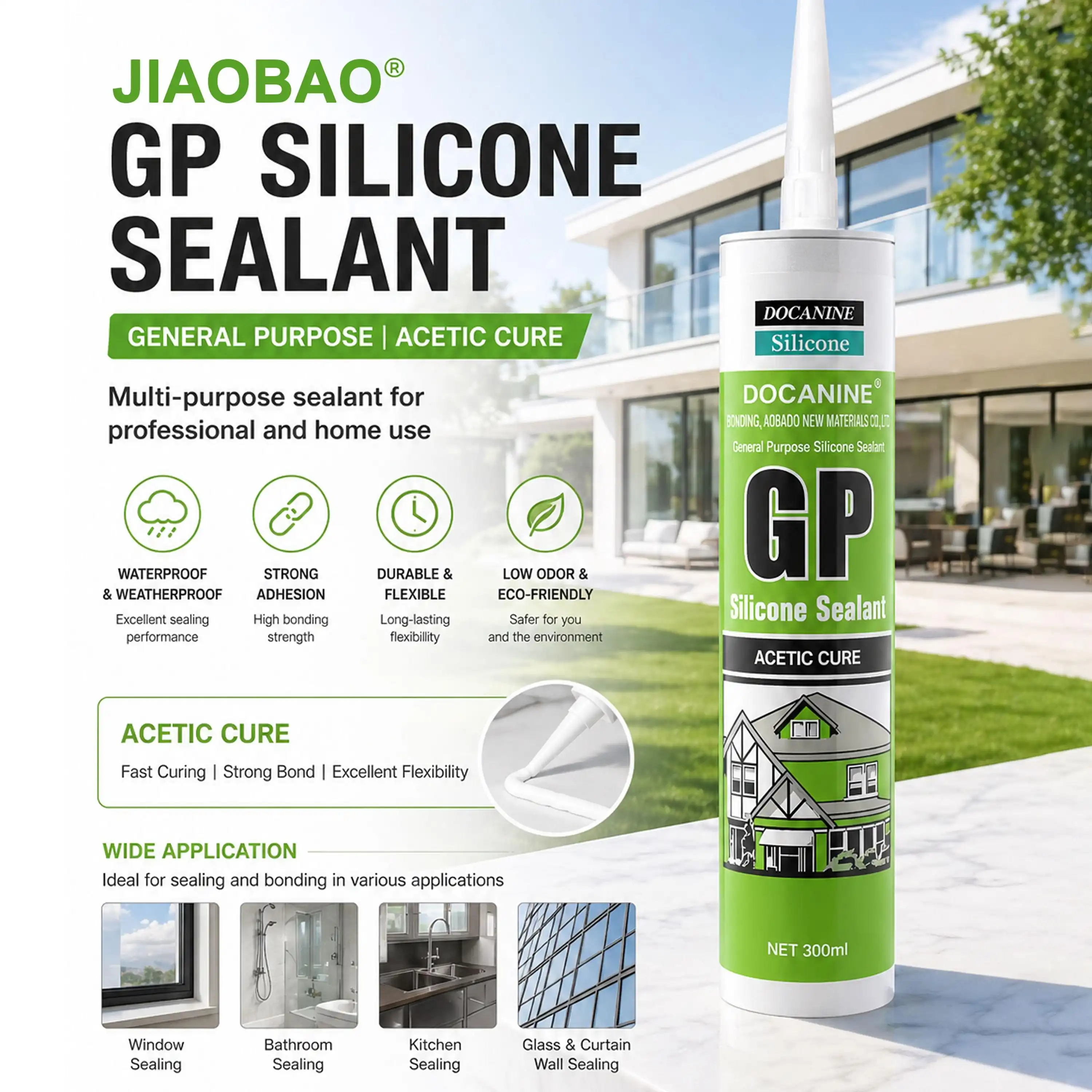
When procurement teams search for a reliable acetic silicone sealant supplier, the decision carries real weight. GP Acetic Silicone Sealant for Construction is a one-component, moisture-curing acetoxy sealant widely specified for doors, windows, glazing, and general building joints. It cures through acetic acid release, forming a permanently flexible, waterproof rubber seal. This guide walks B2B buyers through product properties, sealant comparisons, sourcing criteria, application best practices, and the tangible advantages of partnering with an OEM manufacturer — so every purchasing decision is grounded in evidence, not guesswork.
"GP" stands for "General Purpose," which means that the material can be used in a variety of situations and has a modest modulus across the most common non-porous building surfaces. Jiaobao's acetic silicone sealer is a one-part RTV (Room Temperature Vulcanizing) paste that hardens when it comes in touch with water in the air. The acetoxy healing process releases acetic acid, which gives the joint its typical vinegar smell. The smell goes away once the joint is fully cured.
The product's reputation is based on how well it works in tough site conditions. These are the data points from Jiaobao's technical sheet that have been checked:
They are important because they have a direct effect on how productive the site is and how well the joints will last for a long time. GP Acetic Silicone Sealant for Construction is one such product, and for example, a 15-minute skin-over time cuts in half the time that airborne particles can damage the surface finish compared to options that cure more slowly.
The sealant sticks well to glass, anodized aluminum, glazed ceramics, and fiberglass, which are the main materials used in business and home window installs. It's not a good idea for natural stone, concrete, or cement because the acetic acid reacts with alkaline surfaces and breaks down both the bonding and the material itself.
A lot of the time, procurement engineers compare neutral-cure silicone, polyurethane, and mixed MS polymer seals to acetic silicone. The choice depends on how sensitive the substrate is, how big the project is, and how much money you have.
Even though they cost more per unit, neutral-cure silicones don't corrode on metals or alkaline surfaces. Neutral fix is the better choice for projects that use marble, zinc, or copper. Acetic silicone, on the other hand, sticks better to glass and metal at first and costs less per square meter. This makes it the best choice for large-scale glazing jobs where substrate sensitivity is not a worry.
Polyurethane sealants can be painted on and are very resistant to wear and tear, but they break down when exposed to UV light for a long time and need a primer on many surfaces. Hybrid MS polymers fill in the gaps by being able to be painted and having a low smell, but they come at a higher cost that is rarely worth it for standard door and window sealing. Acetic silicone always has the best price-to-performance ratio when the goal is to make a long-lasting seal on non-porous surfaces on a large scale.

It takes more than just comparing prices to find the right silicone sealant provider. Here are the main factors that B2B buyers should use to judge:
All of these factors lower the risk in the supply line. If a supplier gets all five checks, it means they are operationally mature enough to support long-term procurement plans.
It is imperative that the substrate is kept clean. They need to be dry, dust-free, and free of any oil, old sealant, or paint left over from painting. If you want to seal glass or aluminum, wipe them down with isopropyl alcohol and let it dry completely before using a gun. The ASTM C920 surface preparation standards make this point clear: if there is moisture on the base, the bond will fail right away.
Cut the cartridge nozzle so that it fits the joint width by 45 degrees. Keep the pressure on the joint all the time to fill it up completely. Use the open time window to shape the bead so that it makes full contact with the substrate and has a smooth surface profile. The glue hardens about 2–3 mm deep every 24 hours at 23°C and 50% relative humidity.
The most acetic acid gas is released in the first 30 to 60 minutes after treatment. Make sure that enclosed areas have cross-ventilation. It is important for workers to wear safety glasses and rubber gloves. You shouldn't put uncured sealant in your eyes or on broken skin. GP Acetic Silicone Sealant for Construction should be stored properly, so to keep the cartridges' shelf life intact, keep them below 27°C and out of direct sunlight.
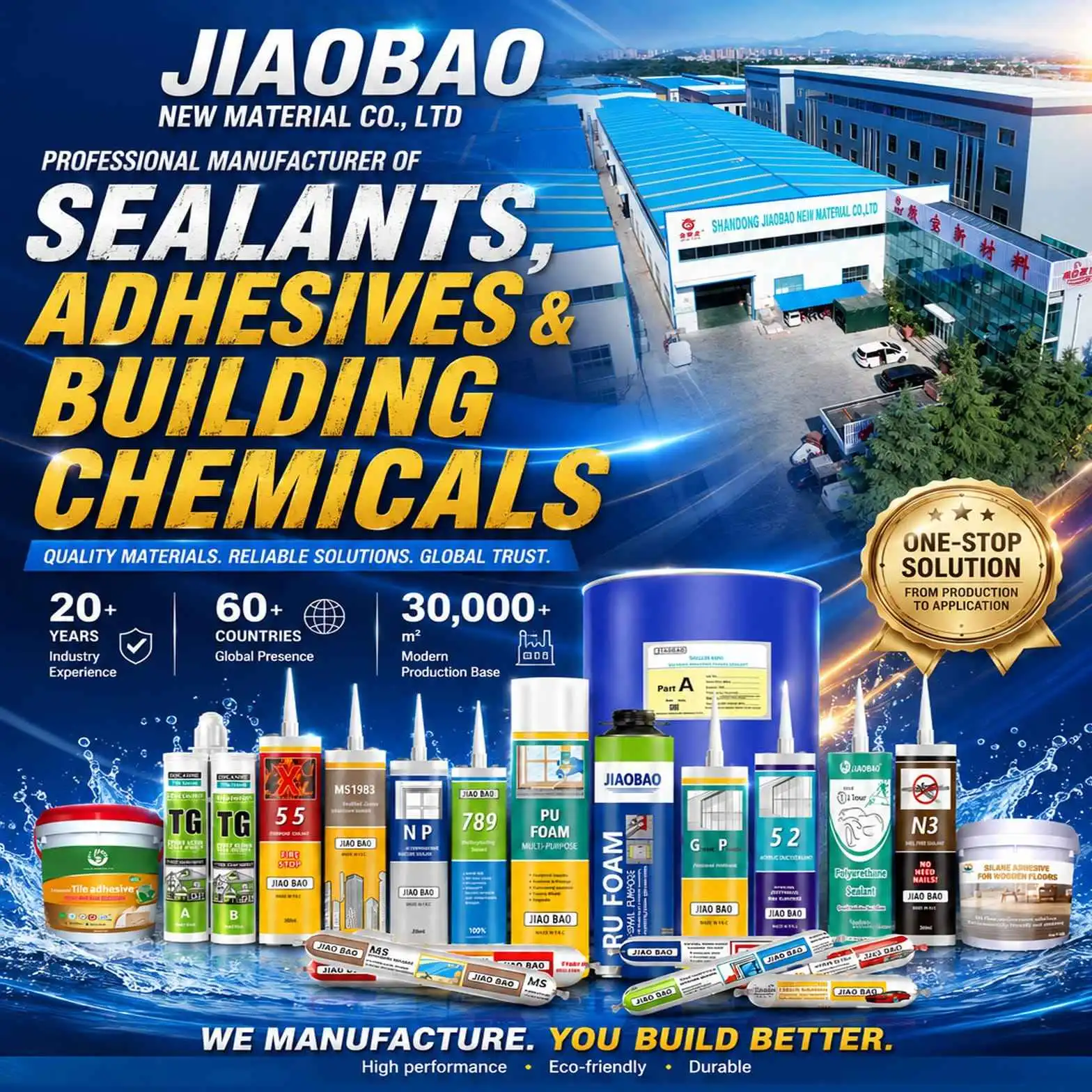
A common product can become a brand asset by working with a specialized OEM maker. Jiaobao has been in business for more than 13 years and has built a production platform that can handle color-matched batches, private-label packing, and compliance paperwork that is specific to Southeast Asian, Middle Eastern, African, and American markets.
There are big real benefits for both importers and owners of area brands. Custom color matching takes away the generic look of shelf items, which lets prices be different. Quality engineers need consistent batch-to-batch Shore hardness and elongation data to pass regulatory audits. This data is backed up by in-house QC and third-party lab verification. Jiaobao also gives a refund or replacement policy if there is a quality problem during the shelf life. This takes away a big obstacle for first-time OEM buyers who need to manage brand image risk.
In addition to the product itself, the manufacturing relationship provides access to formulation knowledge that has been built up over hundreds of custom projects. When a buyer wants a faster tack-free time for a high-humidity area or a certain viscosity profile for automatic dispensing equipment, only a maker with a real R&D depth can give them that kind of application knowledge.
Selecting a high-quality acetic silicone sealant supplier requires matching technical specifications to project demands, verifying certifications, and confirming OEM flexibility. Jiaobao's GP Acetic Silicone Sealant for Construction has a proven 1.5 MPa bond strength, >300% elongation, and a 15-minute tack-free time. It also comes in a cost-effective OEM framework that can be customized. Jiaobao can help distributors, importers, and brand owners at every step of the buying process. They have been making products for over 13 years, are ISO certified, and offer flexible logistics. You can find full technical information and prices at shandongjiaobao.com.
No. The acetic acid that is released during hardening reacts with alkaline materials like concrete, cement, and mortar, making them not stick and rusting on the surface. For those uses, you should choose a neutral-cure silicone.
The smell comes from acetic acid, which is a result of the acetoxy moisture-curing method. It's normal, and it goes away completely when the sealant cures all the way.
Normal silicone rubber surfaces don't let paint stick to them. Finish painting before applying the sealant, or choose an MS polymer sealer if you need to paint over the sealant.
Too much shrinking means that a lower-grade product has a lot of solvents or plasticizers. A good acetic silicone sealer should have close to 100% active silicone polymer, which means that it should lose very little volume after it cures.
Not at all. The base has to be clean and dry. When moisture on the surface gets in the way of adhesion, the bond breaks before the sealant has a chance to cure.
You can buy GP Acetic Silicone Sealant for Construction with confidence from Jiaobao because they have low prices, quick shipping (1–2 weeks), high quality that is ISO-certified, and the ability to make any changes you want. You can ask our team for examples, a detailed datasheet, or a bulk quote right away. You can email us at dorashen@cnjiaobao.com or go to shandongjiaobao.com to start your question right away.
1. ASTM International. ASTM C920: Standard Specification for Elastomeric Joint Sealants. ASTM International, 2022.
2. ISO. ISO 11600: Building Construction — Jointing Products — Classification and Requirements for Sealants. International Organization for Standardization, 2022.
3. Petrie, E. M. Handbook of Adhesives and Sealants. McGraw-Hill, 2007.
4. Cognard, P. Handbook of Adhesives and Sealants, Volume 2: General Knowledge, Application Techniques, New Curing Techniques. Elsevier Science, 2006.
5. Wolf, A. T. "Durability of Silicone Sealants." Construction and Building Materials, Elsevier, 2010.
6. Panek, J. R., and Cook, J. P. Construction Sealants and Adhesives. 3rd ed., Wiley-Interscience, 1991.
November 16,2023
Enterprise Name
The sealant has very strong adhesion and performs well even on glass and aluminum. After curing, it remains flexible and shows no cracking. Perfect for our facade projects.
November 16,2023
Enterprise Name
Stable quality across batches. Our customers especially like the smooth application and consistent extrusion. It helps reduce installation time on site.
November 16,2023
Enterprise Name
I used it for bathroom sealing. Excellent waterproof performance and no mold issues so far. It's been holding up very well in humid conditions.
November 16,2023
Enterprise Name
The neutral silicone works well on sensitive materials without corrosion. Very suitable for industrial applications requiring stable performance.
_1779347426672.webp)