November 16,2023
Enterprise Name
The sealant has very strong adhesion and performs well even on glass and aluminum. After curing, it remains flexible and shows no cracking. Perfect for our facade projects.
Sep 21, 2026
If you work in HVAC installation, you already know how unforgiving a bad seal can be. A single compromised joint in a duct system can drive up energy costs, allow moisture intrusion, and trigger callbacks that damage your reputation. GP Multi-Purpose Silicone Sealant addresses these challenges directly. Engineered as a one-part RTV silicone rubber, it delivers reliable adhesion, broad temperature tolerance from -50°C to +150°C, and a tack-free time of just 15 minutes — making it a practical, field-tested choice for HVAC professionals who cannot afford downtime or rework.
HVAC systems have to deal with temperature, humidity, and mechanical vibrations that change all the time. Caulks made of plastic or rubber tend to crack in these conditions after a few seasons. This glue made from silicone stays flexible no matter what temperature it is. It can be stretched more than 300% and is 18 Shore A hard, which means it bends when the joint moves instead of breaking. Because it can move about ±25%, it can accommodate the natural expansion and contraction of metal pipes. This means that jobs don't have to be re-sealed as often.
One good thing about this item is that it can be used with many different surfaces. The glue works well on metal, glass, plastic steel, concrete, clay tiles, stone, and other materials that are often used in HVAC systems. Both ISO and CE have approved the formula, which is important for business or industrial HVAC projects that have strict rules about how they can be bought. It can be White, Black, Gray, or a color you choose, and it helps setups look good from the outside.
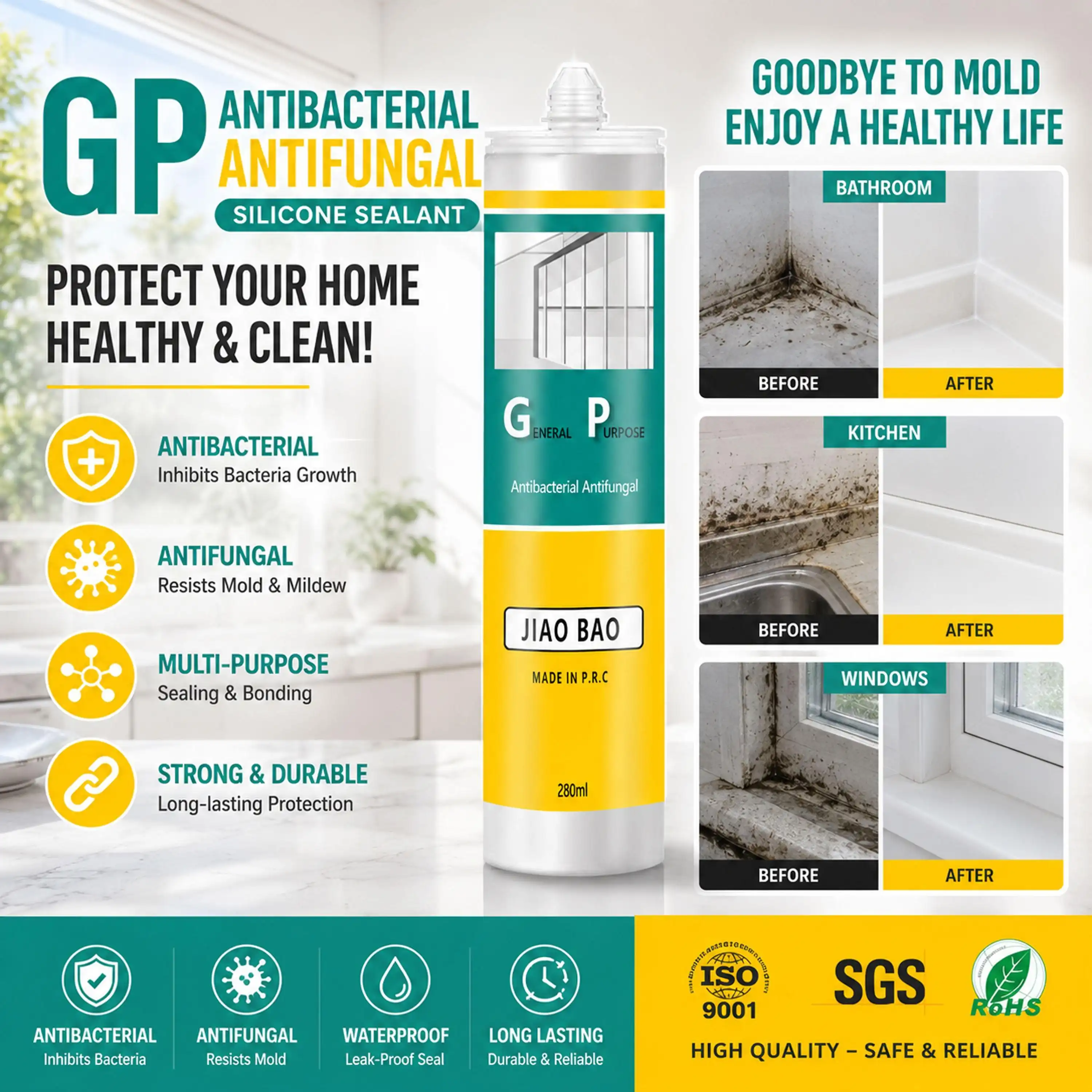
Getting the place ready is the one thing that most techs forget to do. Before silicone sealant can be used, the surface needs to be dried, clean, and free of oil, dust, and old sealer. A wipe with isopropyl alcohol is all you need to clean metal ducts. A 300ml or 600ml cylinder can be put into a normal caulking gun. Make a bead that goes from one joint to the next without stopping. Try to make a bead that is slightly wider than the joint. This way, the tool pressure will touch both sides of the gap.
How quickly something dries depends on how hot and wet it is nearby. If it stays at room temperature and humidity, GP Multi-Purpose Silicone Sealant dries in about 15 minutes to a smooth, sticky surface. The full 2–3 mm of cure takes 24 hours. As long as it's not too cold or damp where you are, give the system more time to fix before you pressurize it.
When acetoxy-cure silicones harden, they give off acetic acid. Because of this, they should only be used in somewhere with good air flow. Wear rubber gloves to protect your eyes and hands. Since the glue is chemically harmless when it's dry, you can touch normal HVAC parts for a long time.
Most of the time, when buying teams look at different sealants, they compare how much they cost up front to how much they cost over time. Acrylic sealants are cheap, but they become less flexible over time because they soak up water. This can happen in HVAC systems that are in places with a lot of humidity.
Seals made of polyurethane stick well, but they break down after being exposed to UV light for a long time and can get hard in cold weather. Both of these issues can be solved by silicone science. UV rays, ozone, or water don't break it down, and it stays flexible at -50°C, which is something that acrylic or polyurethane products in the same price range can't always do.
The three types of sealant that are most important for HVAC purchases are shown below side by side:
The difference in efficiency can be measured by how much money is saved over the course of three to five years of repairs. GP Multi-Purpose Silicone Sealant is the reference frame that procurement officers and buildings managers trust the most is this one.
Businesses that buy in bulk need a lot of silicone sealant, and the reliability of the supply chain is just as important as how well the product works. While Jiaobao only began in 2013, it has been making things for more than 13 years. They can ship by both sea and land, so buyers can choose how to set up their businesses. The production wait time is one to two weeks. They offer OEM and ODM, so you can ask for unique colors, private-label packages, or formulas that are only sold in certain areas without having to switch providers.
The item can be shipped in cartridges or sausage packs and comes in 300ml or 600ml sizes. From the moment it was made, it can be used for 12 months. People who buy things from Jiaobao get samples to do their own adhesion-in-peel and cure verification tests on before they place a bulk order. At any point during the shelf life, you can either get your money back or a new one. This takes away the main risk that people who are buying from businesses for the first time have.
Business HVAC retrofitters often say that duct joints sealed with GP Multi-Purpose Silicone Sealant last longer than the insulation wrap next to them and don't need to be renewed. When the epoxy is completely dry, a shield that keeps water out forms around the joints.
This keeps water from getting inside, which is a typical way for corrosion to happen in sheet metal ducts. It has a consistency rating of 0.88 and a percentage rating of 0.87, and it doesn't sag when used vertically. This is important for protecting duct runs or collars that go through the wall and into the ceiling.
UV and ozone don't hurt this product, so it can be used on both rooftop units and wall penetrations on the outside. It doesn't need to be maintained every season like plastic options do. Jiaobao is always making its silicone polymer recipes better so that they can meet new environmental and carbon standards. This keeps the product legal even if rules in key export markets get stricter.
Installers of HVAC systems need GP Multi-Purpose Silicone Sealant because it is flexible, can handle a range of temperatures, and is simple to use. There is only one ingredient in it, and it can be used on many surfaces. It has a 15-minute tack-free time, ±25% movement accommodation, and a service range of -50°C to +150°C. These tested technical specs lower the number of callbacks, make the seal last longer, and lower the total cost of maintenance. Adding it to a building materials supply list is a low-risk, high-reward move for purchasing teams because it meets ISO/CE standards, comes in different package types, and has a good policy for customer service after the sale.
Yes. It can be used for both inside and outside ductwork joints, like on rooftop unit bases and wall penetrations, since it doesn't react with UV light or ozone and hardens waterproof.
Most silicone surfaces are slippery, so paints made with water or oil don't stick to them. Choose a sealer that fits the color from White, Black, or Gray if you want to paint the finish. You can also paint the base first and then seal it.
When the acetoxy fix system cures, it gives off acetic acid gas. Make sure you're working in a room with good air flow. Nitrile gloves and safety glasses should be worn. Once fully cured, the barrier is inert and safe for routine HVAC maintenance contact.
When everything is normal, the surface reaches a tack-free state in 15 minutes. Every 24 hours, about 2–3 mm of progress is made until the whole through-cure is complete. It is better to wait longer for the cure time to finish if it is cold or there isn't much humidity.
Yes. As long as the metal or other non-porous surface is clean and dry before you use it, it bonds directly without a primer.
Businesses and companies in China and around the world have been able to buy approved silicone sealant from Jiaobao since 2013. Whether you need a GP Multi-Purpose Silicone Sealant supplier for a distribution catalog or a manufacturer capable of OEM packaging to your specifications, Jiaobao delivers competitive pricing, a one-to-two-week lead time, and a quality guarantee within shelf life. Request a sample or discuss bulk pricing today — visit shandongjiaobao.com or contact our team directly at dorashen@cnjiaobao.com.

1. ASHRAE Handbook — Fundamentals, American Society of Heating, Refrigerating and Air-Conditioning Engineers, 2021.
2. Sealants: The Professionals' Guide, Sealant, Waterproofing & Restoration Institute, 2019.
3. ASTM C920: Standard Specification for Elastomeric Joint Sealants, ASTM International, 2022.
4. ISO 11600: Building Construction — Jointing Products — Classification and Requirements for Sealants, International Organization for Standardization, 2022.
5. Silicone Industry Report: Performance Sealants in Construction and HVAC Applications, Freedonia Group, 2023.
6. Building Envelope Technology Symposium Proceedings, RCI Foundation, 2022.

November 16,2023
Enterprise Name
The sealant has very strong adhesion and performs well even on glass and aluminum. After curing, it remains flexible and shows no cracking. Perfect for our facade projects.
November 16,2023
Enterprise Name
Stable quality across batches. Our customers especially like the smooth application and consistent extrusion. It helps reduce installation time on site.
November 16,2023
Enterprise Name
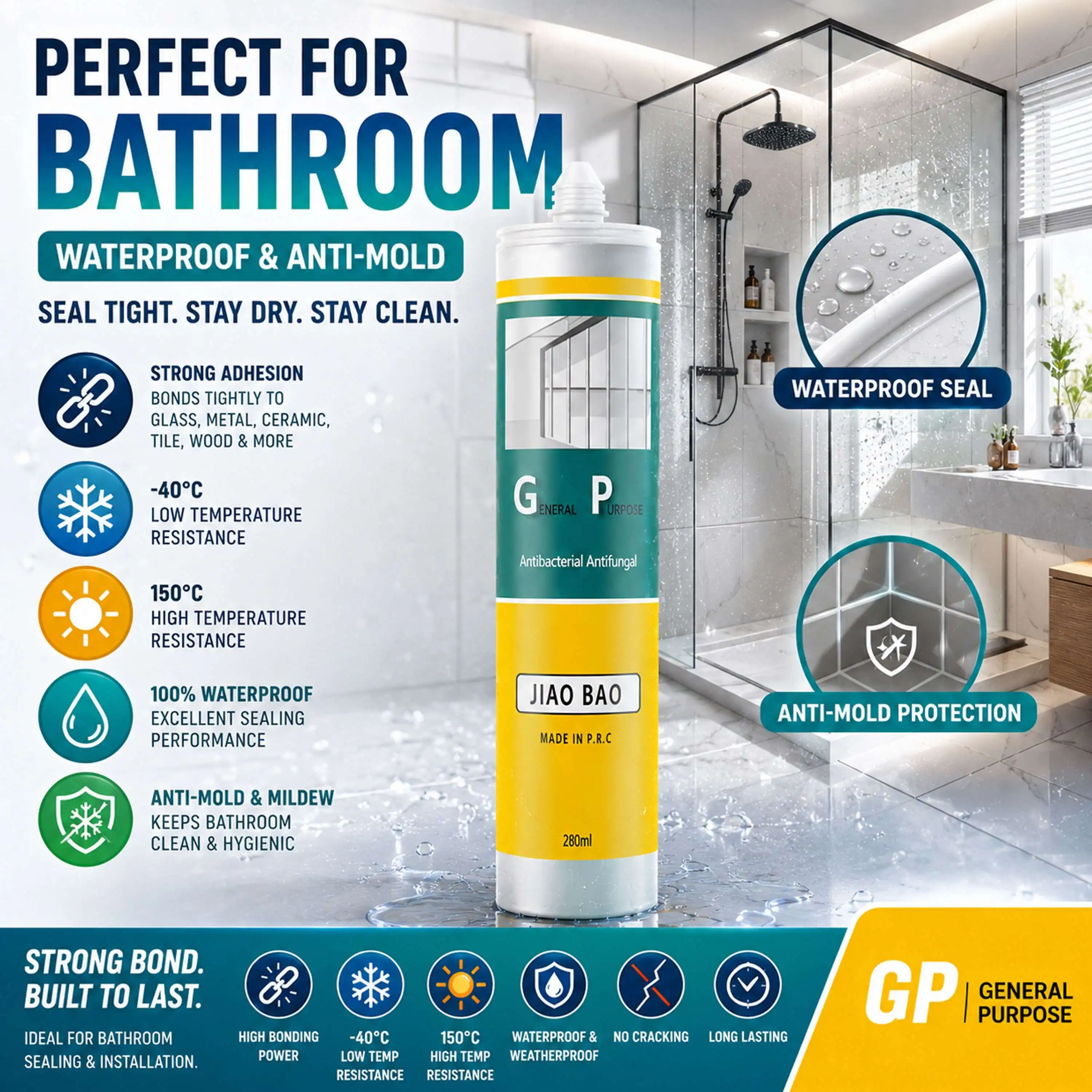
I used it for bathroom sealing. Excellent waterproof performance and no mold issues so far. It's been holding up very well in humid conditions.
November 16,2023
Enterprise Name
The neutral silicone works well on sensitive materials without corrosion. Very suitable for industrial applications requiring stable performance.
_1779347426672.webp)