November 16,2023
Enterprise Name
The sealant has very strong adhesion and performs well even on glass and aluminum. After curing, it remains flexible and shows no cracking. Perfect for our facade projects.
Jul 25, 2026
Selecting the right sealant determines whether your construction project endures weather extremes, structural movement, and decades of service. Among numerous sealing solutions, GP Silicone Sealant for Glass and Aluminum stands out as a dependable choice that balances adhesion strength, weather resistance, and application flexibility. Modern construction demands products that perform consistently across substrates—especially where thermal expansion, moisture infiltration, and UV exposure challenge seal integrity. Understanding sealant chemistry and matching properties to project conditions enables procurement teams to reduce callbacks, extend service life, and meet stringent industry standards.
There are four main types of sealants that construction workers use. Each one is designed to meet specific performance needs. Silicone seals harden when they come into contact with water. They are very flexible and can stay that way from -50°C to +150°C. They also don't break down in UV light or ozone. Although acrylic formulations are cheap and easy to paint, they don't allow for the movement that is needed for dynamic joints. Polysulphide sealants work great in wet places like public decks and fuel storage areas because they are resistant to chemicals in a way that silicones can't. Different types of polyurethane fill in performance gaps by sticking well to concrete and not wearing down easily, making them perfect for horizontal joints and areas that get a lot of use.
How you pair your substrates has a big effect on the finish you choose. When you combine glass and aluminum, which you often see in curtain walls, window systems, and shopfront assemblies, you run into problems with surface energy and thermal expansion coefficients. Glass expands about 9 micrometres, while aluminum expands about 23 micrometres per metre per degree Celsius. Because of this uneven movement, sealants need to be able to stretch a lot so that they don't break when the temperature changes with the seasons.
When you compare silicone and plastic technologies for fenestration projects, you can see that they work differently after the first year of service. Silicone doesn't harden or crack when temperatures change a lot. This means that joints can move with the building when it moves due to wind load or temperature cycling. Acrylic seals are cheap and good for use inside, but they break down over time when exposed to UV light for a long time and lose their flexibility, which causes cracks and water to get in.
The ways that chemicals bond in these systems are very different from one another. When wetness triggers crosslinking, acetic-cure silicones release acetic acid. This makes a strong bond with glass, but it could react with mill-finish aluminum if surfaces are not anodised or covered. Concerns about corrosion are gone with neutral-cure versions, but primers may be needed on some surfaces. Instead of chemical adhesion, acrylic sealants form mechanical bonds. This makes them less durable in joints that move and are exposed to weather.
Field tests that looked at how long things last show that silicone is better for use in exterior glazing uses. When buildings are sealed with good silicones, they usually last longer than 20 years without needing to be replaced. On the other hand, plastic projects usually need to be resealed every 5 to 10 years. When purchasing managers look at the total cost of ownership, they know that silicone costs more at first, but it costs less over its lifetime because it needs less upkeep and service.
Our GP Silicone Sealant for Glass and Aluminum is a one-component product that cures when it comes in contact with moisture. It works well for making windows and putting together buildings. Because it is acidic, this mixture doesn't stick after 15 minutes, which lets door and window factories make things quickly. The product can handle joint movement while keeping the integrity of the seal because its tensile strength is higher than 300 percent elongation and its maximum bond strength is 1.5 MPa.
You can get the sealant in 300ml and 600ml sizes, and it comes in both sausage and cartridge shapes. It can be used by hand or with pneumatic dispensing systems. Standard colours include white, black, and grey. RAL reference systems allow for unique matching to make sure that high-end business projects look the same. The 12-month shelf life helps wholesalers and contractors who buy in bulk keep track of their supplies.
Shandong Jiaobao New Material Co., Ltd. has been making this recipe for over 13 years and uses ISO-certified quality systems to make sure that each batch is the same, which is important for large-scale buying. The company has a well-established shipping network that allows deliveries every one to two weeks. This cuts down on supply chain problems that cause projects to be late.
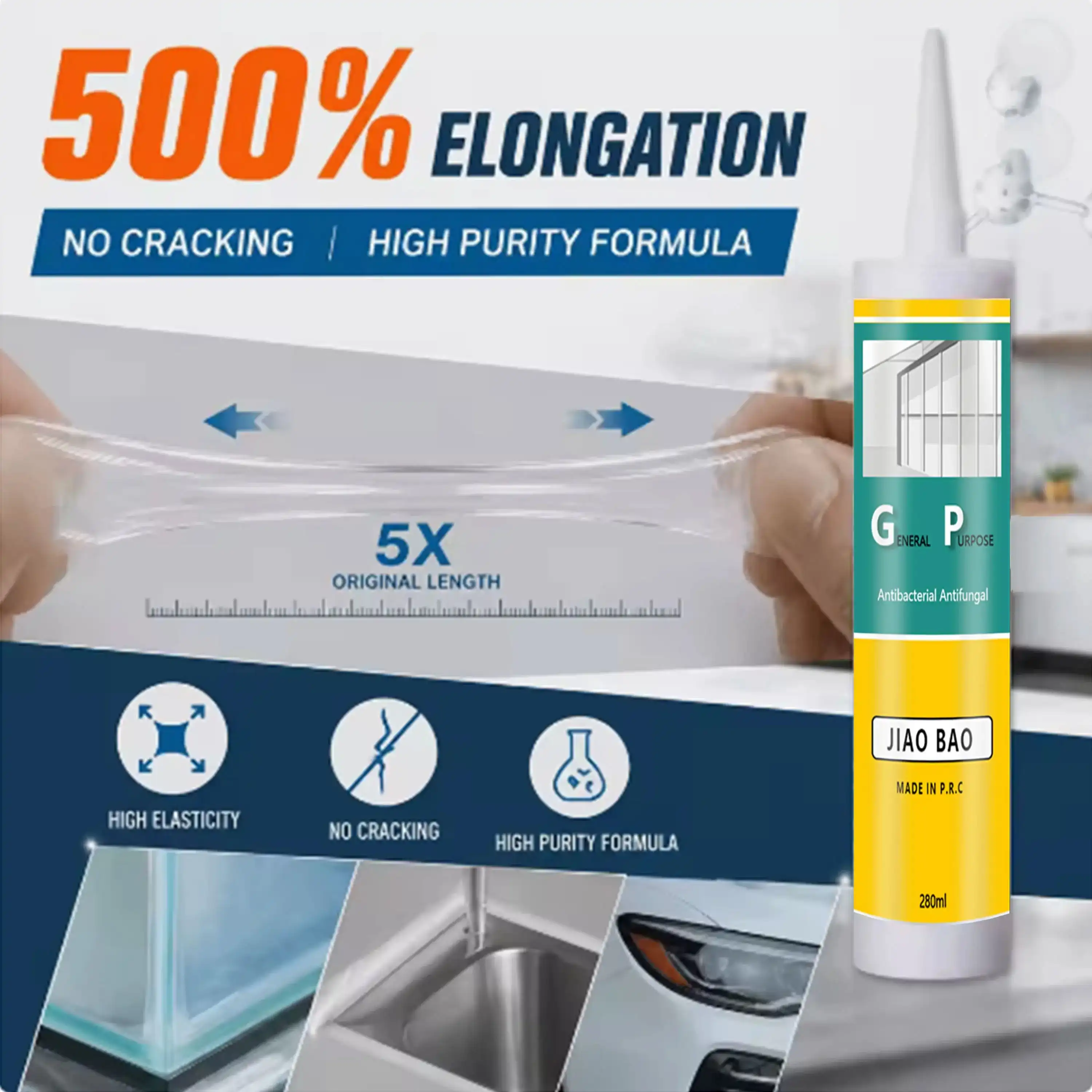
To get strong bonds, the surface must be carefully prepared before the sealant is applied. The two-cloth method with isopropyl alcohol is used to clean aluminum profiles. The first cloth uses the solvent to remove oils and other impurities, and the second cloth wipes the surface right away so that the solvent doesn't dry and leave behind residue. The same method works well on glass surfaces to get rid of factory coats, dust, and handle oils that make sticking harder. Conditions in the air during application have a big effect on the rate of curing and the end qualities. Relative humidity between 40 and 80% speeds up the moisture-curing process. Temperatures below 5°C slow crosslinking and make the tack-free time longer than what is stated.
The design of the joint affects how well the sealant works over its entire service life. Width-to-depth ratios of 2:1 are best for spreading stress evenly and keeping it from building up too much during joint movement. Backing materials, like closed-cell polyethylene foam tubes, control how deep the glue goes and stop three-sided bonding, which makes it hard to move and causes cohesive failure. Putting masking tape next to the edges of joints makes sure that the sealant lines are clean, which improves the look of installations that can be seen.
Consistent bead extraction keeps the joint fill level and stops gaps that could weaken the seal. For manual gunning to work, the trigger pressure and tool speed must stay the same. Pneumatic systems, on the other hand, allow for precise flow control in high-volume production settings. Tooling right after application forms the sealant profile and makes sure it contacts both substrates, getting rid of any air gaps that could hold water.
Curing happens from the outside in at a rate that depends on the temperature and humidity. Under normal conditions (23°C, 50% RH), our GP Silicone Sealant for Glass and Aluminum mixture forms skin in 15 minutes, which lets you handle it without damaging the surface. For 6mm beads, full-depth cure happens in 24 hours, but it takes longer for thicker sections. By planning project plans around cure needs, you can avoid loading buildings too soon, which can damage them as they're being built.
Adhesive failure, in which the sealant comes off of the substrate cleanly, is usually caused by not properly preparing the surface or introducing contamination after cleaning. When a sealant tears inside, this is a sign of low-quality formulas that were stretched with mineral oils that evaporate over time, causing the sealant to shrink and crack under stress. This risk can be reduced by only buying products from companies that have clear quality control systems.
When acetic-cure formulations are used on some plasticisers or porous substrates, there are concerns about discolouration. Potential responses can be found by testing compatibility on sampling samples before it is used on a large scale. Alternatives that use neutral cure get rid of the byproducts of acetic acid, but they may cure more slowly at first.
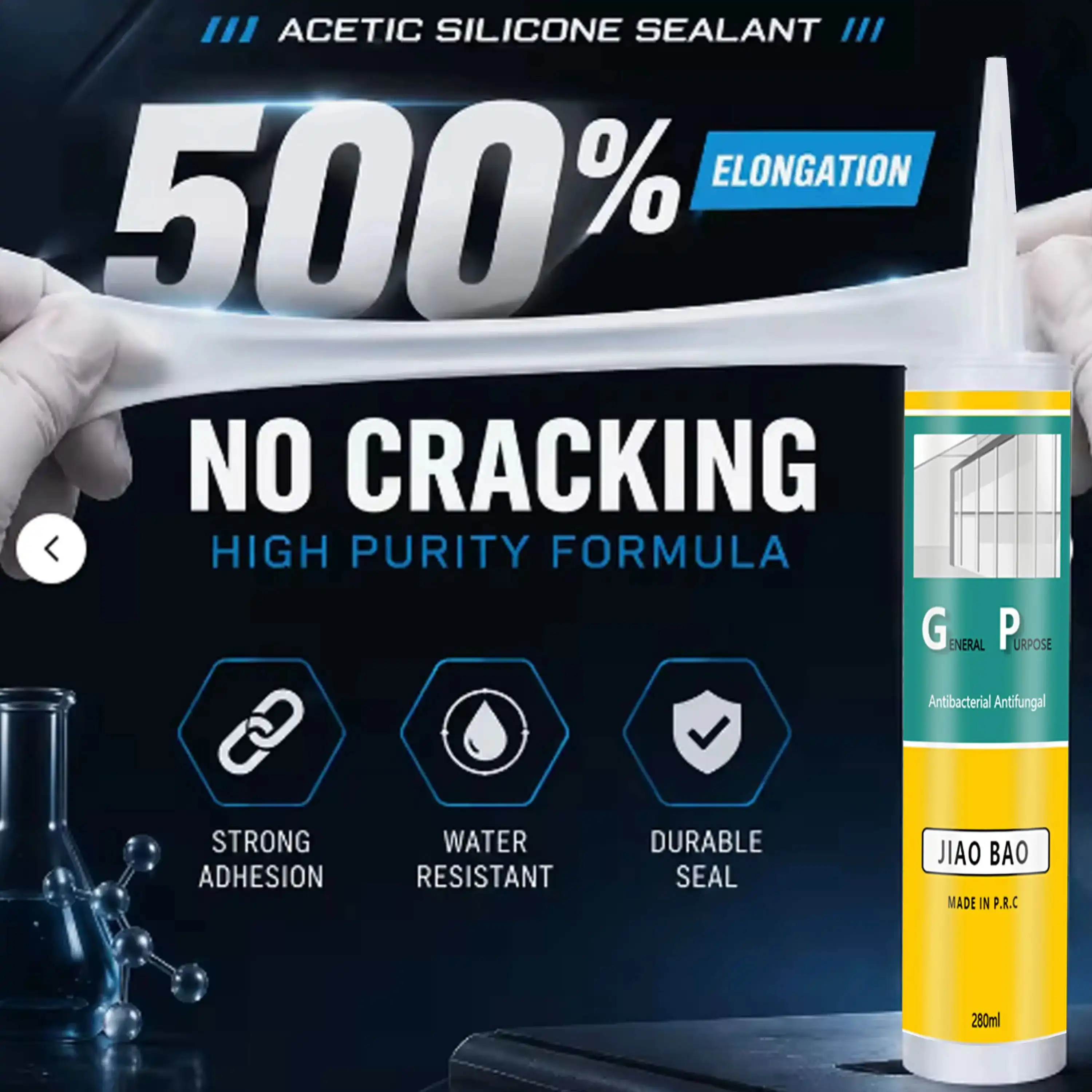
Ultraviolet light breaks down the polymer chains in many sealer chemicals, which makes them less strong and causes the surface to chalk. The artificial backbone of silicone, which is made up of alternating silicon and oxygen atoms, doesn't break down when exposed to UV light, so it stays flexible even after decades of being in the sun. Even though polysulphide and polyurethane sealants are better in some situations, they both turn yellow and harden in the same conditions, making it harder to move and looking less nice.
As part of ASTM C920 weathering tests, sealants are heated, cooled, exposed to UV light, and submerged in water several times. After 5,000 hours of fast ageing, good silicone formulations still have more than 90% of their original stretch and tensile strength. This is better than polyurethanes, which may lose 30% or more of their flexibility. This durability immediately leads to lower upkeep costs and longer periods of time between replacements in outdoor glazing uses.
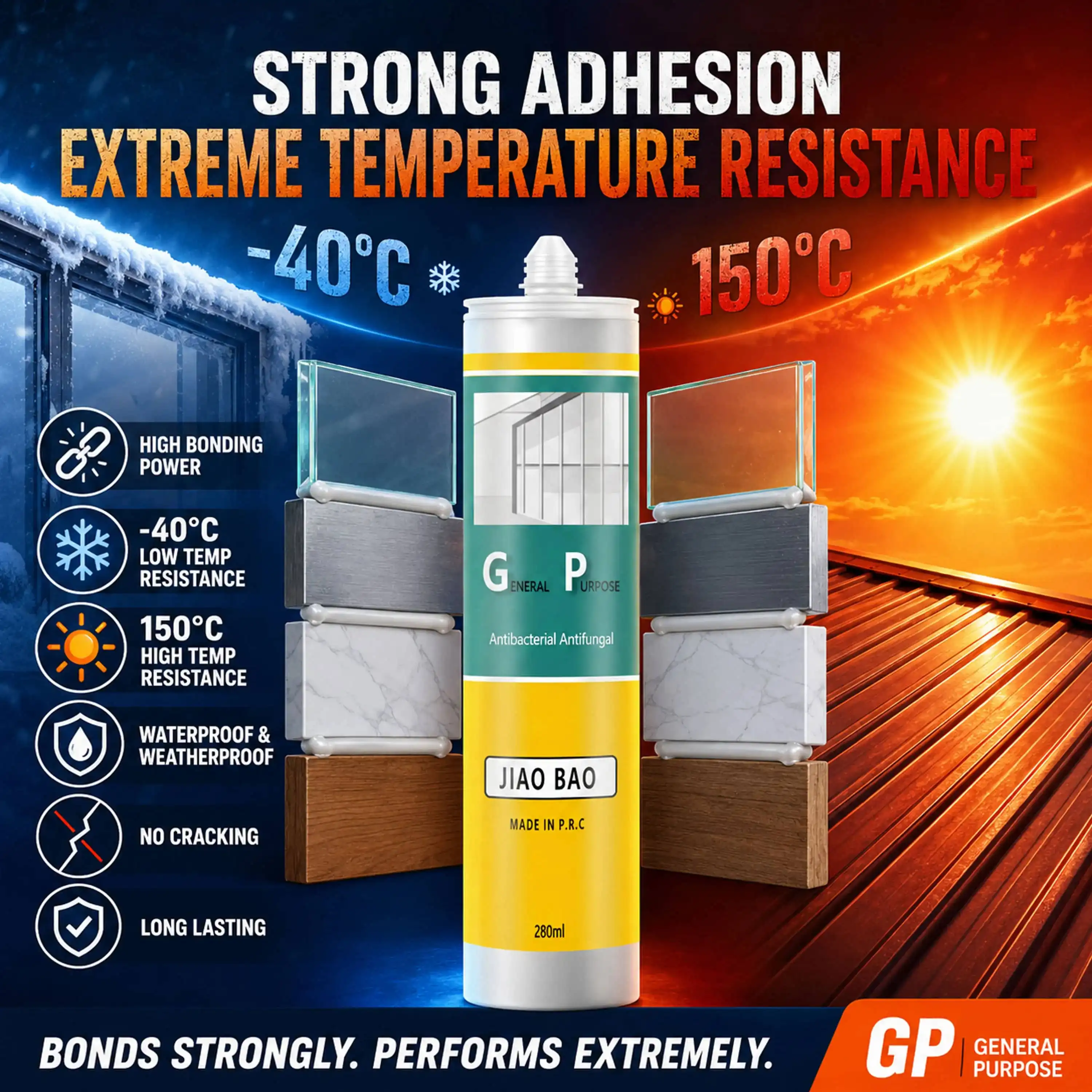
Flexibility is still very important in places where substrates move at different temperatures. When used at temperatures between -50°C and +150°C, our GP Silicone Sealant for Glass and Aluminum keeps its stretchy qualities. This lets the aluminum frame expand without putting too much stress on the glass. Polyurethane alternatives get stiffer when it's cold, which makes failure more likely in the winter.
To figure out how much sealant costs, you have to look at both unit price and lifetime costs. Silicone seals are more expensive than acrylics at first, but they last longer—often twice or three times longer than cheaper products—so they are a better deal. Large projects benefit from volume discounts and reliable supply through well-established networks of distribution.
Jiaobao can handle production lead times of one to two weeks, which lets companies use just-in-time purchasing methods that cut down on the costs of keeping stockpiles. Small fabricators and multinational contractors can both use flexible minimum order quantities, and OEM and ODM capabilities let private labelling be tailored to the needs of different markets.
Knowing the differences between treatment systems helps you choose the right product. When acetic-cure silicones crosslink, they create acetic acid, which smells like vinegar. This makes strong chemical links to glass and anodised aluminum. Before using this chemistry on mill-finish aluminum, copper, brass, or other metals that are easily corroded, it should be made sure that it is compatible. Neutral-cure types get rid of corrosion worries by using alcohol or oxime release mechanisms. This makes substrate compatibility wider, including metals that are easily damaged and natural stone that gets stained.
Environmental safety profiles recommend neutral-cure formulations for occupied spaces where smell is a concern, like hospital renovations or improvements made by tenants who are already living there. Once fully cured, both systems work about the same way in the long term, but acetic types often have faster initial tack-free times, which is helpful in manufacturing environments with a lot of work to do.
Getting things from authorised sellers and distributors. Buying through authorised channels makes sure that the product is real, that the quality is consistent, and that you can get expert help. Shandong Jiaobao New Material Co., Ltd. has a network of established wholesalers that serve North American markets by offering localised supplies and quick customer service. Authorised sellers provide full product paperwork, such as technical datasheets, safety data sheets, and certification records that are needed for regulatory compliance and project requirements.
When you work directly with a maker, you can customise products beyond what's normally available. Jiaobao's OEM and ODM services help procurement teams that are in charge of big projects or looking for exact colour matches. These services allow recipe and packaging changes that are in line with regional standards or company branding needs.
Pricing structures that are clear make budgeting and cost analysis easier. Volume-based pricing levels award larger promises while keeping prices low enough for smaller fabricators to be able to afford them. Quotes usually take into account things like the size of the order, the type of packaging, any customisation needs, and where the product needs to be delivered.
Shipping options by sea freight or land transport are flexible enough to meet a wide range of logistics needs. Because Shandong Jiaobao is close to many of China's major ports, it is easy to load containers quickly and get cheap international freight rates. Also, the customs paperwork process is well-established, so clearance delays are kept to a minimum. Standard goods have delivery times of one to two weeks, which helps with planning projects and keeping track of supplies.
By asking for samples before committing to large quantities, you can be sure that the product meets the needs of the project. Sample programs usually include representative units in certain colours and packaging formats, along with technical information explaining how to use the products and how well they work. The testing procedures should be based on what would happen on the job site in terms of substrate types, joint configurations, and environmental exposures.
Technical support after the sale is what sets good suppliers apart from average ones. Jiaobao's team helps with application advice, fixing, and making sure that odd substrate combinations are compatible. Warranty coverage that covers material flaws during the shelf life time gives you even more peace of mind, and refund or replacement options protect your purchasing investments against mistakes made during production.
Minimum performance standards for sealants are set by how they will be used. For outdoor uses, UV resistance, weather resistance, and temperature stability are all qualities that come naturally to silicone science. Less expensive acrylics may be able to be used in interior projects where there isn't much movement and paintability is more important than long-term flexibility.
The required bonding strength depends on how the joint is designed and how it is loaded. GP Silicone Sealant for Glass and Aluminum with tensile strengths of about 1.5 MPa can be used in non-structural glazing uses, where the weight of the glass is held by mechanical retention rather than adhesive ties. For structural glazing systems that hold wind forces and glass dead loads, they need high-modulus structural silicones that meet ASTM C1184 standards. These are different from GP formulas.
Movement ability tells us if sealants can withstand thermal expansion, seismic movement, or building deflection without breaking. Our GP Silicone Sealant for Glass and Aluminum can stretch by more than 300 percent, which makes it perfect for dynamic joints in aluminum curtain wall systems. On the other hand, lower-performance goods might work on rigid surfaces that don't move much.
Budget limits affect the choice of materials, but lifetime cost analysis often shows that higher-end goods are worth it. To figure out the total cost of ownership, you have to guess how long something will last, how often it will need maintenance, and how much it will cost to replace after the initial purchase price. Silicone has been shown to last for 20 years, which is good for projects with long design lives. However, temporary installations or low-exposure environments may need to use cheaper materials.
In building uses, the need to match colours makes things more difficult and costs more. Standard colours like white, black, and grey keep prices low and stocking levels high. Custom colour development requires making changes to the formula, getting approval for samples, and placing a minimum order. However, for picky customers, the consistent look achieved in high-visibility installations is worth the extra cost.
Extreme conditions make efficiency requirements higher. In deserts with strong UV rays and temperature changes of more than 50°C between day and night, sealants need to be able to stay flexible and stick to surfaces across this range. The -50°C to +150°C service temperature range of our GP Silicone Sealant for Glass and Aluminum formulation allows for these extremes without affecting the integrity of the seal.
Salt spray and moisture-driven damage can happen to sites near the coast. Because silicone is naturally permeable, it doesn't let water in and doesn't let mildew grow. This makes it better than organic seals that break down in damp places. When you specify products that have been tested for marine exposure, you can be sure that they will work well in the long term.
For building projects to go well, the sealants used must be compatible with the base, able to withstand the environment, and meet performance standards. GP Silicone Sealant for Glass and Aluminum has been tested and proven to work well in fenestration uses. It cures quickly and is resistant to weather, making it ideal for parts that move around. By knowing about the chemistry of sealants, the best ways to use them, and how much they will cost over their lifetime, buying teams can choose goods that meet performance and appearance standards while requiring less upkeep. Jiaobao's manufacturing know-how and flexible supply chain help both large contractors and specialised fabricators who need reliable sealing solutions.
To make sure the moisture-cure activation works right, the application should happen between 5°C and 40°C with a relative humidity of at least 30%. Lower temperatures increase the time before tack-free and slow down full-cure development. On the other hand, too much heat can cause cracking to happen before proper shaping.
Silicone's non-stick surface keeps paint from sticking to it. Painting the frame must be done before applying the sealant, or for jobs that need coated joints, modified polymer sealants that can accept paint should be specified.
Silicone is better than polyurethane at resisting UV light and staying stable at high temperatures. It also stays flexible after decades of being outside. For horizontal traffic-bearing joints, polyurethane is better at resisting wear and tear, but silicone is better for vertical glazing applications because it doesn't yellow or get stiff when exposed to the sun for a long time.
Shandong Jiaobao New Material Co., Ltd. is a reliable GP Silicone Sealant for Glass and Aluminum source that procurement professionals can count on. They offer consistent quality, expert support, and a flexible supply chain that is necessary for projects to succeed. Our ISO-certified manufacturing processes and 13 years of experience in the field ensure batch-to-batch reliability. Our flexible minimum orders and 1- to 2-week lead times also allow for a range of purchasing strategies. Email our team at dorashen@cnjiaobao.com to talk about your unique needs, get product samples, or get bulk prices for projects that are coming up.
1. ASTM International. Standard Specification for Elastomeric Joint Sealants (ASTM C920-18). West Conshohocken, PA: ASTM International, 2018.
2. Beech, John C. "Sealants in Construction." Construction Materials Reference Book. Oxford: Butterworth-Heinemann, 2017.
3. Klosowski, John M., and Michael J. Owen. "Silicone Sealants for Building Construction." Building Sealants: Materials, Properties, and Performance. Philadelphia: ASTM, 2000.
4. Panek, Julian R., and John Philip Cook. Construction Sealants and Adhesives. 3rd ed. New York: Wiley-Interscience, 1991.
5. Riegel, Emil Raymond, and James Albert Kent. Riegel's Handbook of Industrial Chemistry. 10th ed. New York: Springer Science, 2003.
6. Wolf, Alan T. "Durability of Building Sealants: A Review of Current Knowledge." Journal of ASTM International 3, no. 7 (2006): 1-15.
November 16,2023
Enterprise Name
The sealant has very strong adhesion and performs well even on glass and aluminum. After curing, it remains flexible and shows no cracking. Perfect for our facade projects.
November 16,2023
Enterprise Name
Stable quality across batches. Our customers especially like the smooth application and consistent extrusion. It helps reduce installation time on site.
November 16,2023
Enterprise Name
I used it for bathroom sealing. Excellent waterproof performance and no mold issues so far. It's been holding up very well in humid conditions.
November 16,2023
Enterprise Name
The neutral silicone works well on sensitive materials without corrosion. Very suitable for industrial applications requiring stable performance.
_1779347426672.webp)