November 16,2023
Enterprise Name
The sealant has very strong adhesion and performs well even on glass and aluminum. After curing, it remains flexible and shows no cracking. Perfect for our facade projects.
Jul 23, 2026
Not at all. The NP Neutral Cure Silicone Sealant is not going to get wet. This one-part RTV mix makes a strong shield that won't let water through once it's fully set. Water molecules can't get in because of the way its polymers are structured. This is true even when it rains, is wet, or comes in direct contact with liquids. During the neutral drying process, residues that are not acidic are formed, along with a rubber seal that is flexible and waterproof from -50°F to +150°F. So, you can trust it to keep water out of places like the gaps between windows and doors, the seams in curtain walls, and the outside of buildings.
It is always hard for project managers to make building covers that are waterproof and will last for years in bad weather. Seals that stay in place, bend with the building, and don't break when water tries to squeeze them are what you need. Most seals don't last long because they rust, break down in UV light, or don't stick well to things like metal panels and covered glass that have a lot of small pieces.
All of these problems can be fixed with NP Neutral Cure Silicone Sealant, which is made with cutting edge polymer science for tough sealing jobs. It is not good for acetoxy silicones to give off acetic acid when they harden. But neutral cure versions leave behind harmless substances that keep fragile materials safer and keep water out better. This book tells professionals in building, buying, and designing everything they need to know about how waterproof something is, what materials work with it, and how to use it to complete a job successfully.
Rubber NP Neutral Cure Silicone Sealants that have a neutral cure are fixed with oxime or alkoxy methods. These methods react with water in the air to make networks of cross-linked polymers. The sealant doesn't give off any acidic fumes during this process, so metal backings won't rust, natural stone won't change colour, and mirror backings won't get broken. Because these two kinds of chemicals are not the same, you need neutral cure goods for big jobs where everything needs to keep working together.
At the first sign of air, this starts to dry out. That's how long it takes to smooth the surface when the temperature is 25℃ and the humidity is 50%. This lets the construction crews keep working quickly. It depends on how deep the joint is, how hot or cold it is, and how much water is in the air. The joint might be fully better in 7 to 14 days. The reaction goes faster when the temperature and humidity are higher. In cooler places, the response takes longer to happen, but it still does.
The sealant's molecules don't like water, so they keep it out. If you push water away from the outside of rubber once it's hard, it won't let it in on the inside. The tests used ASTM C920 standards, and the results showed that water can't get in, even after being immersed for a long time. Everything works the same way when it's very cold or very hot. It doesn't change shape at -50℃ or strength at +150℃. No change in how soft or weak it is.
Resistance to UV light is also very important. When the sun's rays break down sealants that aren't working right, this is called photo-oxidation. In this way, building fronts get chalky and crack. UV energy can break down stabilisers in NP Neutral Cure Silicone Sealant formulas, but they don't break down chemically. That is, the material's look and ability to do its job don't change even after decades of being used. Because of this, it lasts longer, costs less to maintain, and doesn't need to be sealed all the time in high-rise curtain wall uses.
It doesn't sag or slump when it's put on straight joints because it feels like paste. ASTM C679 says it should have 0 mm of flow shift. It can fill all holes because it is thixotropic, so there is no waste and no damage to the tools. The amount of VOCs is less than 80 g/L, which is in line with GB 13477 rules and helps meet standards for green building and indoor air quality. After being cured, the material is Shore A hardness 30. This is the perfect amount of hardness to hold buildings in place while still letting them spread. You can pull the link apart with 0.7 MPa of force, which is strong enough to hold it together even if the building moves. This is important for solid glass systems that have to deal with temperature changes and jumps because the glue lets the joint move 25%.
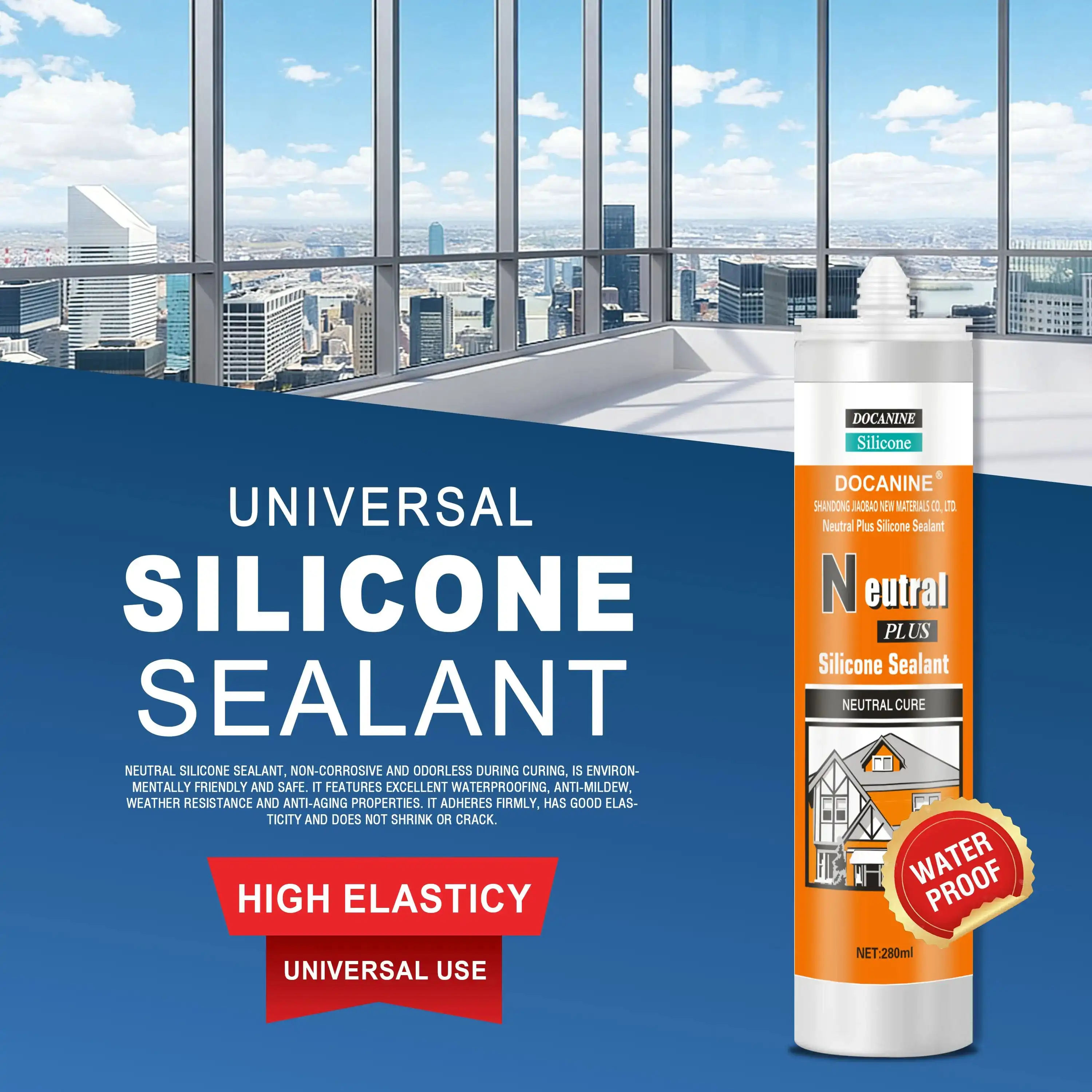
It must do more than just keep water off the surface to really seal something. Water can't get into NP Neutral Cure Silicone Sealant because its backbone is made up of fully cross-linked siloxane molecules. Between the polymer chains, there are very small holes that keep the water molecules in place. This makes the matrix three-dimensional. This building can be used to seal joints below ground and on the ground that are horizontal and collect water because it stays stable even when water pressure is applied to it.
This method makes sure that the polymerisation process goes all the way to the joint's bottom. Some sealants only get tough on the outside. The inside stays sticky. It starts to cure all the edges that can be seen at the same time when it gets wet, though. This keeps the mass the same and makes sure the seal doesn't leak anywhere. This fixes any holes or weak spots that water could get into.
Tests done by a separate lab that follow strict rules prove that the claims that they are waterproof are true. A lot of hot water is poured over test samples that have been shut up nonstop for 1,000 hours. It's the same thing as leaving them outside for years. After the test, the glue was checked to make sure there was no interface debonding, substrate stains, or sealant breakdown. Putting in bathroom fixtures, covering the ends of curtain walls and fixing expansion joints in the roof are all important tasks that can be trusted based on these results.
Proof of what was found in the lab comes from finished projects that show how well they worked in the real world. Weather changes, heavy rain, and salt spray are things that even the best sealants can't handle for high-rise business buildings near the coast. If you seal a building with NP Neutral Cure Silicone Sealant, it won't leak or show any damage for 10 to 15 years, even after that many checks. Because of this track record, specifiers can be sure that the waterproofing solutions they choose will last.
How waterproof something is depends on how well the surface is made. No dust, oils, or glue should be on the bases; they should be dry and clean. This will help the molecules stick together. For some things, like concrete and some kinds of wood, the top layers need binders to help them stick together better. How the joints are made also changes the outcome. When the joints are the right size and depth-to-width ratio, the sealant can bend without being stressed out too much. This means the waterproof seal will stay put even if the building changes.
What you do during treatment can change how well the product helps at first and how well it works in the long run. Chemicals don't stick together when sealer is put on wet surfaces. In other words, the bond doesn't work right away, but when it's dry, the product will be waterproof. When it's below 5°C, curing rates slow down a lot, so the material needs to be kept safe for longer before it can be put in water. It's important to know these limits so that installations go easily and guard as promised.
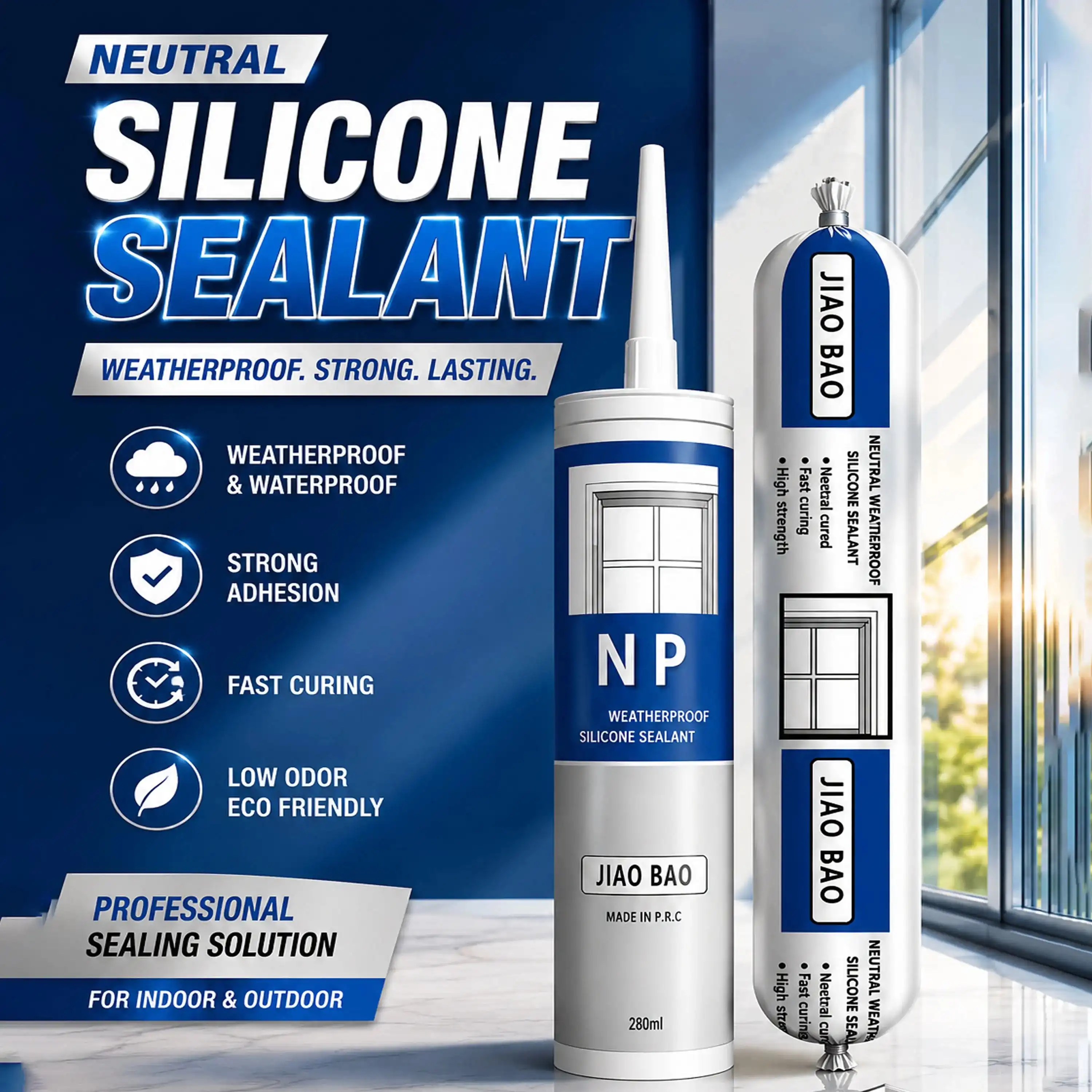
Acryl silicone seals are a good choice for jobs where you need to save money because they dry faster and cost less. But when the paint dries, acetic acid is released. This acid eats away at metal, takes away the silver from mirror backs, and makes places smell like strong vinegar that no one wants to be in. Some NP Neutral Cure Silicone Sealant options can fix these problems. These options keep the adhesion strength the same and make the materials work better together. For some projects, neutral cure chemistry is needed to keep the materials safe and the bond strong over time. For these kinds of projects, curtain walls made of metal, fixings made of stainless steel, or cladding made of natural stone might be used.
You can seal with either type because they can handle UV light and high temperatures. When put on the right surfaces in the right way, it keeps water out in the same way. The important thing is not how waterproof they are, but how well the parts fit together. It costs more to make neutral cure goods, but they work better in hard to set up or expensive situations because they don't wear away at the base.
Different kinds of polyurethane coatings can handle joints that move more than 50%. They are very strong when stretched and when pulled. Because of this, they work great for joints that need to deal with big changes in the ground. On the other hand, polyurethanes break down quickly in UV light if they don't have a covering that keeps them safe. In other words, you can't use them outside where the weather could damage them. They are also less solid when it is very hot or very cold, and they break apart when it is very hot or very cold.
NP Neutral Cure Silicone Sealant works the same at a bigger range of temperatures. Also, UV light doesn't break it down. It's good enough for most artsy windows and building envelopes, even though it only lets 25% of the glass move. Inside, polyurethane is better because it lasts longer, but outside, silicone is better because it can handle the weather better and needs less upkeep.
If you prepare the surface well, NP Neutral Cure Silicone Sealant sticks very well to glass, aluminium, ceramic tiles, and marble. There is a mix of chemicals and mechanical forces in the glue that can stick to silica-based surfaces and porous materials. It can stand up to both shear stress and peel stress. If you put Low-E or reflective film on glass, the neutral chemistry won't hurt it. It keeps the structure's strength and its transparency.
To choose the right recipe for plastics like PMMA and polycarbonate, you need to be careful because some neutral cure methods can cause polymers that are sensitive to them to stress crack. The technical data sheets for products list the surfaces that can be used with them based on tests that see how well they stick. NP Neutral Cure Silicone Sealant works best with all types of fabrics for curtain wall companies that work with them. They won't have to carry around as many seals, and the right one will always work.
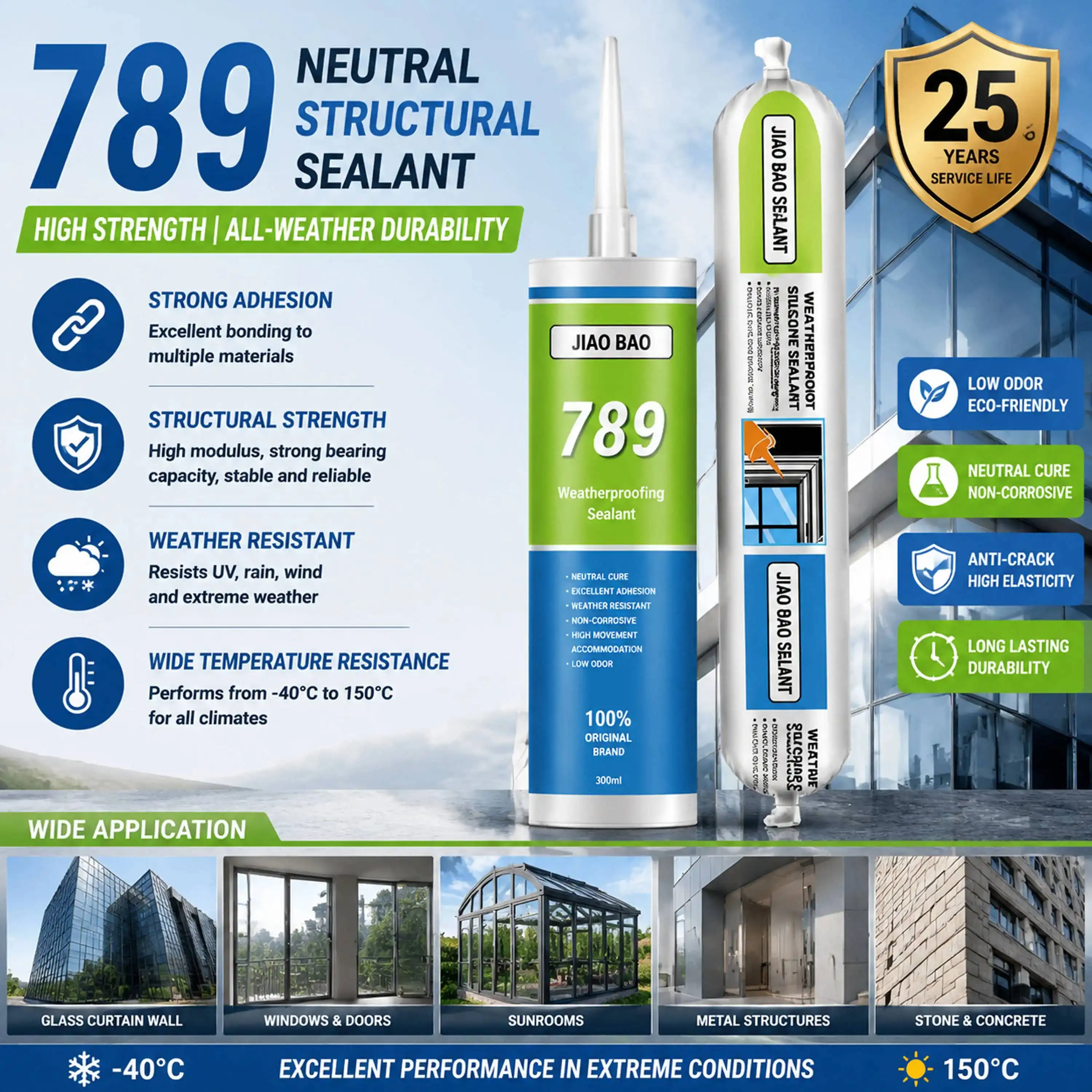
When you put up curtain walls, you need sealants that can seal the walls and keep air out even though the metal frames and glass panels can move in different ways. The NP Neutral Cure Silicone Sealant sticks well, can be bent, and doesn't break down in bad weather, so now is a great time to use it. If you put edge seals around insulated glass units, fog won't form, and the vertical butt joints between glass lites will bend when the temperature changes and stay in place.
We need to put in a lot of doors and windows. How well they seal will determine how well the building works and how comfortable the people who live there are. The sealant can be black, white, grey, or a colour that matches the finish on the frame. The building parts now look like they fit together. You can do different-sized projects with 300ml and 600ml caps. Cartridge boxes are used for standard closing guns, and sausage boxes are used for pneumatic bulk carriers for big business projects.
Sealants that can handle being wet all the time, cleaning products, and living things growing on them are needed in kitchens, bathrooms, and other places that handle food. Mould and mildew can't grow on the smooth, non-porous surface of the elastomer while it's still wet. This keeps places like hospitals and parks clean. Things don't break down after being cleaned a lot of times because they are chemically resistant to what most people use to clean. In places that need to be very clean, this makes them last longer.
As long as it doesn't let water in, it's great for shower walls and the spaces between countertops and backsplashes. The base gets bigger every day since the hot water changes amounts. If the grout or finish is too hard, this can break it up. Buildings below are safe from water damage because the elastomeric parts can handle this moving cycle over and over again without breaking.
How well the surface is cleaned and ready for the glue determines how well it sticks. Some safe chemicals, like isopropyl alcohol, can be used to get rid of oils and other dirt. After that, wait until the surface is totally dry before applying the sealer. Once the sealant is shaped, the masking tape needs to be taken off right away so that it can still be used. This protects surfaces nearby and gives the stick clean lines. Three-sided bonding fails when these tapes or joint backings are used. This is because the base moving puts too much stress on the sealer.
Fill in all the gaps between the joints with sealant. It should be put on in long beads that don't stop. It won't let water in. Do it right away with the tool to make sure the joint is set up right and the sides touch. Standard tools make shapes that are slightly curved so that they can move without putting too much stress on one part. Before putting the joints in dust or light, wait 30 minutes for a skin to form on them. For at least 24 hours, don't let them touch water to make sure the surface dries right.
This NP Neutral Cure Silicone Sealant really does seal well and keep water out. The current polymer science in it keeps water out and doesn't break down in hot or UV light. Its neutral system protects fragile surfaces and forms strong, flexible seals that can be used in tough industrial and building settings. Buying managers can choose options that meet both short-term project needs and long-term performance goals if they know about the technical features, how to use them correctly, and the need for material compatibility. Good neutral cure technology is worth the money because it lowers the cost of maintenance, makes the product last longer, and keeps building surfaces and important parts safe.
A: Things that will be sealed must be dry and clean before the NP Neutral Cure Silicone Sealant can do its job. The sealing process starts with water in the air, but the molecules of the glue don't stick together because there is water on the surface of it. The sealant will dry on its own, but this breaks the bond right away. To make sure waterproof seals work, let wet areas dry all the way before putting them on.
A: If it is 25°F and 50% humidity, the area will be free of tacks in 30 minutes. Based on how thick the joint is, it takes anywhere from 7 to 14 days to fully heal. Places with higher temperatures and humidity cure things faster. In cooler and drier places, it takes longer. It may take longer for joints deeper than 12 mm to fully polymerise across the cross-section.
A: Not at all. Paints that are based on water or liquids won't stick to the slippery silicone surface. This is how silicone is made, and priming and surface treatments can't change it. If you want to paint the project's ends, the coloured sealer should match the style you want. You could also look into hybrid MS polymer options that dry clear and can be painted on.
Shandong Jiaobao New Material Co., Ltd. has been making coloured silicone sealant since 2013. Builders, curtain wall installers and stores that sell building supplies all over North America can now depend on them to get NP Neutral Cure Silicone Sealant. Many of our factories are ISO-certified, and they follow strict rules to make sure that every batch works the same. We can meet your project deadlines and stay true to your brand because we have short production lead times (1 to 2 weeks) and easy OEM/ODM customisation for box sizes and colours.
We stand behind our products with satisfaction guarantees that cover any quality problems that happen within 12 months of purchase. Our expert team is here to help you with the whole application process. Use dorashen@cnjiaobao.com to email our export team and talk about your waterproofing needs. You can also get technical data sheets and set up sample tests. This is why the best builders pick Jiaobao for big closing jobs.
1. American Society for Testing and Materials. (2018). Standard Specification for Elastomeric Joint Sealants. ASTM C920-18, West Conshohocken, PA.
2. Beech, J. C. (2002). The Chemistry and Technology of Silicones and Sealants. Building Science Press, London.
3. National Standards of the People's Republic of China. (2012). Test Method of Silicone Building Sealants. GB 13477-2012, Beijing.
4. Panek, J. R., & Cook, J. P. (1991). Construction Sealants and Adhesives (3rd ed.). Wiley-Interscience, New York.
5. Wolf, A. T. (2006). Durability of Building Sealants: State-of-the-Art Report. RILEM Publications, Bagneux, France.
6. Zhang, L., & Zhou, J. (2015). NP Neutral Cure Silicone Sealants in Curtain Wall Engineering: Performance and Application. China Architecture & Building Press, Beijing.
November 16,2023
Enterprise Name
The sealant has very strong adhesion and performs well even on glass and aluminum. After curing, it remains flexible and shows no cracking. Perfect for our facade projects.
November 16,2023
Enterprise Name
Stable quality across batches. Our customers especially like the smooth application and consistent extrusion. It helps reduce installation time on site.
November 16,2023
Enterprise Name
I used it for bathroom sealing. Excellent waterproof performance and no mold issues so far. It's been holding up very well in humid conditions.
November 16,2023
Enterprise Name
The neutral silicone works well on sensitive materials without corrosion. Very suitable for industrial applications requiring stable performance.
_1779347426672.webp)