November 16,2023
Enterprise Name
The sealant has very strong adhesion and performs well even on glass and aluminum. After curing, it remains flexible and shows no cracking. Perfect for our facade projects.
Jul 30, 2026
When specifying construction sealants, particularly for fire-critical applications, certifications are the cornerstone of informed procurement decisions. Fire Rated Silicone Sealant for Joints must meet rigorous testing standards to ensure it performs reliably under extreme conditions. Essential certifications include ASTM E1966 for dynamic joint fire testing, UL 1479 for fire resistance ratings, and EN 1366-4 for European compliance. ISO 11600 validates movement capability and adhesion strength, while low-VOC certifications such as SCAQMD Rule 1168 confirm environmental safety. These credentials guarantee that sealants prevent flame spread, maintain structural integrity during thermal expansion, and protect occupants by limiting smoke and toxic gas migration through building joints.
Third-party certificates for construction sealants show that the goods meet strict safety, performance, and legal standards. These credentials aren't just marketing tools; they're legal and technical proof that a sealant has been tested in a way that is very close to fire, weather, and mechanical stress in the real world.
Fire-rated joint seals are the last line of defence in systems that put out inactive fires. When there is a fire in a building, gaps around doors, windows, curtain walls and expansion joints can let flames and smoke spread both up and down and side to side. Official fire-rated sealants are made to last at temperatures above 1000°C for a certain amount of time, usually between 60 and 240 minutes, without losing their ability to seal. Regular tests done by reputable labs like Underwriters Laboratories (UL), Intertek, and Warringtonfire show that this performance is correct.
The tests that sealants must pass are set by a number of foreign and regional groups. ASTM International puts out standards like ASTM E1966 that test fire-resistant joint systems by moving them back and forth several times before and after a fire. UL 1479 is all about through-penetration firestop systems and rates seals based on how well they stop fires from spreading. Standards in Europe, like EN 1366-4 and its classification EN 13501-2, check for both soundness (E) and insulation (I). ISO 11600 sorts sealants into groups based on how much they can move and their modulus. This makes sure that the sealants can handle changes in the structure without breaking. In North America, Europe, and more and more in Asia-Pacific areas, projects that need to be approved by the building code must follow these standards.
Certifications have a direct effect on how procurement managers, technical engineers, and general contractors choose suppliers. If the sealant doesn't have the right qualifications, it can lead to legal issues, project delays during inspections, and fines for not following the rules. Certified goods can be tracked using batch numbers, test results, and guarantee paperwork, which lets stakeholders show authorities that they did their research. Distributors and OEM clients prefer suppliers who keep their certifications up to date because it shows that their manufacturing is consistent and their quality control systems are in line with best practices around the world.
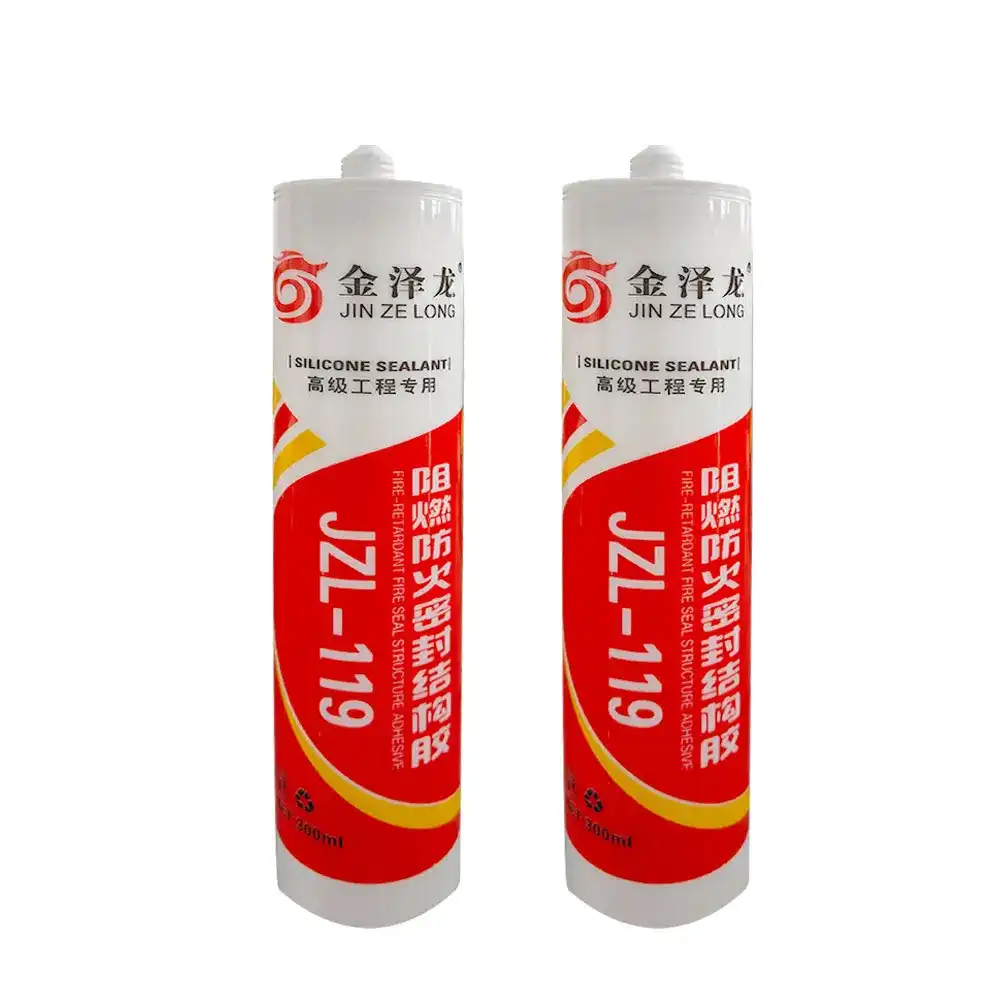
To meet the complex needs of joint sealing in commercial and industrial buildings, Fire Rated Silicone Sealant for Joints must meet more than one certification category. These groups include how long something can resist fire, how much smoke it makes, how stable it is chemically, and how long it can last in the environment.
The main worry for approval is how well the sealant can keep a fire barrier in place. Following standard time-temperature curves, UL 1479 and ASTM E1966 test joint systems in a controlled furnace. F-ratings show how resistant something is to fire, and T-ratings show how well it transmits heat. If the F grade is 120 minutes, it means that the sealer stopped the flame from getting through for two hours. These grades are given to high-performance silicone formulations because their siloxane polymer backbone stays stable at high temperatures, while organic options burn and fail. Jiaobao's RTV silicone sealant has a one-part acidity recipe and a density of 1.40 g/cm³. It is meant to cure into a flexible barrier that lets joints move while keeping the fire integrity.
Besides being resistant to fire, smoke production is a major life-safety risk. Standards like ASTM E84 (Steiner Tunnel Test) measure how fast flames spread and how much smoke they make. Fire-rated silicones don't usually have a lot of smoke because they don't have any halogenated flame retardants in them. When heated, these flame retardants give off harmful hydrogen chloride or bromide gases. This quality is especially important in places where people are, like hospitals, schools, and high-rise apartment buildings, where escape time is very important.
Sealants that are certified to be fire-resistant must also meet the mechanical performance standards set out in ISO 11600 and ASTM C920. These guidelines divide sealants into groups based on how much they can move, usually within ±25% for Class 25LM (low modulus) goods. This flexibility is very important because temperature changes, wind loads, and earthquakes can cause building joints to expand and contract. It's not safe for fire to use sealants that harden too quickly. They will crack. Jiaobao's formula cures at a rate of 3 mm every 24 hours, which lets the depth progress slowly while keeping its flexibility and sticking to surfaces like glass, aluminium, concrete, and steel without the need for primers.
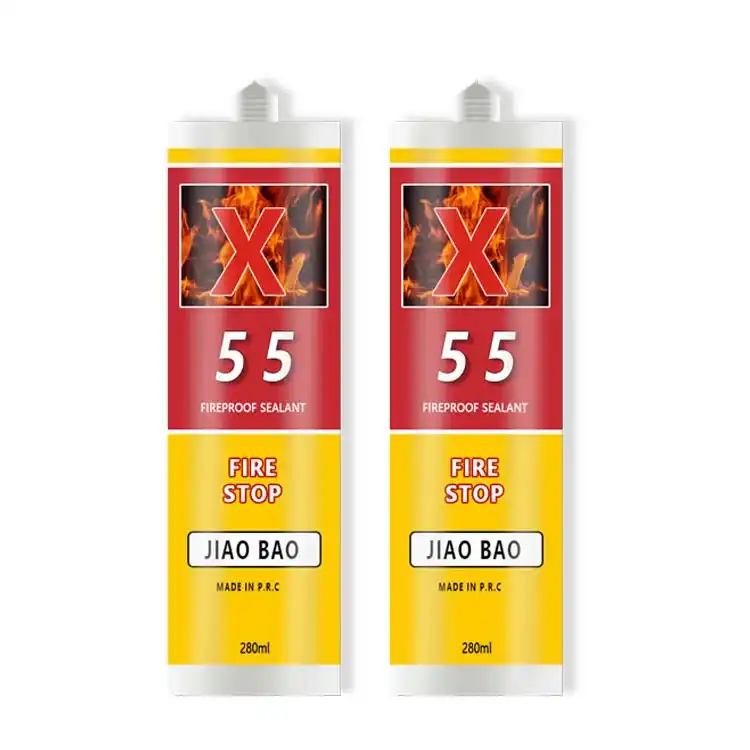
There are a lot of different Fire Rated Silicone Sealant for Joints options on the global market, and each one has its own certifications and best uses. Knowing these differences helps people who buy things match products to the needs of a specific project.
Dow Corning, Sika, and Tremco are well-known companies that have spent decades creating fire-resistant silicone technologies that come with a lot of UL and EN certifications. These brands usually have neutral-cure formulas that work with delicate substrates and full lists of fully tried assemblies that include joint widths, depths, and substrates that are suitable. Newer companies and specialised providers, such as Jiaobao, set themselves apart by offering customisation options, low prices, and faster lead times, all while keeping their ISO and CE certifications. Jiaobao's acidic RTV silicone works well with non-porous substrates that are popular in curtain wall and window uses. It sticks well, doesn't let weather in, and can be stored for 12 months without going bad.
Not every fire-stop sealer works the same way. When heated, intumescent acrylic sealants grow, making a char barrier that keeps the joint warm. These products work well for interior joints that don't move around much, but they don't hold up against repeated cycles of expansion and contraction or when they get wet. Silicone-based fire-rated seals, on the other hand, stay flexible and in shape even when exposed to fire, and they are naturally waterproof. Because of this, they are the best choice for outside uses like outer fire control systems in curtain walls and expansion joints in parking garages. The choice between silicone and intumescent solutions depends on how the joint moves, the conditions of contact, and how well the solution works with the base.
Case studies from commercial construction projects show that certification credentials have a direct effect on the time it takes to get approval for purchases. For a Chicago office building project, the perimeter fire barrier systems had to be certified by ASTM E1966 and have specific F-ratings that matched the floor assembly fire ratings. Suppliers who didn't have the right paperwork were quickly rejected, even if their prices were lower than other suppliers. In the same way, a growth of a data center in Frankfurt required that EN 1366-4 standards be met, along with EI 120 ratings and halogen-free formulations to safeguard critical IT infrastructure. These examples show that approved goods lower the risk of a project and make it easier for architects, engineers, and building officials to give their approval.
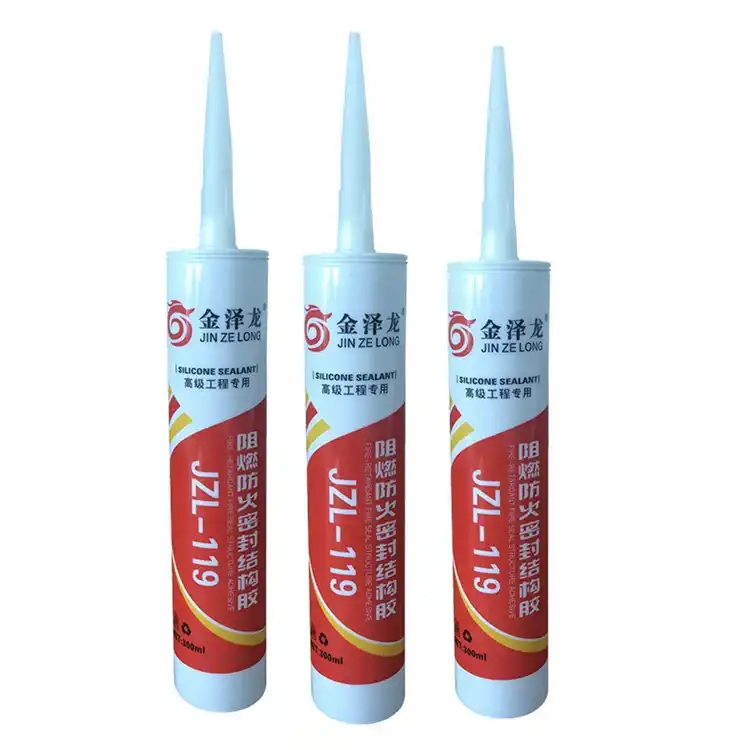
The right way to check and apply Fire Rated Silicone Sealant for Joints makes sure that they do what they're supposed to do to protect against fire for the whole life of the building.
Buyers should ask for all the approval paperwork, such as test results, UL listing numbers, and European Technical Assessment (ETA) papers. Online databases like UL Product iQ make verification easy. Users can look by company name or product identifier to see what the current certification state is. Labels on products should have approval marks, batch numbers, and times of when they go bad. For the European market, Jiaobao makes sure that all of its fire-rated sealants are fully traceable by obtaining ISO quality management system certification and CE marking. As fire ratings are system-specific rather than product-specific, procurement teams should insist on approved test results that list the exact joint configurations, substrate types, and movement capabilities that were tested.
Following the installation instructions carefully, as described in test reports, is necessary to get certified performance. The joint width-to-depth ratio should usually stay at 2:1, and the backing materials should be the same as the ones used for tests. Mineral wool or ceramic fibre should be used instead of plastic backer rod. Preparing the surface is very important; substrates need to be clean, dry, and free of any oils or loose particles. Jiaobao's acidic silicone sealant dries on the surface in 45 to 60 minutes at room temperature and 50% relative humidity. This gives workers enough time to do their job and makes sure the sealant cures on time. By shaping the sealer into the right concave shapes, you can increase the surface area and allow for movement without putting too much stress on one area.
Certified fire-rated lubricants are made to last for a long time, usually 20 to 30 years if they are used correctly. Once a year, maintenance checks should be done, focused on obvious signs of loss of adhesion, cracking, or base separation. Environmental factors like UV light, smog, and sudden changes in temperature can speed up ageing, especially in outdoor uses. Jiaobao's silicone formula is naturally resistant to UV light and ozone. It also stays flexible at temperatures ranging from -50°C to +150°C, so it can be used in a wide range of climates, from the cold winters of northern Europe to the hot summers in the Middle East. To keep the integrity of the fire rating, any damaged parts should be cut out and changed according to the original fitting instructions.
Strategic buying of Fire Rated Silicone Sealant for Joints strikes a balance between meeting regulations, meeting performance standards, saving money, and relying on a reliable source.
For a procurement to go well, the requirements must be well-defined and match the project's fire protection engineering drawings. Specification should list required F- and T-ratings, movement capability classes, and colour options to match architectural finishes. It should also list specific certification standards like ASTM E1966 or EN 1366-4. Jiaobao lets you choose colours other than white, black, and grey, which makes it easier to match the look of things that people can see, like curtain wall edges and inner glass walls. Procurement teams should also look at the different packing choices. Jiaobao offers both 300ml and 600ml volumes in cartridge and sausage forms, which make it easier for different applicators to work together and cut down on waste on big projects.
Reliable providers show consistent quality by having the right certifications, being open about their production capacity, and offering quick technical help. Jiaobao has been making things for 13 years, and their production methods are ISO-certified, so they can offer consistent quality from batch to batch, which is important for multi-phase projects. Delivery time is very important for construction schedules. Jiaobao's lead times of 1-2 weeks and shipping options (sea and land freight) make it easy to meet both planned and urgent project needs. For buyers from other countries, OEM and ODM features let them add their own labels and change the recipe to comply with local laws. This makes distributors and selling companies more competitive in the market.
Certified fire-rated sealants cost more than regular building sealants, but the extra money is worth it because it protects against risk and makes sure the project is approved. Rather than performance gaps, price differences between providers are usually caused by differences in the quality of the raw materials, the range of certifications they offer, and the expert support services they offer. Before placing a large order, buyers should ask for samples to be tested to make sure the binding, cure rate, and workability are all satisfactory. Jiaobao's quality promise, which says that if a product fails within its shelf life, you can get your money back or get a new one. General builders and distributors who are in charge of ongoing projects can save even more money with bulk purchasing programs and savings for placing repeat orders.
Choosing construction coatings that have the right approvals is important for the safety of the building, following the rules, and the success of the project. Fire Rated Silicone Sealant for Joints has to meet strict requirements checked by ASTM, UL, EN, and ISO testing procedures that prove it can fight fire, allow movement, and last in harsh environments. A good procurement strategy is built on three things: authenticating certifications, using the right application techniques, and trusting suppliers. Procurement professionals, engineers, and contractors can get compliant, high-performance sealing solutions that protect people and property while speeding up project approval processes by prioritising certified products from manufacturers like Jiaobao. These companies offer technical expertise, customisation options, and quick service.
Of course. You can use the UL Product iQ online database or give the model number and batch code of the product to certification bodies directly. Real makers give full test results that list joint configurations, substrate types, and fire ratings. Before making big purchases, you should always check the certification marks on the product label against official databases.
When goods aren't certified, the whole assembly loses its fire rating. This makes builders and building owners legally responsible. During checks, officials may order expensive repairs, cause delays in the project, or even deny the occupancy permit. Insurance claims could be denied if materials that don't follow the rules helped the fire spread, which could have big legal and financial effects on the people involved.
Acidic silicones, like Jiaobao's RTV recipe, work great on metals, glass, and glazed pottery that don't have pores. When they dry, they give off acetic acid, which can damage marble, concrete, and some metals. For porous or alkali-sensitive substrates, neutral-cure silicones work best. Always test the substrate's suitability before applying it on a large scale.
Jiaobao offers certified fire safety options that are made to fit your needs in both building and industry. As a specialised producer with more than 13 years of experience, we offer Fire Rated Silicone Sealant for Joints that meet ISO, CE, and international standards. You can choose from a range of colours and sizes. Our one-part acidic RTV mixture works well for door and window joints, curtain wall perimeters, and expansion joints. We can deliver quickly (within 1-2 weeks), and we can do OEM/ODM work as well. For your next job, email our technical team at dorashen@cnjiaobao.com to ask for certification paperwork, product samples, and bulk prices. Jiaobao is a reliable place to get fire-rated silicone sealant. They will make sure you get quality products that meet all the rules, and you can relax.
1. ASTM International. (2020). ASTM E1966: Standard Test Method for Fire-Resistive Joint Systems. West Conshohocken: ASTM.
2. Underwriters Laboratories. (2019). UL 1479: Standard for Fire Tests of Through-Penetration Firestops. Northbrook: UL LLC.
3. European Committee for Standardization. (2018). EN 1366-4: Fire Resistance Tests for Service Installations – Part 4: Linear Joint Seals. Brussels: CEN.
4. International Organization for Standardization. (2015). ISO 11600: Building Construction – Jointing Products – Classification and Requirements for Sealants. Geneva: ISO.
5. National Fire Protection Association. (2021). NFPA 5000: Building Construction and Safety Code. Quincy: NFPA.
6. Building Research Establishment. (2017). Fire Performance of Sealants in Construction: Testing and Specification Guide. Watford: BRE Trust.
November 16,2023
Enterprise Name
The sealant has very strong adhesion and performs well even on glass and aluminum. After curing, it remains flexible and shows no cracking. Perfect for our facade projects.
November 16,2023
Enterprise Name
Stable quality across batches. Our customers especially like the smooth application and consistent extrusion. It helps reduce installation time on site.
November 16,2023
Enterprise Name
I used it for bathroom sealing. Excellent waterproof performance and no mold issues so far. It's been holding up very well in humid conditions.
November 16,2023
Enterprise Name
The neutral silicone works well on sensitive materials without corrosion. Very suitable for industrial applications requiring stable performance.
_1779347426672.webp)