November 16,2023
Enterprise Name
The sealant has very strong adhesion and performs well even on glass and aluminum. After curing, it remains flexible and shows no cracking. Perfect for our facade projects.
Jul 10, 2026
Nail-free adhesives are a revolutionary fastening option for industrial and construction applications where mechanical fasteners fail. Heavy duty nail free adhesive bonds concrete, metal, glass, and wood without drilling. These new polymers cure to permanent, flexible linkages that can tolerate severe temperatures, vibration, and environmental stress with rapid grab strength. Understanding the kinds and technical capabilities of these adhesives helps procurement managers and technical engineers choose solutions for complex project demands.
High-performance nail-free adhesives replace mechanical fasteners like nails, screws, and rivets in structural applications. High-tech formulations use modified silane polymers (MS polymers), polyurethane, or hybrid polymers. These chemicals connect substrates molecularly by moisture-activated curing. Structural variations have tensile shear strengths over 2.5 MPa, making them appropriate for load-bearing installations. High thixotropy allows the paste to stay on vertical surfaces without drooping, which is essential for bonding large panels or fixtures before full cure.
Using sophisticated adhesive solutions instead of standard fasteners improves operations. No drilling and 60% faster installation on huge projects make application stand out. Workers prevent nail gun injuries and flying debris, improving safety. No visible screw heads or nail holes mean no aesthetic damage. Neutral curing avoids metal substrate corrosion, prolonging aluminum curtain wall and HVAC component lifespans. Elastic adhesive bonding can withstand stress in dynamic situations where heat expansion or vibration would release mechanical fasteners.
Professional adhesives fulfill ASTM C557 for drywall adhesives, ISO 11600 for building sealants, and REACH/RoHS for VOC emissions. Proper ventilation is needed while handling these materials in bulk to avoid curing vapor inhalation. Uncured substance can sensitize skin, thus workers should use nitrile gloves. For a 12-month shelf life, items must be stored between 5°C and 25°C in sealed packaging. Batch testing certifications proving viscosity, solid content above 95%, and phase separation should be checked during procurement.
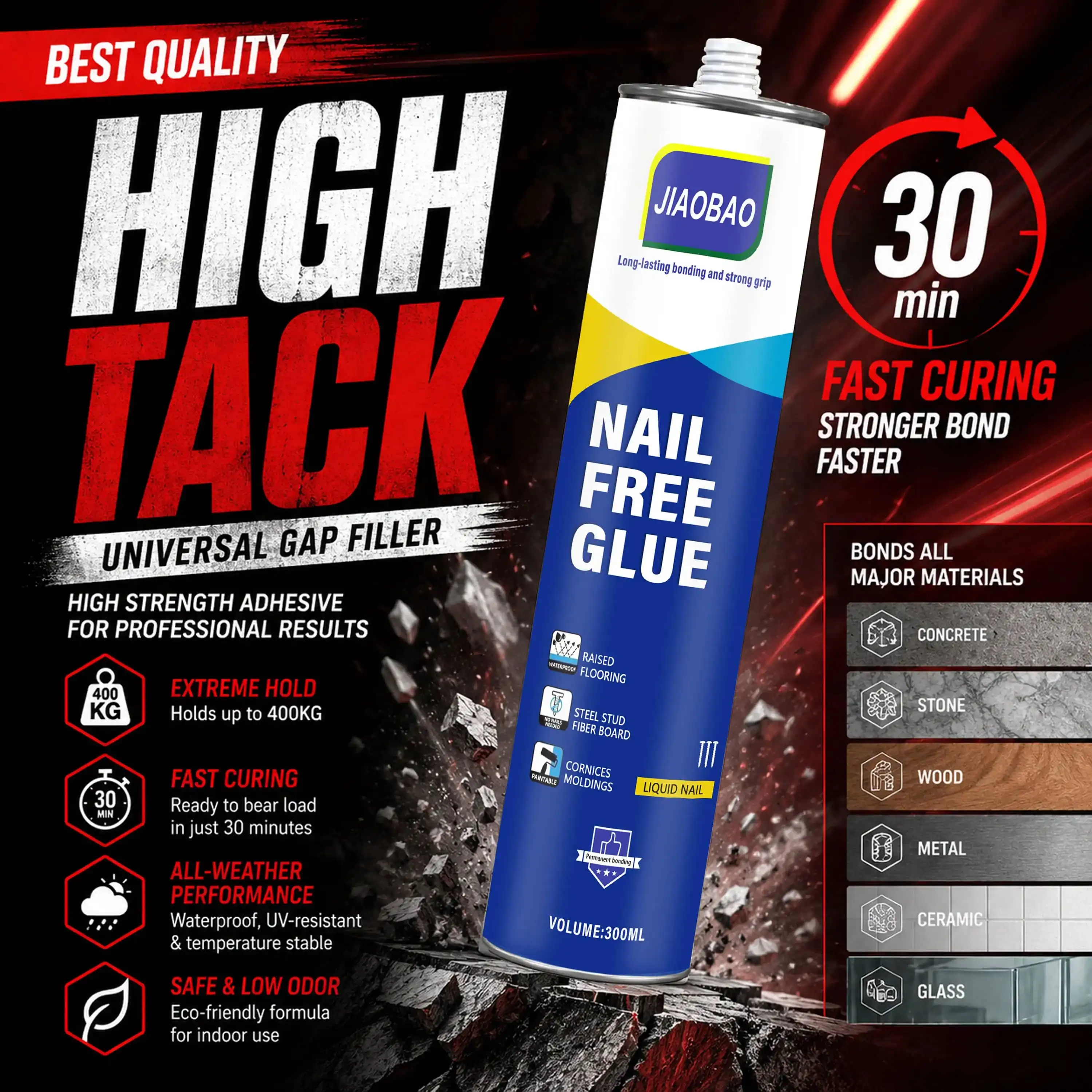
MS polymer adhesives are the most versatile construction and industrial adhesives. These one-part, moisture-curing formulas connect almost all construction materials without primers, including concrete and glass. Curing occurs at 2.5 mm every 24 hours at 23°C and 50% humidity. The completely cured material has Shore A hardness approximately 50-55, balanced rigidity and 300% elongation at break. This flexibility lets the bond move with the substrate without delamination. Mounting mirror panels in commercial toilets, attaching stone cladding on building facades, and installing prefabricated construction components where drilling would weaken impervious membranes are common uses.
Polyurethane adhesives bind wood, metal, and masonry strongly when exposed to moisture. UV stability and hydrolytic resistance make these compositions ideal for outdoor use. Typically, initial grab strength surpasses 50 kg/m², enabling weight support without bracing. HVAC ductwork installation and automobile component assembly benefit from cured bonds' -40°C to 80°C working temperatures. Uncured product can froth during curing, necessitating precise bead control to avoid squeeze-out. Polyurethane variations are chosen by procurement teams for greatest load-bearing capability and long-term environmental exposure.
Two-part epoxy systems provide the highest ultimate tensile strength, potentially 30 MPa in optimal formulas. Resin and hardener react to cure these adhesives regardless of moisture or temperature. Depending on composition, pot life is 5–60 minutes, necessitating accurate mixing and fast application. Epoxy bonding are vital in electronics and chemical processing facilities because they resist chemicals, solvents, and high temperatures. Cure epoxy is hard and brittle, making it unsuitable for vibration and heat cycling applications. Flexible MS polymers perform better.
Actual execution shows the need of matching adhesive type to project needs. A coastal curtain wall contractor chose MS polymer glue for its salt fog resilience and elongation, preventing bond breakage during hurricane-force winds. In contrast, an automobile parts manufacturer used polyurethane for dashboard assembly because of its quick handling strength and paint compatibility.
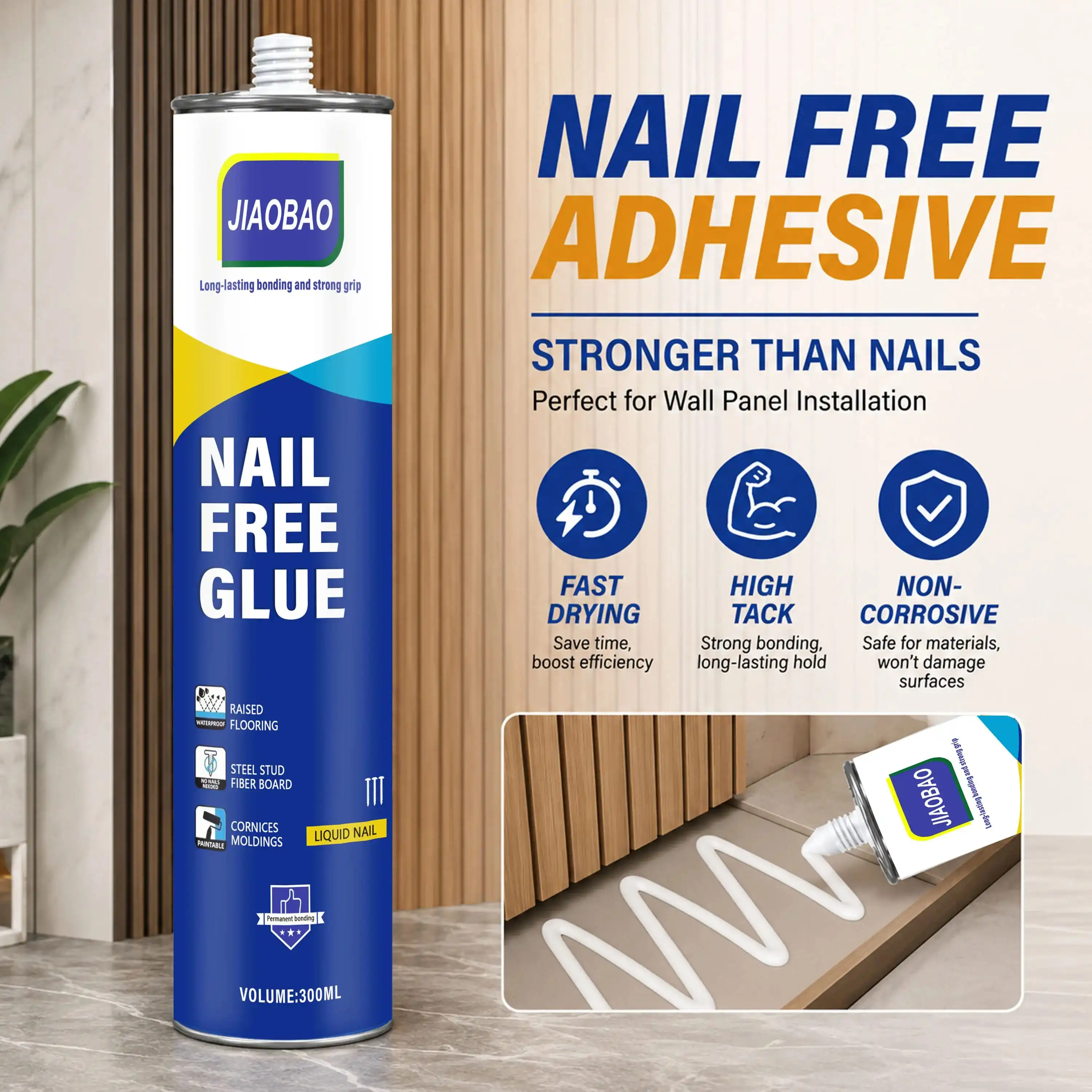
Comparing adhesives and mechanical fasteners shows performance differences. Screws are ideal for temporary installations and maintenance-prone equipment because they provide maximum strength and facilitate disassembly. They concentrate tension, which can break fragile materials like ceramic tile or tempered glass.
Heavy duty nail free adhesive reduces point stress by 70% by spreading load throughout the bond. On metal-to-metal bonding, appropriately placed structural adhesives can match or exceed mechanical fasteners in shear strength. Vibration resistance favors adhesives because the elastic bond absorbs dynamic stresses that loosen threaded fasteners.
Adhesives compete with fasteners in total application costs due to initial material prices. Eliminating drilling saves labor hours, drill bits, anchors, and surface repair supplies, according to a procurement study. This mid-sized curtain wall project used adhesive bonding instead of mechanical anchoring, saving 40% in installation time and material waste. Adhesive bonding generally outlive the substrate, eliminating the need to tighten loose fasteners or replace rusted screws. One adhesive can replace numerous fastener specifications, simplifying inventory for distributors and wholesalers.
Fastening procedures depend on project needs. MS polymer adhesives dominate permanent installations on smooth, clean surfaces where aesthetics matter, such luxury hotel glass panel mounting. When assembling parts for repair, mechanical fasteners are needed. Sometimes hybrid systems work best; structural beams may utilize welded or bolted main connections with adhesive to prevent water intrusion. Fire-rated assemblies require adhesives with suitable certifications since certain formulas retain bond integrity better than others.
The most important element in adhesive choosing is substrate compatibility. Concrete and wood bind readily with most formulas, although powder-coated metal and laminated glass may need surface activation. Chemistry depends on application and service life—high humidity accelerates moisture-cure systems, whereas low temperatures limit curing. Static weight and dynamic factors like wind pressure on outside panels or transportation vibration must be included in load requirements. Architectural joints may look incorrect in white or gray, therefore color matching is important.
Established glue producers guarantee batch quality and technical assistance throughout the product lifecycle. The world's top suppliers have extensive testing labs that verify performance promises. Every bulk purchase should include ISO compliance, ASTM test results, and VOC emission data. For OEM applications requiring private labeling, manufacturers like Jiaobao offer customization with minimum order quantities suited to medium-volume purchasers. Production lead times are usually 1-2 weeks, allowing responsive inventory management without safety stock.
Professional applications require packaging that works with dispensing equipment. 300ml cartridges fit contractor caulking guns, while 600ml sausage packs fit factory assembly line pneumatic dispensers. For high-volume consumers, bulk packing in pails or drums is cost-effective but requires sophisticated metering. Heavy duty nail free adhesive typically offers a 12-month shelf life, which allows quarterly bulk buys, decreasing procurement costs and rotating inventories.
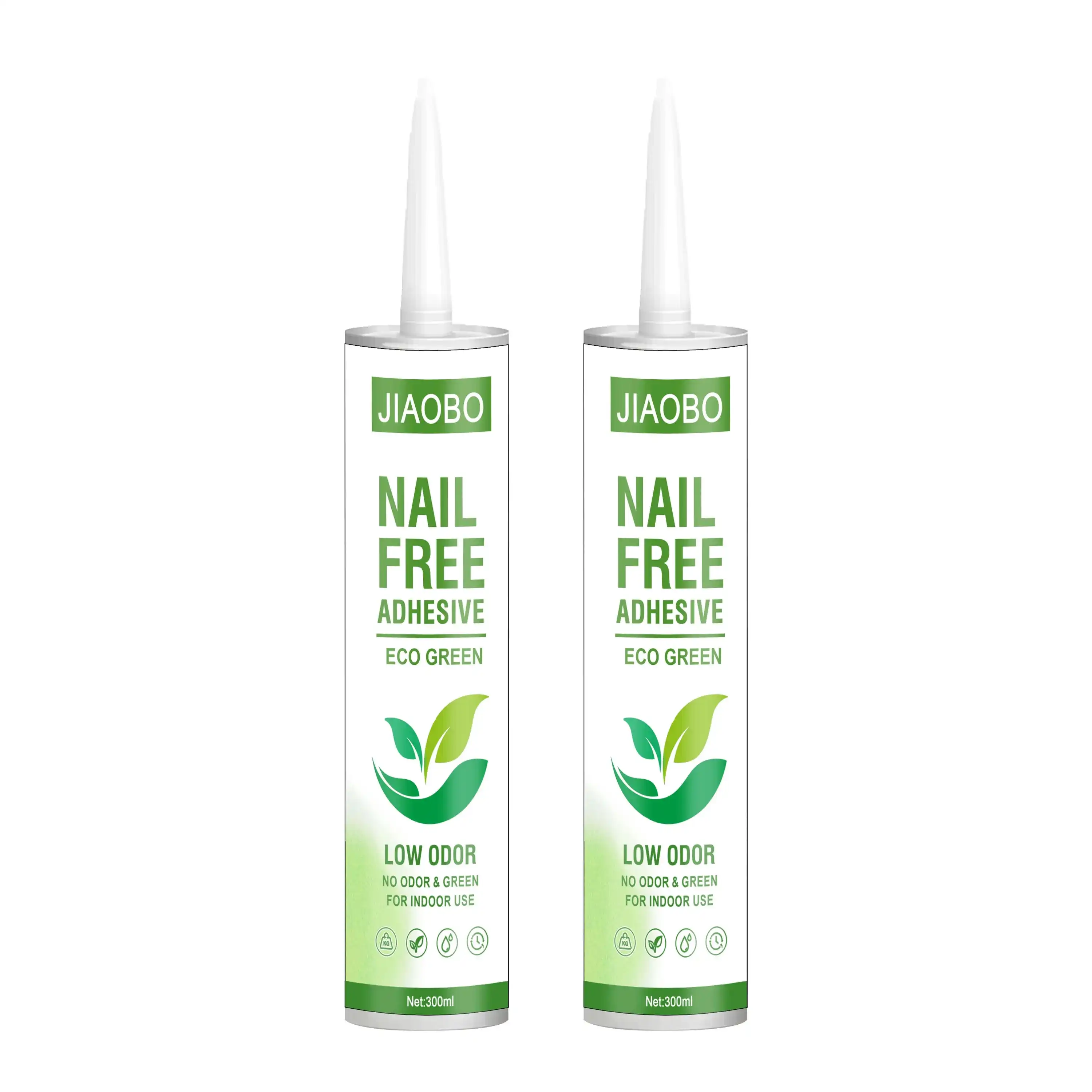
Surface cleanliness and condition determine bond strength. Dust, oil, release agents, and loose particles must be removed from substrates. Wiping metal surfaces with isopropanol eliminates cutting oils and fingerprint residues that inhibit wetting. Wet cleaning can induce adhesive foaming in porous surfaces like concrete, therefore vacuuming and dry cloth wiping are better. Poorly applied coatings will transmit failure to the adhesive layer, requiring paint removal or mechanical abrasion to disclose sound substrate. Temperature verification keeps surfaces and adhesive within manufacturers' 5°C to 35°C application window.
Poor bead size is the most common installation error. Professional installers compute bead size based on bond area and predicted load and use continuous beads for structural applications. When using heavy duty nail free adhesive, poor work time management promotes premature peeling, especially in dry conditions where surface drying occurs within 10-15 minutes. Changing positions after first contact disrupts molecular connections, lowering strength by 50%. To achieve bond interface wetting, confidence placement and quick roller or clamp pressure are required.
Quality assurance includes visual examination for full contact and no voids. Non-destructive testing technologies like ultrasonic thickness gauging may check key structural bond integrity. Before applying maximum design loads, bonding must cure for 3-7 days for ambient moisture. Properly designed cured adhesives withstand UV deterioration, fungal growth, and hydrolytic breakdown, reducing long-term maintenance. Though correctly made bonds often outlast 20 years, visual inspection for edge separation or substrate degradation warns of problems.
Technical needs, application realities, and long-term performance expectations must be considered while choosing a heavy duty nail free adhesive. Modified silane polymers are the preferred choice for general building and assembly because of their unprecedented adaptability across surfaces and environmental conditions. Understanding curing methods, surface preparation needs, and compliance standards helps procurement experts choose goods that function well, install quickly, and maintain aesthetics. Advanced adhesive bonding replaces mechanical fastening and improves building methods.
Curing time varies on formulation chemistry, temperature, and humidity. Under usual settings (23°C, 50% relative humidity), modified silane polymer adhesives cure 2.5 mm per 24 hours. Light handling is possible within 20 minutes after surface peeling, but structural strength takes 3-7 days. Low temperatures below 10°C double curing time, while excessive humidity speeds it up. Applications should not load bonds to design capacity until cure is confirmed.
Yes, correctly specified and applied structural adhesives outperform mechanical fasteners. ASTM C557 and ISO 11600 products have tensile shear strengths for curtain wall, mirror, and panel assembly. Instead of stress concentration at fastener locations, load dispersion over the bond region is the main benefit. For redundancy, critical structural connections may use hybrid adhesive-mechanical systems.
Uncured glue needs ventilation, especially in tight places, to prevent vapor buildup. Wear nitrile gloves to avoid skin sensitization and safety eyewear to avoid splashing. Stores must stay between 5°C and 25°C away from ignition sources. MSDSs contain formulation-specific management instructions. Dispose of unused cartridges and cleaning materials according local construction waste laws.
Shandong Jiaobao New Material Co., Ltd. makes high-performance B2B modified silane polymer adhesives. Our one-part, moisture-curing formulation provides 2.5 MPa tensile strength and 300% elongation for wood, metal, concrete, glass, and composite substrates. Our product satisfies ISO and international export requirements and comes in white, black, grey, or bespoke colors to complement your project.
We guarantee batch uniformity, 1-2 week lead times, and flexible sea or land logistics with 13 years of production expertise. Our technical team provides application help throughout your procurement process for OEM packaging for distribution channels or bulk supply for major building projects. Contact our sales team at dorashen@cnjiaobao.com for samples, custom color matching, or bulk pricing from a trusted heavy duty nail-free adhesive supplier devoted to your project success.
1. American Society for Testing and Materials. (2021). ASTM C557: Standard Specification for Adhesives for Fastening Gypsum Wallboard to Wood Framing. ASTM International.
2. International Organization for Standardization. (2020). ISO 11600: Building Construction—Jointing Products—Classification and Requirements for Sealants. ISO Standards Catalogue.
3. Petrie, E.M. (2019). Handbook of Adhesives and Sealants in Construction. McGraw-Hill Professional.
4. Cognard, P. (2018). Adhesives and Sealants: General Knowledge, Application Techniques, New Curing Techniques. Technical Publishing.
5. Brockmann, W., Hennemann, O.D., Kollek, H., & Matz, C. (2022). Adhesion in Bonded Aluminium Joints for Aircraft Construction. Springer Materials Science.
6. Ebnesajjad, S. & Landrock, A.H. (2020). Adhesives Technology Handbook (3rd Edition). William Andrew Publishing.
November 16,2023
Enterprise Name
The sealant has very strong adhesion and performs well even on glass and aluminum. After curing, it remains flexible and shows no cracking. Perfect for our facade projects.
November 16,2023
Enterprise Name
Stable quality across batches. Our customers especially like the smooth application and consistent extrusion. It helps reduce installation time on site.
November 16,2023
Enterprise Name
I used it for bathroom sealing. Excellent waterproof performance and no mold issues so far. It's been holding up very well in humid conditions.
November 16,2023
Enterprise Name
The neutral silicone works well on sensitive materials without corrosion. Very suitable for industrial applications requiring stable performance.
_1779347426672.webp)