November 16,2023
Enterprise Name
The sealant has very strong adhesion and performs well even on glass and aluminum. After curing, it remains flexible and shows no cracking. Perfect for our facade projects.
Sep 15, 2026
When temperatures drop below freezing, the adhesive holding your windshield in place becomes one of the most safety-critical components on the vehicle. A quality PU windshield auto glass sealant is engineered specifically to maintain structural integrity under extreme cold, resisting freeze-thaw cycling, moisture intrusion, and thermal contraction that would cause inferior products to crack or debond. For procurement managers sourcing auto glass adhesives at scale, understanding how polyurethane sealants behave in cold climates is essential to protecting your brand, your customers, and your bottom line.
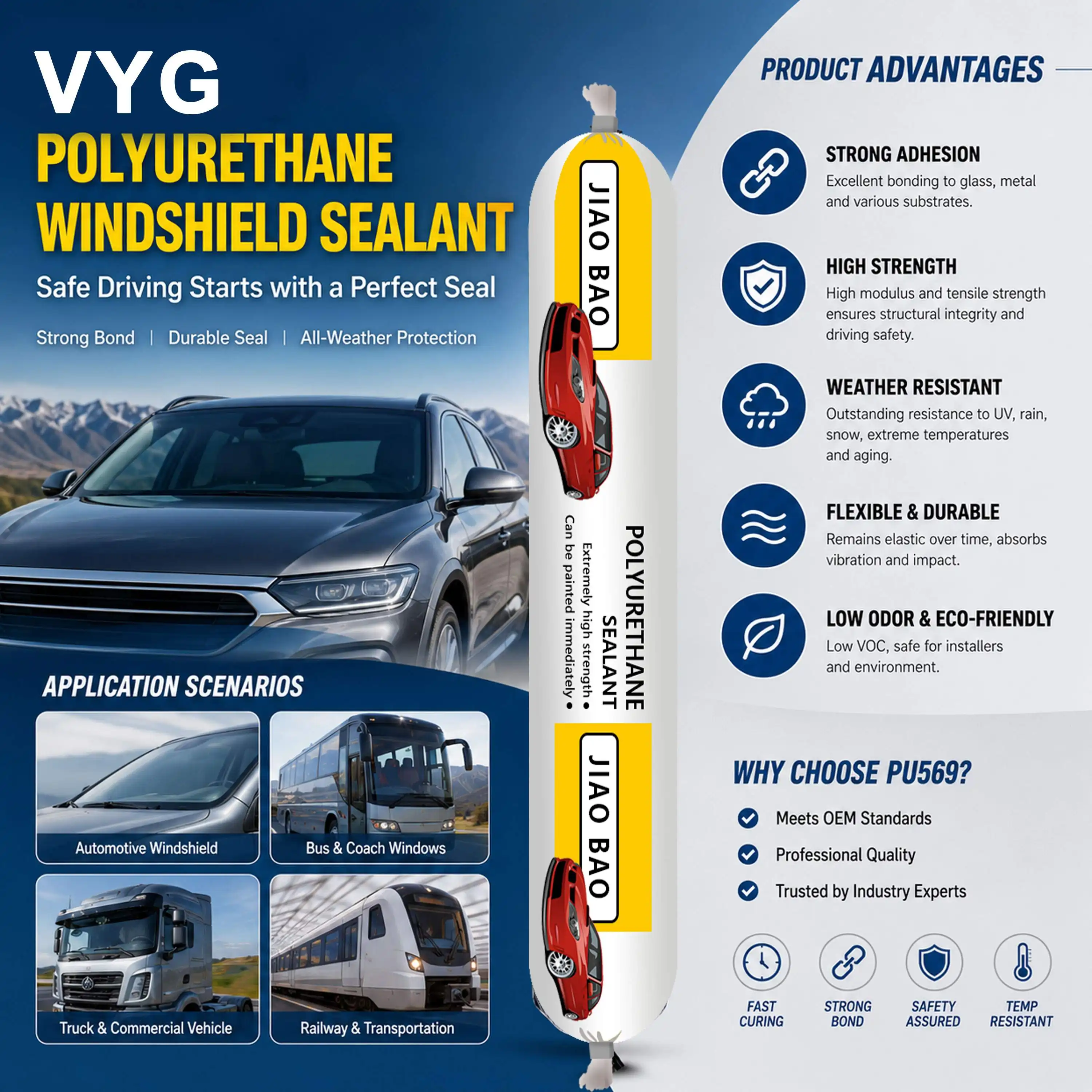
A chemical reaction set off by moisture in PU windshield auto glass sealants creates a strong, stretchy polymer network that hardens. PU formulations chemically stick to glass, metal pinchwelds, and painting substrates, while silicone stays flexible but doesn't stick to structures as well. This structural link is what lets the windshield add about 30% of roof crush resistance to current cars, which is a number used in FMVSS 212 compliance testing.
PU's molecular backbone stays flexible when it's cold. Our formula stays flexible from -40°C to +90°C, so techs in the cold winters of Minnesota or the warm prairies of Canada can use it and know that it will work.
When buying auto glass adhesives, these three groups come up a lot, and the differences between them are very important. Standard silicone is great for keeping doors and windows weathertight, but it doesn't have the shear strength needed for structural windshield bonding. There is a wide range of quality in generic urethane goods, as the modulus and elongation numbers change a lot from one company to the next.
On the other hand, PU windshield auto glass sealant is made to meet certain mechanical requirements, such as having a tensile strength of about 2.2 MPa, an elongation at break of about 400%, and a Shore A hardness of about 45. These numbers directly lead to a bond that can handle vibrations and frame flex without wearing down the glass over time.
When you don't prepare the area well, the effects are worse in cold weather. Before the sealant is even put on, moisture, road salt residue, and frost on the pinchweld will make it less likely to stick. Technicians must use an approved automotive glass cleaner to clean the bonding surface, let it dry completely, and then follow the product SOP and apply the right primer or activator. The most common reason why glue fails in field setups is that this step is skipped.
When PU windshield auto glass sealants dry, they react with water vapor in the air. This means that the humidity in the air directly affects how fast the sealants dry. In the winter, our product cures at a rate of about 3.5 mm per day at room temperature and 50% relative humidity, reaching a tack-free state in 15 to 30 minutes. Curing takes longer in places that are colder and drier.
Here are the most important application factors that buying teams should tell field technicians:
When techs follow a standard SOP, they can use the same application method at all service sites. When you're in charge of 50 to 200 sites as a chain operator, training materials given by your supplier become a real competitive advantage, not just an extra.
At the chain-operator level, buying choices can't just be based on marketing words. Our PU windshield auto glass sealant has been tested against performance standards that can be measured. These standards directly support compliance and quality assurance:
| Property | Value |
|---|---|
| Appearance | Black, white, or gray paste that is all the same color |
| Sagging | 0 mm |
| Tack-Free Time (Winter) | 15–30 minutes |
| Tack-Free Time (Summer) | 25–40 min |
| Curing Speed | About 3.5 mm per day |
| Tensile Strength | 2.2 MPa |
| Elongation at Break | ≈400% |
| Shore A Hardness | 45 |
| Solid Content | 99% |
| Shelf Life | 12 months after opening |
| Available Volumes | 300 ml and 600 ml sizes |
| Packaging | Rounds and sausages |
When quality control inspectors check out a new sealant provider, they look at the full-cure mechanical profile that these specs show. This is important to note that our adhesion peel tests on glass with ceramic frit and painted metal panels always show 100% cohesive failure within the bead, not adhesive failure at the interface, which is the normal pass level for structural car glass adhesives.
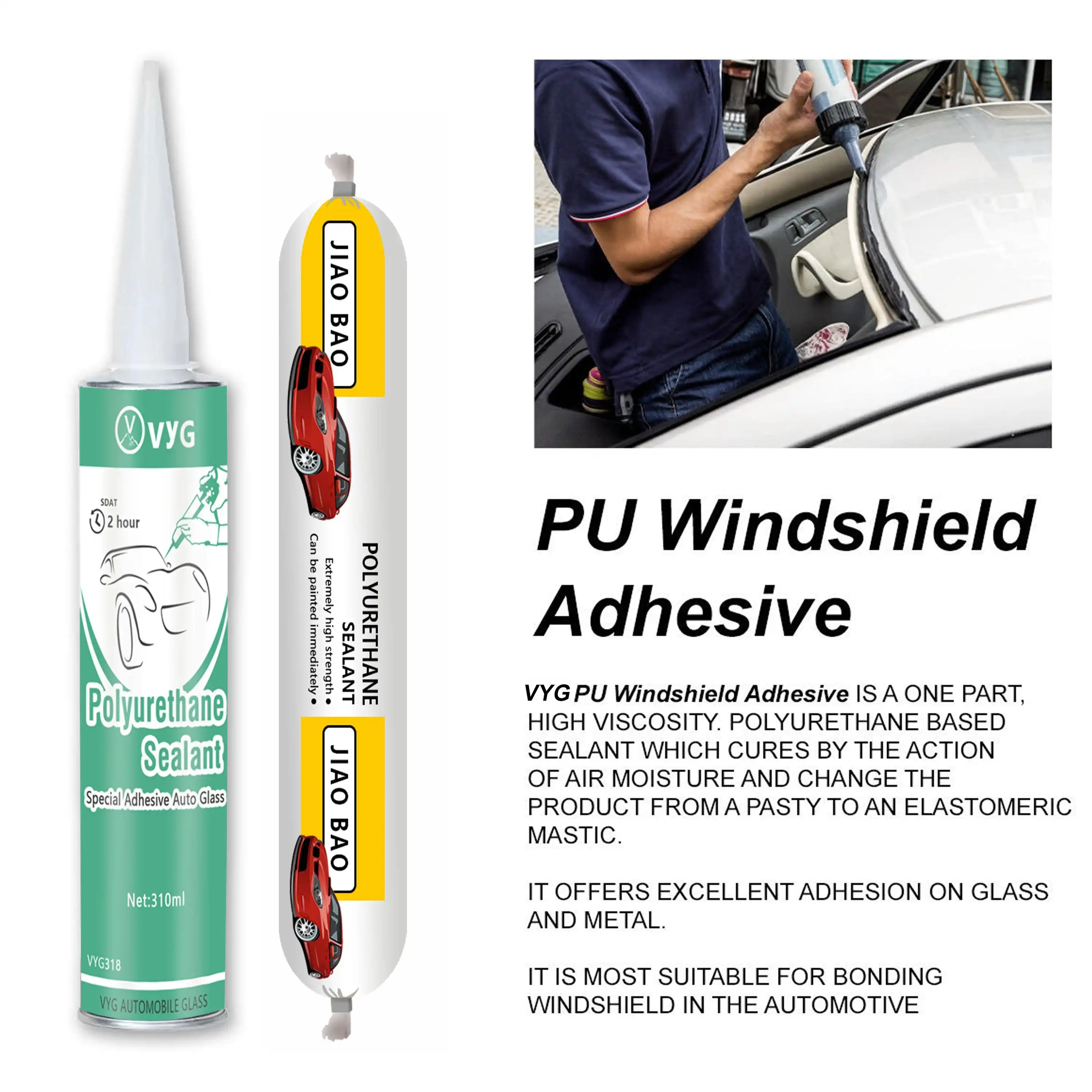
We offer full OEM and ODM customization for chain service brands that want to give all of their sites the same look. The sealant can be turned into a brand touchpoint at every placement by putting your brand's logo, color scheme, and product name on the packaging. Aside from looks, batch number management allows full quality tracking: if a problem shows up anywhere, procurement teams can quickly find the offending production batch and take action.
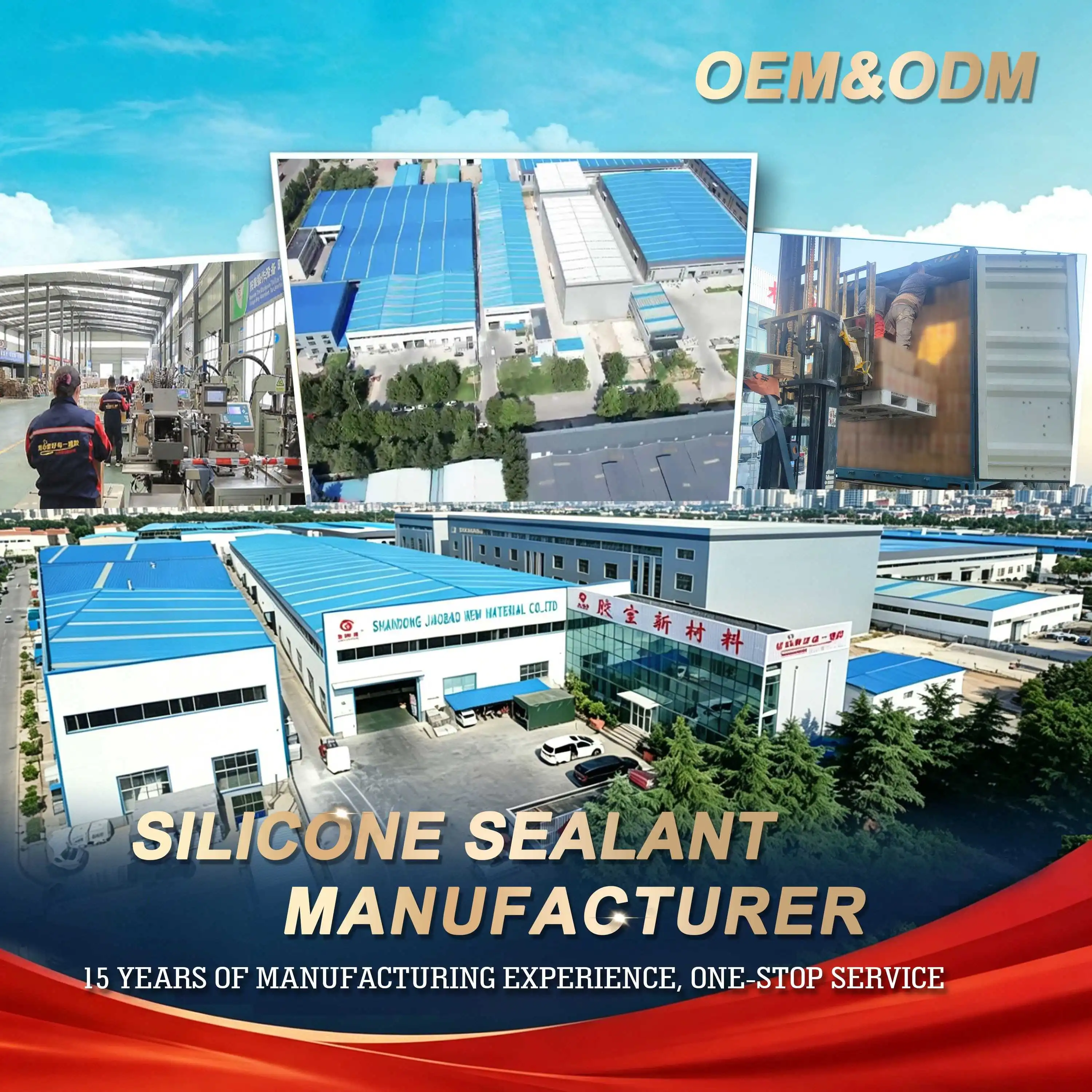
Supply dependability is just as important. Jiaobao has a production lead time of one to two weeks and can ship goods by land or sea. With 13 years of experience making things, we've set up a stable quality control system backed by ISO and CE standards. This meets the import requirements of many markets, such as the US and Southeast Asia.
If you want to use PU windshield auto glass sealants in more than one place, you should look at a lot more than just the product datasheet. Before agreeing to a seller, procurement teams with a lot of experience usually check four things:
It's also important to match the sealer modulus to the type of car. Modern unibody cars need high-modulus formulations to get their torsional stiffness back to OEM standards. Older platforms or heavy-duty transport glass, on the other hand, need softer, higher-elongation formulations because the chassis bends more.
Weak glue doesn't hold up well in cold weather. A PU windshield auto glass sealant that is properly specified will keep its structural performance from the time it was installed for years, even after being exposed to UV light, road vibration, and freeze-thaw cycles. Chain service owners who want consistent quality at all locations must choose a provider that offers verified performance data, OEM customization, batch traceability, and reliable logistics. Not doing so is not a choice; it is essential for protecting the brand and keeping customers safe.
Yes. If you clean and prime the surfaces first, PU windshield auto glass sealant sticks well to laminated glass, tempered glass, and glass with ceramic frit edges.
With temperatures around 5°C and average humidity, the surface should be free of tack in 15 to 30 minutes. It takes longer for a full mechanical cure to happen when it is cold and dry. Slightly raising the humidity in the installation bay speeds up the moisture-cure reaction without putting anyone at risk.
Our PU windshield auto glass sealant has a solid content of about 99%, which means that it doesn't release many solvents when it cures. Low-VOC rules in the US and other big foreign markets are in line with this high-solid formulation.
No. Cross-linking agents in expired PU windshield auto glass sealant may have broken down, which can cause healing failure or a much weaker bond. There is no way that the safety responsibility risk can be accepted.
Yes. We offer full OEM customization, including branded packaging with your image, color, and product name. Our ISO/CE approval and 13-year history of manufacturing back this up.
Since more than ten years ago, Jiaobao has sold approved PU windshield auto glass sealants to chain owners and wholesalers in many different markets. Our OEM-ready sealant comes in 300 ml and 600 ml sizes and can be packed in sausage or cartridge style. Each batch can be tracked and we offer full technical support. Get in touch with us to ask for a sample of the product, a detailed data sheet, or an OEM quote. To start your evaluation, email us at dorashen@cnjiaobao.com.
1. SAE International Journal of Materials and Manufacturing — 2021
2. Adhesives & Sealants Industry Magazine — 2022
3. Journal of Applied Polymer Science — 2020
4. Automotive Body Repair News (ABRN) — 2023
5. National Highway Traffic Safety Administration (NHTSA), FMVSS 212 Standard Documentation — 2019
November 16,2023
Enterprise Name
The sealant has very strong adhesion and performs well even on glass and aluminum. After curing, it remains flexible and shows no cracking. Perfect for our facade projects.
November 16,2023
Enterprise Name
Stable quality across batches. Our customers especially like the smooth application and consistent extrusion. It helps reduce installation time on site.
November 16,2023
Enterprise Name
I used it for bathroom sealing. Excellent waterproof performance and no mold issues so far. It's been holding up very well in humid conditions.
November 16,2023
Enterprise Name
The neutral silicone works well on sensitive materials without corrosion. Very suitable for industrial applications requiring stable performance.
_1779347426672.webp)